 YardMate


Wild Asparagus
Asparagus officinalis
Medium · Some experienceAbout Wild Asparagus
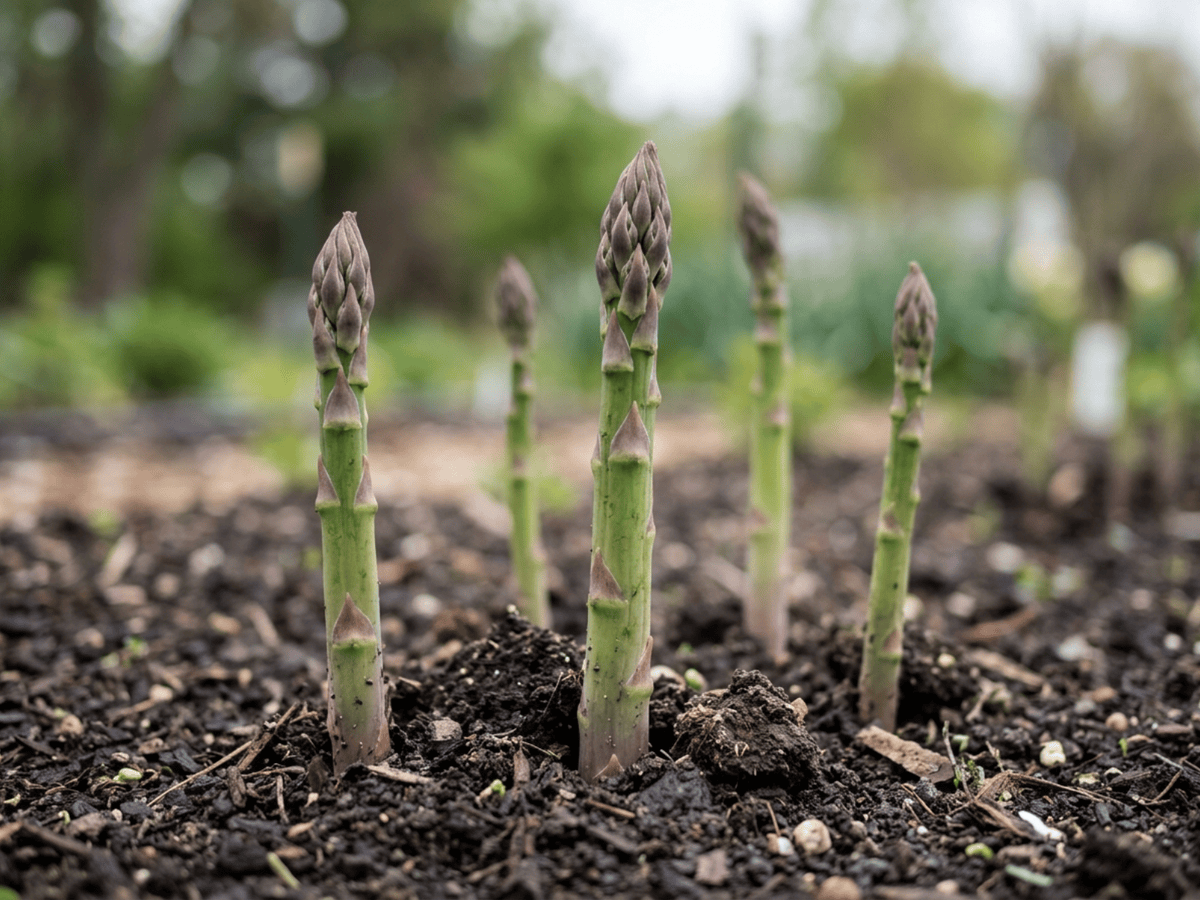
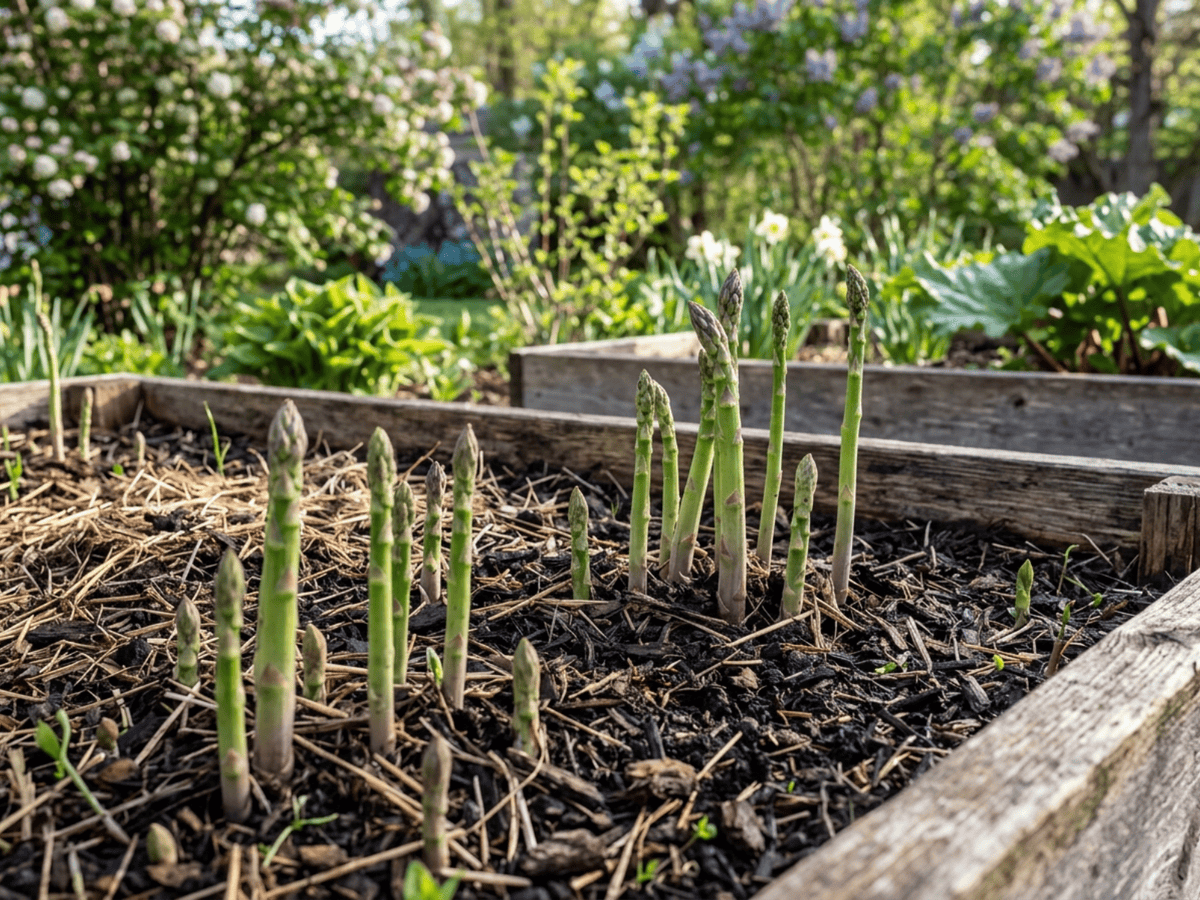
Asparagus officinalis is a perennial vegetable in the Asparagaceae family native to Europe and western Asia. Unlike most vegetables, asparagus is a long-term investment: it takes 2–3 years from planting to first harvest, but a well-maintained bed produces for 15–25 years. The edible spears are actually young shoots emerging from an underground crown of fleshy roots. Left unharvested, spears develop into tall, feathery ferns that feed the crown for next year's crop.
Asparagus thrives in USDA zones 3–8, preferring full sun, deep, well-drained, sandy soil, and a slightly alkaline pH. It is one of the first vegetables ready in spring—a welcome sign of the new growing season. Purple varieties (like 'Purple Passion') and white asparagus (green spears blanched by mounding soil) add variety. Male plants (producing no berries) are preferred as they put more energy into spear production.
Fresh asparagus is a springtime luxury: tender, with a distinctive, slightly sweet, grassy flavour that degrades within hours of cutting. It is rich in folate, vitamins A, C, and K, and the antioxidant glutathione. The characteristic post-consumption urinary odour (caused by asparagusic acid breakdown) is detectable by only about 40% of the population due to genetic variation.
- Edible
- Cold-hardy
How to care for Wild Asparagus
Watering
- Springevery 4 days
- Summerevery 3 days
- Fallevery 5 days
- Winterevery 10 days
Soil · Rich & well-draining
- Top dressingCompost10%
- Main mixPotting soil + compost 3:180%
- DrainageGravel10%
Top up the compost layer each season.
FERTILIZER
Balanced Feed 14-14-14
An even feed covers all three needs at once, keeping leaves, roots and blooms moving together with nothing pushed out of balance.
- Nitrogen · Leaves
- Phosphorus · Roots + Blooms
- Potassium · Strength
- Springevery 30 days
- Summerevery 30 days
- Fallevery 45 days
At a Glance
- NativeEurope, Western Asia, Africa
- Height4–6 ft (1.2–1.8 m)
- Spread2–3 ft (0.6–0.9 m)
- Flower colorGreen, Yellow
- Foliage colorGreen
- SoilSandy, Well-drained, Rich
- LocationsYard
Bloom time
BLOOM CYCLE
Peak bloom
Jun–Jul
Allow ferns to grow fully after harvest season ends (late June); they feed the crown for next year.
Fragrance
NO FRAGRANCE
No notable fragrance.
Toxicity
Pets Slight
asparagusic acid and saponins
Not reported
EXPOSURE No exposure route is reported.
EFFECT Widely consumed and rare asparagus allergy.
NOTE No toxicity is reported for humans in this catalog; this is not evidence that the plant is edible or harmless.
Slight
- Berry
- Ingestion
EXPOSURE Eating berries.
EFFECT Red berries of mature plants can cause mild GI upset and ornamental asparagus ferns more toxic.
NOTE Edible shoots safe; ornamental Asparagus setaceus and A. densiflorus more problematic for pets.
Slight
- Berry
- Ingestion
EXPOSURE Eating berries.
EFFECT Berries cause mild GI upset.
NOTE Edible shoots safe; ornamental Asparagus setaceus and A. densiflorus more problematic for pets.
Educational information, not medical or veterinary advice. If exposure is suspected, contact a doctor or veterinarian.
DISTRIBUTION


- Native
- Introduced
- Europe
- Western Asia
- Africa
History
Asparagus officinalis is native to Europe, western Asia, and North Africa. Wild asparagus grows along salt marshes and sandy coasts of the Mediterranean. Egyptian frescoes depict asparagus as offerings at least 4,500 years ago. Greeks knew it; Romans cultivated it extensively and considered it a luxury vegetable.
The Roman emperor Augustus was reportedly fond of the proverb "velocius quam asparagi cocuntur" — "faster than you can cook asparagus" — applied to any quickly-completed task. Roman military units were issued asparagus seeds. After the Roman collapse, asparagus cultivation nearly disappeared in Europe until revived by 15th-century French monks.
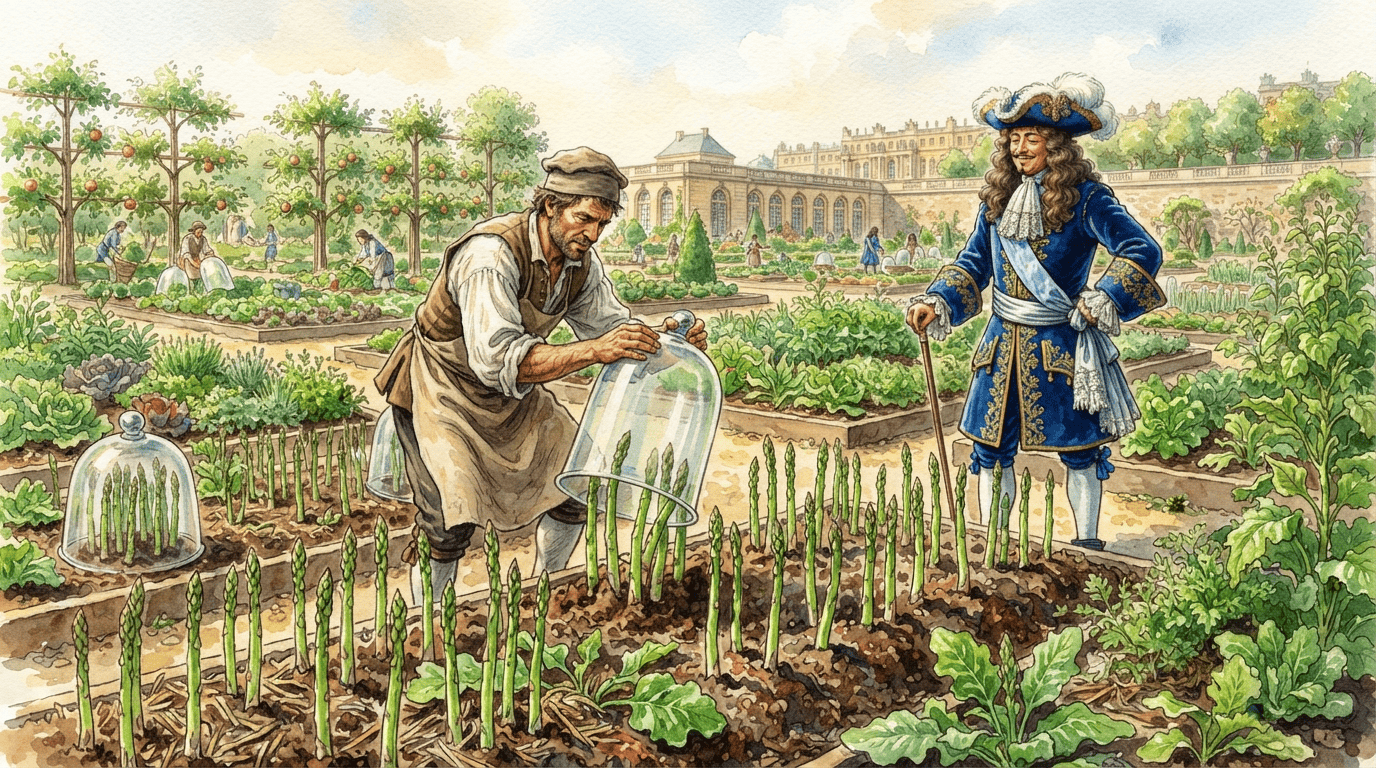
Louis XIV of France was famously devoted to asparagus, having gardeners (led by Jean-Baptiste de La Quintinie) produce it year-round under bell jars and in hothouses at Versailles. American asparagus cultivation was launched by 17th-century English colonists; California and New Jersey Cumberland County are major producers. White asparagus is grown entirely underground to exclude light and prevent chlorophyll; Germany's "Spargelzeit" (asparagus season, April-June) is a culinary and cultural event. Asparagus causes a distinctive urine odor in roughly half of people due to genetic variation in OR2M7 olfactory receptor — a taste/smell quirk mapped to specific human SNPs. Cultivated by ancient Egyptians and Romans — Augustus coined the phrase 'velocius quam asparagi coquantur' (faster than cooking asparagus) meaning quickly. White asparagus, grown buried in sand to prevent greening, became a German and Dutch obsession — 'Spargelzeit' (asparagus season) is celebrated across Germany every spring.
Symbolism & meaning
What It Symbolizes
Wild Asparagus suggests anticipation, those first slim spears pushing through April soil after years of patient bed-making and waiting. Another layer is longevity, for an asparagus bed will produce for twenty-five years or more, becoming a quiet inheritance passed between gardeners. In the cottage tradition, no other vegetable so neatly braids the thrill of spring's first taste with the slow reward of decades, asking faith of the planter and giving abundance in return.
- Anticipation — The first spears of spring, eagerly awaited after a long investment, symbolize the thrill of something worth waiting for
- Longevity — A bed producing for 25 years represents lasting value and enduring reward
Where the Name Comes From
Asparagus from Greek 'asparagos,' possibly from Persian 'asparag' (sprout); 'officinalis' denotes its use in pharmacies.
Uses & Fun Facts
- Tender spring spears harvested as gourmet vegetable
Related plants
More Asparagus plants
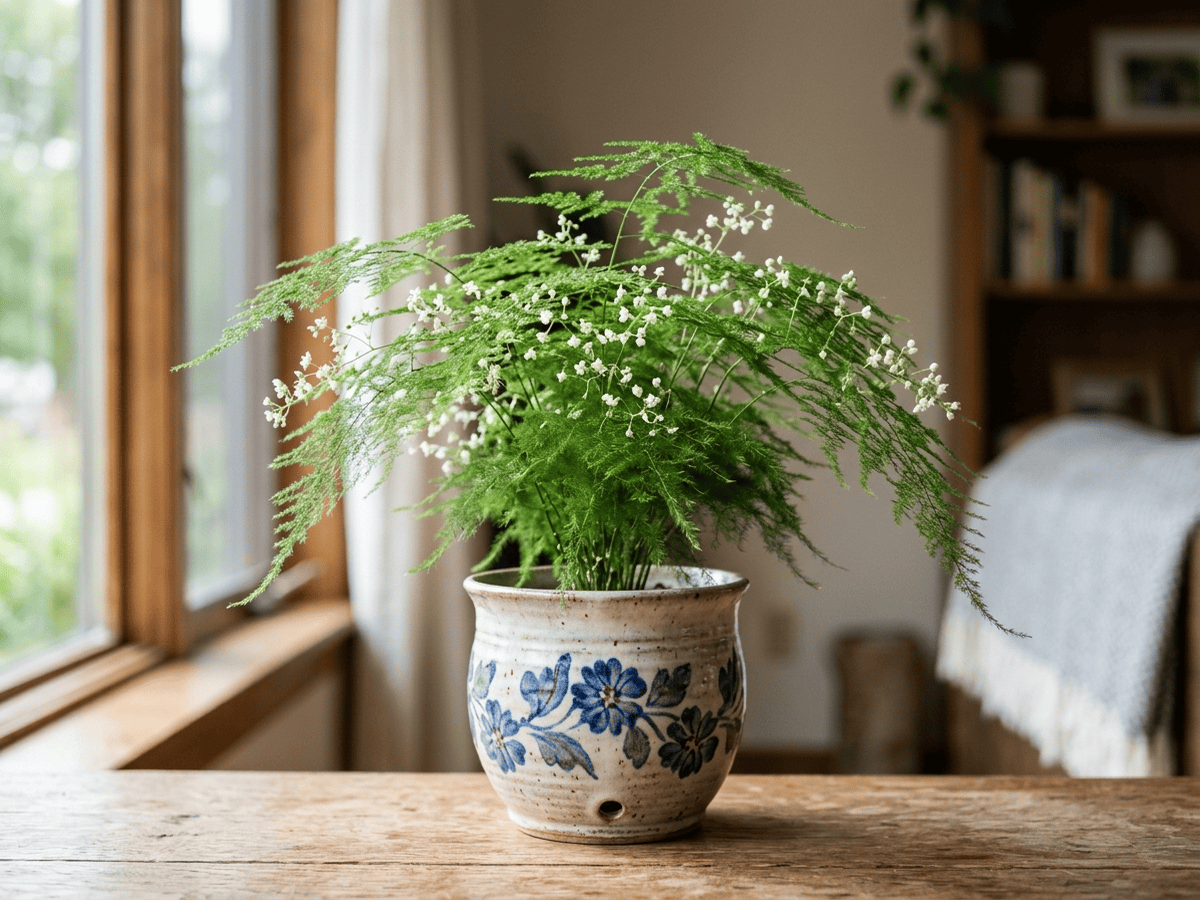
Plants with similar care
 Mexican AbeliaAbelia floribunda
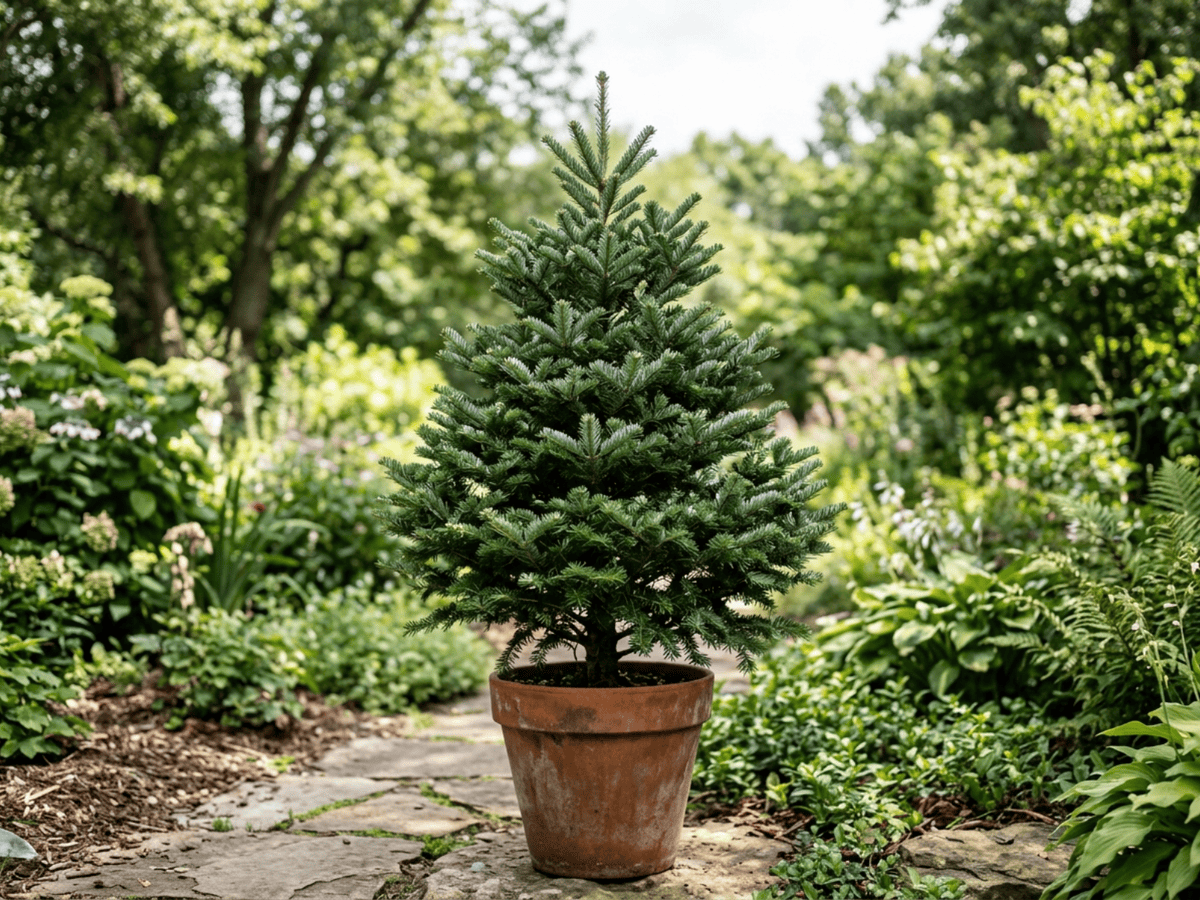 Fraser FirAbies fraseri
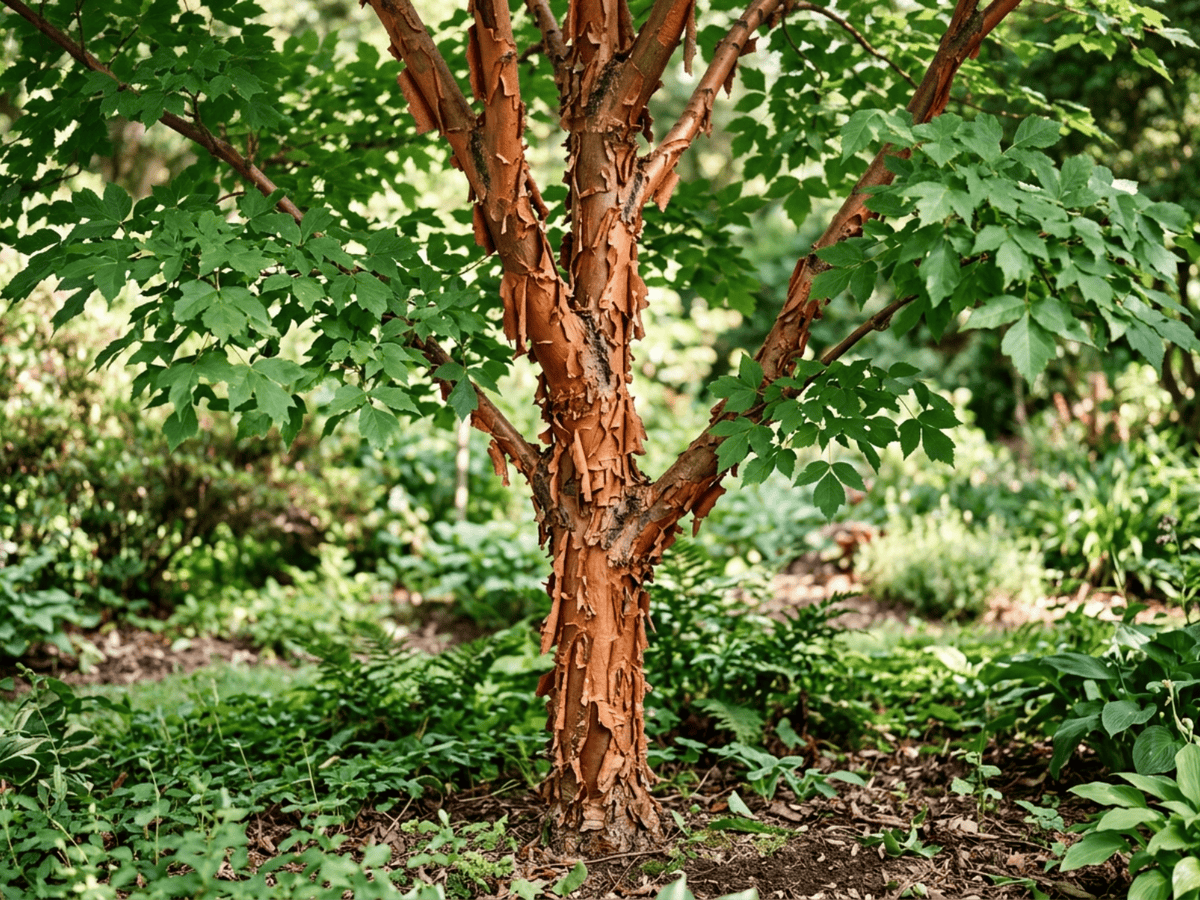 Paperbark MapleAcer griseum
 Sugar MapleAcer saccharum
Frequently asked questions
How often should I water Wild Asparagus?
In summer, water about every 3 days; in winter, about every 10 days. Adjust for heat, pot size and drainage.
How much light does Wild Asparagus need?
Full sun: 6+ hrs direct. Watch the leaves — scorching or stretching means the light needs adjusting.
Is Wild Asparagus toxic to cats or dogs?
Pets Slight (Dogs Slight · Cats Slight) Educational information, not medical or veterinary advice. If exposure is suspected, contact a doctor or veterinarian.
Is Wild Asparagus easy to grow?
It is moderately demanding: a good choice once you have a little experience.
When does Wild Asparagus bloom?
It typically blooms Jun–Jul in the Northern Hemisphere.
YardMate
Identify any plant in seconds
Snap a photo — YardMate names the plant, diagnoses problems, and reminds you when to water.
Download on the App Store