 YardMate


Common Asparagus Fern
Asparagus setaceus
Medium · Some experienceAbout Common Asparagus Fern
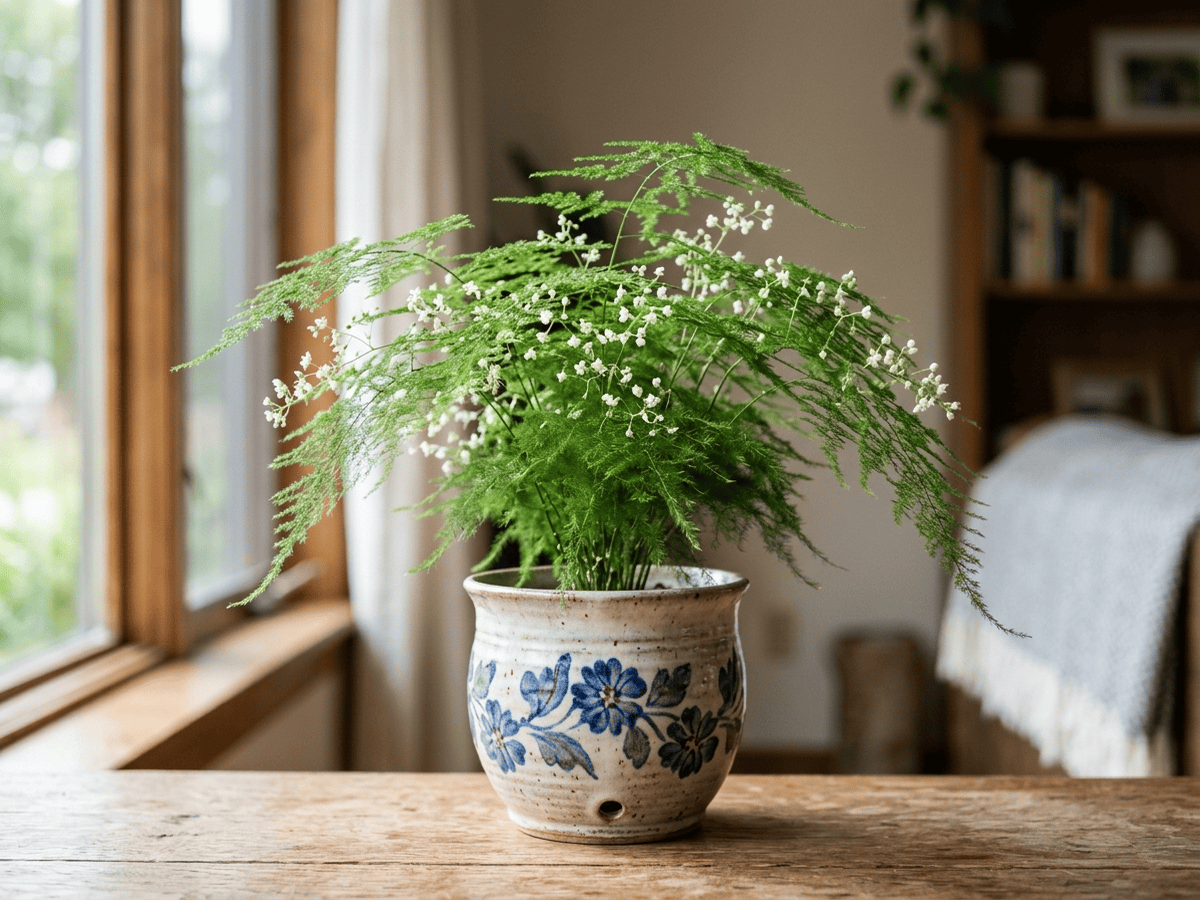
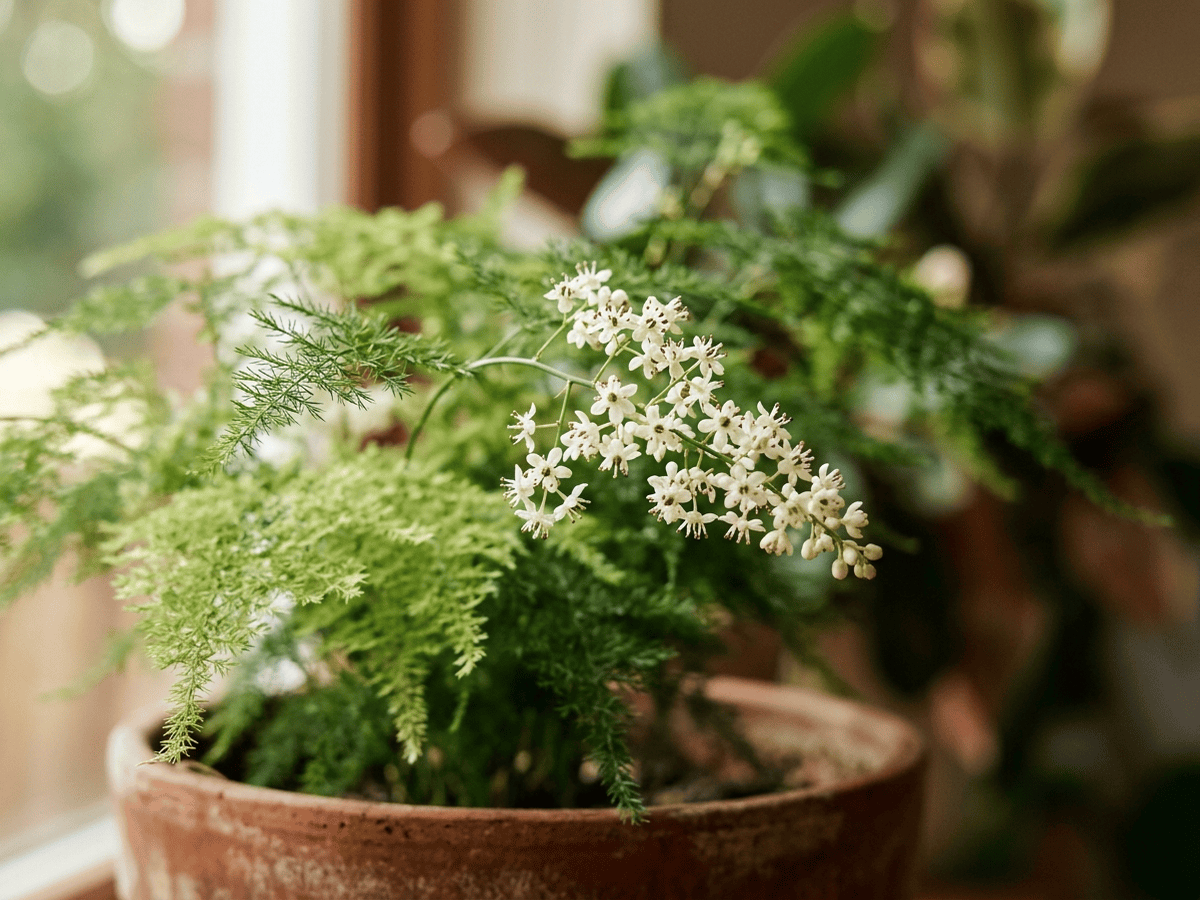
Asparagus setaceus, the asparagus fern, produces clouds of impossibly fine, feathery foliage on wiry climbing stems — despite its common name, it is not a true fern but a member of the asparagus family. The delicate, needle-like cladodes (modified stems that function as leaves) create a mist-like texture. Native to southern and eastern Africa, it is widely used by florists as greenery in arrangements. Indoors, it prefers bright indirect light and consistent moisture. It can develop tiny white flowers followed by small dark berries. The plant has thorny stems, so handle with care.
- Climbing
How to care for Common Asparagus Fern
Watering
- Springevery 5 days
- Summerevery 4 days
- Fallevery 7 days
- Winterevery 10 days
Soil · Well-draining
- Top dressingPine bark mulch10%
- Main mixPotting soil + perlite 2:170%
- DrainageLECA / gravel20%
Never skip the drainage layer — standing water is the top cause of root rot.
FERTILIZER
Balanced Feed 14-14-14
An even feed covers all three needs at once, keeping leaves, roots and blooms moving together with nothing pushed out of balance.
- Nitrogen · Leaves
- Phosphorus · Roots + Blooms
- Potassium · Strength
- Springevery 30 days
- Summerevery 30 days
- Fallevery 60 days
At a Glance
- NativeAfrica
- Height2–3 ft (0.6–0.9 m)
- Spread1–2 ft (0.3–0.6 m)
- Flower colorWhite
- Foliage colorGreen
- Fruit colorBlack
- SoilLoamy, Well-drained
- LocationsIndoor
Bloom time
BLOOM CYCLE
Peak bloom
Jun–Aug
Tiny fragrant white flowers followed by dark berries
Fragrance
LIGHT FRAGRANCE
Tiny flowers have a faint sweet scent; rarely noticed indoors.
Toxicity
Humans Slight · Pets Slight
steroidal saponins and sapogenins
Slight
- Fruit
- Stem
- Contact
- Ingestion
EXPOSURE Touching fruit and stems. Eating fruit and stems.
EFFECT Contact dermatitis from sap and gI upset from berries.
NOTE Berries are the most toxic part.
Slight
- Fruit
- Stem
- Contact
- Ingestion
EXPOSURE Touching fruit and stems. Eating fruit and stems.
EFFECT Allergic dermatitis with repeated exposure, vomiting, diarrhea, abdominal pain from berries, and per ASPCA.
NOTE Berries are the most toxic part.
Slight
- Fruit
- Stem
- Contact
- Ingestion
EXPOSURE Touching fruit and stems. Eating fruit and stems.
EFFECT Allergic dermatitis with repeated exposure, vomiting, diarrhea, abdominal pain from berries, and per ASPCA.
NOTE Berries are the most toxic part.
Educational information, not medical or veterinary advice. If exposure is suspected, contact a doctor or veterinarian.
DISTRIBUTION


- Native
- Introduced
- Africa
History
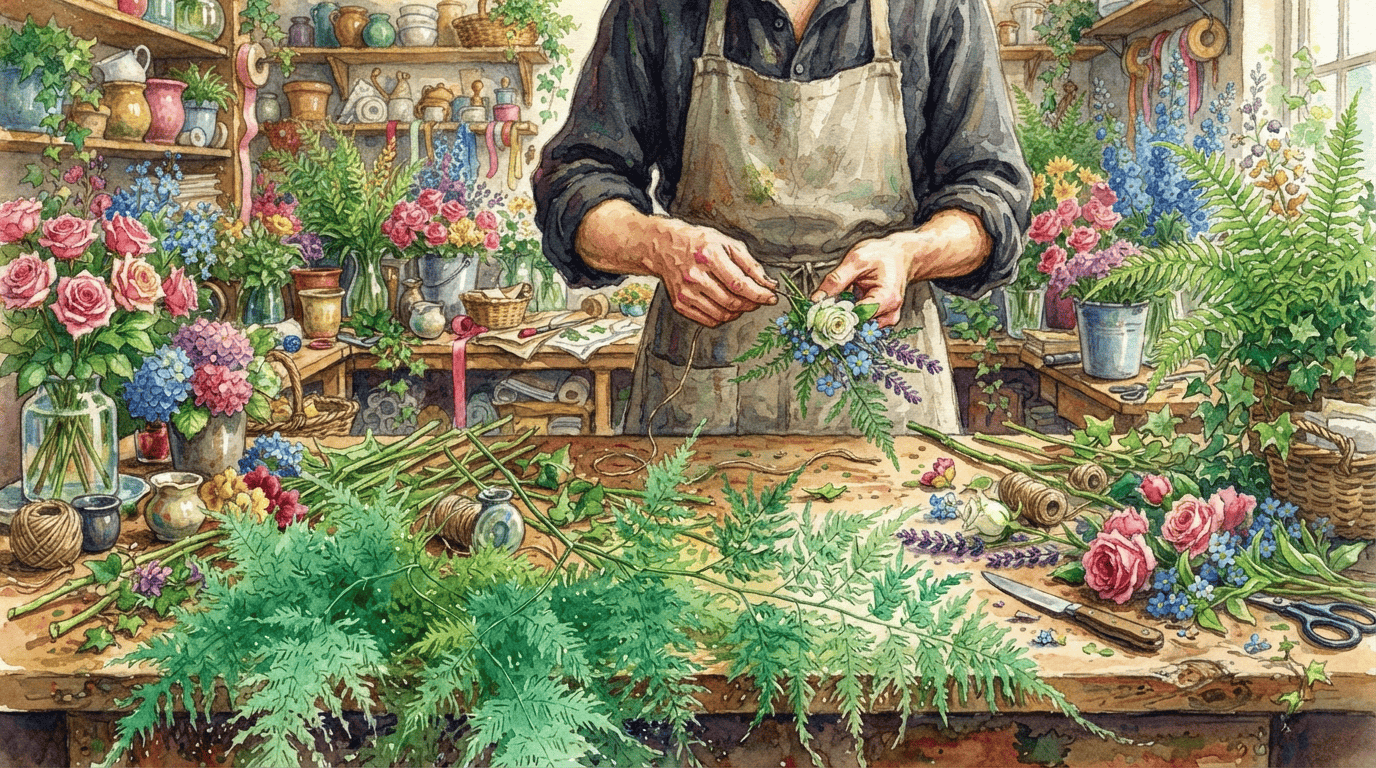
Asparagus setaceus is native to southern Africa, particularly South Africa and Zimbabwe, where it climbs as a woody-stemmed liana in open forest and scrub. Despite the universal common name, it is not a fern — the finely divided 'leaves' are actually modified branchlets called cladodes. Introduced to European horticulture in the 1870s, it quickly replaced true ferns as the standard filler green for florists' buttonhole bouquets and wedding arrangements because it lasts far longer cut than maidenhair fern.
It became a major commercial cut-green crop in Spain and Kenya through the 20th century. The small white flowers are followed by red-then-black berries that contain saponins and are the most toxic part of the plant — significantly poisonous to pets if eaten in quantity. Skin contact can cause dermatitis.
The extremely fine cladodes last well in water, providing an airy backdrop for flowers. In its native habitat, it is a scrambling climber that uses tiny hook-like thorns to grip support structures. It has become invasive in parts of Australia, New Zealand, and Hawaii, forming dense tangles that smother native vegetation. The genus Asparagus has about 300 species, including the edible vegetable A. officinalis — all share the characteristic cladode structure.
Symbolism & meaning
What It Symbolizes
The asparagus fern expresses delicacy in its purest form. Its foliage is so fine that it reads more as green mist than as leaves, a soft cloud that seems to hold its breath whenever the room stirs. To stand near it is to feel the room itself become gentler. Few plants speak so eloquently of refined sensitivity, of the quiet beauty in things almost too light to touch.
- Delicacy — Its impossibly fine, mist-like foliage embodies gentleness and refined sensitivity
Where the Name Comes From
Asparagus from Greek 'asparagos,' possibly meaning 'sprout.' Setaceus means 'bristly' or 'hair-like,' describing the fine foliage.
Uses & Fun Facts
- Lacy bright-green fronds grown as feathery indoor pot plant
- Soft fern-like sprays used as filler greenery in floral work
Related plants
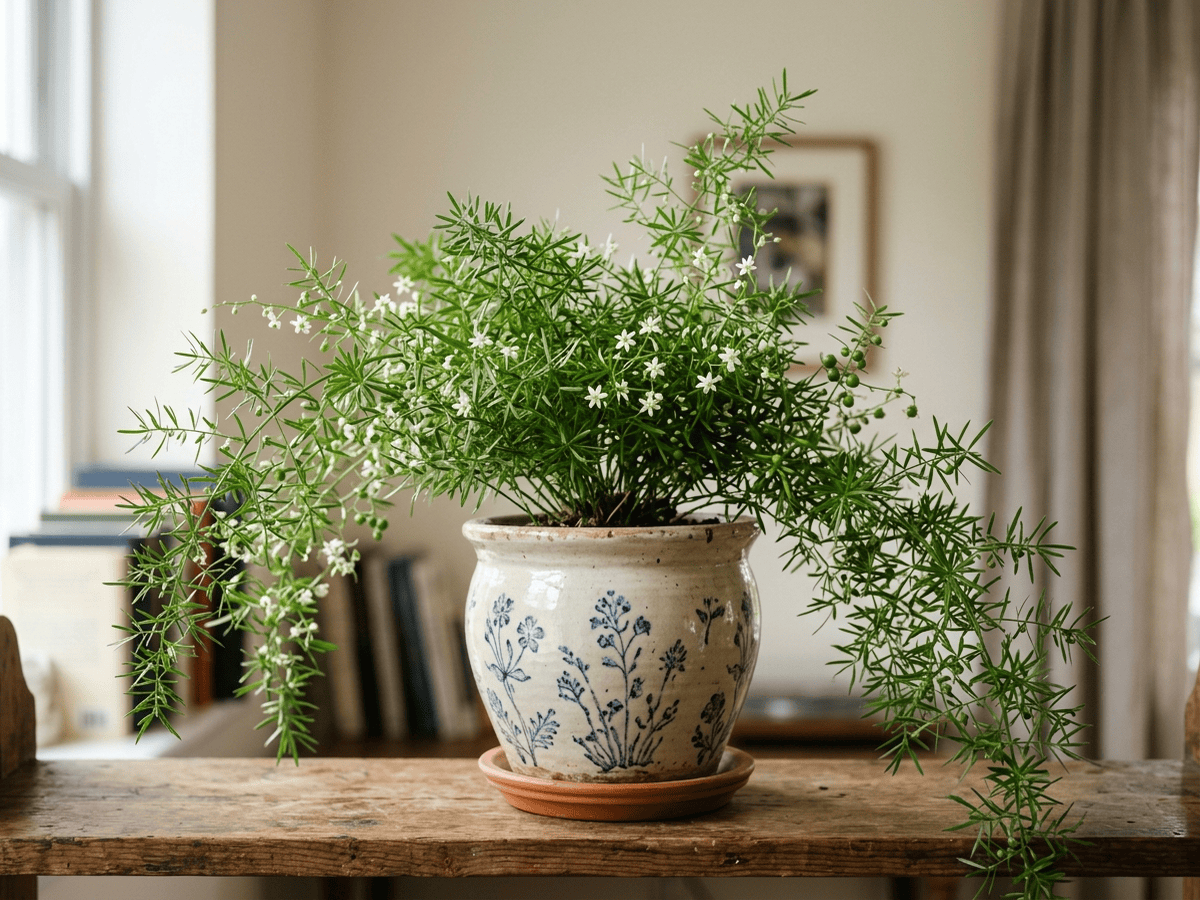
More Asparagus plants

Plants with similar care
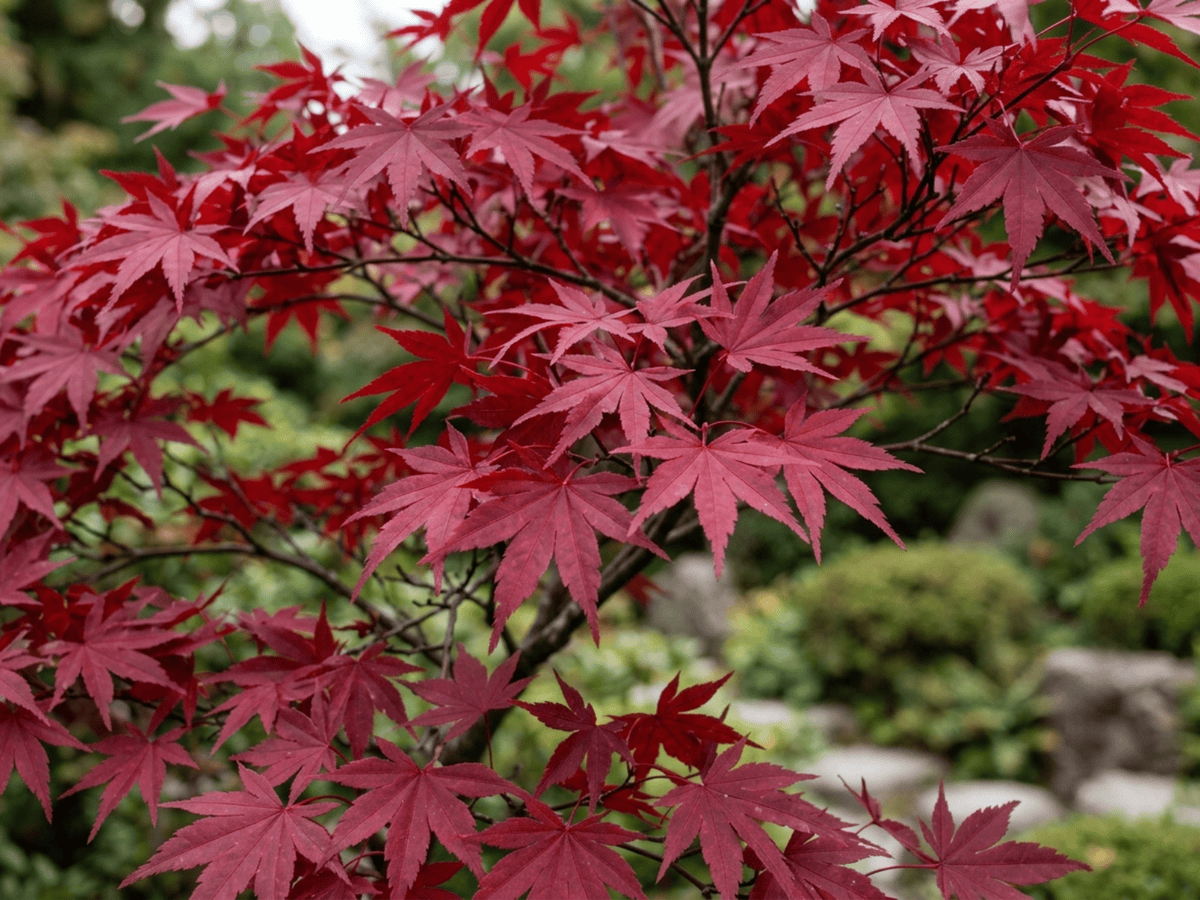 Japanese MapleAcer palmatum
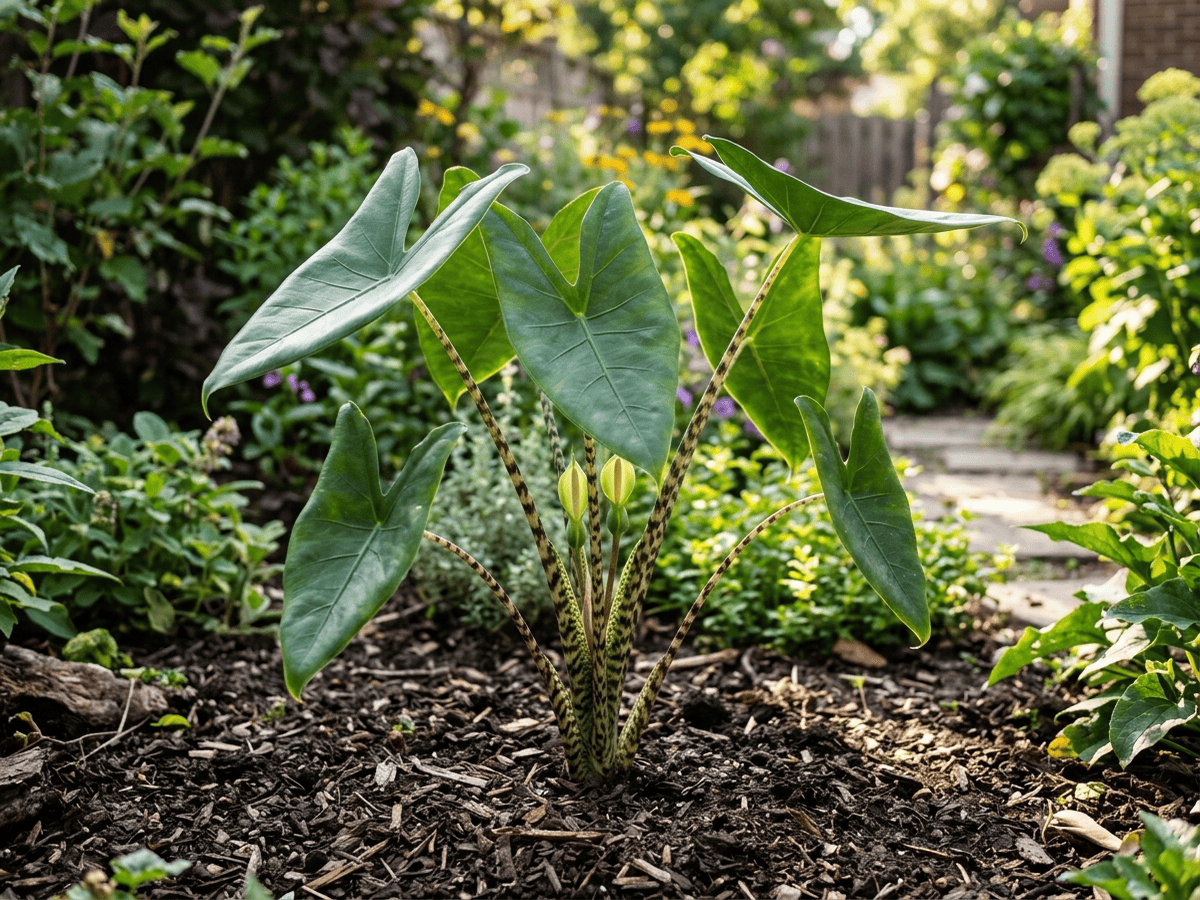 Alocasia zebrinaAlocasia zebrina
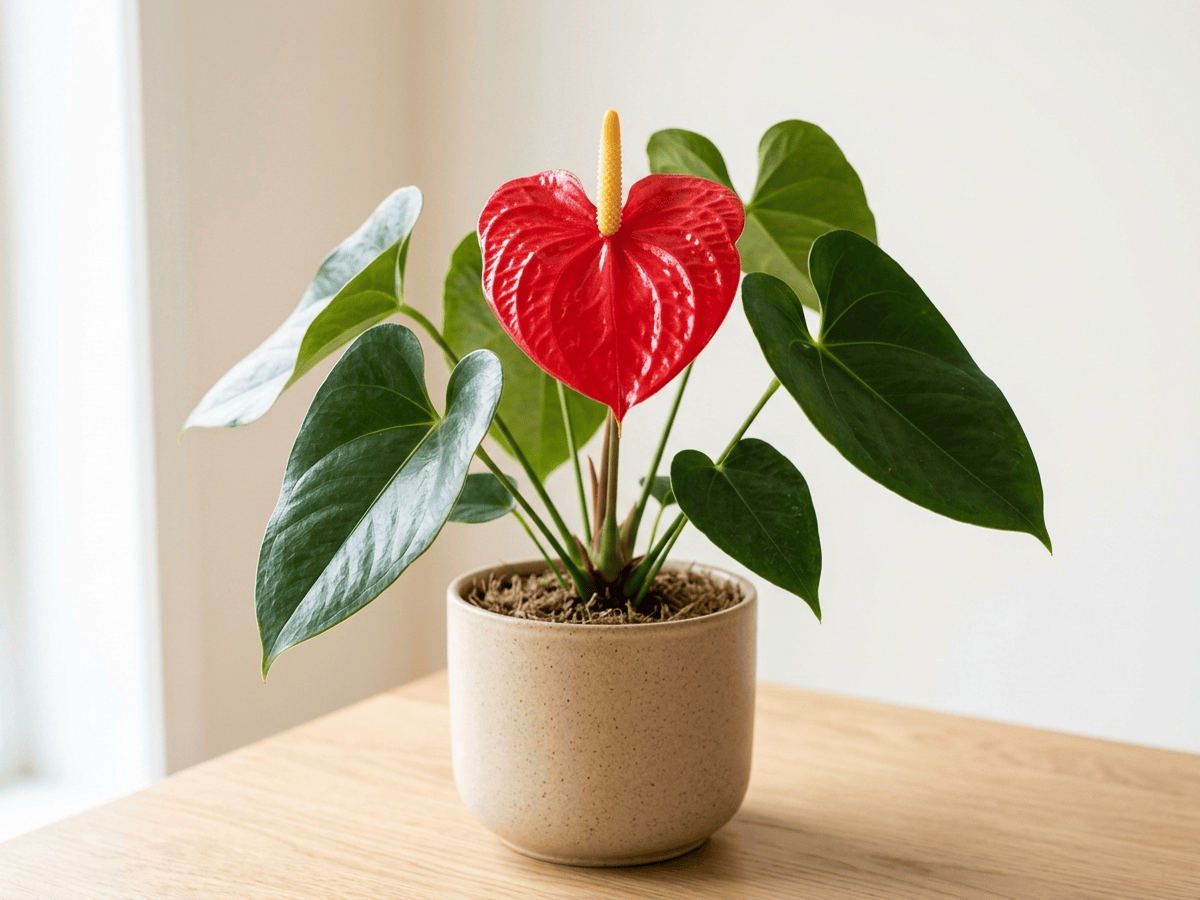 Painter's-PaletteAnthurium andraeanum
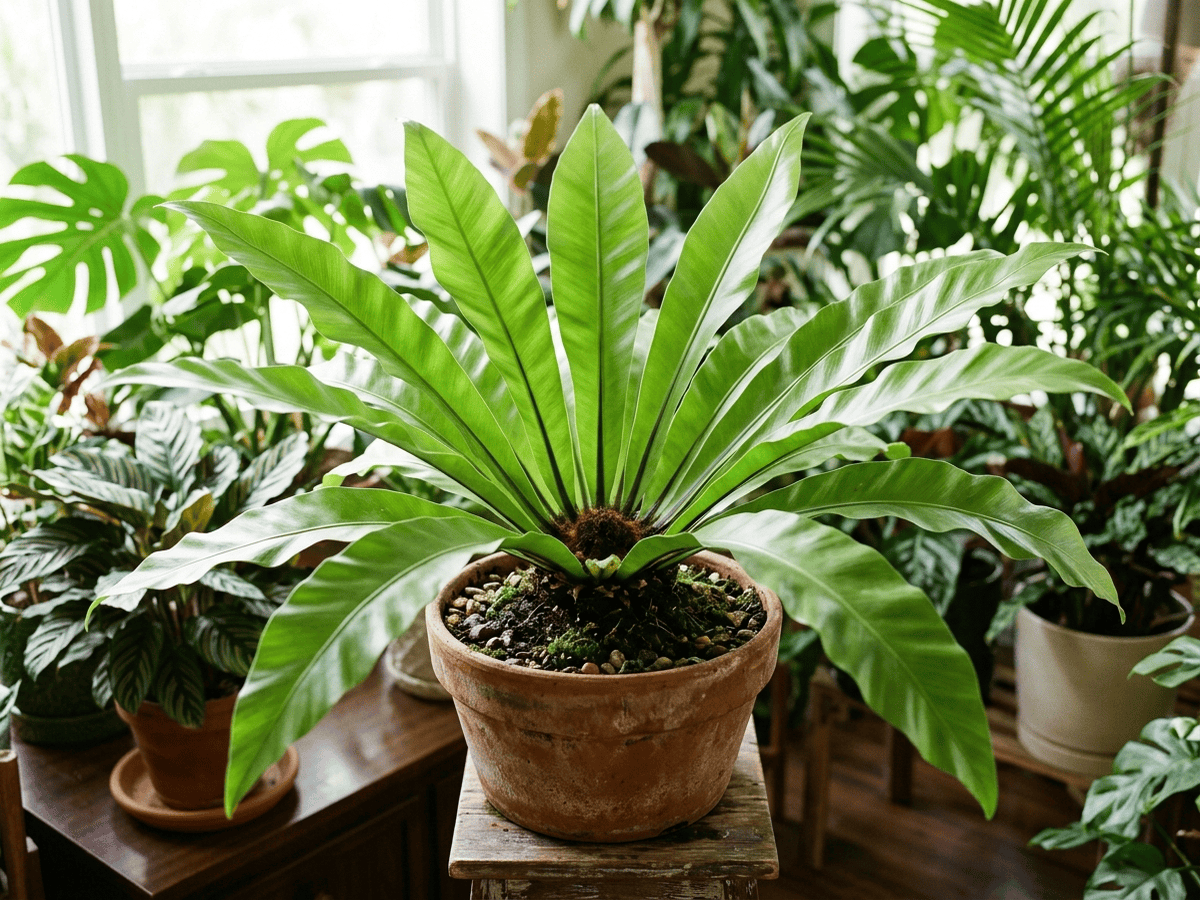 Bird's Nest FernAsplenium nidus
Frequently asked questions
How often should I water Common Asparagus Fern?
In summer, water about every 4 days; in winter, about every 10 days. Adjust for heat, pot size and drainage.
How much light does Common Asparagus Fern need?
Part shade: 2–4 hrs direct. Watch the leaves — scorching or stretching means the light needs adjusting.
Is Common Asparagus Fern toxic to cats or dogs?
Pets Slight (Dogs Slight · Cats Slight) Educational information, not medical or veterinary advice. If exposure is suspected, contact a doctor or veterinarian.
Is Common Asparagus Fern easy to grow?
It is moderately demanding: a good choice once you have a little experience.
Can Common Asparagus Fern be grown indoors?
Yes, it adapts well to indoor growing given the right light.
When does Common Asparagus Fern bloom?
It typically blooms Jun–Aug in the Northern Hemisphere.
YardMate
Identify any plant in seconds
Snap a photo — YardMate names the plant, diagnoses problems, and reminds you when to water.
Download on the App Store