 YardMate

Giant Timber Bamboo
Bambusa oldhamii
Easy · Beginner friendlyAbout Giant Timber Bamboo
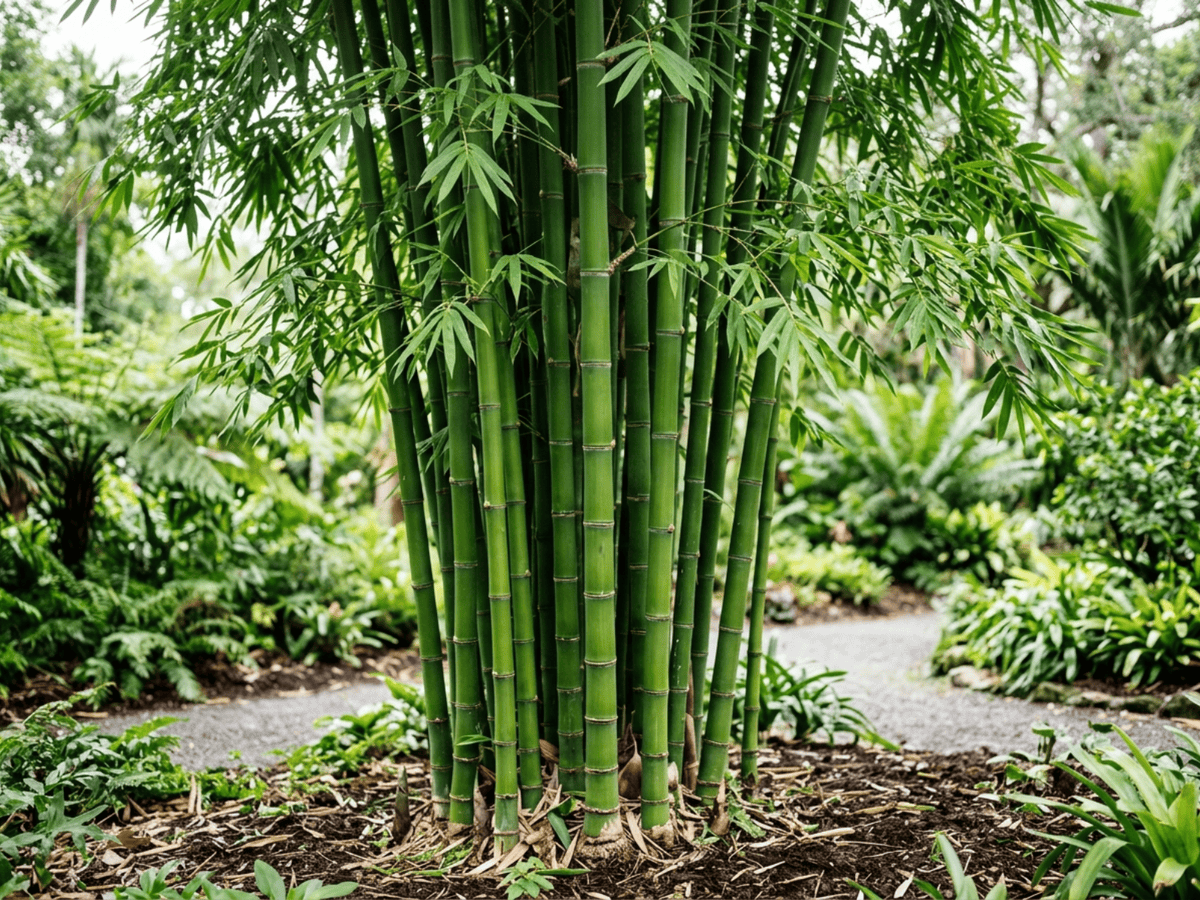
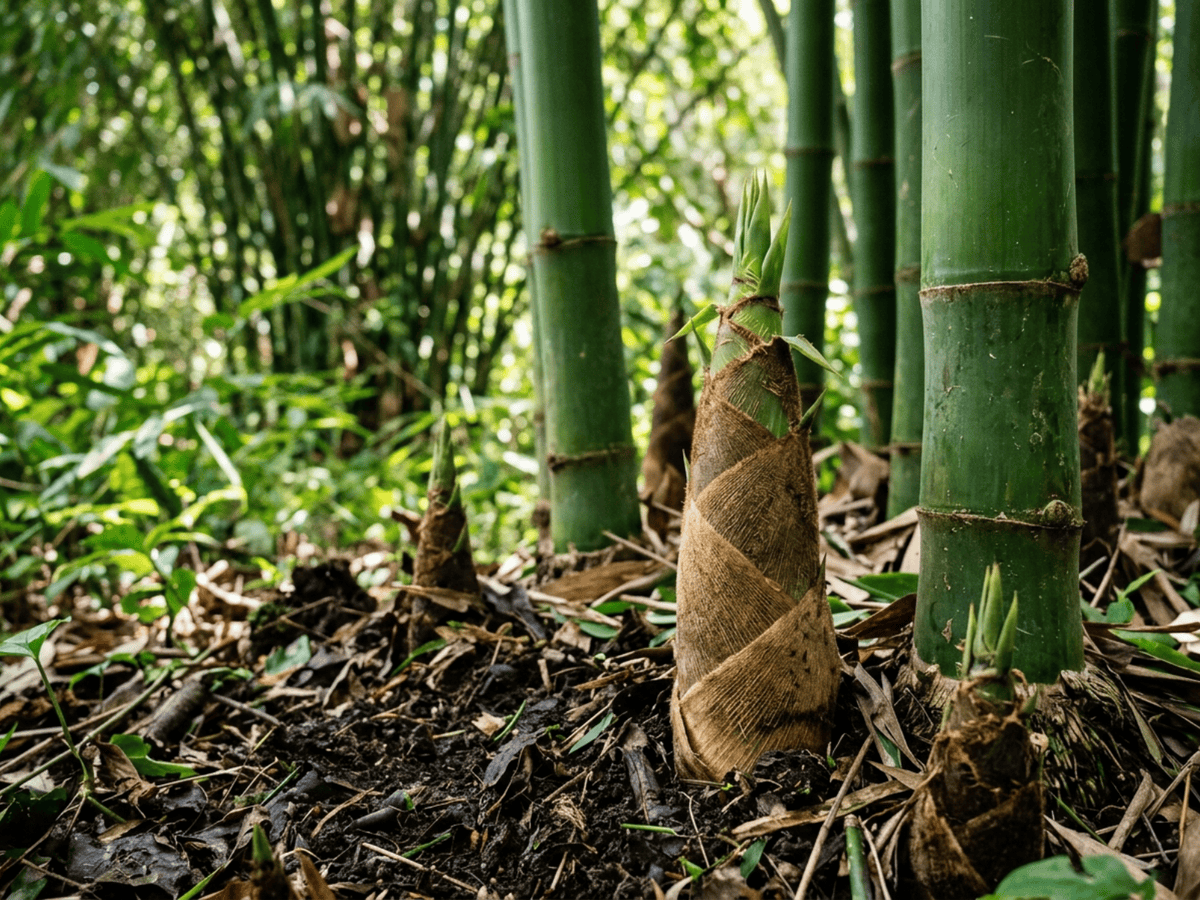
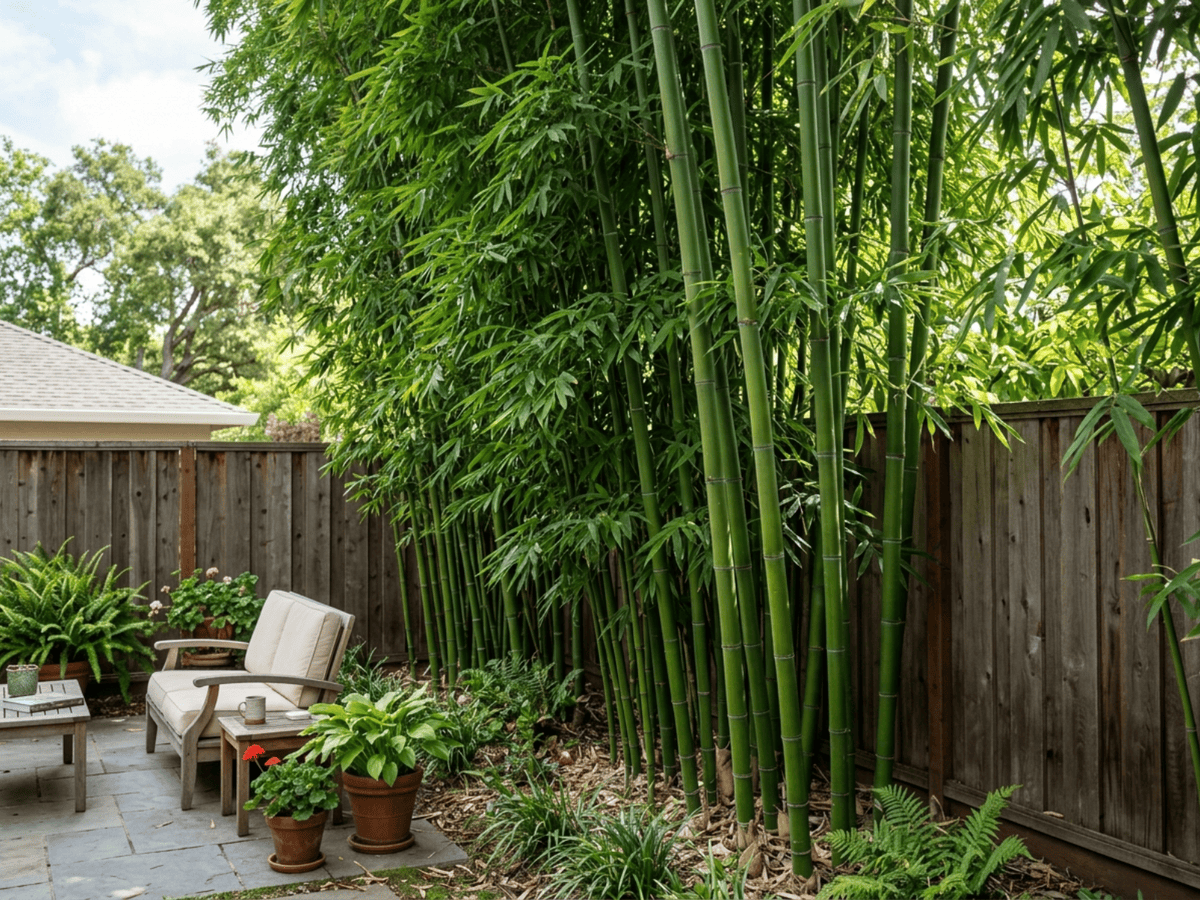
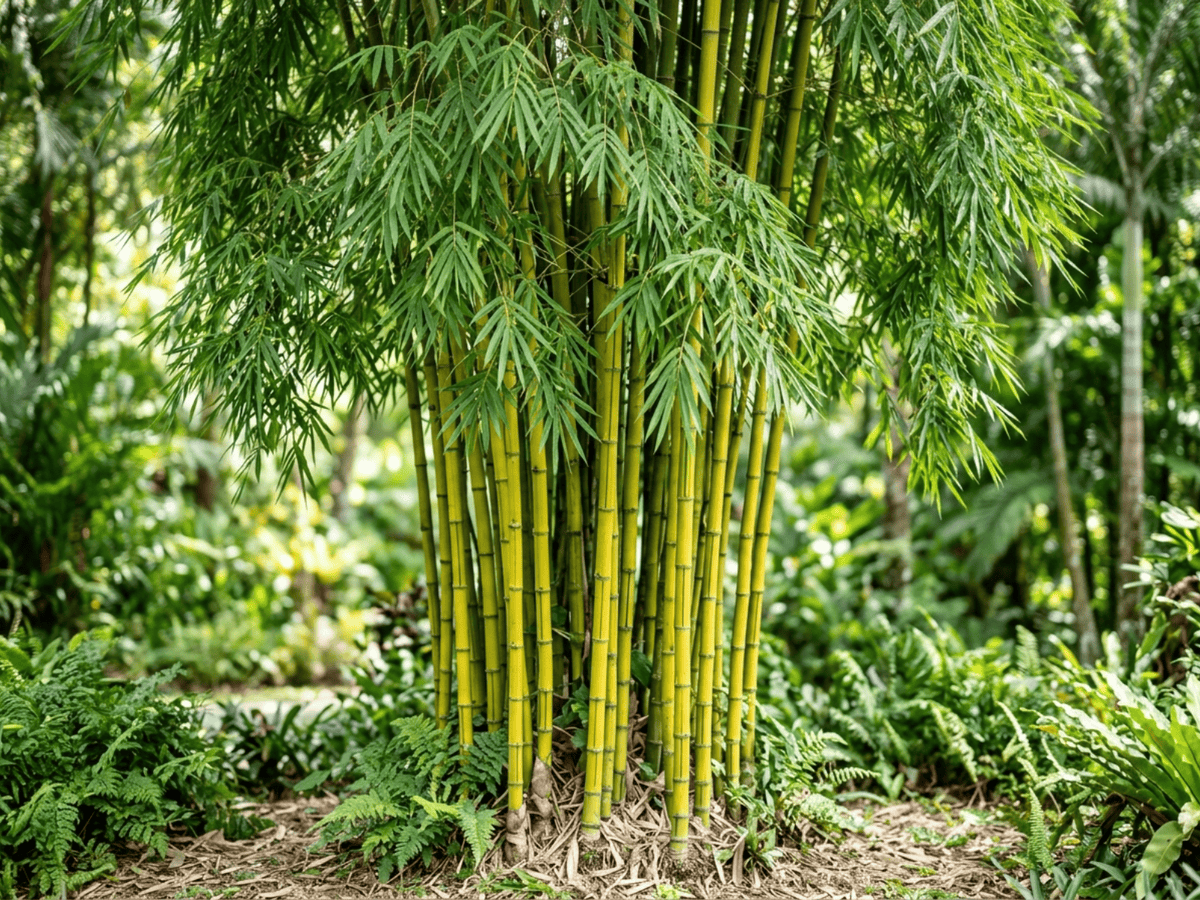
Bambusa oldhamii, Oldham's bamboo or giant timber bamboo, is one of the most useful and well-behaved clumping bamboos, native to southern China and Taiwan. Unlike the notorious running bamboos that spread aggressively, this clumping species stays in a tight, expanding clump, making it far more manageable in garden settings. Growing rapidly to 15–20 meters tall with culms up to 10 cm in diameter, it forms a dense, upright grove that creates an instant tropical privacy screen. The young shoots are prized as one of the best edible bamboo species — sweet, tender, and widely sold in Taiwanese markets. The strong, flexible culms are used for construction, furniture, and crafts. It is one of the fastest-growing plants on Earth, with culms capable of growing up to 30 cm per day during peak growth season. It thrives in warm climates and is hardy to about -4°C.
- Edible
- Fast-growing
How to care for Giant Timber Bamboo
Watering
- Springevery 3 days
- Summerevery 2 days
- Fallevery 5 days
- Winterevery 14 days
Soil · Well-draining
- Top dressingPine bark mulch10%
- Main mixPotting soil + perlite 2:170%
- DrainageLECA / gravel20%
Never skip the drainage layer — standing water is the top cause of root rot.
FERTILIZER
Foliage Feed 24-8-16
Nitrogen leads so the plant spends its energy on dense green growth. Phosphorus and potassium follow just far enough to keep roots and stems up to speed.
- Nitrogen · Leaves
- Phosphorus · Roots + Blooms
- Potassium · Strength
- Springevery 30 days
- Summerevery 30 days
At a Glance
- NativeEast Asia
- Height30–55 ft (9.1–16.8 m)
- Spread10–15 ft (3–4.6 m)
- Foliage colorGreen
- SoilRich, Loamy, Well-drained
- LocationsYard · Indoor · Balcony
Bloom time
BLOOM CYCLE
Bamboo flowering is extremely rare (decades apart) and often fatal to the clump; not grown for flowers
Fragrance
NO FRAGRANCE
No notable fragrance.
Toxicity
Humans Slight
taxiphyllin (raw shoots only)
Slight
- Shoot
- Ingestion
EXPOSURE Eating shoot.
EFFECT Raw shoots contain taxiphyllin (cyanogenic glycoside) — must be boiled before eating and cooking destroys the compound.
NOTE Documented concern for humans: Raw shoots contain taxiphyllin (cyanogenic glycoside) — must be boiled before eating and cooking destroys the compound.
Not reported
EXPOSURE No exposure route is reported.
EFFECT Not listed as toxic.
NOTE No toxicity is reported for dogs in this catalog; this is not evidence that the plant is edible or harmless.
Not reported
EXPOSURE No exposure route is reported.
EFFECT Not listed as toxic.
NOTE No toxicity is reported for cats in this catalog; this is not evidence that the plant is edible or harmless.
Educational information, not medical or veterinary advice. If exposure is suspected, contact a doctor or veterinarian.
DISTRIBUTION


- Native
- Introduced
- East Asia
History
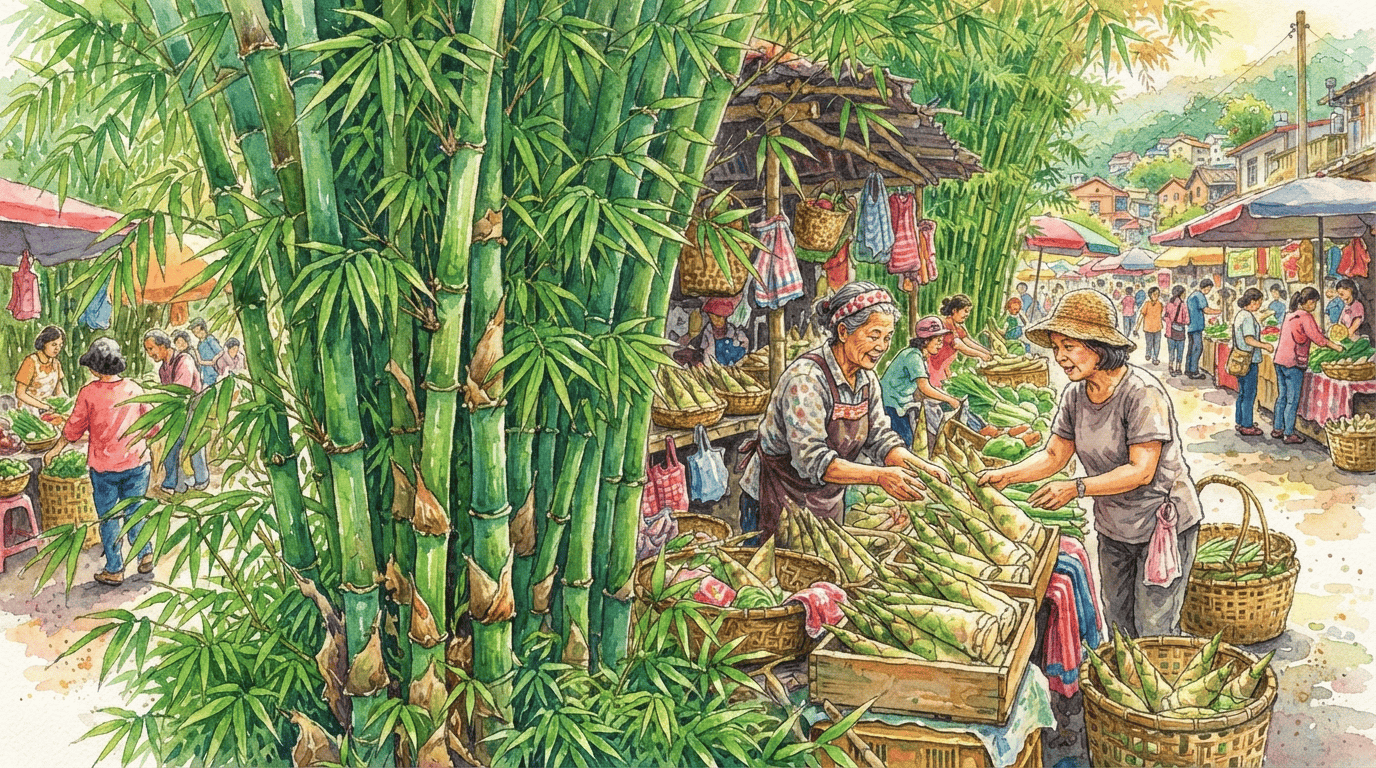
Bambusa oldhamii is native to southeastern China and Taiwan, where it is grown for edible bamboo shoots and known in local markets as green bamboo. Named for Scottish-British collector Richard Oldham, who gathered it in Taiwan for Kew in the 1860s, it became the most widely planted large clumping bamboo in subtropical North America. Its importance lies in its manners: unlike running bamboos that send rhizomes far from the parent, Oldham's bamboo expands slowly from a tight central clump.
Mature plants reach 12-20 meters with thick culms and dense foliage, creating tall privacy screens without the fear attached to Phyllostachys. In Taiwan the emerging shoots are a major seasonal vegetable after proper preparation.
The species also carries the larger cultural weight of bamboo in Chinese civilization, where bamboo has served as writing material, tool, food, musical instrument, building material, and symbol of resilience for thousands of years.
Symbolism & meaning
What It Symbolizes
Giant Timber Bamboo makes visible the threefold virtues of Confucian thought: strength that bends in storms without breaking, humility expressed in its hollow stem, and integrity in its straight, true growth. Towering groves rustle with a sound that has soothed Chinese scholars for millennia, a green calligraphy against the sky. To live near it is to be reminded daily of resilient fortitude and an open, learning heart.
- Strength — bends in storms but never breaks, symbolizing resilient fortitude
- Humility — the hollow stem represents an open, humble heart ready to learn
- Integrity — grows straight and true, representing moral uprightness in Confucian thought
Where the Name Comes From
The name Giant Timber Bamboo describes its bamboo-like canes. 'Bambusa' from the Malay word 'bambu.' 'Oldhamii' honors Richard Oldham (1837–1864), British botanist who collected extensively in Taiwan and East Asia.
Uses & Fun Facts
- Sweet shoots harvested as culinary bamboo vegetable
- Tall clumping culms form dense privacy screens
- Strong canes used for fencing furniture and craft poles
Related plants
More Bambusa plants
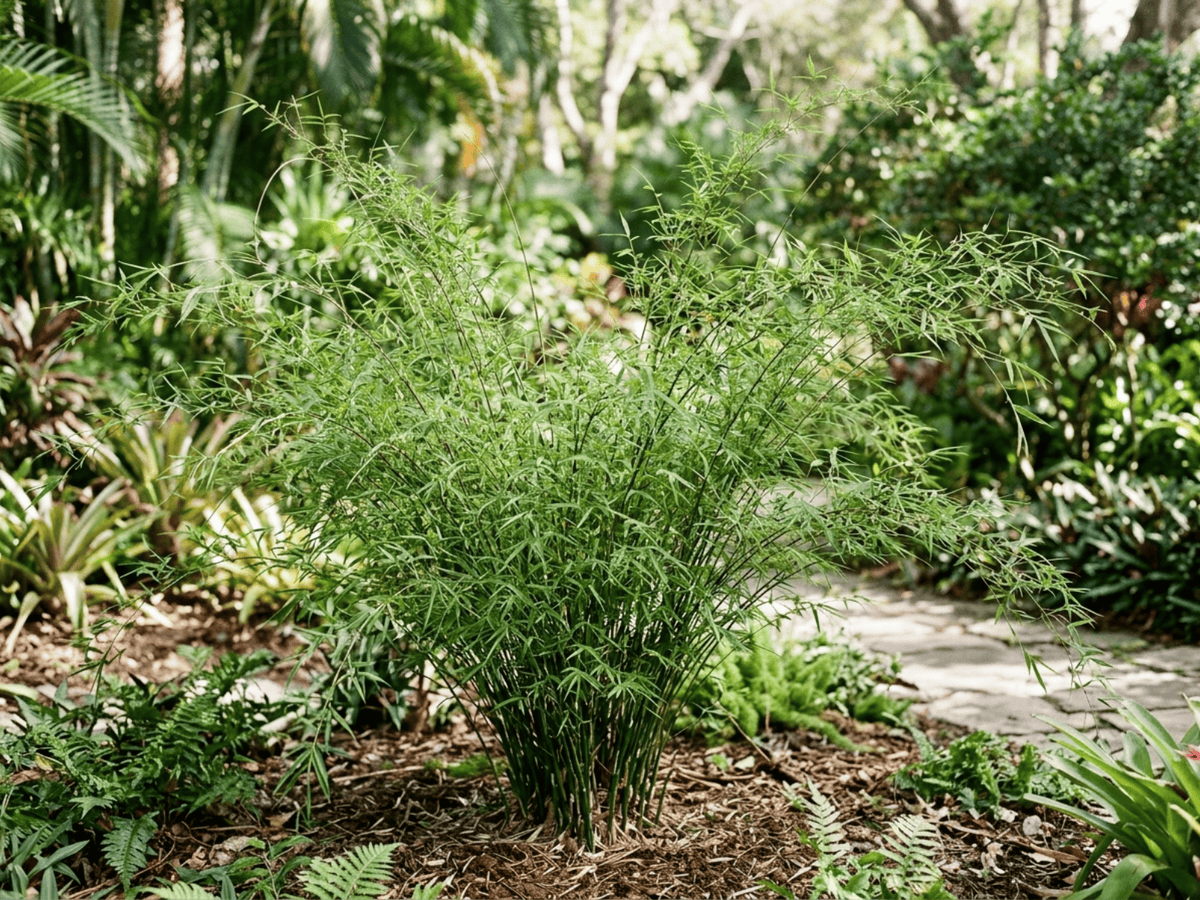
Plants with similar care
 Chinese AbeliaAbelia chinensis
 Fragrant AbeliaAbelia mosanensis
 Large-Flowered AbeliaAbelia uniflora
 Glossy AbeliaAbelia x grandiflora
Frequently asked questions
How often should I water Giant Timber Bamboo?
In summer, water about every 2 days; in winter, about every 14 days. Adjust for heat, pot size and drainage.
How much light does Giant Timber Bamboo need?
Full sun: 6+ hrs direct. Watch the leaves — scorching or stretching means the light needs adjusting.
Is Giant Timber Bamboo toxic to cats or dogs?
Pets Not reported (Dogs Not reported · Cats Not reported) Educational information, not medical or veterinary advice. If exposure is suspected, contact a doctor or veterinarian.
Is Giant Timber Bamboo easy to grow?
Yes — it is considered an easy, beginner-friendly plant.
Can Giant Timber Bamboo be grown indoors?
Yes, it adapts well to indoor growing given the right light.
YardMate
Identify any plant in seconds
Snap a photo — YardMate names the plant, diagnoses problems, and reminds you when to water.
Download on the App Store