 YardMate

Common Bamboo
Bambusa vulgaris
Easy · Beginner friendlyAbout Common Bamboo
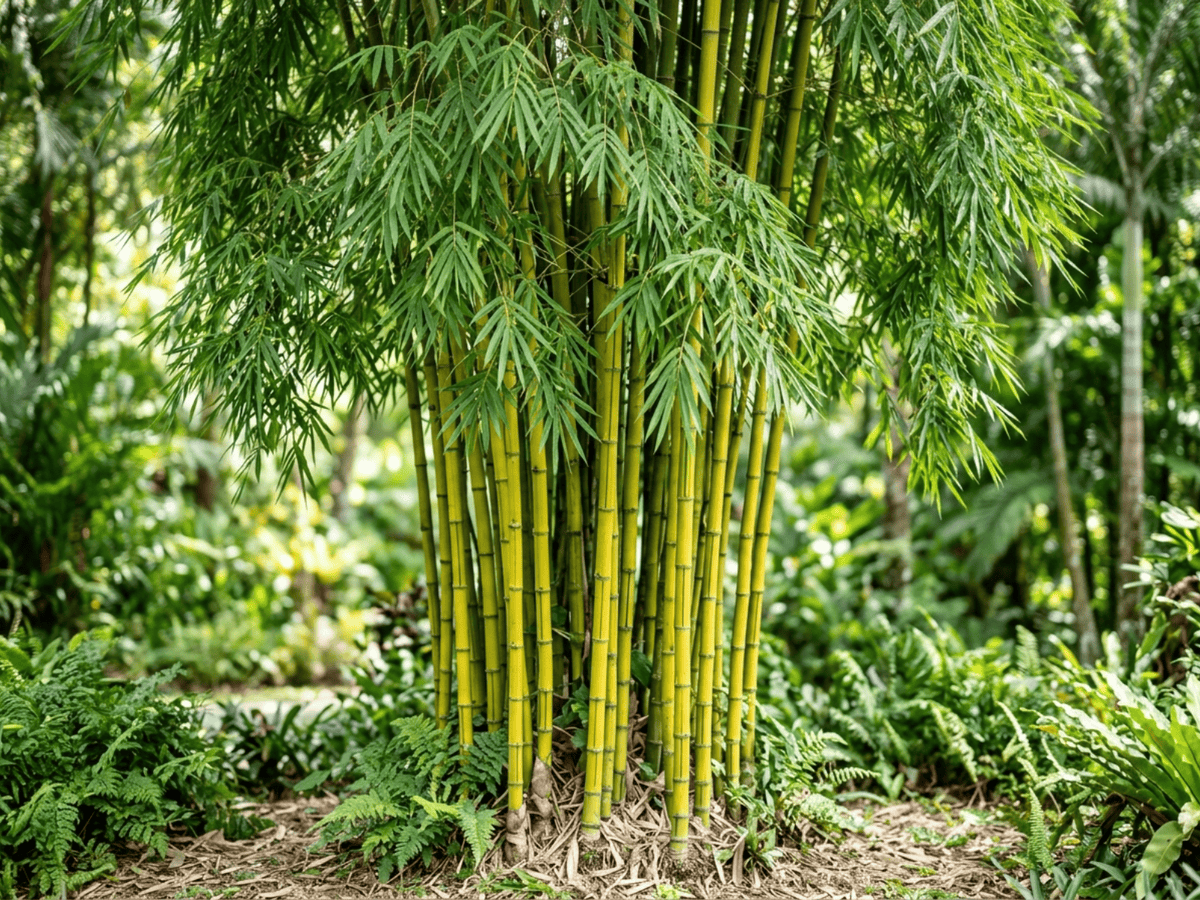
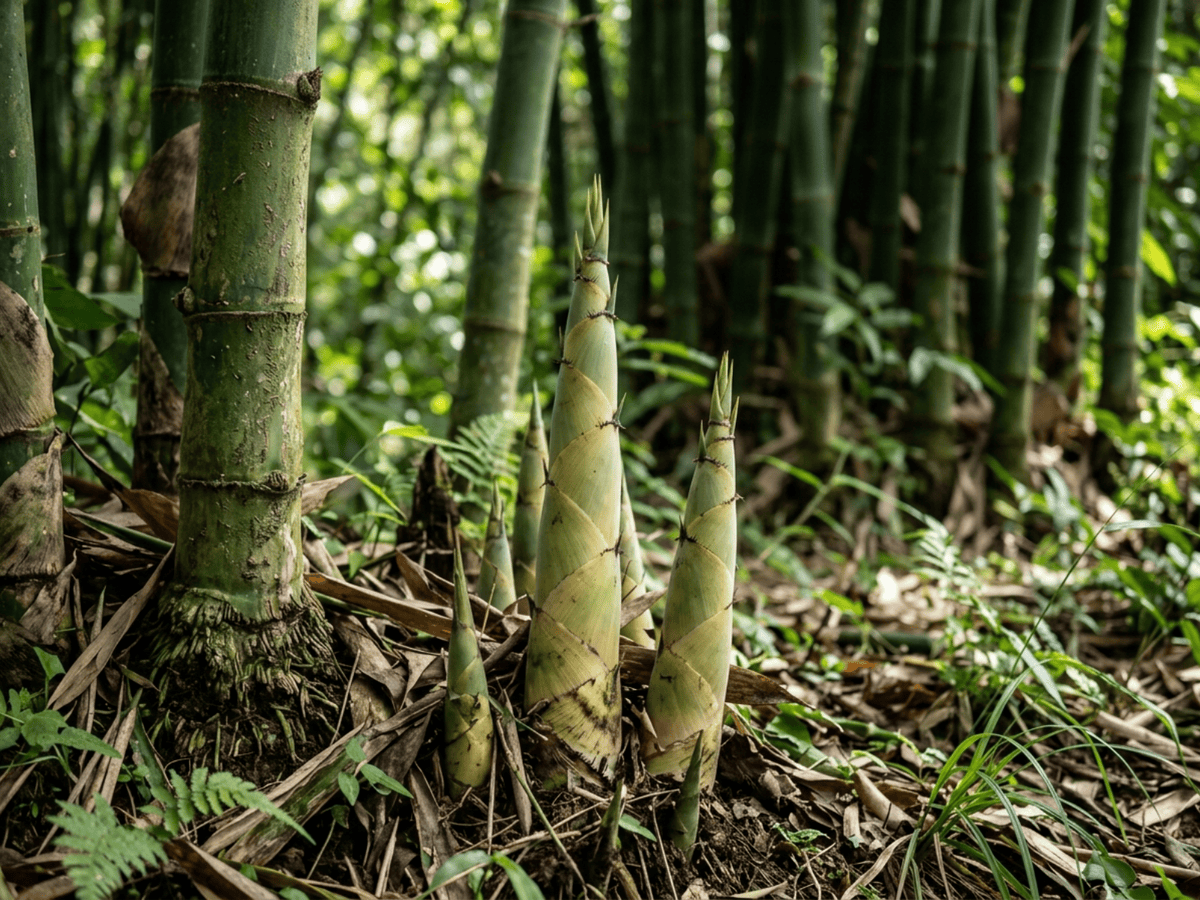
Bambusa vulgaris, the common bamboo, is the most widely cultivated bamboo in the tropics, believed to have originated in southern China and Southeast Asia. It forms large, open clumps of golden-yellow to green culms reaching 10–20 meters tall, with culm diameters up to 10 cm. The striking cultivar 'Vittata' features bright yellow culms with irregular green stripes and is widely planted as an ornamental. Unlike running bamboos, it is a clumping species that stays in defined clusters, making it more manageable in gardens. It grows extremely fast — up to 60 cm per day under ideal conditions — making it one of the fastest-growing plants on Earth. It thrives in tropical and subtropical climates with ample rainfall and is sensitive to prolonged frost. It is used worldwide for construction, scaffolding, furniture, paper pulp, and as a food source for its edible young shoots.
- Fast-growing
- Tropical
How to care for Common Bamboo
Watering
- Springevery 3 days
- Summerevery 2 days
- Fallevery 5 days
- Winterevery 14 days
Soil · Well-draining
- Top dressingPine bark mulch10%
- Main mixPotting soil + perlite 2:170%
- DrainageLECA / gravel20%
Never skip the drainage layer — standing water is the top cause of root rot.
FERTILIZER
Foliage Feed 24-8-16
Nitrogen leads so the plant spends its energy on dense green growth. Phosphorus and potassium follow just far enough to keep roots and stems up to speed.
- Nitrogen · Leaves
- Phosphorus · Roots + Blooms
- Potassium · Strength
- Springevery 45 days
- Summerevery 45 days
At a Glance
- NativeSoutheast Asia
- Height30–50 ft (9.1–15.2 m)
- Spread10–20 ft (3–6.1 m)
- Foliage colorGreen, Yellow, Variegated
- SoilLoamy, Moisture-retentive, Rich
- LocationsYard
Bloom time
BLOOM CYCLE
Peak bloom
May
Blooms rarely and unpredictably, often after decades; flowering may weaken the plant
Fragrance
NO FRAGRANCE
No notable fragrance.
Toxicity
Humans Slight
taxiphyllin (cyanogenic glycoside, in raw shoots)
Slight
- Shoot
- Ingestion
EXPOSURE Eating shoot.
EFFECT Raw bamboo shoots contain taxiphyllin (cyanogenic glycoside) and must be boiled before consumption.
NOTE Documented concern for humans: Raw bamboo shoots contain taxiphyllin (cyanogenic glycoside) and must be boiled before consumption.
Safe
EXPOSURE No exposure route is reported.
EFFECT Not listed as toxic and mechanical GI irritation possible from swallowed pieces.
NOTE Listed as non-toxic for dogs; avoid eating ornamental plants unless confirmed edible.
Safe
EXPOSURE No exposure route is reported.
EFFECT Not listed as toxic.
NOTE Listed as non-toxic for cats; avoid eating ornamental plants unless confirmed edible.
Educational information, not medical or veterinary advice. If exposure is suspected, contact a doctor or veterinarian.
DISTRIBUTION


- Native
- Introduced
- Southeast Asia
History
Bambusa vulgaris is one of the most widely distributed and cultivated bamboos in the tropics and subtropics worldwide. Its precise wild origin is debated — molecular evidence suggests a likely origin in southern China, Indochina, or Malesia, but the species has been carried, cultivated, and naturalized so thoroughly for so long that no truly wild populations remain clearly identifiable. By the 19th century B. vulgaris had been introduced throughout tropical Asia, all of Africa, the Caribbean, tropical Americas, and Oceania, becoming one of the characteristic economic bamboos of tropical agriculture and rural construction. It is a pachymorph (clumping) bamboo, forming tight clumps of culms 10-20 meters tall and up to 10 cm diameter rather than the aggressively running rhizome mats of Asian temperate bamboos (Phyllostachys, etc.), making it somewhat easier to contain — though it can still be vigorous in suitable climates.
Three principal ornamental forms exist: the normal green form, var. vittata (bright yellow-gold culms with irregular green stripes — the most widely planted ornamental bamboo in the tropical world), and var. wamin (short-jointed "Buddha's belly" form with swollen lower internodes). The culms are an important construction material across tropical Asia, Africa, and Latin America. In many Asian cultures, bamboo symbolizes strength through flexibility — it bends in storms but rarely breaks.
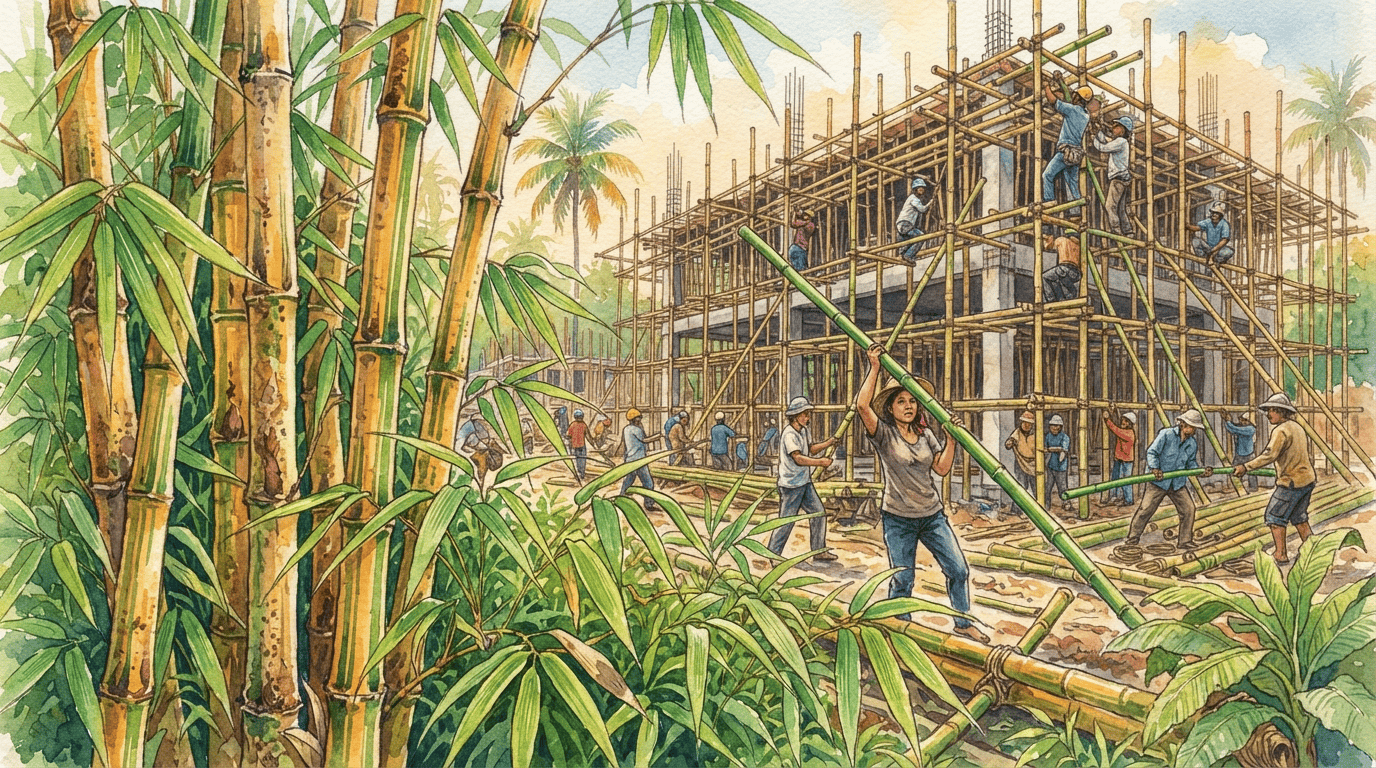
The species has been used in construction for thousands of years; bamboo scaffolding is still preferred over steel in many parts of Asia for its strength-to-weight ratio. Thomas Edison used carbonized bamboo filaments in his early light bulbs. Modern research focuses on bamboo's remarkable carbon sequestration rate — it absorbs up to four times more carbon dioxide than equivalent stands of hardwood trees.
Symbolism & meaning
What It Symbolizes
Common Bamboo bends without breaking, an Asian emblem of flexibility and the resilient mind that survives storm after storm by yielding rather than resisting. Its astonishing growth and thousand uses — from scaffolding to flutes to food — make it also a symbol of prosperity, abundance rooted in adaptability. In countless gardens and proverbs it is the teacher who shows that strength can look very much like grace.
- Flexibility — Bends without breaking, symbolizing adaptability and resilience in adversity
- Prosperity — Fast growth and abundant utility make it a symbol of abundance and success
Where the Name Comes From
Bambusa derives from the Malay word 'bambu.' Vulgaris is Latin for 'common,' reflecting its widespread cultivation.
Uses & Fun Facts
- Golden culms harvested for construction, scaffolding, and furniture
- Young shoots cooked as staple vegetable across tropical Asia
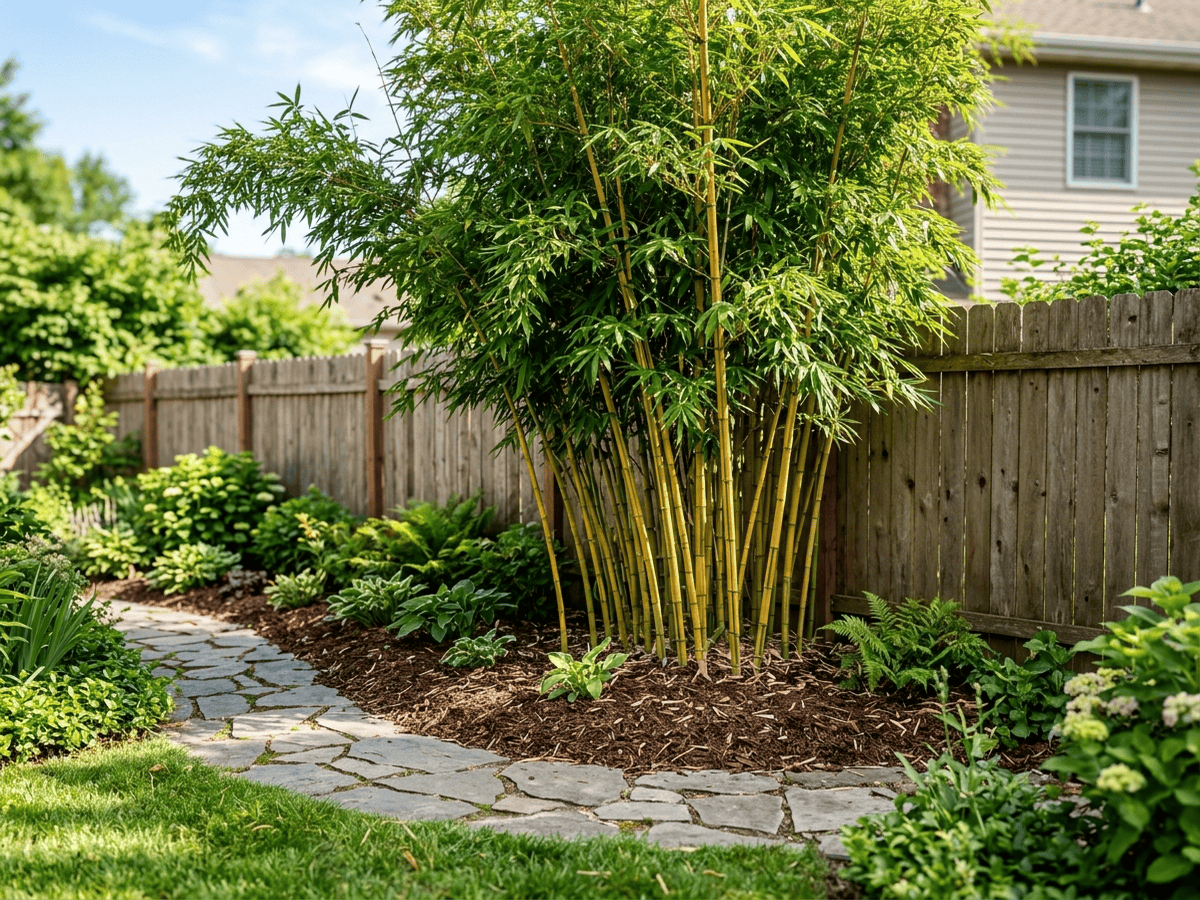
- Tall clumps form dense privacy screens in tropical yards
- Striking yellow-green canes add tropical architectural drama
Related plants
More Bambusa plants
Plants with similar care
 Chinese AbeliaAbelia chinensis
 Fragrant AbeliaAbelia mosanensis
 Large-Flowered AbeliaAbelia uniflora
 Glossy AbeliaAbelia x grandiflora
Frequently asked questions
How often should I water Common Bamboo?
In summer, water about every 2 days; in winter, about every 14 days. Adjust for heat, pot size and drainage.
How much light does Common Bamboo need?
Full sun: 6+ hrs direct. Watch the leaves — scorching or stretching means the light needs adjusting.
Is Common Bamboo toxic to cats or dogs?
Pets Safe (Dogs Safe · Cats Safe) Educational information, not medical or veterinary advice. If exposure is suspected, contact a doctor or veterinarian.
Is Common Bamboo easy to grow?
Yes — it is considered an easy, beginner-friendly plant.
When does Common Bamboo bloom?
It typically blooms May in the Northern Hemisphere.
YardMate
Identify any plant in seconds
Snap a photo — YardMate names the plant, diagnoses problems, and reminds you when to water.
Download on the App Store