 YardMate
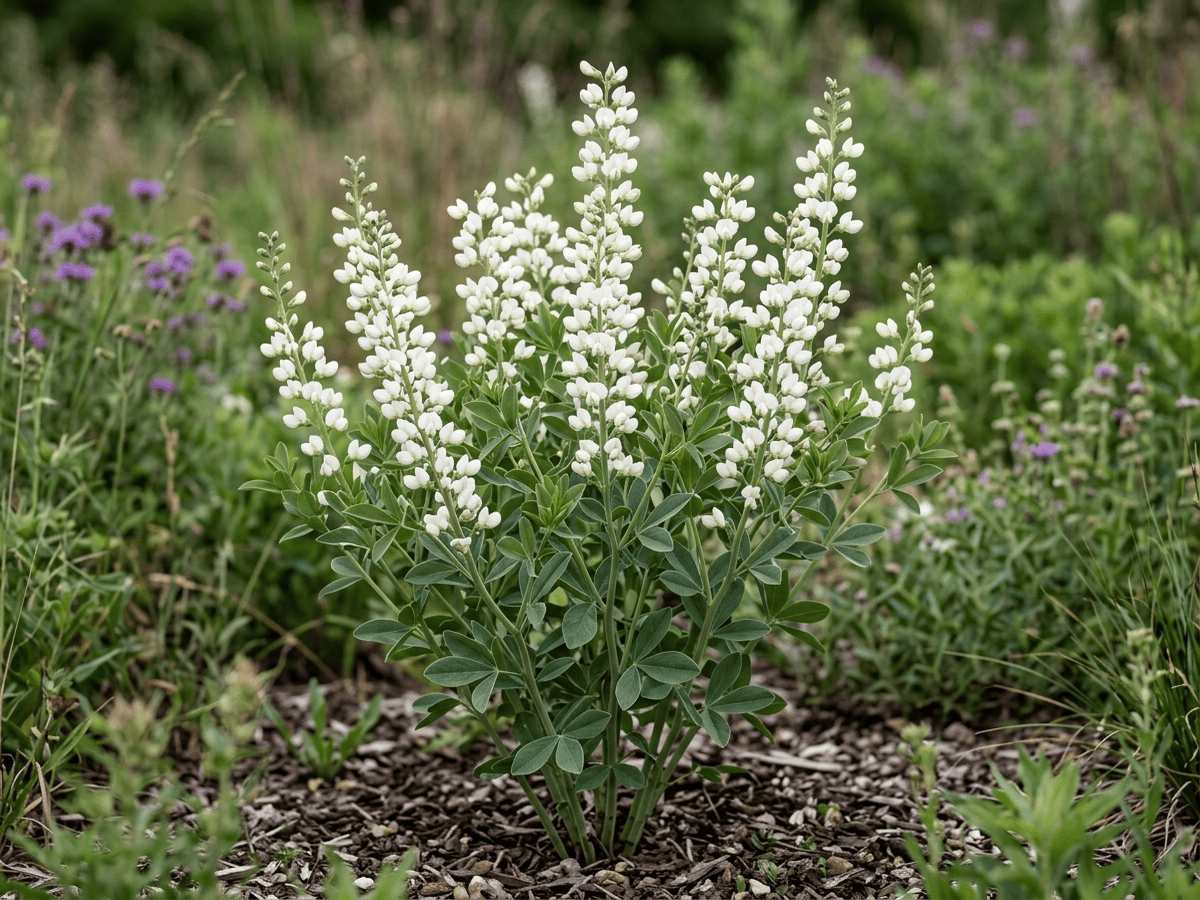


Thick-Pod White Wild Indigo
Baptisia alba
Easy · Beginner friendlyAbout Thick-Pod White Wild Indigo
White Wild Indigo is a southeastern US native perennial producing tall spires of pure white pea flowers on dark purple-black stems in late spring. Growing 3 to 5 feet tall and wide, it forms a shrublike clump with blue-green cloverlike foliage that persists through summer. A premier American native perennial for pollinator gardens, especially loved by native bumblebees and duskywing butterflies.
- Drought-tolerant
- Deer-resistant
- Native
- Pollinator-friendly
How to care for Thick-Pod White Wild Indigo
Watering
- Springevery 7 days
- Summerevery 5 days
- Fallevery 10 days
- Winterevery 21 days
Soil · Well-draining
- Top dressingPine bark mulch10%
- Main mixPotting soil + perlite 2:170%
- DrainageLECA / gravel20%
Never skip the drainage layer — standing water is the top cause of root rot.
FERTILIZER
This plant needs little to no feeding.
At a Glance
- NativeNorth America
- Height3–4 ft (0.9–1.2 m)
- Spread2–3 ft (0.6–0.9 m)
- Flower colorWhite
- Foliage colorBlue-green, Green
- Fruit colorBlack
- SoilWell-drained, Sandy, Loamy
- LocationsYard
Bloom time
BLOOM CYCLE
Peak bloom
Mar–May
Tall white flower spires on dark stems in late spring
Fragrance
LIGHT FRAGRANCE
The flowers have a very lightly pea-scented scent.
Toxicity
Humans Moderate · Pets Moderate
cytisine and quinolizidine alkaloids
Moderate
- Seed
- Root
- Ingestion
EXPOSURE Eating seeds and roots.
EFFECT Nausea, vomiting, and diarrhea.
NOTE Seeds and roots contain toxic alkaloids; ingestion of pods by livestock has been reported to cause poisoning.
Moderate
- Seed
- Root
- Ingestion
EXPOSURE Eating seeds and roots.
EFFECT Vomiting, diarrhea, and weakness.
NOTE Seeds and roots contain toxic alkaloids; ingestion of pods by livestock has been reported to cause poisoning.
Moderate
- Seed
- Root
- Ingestion
EXPOSURE Eating seeds and roots.
EFFECT Vomiting, diarrhea, and weakness.
NOTE Seeds and roots contain toxic alkaloids; ingestion of pods by livestock has been reported to cause poisoning.
Educational information, not medical or veterinary advice. If exposure is suspected, contact a doctor or veterinarian.
DISTRIBUTION


- Native
- North America
History

Baptisia alba inhabits moist to dry prairies, savannas, and glades from New Jersey south to Florida and west to Texas. Linnaeus described it as Crotalaria alba in 1753, and the genus Baptisia was later established by Ventenat in 1808. Cherokee and Creek peoples used small amounts of the bitter root to treat toothache, inflammation, and as a purgative.
Colonial dyers occasionally used it like B. tinctoria for blue coloring, though with poorer results. It entered Victorian perennial borders through trade between American and European nurseries in the mid-1800s.
Modern breeding, including Jim Ault's 'Prairieblues' series from Chicago Botanic Garden, has crossed it with B. australis and B. sphaerocarpa to produce hybrids such as 'Twilite Prairieblues' and 'Solar Flare'. Long-lived plants develop deep taproots that can sustain the plant for 50 years or more. Increasingly grown in American native plant gardens as a structural alternative to non-native shrubs.
Symbolism & meaning
What It Symbolizes
Thick-Pod White Wild Indigo makes visible Quiet strength — a slow-growing prairie native whose taproot can sustain the same plant for decades, surviving drought and fire. It carries the Southern grace of the Southeastern grasslands, lifting white spires above the grasses each spring. Each plant is a long, patient pact with its piece of ground.
- Quiet strength — long-lived taproot sustains plant for decades
- Southern grace — signature Southeastern prairie plant
Where the Name Comes From
'alba' from Latin means white, for the pristine flower color.
Uses & Fun Facts
- White lupine-like spikes rise above blue-green native foliage
- Spring blooms attract bumblebees and host duskywing butterflies
- Stately stems and dark seedpods used in arrangements
Related plants
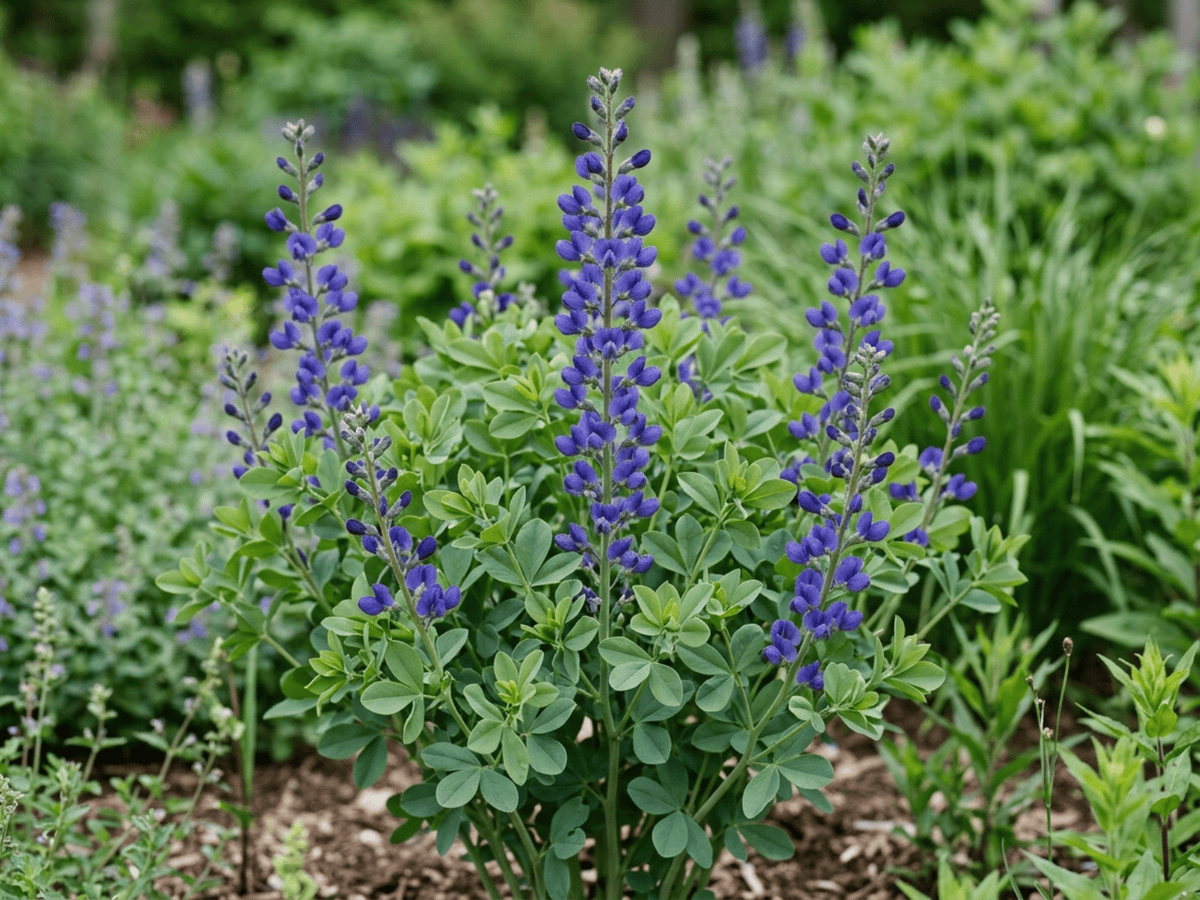
More Baptisia plants

Plants with similar care
 Chinese AbeliaAbelia chinensis
 Fragrant AbeliaAbelia mosanensis
 Large-Flowered AbeliaAbelia uniflora
 Glossy AbeliaAbelia x grandiflora
Frequently asked questions
How often should I water Thick-Pod White Wild Indigo?
In summer, water about every 5 days; in winter, about every 21 days. Adjust for heat, pot size and drainage.
How much light does Thick-Pod White Wild Indigo need?
Full sun: 6+ hrs direct. Watch the leaves — scorching or stretching means the light needs adjusting.
Is Thick-Pod White Wild Indigo toxic to cats or dogs?
Pets Moderate (Dogs Moderate · Cats Moderate) Educational information, not medical or veterinary advice. If exposure is suspected, contact a doctor or veterinarian.
Is Thick-Pod White Wild Indigo easy to grow?
Yes — it is considered an easy, beginner-friendly plant.
When does Thick-Pod White Wild Indigo bloom?
It typically blooms Mar–May in the Northern Hemisphere.
YardMate
Identify any plant in seconds
Snap a photo — YardMate names the plant, diagnoses problems, and reminds you when to water.
Download on the App Store