 YardMate

Tall Blue Wild Indigo
Baptisia australis
Easy · Beginner friendlyAbout Tall Blue Wild Indigo
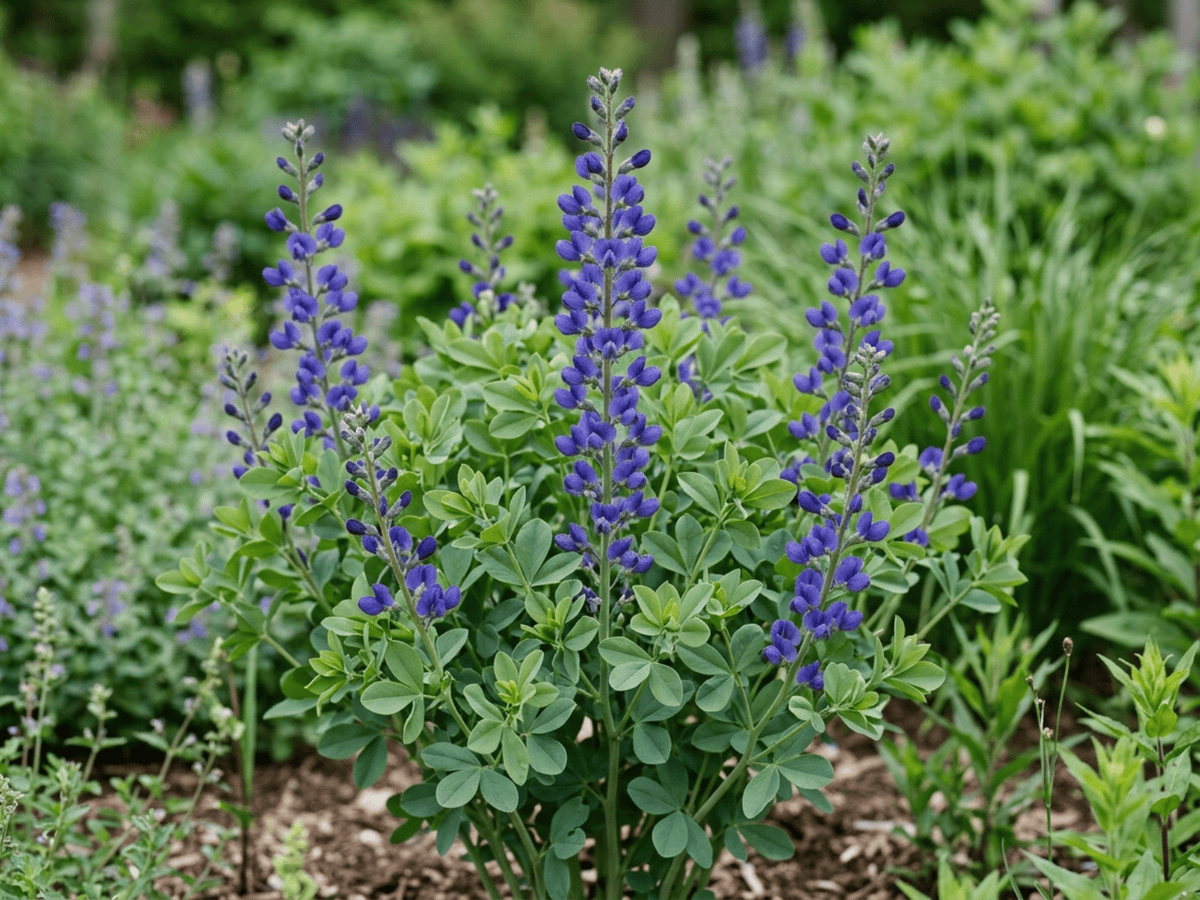
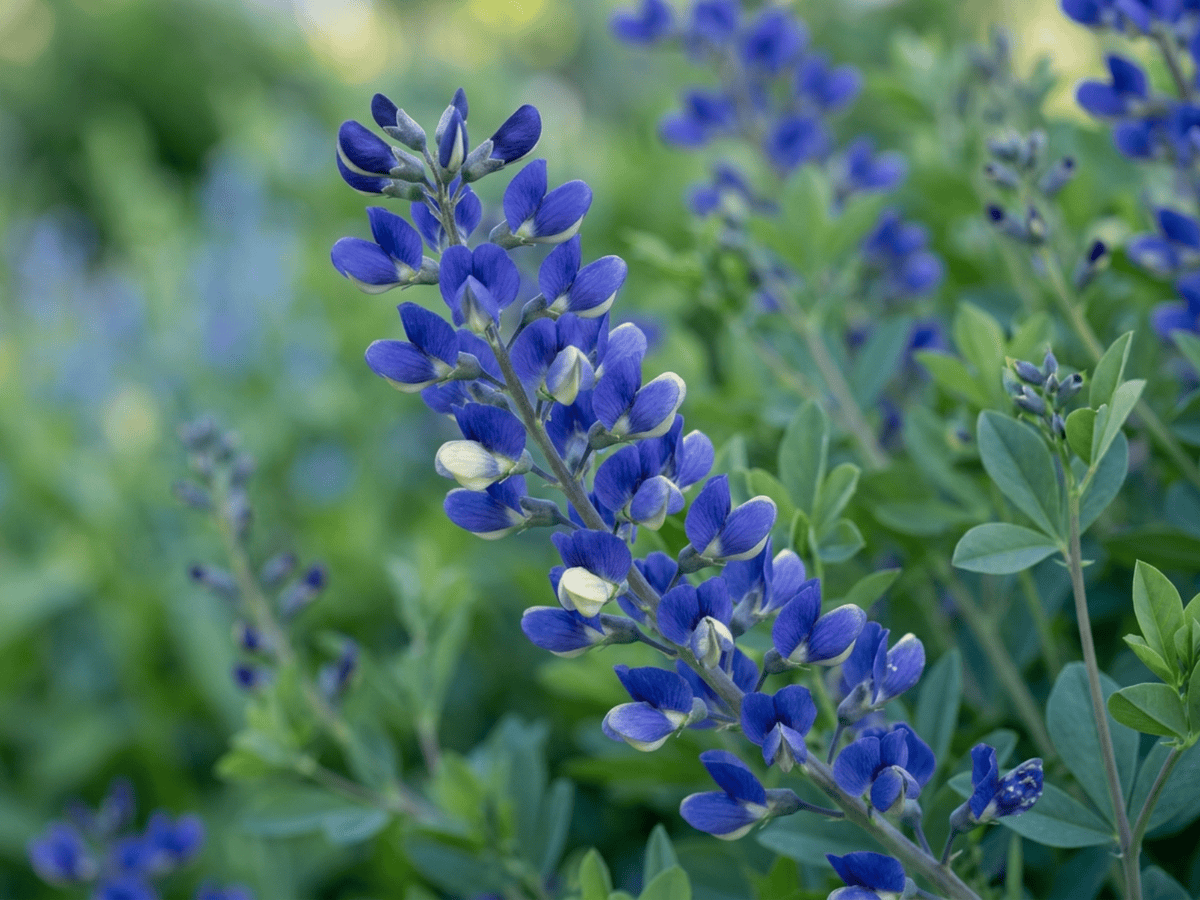
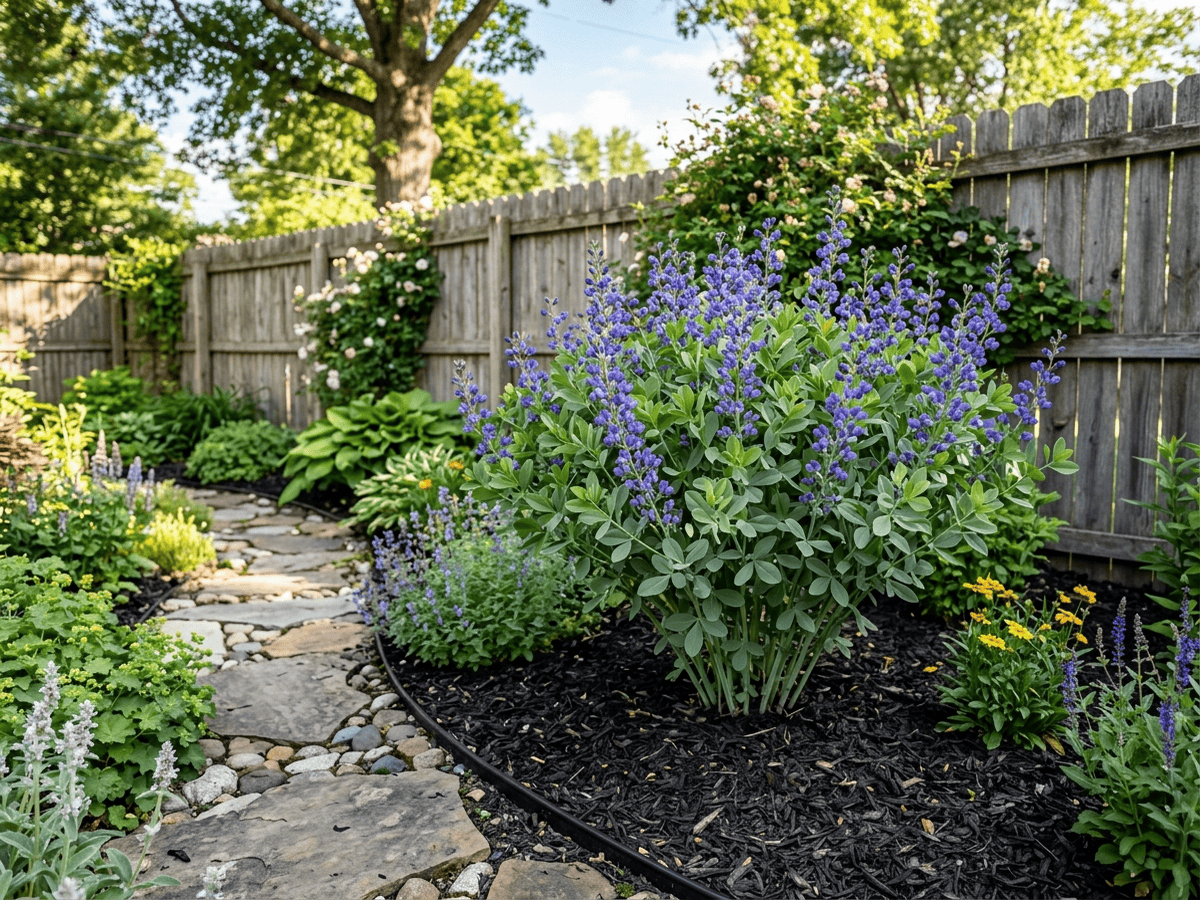
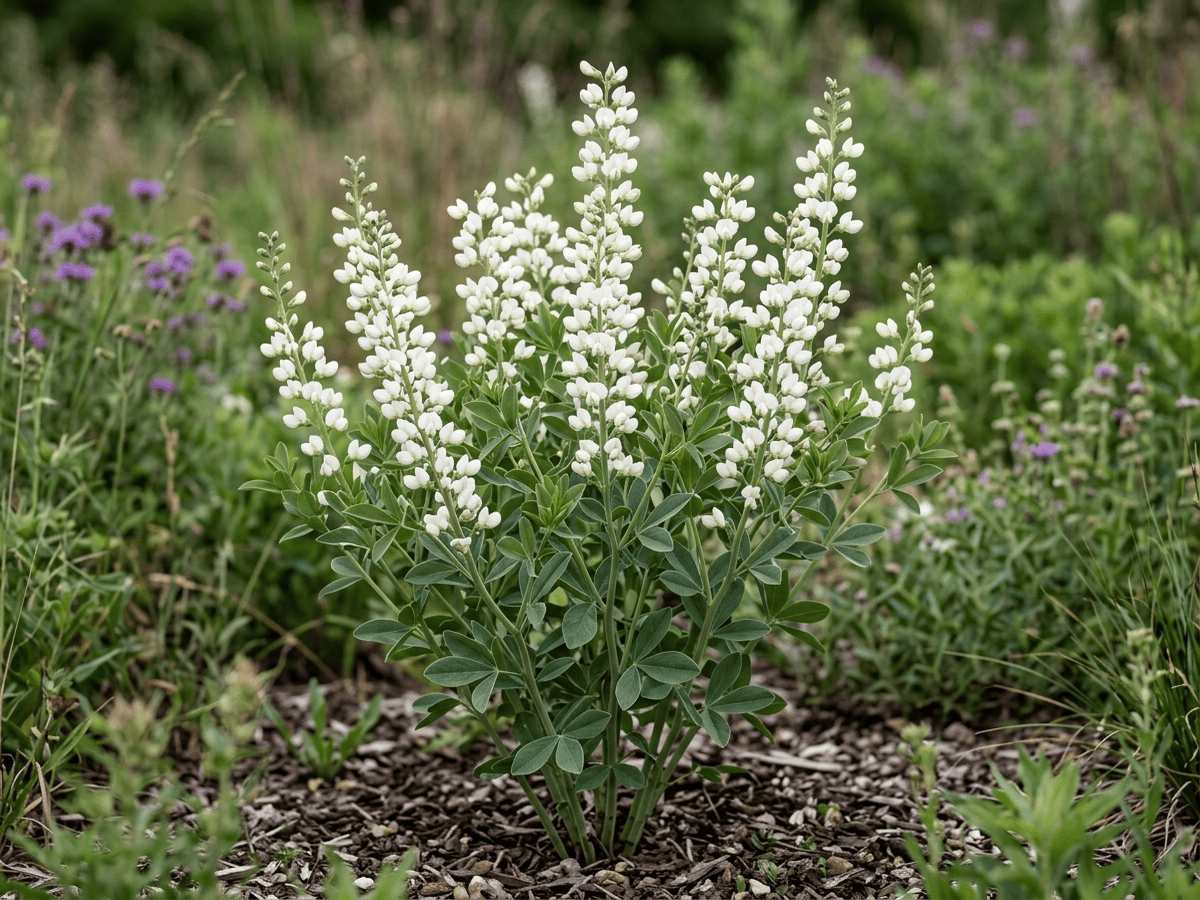
Baptisia australis, blue false indigo, is a stately perennial native to eastern and central North America. In late spring, it produces elegant spires of lupine-like indigo-blue flowers above attractive blue-green trifoliate foliage. The plant forms a large, shrub-like mound reaching 90 to 120 cm tall and equally wide, serving as a bold structural element in perennial borders. After flowering, ornamental black seed pods develop that rattle in the wind and are popular in dried arrangements. Baptisia is a nitrogen-fixing legume, enriching the soil through its symbiotic relationship with rhizobium bacteria. It develops a massive deep root system that makes mature plants extremely drought-tolerant but nearly impossible to transplant. Young plants are slow to establish, often taking three years to reach full bloom potential. Once settled, however, Baptisia is virtually indestructible — long-lived specimens can persist for decades with no care. It is deer-resistant and pest-free.
- Deer-resistant
- Native
How to care for Tall Blue Wild Indigo
Watering
- Springevery 7 days
- Summerevery 5 days
- Fallevery 14 days
- Winterevery 30 days
Soil · Well-draining
- Top dressingPine bark mulch10%
- Main mixPotting soil + perlite 2:170%
- DrainageLECA / gravel20%
Never skip the drainage layer — standing water is the top cause of root rot.
FERTILIZER
- Springevery 60 days
At a Glance
- NativeNorth America
- Height3–4 ft (0.9–1.2 m)
- Spread3–4 ft (0.9–1.2 m)
- Flower colorBlue, Purple
- Foliage colorGreen, Blue-green
- SoilLoamy, Well-drained, Sandy
- LocationsYard
Bloom time
BLOOM CYCLE
Peak bloom
May–Jun
Leave seed pods for winter interest and dried arrangements; takes 2-3 years to reach full bloom potential
Fragrance
NO FRAGRANCE
No notable fragrance.
Toxicity
Humans Slight · Pets Slight
quinolizidine alkaloids
Slight
- Seed
- Leaf
- Ingestion
EXPOSURE Eating seeds and leaves.
EFFECT Contains quinolizidine alkaloids and mild GI upset if ingested.
NOTE Documented concern for humans: Contains quinolizidine alkaloids and mild GI upset if ingested.
Slight
- Seed
- Leaf
- Ingestion
EXPOSURE Eating seeds and leaves.
EFFECT Vomiting, diarrhea.
NOTE Not prominently listed by ASPCA. Low to moderate concern; most Fabaceae seeds are at least slightly toxic.
Slight
- Seed
- Leaf
- Ingestion
EXPOSURE Eating seeds and leaves.
EFFECT Same as dogs.
NOTE Not prominently listed by ASPCA. Low to moderate concern; most Fabaceae seeds are at least slightly toxic.
Educational information, not medical or veterinary advice. If exposure is suspected, contact a doctor or veterinarian.
DISTRIBUTION


- Native
- Introduced
- North America
History
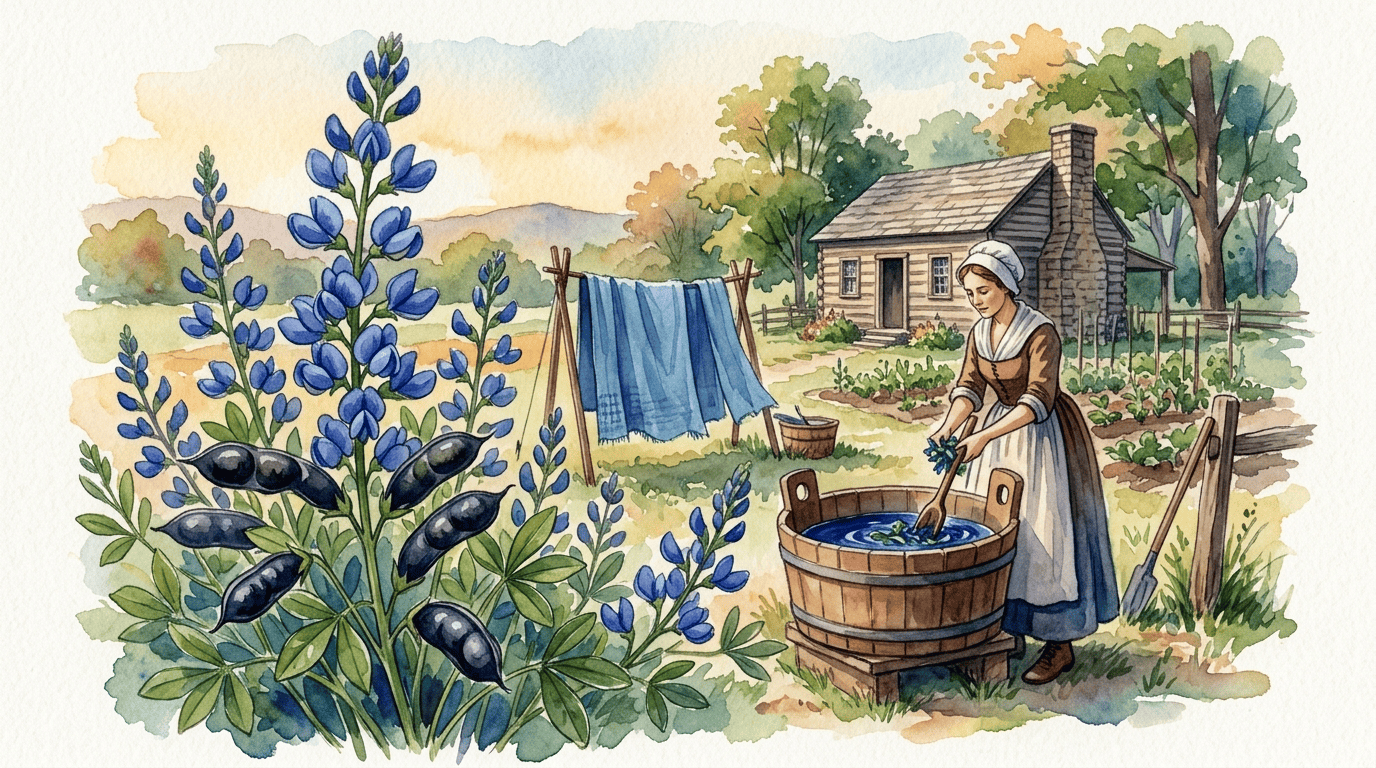
Baptisia australis is native to the central and eastern United States, from Pennsylvania west to Nebraska and south to Texas, growing in open woodland, prairie, and streamside habitats. It produces upright 90-150 cm flowering stems bearing pea-family racemes of rich indigo-blue (occasionally violet) flowers in late spring and early summer, followed by distinctive inflated black seed pods that rattle audibly in autumn and winter wind — the rattling dry seedpods have given the plant the alternative folk name "rattleweed." The common name "false indigo" reflects its colonial and early American use as a textile dye: when true indigo (Indigofera tinctoria) from India and the Caribbean was unavailable or prohibitively expensive during wartime blockades, particularly during the American Revolution and the Civil War, colonial and confederate textile makers fermented B. australis leaves to extract a similar blue dye. The yield and quality were much inferior to true indigo but the substitute was workable for home-textile purposes.
The plant has a deep taproot and is long-lived and deer-resistant, but slow to establish — new plantings often look unimpressive for 2-3 years before reaching their mature form. Its strong architectural habit, pea-flower bloom, and black winter seed pods made it the Perennial Plant Association Plant of the Year in 2010, a recognition that drove its late-2010s and 2020s boom in native-plant horticulture. Before synthetic dyes, colonists used Baptisia australis as a substitute for true indigo (Indigofera tinctoria) — hence 'false indigo.'
The blue dye it produced was inferior but freely available to those who could not afford imported indigo. Native Americans used root preparations medicinally, though the plant's toxicity made dosing dangerous. The genus name comes from the Greek 'baptein' (to dye), directly referencing this dyeing tradition. Today it is celebrated as one of the finest native perennials for sustainable landscaping.
Symbolism & meaning
What It Symbolizes
Tall Blue Wild Indigo asks for patience before it gives it full reward. Slow to settle, it eventually forms a deep-rooted prairie clump with cool blue flowers and a presence that resists heat, drought, and browsing. Its meaning is earned protection: a plant that becomes strong by taking its time.
- Protection — Its dense mounding habit and toxicity symbolize guarding and shelter
- Patience — Slow to establish but immensely rewarding, teaching the value of waiting
Where the Name Comes From
Baptisia from Greek 'baptein' meaning 'to dye,' as the plant was used as an indigo dye substitute. Australis means 'southern,' referring to its range in the southeastern United States.
Uses & Fun Facts
- Lupine-like indigo flower spires anchor late-spring borders
- Blue blooms feed bumblebees and native long-tongued bees
- Rattling seed pods provide winter interest and bird forage
Related plants
More Baptisia plants

Plants with similar care
 Chinese AbeliaAbelia chinensis
 Fragrant AbeliaAbelia mosanensis
 Large-Flowered AbeliaAbelia uniflora
 Glossy AbeliaAbelia x grandiflora
Frequently asked questions
How often should I water Tall Blue Wild Indigo?
In summer, water about every 5 days; in winter, about every 30 days. Adjust for heat, pot size and drainage.
How much light does Tall Blue Wild Indigo need?
Full sun: 6+ hrs direct. Watch the leaves — scorching or stretching means the light needs adjusting.
Is Tall Blue Wild Indigo toxic to cats or dogs?
Pets Slight (Dogs Slight · Cats Slight) Educational information, not medical or veterinary advice. If exposure is suspected, contact a doctor or veterinarian.
Is Tall Blue Wild Indigo easy to grow?
Yes — it is considered an easy, beginner-friendly plant.
When does Tall Blue Wild Indigo bloom?
It typically blooms May–Jun in the Northern Hemisphere.
YardMate
Identify any plant in seconds
Snap a photo — YardMate names the plant, diagnoses problems, and reminds you when to water.
Download on the App Store