 YardMate


Korean Boxwood
Buxus sinica var. insularis
Easy · Beginner friendlyAbout Korean Boxwood
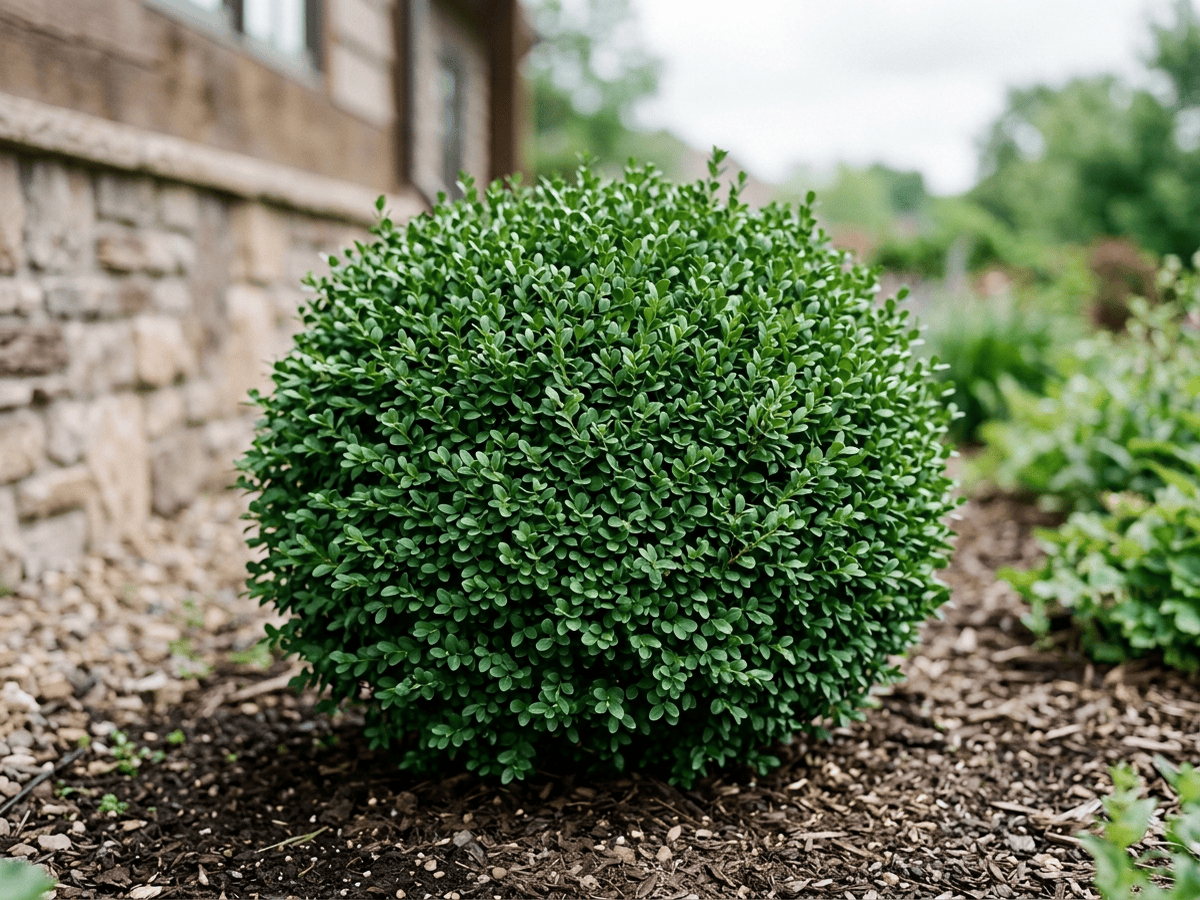
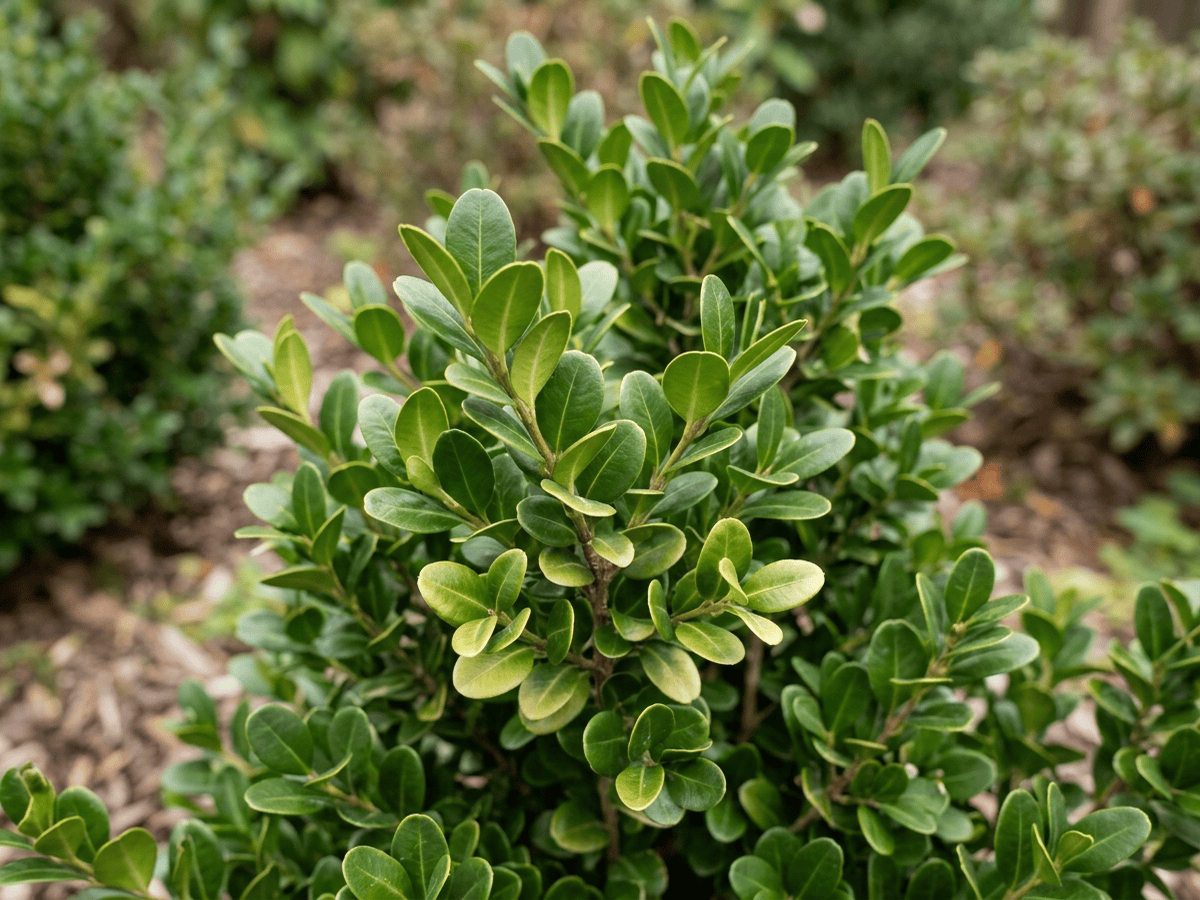
Korean Boxwood is a compact evergreen shrub native to Korea, growing 2-4 feet tall with a naturally rounded habit and small glossy dark green leaves. It is considered the most cold-hardy boxwood, surviving temperatures to -25°F, making it the standard choice for northern gardens where other boxwoods fail. The dense branching and fine texture make it ideal for low hedges, edging, and foundation plantings. Less susceptible to boxwood blight than English boxwood.
- Cold-hardy
- Low-maintenance
- Evergreen
- Compact
How to care for Korean Boxwood
Watering
- Springevery 7 days
- Summerevery 5 days
- Fallevery 10 days
- Winterevery 21 days
Soil · Well-draining
- Top dressingPine bark mulch10%
- Main mixPotting soil + perlite 2:170%
- DrainageLECA / gravel20%
Never skip the drainage layer — standing water is the top cause of root rot.
FERTILIZER
Balanced Feed 14-14-14
An even feed covers all three needs at once, keeping leaves, roots and blooms moving together with nothing pushed out of balance.
- Nitrogen · Leaves
- Phosphorus · Roots + Blooms
- Potassium · Strength
- Springevery 30 days
At a Glance
- NativeEast Asia
- Height2–4 ft (0.6–1.2 m)
- Spread2–4 ft (0.6–1.2 m)
- Flower colorYellow, Green
- Foliage colorGreen, Bronze
- SoilLoamy, Well-drained, Neutral
- LocationsYard
Bloom time
BLOOM CYCLE
Peak bloom
Jun–Aug
Inconspicuous; grown for evergreen structure
Fragrance
LIGHT FRAGRANCE
The foliage has a mild musky boxwood scent.
Toxicity
Humans Toxic · Pets Toxic
buxine and cyclobuxine
Toxic
- Leaf
- Stem
- Ingestion
EXPOSURE Eating leaves and stems.
EFFECT GI irritation, vomiting, diarrhea from buxine alkaloids.
NOTE Documented concern for humans: GI irritation, vomiting, diarrhea from buxine alkaloids.
Toxic
- Leaf
- Stem
- Ingestion
EXPOSURE Eating leaves and stems.
EFFECT Vomiting, diarrhea, weakness.
NOTE ASPCA toxic like all Buxus.
Toxic
- Leaf
- Stem
- Ingestion
EXPOSURE Eating leaves and stems.
EFFECT Vomiting, diarrhea, weakness.
NOTE ASPCA toxic like all Buxus.
Educational information, not medical or veterinary advice. If exposure is suspected, contact a doctor or veterinarian.
DISTRIBUTION


- Native
- East Asia
History

Buxus sinica var. insularis (synonyms: B. microphylla var. koreana, B. koreana) is native to the Korean Peninsula, offshore Korean islands, and adjacent northeastern China. Modern Chinese botanists T.T. Yu and P.C. Chia have clarified that this taxon belongs with B. sinica rather than B. microphylla. The variety is the most cold-hardy of all boxwoods, surviving to zone 4 and tolerating sub-zero winter temperatures that kill English box.
Introduced to North American cultivation around 1919 through the USDA's collections in Korea, it became the key breeding parent for cold-hardy boxwood cultivars developed at Sheridan Nurseries in Ontario, Canada, beginning in the 1960s—'Green Mountain', 'Green Velvet', 'Green Gem', and 'Green Mound' (collectively the 'Green' series) are all hybrids of B. sinica var. insularis and B. sempervirens, combining the hardiness of the Korean parent with the richer green color and upright habit of the English parent. These cultivars have revolutionized boxwood use in cold-winter landscapes from New England to the Upper Midwest. Native to the mountains of Korea, where it endures harsh continental winters.
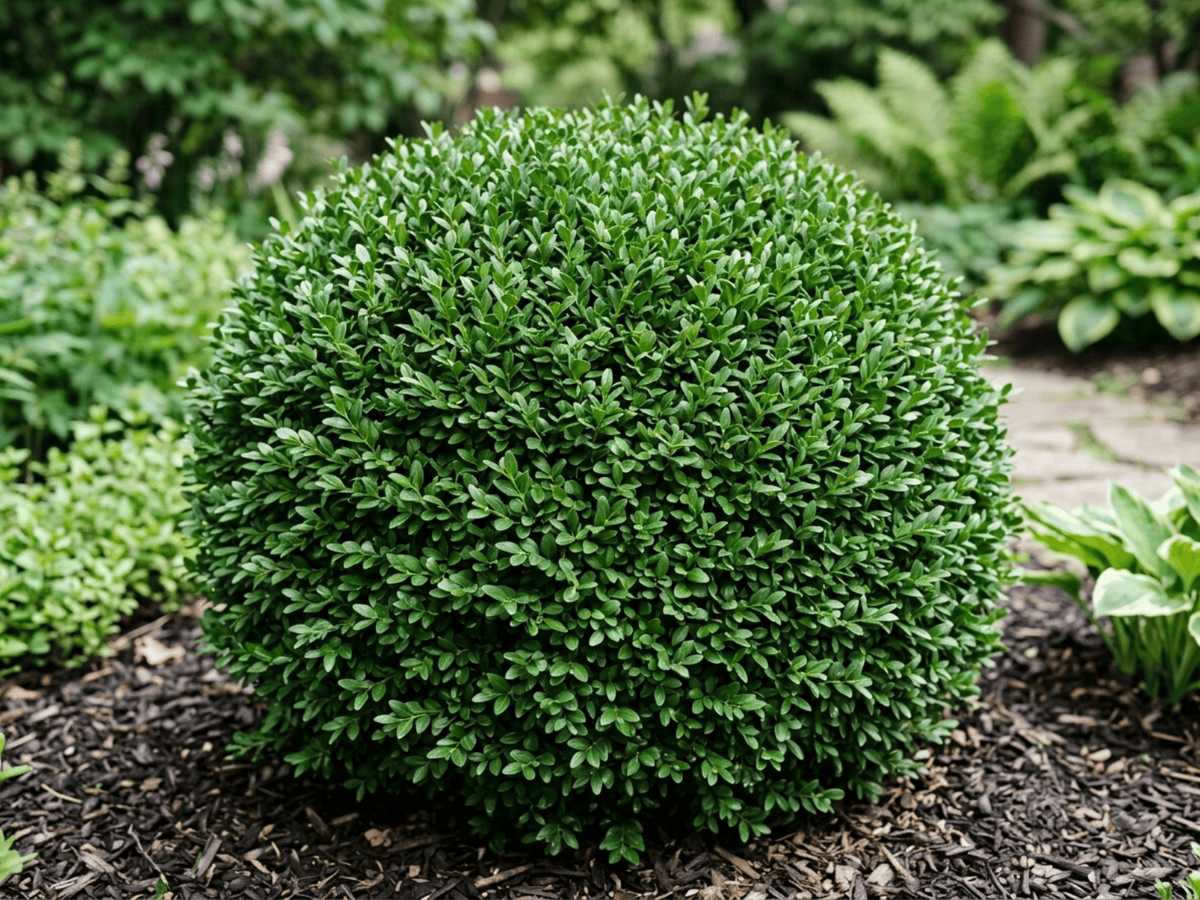
The cultivar 'Wintergreen' was selected at the US National Arboretum for its exceptional winter color retention and cold hardiness. 'Justin Brouwers' is valued for its naturally dense dome shape. Korean boxwood filled a critical gap in northern gardens where gardeners wanted formal boxwood hedges but couldn't grow the less hardy English or Japanese species.
Symbolism & meaning
What It Symbolizes
Korean Boxwood expresses endurance, withstanding winters that would shatter every other boxwood in the genus. By surviving where its cousins fail, it carries the tradition of formal hedging into the cold gardens of the north, allowing parterres and knot gardens far beyond their ancestral climates. This is the boxwood of stubborn fidelity to old garden forms, a green architecture that refuses to surrender to frost.
- Endurance — survives the harshest winters of any boxwood
- Tradition — enables formal garden design in cold climates
Where the Name Comes From
'Sinica' means 'of China' (the broader species range); 'insularis' means 'of the island', referring to its Korean peninsula habitat.
Uses & Fun Facts
- Cold-hardy evergreen foliage clips into low hedges, edging, and formal knots
- Korean Boxwood sheared into clipped hedges and privacy screens
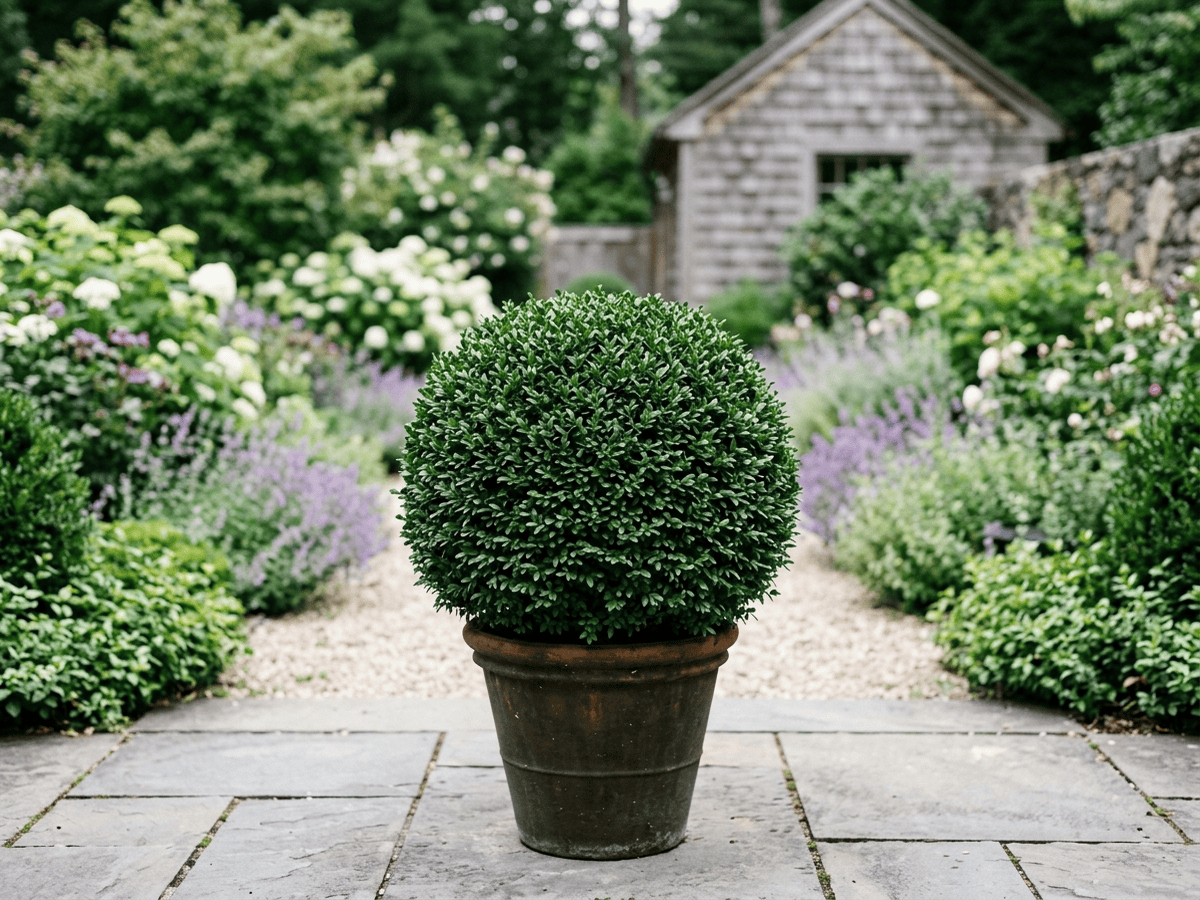
- Small leaves clip cleanly for courtyard edging and low formal containers
Related plants
More Buxus plants
Plants with similar care
 Chinese AbeliaAbelia chinensis
 Fragrant AbeliaAbelia mosanensis
 Large-Flowered AbeliaAbelia uniflora
 Glossy AbeliaAbelia x grandiflora
Frequently asked questions
How often should I water Korean Boxwood?
In summer, water about every 5 days; in winter, about every 21 days. Adjust for heat, pot size and drainage.
How much light does Korean Boxwood need?
Full sun: 6+ hrs direct. Watch the leaves — scorching or stretching means the light needs adjusting.
Is Korean Boxwood toxic to cats or dogs?
Pets Toxic (Dogs Toxic · Cats Toxic) Educational information, not medical or veterinary advice. If exposure is suspected, contact a doctor or veterinarian.
Is Korean Boxwood easy to grow?
Yes — it is considered an easy, beginner-friendly plant.
When does Korean Boxwood bloom?
It typically blooms Jun–Aug in the Northern Hemisphere.
YardMate
Identify any plant in seconds
Snap a photo — YardMate names the plant, diagnoses problems, and reminds you when to water.
Download on the App Store