 YardMate


Peacock Plant
Calathea makoyana
Medium · Some experienceAbout Peacock Plant
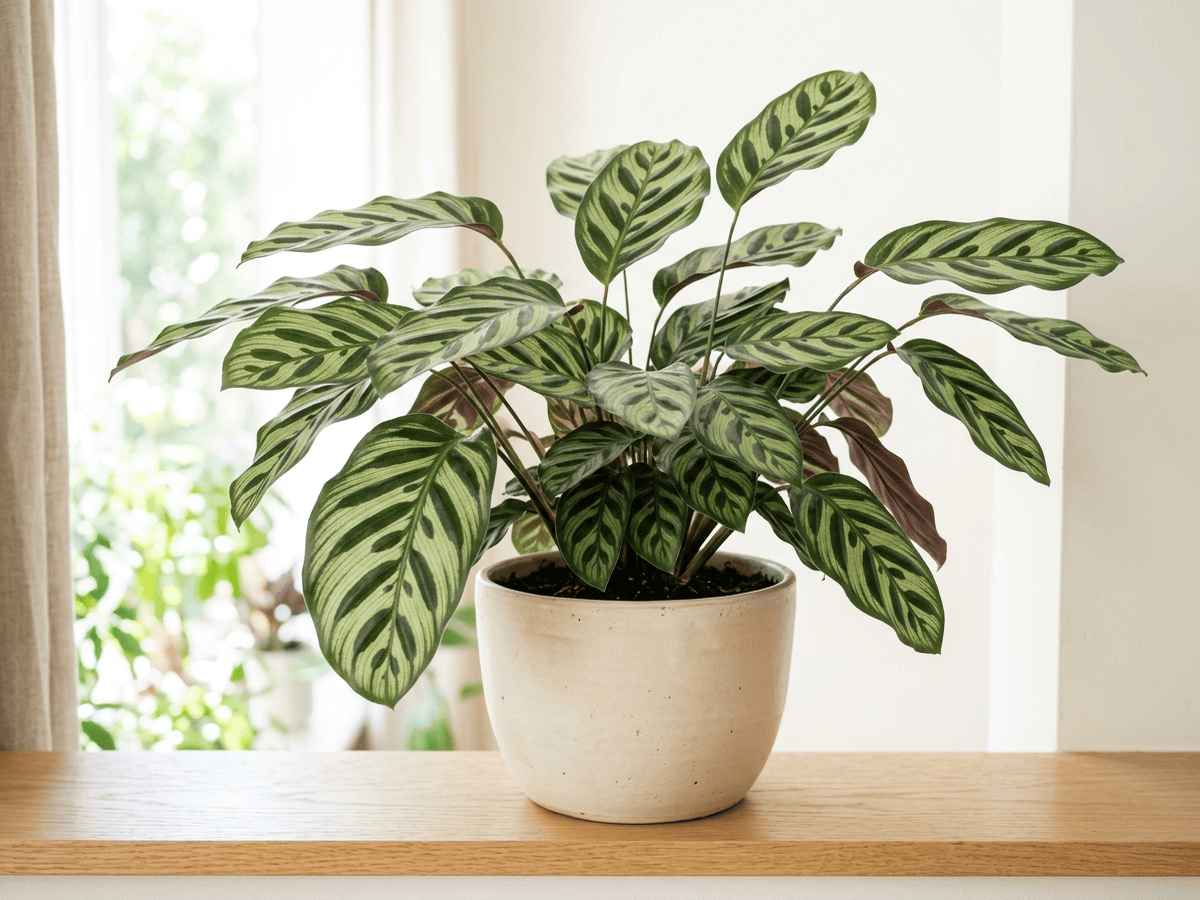
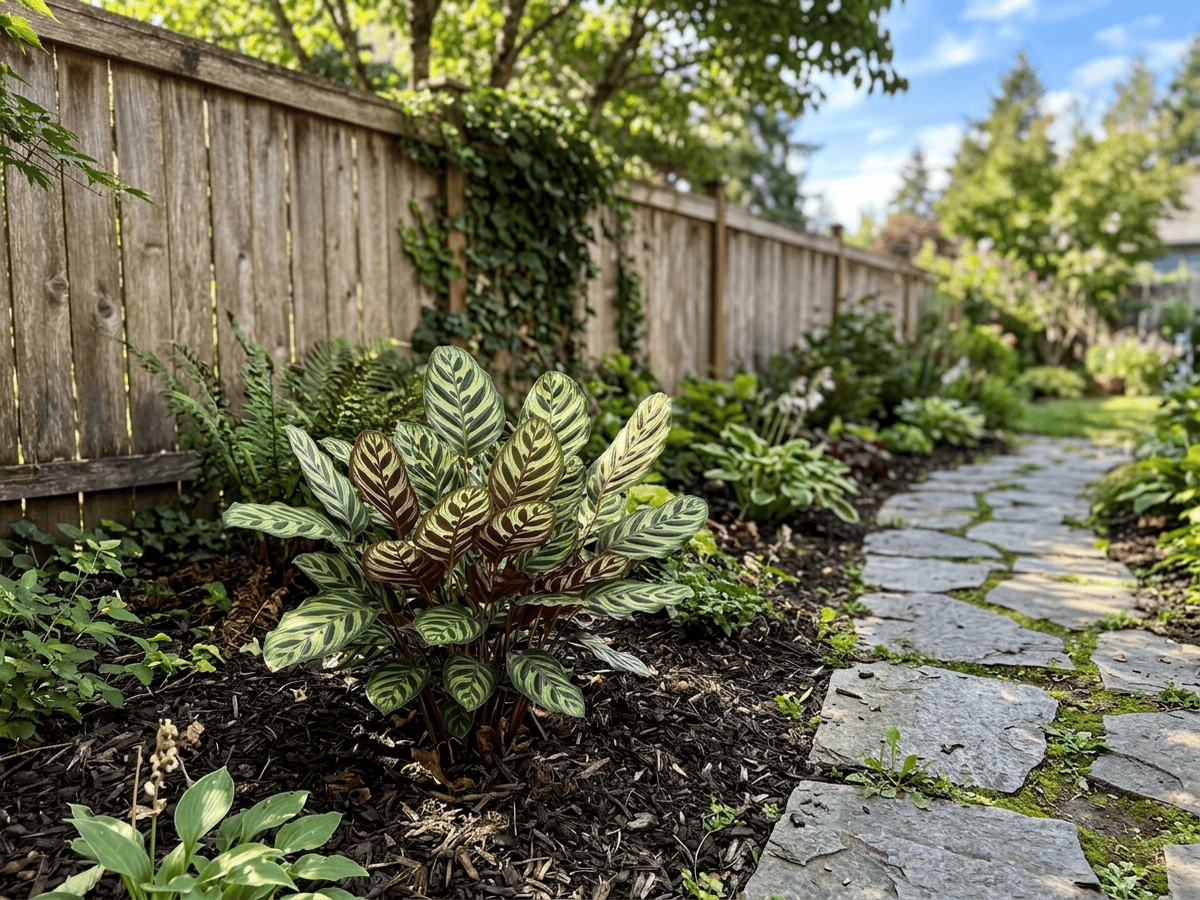
Calathea makoyana, the peacock plant, displays oval leaves with a feather-like pattern of dark green ovals on a pale green background, with purplish-red undersides visible during its nightly prayer movement. Native to eastern Brazil, it is one of the most widely grown Calatheas. Like its relatives, it prefers humid conditions and filtered water, but is somewhat more forgiving than C. orbifolia. The striking bicolored leaves make it appear almost hand-painted. It stays compact at 30–60 cm, making it ideal for tabletops and terrariums.
- Tropical
- Shade-tolerant
- Air-purifying
- Container-friendly
How to care for Peacock Plant
Watering
- Springevery 5 days
- Summerevery 4 days
- Fallevery 7 days
- Winterevery 10 days
Soil · Moisture-retentive
- Top dressingSphagnum moss10%
- Main mixPeat + coco coir 1:180%
- DrainagePerlite / gravel10%
Keep it evenly moist — but the drainage layer still matters.
FERTILIZER
Balanced Feed 14-14-14
An even feed covers all three needs at once, keeping leaves, roots and blooms moving together with nothing pushed out of balance.
- Nitrogen · Leaves
- Phosphorus · Roots + Blooms
- Potassium · Strength
- Springevery 30 days
- Summerevery 30 days
- Fallevery 60 days
At a Glance
- NativeSouth America
- Height1–2 ft (0.3–0.6 m)
- Spread1–2 ft (0.3–0.6 m)
- Flower colorWhite
- Foliage colorGreen, Red, Variegated
- SoilMoisture-retentive, Rich, Loamy
- LocationsIndoor
Bloom time
BLOOM CYCLE
Peak bloom
Jun–Aug
Small white flowers; insignificant
Fragrance
NO FRAGRANCE
Not fragrant.
Toxicity
No toxicity has been reported for this plant. Still, it is wise to keep pets from chewing on any houseplant.
Educational information, not medical or veterinary advice. If exposure is suspected, contact a doctor or veterinarian.
DISTRIBUTION


- Native
- South America
History

Calathea makoyana was collected from the Atlantic coastal rainforest of eastern Brazil and formally described in 1875, when it was named after the Belgian horticulturist Jacob Makoy, whose Liège nursery was one of the major 19th-century importers of tropical plants into Europe. Its common name, Peacock Plant, comes from the pattern of alternating light and dark oval bands on the upper leaf surface, with a magenta underside — a structure thought to help it photosynthesize in low forest light. Like other marantas it performs nyctinasty, folding its leaves upright at night in a slow visible motion that led to the family nickname 'prayer plants'.
Modern taxonomy places it as Goeppertia makoyana, though Calathea remains the trade name. The peacock plant was named in honor of Jacob-Makoy, a 19th-century Belgian nurseryman whose greenhouse in Liège was among the first to successfully cultivate tropical Calatheas for the European market.
The peacock-feather leaf pattern has made it a favorite subject for botanical illustrators. In its native Brazilian Atlantic Forest — one of the most threatened ecosystems on Earth — it grows in the deep shade of the forest floor, where dappled light creates the conditions its delicate leaves evolved to exploit.
Symbolism & meaning
What It Symbolizes
The Peacock Plant wears grace as plumage — leaves patterned in feathered ovals of cream and deep green that mimic a peacock's eye-spots. Each frond moves through the day, lifting at dusk in the slow choreography Marantaceae are known for. It is living artistry, a quiet daily performance staged on a single stem.
- Grace — Its elegant peacock-feather patterns embody natural artistry and poise
Where the Name Comes From
Calathea from Greek 'kalathos' (basket). Makoyana honors Jacob-Makoy, the Belgian horticulturist who first cultivated it commercially.
Uses & Fun Facts
- Peacock-patterned leaves prized as tropical houseplant
- Thrives in indoor pots with high humidity and shade
Related plants
More Calathea plants
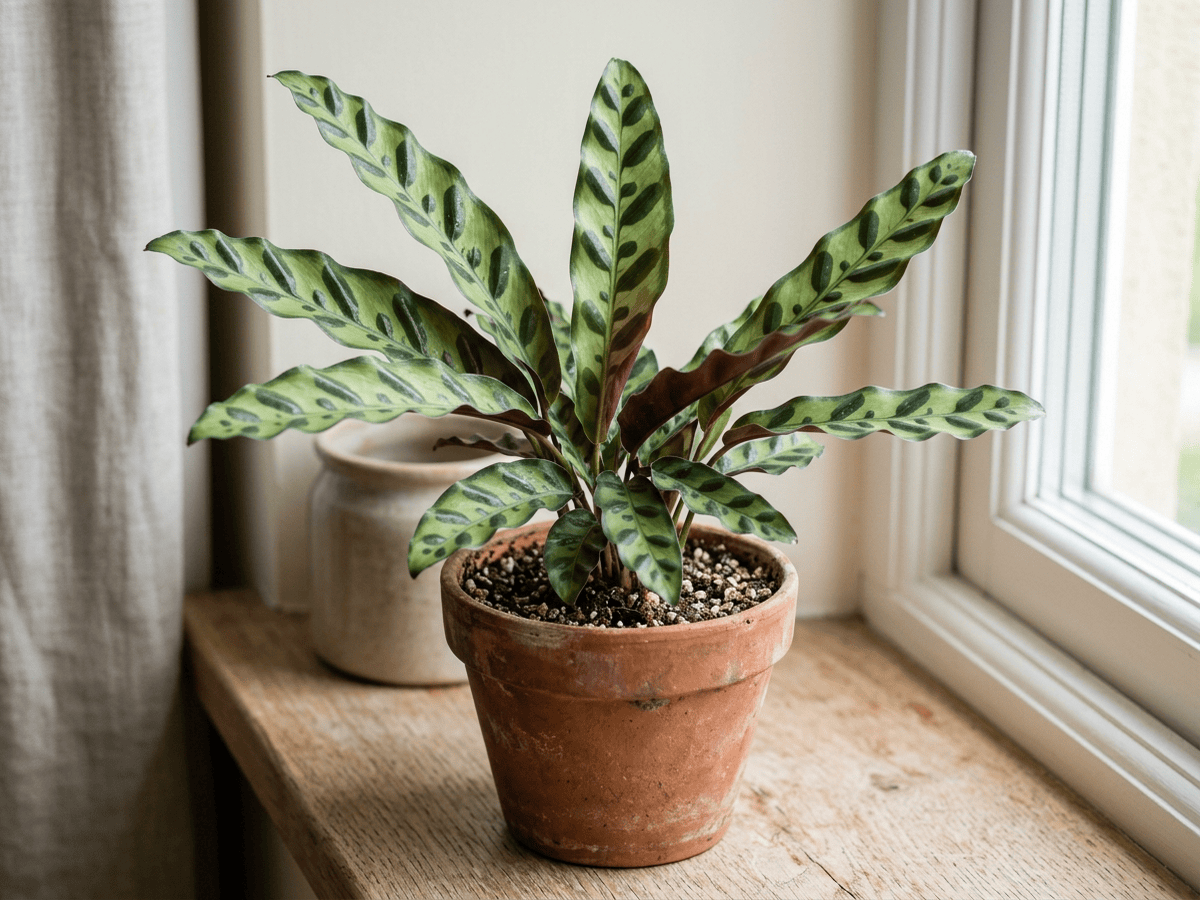 Rattlesnake-PlantCalathea lancifolia
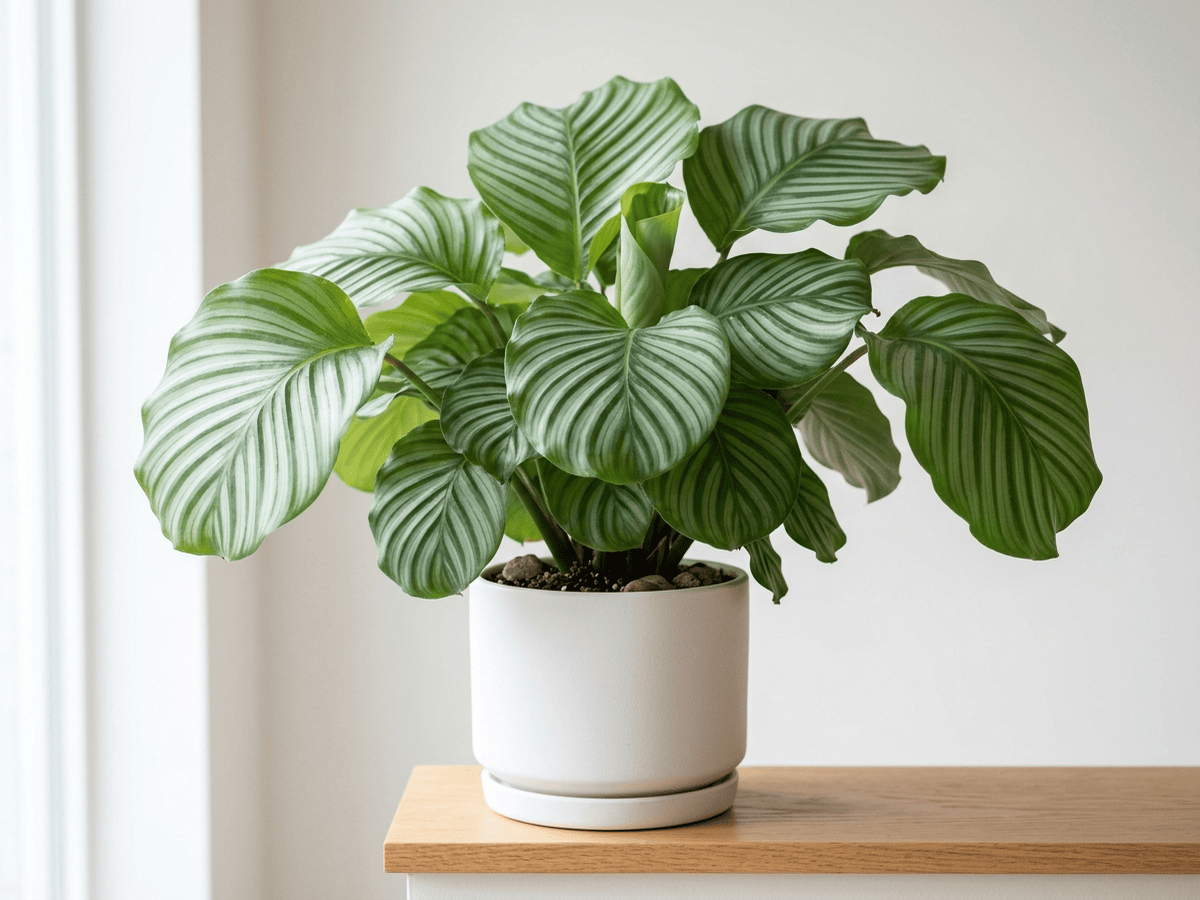 Goeppertia OrbifoliaCalathea orbifolia
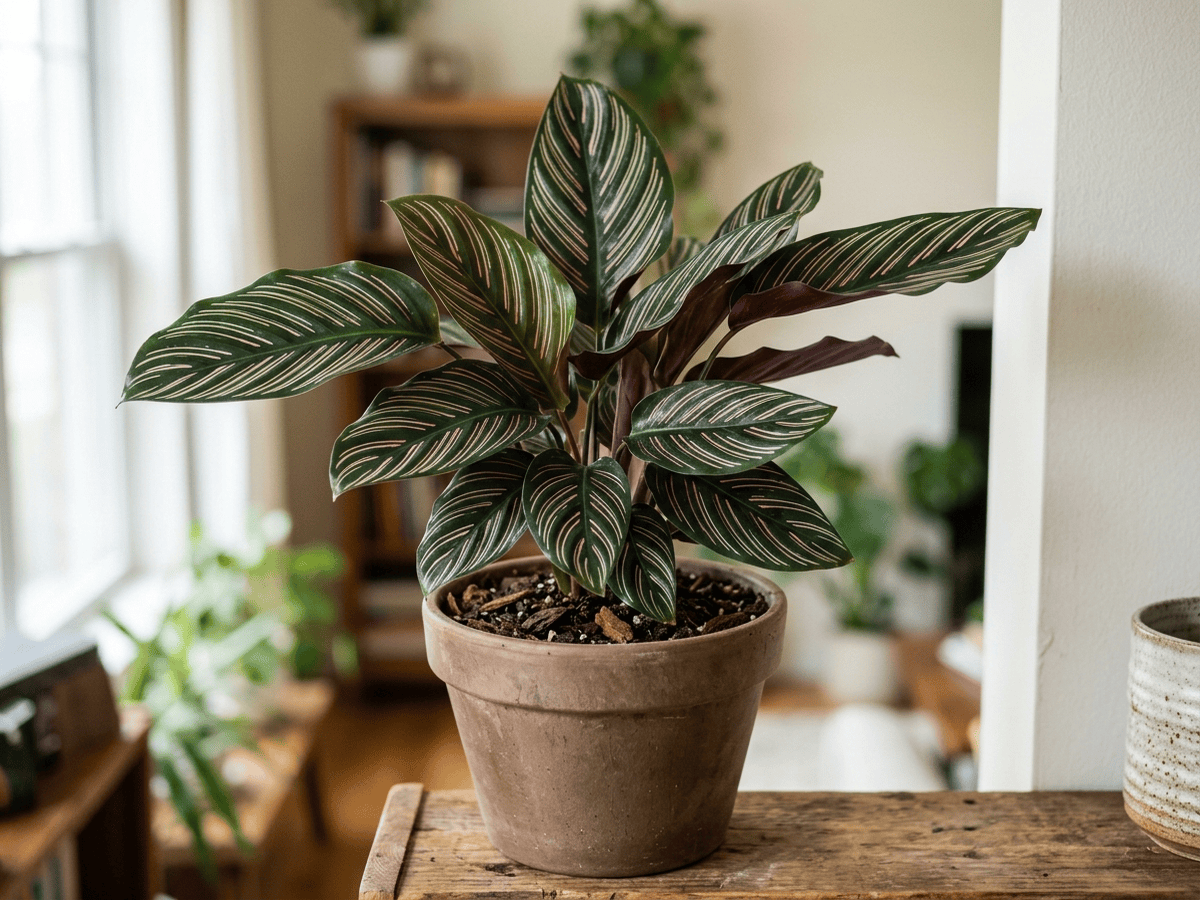 Pin-Stripe CalatheaCalathea ornata
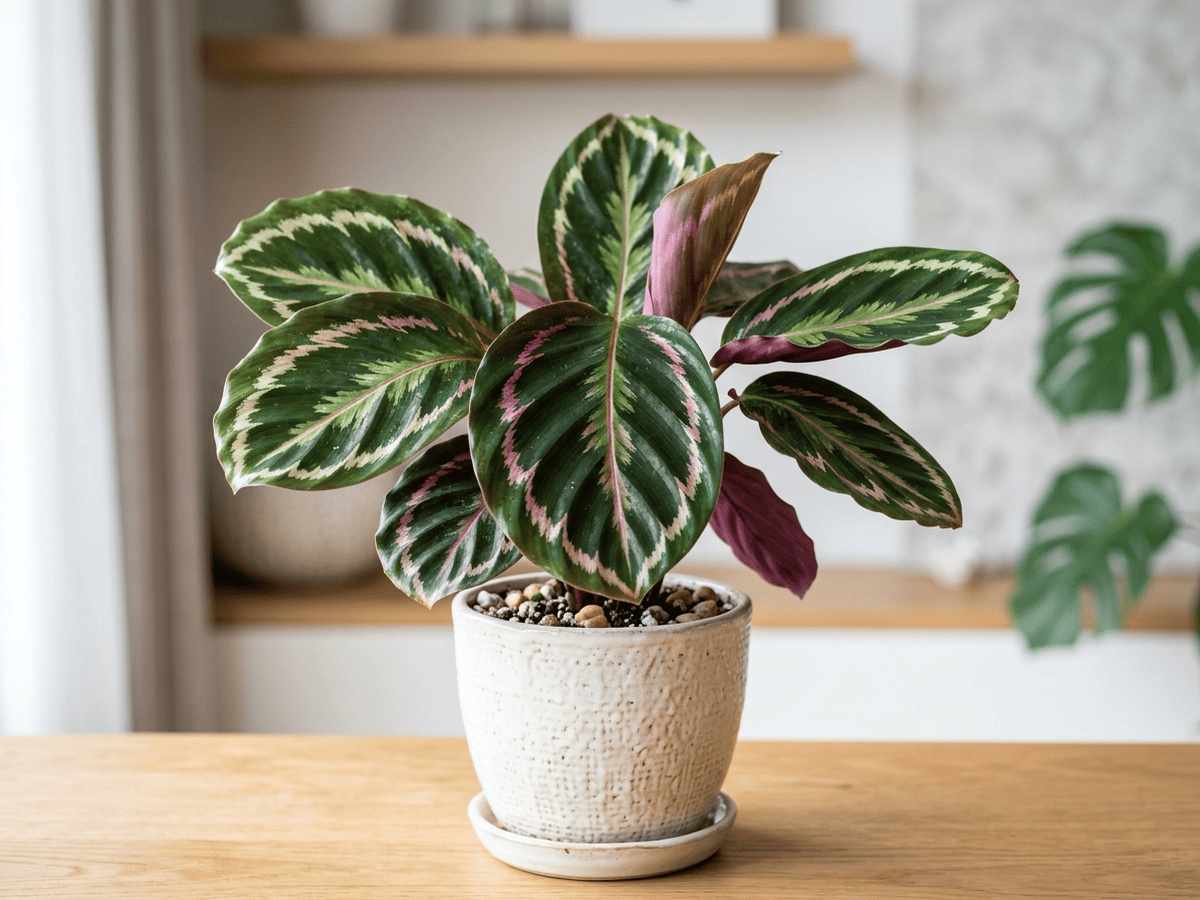 Goeppertia RoseopictaCalathea roseopicta
Plants with similar care
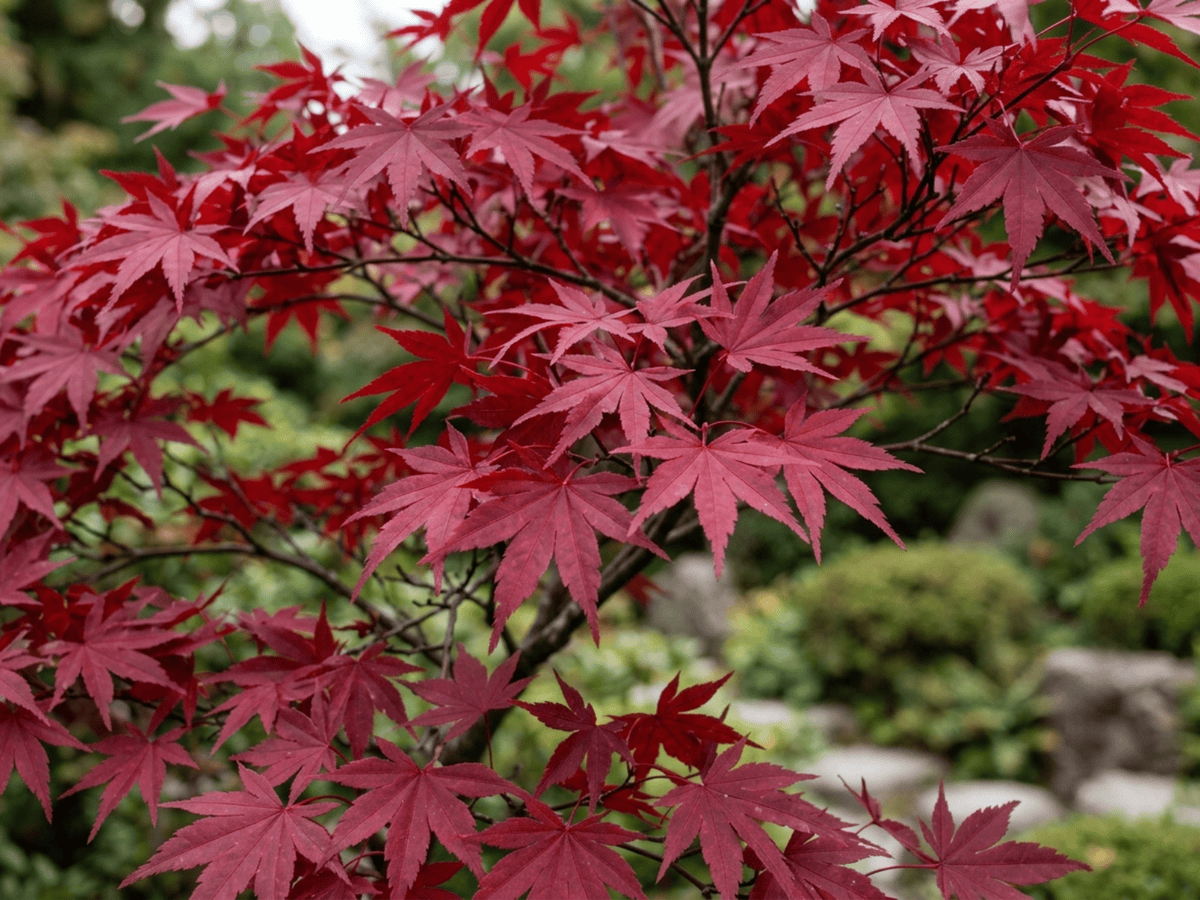 Japanese MapleAcer palmatum
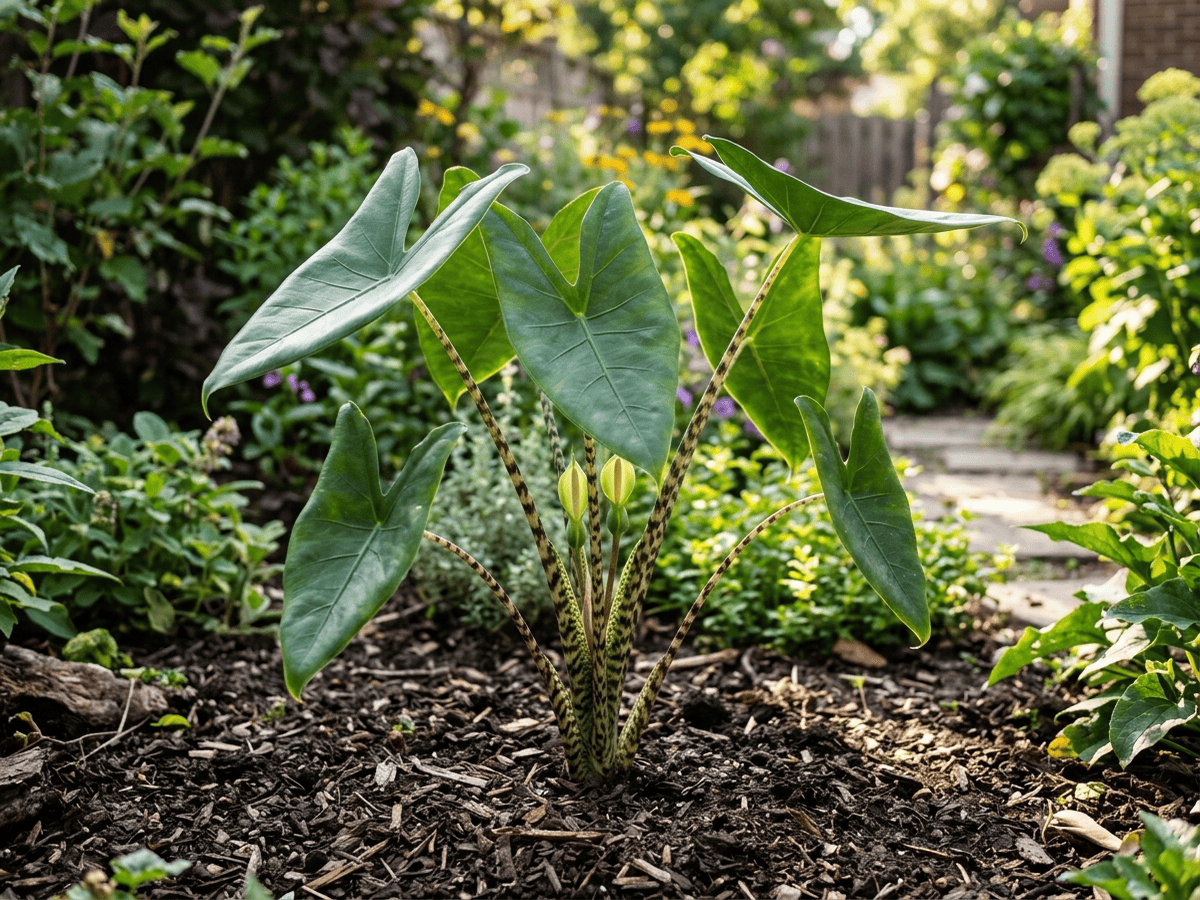 Alocasia zebrinaAlocasia zebrina
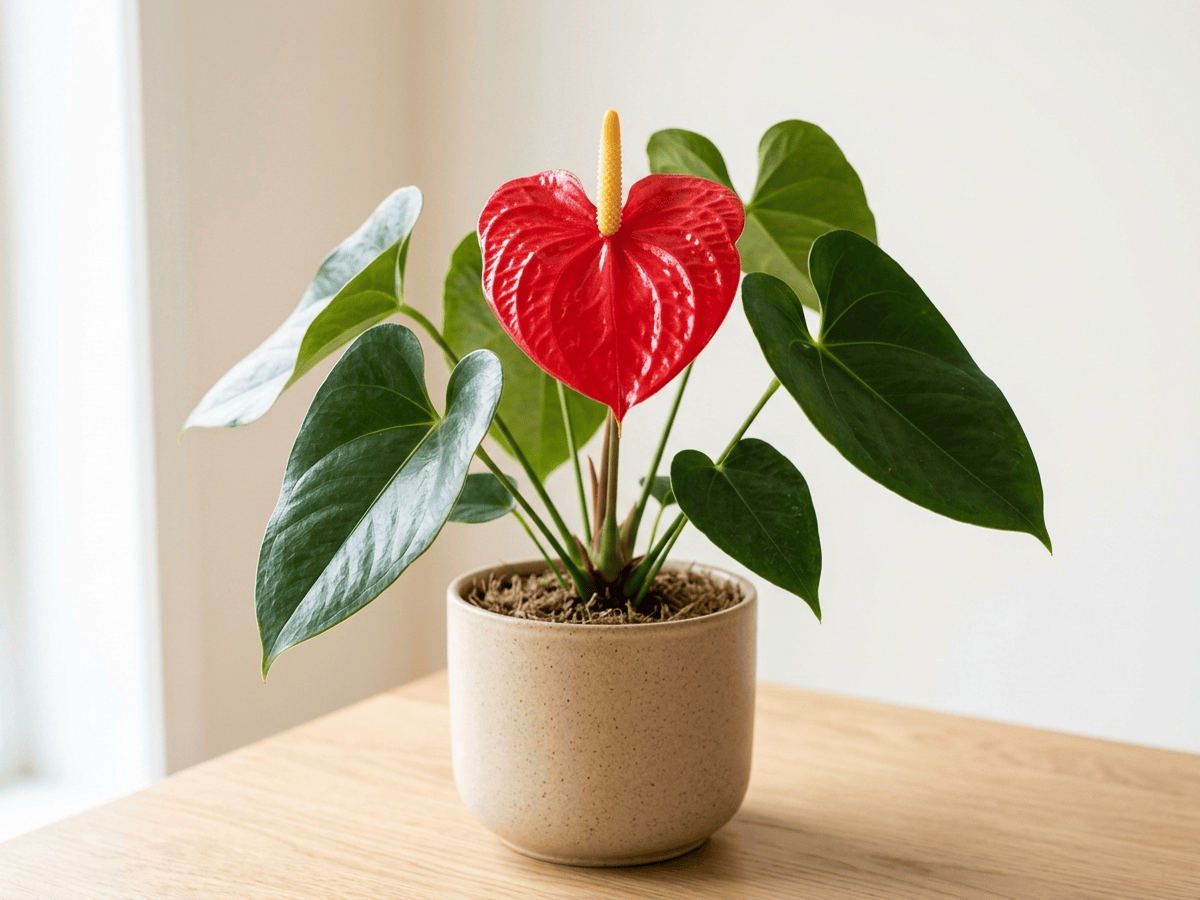 Painter's-PaletteAnthurium andraeanum
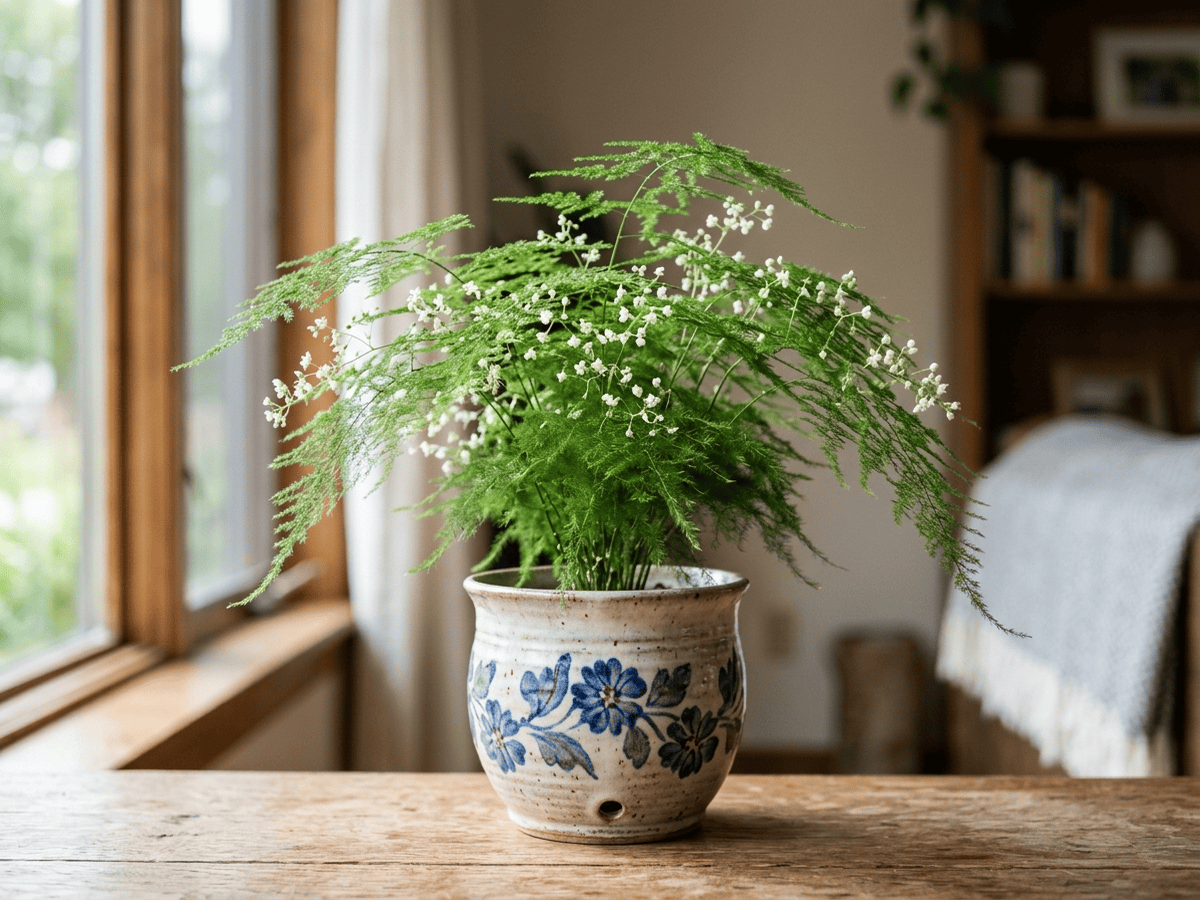 Common Asparagus FernAsparagus setaceus
Frequently asked questions
How often should I water Peacock Plant?
In summer, water about every 4 days; in winter, about every 10 days. Adjust for heat, pot size and drainage.
How much light does Peacock Plant need?
Part shade: 2–4 hrs direct. Watch the leaves — scorching or stretching means the light needs adjusting.
Is Peacock Plant toxic to cats or dogs?
No toxicity has been reported for this plant. Still, it is wise to keep pets from chewing on any houseplant. Educational information, not medical or veterinary advice. If exposure is suspected, contact a doctor or veterinarian.
Is Peacock Plant easy to grow?
It is moderately demanding: a good choice once you have a little experience.
Can Peacock Plant be grown indoors?
Yes, it adapts well to indoor growing given the right light.
When does Peacock Plant bloom?
It typically blooms Jun–Aug in the Northern Hemisphere.
YardMate
Identify any plant in seconds
Snap a photo — YardMate names the plant, diagnoses problems, and reminds you when to water.
Download on the App Store