 YardMate
White Globe Lily
Calochortus albus
Hard · Experienced growersAbout White Globe Lily
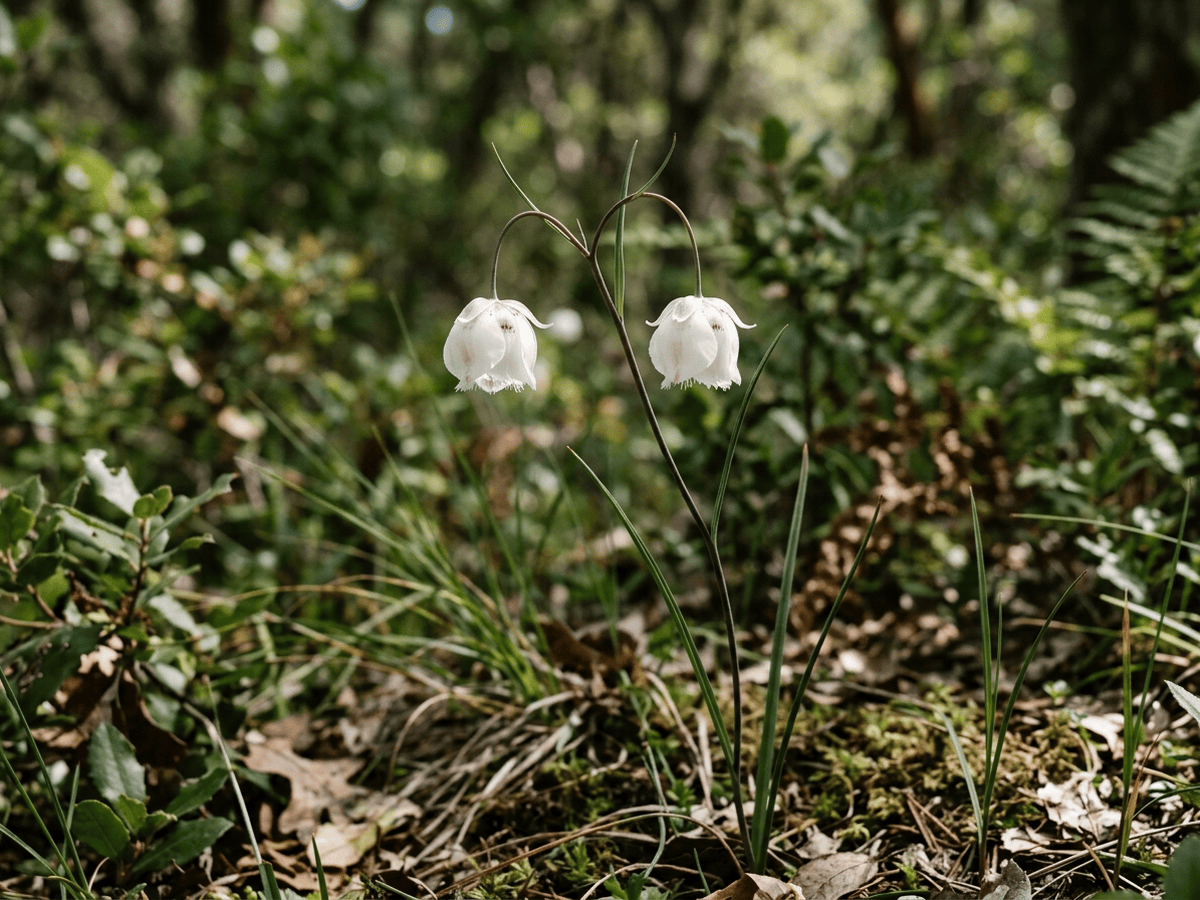
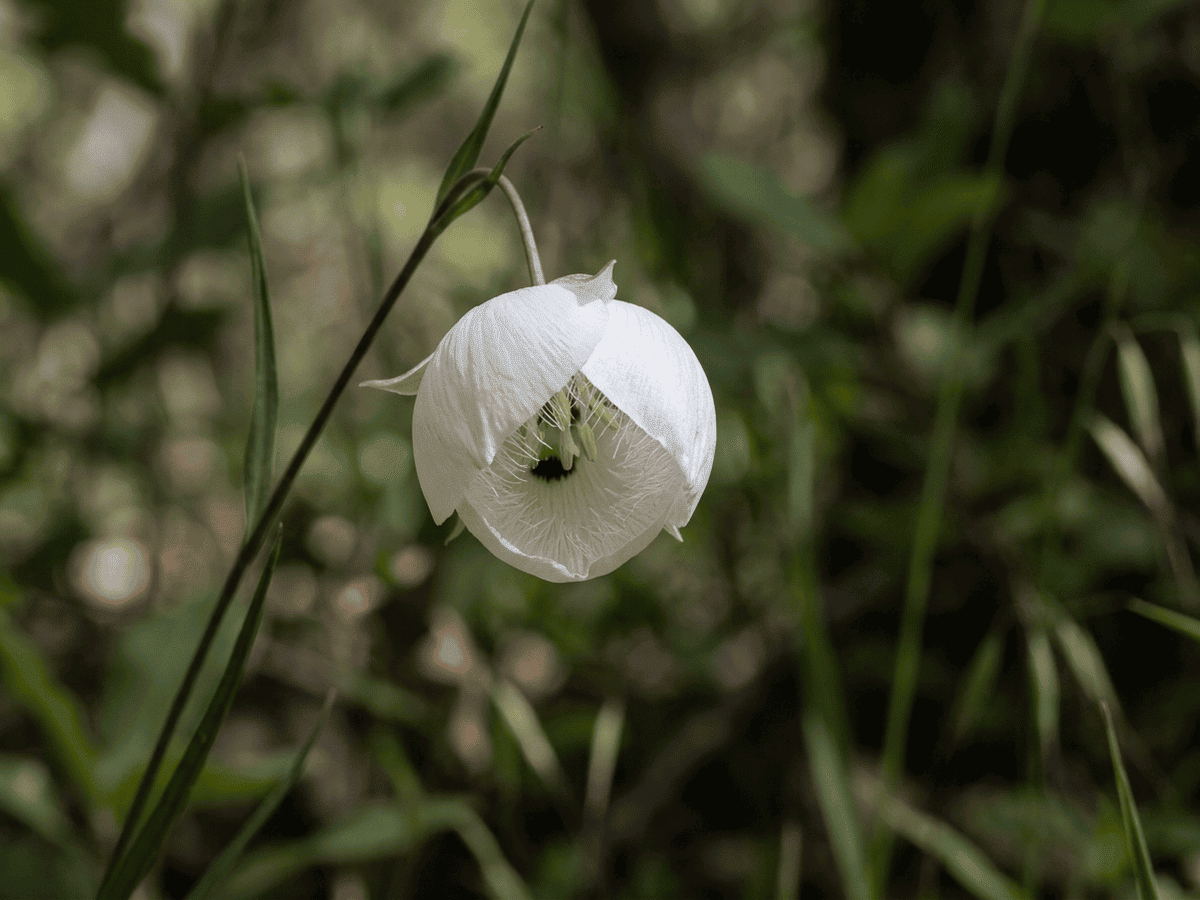
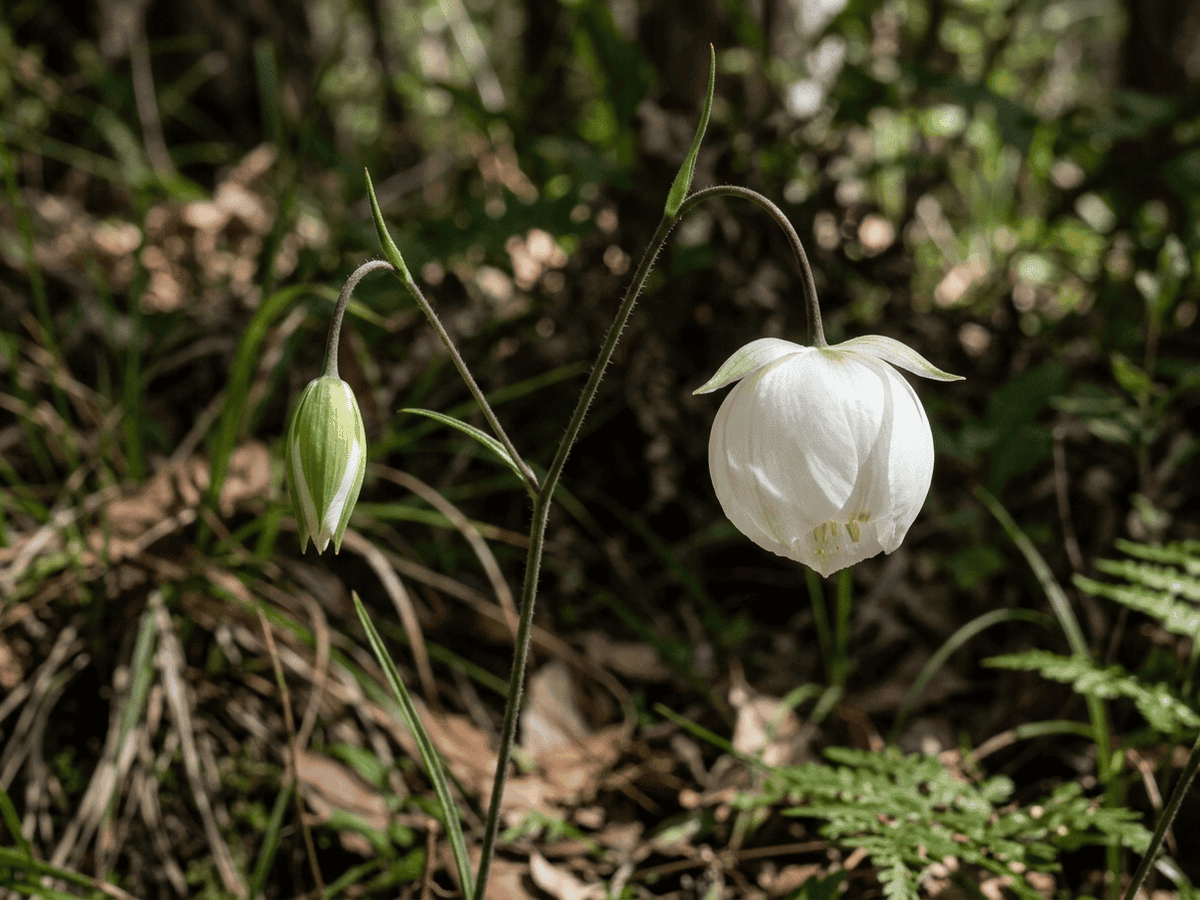
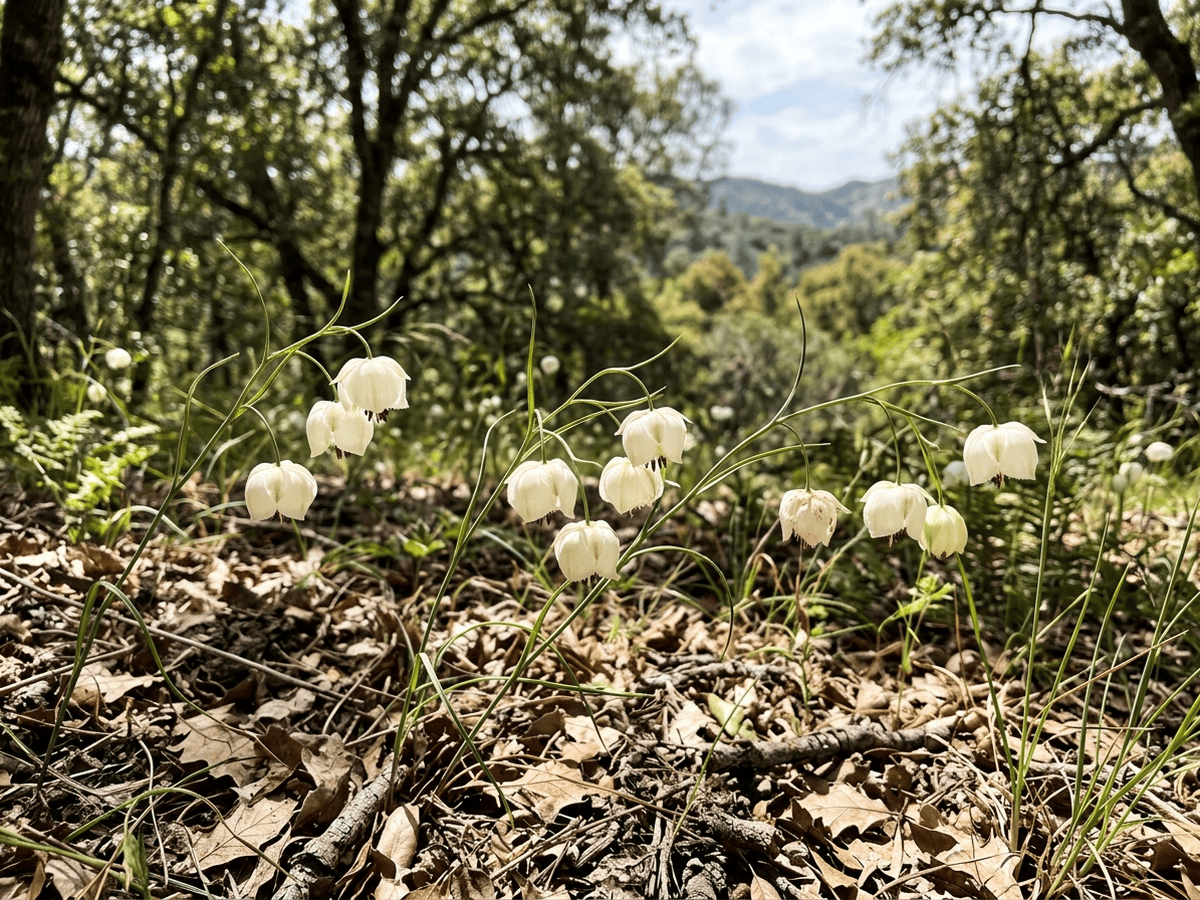
Calochortus albus, the white globe lily or fairy lantern, is one of California's most enchanting native bulbs—bearing nodding, globe-shaped white flowers that hang from wiry 1–3 foot stems like translucent porcelain lanterns in late spring. Each flower is a perfect sphere of silky petals decorated with fine hairs and a subtle blush of pink or green. Native to the wooded slopes and chaparral of California's Coast Ranges and Sierra Nevada foothills, it demands excellent drainage and summer dryness to thrive. The bulbs were an important food source for California's Indigenous peoples for centuries and remain among the most beautiful native perennials available to California gardeners.
- Deciduous
- Pollinator-friendly
- Compact
- Shade-tolerant
How to care for White Globe Lily
Watering
- Springevery 7 days
- Summerevery 7 days
- Fallevery 14 days
- Winterevery 30 days
Soil · Rich & well-draining
- Top dressingCompost10%
- Main mixPotting soil + compost 3:180%
- DrainageGravel10%
Top up the compost layer each season.
FERTILIZER
Bulb Feed 3-5-3
With bulbs, when matters more than what. One dose goes in the hole at planting, the second when shoots break ground.
- Nitrogen · Leaves
- Phosphorus · Roots + Blooms
- Potassium · Strength
- Springevery 30 days
- Summerevery 30 days
- Fallevery 30 days
At a Glance
- NativeNorth America
- Height1–3 ft (0.3–0.9 m)
- Spread1–2 ft (0.3–0.6 m)
- Flower colorWhite
- Foliage colorGreen
- SoilWell-drained, Sandy
- LocationsYard · Balcony
Bloom time
BLOOM CYCLE
Peak bloom
May–Jun
This plant produces distinctive white flowers in late spring to early summer.
Fragrance
NO FRAGRANCE
Flowers unscented; pollinators are attracted by the silky petals and accessible pollen.
Toxicity
Pets Safe
None reported
Not reported
EXPOSURE No exposure route is reported.
EFFECT No toxic effect is reported.
NOTE No toxicity is reported for humans in this catalog; this is not evidence that the plant is edible or harmless.
Safe
EXPOSURE No exposure route is reported.
EFFECT No toxic effect is reported.
NOTE Authoritative sources report this plant as non-toxic to dogs; this is not evidence that the plant is edible.
Safe
EXPOSURE No exposure route is reported.
EFFECT No toxic effect is reported.
NOTE Authoritative sources report this plant as non-toxic to cats; this is not evidence that the plant is edible.
Educational information, not medical or veterinary advice. If exposure is suspected, contact a doctor or veterinarian.
DISTRIBUTION


- Native
- North America
History
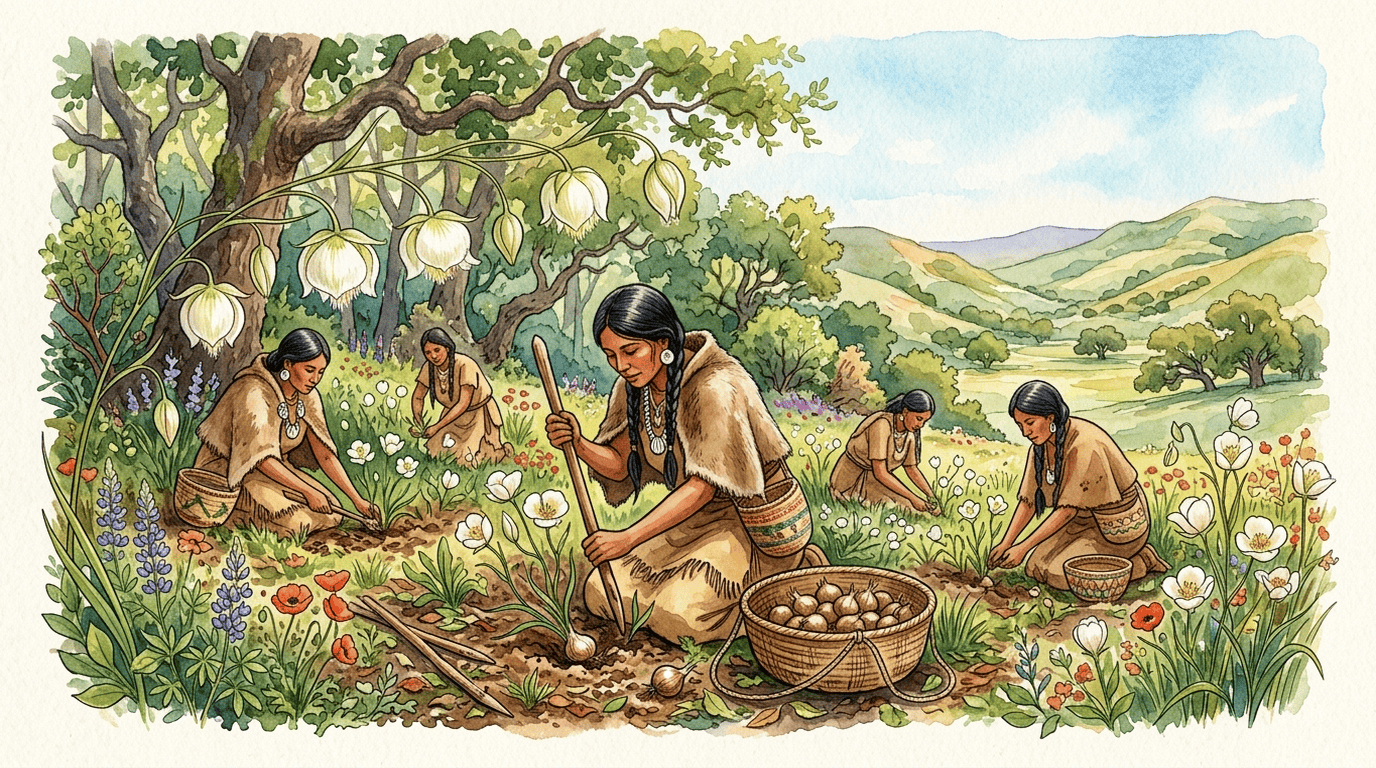
Long before European botanists gave Calochortus albus its Latin name, the white globe lily had sustained human life in California. The starchy bulbs of Calochortus species were among the most prized wild foods of many California Native peoples—Miwok, Pomo, Yokuts, Chumash, and others harvested them each spring using digging sticks, eating them raw, boiling them into porridge, or roasting them in earth ovens. The Miwok called the bulb 'ookow,' and its spring harvest was an important community occasion.
European botanists first encountered Calochortus species during the early 19th-century exploration of California. Scottish botanist David Douglas, collecting for the Royal Horticultural Society in the 1820s and 1830s, sent specimens of California's fairy lanterns back to England, where they caused a sensation in horticultural circles. Calochortus albus was formally described by Asa Gray in 1868, who named it for the white (albus) flowers.
John Muir encountered the fairy lanterns during his first long walk through the Sierra Nevada in the early 1870s and described them with characteristic reverence in his journals—'the fairy lanterns of the forest floor,' he called them, their translucent globes glowing in the dappled light under the pines like something not quite of the ordinary world.
Calochortus albus is notoriously specific in its requirements: it needs the long dry California summer followed by winter rain, well-drained rocky or sandy soils, and the dappled shade of oak woodland or chaparral. Outside of California it is difficult to cultivate but within its range is a rewarding and uniquely beautiful native bulb.
Symbolism & meaning
What It Symbolizes
Muir walked under the pines and saw something glowing in the filtered light. Fairy lanterns, he wrote—and that name has endured because it is exactly right. A globe of white silk in the shade of oaks, spring-only, California-only, brief and perfect.
- hidden treasure — A globe of white silk hanging from a wiry stem in dappled shade—Calochortus albus rewards those who look closely, easy to pass without seeing.
- California wonder — John Muir called them fairy lanterns of the forest floor—something that belongs to a specific place and time, found nowhere else.
Where the Name Comes From
Calochortus derives from Greek kalos (beautiful) and chortos (grass), referring to the grass-like linear leaves that accompany the flowers. The species epithet albus is Latin for 'white,' describing the pure white globose flower. The common name 'white globe lily' refers to the distinctive spherical, lantern-like shape of the nodding flowers, while 'fairy lantern' evokes the glowing translucency of the petals in dappled light.
Uses & Fun Facts
- Unique nodding globe-shaped white flowers unlike any other bulb; ideal for California native gardens, dry shaded slopes, and oak woodland understories; a jewel of the California spring garden
- Globe-shaped flowers provide protected nectar and pollen accessible to native bees; the hairy petal interiors are adapted to specific bee pollinators
- Starchy bulbs were a vital spring food for many California Native peoples including the Miwok and Pomo, eaten raw, boiled, or roasted—one of California's most important Indigenous food plants
Related plants
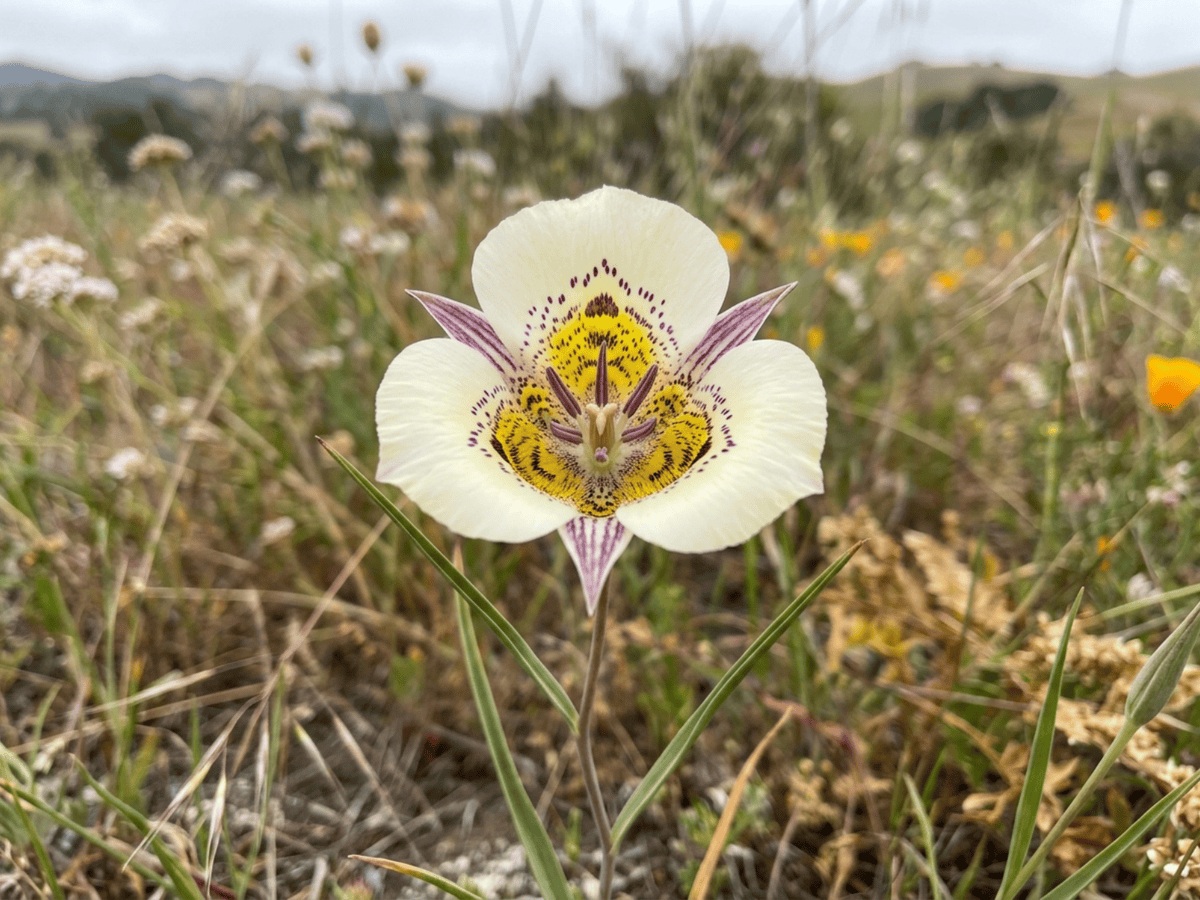
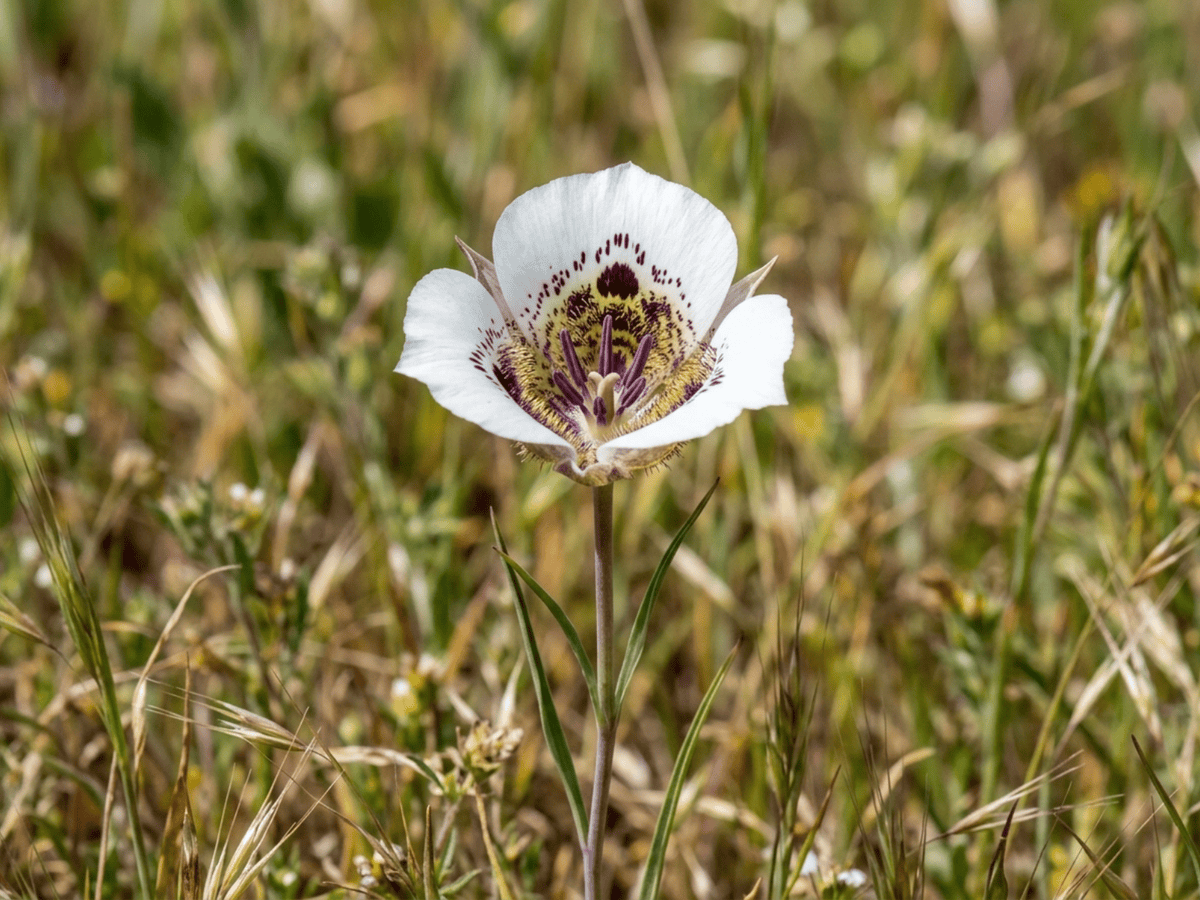
More Calochortus plants
Plants with similar care
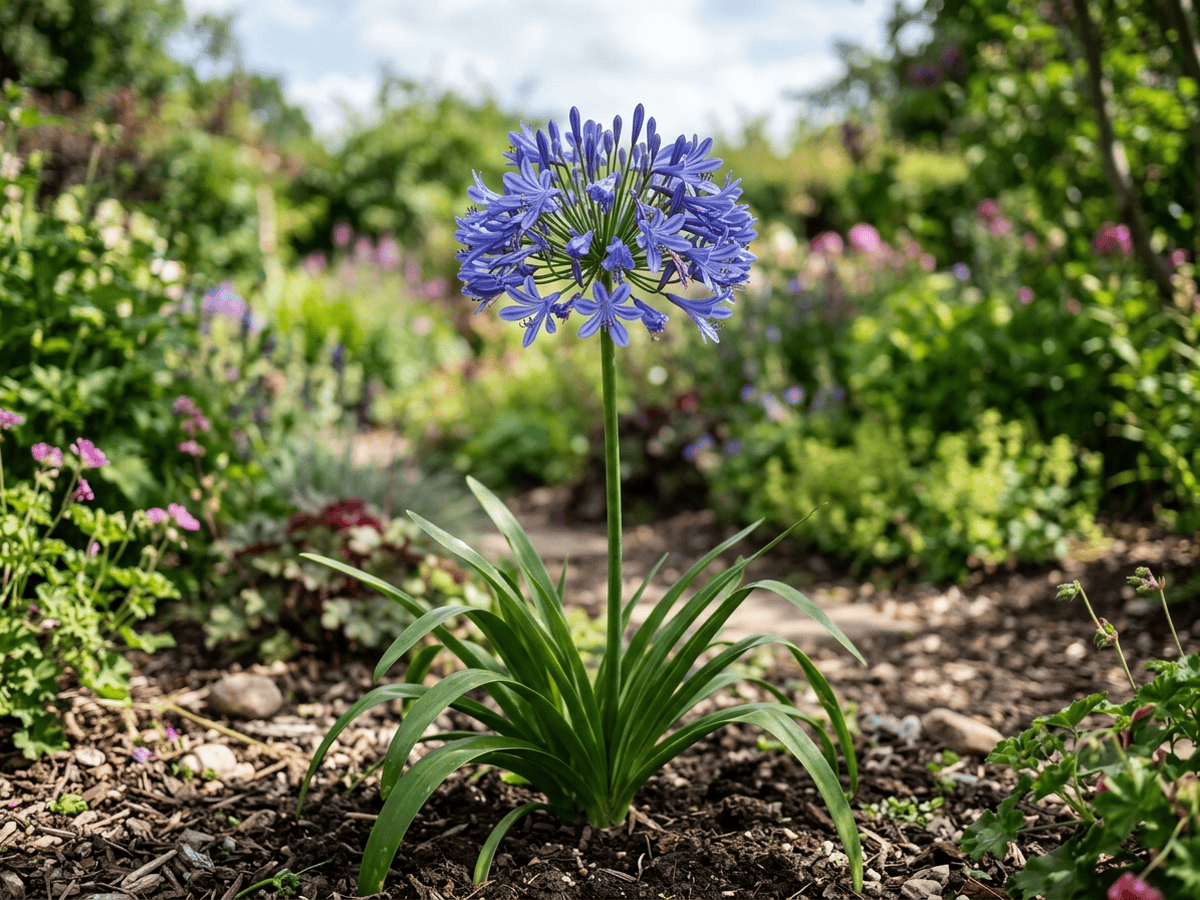 African LilyAgapanthus africanus
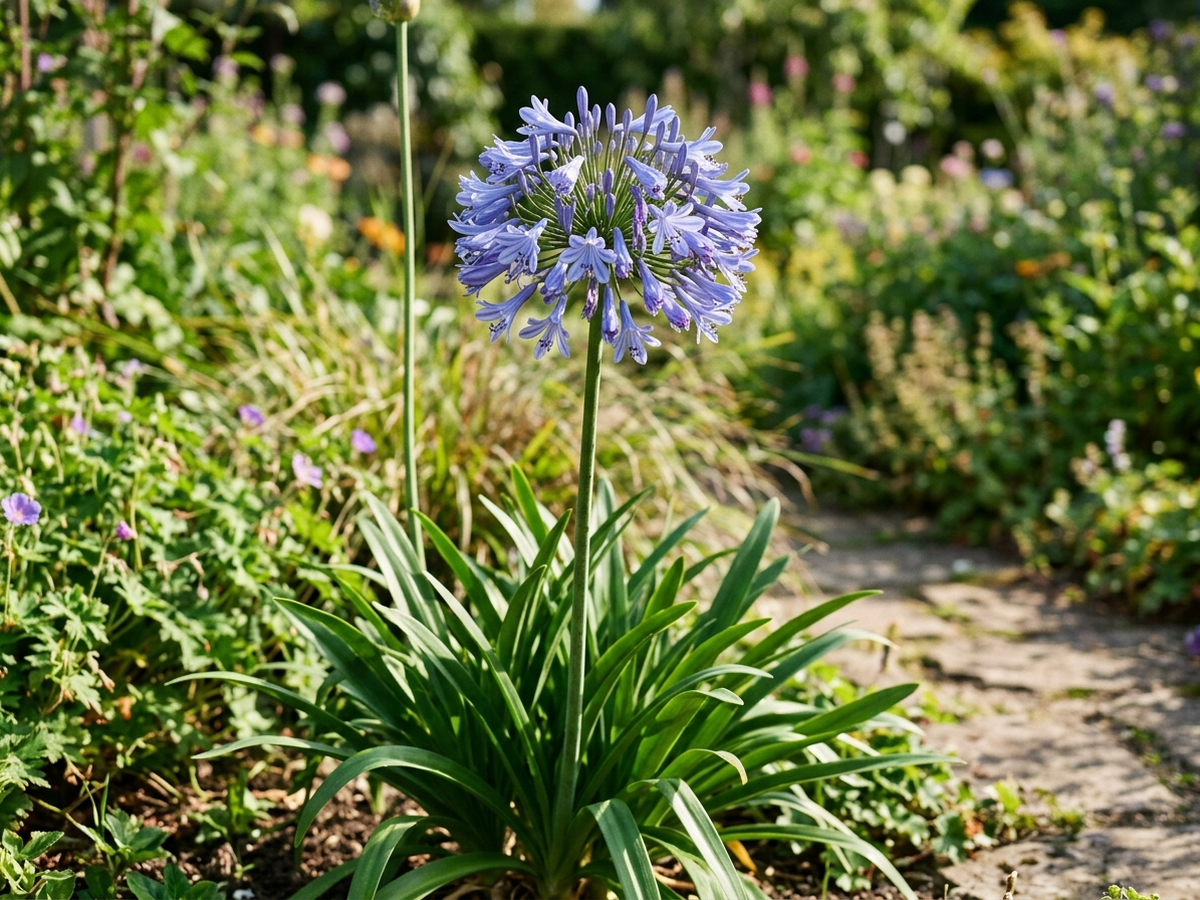 Bell AgapanthusAgapanthus campanulatus
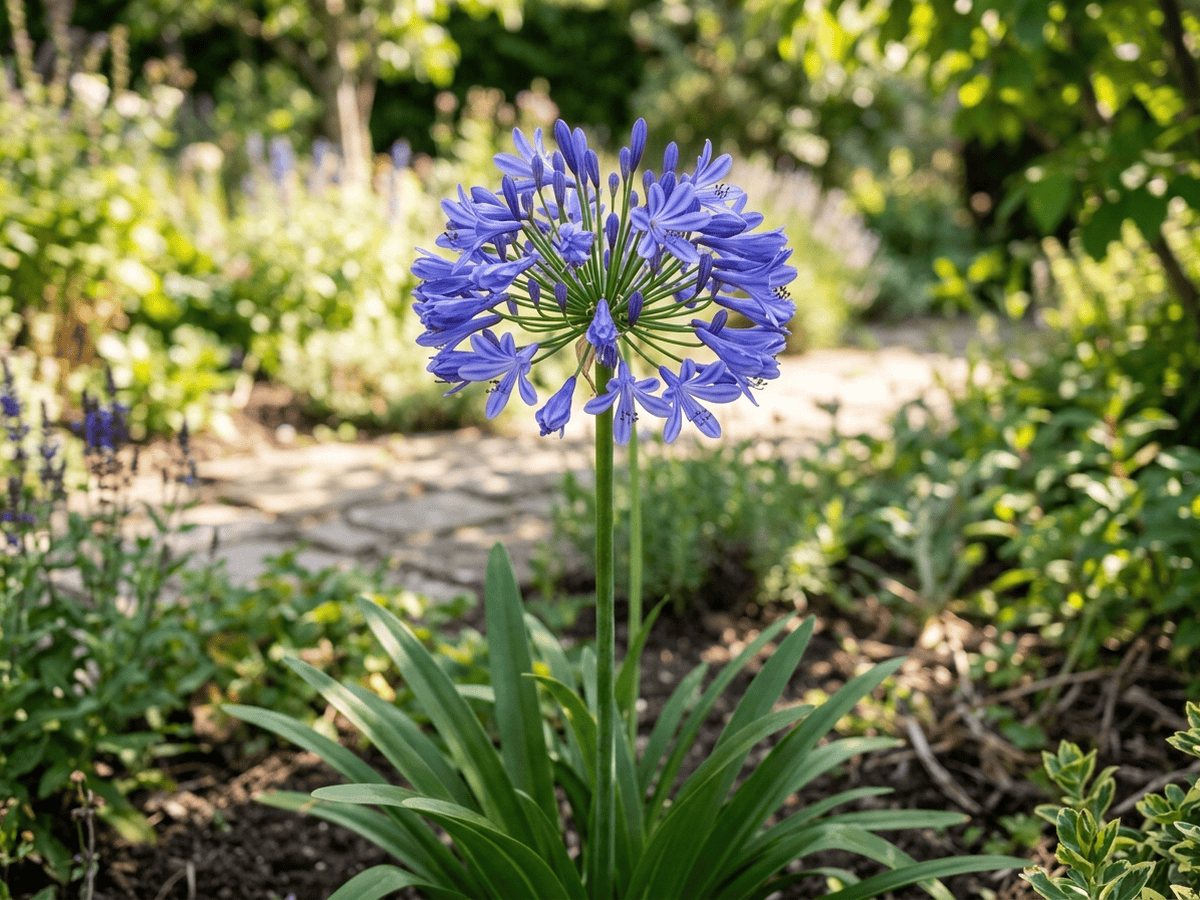 Common AgapanthusAgapanthus praecox
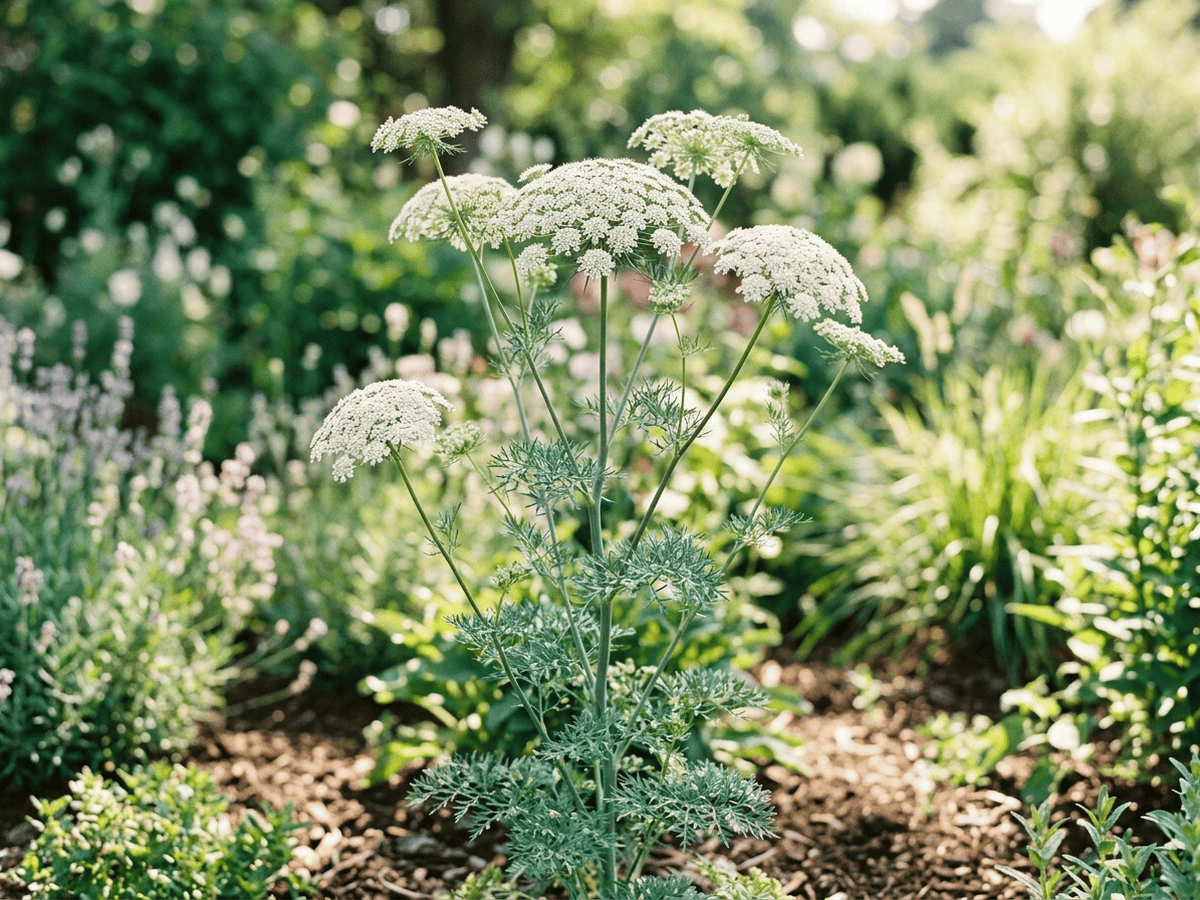 False Queen Anne's LaceAmmi majus glaucifolium
Frequently asked questions
How often should I water White Globe Lily?
In summer, water about every 7 days; in winter, about every 30 days. Adjust for heat, pot size and drainage.
How much light does White Globe Lily need?
Part sun: 4–6 hrs direct. Watch the leaves — scorching or stretching means the light needs adjusting.
Is White Globe Lily toxic to cats or dogs?
Pets Safe (Dogs Safe · Cats Safe) Educational information, not medical or veterinary advice. If exposure is suspected, contact a doctor or veterinarian.
Is White Globe Lily easy to grow?
It is considered challenging and rewards experienced growers.
When does White Globe Lily bloom?
It typically blooms May–Jun in the Northern Hemisphere.
YardMate
Identify any plant in seconds
Snap a photo — YardMate names the plant, diagnoses problems, and reminds you when to water.
Download on the App Store