 YardMate


Cusick's Camas
Camassia cusickii
Easy · Beginner friendlyAbout Cusick's Camas
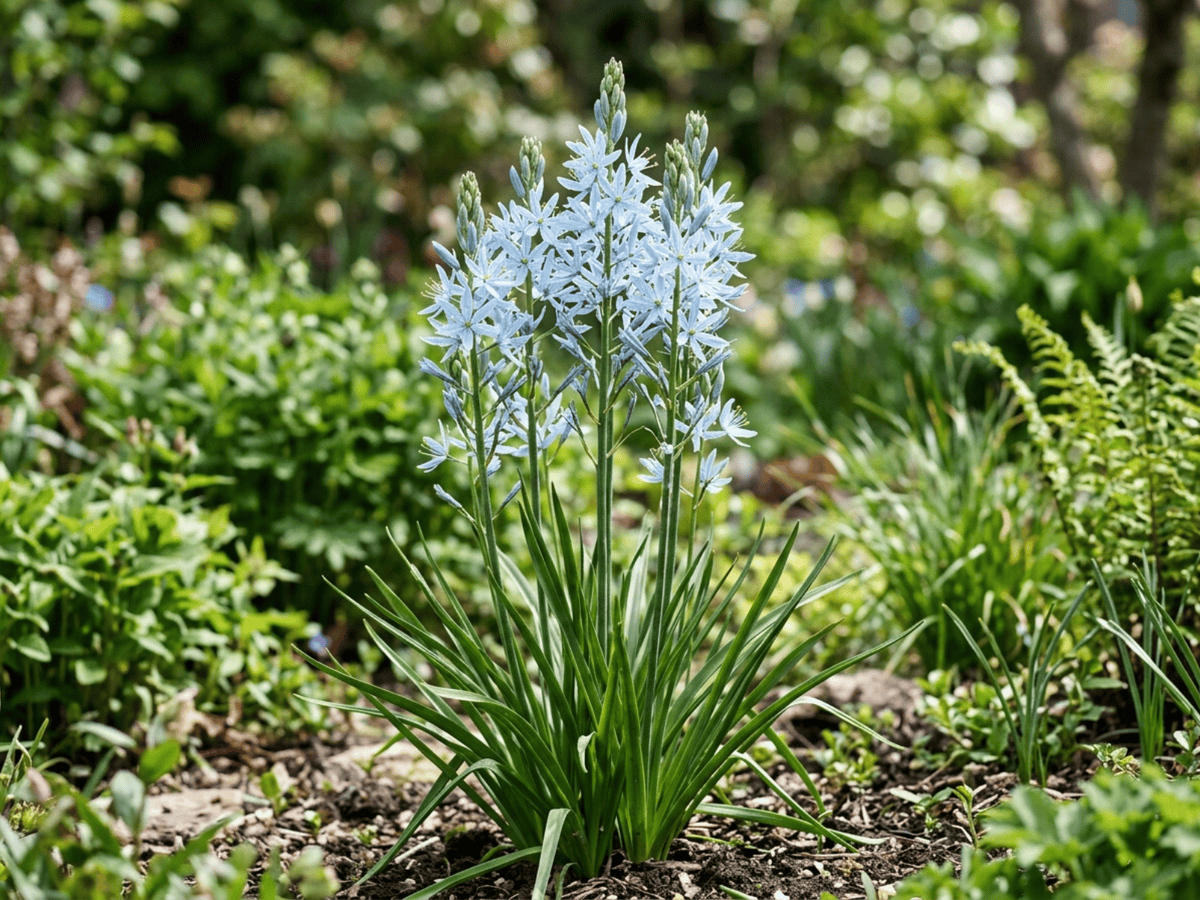
Cusick's Camas is a robust native bulb of northeastern Oregon producing tall spikes of star-shaped pale blue flowers that open from bottom to top. Growing 24-36 inches tall on sturdy stems above strap-like bluish-green leaves, it blooms in late spring. A splendid native bulb for American meadow plantings and wet lawn areas, naturalizing to form drifts in USDA zones 3-8.
- Cold-hardy
- Deer-resistant
- Native
- Pollinator-friendly
How to care for Cusick's Camas
Watering
- Springevery 4 days
- Summerpause watering
- Fallevery 10 days
- Winterpause watering
Soil · Well-draining
- Main mixLoam + coarse sand 3:175%
- DrainageGravel25%
Sharp drainage matters most — bulbs rot in wet soil while dormant.
FERTILIZER
- Springevery 30 days
- Fallevery 60 days
At a Glance
- NativeNorth America
- Height2–3 ft (0.6–0.9 m)
- Spread0.5–1 ft (0.2–0.3 m)
- Flower colorBlue, Purple, White
- Foliage colorGreen
- SoilLoamy, Moisture-retentive
- LocationsYard
Bloom time
BLOOM CYCLE
Peak bloom
May–Jun
Pale blue spikes May to June
Fragrance
LIGHT FRAGRANCE
The flowers have a mild scent.
Toxicity
Pets Slight
Unknown toxic principle
Unknown
EXPOSURE Unspecified plant material.
EFFECT Toxic effects are not specified.
NOTE Toxicity for humans is not well documented; use caution until verified.
Slight
- Bulb
- Ingestion
EXPOSURE Eating bulbs.
EFFECT Mild vomiting.
NOTE C. quamash bulbs historically eaten; little toxicity data on cusickii. Not listed by ASPCA.
Slight
- Bulb
- Ingestion
EXPOSURE Eating bulbs.
EFFECT Mild vomiting.
NOTE C. quamash bulbs historically eaten; little toxicity data on cusickii. Not listed by ASPCA.
Educational information, not medical or veterinary advice. If exposure is suspected, contact a doctor or veterinarian.
DISTRIBUTION


- Native
- North America
History
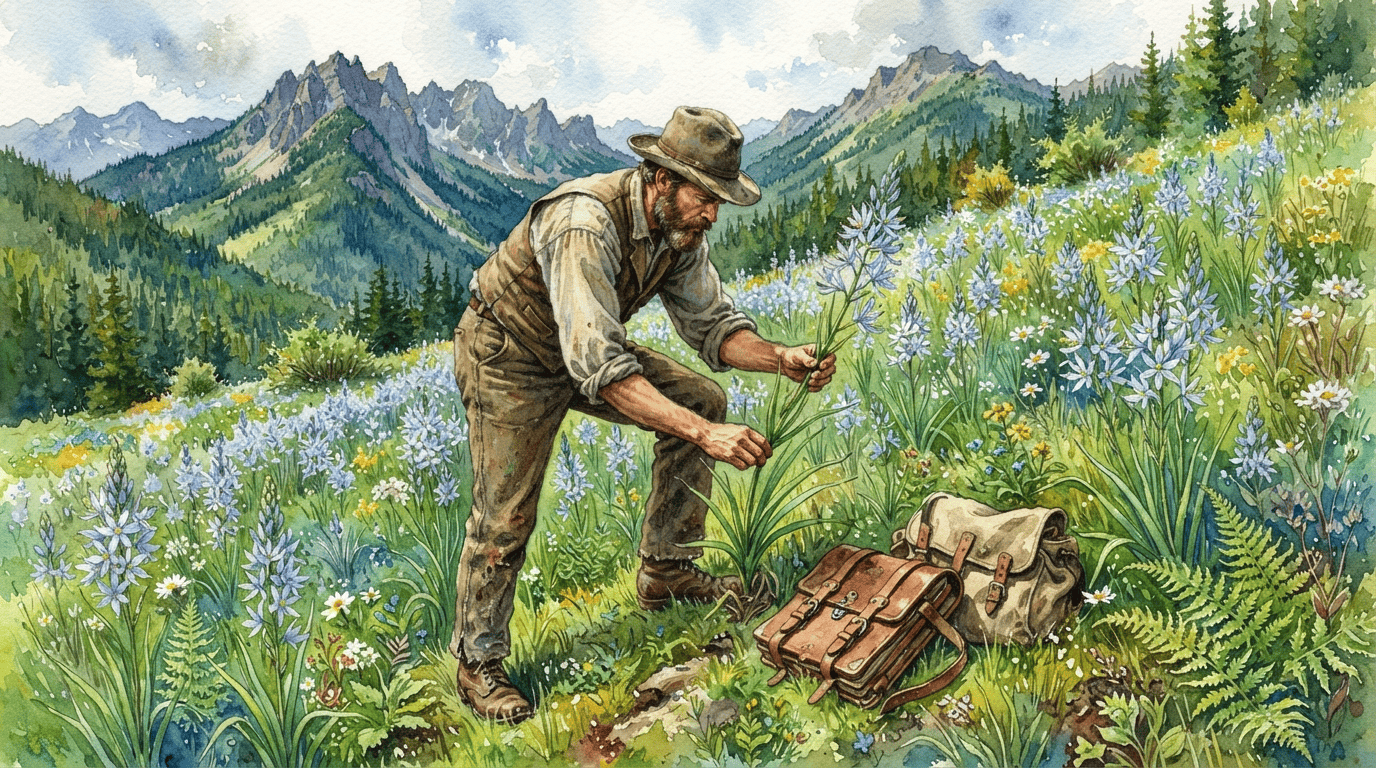
Camassia cusickii is narrowly endemic to moist mountain meadows of the Wallowa and Blue mountains of northeastern Oregon and adjacent Idaho. Oregon botanist William Conklin Cusick (1842-1922) collected the species extensively in the late 19th century; Sereno Watson formally described it in 1887 honoring Cusick. Like other camas species, its bulbs were not important Indigenous food crops (the more common C. quamash and C. leichtlinii held that role), but it became a premier garden species for its tall graceful spires of pale blue star-shaped flowers.
English garden writers William Robinson and Gertrude Jekyll championed camas for meadow planting at the turn of the 20th century. Van Tubergen and Dutch bulb firms distributed it widely.
The cultivar 'Zwanenburg' with deeper violet flowers is the most popular selection. Named after William Conklin Cusick (1842–1922), Oregon botanical collector who first discovered it in the Wallowa Mountains. The closely related Camassia quamash was one of the most important staple foods of Pacific Northwest Indigenous peoples; bulbs were pit-roasted for days to convert inulin to sweet fructose.
Symbolism & meaning
What It Symbolizes
Cusick's Camas carries heritage in its starry blue spires, a flower long tied to the bulbs that fed Indigenous peoples of the Pacific Northwest. In meadows it naturalizes freely, weaving spring carpets that speak of freedom — fields not planted, only welcomed. To grow camas is to plant a small piece of the prairie's ancestral table back into the garden.
- Heritage — connects to Indigenous food traditions
- Freedom — naturalizes freely in meadows
Where the Name Comes From
'Camassia' from 'kamas', the Nez Perce name; 'cusickii' honors W.C. Cusick.
Uses & Fun Facts
- Tall pale-blue flower spires shine in native meadow plantings
- Star-shaped blooms feed bees in late spring
- Naturalizes in damp meadows for prairie restoration projects
Related plants
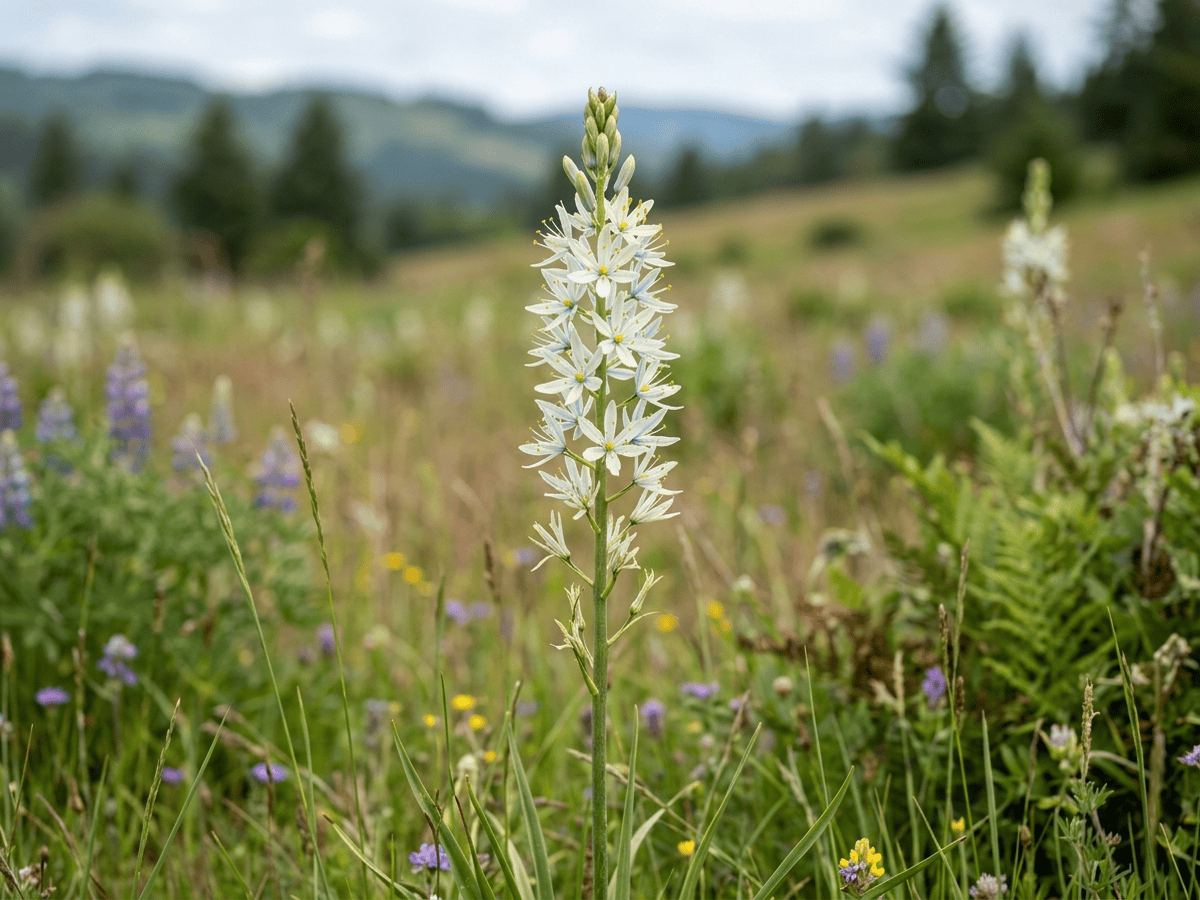
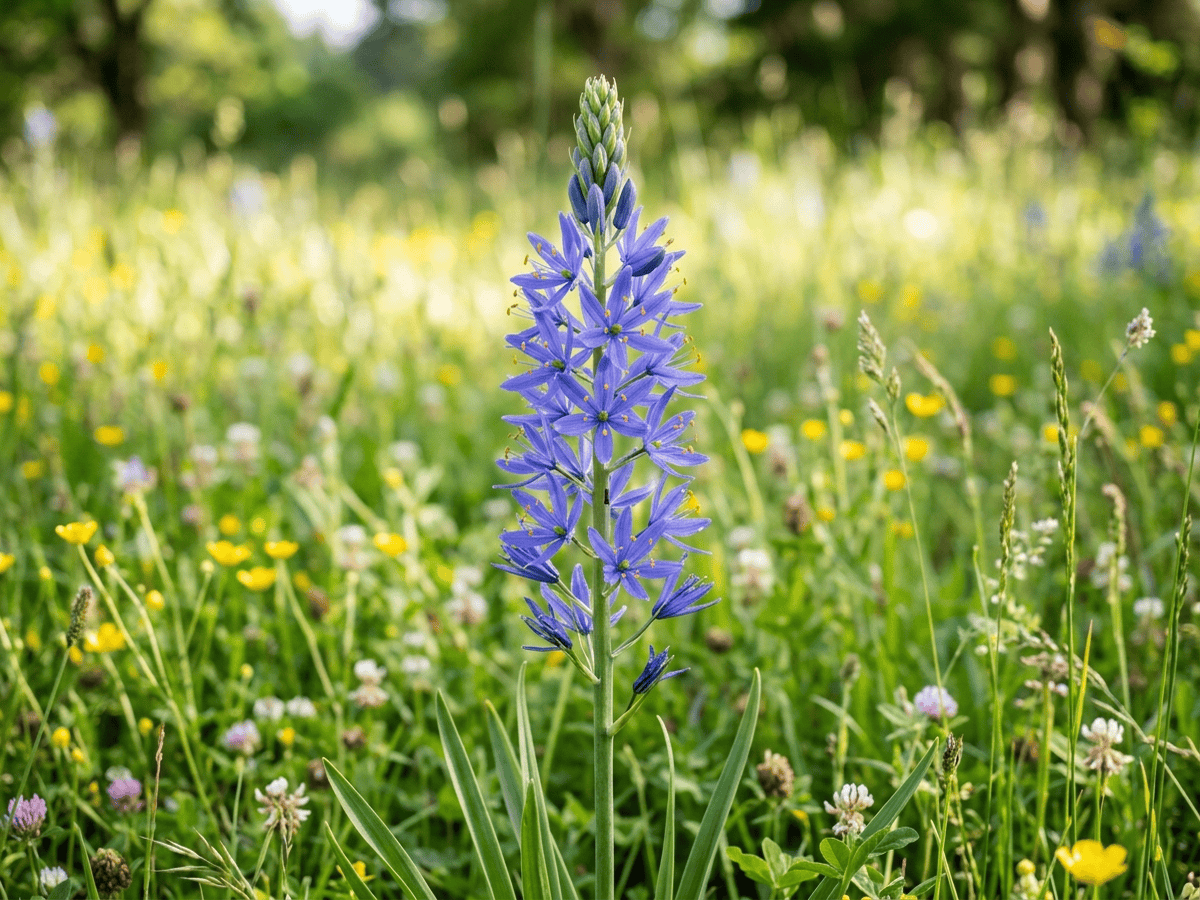
More Camassia plants
Plants with similar care
 Chinese AbeliaAbelia chinensis
 Fragrant AbeliaAbelia mosanensis
 Large-Flowered AbeliaAbelia uniflora
 Glossy AbeliaAbelia x grandiflora
Frequently asked questions
How often should I water Cusick's Camas?
Water about every 4 days during the growing season, and always let excess water drain away.
How much light does Cusick's Camas need?
Full sun: 6+ hrs direct. Watch the leaves — scorching or stretching means the light needs adjusting.
Is Cusick's Camas toxic to cats or dogs?
Pets Slight (Dogs Slight · Cats Slight) Educational information, not medical or veterinary advice. If exposure is suspected, contact a doctor or veterinarian.
Is Cusick's Camas easy to grow?
Yes — it is considered an easy, beginner-friendly plant.
When does Cusick's Camas bloom?
It typically blooms May–Jun in the Northern Hemisphere.
YardMate
Identify any plant in seconds
Snap a photo — YardMate names the plant, diagnoses problems, and reminds you when to water.
Download on the App Store