 YardMate
Papaya
Carica papaya
Hard · Experienced growersAbout Papaya
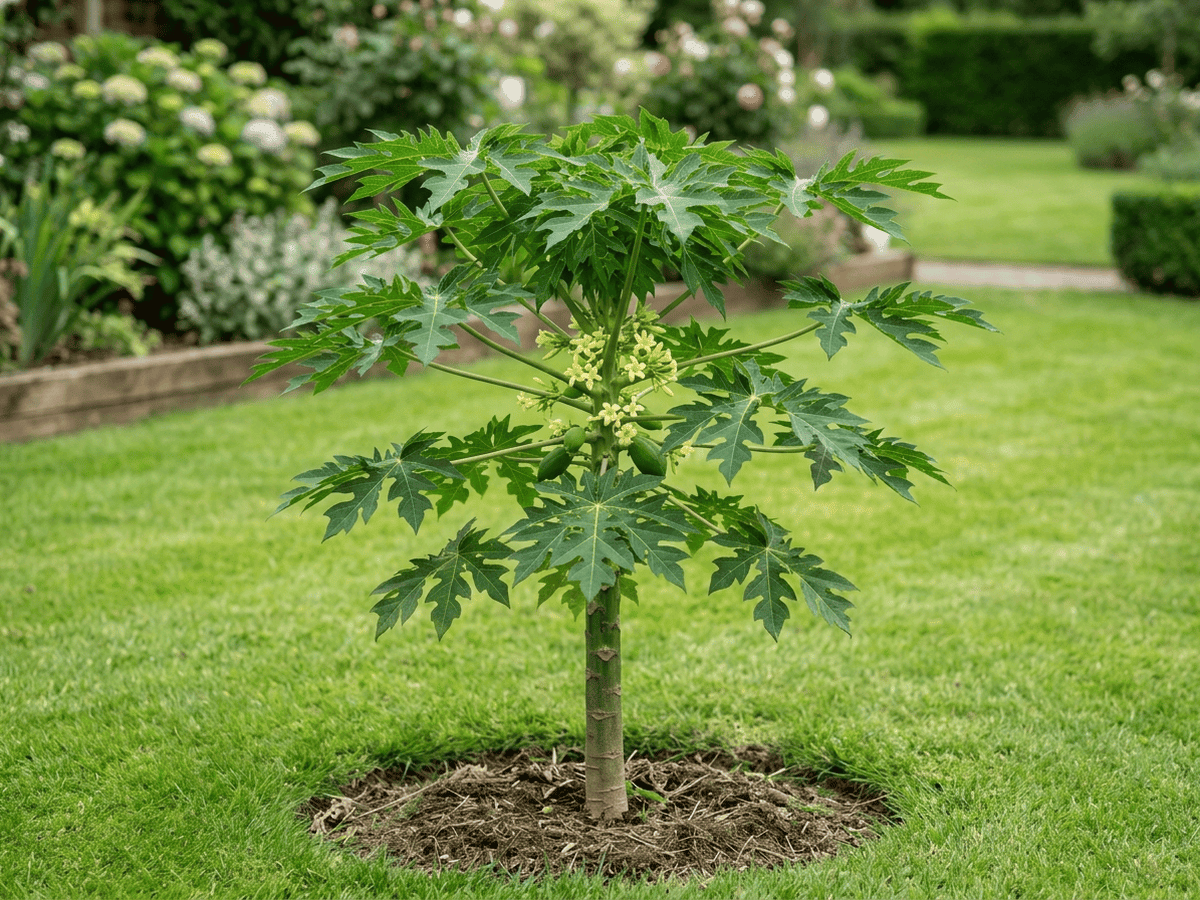
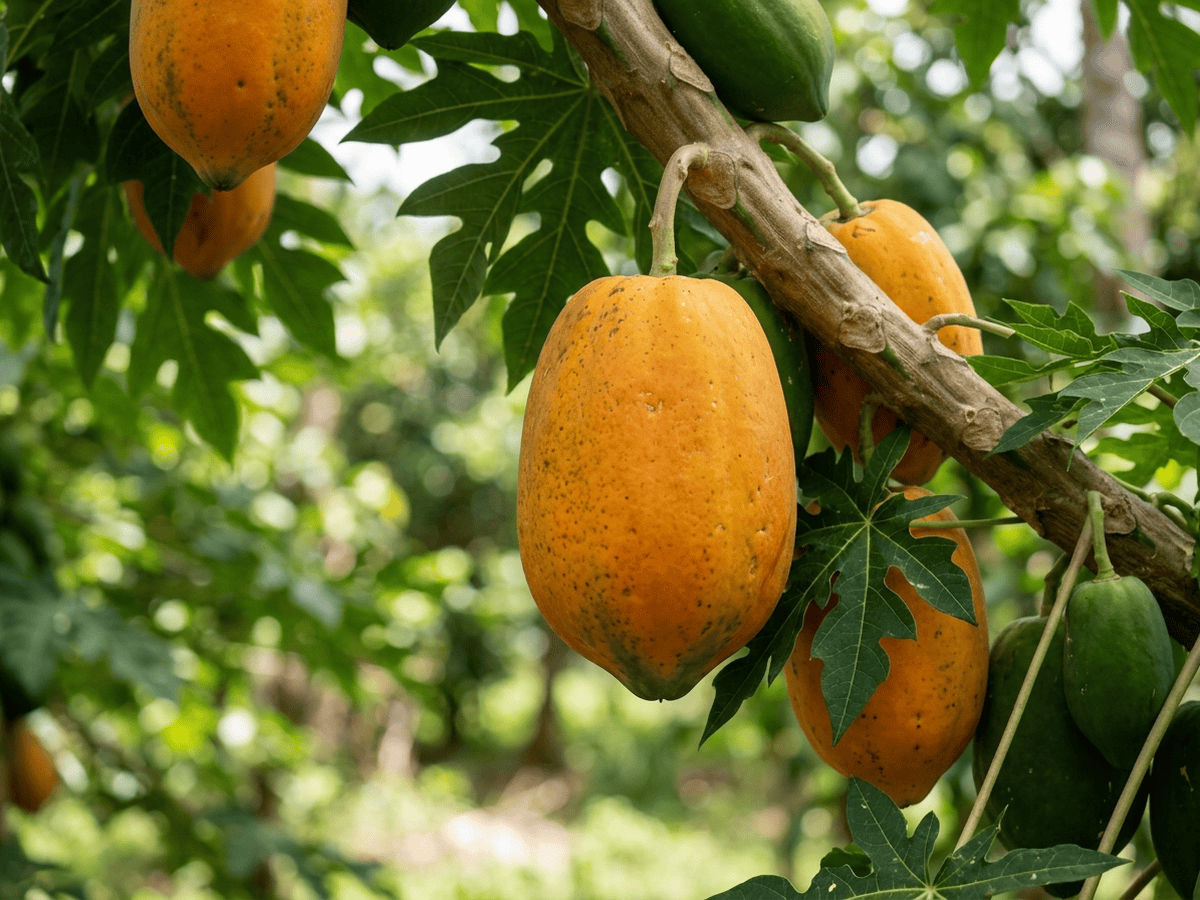
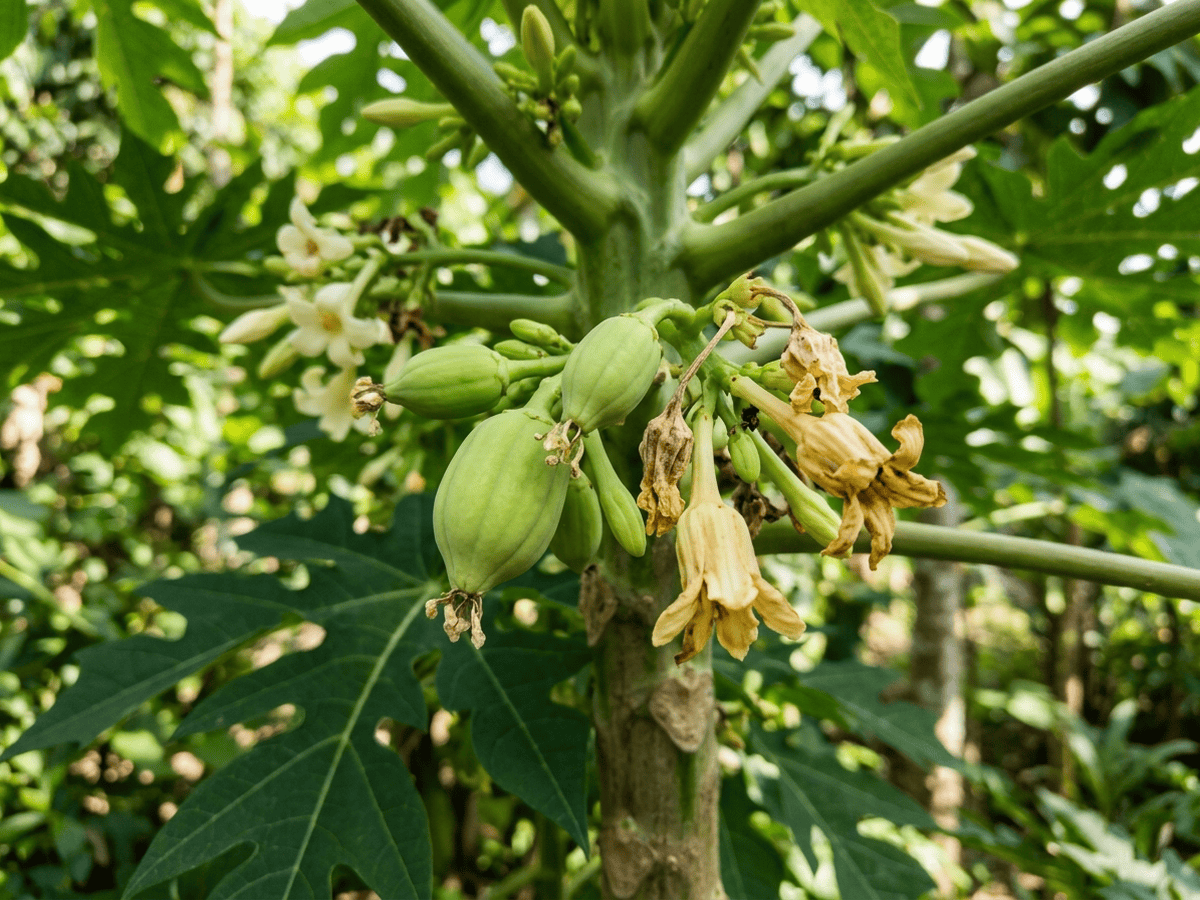
Carica papaya, the Papaya, is a fast-growing tropical tree native to southern Mexico and Central America, now cultivated across the tropics for its large, melon-like orange-yellow fruit—one of the world's most widely consumed tropical crops. A single-stemmed, palm-like tree with deeply lobed leaves clustered at the crown, it bears yellow flowers and produces fruit year-round in warm climates. Its sweet, musky flesh is eaten fresh and used in cooking, while the latex-rich leaves and seeds have long held roles in traditional medicine.
- Edible
- Fast-growing
- Showy-fruit
How to care for Papaya
Watering
- Springevery 7 days
- Summerevery 5 days
- Fallevery 15 days
- Winterevery 30 days
Soil · Rich & well-draining
- Top dressingCompost10%
- Main mixPotting soil + compost 3:180%
- DrainageGravel10%
Top up the compost layer each season.
FERTILIZER
Bloom Booster 10-52-10
A phosphorus-forward feed fuels abundant blooms, with just enough nitrogen and potassium to keep foliage and roots steady.
- Nitrogen · Leaves
- Phosphorus · Roots + Blooms
- Potassium · Strength
- Springevery 30 days
- Summerevery 15 days
- Fallevery 30 days
At a Glance
- NativeCentral America, South America
- Height6–10 ft (1.8–3 m)
- Spread6–10 ft (1.8–3 m)
- Flower colorYellow
- Foliage colorGreen
- Fruit colorOrange, Yellow
- SoilWell-drained, Moist, Sandy
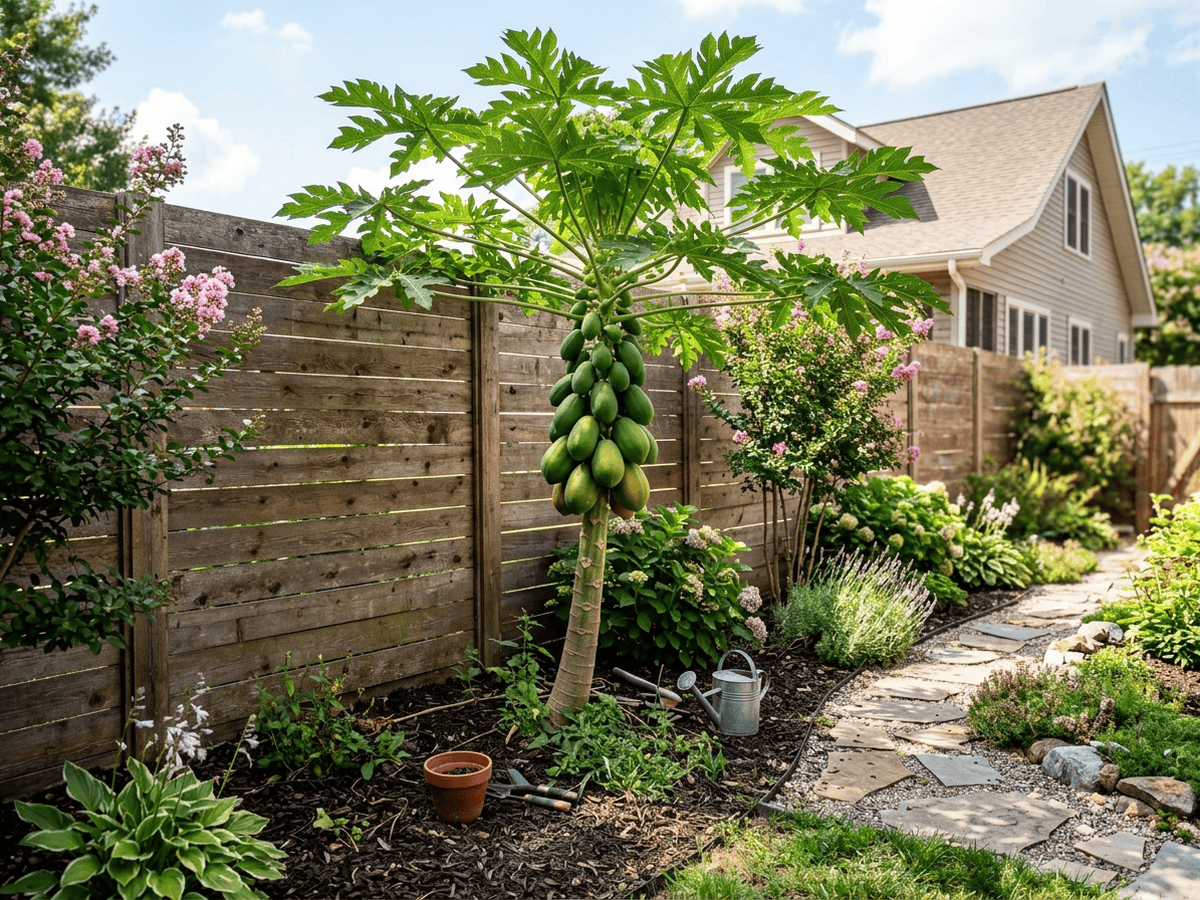
- LocationsYard · Balcony
Bloom time
BLOOM CYCLE
Peak bloom
Jan–Dec
Papaya produces flowers and fruits throughout the year in suitable climates.
Fragrance
LIGHT FRAGRANCE
Female and bisexual flowers have a mild, sweet honey-like scent; male flowers more pronounced but still subtle.
Toxicity
No toxicity has been reported for this plant. Still, it is wise to keep pets from chewing on any houseplant.
Educational information, not medical or veterinary advice. If exposure is suspected, contact a doctor or veterinarian.
DISTRIBUTION

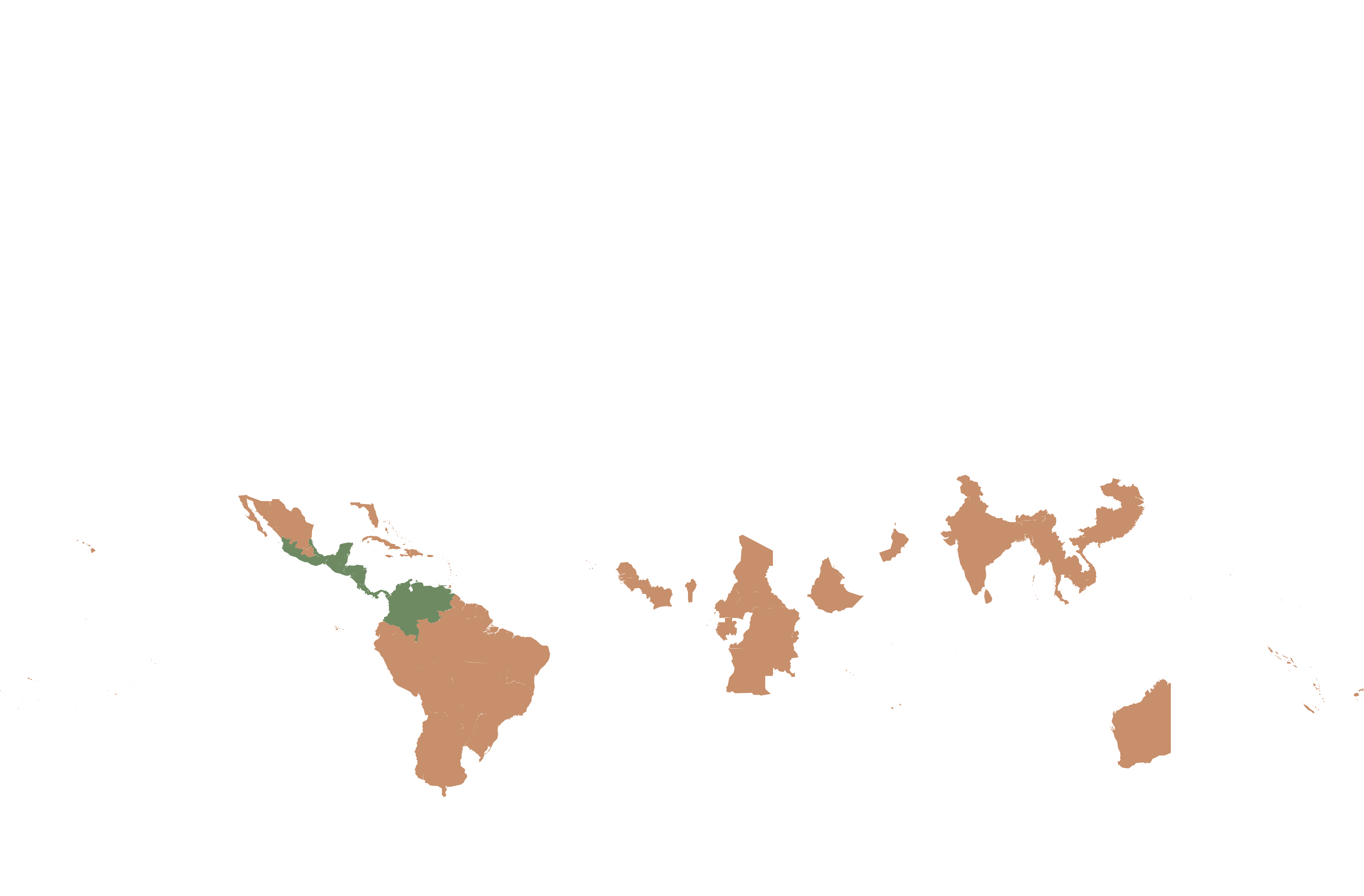
- Native
- Introduced
- Central America
- South America
History
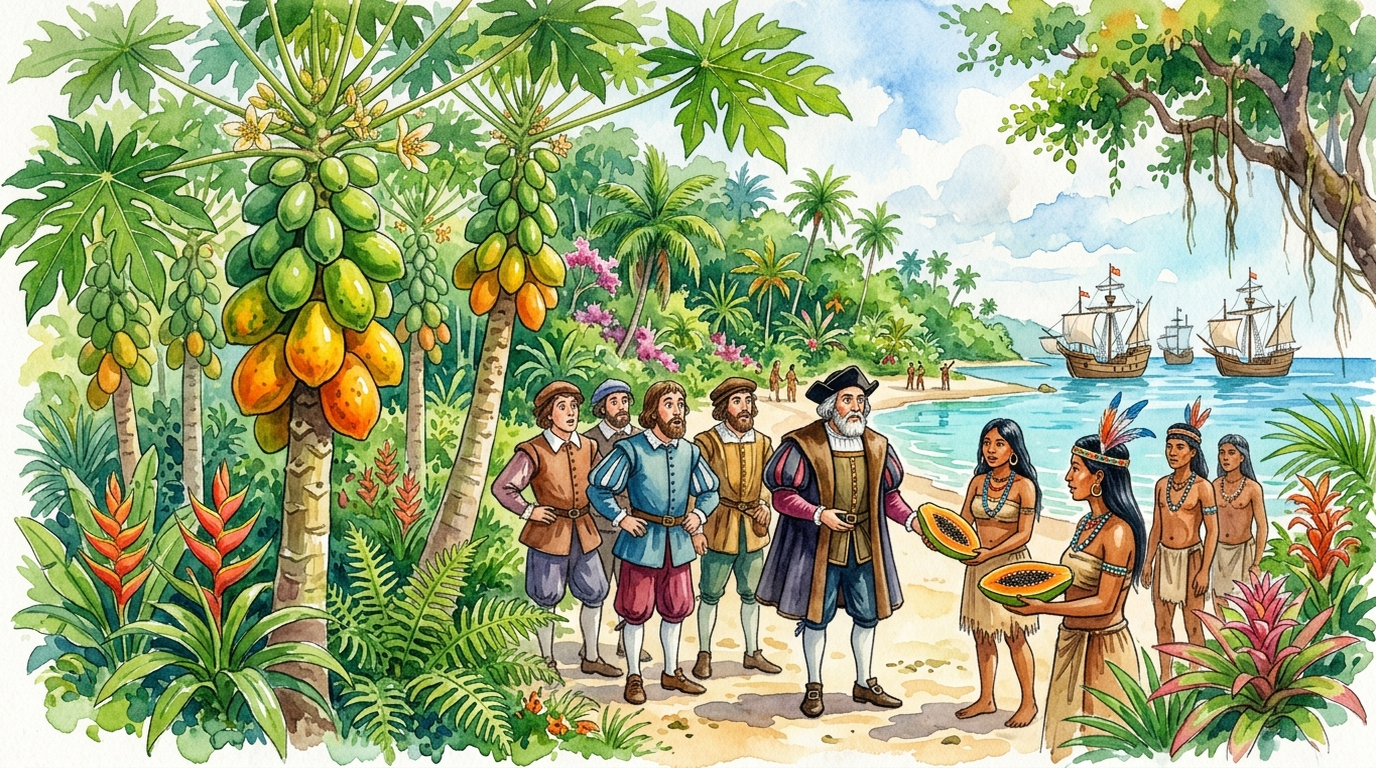
The papaya originated in lowland Central America, likely in southern Mexico, where indigenous peoples domesticated it thousands of years ago. Pre-Columbian Mesoamerican cultures consumed the fruit fresh and fermented, used the leaves to tenderize meat—exploiting its protease enzyme papain—and employed the latex and seeds in folk medicine for digestive complaints and intestinal parasites. Christopher Columbus encountered the papaya in the Caribbean on his 1492 voyage and reportedly called it the 'fruit of the angels.'
Spanish and Portuguese explorers carried papaya seeds throughout their maritime empires in the early 16th century, introducing the tree to the Philippines, India, Africa, and eventually the Pacific Islands within just a few decades of European contact. By 1600, papaya was established across the tropical belt as a staple food crop, remarkable for its speed—plants can bear fruit within a year of sowing.
In the 20th century, commercial cultivation expanded dramatically. In 1998, the papaya became the first fruit crop to be saved by transgenic technology: the Rainbow papaya, engineered to resist the devastating Papaya Ringspot Virus, rescued Hawaii's industry from near-collapse. Today, India, Brazil, Mexico, and Indonesia dominate global production, and papain—extracted from unripe fruit—is a key ingredient in meat tenderizers and medical wound dressings.
Symbolism & meaning
What It Symbolizes
Long before European contact, Mesoamerican peoples called the papaya a gift from the earth—a tree that seemed to produce more than it took, fruiting without pause in the endless tropical warmth. When Columbus tasted it on his Caribbean landing and declared it fit for angels, he expressed what indigenous cultivators had known for millennia: the papaya gives abundantly and asks little in return.
- abundance — The papaya's prolific year-round fruiting and rapid growth from seed to bearing tree embody tropical abundance and generous nourishment.
- vitality — Bearing fruit within a single year of sowing, the papaya symbolizes swift growth, resilience, and the sustaining power of the tropics.
Where the Name Comes From
The genus name Carica was used by Pliny for figs exported from Caria, an ancient region of Asia Minor; Linnaeus applied it to papaya because its lobed leaves resembled a fig leaf. The species epithet 'papaya' derives from 'ababai,' the Carib indigenous word for the fruit that Spanish explorers heard and transcribed in the Caribbean.
Uses & Fun Facts
- Sweet orange flesh eaten fresh, juiced, or added to smoothies; unripe green fruit cooked in salads and curries in Southeast Asian and Caribbean cuisine
- Papain enzyme from unripe latex used in traditional medicine for digestion aid, and commercially in meat tenderizers and wound-care products
- Bold, deeply lobed foliage and palm-like silhouette make it a dramatic tropical focal point in warm-climate gardens
- Peppery seeds used as a spice substitute; young leaves and flowers cooked as vegetables in parts of Asia and Africa
Related plants
Plants with similar care
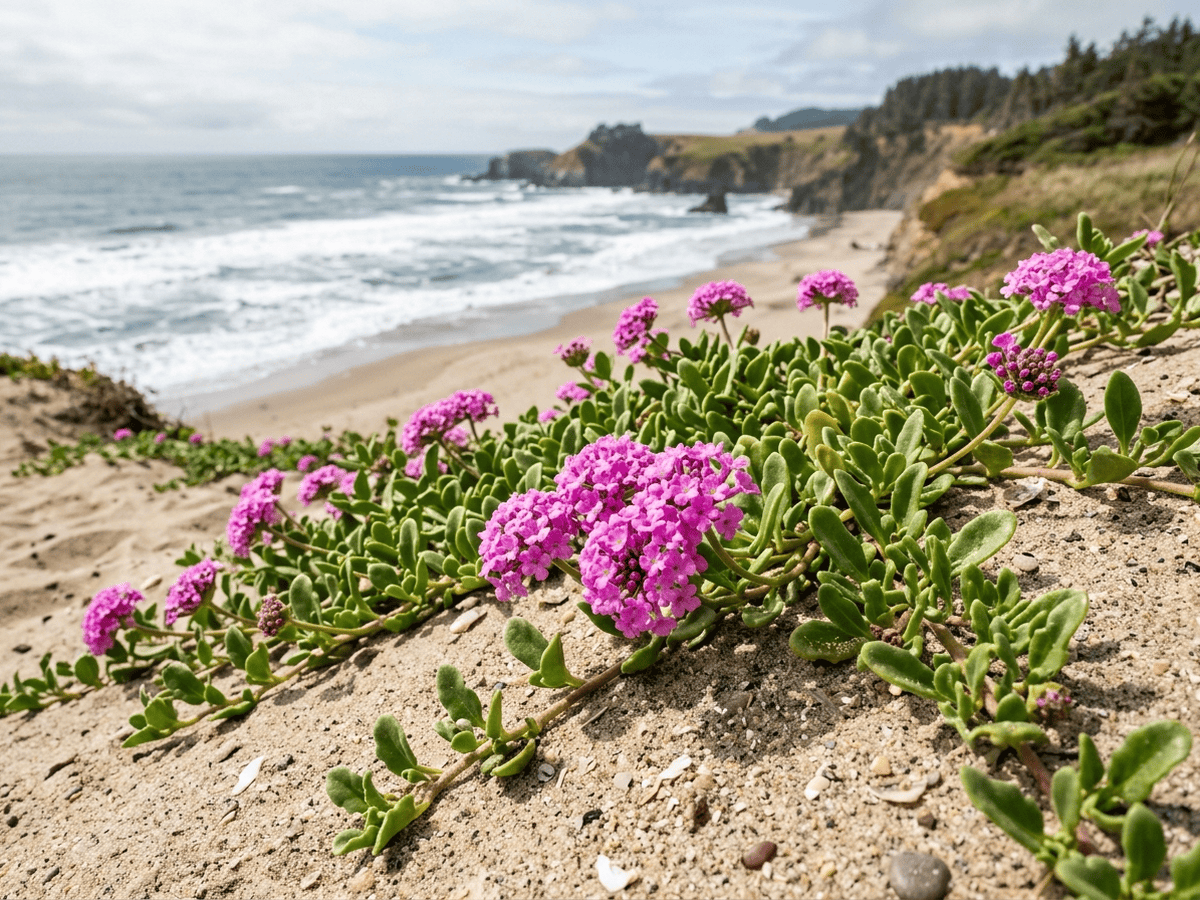 Pink Sand VerbenaAbronia umbellata
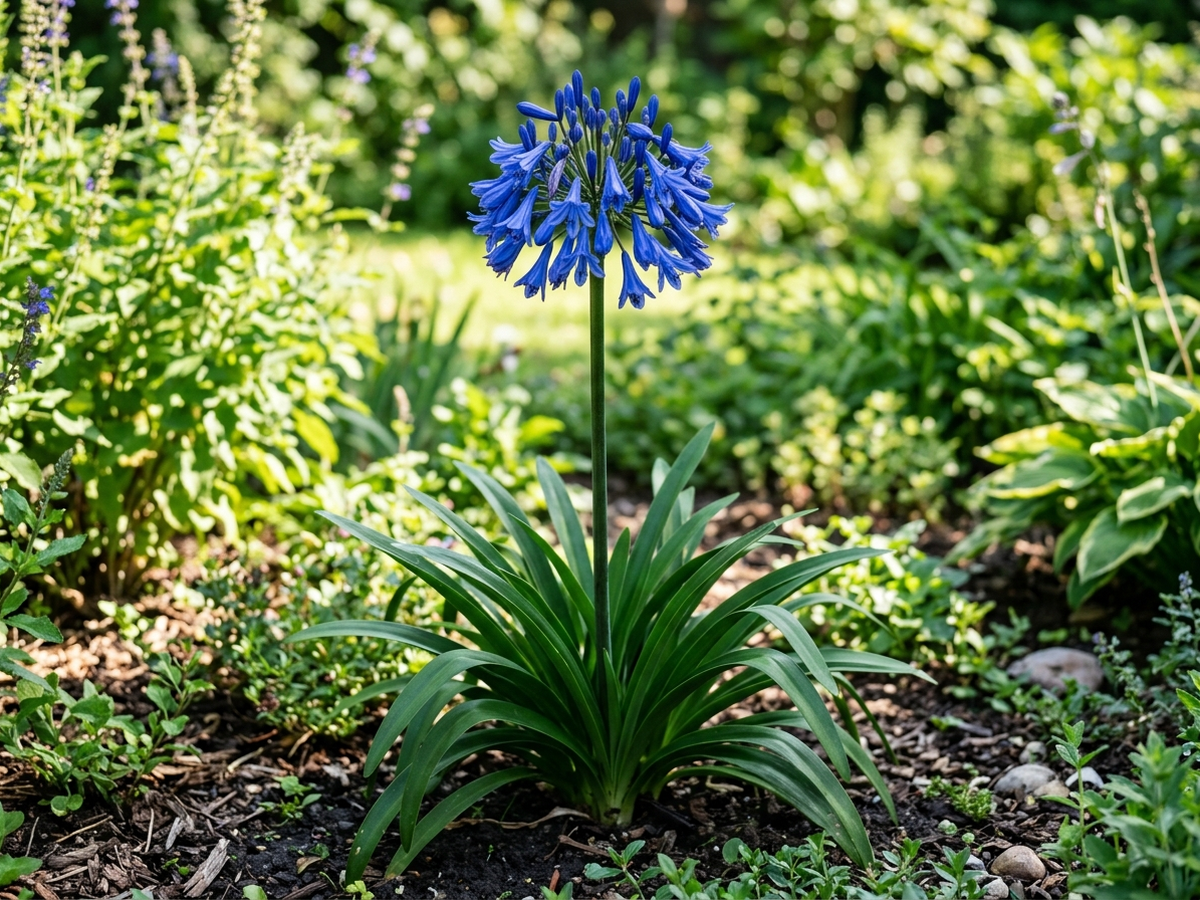 Drooping AgapanthusAgapanthus inapertus
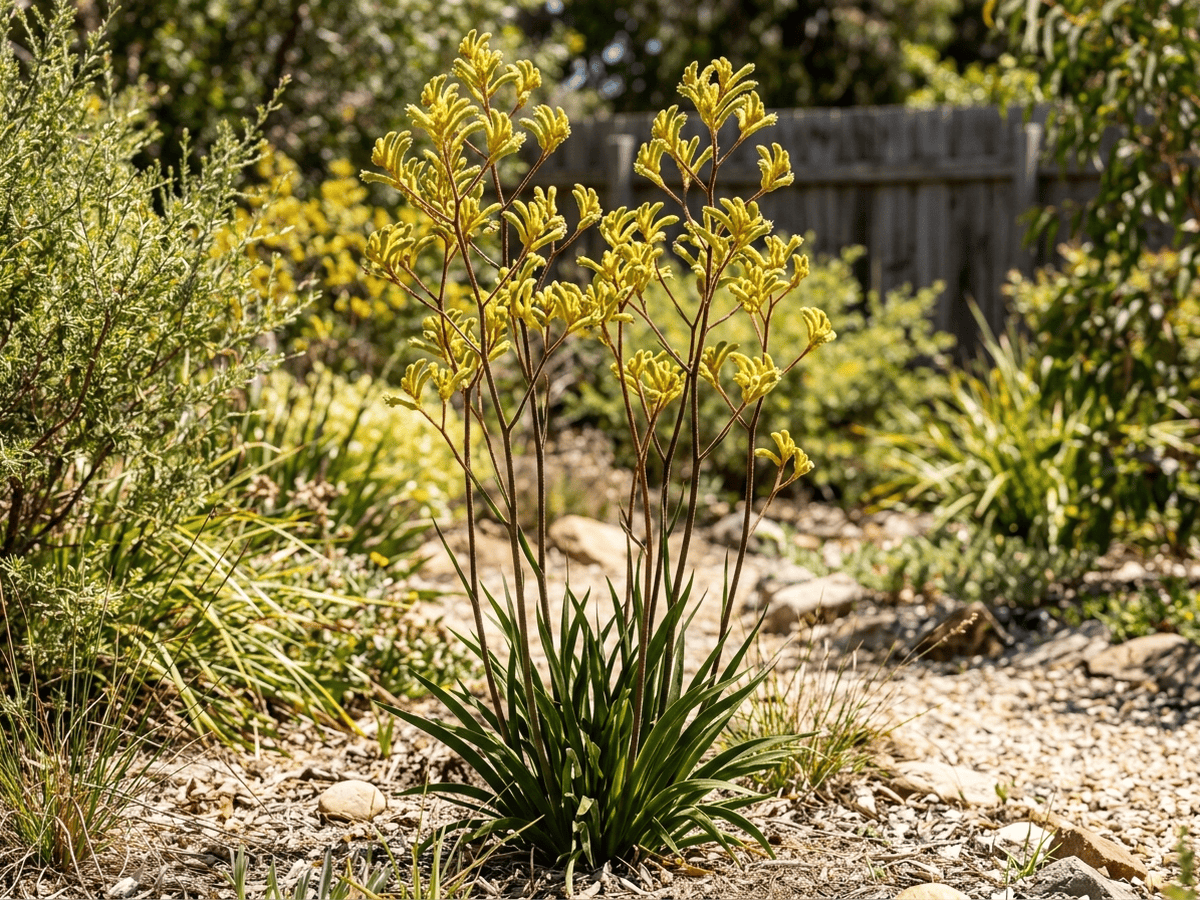 Tall Kangaroo PawAnigozanthos flavidus
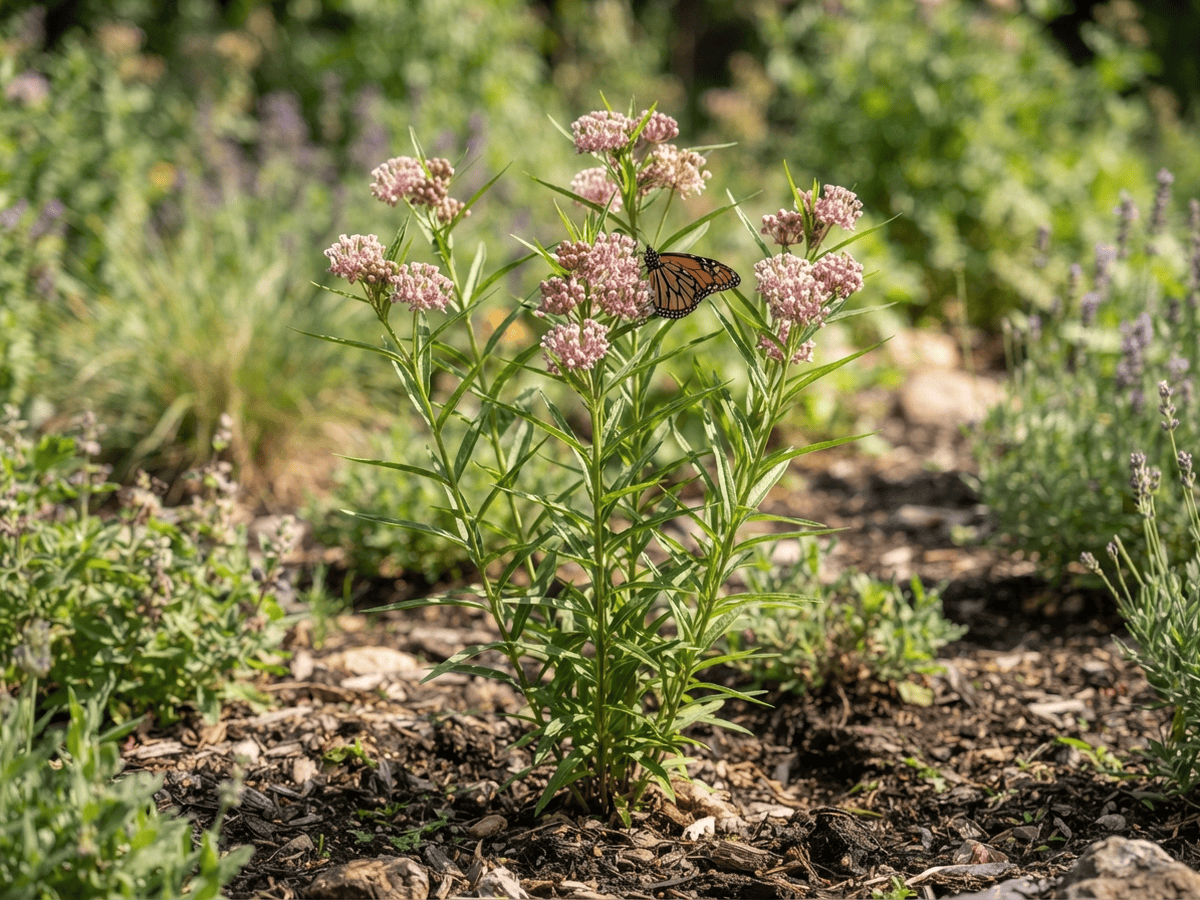 Narrowleaf MilkweedAsclepias fascicularis
Frequently asked questions
How often should I water Papaya?
In summer, water about every 5 days; in winter, about every 30 days. Adjust for heat, pot size and drainage.
How much light does Papaya need?
Full sun: 6+ hrs direct. Watch the leaves — scorching or stretching means the light needs adjusting.
Is Papaya toxic to cats or dogs?
No toxicity has been reported for this plant. Still, it is wise to keep pets from chewing on any houseplant. Educational information, not medical or veterinary advice. If exposure is suspected, contact a doctor or veterinarian.
Is Papaya easy to grow?
It is considered challenging and rewards experienced growers.
When does Papaya bloom?
It typically blooms Jan–Dec in the Northern Hemisphere.
YardMate
Identify any plant in seconds
Snap a photo — YardMate names the plant, diagnoses problems, and reminds you when to water.
Download on the App Store