 YardMate


Common Bluebeard
Caryopteris incana
Easy · Beginner friendlyAbout Common Bluebeard
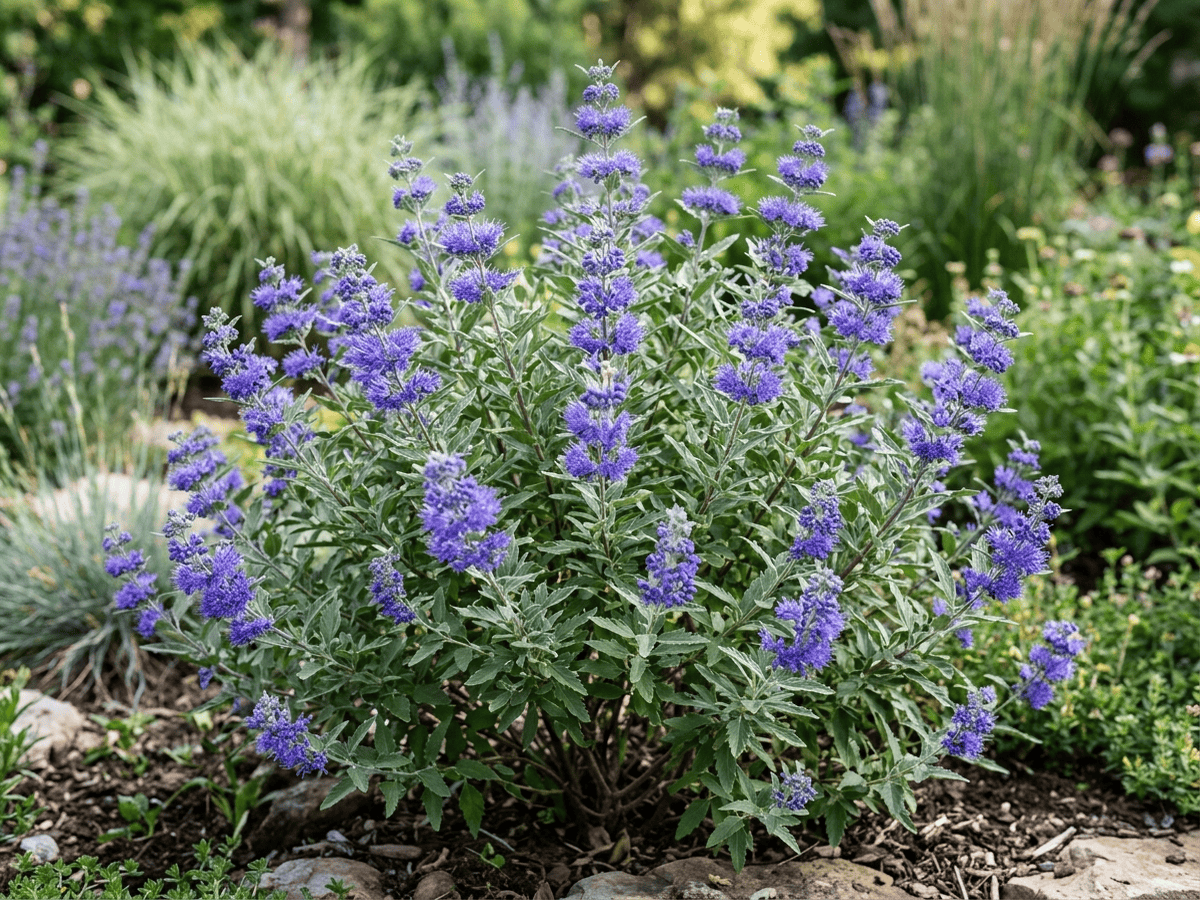
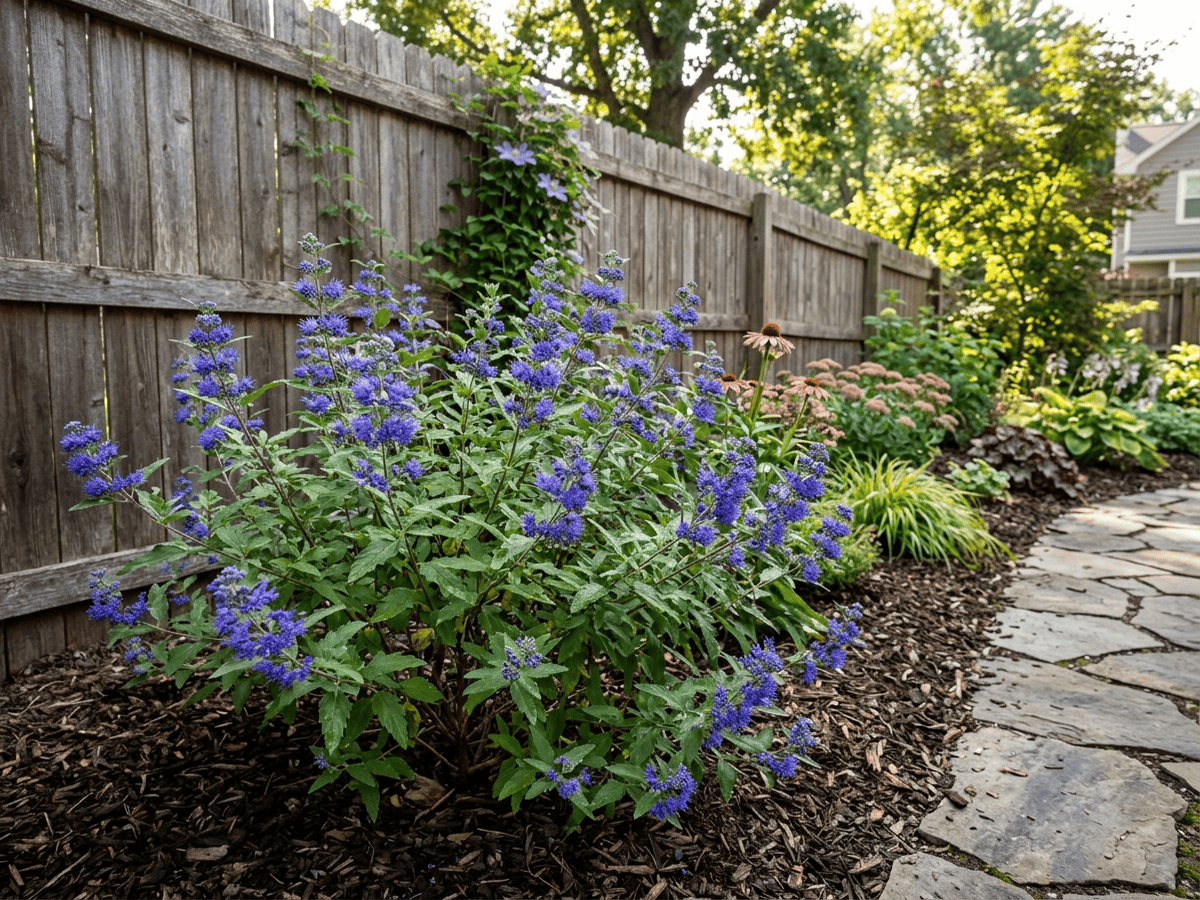
Common Bluebeard is a Japanese and Chinese deciduous subshrub growing 2 to 4 feet tall, with grey-green aromatic leaves and dense clusters of small violet-blue flowers along upper stems in late summer and fall. A parent of the widely grown Caryopteris x clandonensis hybrids, still grown as a species for its extended late-season bloom and intense butterfly appeal in American pollinator gardens.
- Fragrant
- Drought-tolerant
- Deer-resistant
- Pollinator-friendly
How to care for Common Bluebeard
Watering
- Springevery 7 days
- Summerevery 5 days
- Fallevery 10 days
- Winterevery 21 days
Soil · Rich & loamy
- Top dressingBark mulch15%
- Main mixRich loam + compost 3:170%
- DrainageGravel15%
Use fully finished compost — fresh compost burns roots.
FERTILIZER
Balanced Feed 14-14-14
An even feed covers all three needs at once, keeping leaves, roots and blooms moving together with nothing pushed out of balance.
- Nitrogen · Leaves
- Phosphorus · Roots + Blooms
- Potassium · Strength
- Springevery 60 days
- Summerevery 90 days
At a Glance
- NativeEast Asia
- Height2–4 ft (0.6–1.2 m)
- Spread2–4 ft (0.6–1.2 m)
- Flower colorBlue, Purple
- Foliage colorGreen, Yellow
- SoilWell-drained, Loamy
- LocationsYard
Bloom time
BLOOM CYCLE
Peak bloom
Jun–Nov
Violet-blue clusters along upper stems late summer to fall
Fragrance
MODERATE FRAGRANCE
Foliage mint-sage scented when brushed; flowers mildly fragrant.
Toxicity
No toxicity has been reported for this plant. Still, it is wise to keep pets from chewing on any houseplant.
Educational information, not medical or veterinary advice. If exposure is suspected, contact a doctor or veterinarian.
DISTRIBUTION


- Native
- Introduced
- East Asia
History
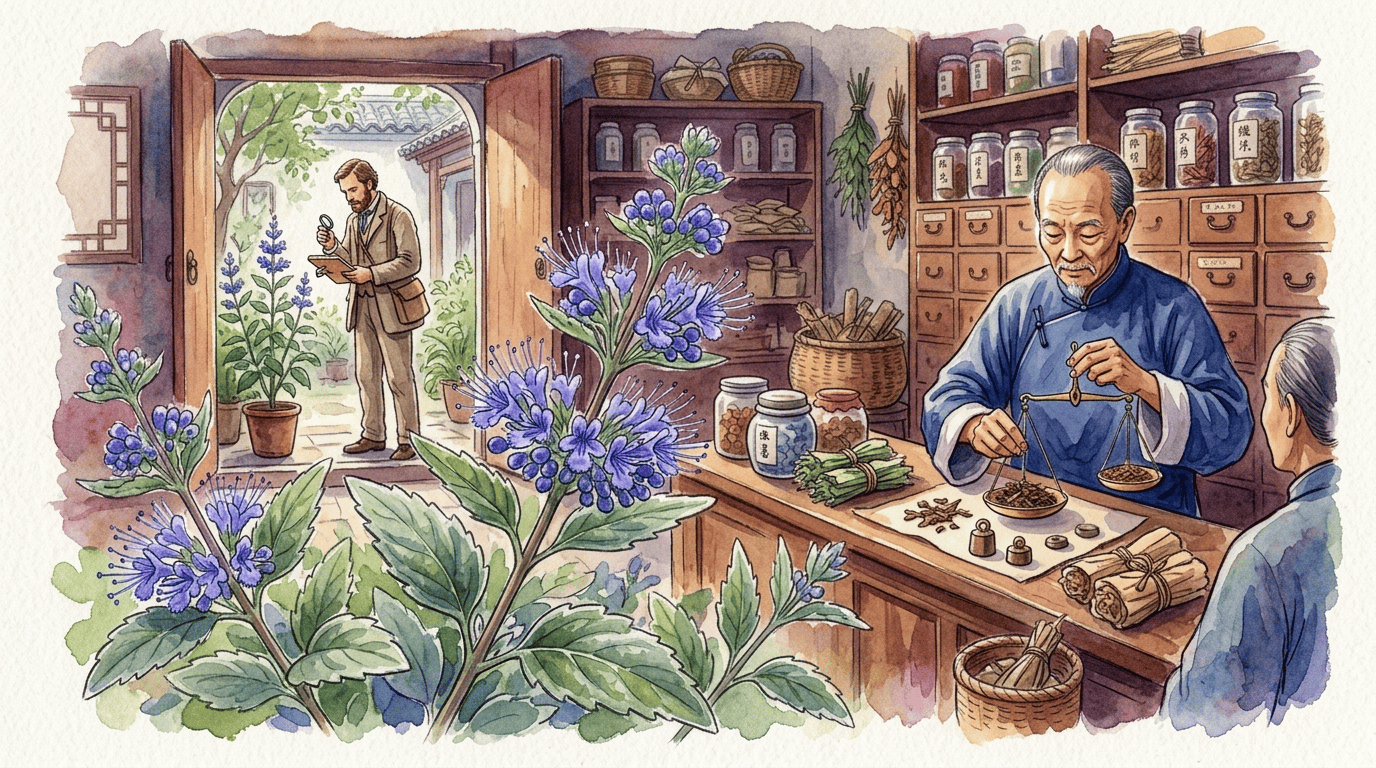
Caryopteris incana grows on dry hillsides and open forests across eastern China, Taiwan, Korea, and Japan. Friedrich Miquel described it in 1865. In Chinese traditional medicine (as lan xiang cao) the aerial parts were used to treat coughs, bronchitis, and rheumatism.
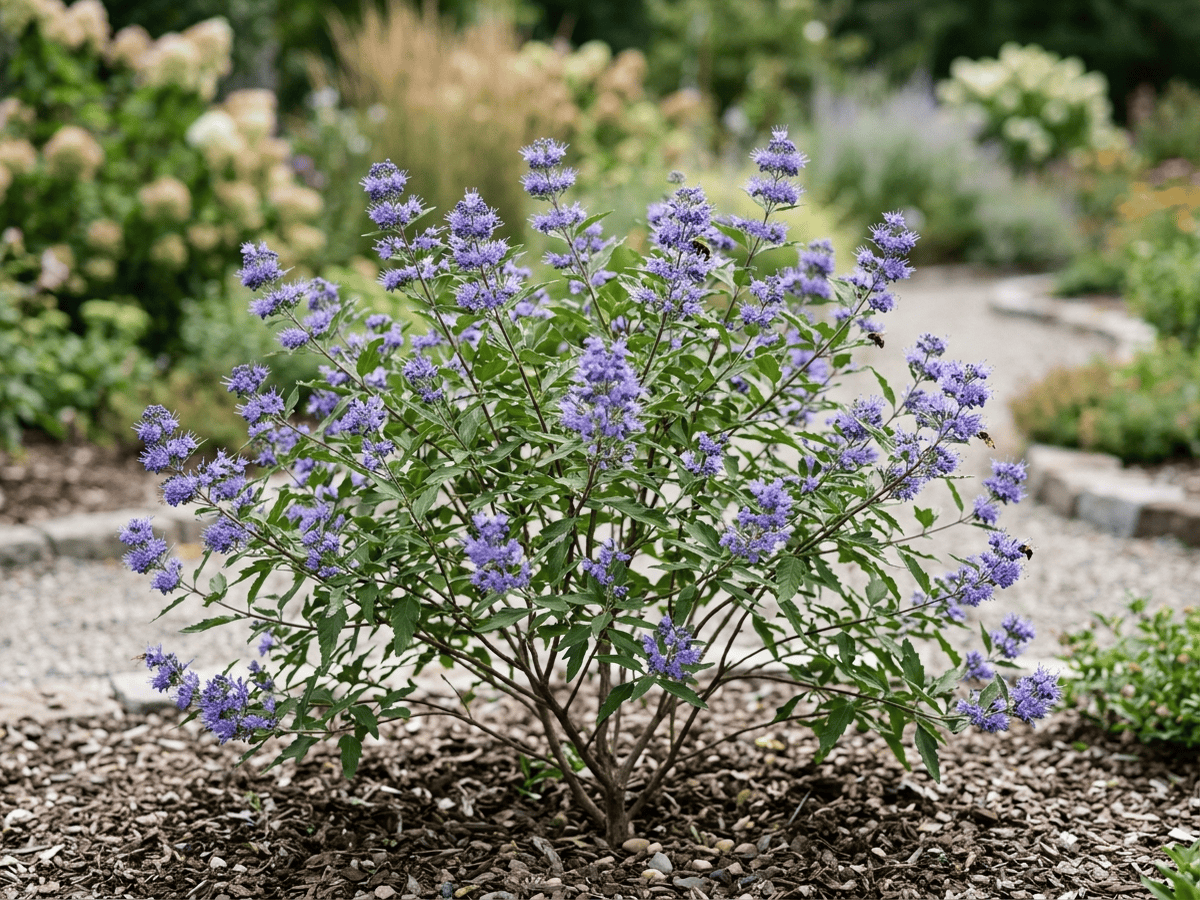
The species reached European botanical gardens in the 1840s through Robert Fortune's China expeditions. In 1933, Arthur Simmonds of Clandon Park in Surrey crossed C. incana with the hardier C. mongolica; the resulting hybrid C. × clandonensis and its cultivars ('Heavenly Blue', 'Dark Knight', 'Longwood Blue', 'Worcester Gold') became among the most popular late-summer flowering shrubs in temperate gardens. Pure C. incana remains grown in mild-winter areas, particularly the cultivar 'Jason' ('Sunshine Blue') with gold foliage.
Long cultivated in China and Japan as both garden plant and traditional medicine. Introduced to British gardens in 1844 by Robert Fortune, and thence to American horticulture. A key parent species in the famous Caryopteris x clandonensis hybrids created at Clandon Park, UK in the 1930s that dominate modern American markets.
Symbolism & meaning
What It Symbolizes
Common Bluebeard offers an autumn serenade in violet-blue, its late clusters humming with bees when most shrubs have gone quiet. Silver-gray foliage carries the season toward dormancy with a heritage hue that pairs gently with goldenrod and aster. Its meaning is the soft, considered close of the gardening year — music played in a minor key, just before the leaves let go.
- Autumn serenade — gentle late-season blue clusters
- Silver heritage — gray foliage with violet flowers
Where the Name Comes From
The common name highlights its blue coloring. 'incana' from Latin means hoary or gray, for the silvery-gray foliage.
Uses & Fun Facts
- Aromatic blue flowers and foliage scent late-summer gardens
- Late-summer blue blossoms feed bees and butterflies
Related plants
More Caryopteris plants

Plants with similar care
 Chinese AbeliaAbelia chinensis
 Fragrant AbeliaAbelia mosanensis
 Large-Flowered AbeliaAbelia uniflora
 Glossy AbeliaAbelia x grandiflora
Frequently asked questions
How often should I water Common Bluebeard?
In summer, water about every 5 days; in winter, about every 21 days. Adjust for heat, pot size and drainage.
How much light does Common Bluebeard need?
Full sun: 6+ hrs direct. Watch the leaves — scorching or stretching means the light needs adjusting.
Is Common Bluebeard toxic to cats or dogs?
No toxicity has been reported for this plant. Still, it is wise to keep pets from chewing on any houseplant. Educational information, not medical or veterinary advice. If exposure is suspected, contact a doctor or veterinarian.
Is Common Bluebeard easy to grow?
Yes — it is considered an easy, beginner-friendly plant.
When does Common Bluebeard bloom?
It typically blooms Jun–Nov in the Northern Hemisphere.
YardMate
Identify any plant in seconds
Snap a photo — YardMate names the plant, diagnoses problems, and reminds you when to water.
Download on the App Store