 YardMate


Bluebeard
Caryopteris x clandonensis
Easy · Beginner friendlyAbout Bluebeard
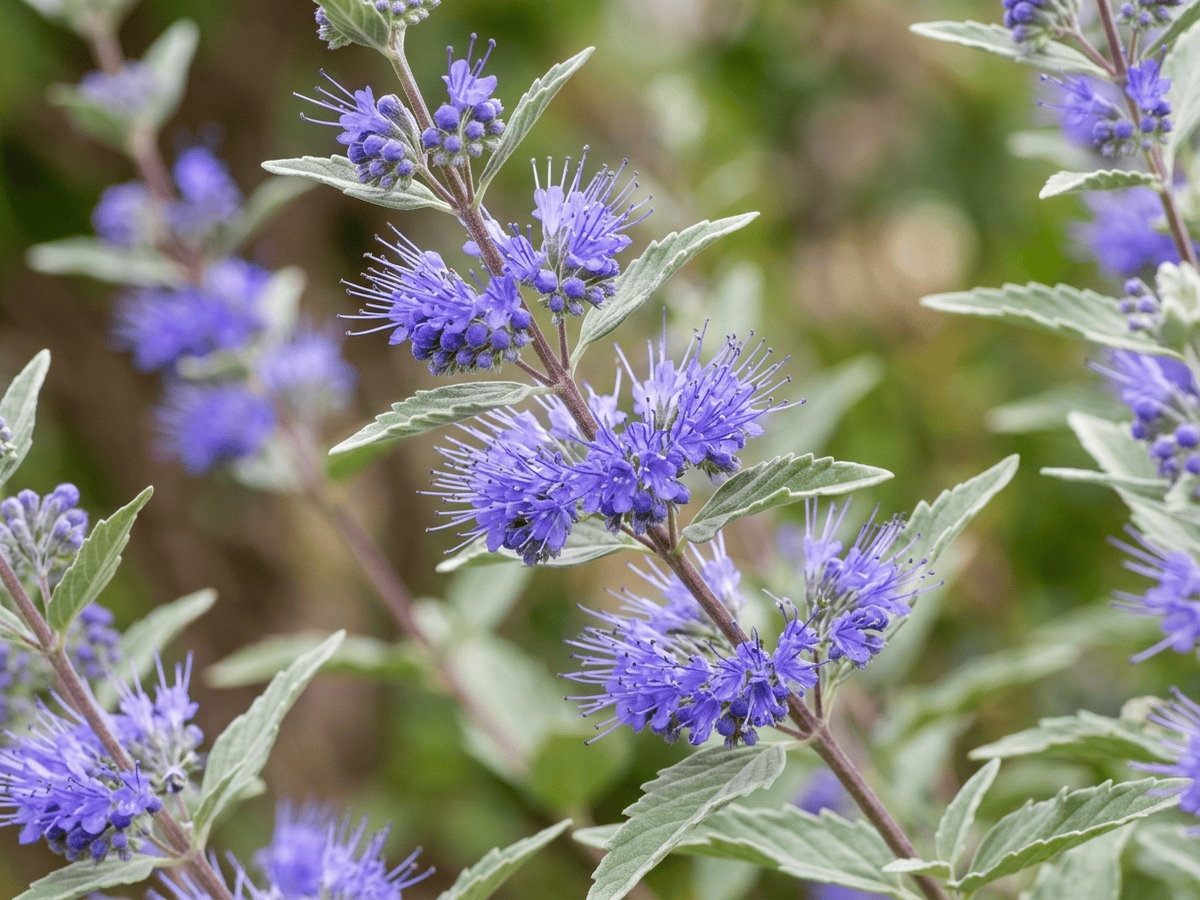
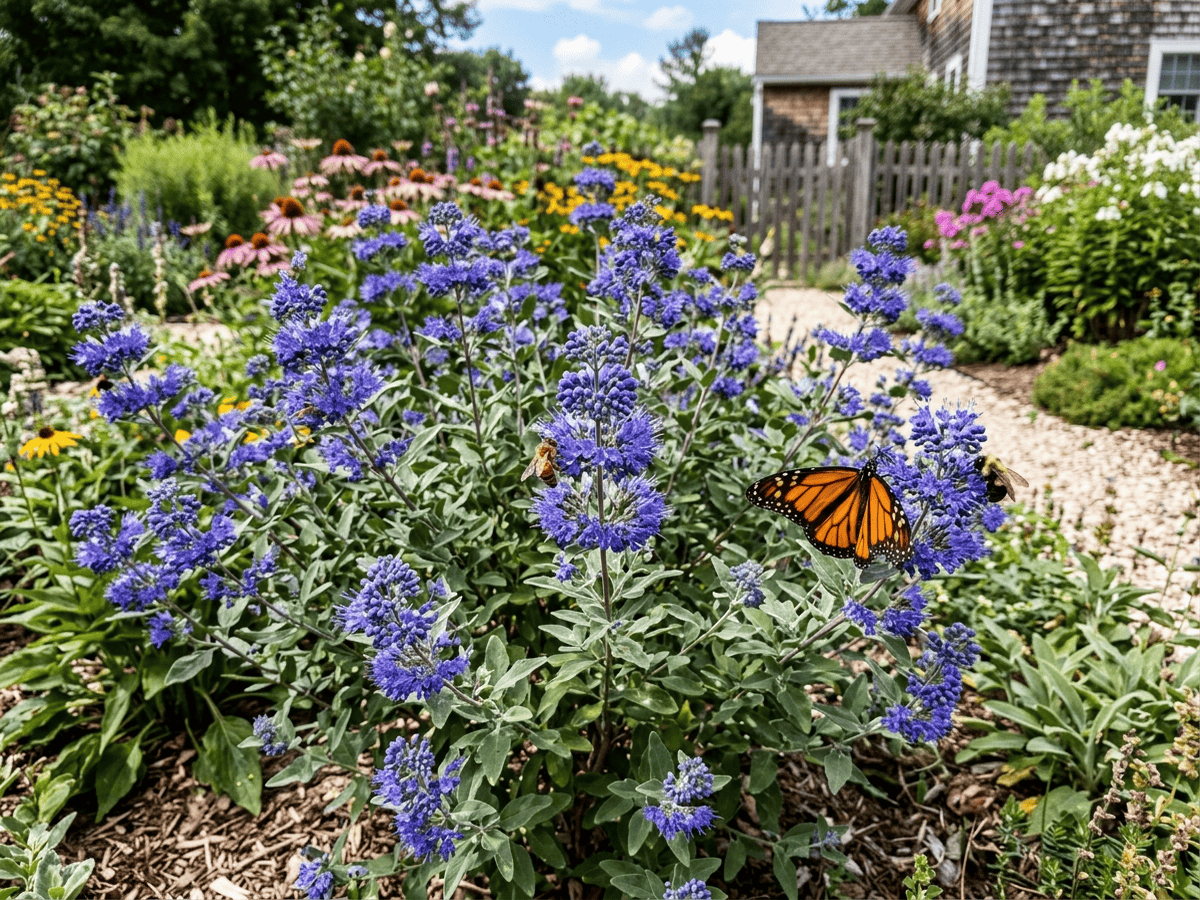
Blue Mist Shrub is a compact deciduous subshrub growing 2-3 feet tall, a hybrid of Asian species prized for its clusters of misty blue flowers from late summer into fall—a rare color at that time of year. The aromatic gray-green foliage releases a spicy scent when brushed. Technically a woody perennial, it dies back partway in cold winters and is pruned hard in spring. A magnet for butterflies and bees, it fills the late-season pollinator gap when other flowers have faded.
- Fragrant
- Drought-tolerant
- Deer-resistant
- Pollinator-friendly
How to care for Bluebeard
Watering
- Springevery 10 days
- Summerevery 7 days
- Fallevery 14 days
- Winterevery 30 days
Soil · Rich & loamy
- Top dressingBark mulch15%
- Main mixRich loam + compost 3:170%
- DrainageGravel15%
Use fully finished compost — fresh compost burns roots.
FERTILIZER
Balanced Feed 14-14-14
An even feed covers all three needs at once, keeping leaves, roots and blooms moving together with nothing pushed out of balance.
- Nitrogen · Leaves
- Phosphorus · Roots + Blooms
- Potassium · Strength
- Springevery 30 days
At a Glance
- Height2–4 ft (0.6–1.2 m)
- Spread2–4 ft (0.6–1.2 m)
- Flower colorBlue, Purple
- Foliage colorGreen, Silver, Yellow
- SoilLoamy, Well-drained, Sandy
- LocationsYard
Bloom time
BLOOM CYCLE
Peak bloom
Aug–Oct
Misty blue flower clusters August to October; cut back hard in spring
Fragrance
MODERATE FRAGRANCE
Pungent aromatic sage-camphor scent when leaves are crushed.
Toxicity
No toxicity has been reported for this plant. Still, it is wise to keep pets from chewing on any houseplant.
Educational information, not medical or veterinary advice. If exposure is suspected, contact a doctor or veterinarian.
History

Caryopteris x clandonensis originated around 1930 at Clandon Park in Surrey, England, where Arthur Simmonds crossed the Chinese C. incana with the Mongolian C. mongholica. The hybrid combined larger, denser flower clusters with hardier shrubby growth, giving gardeners a rare late-summer shrub with true blue flowers. Cultivars quickly followed: 'Arthur Simmonds' preserves the original line, 'Heavenly Blue' deepened the color, 'Dark Knight' brought violet-blue flowers from a Texas selection, and yellow-leaved forms such as 'Worcester Gold' and 'Sunshine Blue' widened the ornamental range.
The plant flowers on new wood from late summer into autumn, when bees and butterflies are hungry for nectar. It is usually cut back hard in spring, then rebounds into a compact aromatic shrub. Few woody plants offer this much blue at the dog days of summer.
Symbolism & meaning
What It Symbolizes
Bluebeard offers serenity in late summer's heat, its cool blue haze of bee-loved flowers a balm to gardens scorched by August. Each spring it returns reliably from winter dieback, an act of persistence that gardeners learn to trust the way one trusts old friends. It is proof that calm and durability can grow on the same modest woody stem.
- Serenity — cool blue flowers evoke calm in late summer heat
- Persistence — returns reliably each spring after winter dieback
Where the Name Comes From
'Caryopteris' from Greek 'karyon' (nut) and 'pteron' (wing), referring to winged fruit; 'clandonensis' for Clandon, Surrey.
Uses & Fun Facts
- Late-summer blue flowers feed bees during nectar dearth
- Aromatic gray foliage releases spicy scent when brushed
- Compact subshrub for sunny mixed borders and edging
Related plants
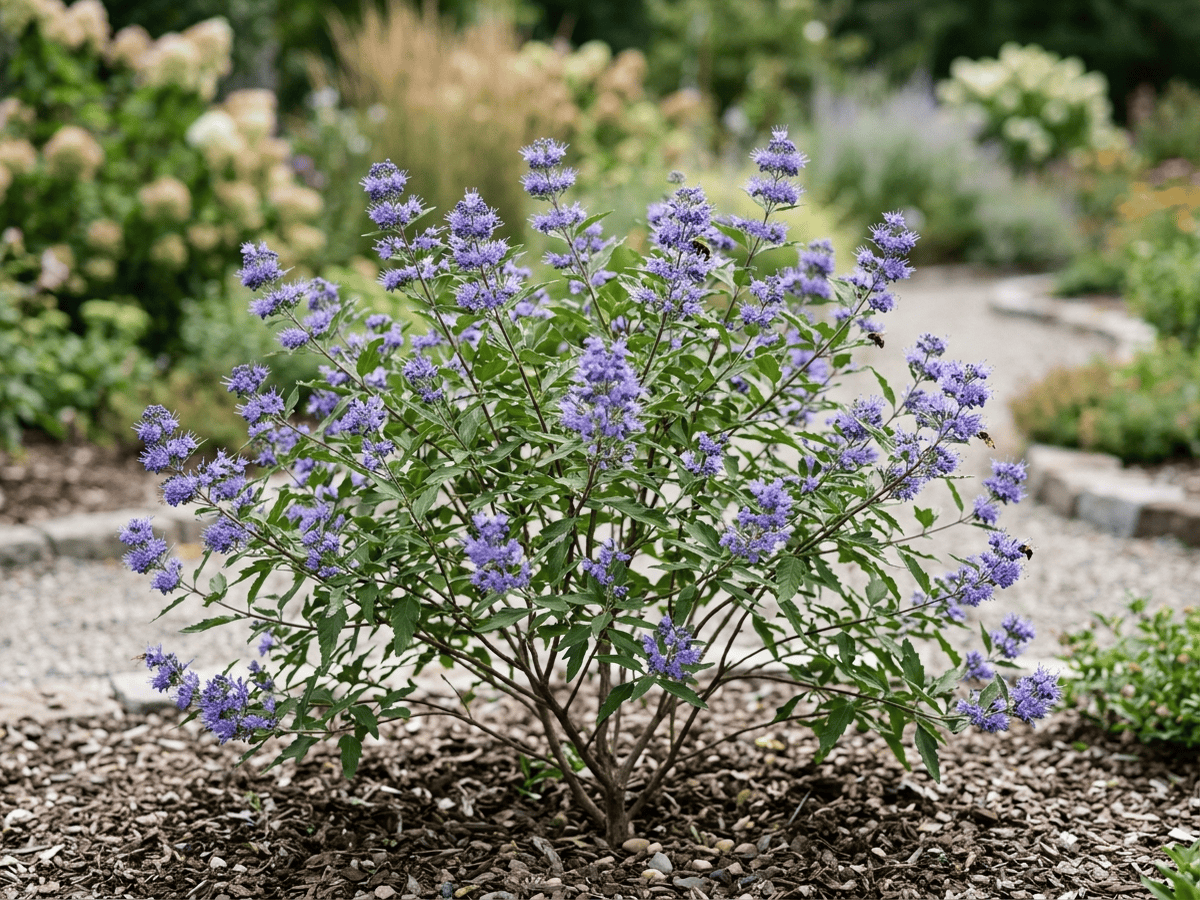
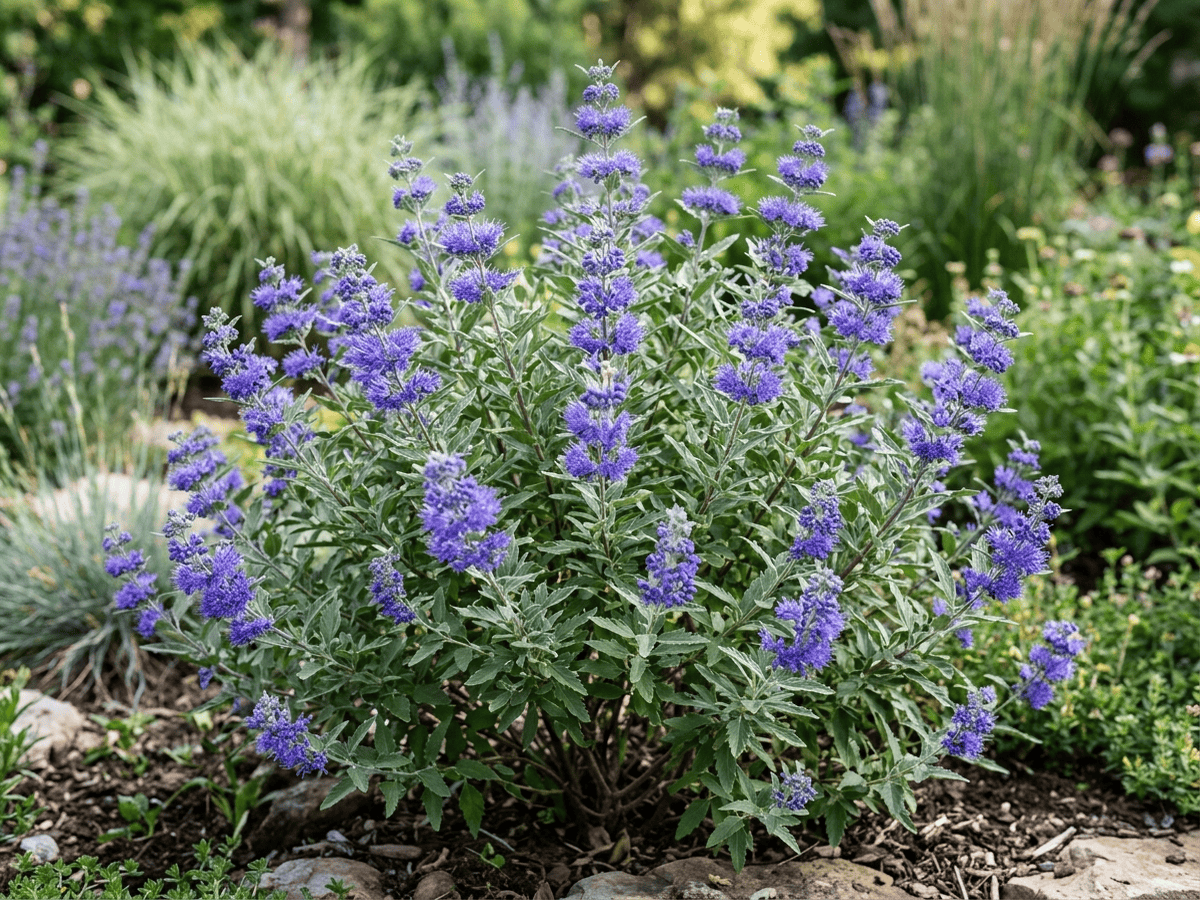
More Caryopteris plants
Plants with similar care
 Chinese AbeliaAbelia chinensis
 Fragrant AbeliaAbelia mosanensis
 Large-Flowered AbeliaAbelia uniflora
 Glossy AbeliaAbelia x grandiflora
Frequently asked questions
How often should I water Bluebeard?
In summer, water about every 7 days; in winter, about every 30 days. Adjust for heat, pot size and drainage.
How much light does Bluebeard need?
Full sun: 6+ hrs direct. Watch the leaves — scorching or stretching means the light needs adjusting.
Is Bluebeard toxic to cats or dogs?
No toxicity has been reported for this plant. Still, it is wise to keep pets from chewing on any houseplant. Educational information, not medical or veterinary advice. If exposure is suspected, contact a doctor or veterinarian.
Is Bluebeard easy to grow?
Yes — it is considered an easy, beginner-friendly plant.
When does Bluebeard bloom?
It typically blooms Aug–Oct in the Northern Hemisphere.
YardMate
Identify any plant in seconds
Snap a photo — YardMate names the plant, diagnoses problems, and reminds you when to water.
Download on the App Store