 YardMate


Venezuelan Apple Cactus
Cereus peruvianus
Easy · Beginner friendlyAbout Venezuelan Apple Cactus
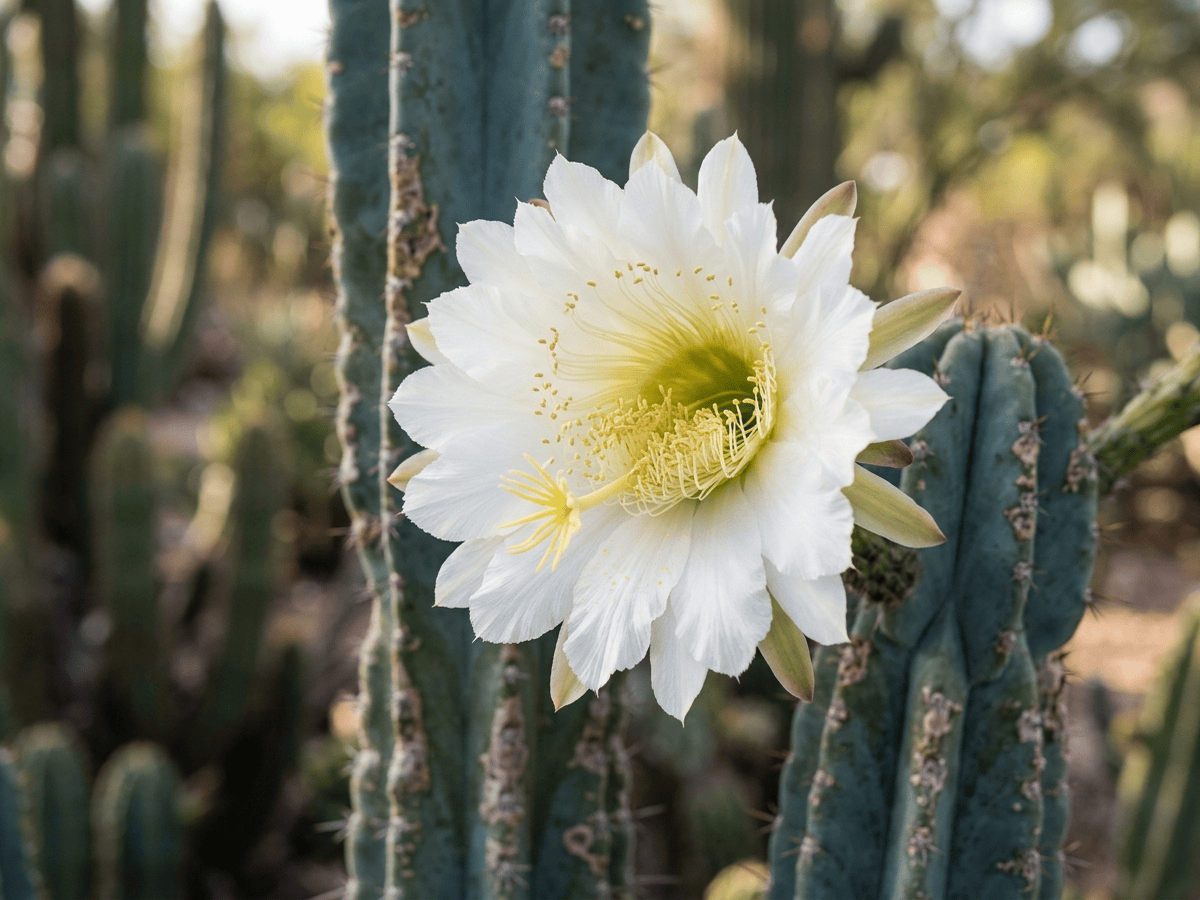
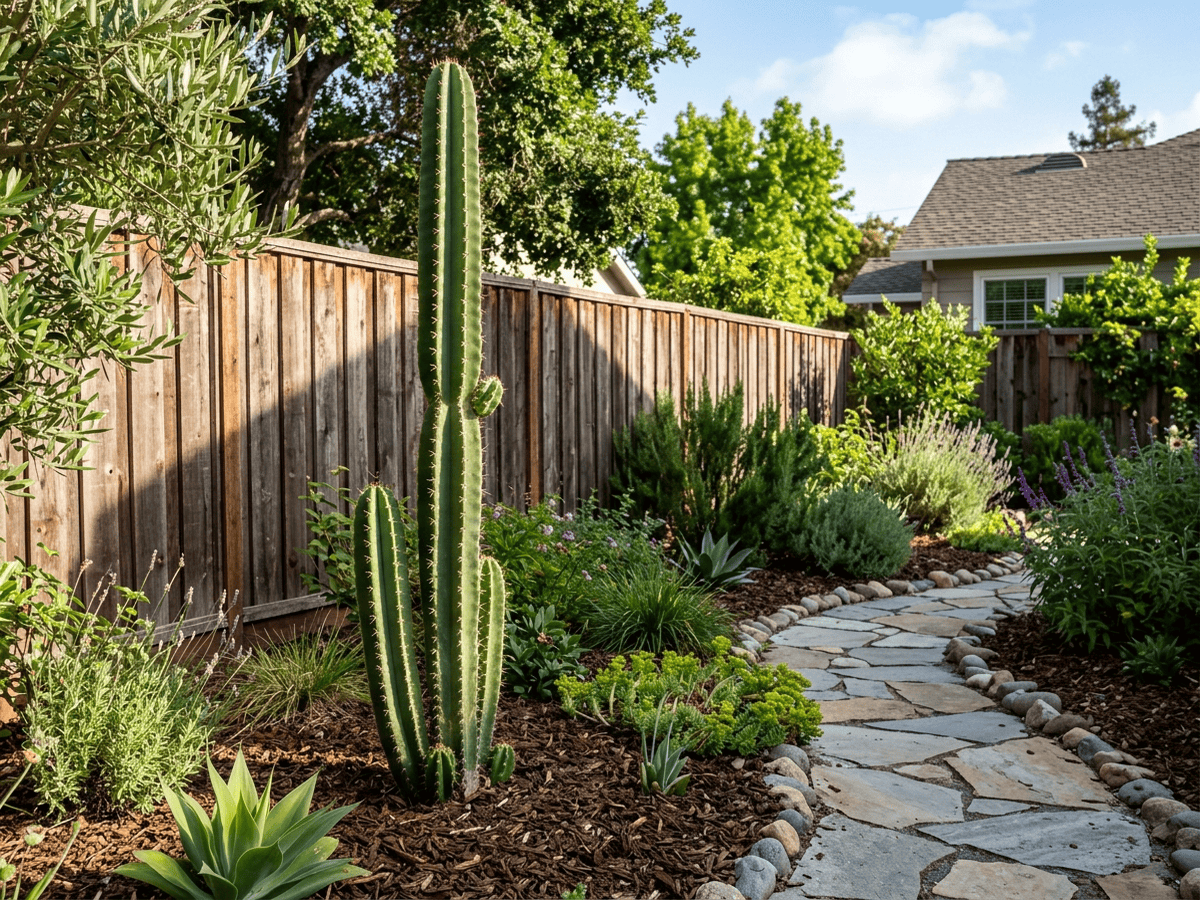
The Peruvian Apple Cactus is a tall, columnar cactus native to South America, widely cultivated as an ornamental and for its edible fruit. Despite its name, it is not from Peru but likely from southeastern Brazil, Uruguay, and Argentina — the misnomer dates to early botanical confusion. It grows rapidly into an imposing blue-green column up to thirty feet tall, branching candelabra-style with age to create dramatic silhouettes against the sky. Its deeply ribbed stems bear short, dark spines along the ridges. Large, fragrant white flowers open at night in summer, pollinated by bats and moths, followed by smooth, thornless red or magenta fruit with sweet white flesh. The monstrose form, known as 'Curiosity Plant,' develops irregular, twisted growth patterns prized by collectors. It is one of the fastest-growing columnar cacti, adding up to two feet per year in warm climates. Its imposing architectural form makes it a signature plant of desert and tropical landscapes worldwide.
- Drought-tolerant
- Fast-growing
- Architectural
How to care for Venezuelan Apple Cactus
Watering
- Springevery 14 days
- Summerevery 10 days
- Fallevery 21 days
- Winterevery 45 days
Soil · Fast-draining
- Main mixSand + pumice + soil 1:1:150%
- DrainagePumice / gravel50%
Keep grit at half the mix or more — this soil is meant to dry out fast.
FERTILIZER
Balanced Feed 14-14-14
An even feed covers all three needs at once, keeping leaves, roots and blooms moving together with nothing pushed out of balance.
- Nitrogen · Leaves
- Phosphorus · Roots + Blooms
- Potassium · Strength
- Springevery 45 days
- Summerevery 45 days
- Fallevery 60 days
At a Glance
- NativeSouth America
- Height15–30 ft (4.6–9.1 m)
- Spread6–10 ft (1.8–3 m)
- Flower colorWhite
- Foliage colorGreen, Blue-green
- SoilSandy, Well-drained
- LocationsYard
Bloom time
BLOOM CYCLE
Peak bloom
Jun–Aug
Large white nocturnal flowers in summer; pollinated by bats and moths
Fragrance
MODERATE FRAGRANCE
Night-blooming flowers produce sweet musky scent attracting bat and moth pollinators.
Toxicity
Humans Safe · Pets Safe
None reported
Safe
EXPOSURE No exposure route is reported.
EFFECT Fruit edible and commercially grown and no significant toxicity.
NOTE Listed as non-toxic for humans; avoid eating ornamental plants unless confirmed edible.
Safe
EXPOSURE No exposure route is reported.
EFFECT Not chemically toxic.
NOTE Listed as non-toxic for dogs; avoid eating ornamental plants unless confirmed edible.
Safe
EXPOSURE No exposure route is reported.
EFFECT Not chemically toxic.
NOTE Listed as non-toxic for cats; avoid eating ornamental plants unless confirmed edible.
Educational information, not medical or veterinary advice. If exposure is suspected, contact a doctor or veterinarian.
DISTRIBUTION


- Native
- South America
History
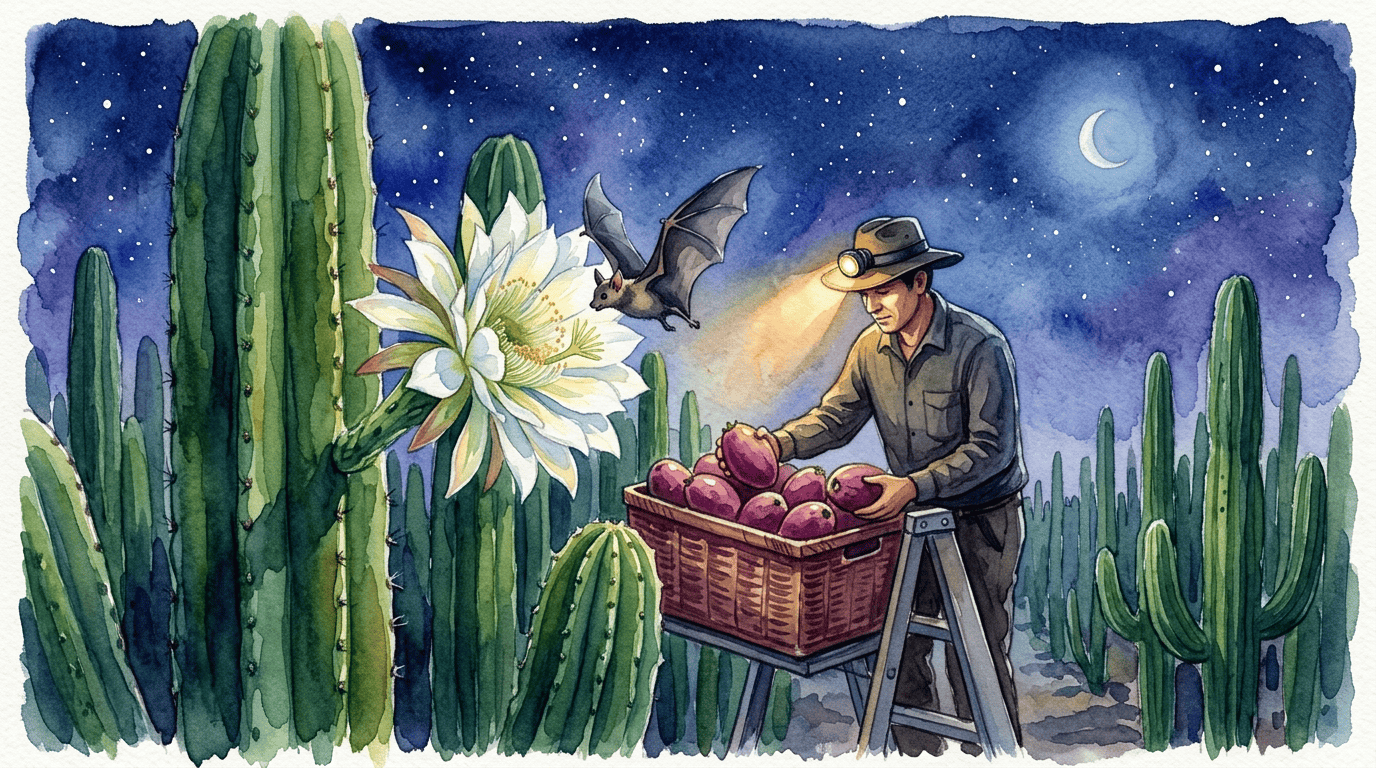
Cereus repandus (commonly sold under the older name C. peruvianus) is native to northern South America — Venezuela, Colombia, and the Lesser Antilles — despite the misleading epithet "peruvianus" given by Linnaeus in 1753 based on a specimen of uncertain provenance. It is one of the fastest-growing columnar cacti, capable of adding a meter of height per year in favorable conditions, and reaches 10 meters tall. Because of this vigor it is widely used in warm-climate landscaping across the American Southwest, Mediterranean Europe, North Africa, Australia, and throughout the tropics.
Its large sweet fruit is marketed commercially in Israel under the trade name koubo, cultivated as a desert fruit crop alongside prickly pear. Night-blooming, large white flowers open for a single night and are pollinated by bats and moths in the native range. Philip Miller first described this cactus in 1768, mistakenly attributing it to Peru.
The confusion persisted and the name stuck despite later botanical evidence pointing to Brazil as its true origin. In South America, the fruit — called pitaya or Peruvian apple — has been eaten for centuries. The monstrose mutation was discovered in the early 20th century and became a horticultural sensation. Today, commercial fruit orchards of Cereus exist in Israel, where the fruit is marketed as 'Koubo' and studied for its antioxidant properties.
Symbolism & meaning
What It Symbolizes
The Venezuelan Apple Cactus is a column of mystery: its enormous white flowers open only at night and vanish by dawn, glimpsed only by moths and the lucky watcher. Its towering, ribbed stems represent aspiration — a steady, patient reach for the sky over many slow years. To live with one is to keep a tall and quiet companion that hides its most beautiful self in the dark.
- Mystery — night-blooming flowers that vanish by dawn evoke hidden beauty
- Aspiration — its towering columnar growth represents reaching for the sky
Where the Name Comes From
The name Venezuelan Apple Cactus describes its cactus-like form. 'Cereus' from Latin 'cereus' meaning waxy or torch-like, describing the tall candle-shaped stems. 'Peruvianus' means 'of Peru,' a geographical error that has persisted since the 18th century.
Uses & Fun Facts
- Sweet pitaya-like fruits eaten fresh in dry regions
- Tall columnar cactus serves as architectural focal point
Related plants
Plants with similar care
 Chinese AbeliaAbelia chinensis
 Fragrant AbeliaAbelia mosanensis
 Large-Flowered AbeliaAbelia uniflora
 Glossy AbeliaAbelia x grandiflora
Frequently asked questions
How often should I water Venezuelan Apple Cactus?
In summer, water about every 10 days; in winter, about every 45 days. Adjust for heat, pot size and drainage.
How much light does Venezuelan Apple Cactus need?
Full sun: 6+ hrs direct. Watch the leaves — scorching or stretching means the light needs adjusting.
Is Venezuelan Apple Cactus toxic to cats or dogs?
Pets Safe (Dogs Safe · Cats Safe) Educational information, not medical or veterinary advice. If exposure is suspected, contact a doctor or veterinarian.
Is Venezuelan Apple Cactus easy to grow?
Yes — it is considered an easy, beginner-friendly plant.
When does Venezuelan Apple Cactus bloom?
It typically blooms Jun–Aug in the Northern Hemisphere.
YardMate
Identify any plant in seconds
Snap a photo — YardMate names the plant, diagnoses problems, and reminds you when to water.
Download on the App Store