 YardMate

Farewell-To-Spring
Clarkia amoena
Easy · Beginner friendlyAbout Farewell-To-Spring
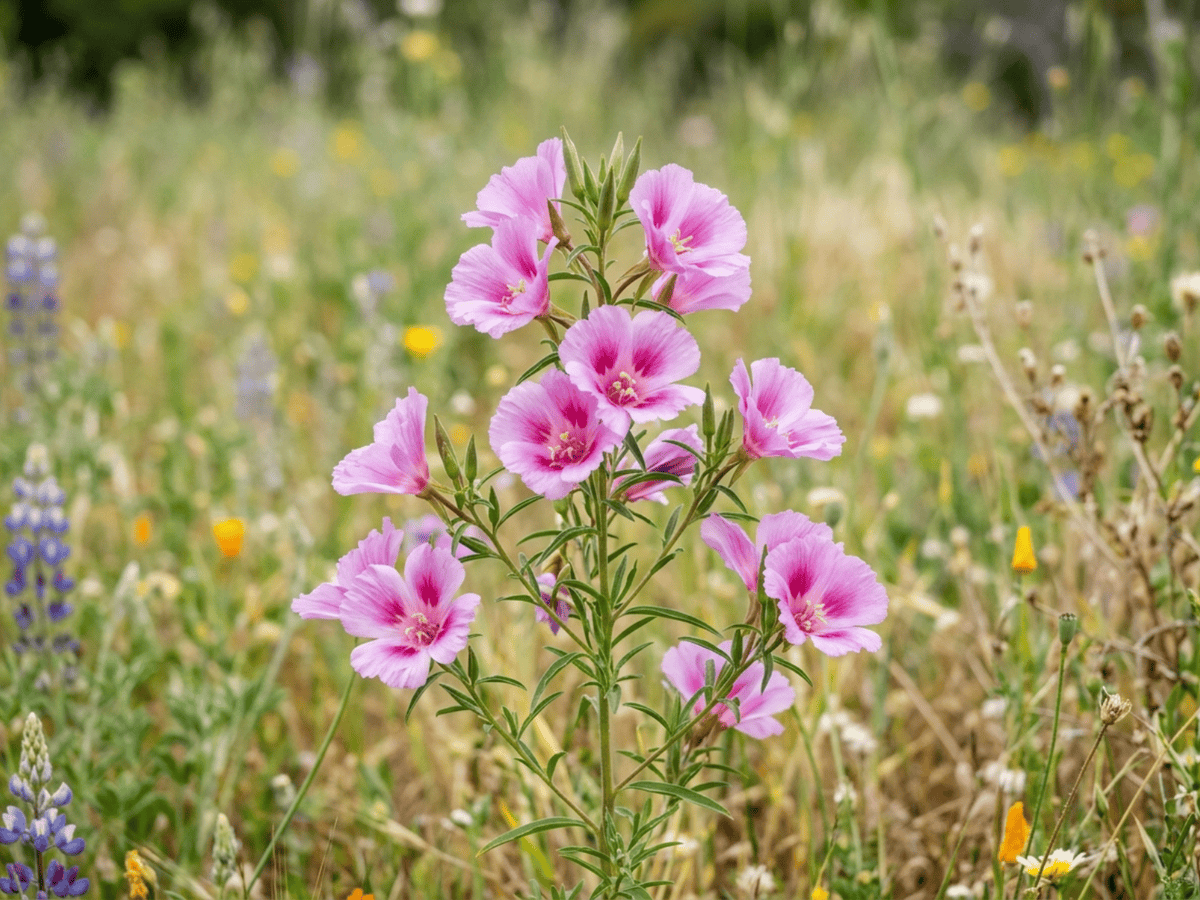
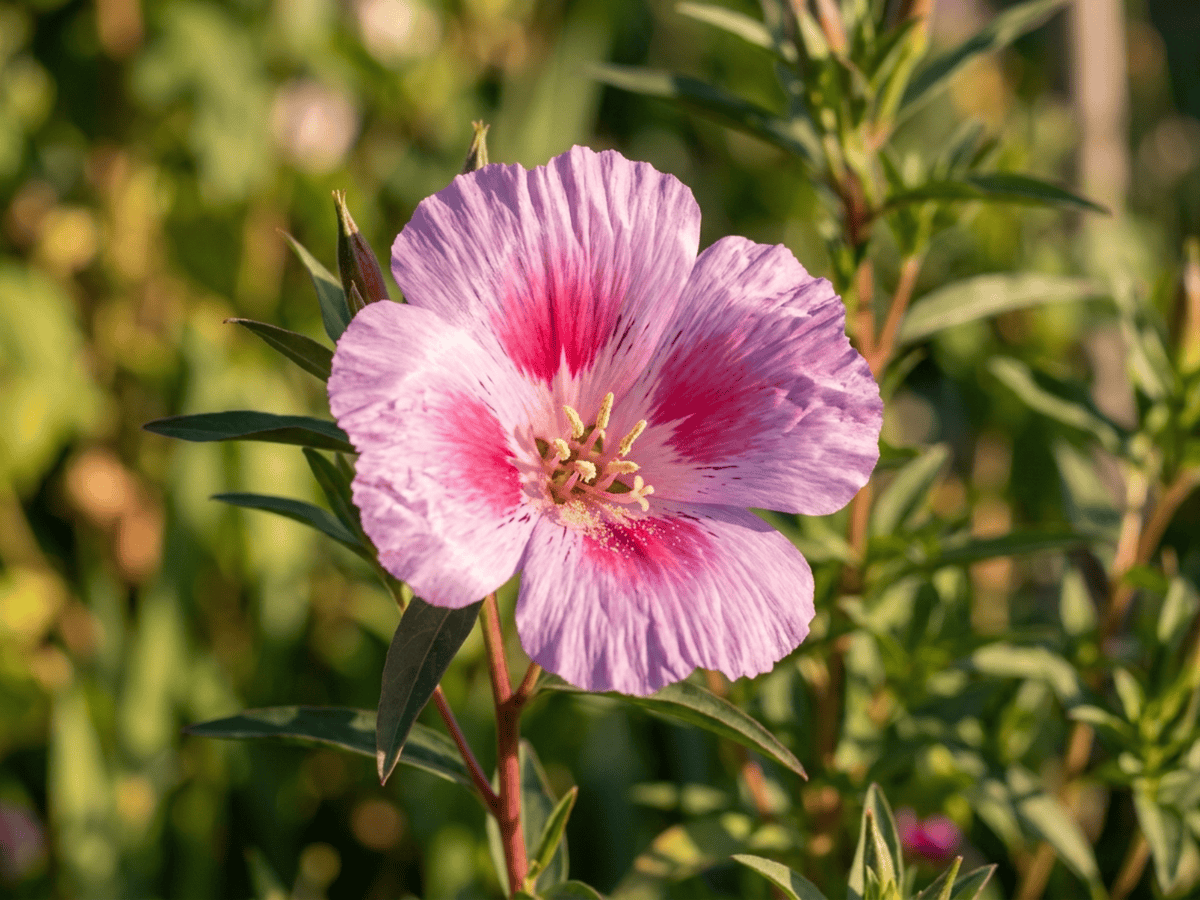
Farewell-to-Spring is a beloved California native annual wildflower that puts on its spectacular show just as temperatures begin to rise, producing satiny cup-shaped flowers in shades of pink, lavender, white, and bicolor. Native to grassy slopes and open woodlands throughout California and the Pacific Northwest, it grows 12-30 inches tall. One of the prettiest and most graceful of all California wildflowers, it self-seeds reliably and forms glowing drifts when planted in mass.
- Drought-tolerant
- Native
- Pollinator-friendly
How to care for Farewell-To-Spring
Watering
- Springevery 7 days
- Summerevery 7 days
- Fallevery 14 days
- Winterpause watering
Soil · Well-draining
- Top dressingPine bark mulch10%
- Main mixPotting soil + perlite 2:170%
- DrainageLECA / gravel20%
Never skip the drainage layer — standing water is the top cause of root rot.
FERTILIZER
Balanced Feed 14-14-14
An even feed covers all three needs at once, keeping leaves, roots and blooms moving together with nothing pushed out of balance.
- Nitrogen · Leaves
- Phosphorus · Roots + Blooms
- Potassium · Strength
This plant needs little to no feeding.
At a Glance
- NativeNorth America
- Height1–2.5 ft (0.3–0.8 m)
- Spread0.5–1 ft (0.2–0.3 m)
- Flower colorPink, Coral, Purple, White
- Foliage colorGreen
- SoilWell-drained, Sandy, Loamy
- LocationsYard · Balcony
Bloom time
BLOOM CYCLE
Peak bloom
May–Jul
Pink to lavender satiny cups May to July
Fragrance
NO FRAGRANCE
No notable fragrance.
Toxicity
No toxicity has been reported for this plant. Still, it is wise to keep pets from chewing on any houseplant.
Educational information, not medical or veterinary advice. If exposure is suspected, contact a doctor or veterinarian.
DISTRIBUTION

- Native
- Introduced
- North America
History
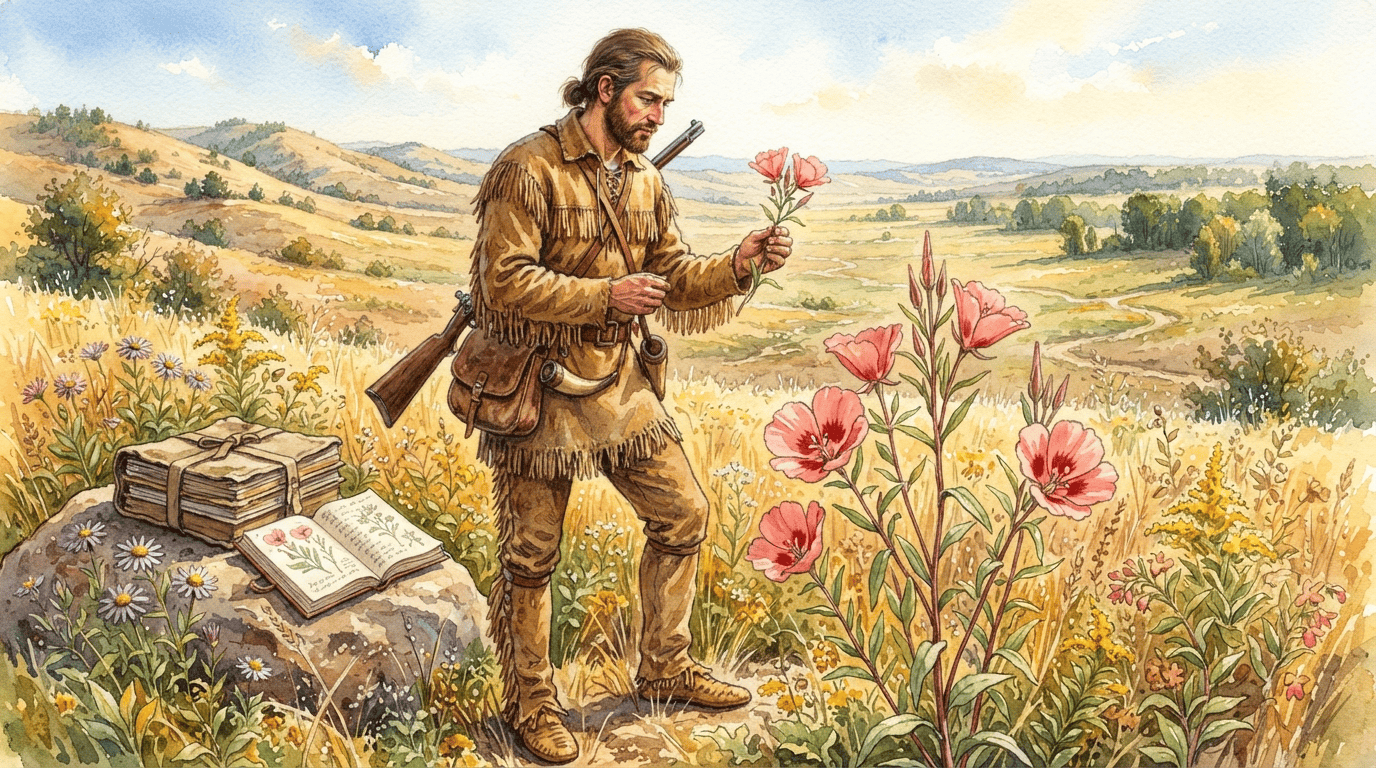
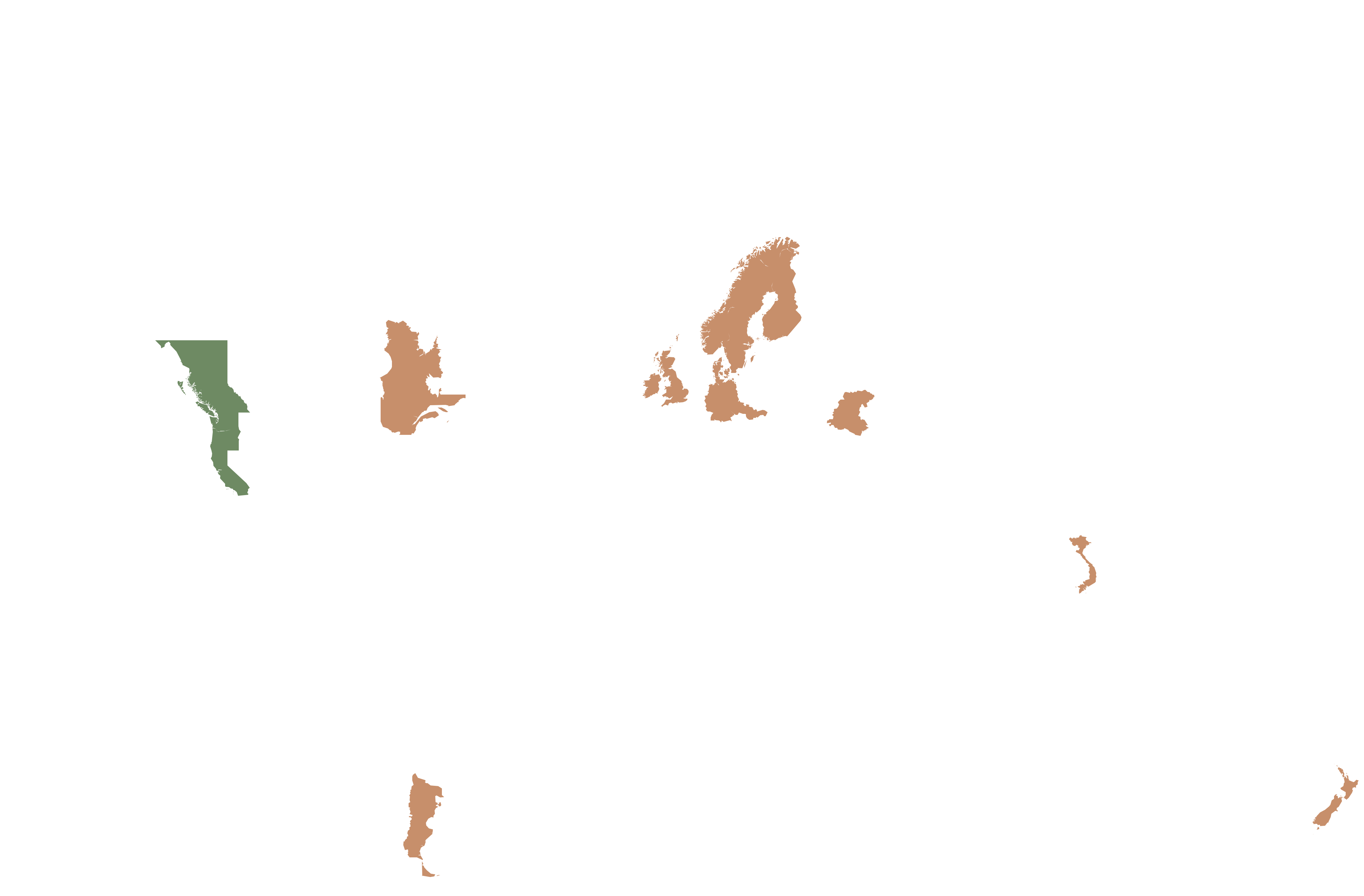
Clarkia amoena is native to western North America from southern British Columbia south through Washington, Oregon, and California as far south as Santa Barbara County, growing in coastal bluffs, grasslands, open forests, and roadside slopes. The genus Clarkia was named for William Clark (1770-1838), co-leader of the Lewis & Clark Corps of Discovery expedition of 1804-1806; Meriwether Lewis collected the first specimens during the expedition's 1806 return journey through what is now Idaho. The species epithet "amoena" means "pleasant," reflecting the appealing appearance and garden-worthiness of the plant. It is an upright slender annual 30-90 cm tall with narrow linear leaves and, in late spring through early summer, large cup-shaped four-petaled flowers 4-6 cm across in shades of pink, salmon-pink, lavender, and occasional white, often with a deeper reddish-magenta blotch or spot at the base of each petal.
The late blooming in relation to winter annual wildflowers gives the common name "farewell-to-spring" — the flowers appear as most other spring wildflowers are finishing. The older garden name "godetia" reflects an obsolete generic treatment and is still commonly used in the European cut-flower trade. Widely grown from seed in both native wildflower meadow plantings and cottage garden annual mixes, with many cultivated color selections available including the "Satin" series and "Memoria" series.
Common name 'Farewell to Spring' reflects its bloom time—when other spring flowers have finished and summer approaches. A favorite among California native plant enthusiasts for its ease of cultivation and long flowering period.
Symbolism & meaning
What It Symbolizes
Farewell-To-Spring carries Joy as a goodbye — cheerful pink cups opening just as California's wildflower season closes. Its very name marks the Transition between green spring and golden summer, the hinge of the western year. Each bloom is an unhurried farewell, celebrating rather than mourning the turning of the season.
- Joy — cheerful blooms celebrating California's spring farewell
- Transition — marks the passage between spring and summer
Where the Name Comes From
Genus honors William Clark (1770–1838) of the Lewis and Clark Expedition; 'amoena' means 'pleasing' or 'charming' in Latin.
Uses & Fun Facts
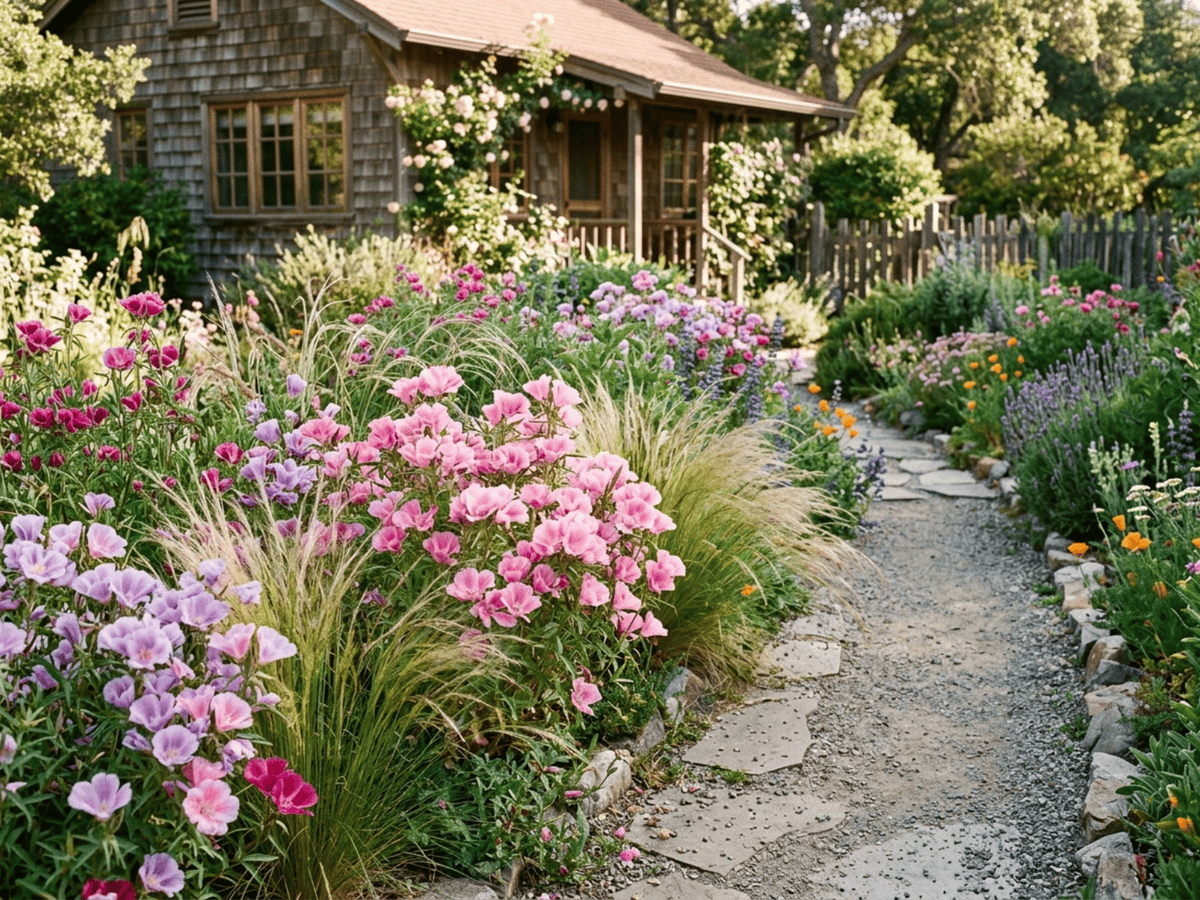
- Satiny pink cup flowers brighten meadow gardens
- Long-lasting blooms popular in summer bouquets
- Native annual supports California bees and butterflies
Related plants
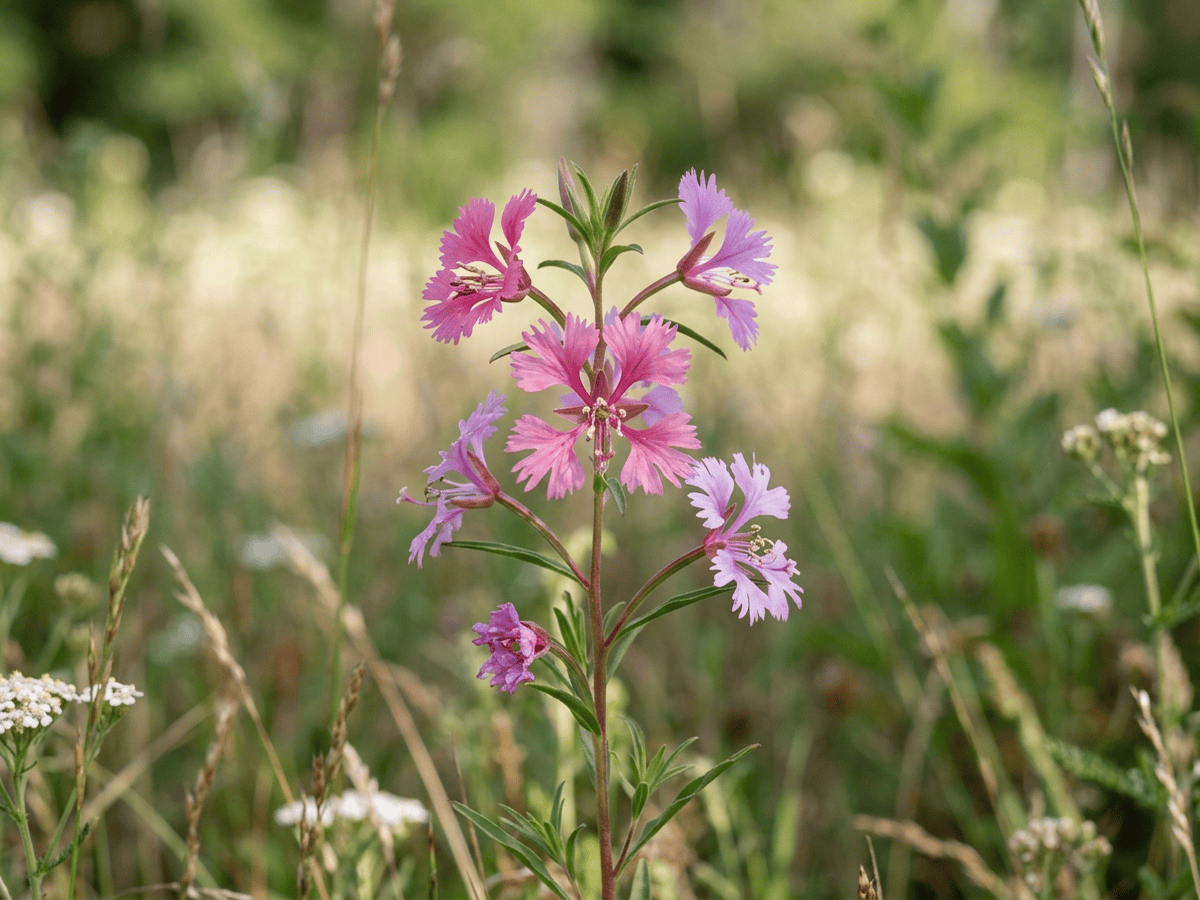
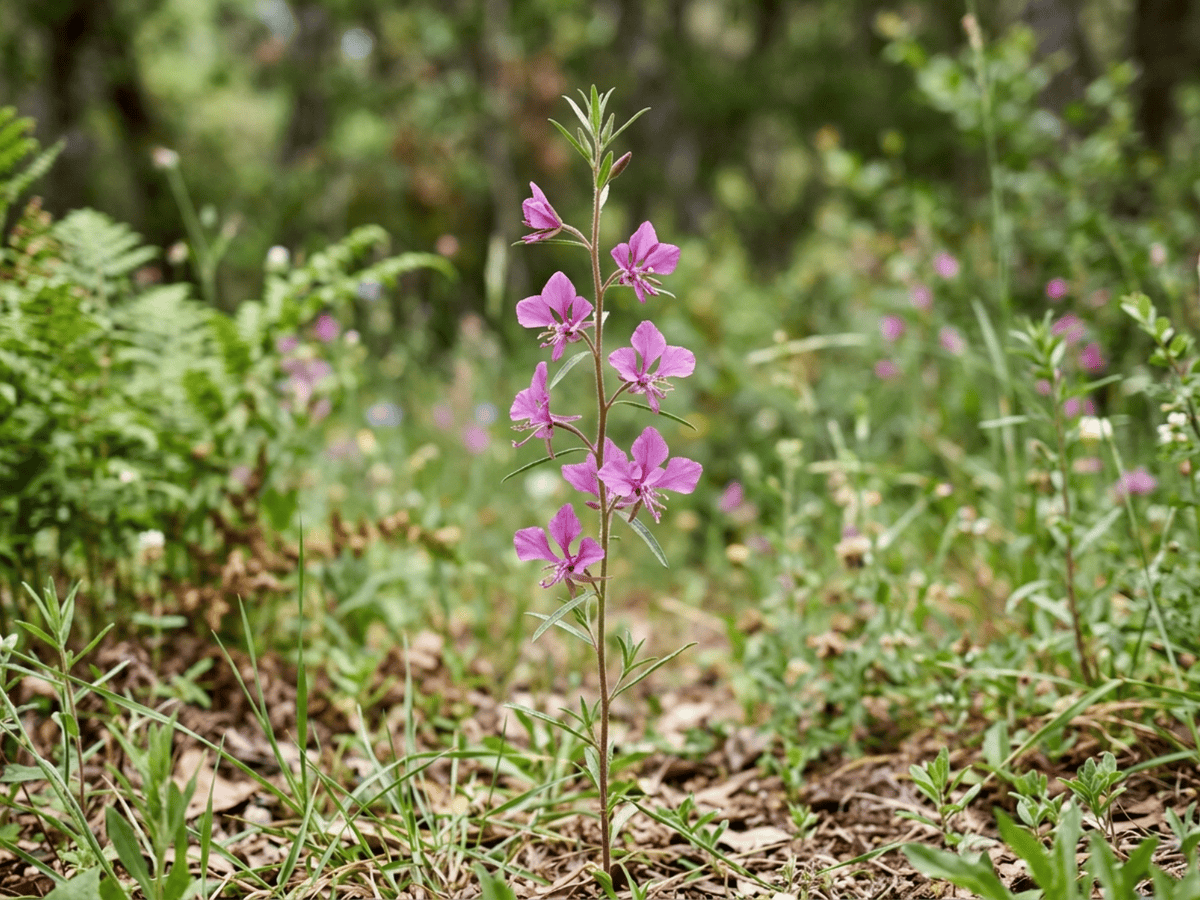
More Clarkia plants
Plants with similar care
 Chinese AbeliaAbelia chinensis
 Fragrant AbeliaAbelia mosanensis
 Large-Flowered AbeliaAbelia uniflora
 Glossy AbeliaAbelia x grandiflora
Frequently asked questions
How often should I water Farewell-To-Spring?
Water about every 7 days during the growing season, and always let excess water drain away.
How much light does Farewell-To-Spring need?
Full sun: 6+ hrs direct. Watch the leaves — scorching or stretching means the light needs adjusting.
Is Farewell-To-Spring toxic to cats or dogs?
No toxicity has been reported for this plant. Still, it is wise to keep pets from chewing on any houseplant. Educational information, not medical or veterinary advice. If exposure is suspected, contact a doctor or veterinarian.
Is Farewell-To-Spring easy to grow?
Yes — it is considered an easy, beginner-friendly plant.
When does Farewell-To-Spring bloom?
It typically blooms May–Jul in the Northern Hemisphere.
YardMate
Identify any plant in seconds
Snap a photo — YardMate names the plant, diagnoses problems, and reminds you when to water.
Download on the App Store