 YardMate
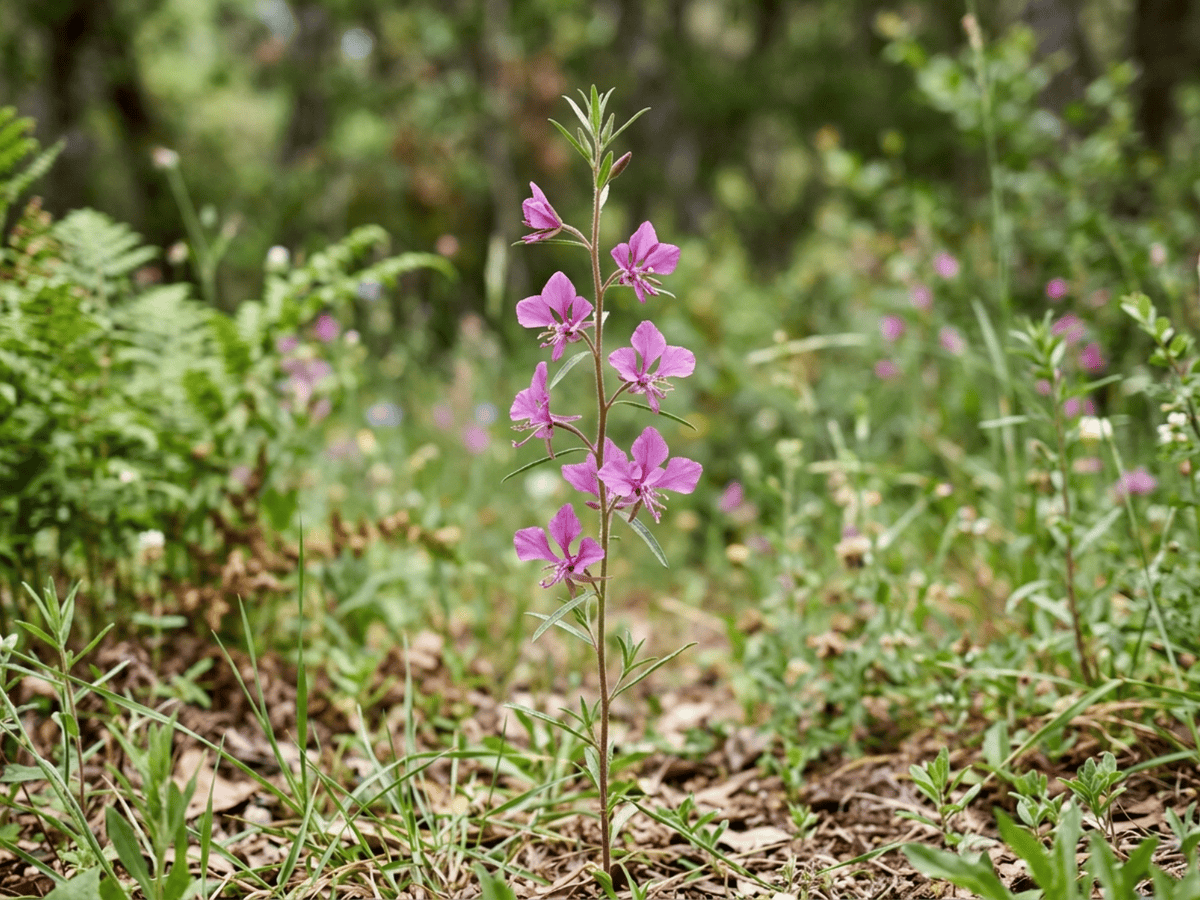


Elegant Clarkia
Clarkia unguiculata
Easy · Beginner friendlyAbout Elegant Clarkia
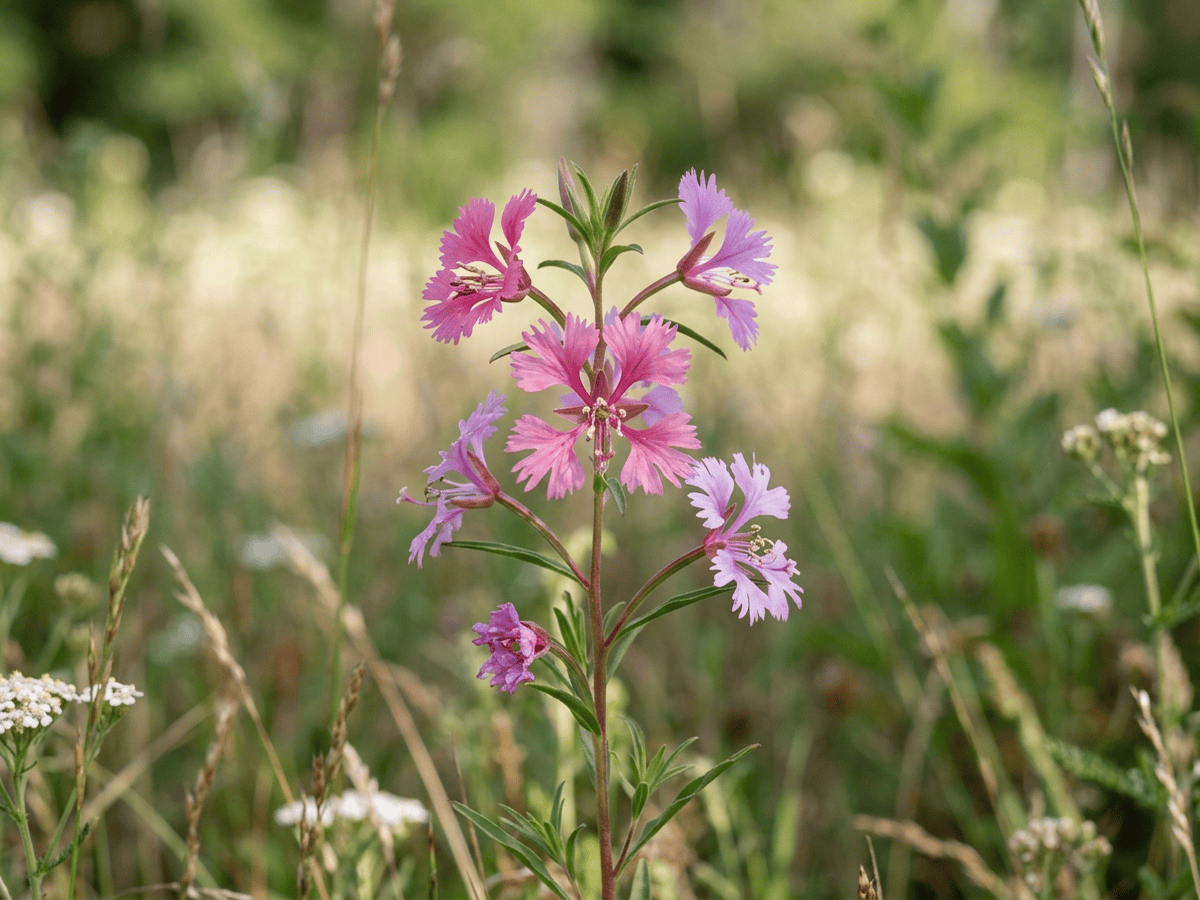
Elegant Clarkia or Mountain Garland is a slender California native annual reaching 1-3 feet, producing delicate pink to purple flowers with distinctively clawed petals that give it exceptional refinement. Native to grassy slopes and woodland edges throughout California's foothills and mountains, it thrives in well-drained soils with minimal water. An excellent self-seeding annual for the naturalistic garden, it combines beautifully with other native annuals and perennials.
- Drought-tolerant
- Native
- Pollinator-friendly
How to care for Elegant Clarkia
Watering
- Springevery 7 days
- Summerevery 7 days
- Fallevery 14 days
- Winterpause watering
Soil · Well-draining
- Top dressingPine bark mulch10%
- Main mixPotting soil + perlite 2:170%
- DrainageLECA / gravel20%
Never skip the drainage layer — standing water is the top cause of root rot.
FERTILIZER
Balanced Feed 14-14-14
An even feed covers all three needs at once, keeping leaves, roots and blooms moving together with nothing pushed out of balance.
- Nitrogen · Leaves
- Phosphorus · Roots + Blooms
- Potassium · Strength
This plant needs little to no feeding.
At a Glance
- NativeNorth America
- Height1–3 ft (0.3–0.9 m)
- Spread0.5–1 ft (0.2–0.3 m)
- Flower colorPink, Purple
- Foliage colorGreen
- SoilSandy, Well-drained
- LocationsYard
Bloom time
BLOOM CYCLE
Peak bloom
May–Jul
Pink-purple clawed flowers May to July
Fragrance
NO FRAGRANCE
No notable fragrance.
Toxicity
No toxicity has been reported for this plant. Still, it is wise to keep pets from chewing on any houseplant.
Educational information, not medical or veterinary advice. If exposure is suspected, contact a doctor or veterinarian.
DISTRIBUTION

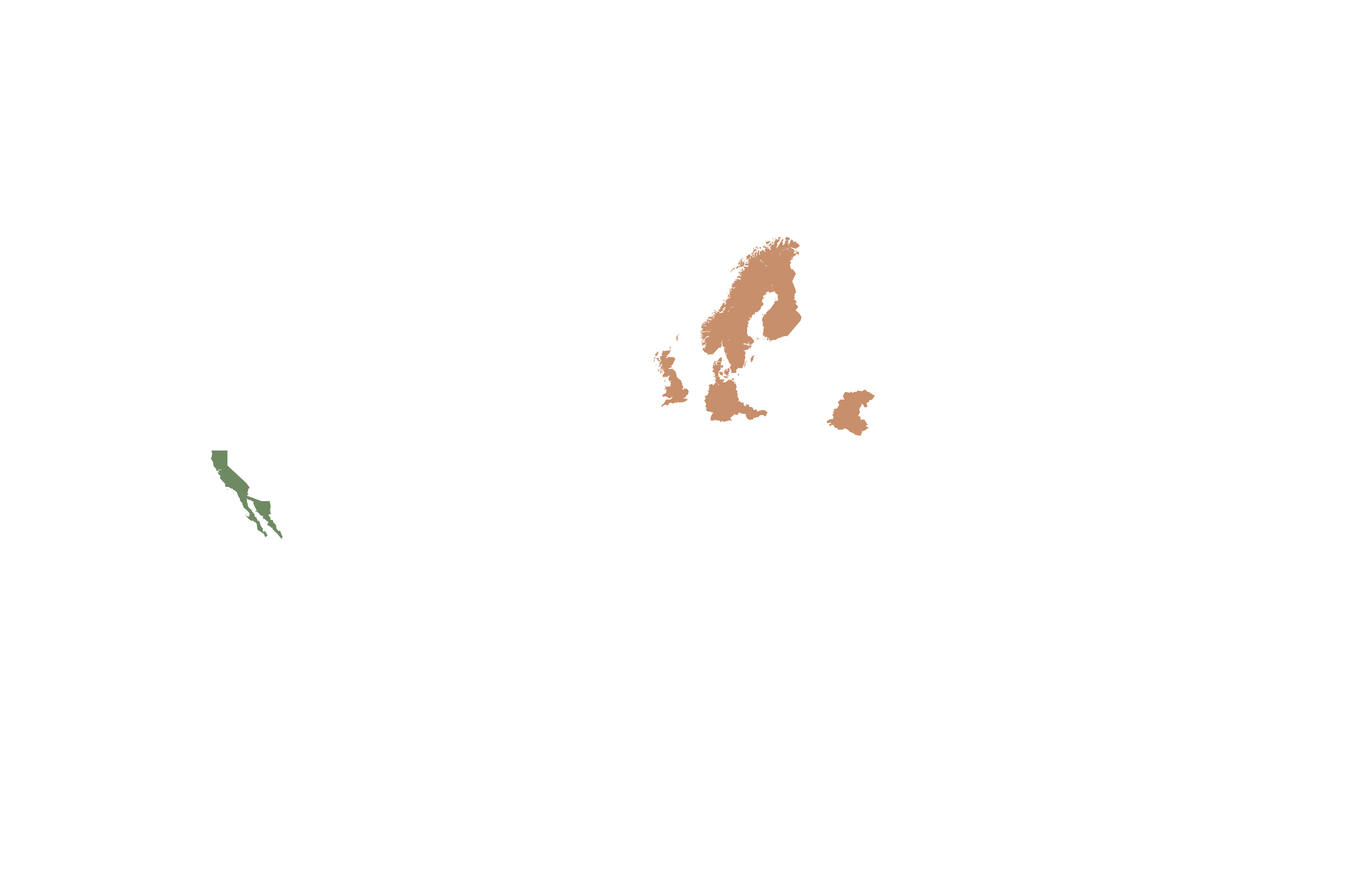
- Native
- Introduced
- North America
History
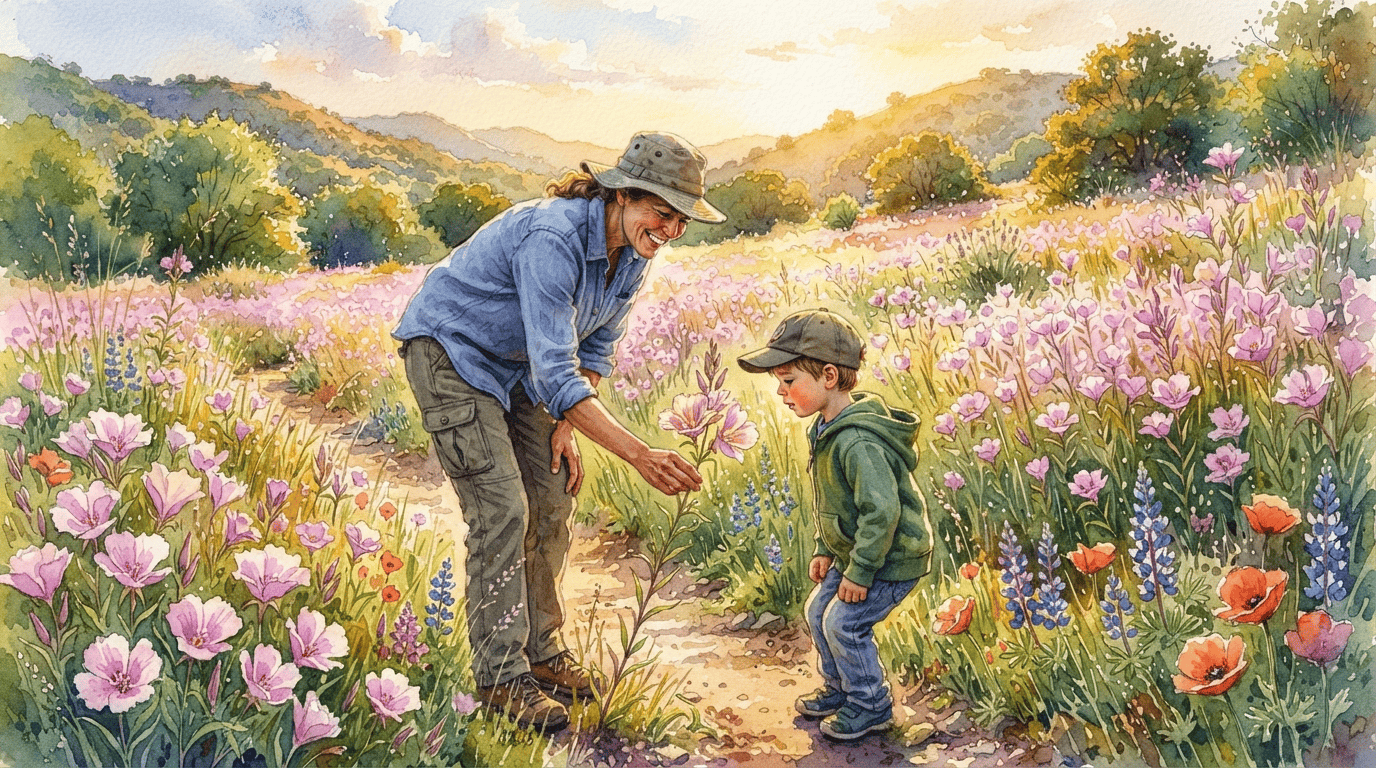
Clarkia unguiculata is endemic to California — found essentially nowhere else in the world — growing in oak woodlands, chaparral openings, roadside slopes, and grassland edges across most of the state below 1500 meters elevation, from the North Coast Ranges south through the Sierra Nevada foothills and the Transverse and Peninsular Ranges. The species epithet "unguiculata" means "with small claws" and refers to the distinctive petal form: each of the four flower petals has a narrow stalk-like basal "claw" supporting a broader terminal blade, creating the effect of four tiny dancers balanced on tip-toe with arms spread. This distinctive flower form gives the common name "elegant clarkia" and "mountain garland." Flowers are typically pink, lavender, or purple, sometimes with darker markings, on slender 30-90 cm wands blooming in late spring to early summer.
The species is an important model organism in plant evolutionary biology, particularly in the study of speciation and mating-system evolution; University of California and Stanford University research programs have used Clarkia species extensively as a model system for understanding how new plant species arise through selfing versus outcrossing differences. Widely planted from seed in California-native wildflower meadow plantings as a colorful late-spring element, readily reseeding for subsequent years in appropriate dry-summer conditions. An important model organism in evolutionary biology, studied for decades by Verne Grant at the Rancho Santa Ana Botanic Garden.
Research on Clarkia species helped establish our understanding of plant speciation and hybridization in California's flora. The species is named for William Clark and classified elegantly by Lindley in 1830.
Symbolism & meaning
What It Symbolizes
Elegant Clarkia can symbolize grace through its slender clawed petals, each blossom resembling a small dancer caught mid-step. Closer inspection reveals an intricate delicacy, fringed petals and finely poised stamens that reward the gardener who kneels to look. In the western American wildflower tradition, clarkia is the quietly refined companion, an annual that asks the eye to slow down and to find its delight in details easy to miss from a path.
- Grace — refined clawed petals with exceptional elegance
- Delicacy — intricate flower form rewards close inspection
Where the Name Comes From
'Unguiculata' means 'clawed' in Latin, referring to the long narrow claw at the base of each petal.
Uses & Fun Facts
- Spidery pink flowers feed native solitary bees
- Slender wands mix into cottage bouquets
Related plants
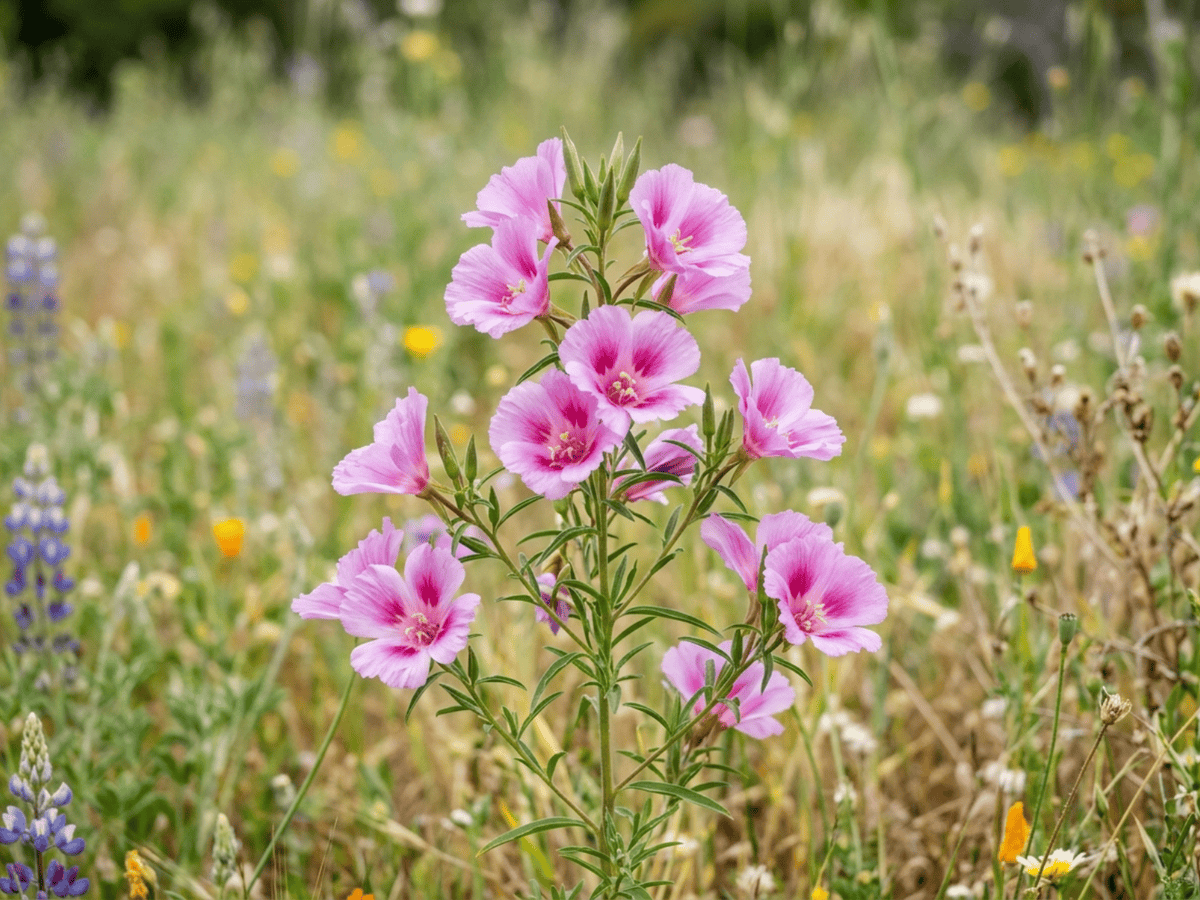
More Clarkia plants
Plants with similar care
 Chinese AbeliaAbelia chinensis
 Fragrant AbeliaAbelia mosanensis
 Large-Flowered AbeliaAbelia uniflora
 Glossy AbeliaAbelia x grandiflora
Frequently asked questions
How often should I water Elegant Clarkia?
Water about every 7 days during the growing season, and always let excess water drain away.
How much light does Elegant Clarkia need?
Full sun: 6+ hrs direct. Watch the leaves — scorching or stretching means the light needs adjusting.
Is Elegant Clarkia toxic to cats or dogs?
No toxicity has been reported for this plant. Still, it is wise to keep pets from chewing on any houseplant. Educational information, not medical or veterinary advice. If exposure is suspected, contact a doctor or veterinarian.
Is Elegant Clarkia easy to grow?
Yes — it is considered an easy, beginner-friendly plant.
When does Elegant Clarkia bloom?
It typically blooms May–Jul in the Northern Hemisphere.
YardMate
Identify any plant in seconds
Snap a photo — YardMate names the plant, diagnoses problems, and reminds you when to water.
Download on the App Store