 YardMate


Common Hawthorn
Crataegus monogyna
Easy · Beginner friendlyAbout Common Hawthorn
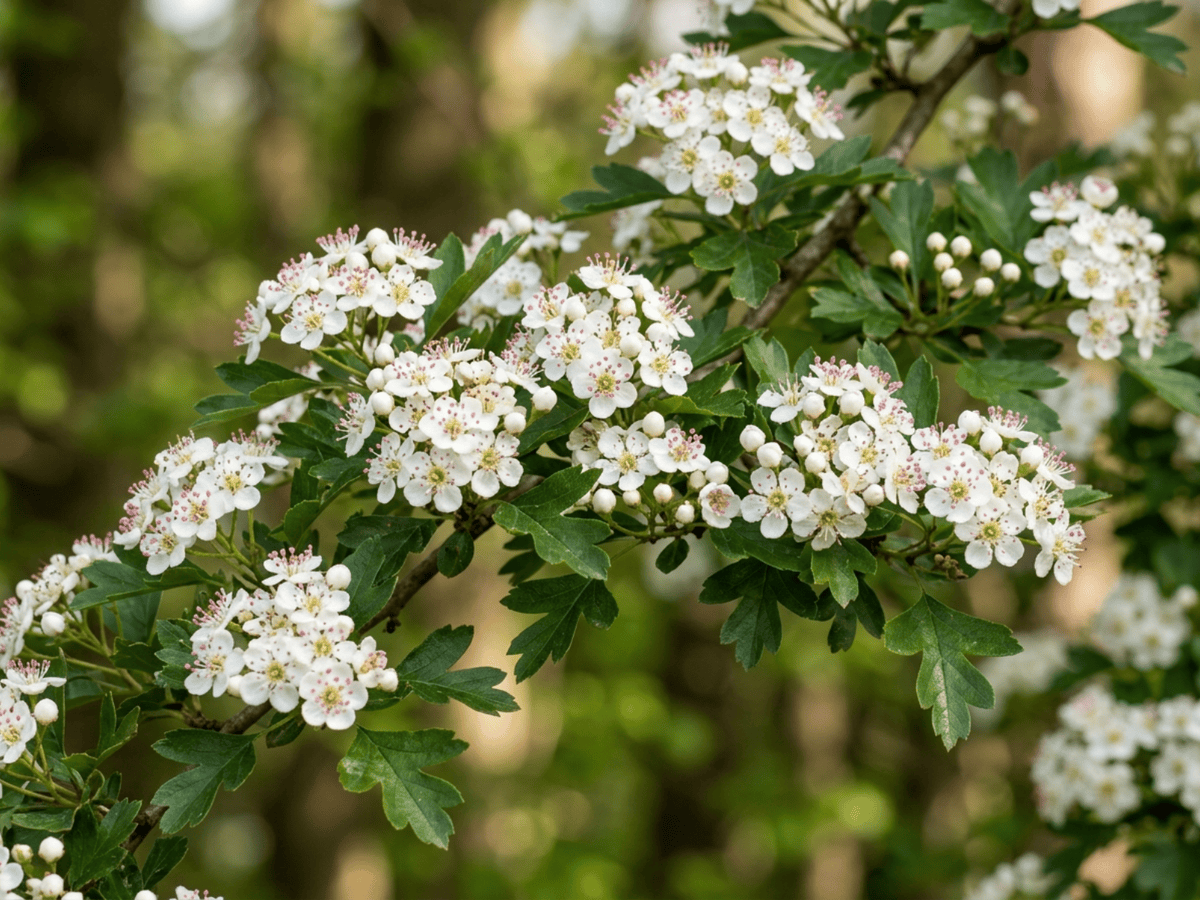
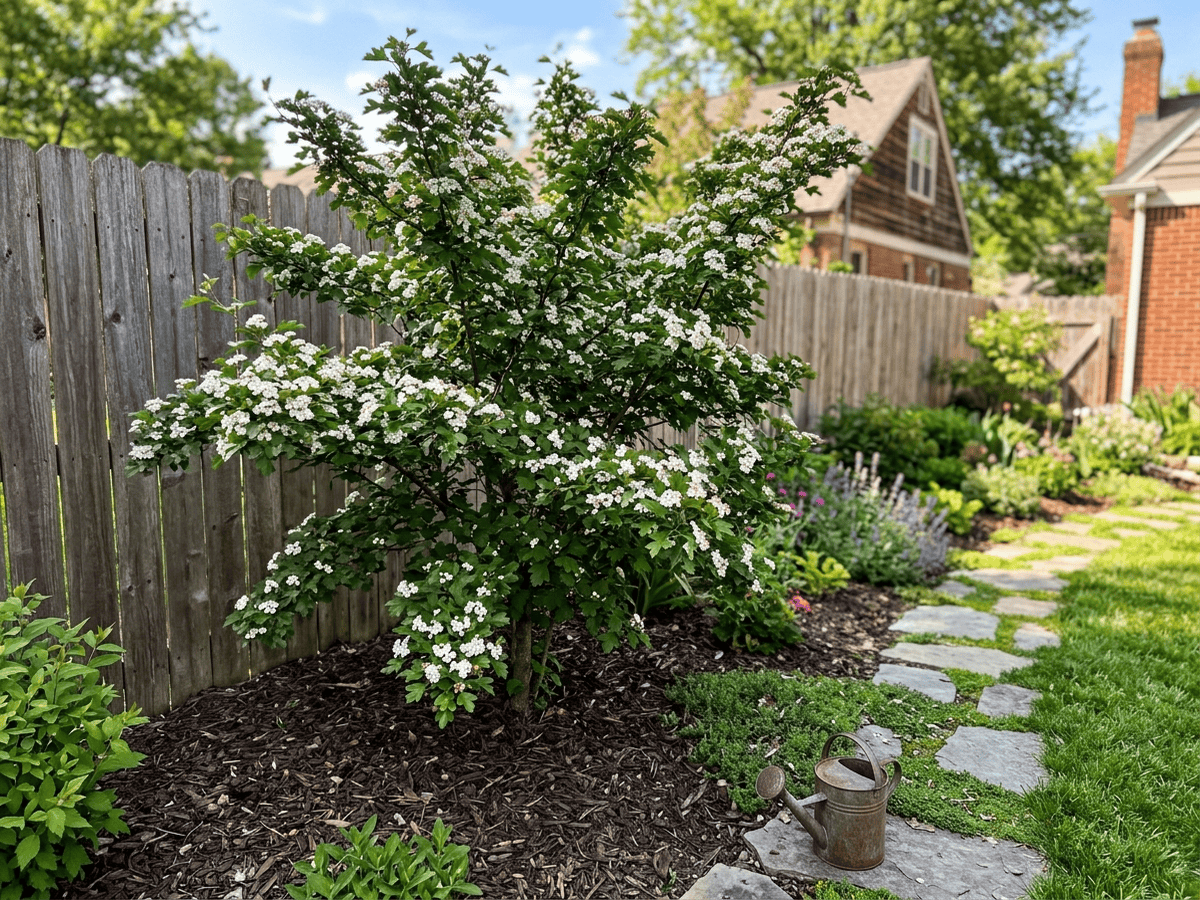
Crataegus monogyna, the common hawthorn or may tree, is a thorny deciduous small tree or large shrub native throughout Europe, northwestern Africa, and western Asia. Growing 15 to 30 feet tall, it is one of the most ecologically important hedgerow plants in the British countryside, providing dense thorny shelter for nesting birds and a vital autumn food source through its abundant red haws. In late spring, the tree is smothered in clusters of fragrant white or pink flowers that have a distinctive musky scent. The small red fruits (haws) persist into winter and are rich in antioxidants. Hawthorn is extraordinarily tough, tolerating poor soil, wind exposure, air pollution, and hard pruning, which made it the backbone of agricultural hedging across Europe for centuries. It can live for several hundred years and some specimens in England are believed to be over 700 years old. The species is deeply embedded in European folklore, associated with both protection and bad luck depending on the tradition.
- Drought-tolerant
- Native
- Wildlife-friendly
How to care for Common Hawthorn
Watering
- Springevery 5 days
- Summerevery 4 days
- Fallevery 10 days
- Winterevery 30 days
Soil · Well-draining
- Top dressingPine bark mulch10%
- Main mixPotting soil + perlite 2:170%
- DrainageLECA / gravel20%
Never skip the drainage layer — standing water is the top cause of root rot.
FERTILIZER
Balanced Feed 14-14-14
An even feed covers all three needs at once, keeping leaves, roots and blooms moving together with nothing pushed out of balance.
- Nitrogen · Leaves
- Phosphorus · Roots + Blooms
- Potassium · Strength
- Springevery 45 days
At a Glance
- NativeEurope, Africa, Western Asia
- Height15–30 ft (4.6–9.1 m)
- Spread15–25 ft (4.6–7.6 m)
- Flower colorWhite, Pink
- Foliage colorGreen, Yellow
- SoilLoamy, Well-drained, Alkaline
- LocationsYard
Bloom time
BLOOM CYCLE
Peak bloom
May
Fragrant white flower clusters appear in late spring (May); flowers on old wood so prune after flowering if needed
Fragrance
MODERATE FRAGRANCE
May blossom has a distinctive, slightly musky-sweet scent; polarizing — some find it unpleasant.
Toxicity
Humans Slight · Pets Slight
cyanogenic glycosides (amygdalin, in seeds), procyanidins, and flavonoids
Slight
- Seed
- Ingestion
EXPOSURE Eating seeds.
EFFECT Seeds contain trace cyanogenic compounds and flesh of haws is edible and traditional.
NOTE Documented concern for humans: Seeds contain trace cyanogenic compounds and flesh of haws is edible and traditional.
Slight
- Seed
- Ingestion
EXPOSURE Eating seeds.
EFFECT Large amounts of seeds could release cyanide and generally considered safe.
NOTE Not listed by ASPCA. Fruit flesh traditionally eaten in jellies and wines; seeds should not be crushed and consumed in quantity.
Slight
- Seed
- Ingestion
EXPOSURE Eating seeds.
EFFECT Trace cyanogenic glycosides in seeds.
NOTE Not listed by ASPCA. Fruit flesh traditionally eaten in jellies and wines; seeds should not be crushed and consumed in quantity.
Educational information, not medical or veterinary advice. If exposure is suspected, contact a doctor or veterinarian.
DISTRIBUTION


- Native
- Introduced
- Europe
- Africa
- Western Asia
History
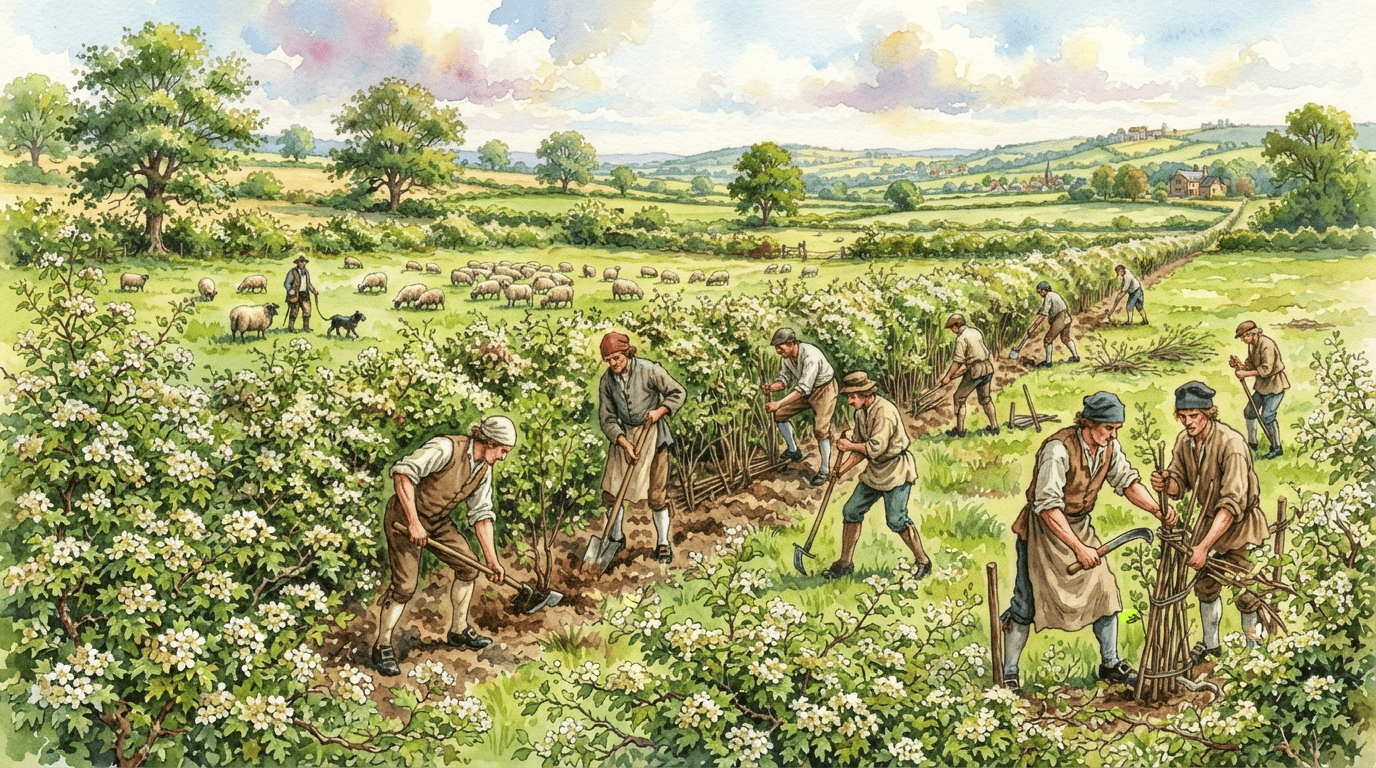
Crataegus monogyna is native to Europe, northwestern Africa, and western Asia. From at least the early medieval period onward it has been the foundational hedging shrub of the British and Irish pastoral landscape — the vast Enclosure Acts of 18th-19th century England planted hundreds of thousands of miles of hawthorn hedge to divide common lands into private fields, creating the patchwork field landscape still characteristic of rural England. Its dense thorny growth makes it stockproof (containing cattle and sheep) and its nectar-rich May flowers and autumn haws (red fruits) feed pollinators and birds.
Celtic and British folklore holds the hawthorn as a fairy tree: solitary hawthorns growing in a pasture are "fairy thorns" that must not be cut, under threat of misfortune — a belief still honored in some 21st-century Irish road-building diversions. The flowers are known as "May blossom" and the tree as the "May-tree," central to Mayday celebrations and the saying "ne'er cast a clout 'til May be out."
Hawthorn has also been used medicinally for centuries; modern clinical use of standardized hawthorn extracts for mild heart failure is supported in European phytomedicine. Hawthorn has been central to European land management since the Enclosure Acts of the 18th century, when millions were planted as livestock hedges. In Celtic tradition, hawthorn was sacred to the fairy folk and cutting one was considered extremely unlucky.
Symbolism & meaning
What It Symbolizes
Common Hawthorn carries protection in deep European folk tradition, its thorny branches once hung over doorways and stable windows to ward off evil spirits. In Celtic culture it also embodies fertility, central to May Day celebrations marking the start of the bright half of the year. It is often read as a flower of thresholds, guarding entrances while blessing the season's quickening with white blossoms and ancient ceremony.
- Protection — Thorny branches were hung over doorways to ward off evil spirits in European folk tradition
- Fertility — Associated with May Day and spring fertility celebrations across Celtic cultures
Where the Name Comes From
'Crataegus' from Greek 'kratos' (strength), referring to the extremely hard wood. 'Monogyna' means 'one seed', distinguishing its single-seeded fruit from other hawthorn species.
Uses & Fun Facts
- Berries and flowers used in cardiovascular herbal tonics
- Thorny stems make classic British countryside hedgerow
- Dense thicket shelters birds, berries feed thrushes
- Spring flowers buzz with bees and beneficial insects
Related plants
Plants with similar care
 Chinese AbeliaAbelia chinensis
 Fragrant AbeliaAbelia mosanensis
 Large-Flowered AbeliaAbelia uniflora
 Glossy AbeliaAbelia x grandiflora
Frequently asked questions
How often should I water Common Hawthorn?
In summer, water about every 4 days; in winter, about every 30 days. Adjust for heat, pot size and drainage.
How much light does Common Hawthorn need?
Full sun: 6+ hrs direct. Watch the leaves — scorching or stretching means the light needs adjusting.
Is Common Hawthorn toxic to cats or dogs?
Pets Slight (Dogs Slight · Cats Slight) Educational information, not medical or veterinary advice. If exposure is suspected, contact a doctor or veterinarian.
Is Common Hawthorn easy to grow?
Yes — it is considered an easy, beginner-friendly plant.
When does Common Hawthorn bloom?
It typically blooms May in the Northern Hemisphere.
YardMate
Identify any plant in seconds
Snap a photo — YardMate names the plant, diagnoses problems, and reminds you when to water.
Download on the App Store