 YardMate
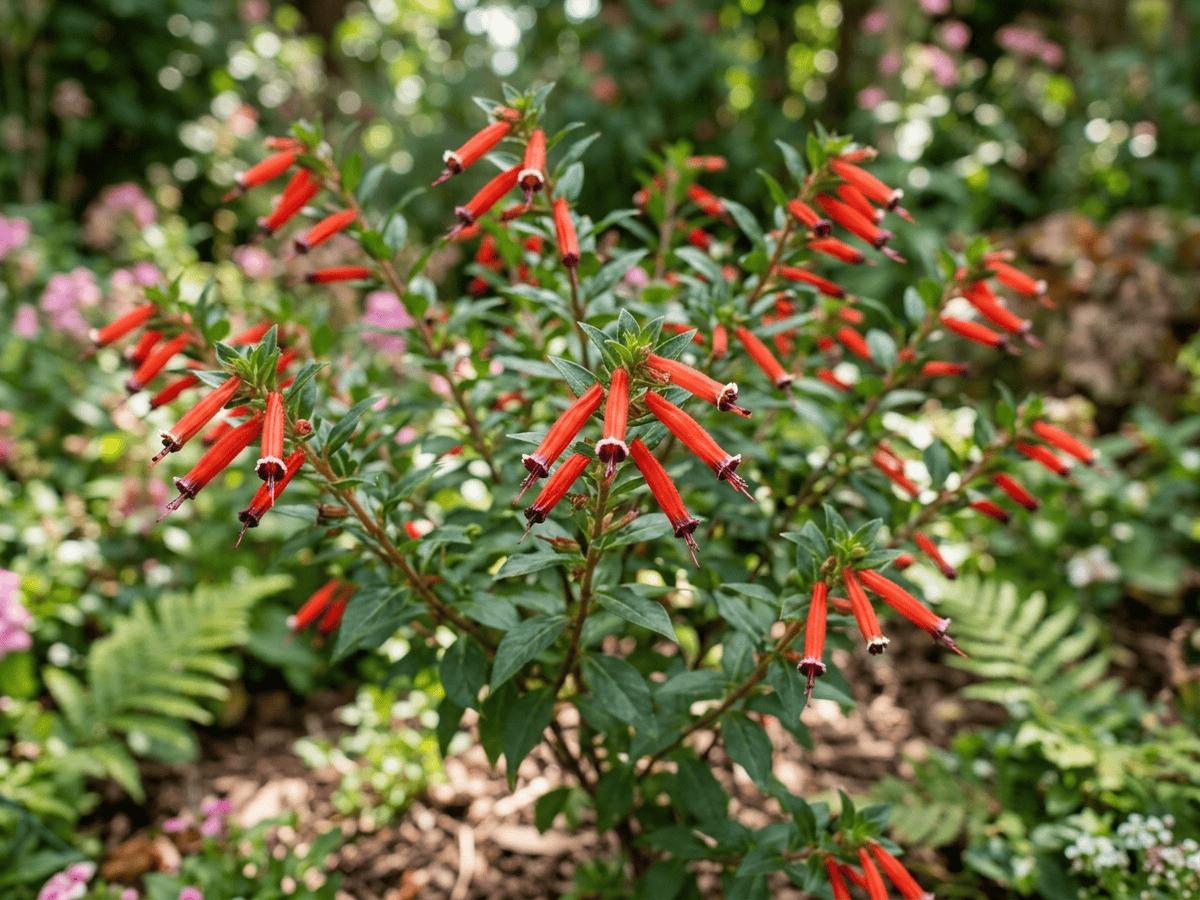


Cigar Plant
Cuphea ignea
Easy · Beginner friendlyAbout Cigar Plant
Cigar Flower or Firecracker Plant is a Mexican tender shrub grown as an annual across most of the US, producing countless tubular red flowers with dark ring tips that resemble tiny lit cigars. Growing 12 to 24 inches tall in bushy form, it blooms continuously from spring through frost, drawing hummingbirds and butterflies to its nectar-rich flowers. A signature hot-color annual for American summer gardens and hummingbird plantings.
- Heat-tolerant
- Deer-resistant
- Container-friendly
- Long-blooming
How to care for Cigar Plant
Watering
- Springevery 5 days
- Summerevery 4 days
- Fallevery 7 days
- Winterevery 10 days
Soil · Well-draining
- Top dressingPine bark mulch10%
- Main mixPotting soil + perlite 2:170%
- DrainageLECA / gravel20%
Never skip the drainage layer — standing water is the top cause of root rot.
FERTILIZER
Balanced Feed 14-14-14
An even feed covers all three needs at once, keeping leaves, roots and blooms moving together with nothing pushed out of balance.
- Nitrogen · Leaves
- Phosphorus · Roots + Blooms
- Potassium · Strength
- Springevery 30 days
- Summerevery 30 days
At a Glance
- NativeNorth America, Central America
- Height1–2 ft (0.3–0.6 m)
- Spread1–2 ft (0.3–0.6 m)
- Flower colorRed, Orange
- Foliage colorGreen
- SoilWell-drained, Loamy, Rich
- LocationsYard · Balcony
Bloom time
BLOOM CYCLE
Peak bloom
Mar–Nov
Tubular red cigar flowers spring to frost
Toxicity
Toxicity unknown
None reported
Unknown
EXPOSURE Unspecified plant material.
EFFECT Toxic effects are not specified.
NOTE Toxicity for humans is not well documented; use caution until verified.
Unknown
EXPOSURE Unspecified plant material.
EFFECT Toxic effects are not specified.
NOTE Toxicity for dogs is not well documented; use caution until verified.
Unknown
EXPOSURE Unspecified plant material.
EFFECT Toxic effects are not specified.
NOTE Toxicity for cats is not well documented; use caution until verified.
Educational information, not medical or veterinary advice. If exposure is suspected, contact a doctor or veterinarian.
DISTRIBUTION


- Native
- Introduced
- North America
- Central America
History
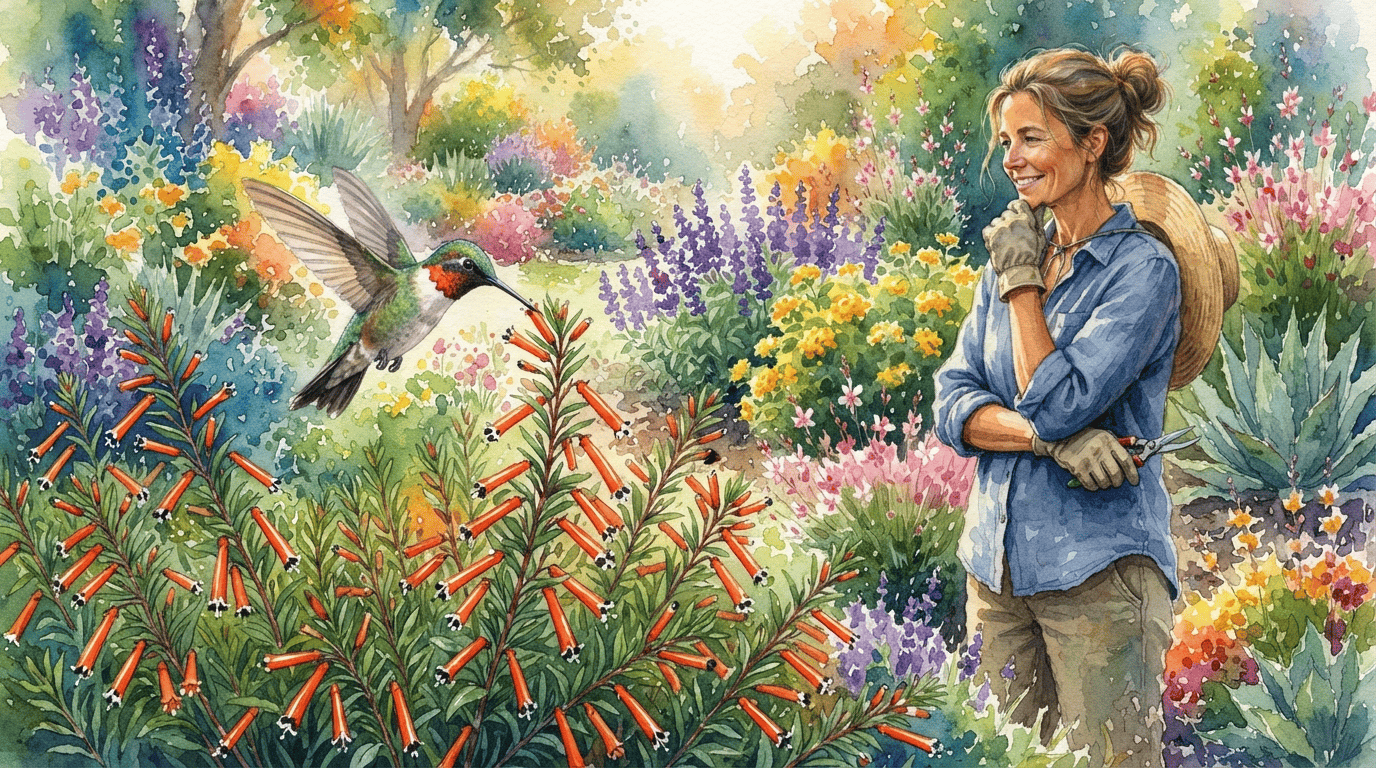
Cuphea ignea, commonly called cigar plant or cigar flower, is a tender evergreen subshrub native to Mexico, Jamaica, and parts of the Caribbean. Swiss botanist Augustin-Pyramus de Candolle described the species in 1842. Its slender tubular scarlet-orange flowers, tipped in black and white, resemble miniature lit cigars, inspiring the common name.
The plant reached European horticulture in the 1840s through English and Belgian nurseries and became a Victorian greenhouse conservatory favorite. In modern North American gardens it is grown as a tender perennial in frost-free zones or as a summer annual elsewhere, where hummingbirds and butterflies work the flowers daily.
Proven Winners offers the compact David Verity and related selections. The bark-brown stems, fine leaves, and non-stop flowers make it a particularly reliable container accent. Became a staple of mid-20th-century American cottage gardens and remains a top-tier hummingbird plant, especially beloved in Texas and the Southwest for its summer-long performance.
Symbolism & meaning
What It Symbolizes
The Cigar Plant burns with Fiery cheer — narrow tubular blooms glowing red with a dark tip, lit like tiny embers along every stem. It is a Hummingbird flame in literal terms, ranking among the very best nectar plants for ruby-throats and their kin. A small shrub that hums all summer with feathered visitors.
- Fiery cheer — glowing red blooms never stop
- Hummingbird flame — top nectar source for hummers
Where the Name Comes From
'ignea' from Latin means fiery, for the glowing red-orange flower color reminiscent of a lit cigar tip.
Uses & Fun Facts
- Tubular cigar-shaped flowers draw hummingbirds all summer
- Compact mounding habit suits sunny window boxes
- Continuous bright orange bloom on heat-tolerant shrub
Related plants
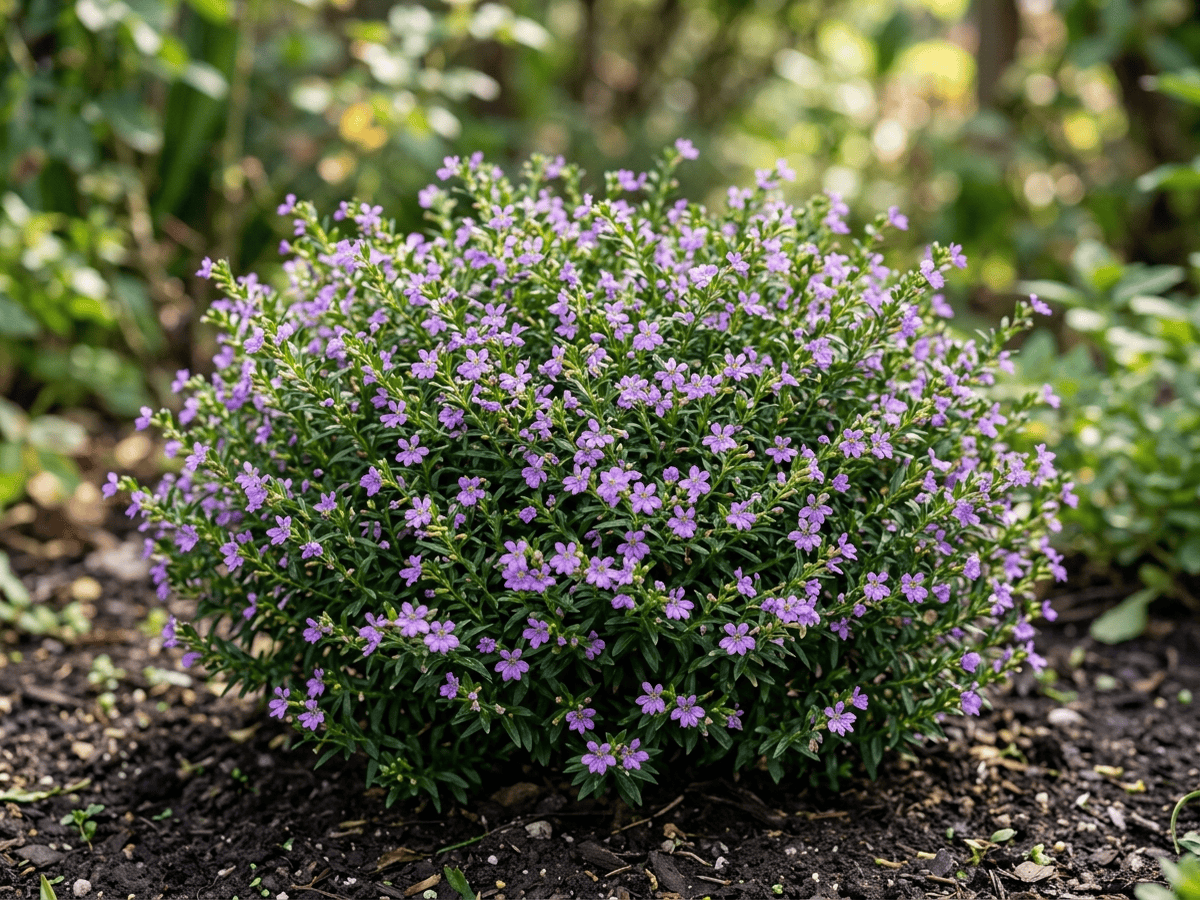
More Cuphea plants

Plants with similar care
 Chinese AbeliaAbelia chinensis
 Fragrant AbeliaAbelia mosanensis
 Large-Flowered AbeliaAbelia uniflora
 Glossy AbeliaAbelia x grandiflora
Frequently asked questions
How often should I water Cigar Plant?
In summer, water about every 4 days; in winter, about every 10 days. Adjust for heat, pot size and drainage.
How much light does Cigar Plant need?
Full sun: 6+ hrs direct. Watch the leaves — scorching or stretching means the light needs adjusting.
Is Cigar Plant toxic to cats or dogs?
Pets Unknown (Dogs Unknown · Cats Unknown) Educational information, not medical or veterinary advice. If exposure is suspected, contact a doctor or veterinarian.
Is Cigar Plant easy to grow?
Yes — it is considered an easy, beginner-friendly plant.
When does Cigar Plant bloom?
It typically blooms Mar–Nov in the Northern Hemisphere.
YardMate
Identify any plant in seconds
Snap a photo — YardMate names the plant, diagnoses problems, and reminds you when to water.
Download on the App Store