 YardMate



Bat-Faced Cuphea
Cuphea llavea
Easy · Beginner friendlyAbout Bat-Faced Cuphea
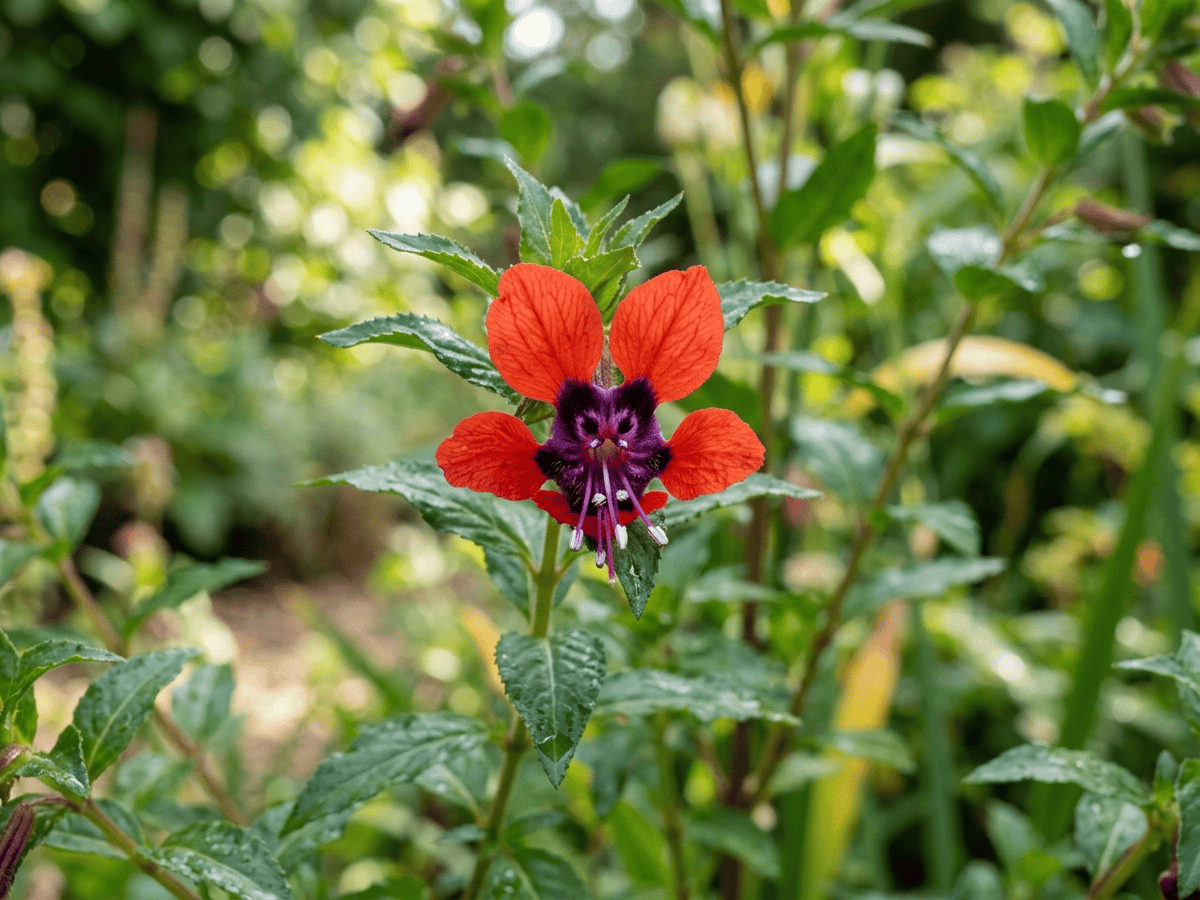
Cuphea llavea, bat-faced cuphea, is a tender Mexican shrub grown as an annual in cooler climates for flowers that look almost theatrical: a dark purple tubular calyx with two bright red upper petals like little ears. Plants form bushy mounds 30-75 cm tall and bloom from spring until frost if kept warm, watered, and lightly fed. Hummingbirds visit constantly, and the flowers also draw butterflies and bees. It is excellent in containers, pollinator beds, and sunny border edges where its small details can be seen up close. Modern compact selections made the plant easier for patio gardening, but its charm still comes from the same odd, comic, unmistakable flower face.
- Heat-tolerant
- Deer-resistant
- Long-blooming
- Pollinator-friendly
How to care for Bat-Faced Cuphea
Watering
- Springevery 5 days
- Summerevery 4 days
- Fallevery 7 days
- Winterevery 10 days
Soil · Well-draining
- Top dressingPine bark mulch10%
- Main mixPotting soil + perlite 2:170%
- DrainageLECA / gravel20%
Never skip the drainage layer — standing water is the top cause of root rot.
FERTILIZER
Balanced Feed 14-14-14
An even feed covers all three needs at once, keeping leaves, roots and blooms moving together with nothing pushed out of balance.
- Nitrogen · Leaves
- Phosphorus · Roots + Blooms
- Potassium · Strength
- Springevery 30 days
- Summerevery 30 days
At a Glance
- NativeNorth America
- Height1–2 ft (0.3–0.6 m)
- Spread1–2 ft (0.3–0.6 m)
- Flower colorRed, Purple
- Foliage colorGreen
- SoilLoamy, Well-drained
- LocationsYard · Balcony
Bloom time
BLOOM CYCLE
Peak bloom
Mar–Nov
Bat-face flowers spring to frost
Toxicity
Toxicity unknown
None reported
Unknown
EXPOSURE Unspecified plant material.
EFFECT Toxic effects are not specified.
NOTE Toxicity for humans is not well documented; use caution until verified.
Unknown
EXPOSURE Unspecified plant material.
EFFECT Toxic effects are not specified.
NOTE Toxicity for dogs is not well documented; use caution until verified.
Unknown
EXPOSURE Unspecified plant material.
EFFECT Toxic effects are not specified.
NOTE Toxicity for cats is not well documented; use caution until verified.
Educational information, not medical or veterinary advice. If exposure is suspected, contact a doctor or veterinarian.
DISTRIBUTION


- Native
- Introduced
- North America
History

Cuphea llavea, the bat-faced cuphea or bat-face cuphea, is a tender subshrub native to Mexico, particularly Oaxaca, Jalisco, and Michoacán. Spanish botanists La Llave and Lexarza described the species in 1824, and the genus epithet honors Mexican priest-botanist Pablo de La Llave. Its uniquely shaped flowers have two erect scarlet petals resembling mouse or bat ears above a fused dark purple calyx face, delighting gardeners and children alike.
Breeders at Ball FloraPlant, Danziger, and Proven Winners have selected improved clones such as Tiny Mice, Flamenco Samba, and FloriGlory Diana. The plant blooms nonstop from spring through frost, attracting hummingbirds and butterflies, and remains evergreen in frost-free zones, making it an increasingly popular subtropical landscape subshrub in the southern United States.
Native to Mexico, introduced to American gardens in the late 20th century. The discovery of its uncanny bat-face flower pattern made it a children's-garden conversation plant, and Proven Winners' 'Vermillionaire' hybrid popularized it widely in the 2010s.
Symbolism & meaning
What It Symbolizes
Bat-Faced Cuphea greets visitors with playful charm, its tiny scarlet flowers each tipped with two purple 'ears' that turn the bloom into a miniature bat mask. Long beloved in Mexican folk gardens, it carries small-scale whimsy into hot summer borders where humor is rare. In its petite, theatrical flowers, the garden cracks a sly little smile.
- Playful charm — whimsical bat-face flower pattern
- Mexican folk — celebrated in traditional folk gardens
Where the Name Comes From
'llavea' honors Mexican clergyman Pablo de la Llave (1773-1833), who studied the flora of Mexico.
Uses & Fun Facts
- Bat-faced flowers attract hummingbirds from spring through frost
- Long-blooming Mexican shrublet for patio pots and baskets
- Whimsical purple-and-red blooms charm children's and tropical gardens
Related plants
More Cuphea plants

Plants with similar care
 Chinese AbeliaAbelia chinensis
 Fragrant AbeliaAbelia mosanensis
 Large-Flowered AbeliaAbelia uniflora
 Glossy AbeliaAbelia x grandiflora
Frequently asked questions
How often should I water Bat-Faced Cuphea?
In summer, water about every 4 days; in winter, about every 10 days. Adjust for heat, pot size and drainage.
How much light does Bat-Faced Cuphea need?
Full sun: 6+ hrs direct. Watch the leaves — scorching or stretching means the light needs adjusting.
Is Bat-Faced Cuphea toxic to cats or dogs?
Pets Unknown (Dogs Unknown · Cats Unknown) Educational information, not medical or veterinary advice. If exposure is suspected, contact a doctor or veterinarian.
Is Bat-Faced Cuphea easy to grow?
Yes — it is considered an easy, beginner-friendly plant.
When does Bat-Faced Cuphea bloom?
It typically blooms Mar–Nov in the Northern Hemisphere.
YardMate
Identify any plant in seconds
Snap a photo — YardMate names the plant, diagnoses problems, and reminds you when to water.
Download on the App Store