 YardMate

Britton's Dudleya
Dudleya brittonii
Medium · Some experienceAbout Britton's Dudleya
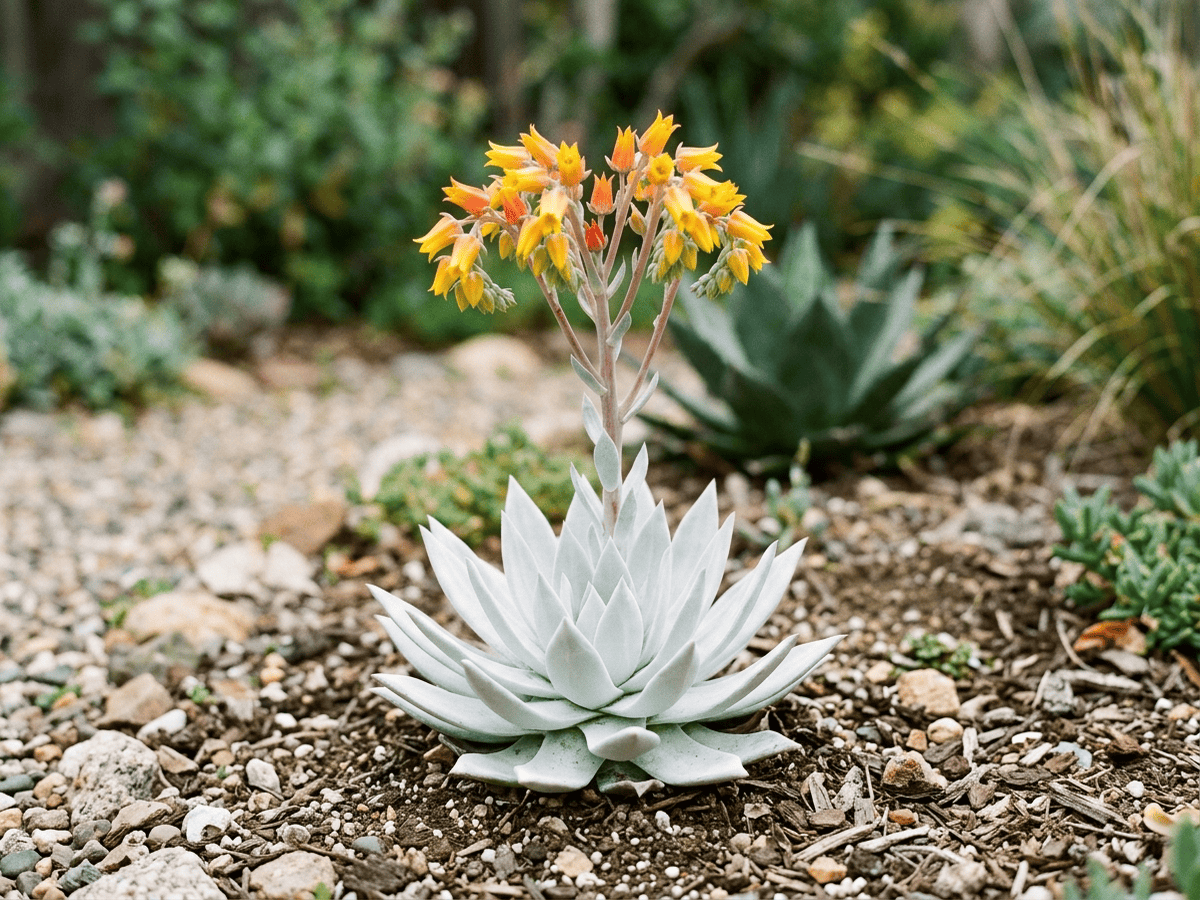
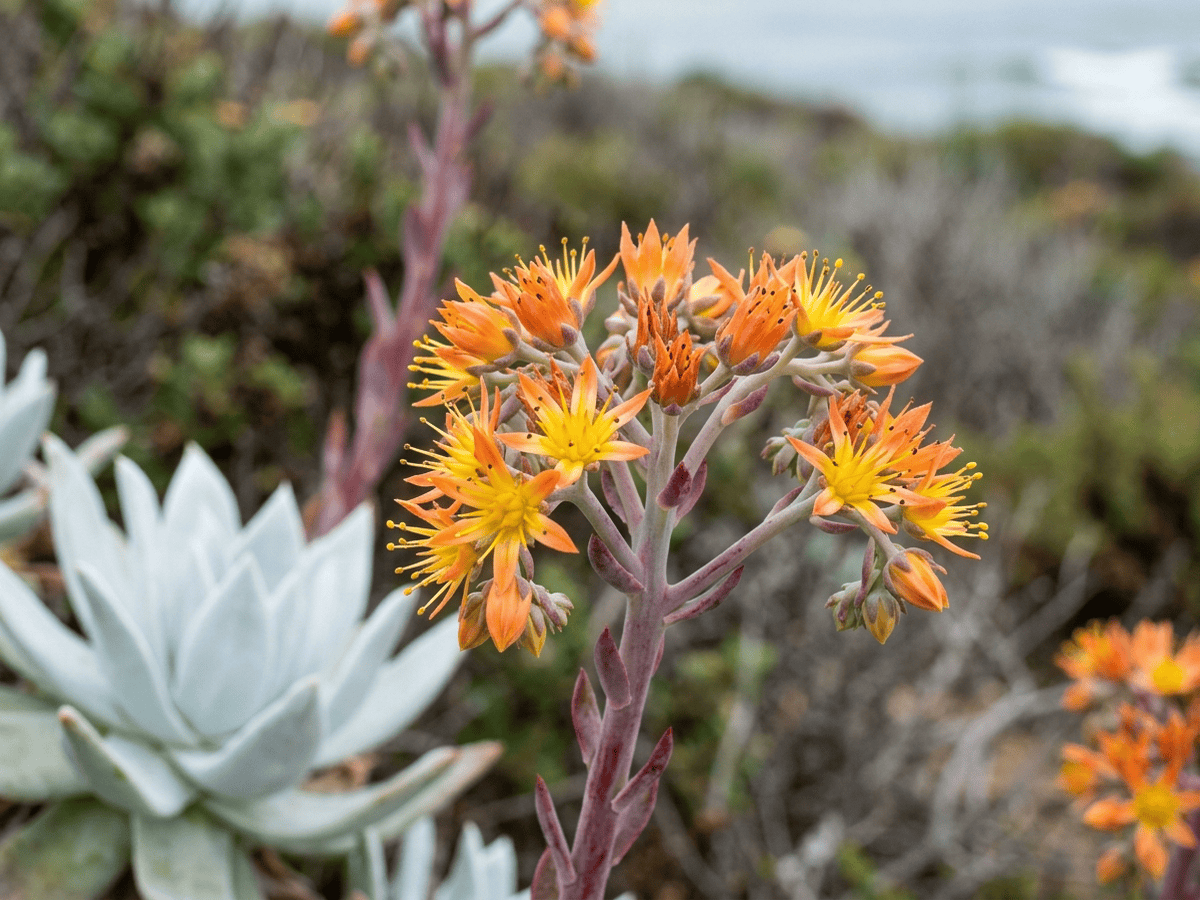
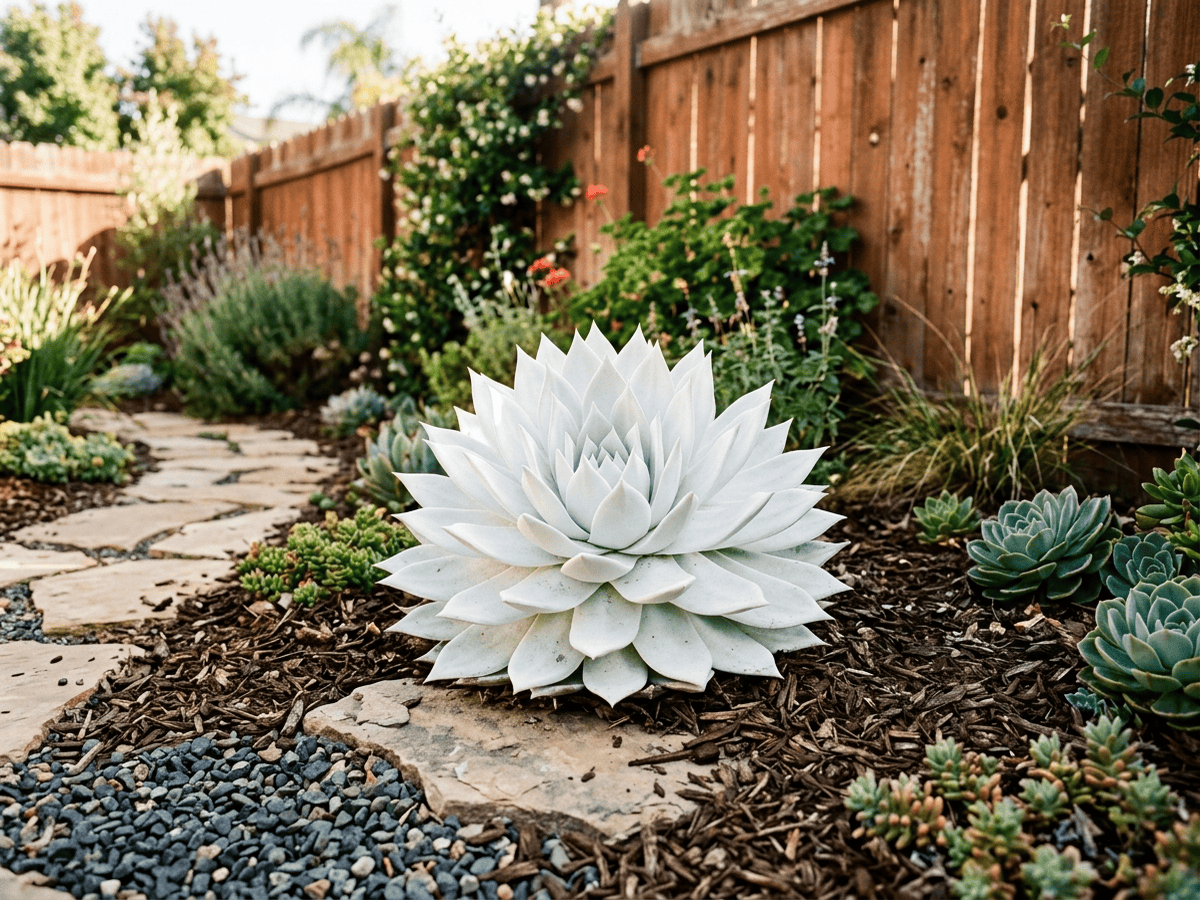
Giant Chalk Dudleya is the largest Dudleya species, forming impressive rosettes up to 3 feet across with the most brilliant white powdery coating of any succulent. Native to rocky slopes near Ensenada in Baja California, it produces tall branched stalks of small yellow flowers in summer. The extraordinary white farina makes this one of the most sought-after ornamental succulents worldwide, but wild populations are severely threatened by illegal collection. Growing it at home is a powerful conservation act.
- Drought-tolerant
- Deer-resistant
- Native
How to care for Britton's Dudleya
Watering
- Springevery 14 days
- Summerevery 21 days
- Fallevery 21 days
- Winterpause watering
Soil · Fast-draining
- Main mixSand + pumice + soil 1:1:150%
- DrainagePumice / gravel50%
Keep grit at half the mix or more — this soil is meant to dry out fast.
FERTILIZER
This plant needs little to no feeding.
At a Glance
- NativeNorth America
- Height1–1.5 ft (0.3–0.5 m)
- Spread1.5–2 ft (0.5–0.6 m)
- Flower colorYellow, Orange
- Foliage colorVariegated, Silver
- SoilSandy, Well-drained
- LocationsYard · Balcony
Bloom time
BLOOM CYCLE
Peak bloom
May–Jul
Yellow flowers on tall branched stalks May to July
Fragrance
NO FRAGRANCE
No notable fragrance.
Toxicity
No toxicity has been reported for this plant. Still, it is wise to keep pets from chewing on any houseplant.
Educational information, not medical or veterinary advice. If exposure is suspected, contact a doctor or veterinarian.
DISTRIBUTION


- Native
- North America
History
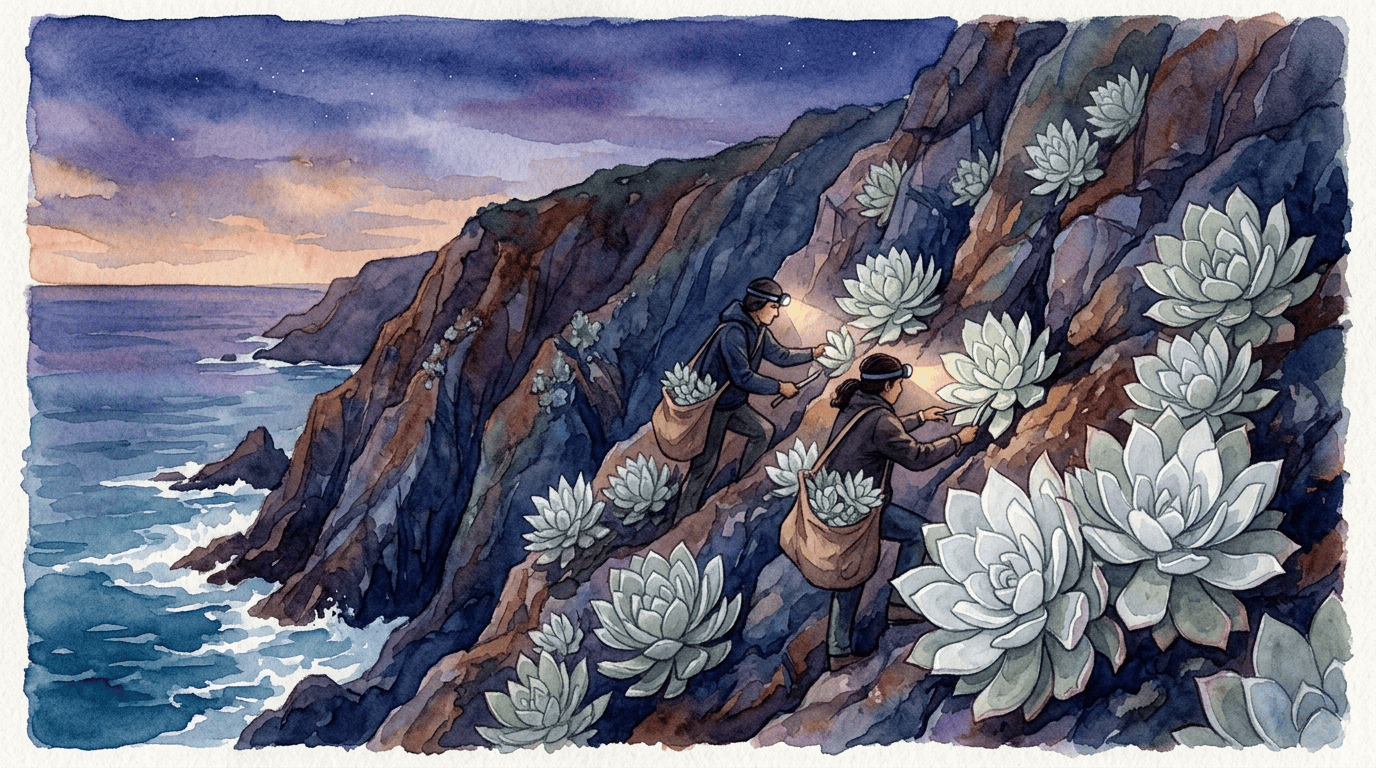
Dudleya brittonii is native to a relatively restricted area of coastal northwestern Baja California, Mexico, from roughly Ensenada south to around El Rosario, growing on steep coastal rocky cliffs within about 20 km of the Pacific Ocean. The species was named by American botanist Thomas Rose for Nathaniel Lord Britton (1859-1934), founding director of the New York Botanical Garden. It forms the largest rosettes of any Dudleya species — individual mature rosettes can reach 40-50 cm across with 60-80 leaves each — making it the most architecturally dramatic dudleya. The best-selected forms produce leaves with an unusually thick, pure-white waxy epicuticular bloom that makes the plants look nearly artificial, almost like a sculptural element rather than a living plant.
The species is one of the most internationally desired Dudleyas in the global succulent horticultural trade, particularly in East Asia, and is widely commercially propagated from seed and leaf cuttings (legal and ethical propagation is straightforward). Wild populations in Baja California have faced pressure from both land development and some poaching, and Mexican conservation law now protects wild plants; commercial horticulture is adequately supplied by nursery production. In cultivation the species is best grown in full sun in sharply-drained soil, with no overhead water (water landing on the rosette destroys the chalky bloom) and strict summer-dry regime.
A 2018 poaching operation near Ensenada, Mexico removed thousands of wild specimens for export to South Korea and Japan, resulting in federal charges and international conservation attention. It is now one of the most publicized cases of succulent trafficking.
Symbolism & meaning
What It Symbolizes
Britton's Dudleya wears purity as a literal coating — a chalky white bloom so immaculate that a single fingerprint mars it. That untouched beauty has made it one of the most sought-after succulents in the world, prized for its symmetry and its silver glow at dusk. Its meaning is the fragility of perfection: a rarity asking to be admired only with the eyes.
- Purity — immaculate white coating symbolizes untouched beauty
- Rarity — one of the world's most sought-after succulents
Where the Name Comes From
'Brittonii' honors Nathaniel Lord Britton (1859–1934), director of the New York Botanical Garden and prolific plant taxonomist.
Uses & Fun Facts
- Chalky white rosette as standout succulent focal point
- Showpiece pot subject for Southern California succulent collectors
Related plants
More Dudleya plants

Plants with similar care
 Mexican AbeliaAbelia floribunda
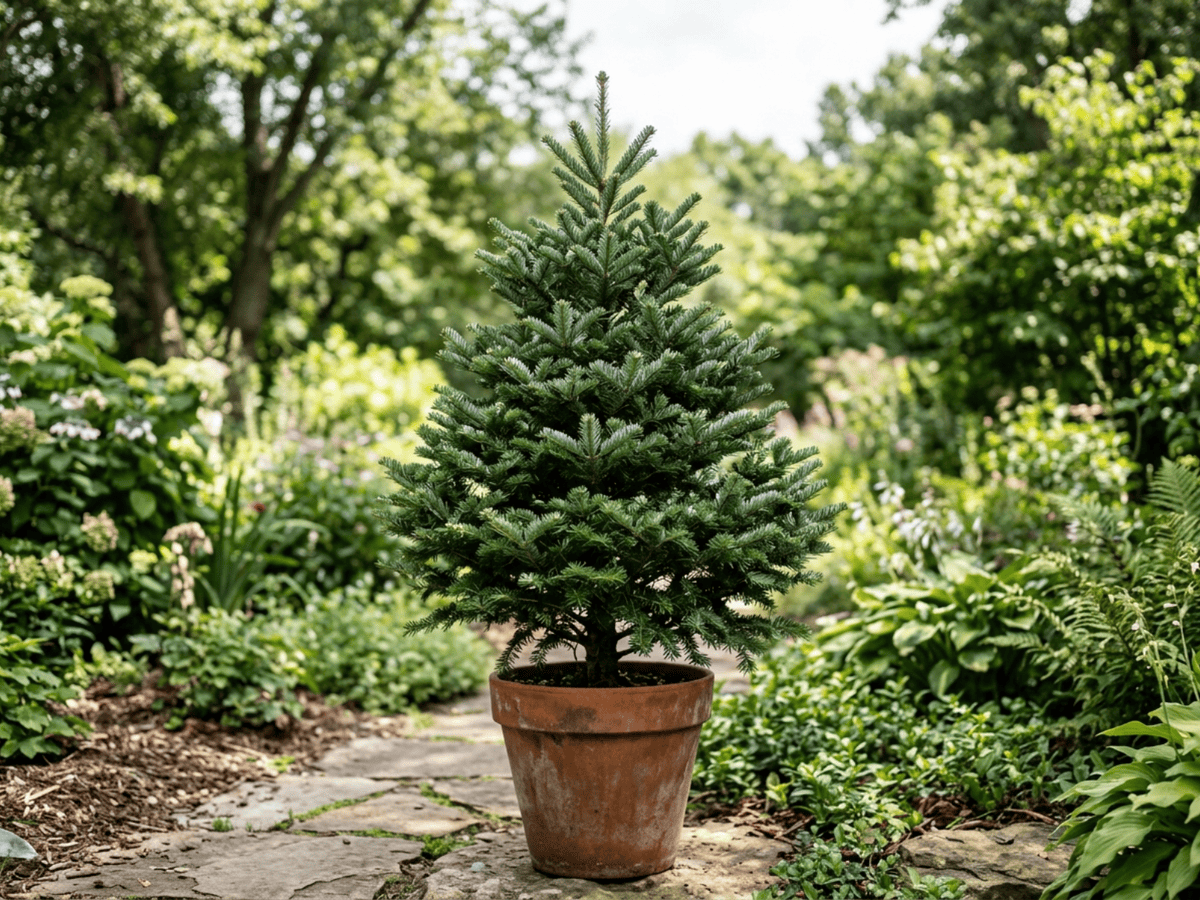 Fraser FirAbies fraseri
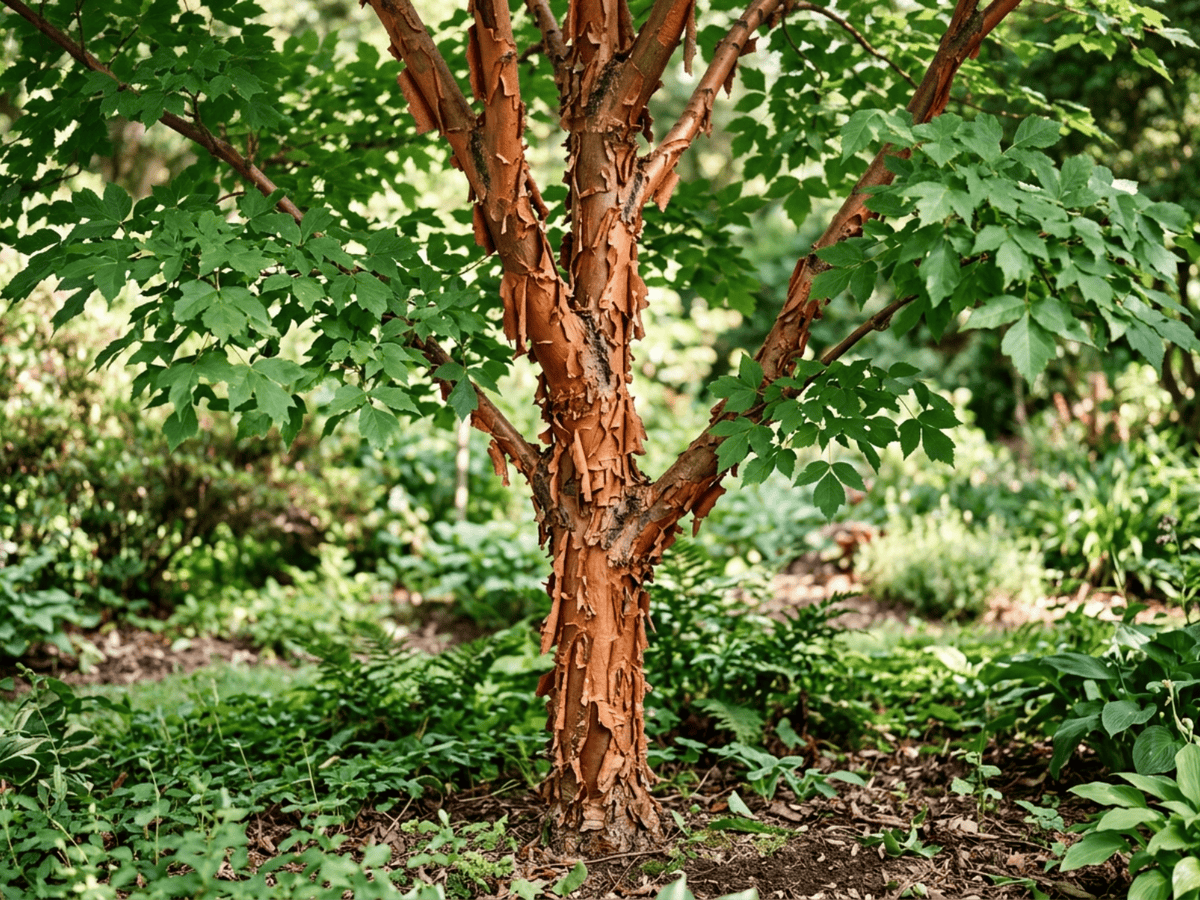 Paperbark MapleAcer griseum
 Sugar MapleAcer saccharum
Frequently asked questions
How often should I water Britton's Dudleya?
Water about every 14 days during the growing season, and always let excess water drain away.
How much light does Britton's Dudleya need?
Full sun: 6+ hrs direct. Watch the leaves — scorching or stretching means the light needs adjusting.
Is Britton's Dudleya toxic to cats or dogs?
No toxicity has been reported for this plant. Still, it is wise to keep pets from chewing on any houseplant. Educational information, not medical or veterinary advice. If exposure is suspected, contact a doctor or veterinarian.
Is Britton's Dudleya easy to grow?
It is moderately demanding: a good choice once you have a little experience.
When does Britton's Dudleya bloom?
It typically blooms May–Jul in the Northern Hemisphere.
YardMate
Identify any plant in seconds
Snap a photo — YardMate names the plant, diagnoses problems, and reminds you when to water.
Download on the App Store