 YardMate

Pale Purple Coneflower
Echinacea pallida
Easy · Beginner friendlyAbout Pale Purple Coneflower
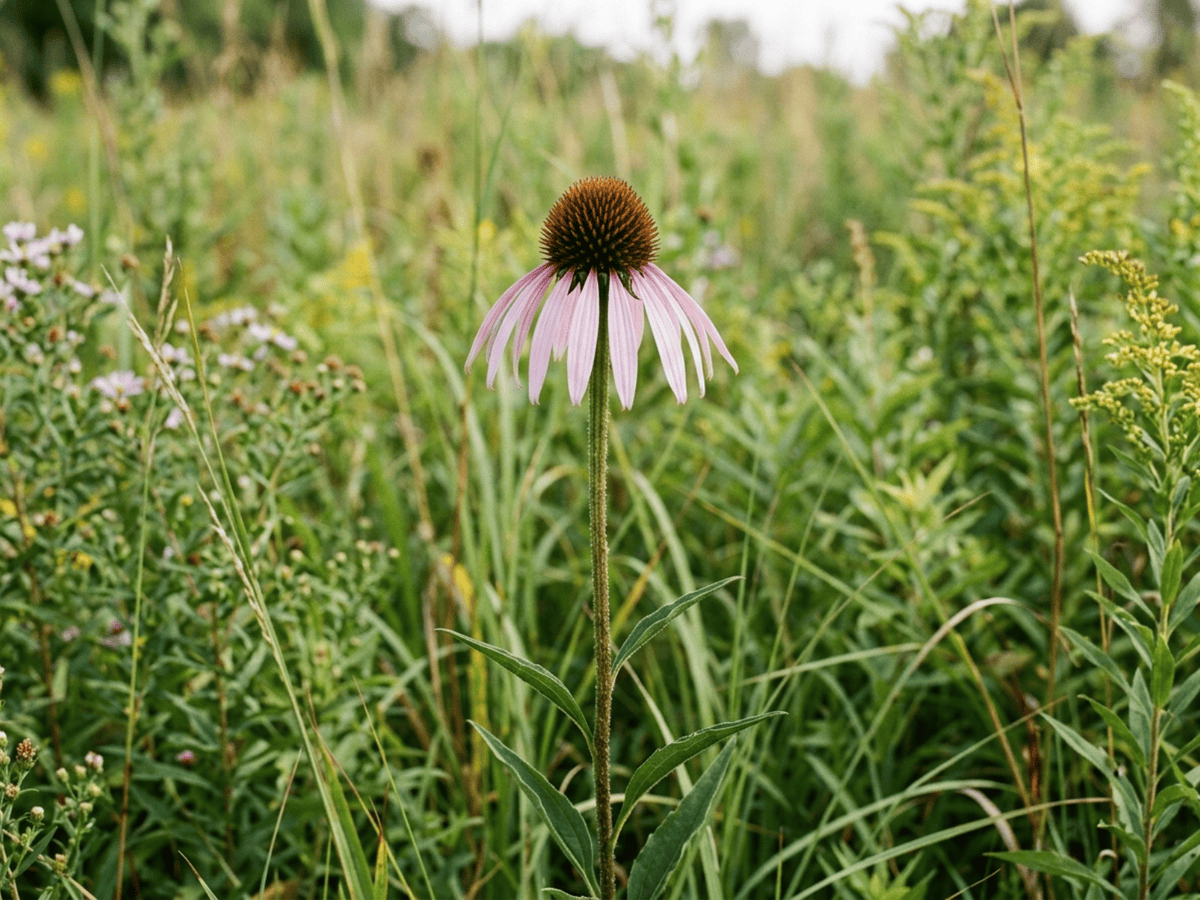
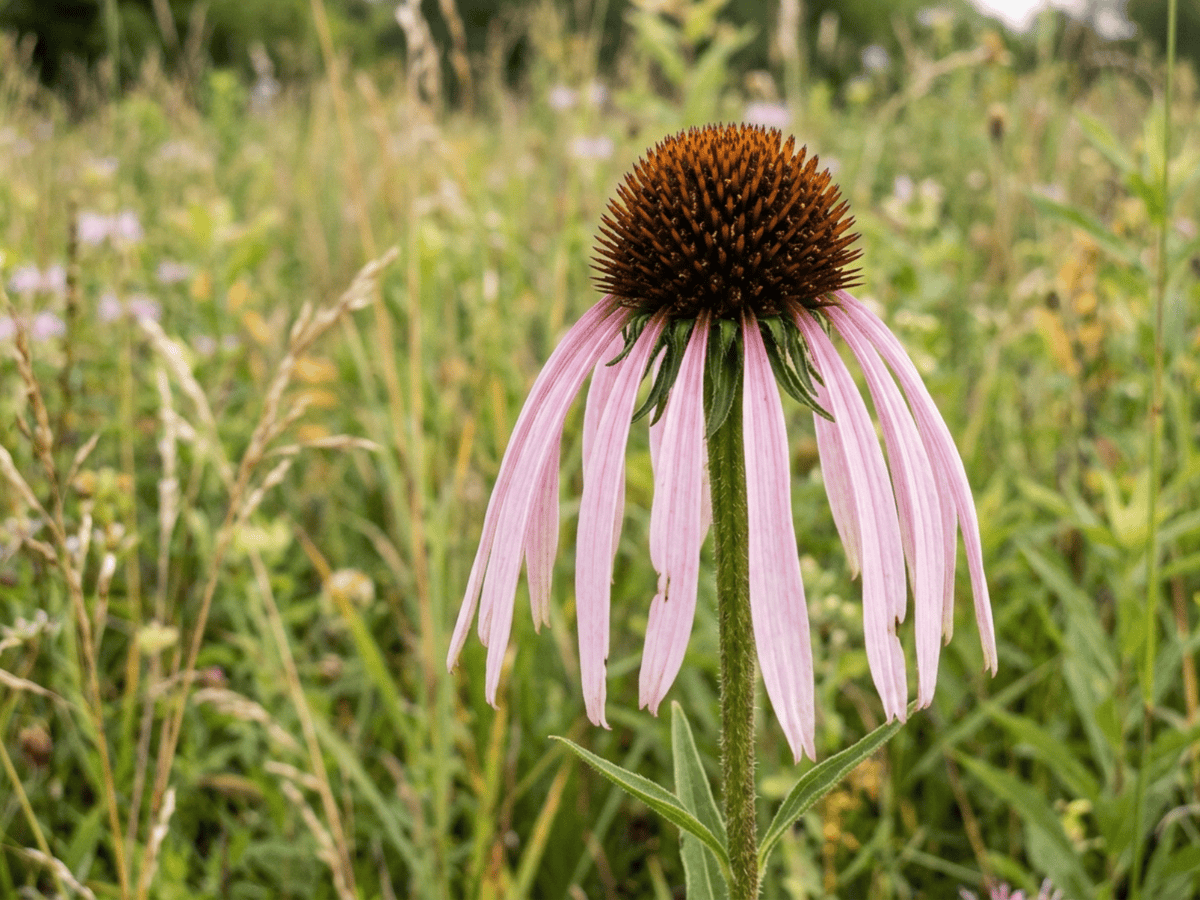
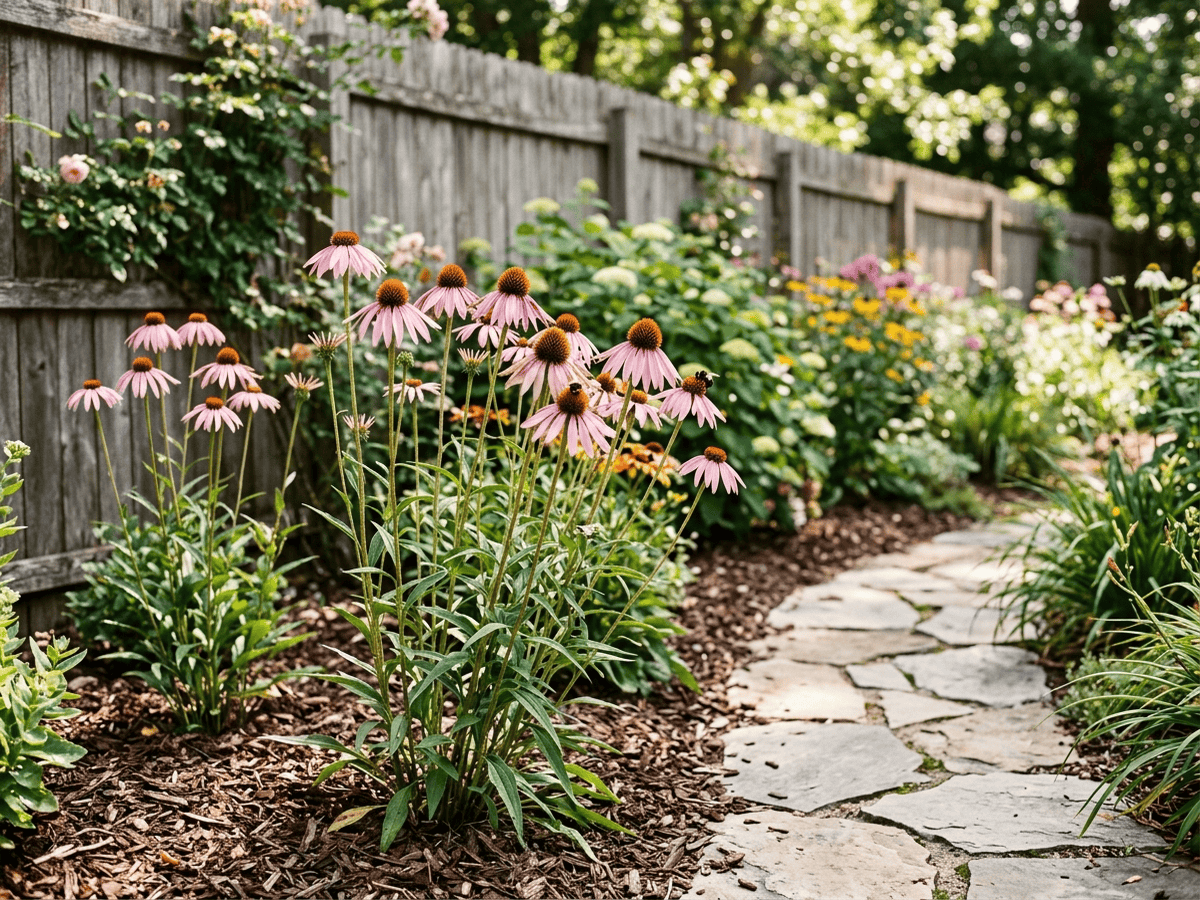
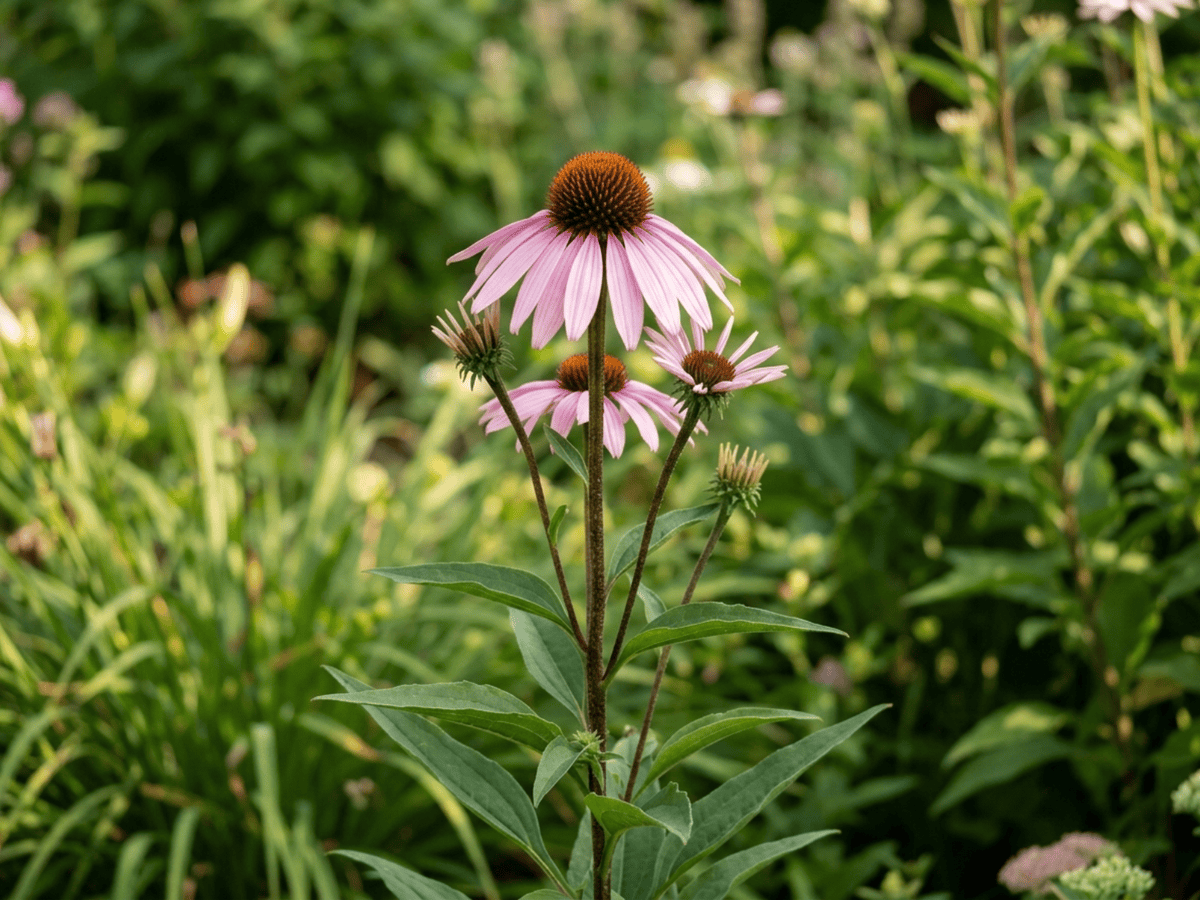
Echinacea pallida, the pale purple coneflower, is a graceful native perennial of the North American tallgrass prairie, found from the Great Plains eastward to the Appalachian foothills. Its distinctive flowers feature long, drooping, pale lavender-pink ray petals that hang downward like a ballerina's skirt around a spiky copper-brown central cone. Growing 60–120 cm tall on slender, hairy stems, it sways beautifully in prairie winds. Unlike its more famous cousin E. purpurea, this species has notably narrow, elongated petals that give it a delicate, refined appearance. It is deeply taprooted and extremely drought-tolerant once established, thriving in lean, well-drained soils where it can persist for decades. The dried seed heads provide winter interest and food for goldfinches and other songbirds. It is a key component of prairie restoration plantings and a foundational plant for native wildflower meadows. In European phytotherapy it is more widely used medicinally than E. purpurea, particularly as an immune-stimulating preparation.
- Drought-tolerant
- Low-maintenance
- Native
- Pollinator-friendly
How to care for Pale Purple Coneflower
Watering
- Springevery 5 days
- Summerevery 4 days
- Fallevery 14 days
- Winterevery 30 days
Soil · Well-draining
- Top dressingPine bark mulch10%
- Main mixPotting soil + perlite 2:170%
- DrainageLECA / gravel20%
Never skip the drainage layer — standing water is the top cause of root rot.
FERTILIZER
- Springevery 60 days
At a Glance
- NativeNorth America
- Height2–4 ft (0.6–1.2 m)
- Spread1–2 ft (0.3–0.6 m)
- Flower colorPink, Purple
- Foliage colorGreen
- SoilLoamy, Well-drained, Sandy
- LocationsYard
Bloom time
BLOOM CYCLE
Peak bloom
Jun–Jul
Pale lavender-pink drooping petals with copper cones; blooms early to mid summer
Fragrance
NO FRAGRANCE
No notable fragrance.
Toxicity
No toxicity has been reported for this plant. Still, it is wise to keep pets from chewing on any houseplant.
Educational information, not medical or veterinary advice. If exposure is suspected, contact a doctor or veterinarian.
DISTRIBUTION


- Native
- Introduced
- North America
History

Echinacea pallida is native to tallgrass prairie and oak-savanna regions of the central United States, from Illinois and Iowa south toward Texas. It is more slender and ghostly than the familiar purple coneflower, with narrow drooping rays and a prominent cone. Indigenous peoples, including Plains tribes, used echinaceas for toothache, snakebite, infections, and other ailments.
In the 19th century Echinacea entered American patent medicine, most famously through Meyer's Blood Purifier, and in the 20th century German researchers brought E. pallida into European phytomedicine. The species became a major source for immune-support supplements, though modern clinical studies show mixed and modest effects. Because E. pallida has a more restricted native range than E. purpurea, wild harvesting and habitat loss have raised conservation concerns. In gardens, it now serves both beauty and restoration.
Symbolism & meaning
What It Symbolizes
Pale Purple Coneflower is strength rooted deep. Its taproot drives far into tallgrass prairie soil, outlasting drought, wind, and fire while the pale petals lean like dancers around the cone. It symbolizes endurance without heaviness: a flower that survives by reaching downward first.
- Strength — Deep-rooted prairie survivor symbolizing inner fortitude and natural healing power
- Healing — Centuries of medicinal use represent nature's pharmacy and holistic wellness
Where the Name Comes From
Echinacea from Greek 'echinos' (hedgehog), referring to the spiky central cone. Pallida means 'pale' in Latin, describing the lighter-colored ray petals compared to other species.
Uses & Fun Facts
- Roots used in herbal tinctures supporting immune function
- Drooping pink rays feed native bees and goldfinches
- Graceful prairie wildflower for native restoration plantings
Related plants
More Echinacea plants
 Narrow-Leaved Purple ConeflowerEchinacea angustifolia
 Smooth Purple ConeflowerEchinacea laevigata
 Purple ConeflowerEchinacea purpurea
Plants with similar care
 Chinese AbeliaAbelia chinensis
 Fragrant AbeliaAbelia mosanensis
 Large-Flowered AbeliaAbelia uniflora
 Glossy AbeliaAbelia x grandiflora
Frequently asked questions
How often should I water Pale Purple Coneflower?
In summer, water about every 4 days; in winter, about every 30 days. Adjust for heat, pot size and drainage.
How much light does Pale Purple Coneflower need?
Full sun: 6+ hrs direct. Watch the leaves — scorching or stretching means the light needs adjusting.
Is Pale Purple Coneflower toxic to cats or dogs?
No toxicity has been reported for this plant. Still, it is wise to keep pets from chewing on any houseplant. Educational information, not medical or veterinary advice. If exposure is suspected, contact a doctor or veterinarian.
Is Pale Purple Coneflower easy to grow?
Yes — it is considered an easy, beginner-friendly plant.
When does Pale Purple Coneflower bloom?
It typically blooms Jun–Jul in the Northern Hemisphere.
YardMate
Identify any plant in seconds
Snap a photo — YardMate names the plant, diagnoses problems, and reminds you when to water.
Download on the App Store