 YardMate


Purple Coneflower
Echinacea purpurea
Easy · Beginner friendlyAbout Purple Coneflower
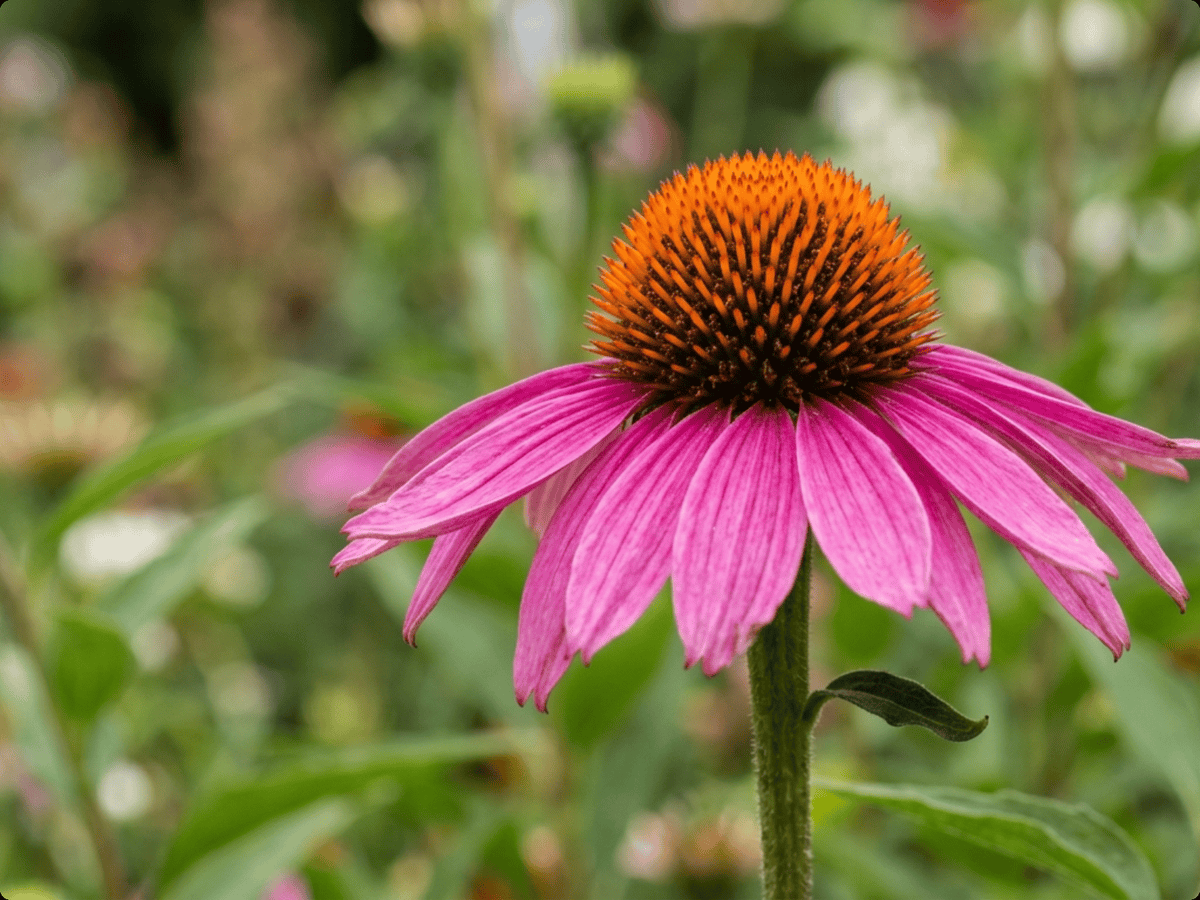
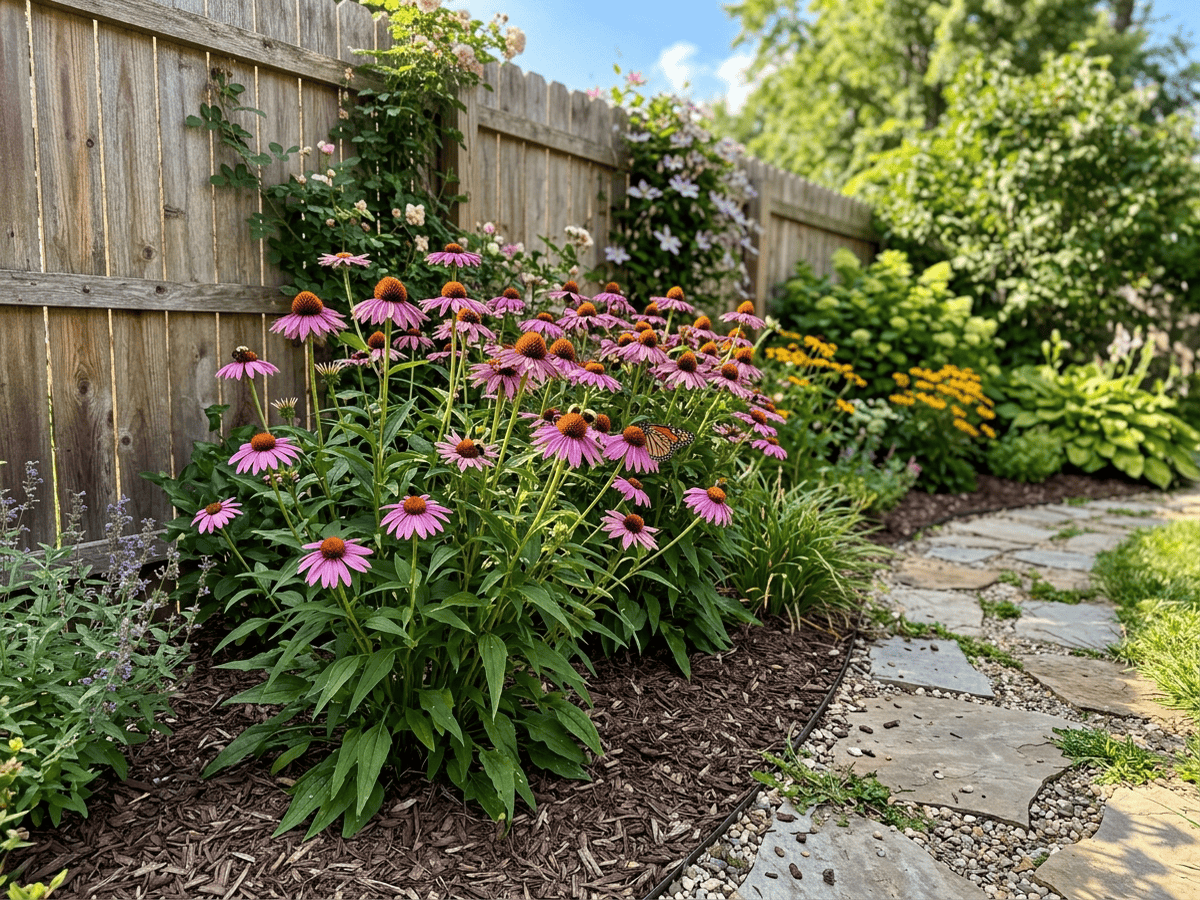
Echinacea purpurea, the purple coneflower, is a native North American perennial producing daisy-like flowers with distinctive raised, spiny orange-brown central cones surrounded by drooping purple-pink ray petals. Growing 60–120 cm tall, it is one of the most reliable and long-blooming prairie perennials, flowering from midsummer through autumn. It is drought-tolerant once established, attracts butterflies, and the seed heads provide winter food for goldfinches. Modern breeding has expanded the color palette to include orange, yellow, white, and double forms.
- Medicinal
- Drought-tolerant
- Native
- Pollinator-friendly
How to care for Purple Coneflower
Watering
- Springevery 10 days
- Summerevery 7 days
- Fallevery 14 days
- Winterevery 21 days
Soil · Well-draining
- Top dressingPine bark mulch10%
- Main mixPotting soil + perlite 2:170%
- DrainageLECA / gravel20%
Never skip the drainage layer — standing water is the top cause of root rot.
FERTILIZER
- Springevery 30 days
- Summerevery 30 days
At a Glance
- NativeNorth America
- Height2–4 ft (0.6–1.2 m)
- Spread1.5–2 ft (0.5–0.6 m)
- Flower colorPink, Purple, White
- Foliage colorGreen
- Fruit colorBrown
- SoilWell-drained, Loamy, Neutral
- LocationsYard
Bloom time
BLOOM CYCLE
Peak bloom
Jun–Sep
Long bloom season; leave seed heads for winter bird food; divide every 4 years
Fragrance
LIGHT FRAGRANCE
Mild honey-like scent attractive to bees and butterflies.
Toxicity
Humans Safe · Pets Safe
alkamides, cichoric acid, and polysaccharides
Safe
EXPOSURE No exposure route is reported.
EFFECT Widely consumed as tea and supplement and rare allergic reactions in Asteraceae-sensitive individuals.
NOTE Listed as non-toxic for humans; avoid eating ornamental plants unless confirmed edible.
Safe
EXPOSURE No exposure route is reported.
EFFECT Not listed as toxic by ASPCA and large ingestion may cause mild GI upset.
NOTE Listed as non-toxic for dogs; avoid eating ornamental plants unless confirmed edible.
Safe
EXPOSURE No exposure route is reported.
EFFECT Not listed as toxic by ASPCA.
NOTE Listed as non-toxic for cats; avoid eating ornamental plants unless confirmed edible.
Educational information, not medical or veterinary advice. If exposure is suspected, contact a doctor or veterinarian.
DISTRIBUTION

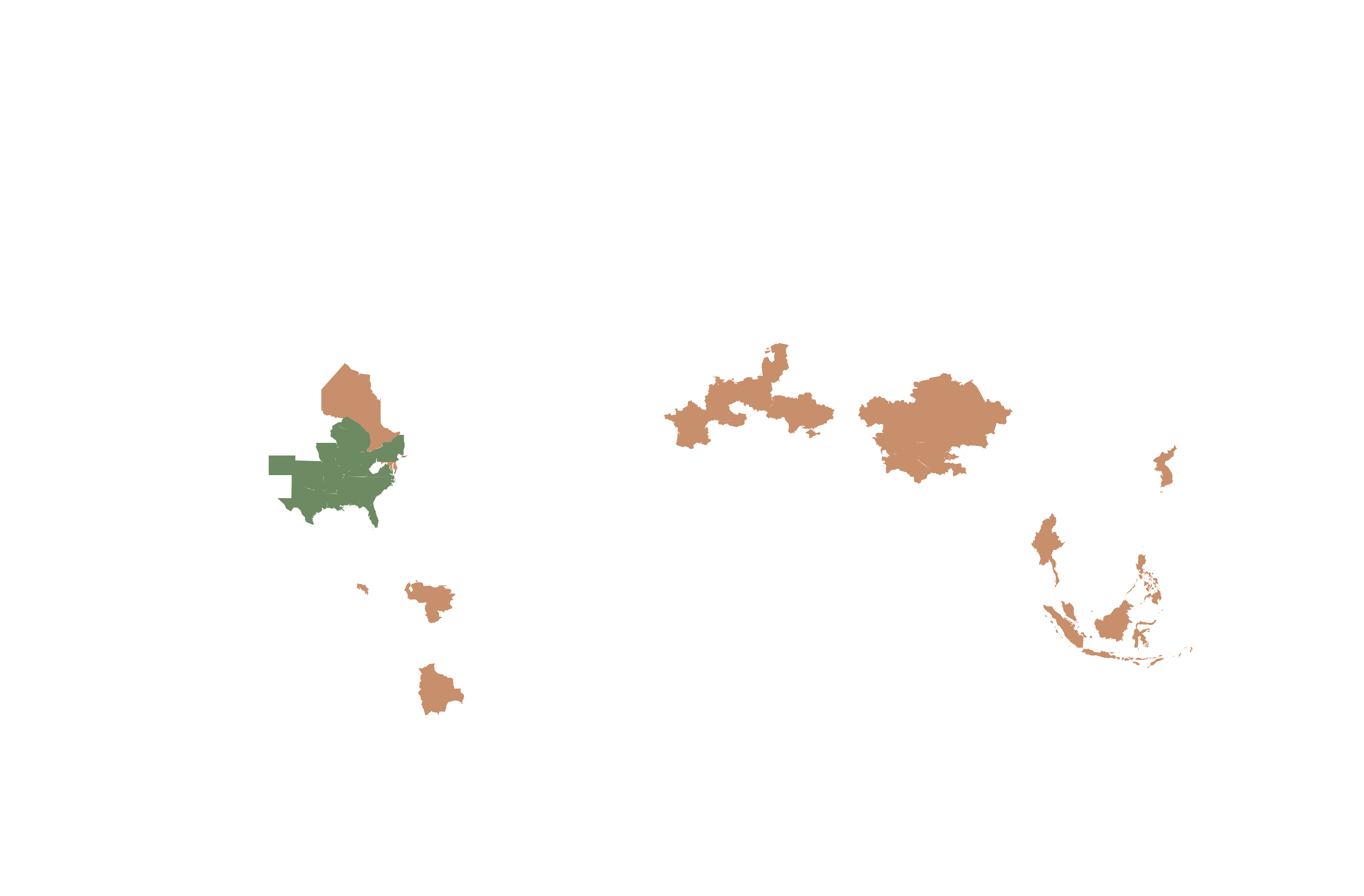
- Native
- Introduced
- North America
History

Echinacea purpurea is a prairie and open-woodland species native to eastern and central North America. Indigenous peoples — notably the Lakota, Cheyenne, Comanche, Choctaw, and Dakota — used the chewed root as an analgesic for toothache, sore throat, and snakebite, and as a wash for wounds and burns. European settlers adopted the plant through observation of these practices; by the late 19th century H.C.F. Meyer was marketing a Nebraska-made "Meyer's Blood Purifier" from Echinacea, which launched it into American patent medicine.
It faded during the antibiotic era but was revived in Germany by Gerhard Madaus, who brought seed back from Nebraska in 1938 and established clinical and horticultural research, cementing Echinacea as a mainstream European phytomedicine for cold and flu support. Echinacea was the most important medicinal plant of the Great Plains Native Americans — the Cheyenne, Lakota, and Comanche used it for toothaches, snakebites, and infections. German settlers in the 1800s learned about echinacea from indigenous peoples and brought knowledge back to Europe, where it became one of the world's best-selling herbal supplements.
Annual global sales of echinacea products exceed $1 billion. The name means 'hedgehog' in Greek, for the spiny central cone. While clinical evidence for immune-boosting claims is mixed, its continued popularity reflects deep cultural trust in plant medicine.
Symbolism & meaning
What It Symbolizes
Purple Coneflower is the prairie made approachable. Strong stems, rough leaves, and raised copper cones give it durability, while rose-purple rays invite bees, butterflies, and gardeners close. Its symbolism is open strength: tough enough for drought, generous enough to become a beloved border flower.
- Strength — A healing plant of the prairies, representing resilience and natural medicine
Where the Name Comes From
Echinacea from Greek 'echinos' (hedgehog), for the spiny flower cone. Purpurea means 'purple.'
Uses & Fun Facts
- Roots used in immune-supporting herbal preparations
- Long-lasting pink daisies feed bees and butterflies
- Sturdy stems excellent for prairie-style bouquets
- Seed cones provide winter food for goldfinches
Related plants
More Echinacea plants
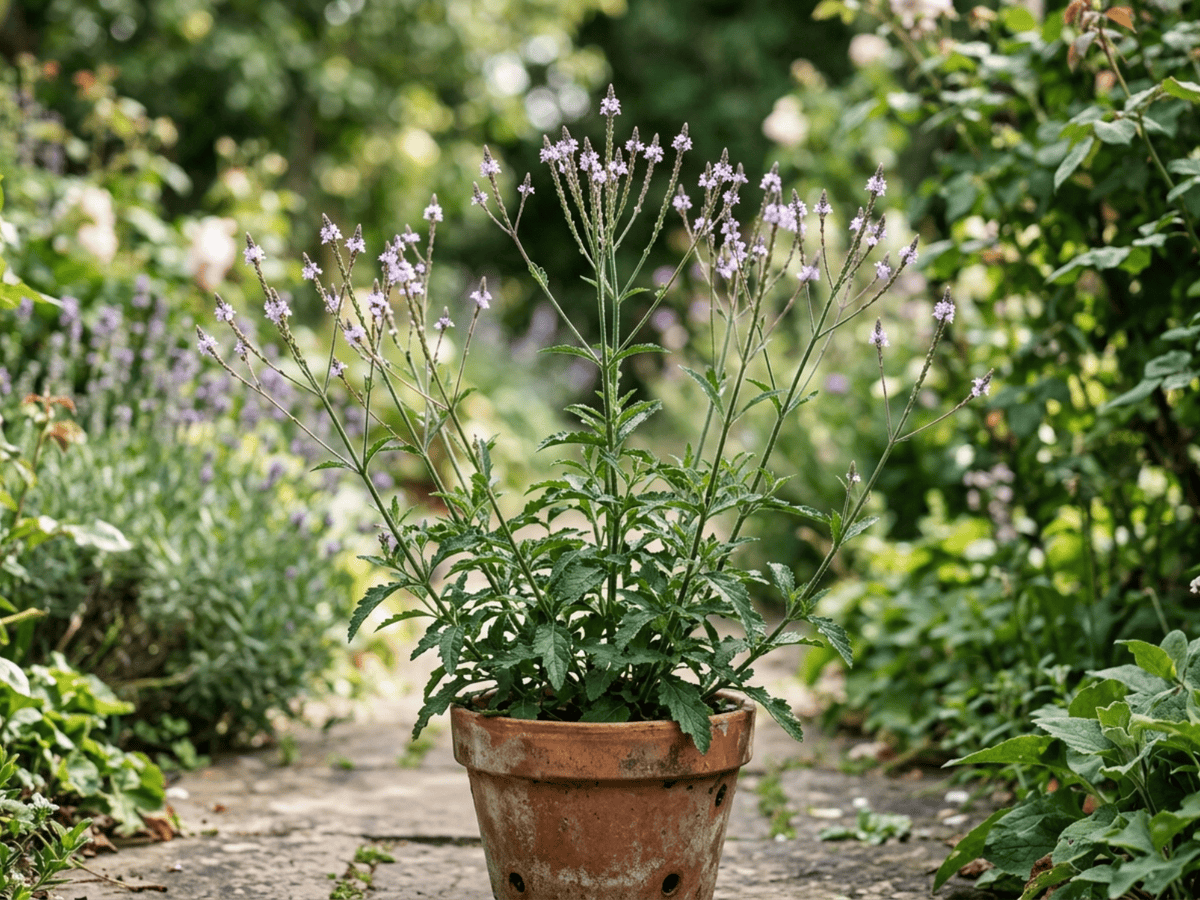 Narrow-Leaved Purple ConeflowerEchinacea angustifolia
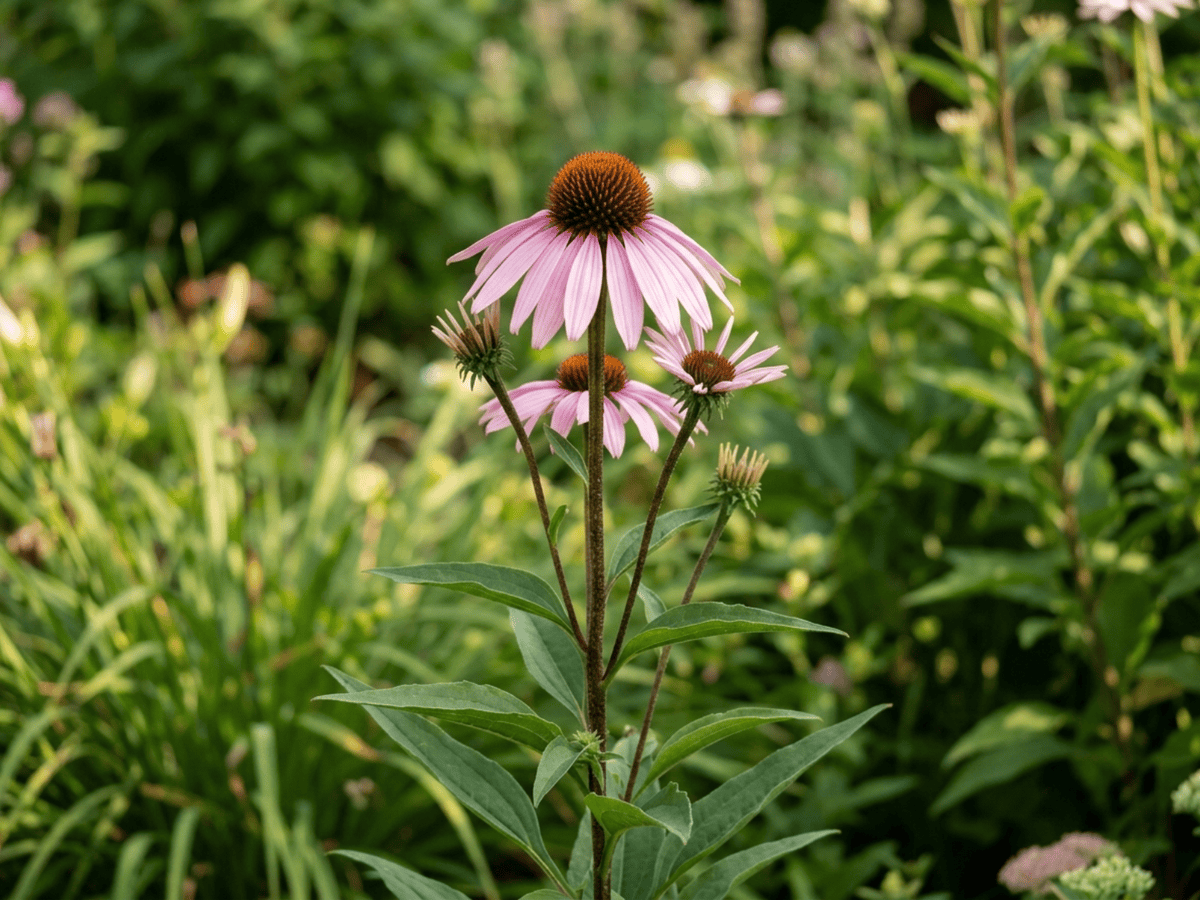 Smooth Purple ConeflowerEchinacea laevigata
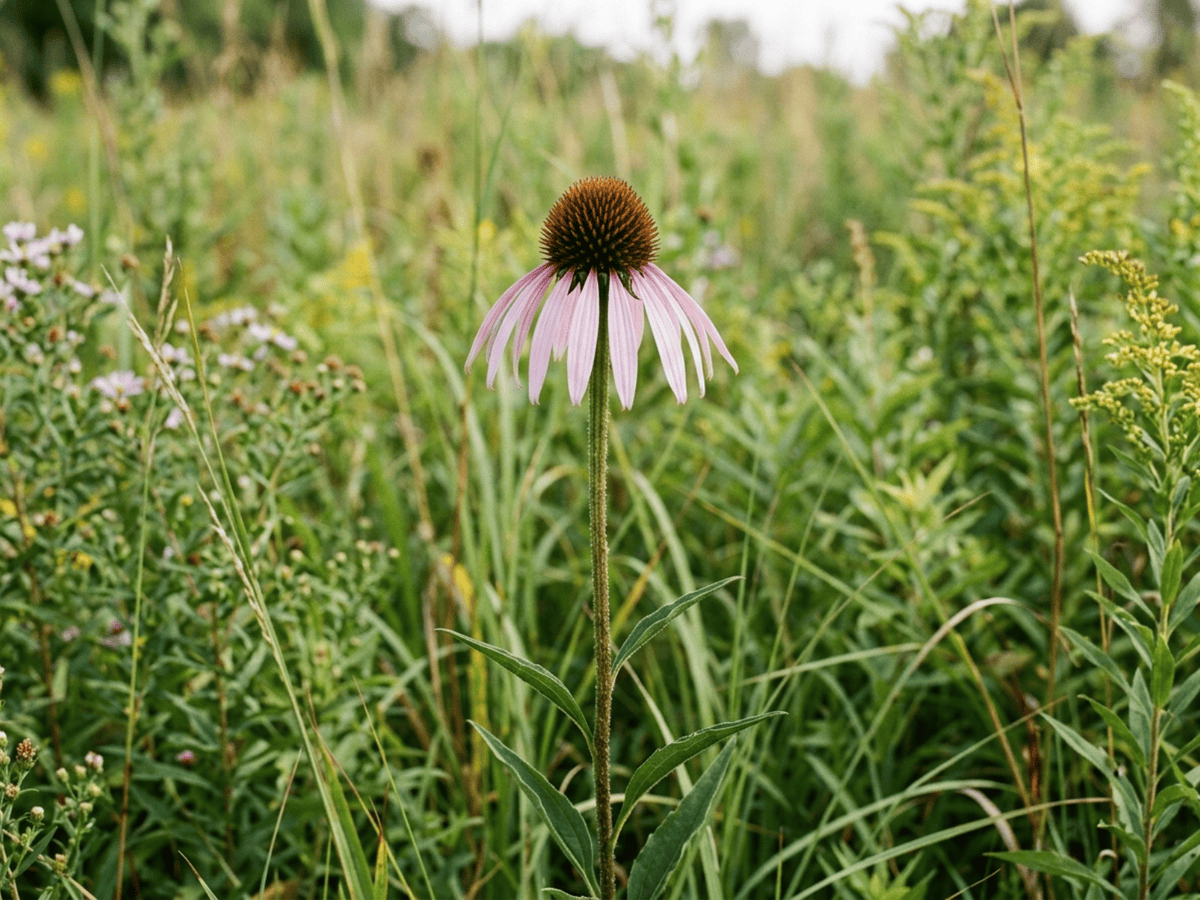 Pale Purple ConeflowerEchinacea pallida
Plants with similar care
 Chinese AbeliaAbelia chinensis
 Fragrant AbeliaAbelia mosanensis
 Large-Flowered AbeliaAbelia uniflora
 Glossy AbeliaAbelia x grandiflora
Frequently asked questions
How often should I water Purple Coneflower?
In summer, water about every 7 days; in winter, about every 21 days. Adjust for heat, pot size and drainage.
How much light does Purple Coneflower need?
Full sun: 6+ hrs direct. Watch the leaves — scorching or stretching means the light needs adjusting.
Is Purple Coneflower toxic to cats or dogs?
Pets Safe (Dogs Safe · Cats Safe) Educational information, not medical or veterinary advice. If exposure is suspected, contact a doctor or veterinarian.
Is Purple Coneflower easy to grow?
Yes — it is considered an easy, beginner-friendly plant.
When does Purple Coneflower bloom?
It typically blooms Jun–Sep in the Northern Hemisphere.
YardMate
Identify any plant in seconds
Snap a photo — YardMate names the plant, diagnoses problems, and reminds you when to water.
Download on the App Store