 YardMate
Redstem Stork's-bill
Erodium cicutarium
Hard · Experienced growersAbout Redstem Stork's-bill
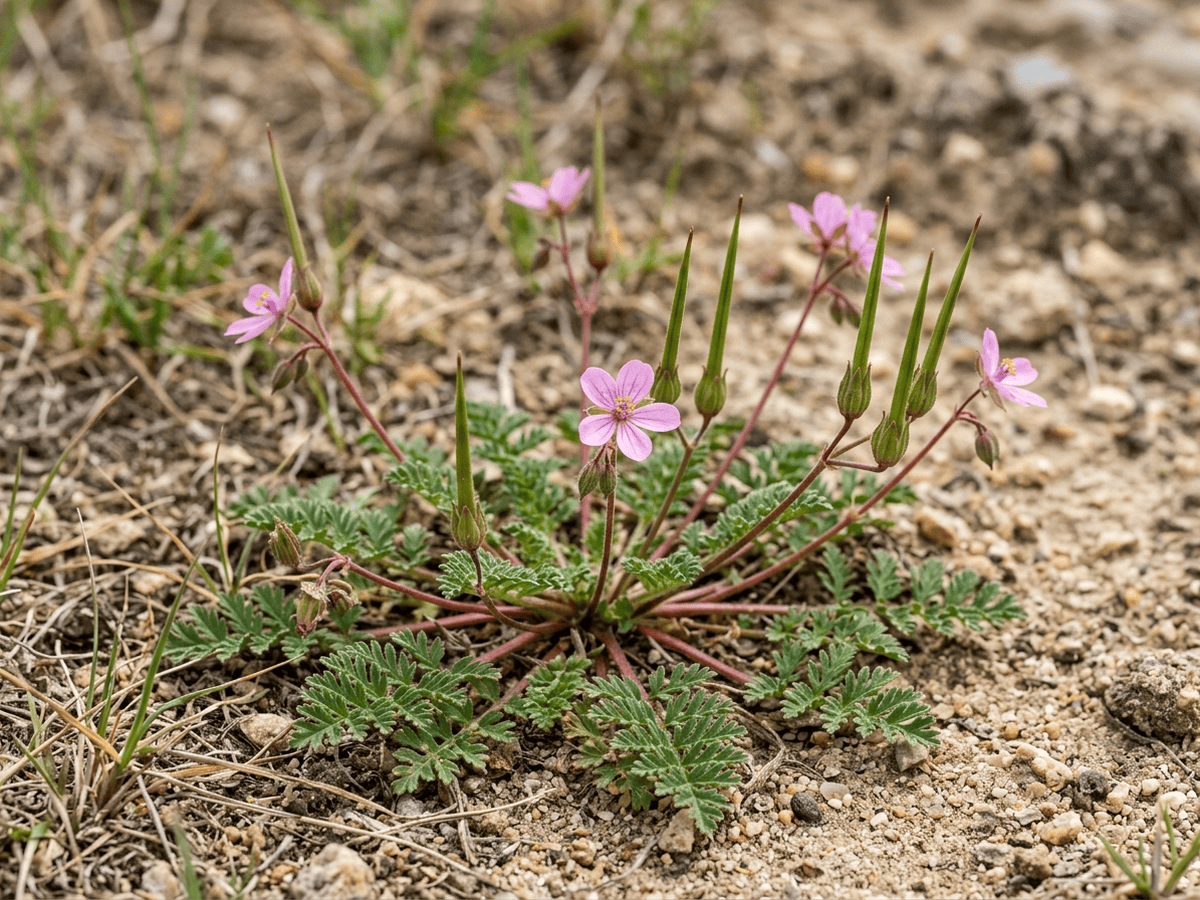
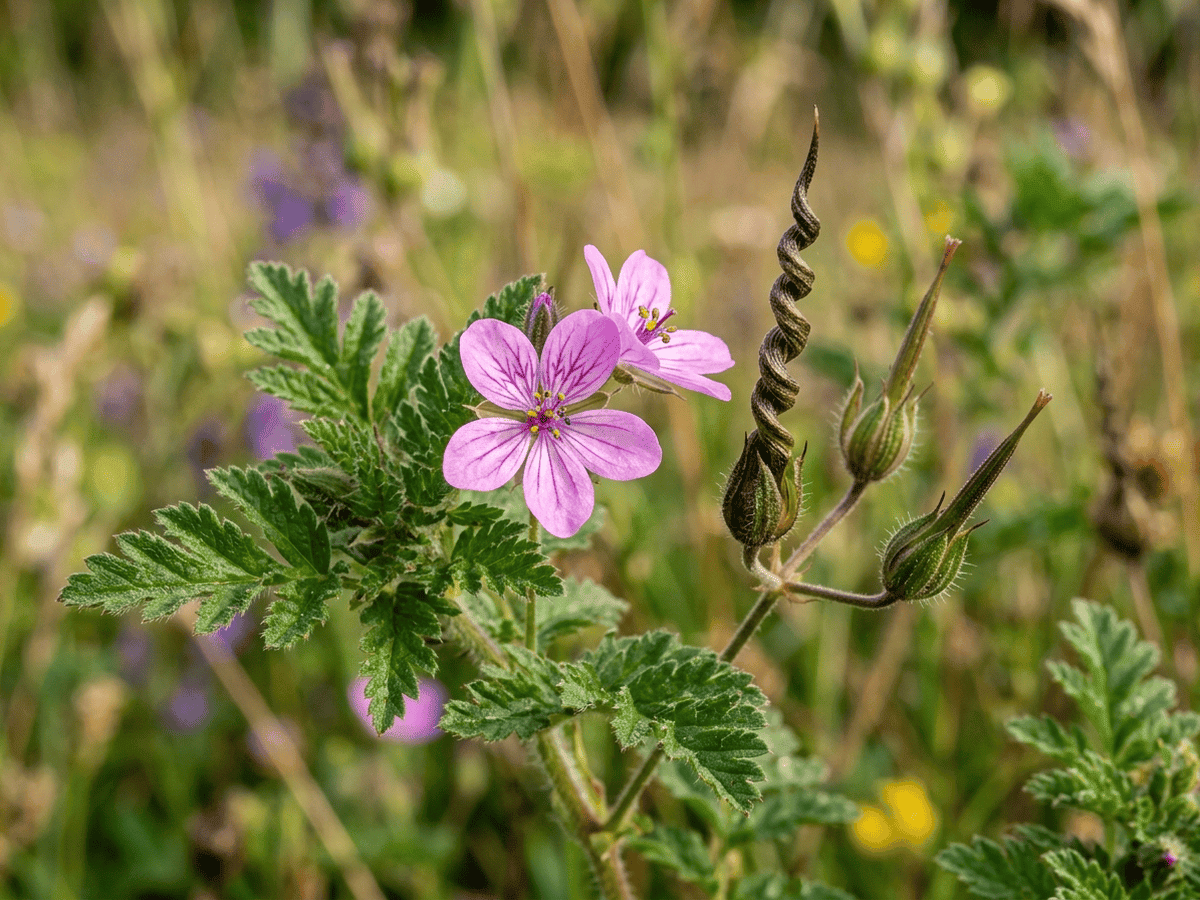
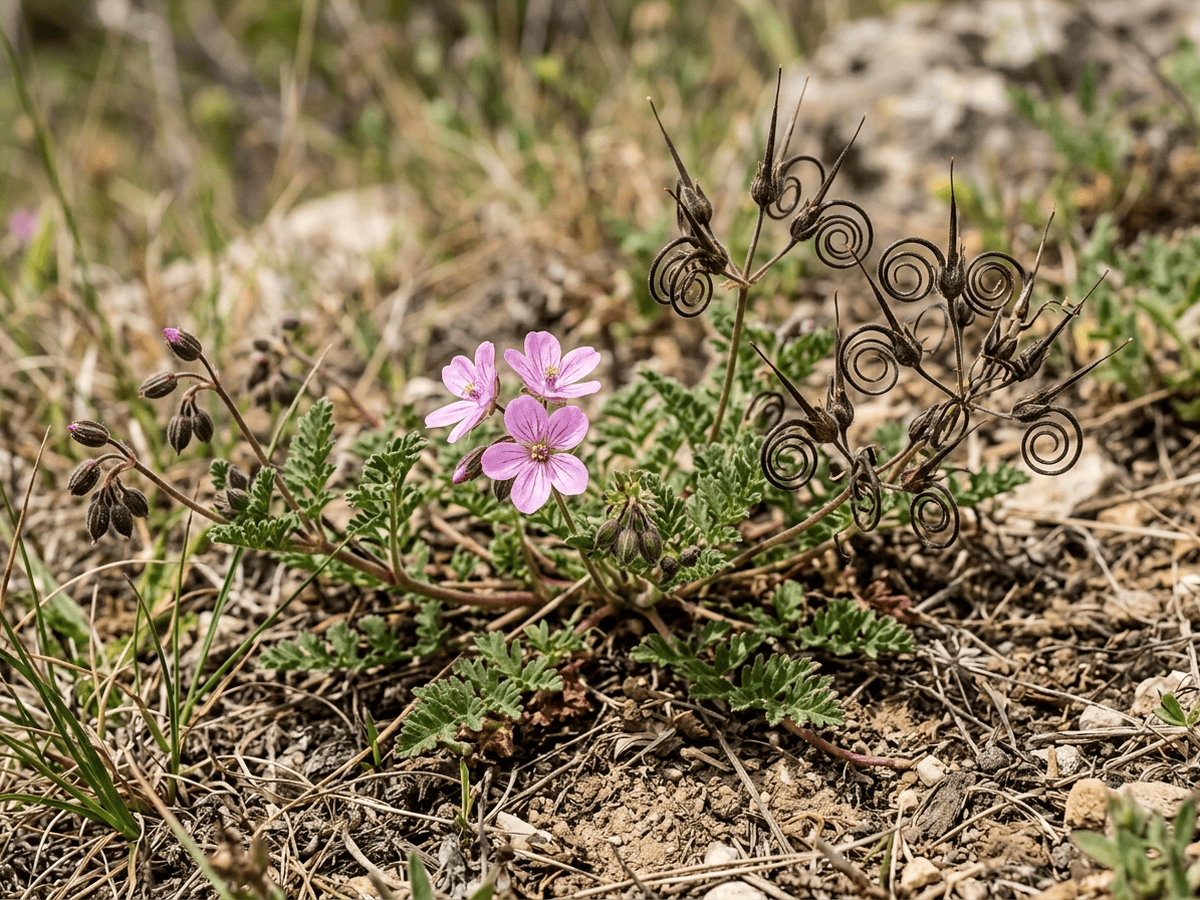
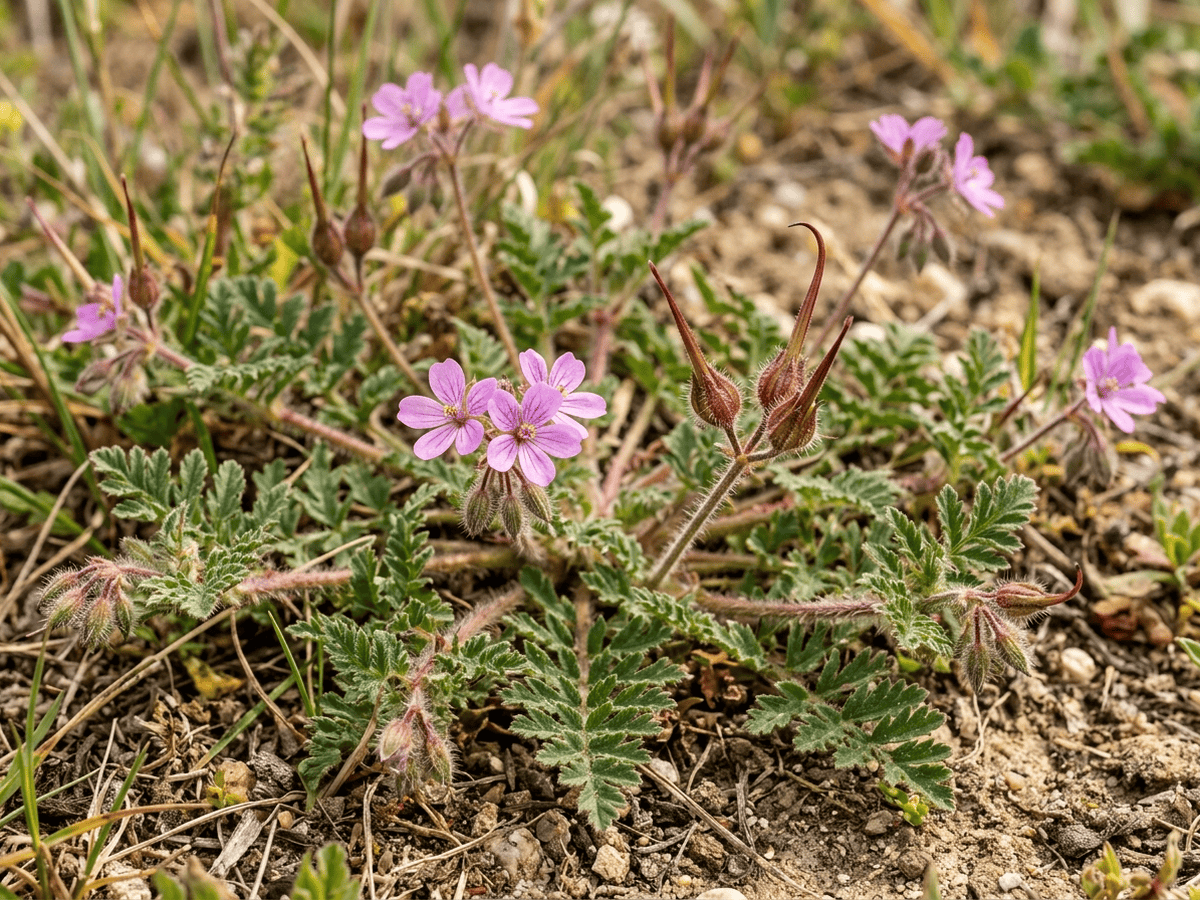
Erodium cicutarium, Redstem Stork's-bill, is a low-growing annual or biennial native to the Mediterranean, now naturalized across every inhabited continent on dry disturbed ground. It forms rosettes of finely divided, carrot-like leaves on red-tinged stems, producing small five-petaled flowers in pink to lavender from early spring onward. The plant's most remarkable feature is its seed: a corkscrew-tailed achene that literally drills itself into the soil by rotating as humidity changes—a hygroscopic mechanism that has fascinated engineers and biologists alike.
- Drought-tolerant
- Deciduous
- Pollinator-friendly
- Edible
- Fast-growing
How to care for Redstem Stork's-bill
Watering
- Springevery 7 days
- Summerevery 10 days
- Fallevery 14 days
- Winterpause watering
Soil · Rich & well-draining
- Top dressingCompost10%
- Main mixPotting soil + compost 3:180%
- DrainageGravel10%
Top up the compost layer each season.
FERTILIZER
- Springevery 30 days
At a Glance
- NativeEurope, Asia, North America
- Height0.5–1.5 ft (0.2–0.5 m)
- Spread1–2 ft (0.3–0.6 m)
- Flower colorPink, Purple
- Foliage colorGreen
- Fruit colorBrown
- SoilWell-drained, Sandy
- LocationsYard · Balcony
Bloom time
BLOOM CYCLE
Peak bloom
Apr–Jun
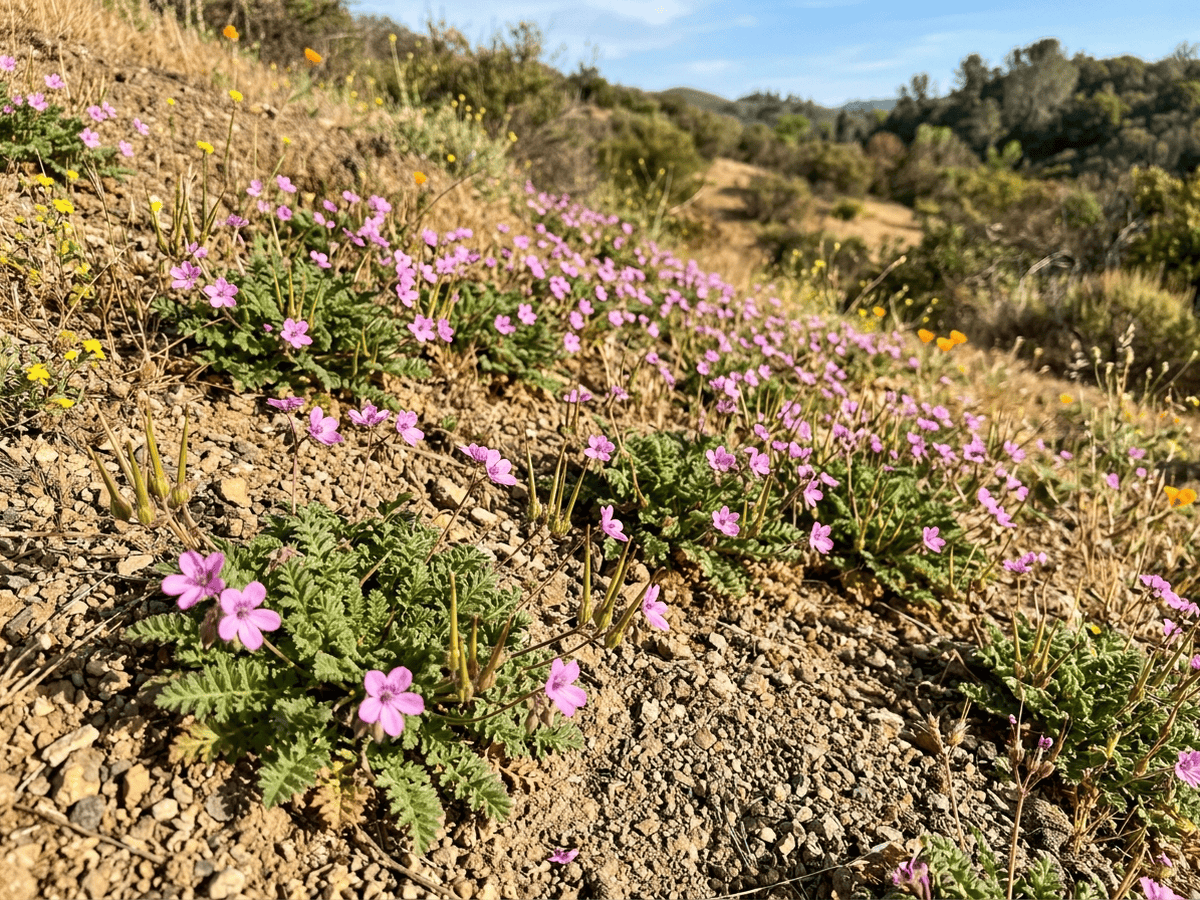
Flowers appear in spring, showcasing unique stork's-bill shape and attract pollinators.
Toxicity
No toxicity has been reported for this plant. Still, it is wise to keep pets from chewing on any houseplant.
Educational information, not medical or veterinary advice. If exposure is suspected, contact a doctor or veterinarian.
DISTRIBUTION


- Native
- Introduced
- Europe
- Asia
- North America
History
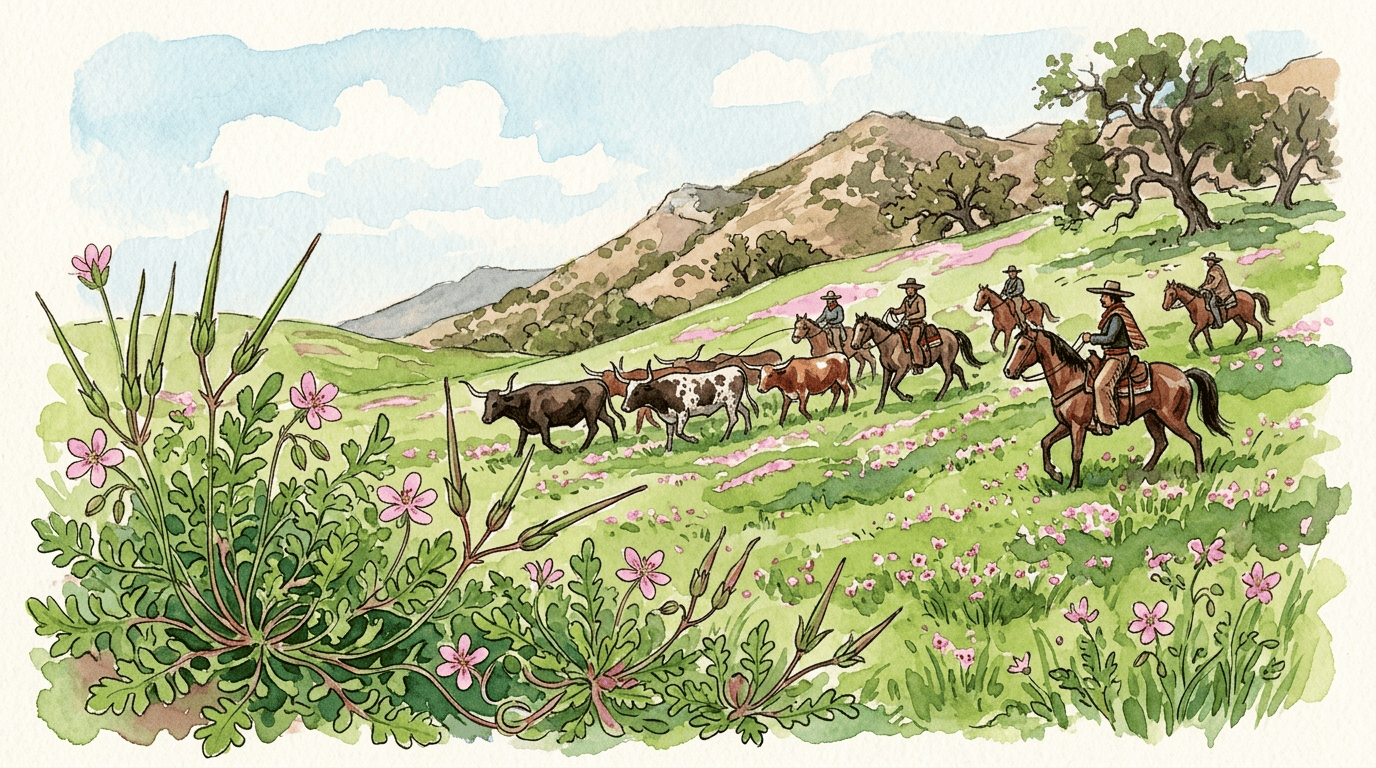
Erodium cicutarium is native to the Mediterranean basin, where it has grown in disturbed ground since antiquity. The genus name derives from Greek erodios (heron), the seed's long curved beak resembling the bird's bill; the species epithet cicutarium notes the leaves' resemblance to hemlock (Cicuta), though the plant is unrelated and not toxic.
The plant's most remarkable adaptation is its seed dispersal mechanism. Each seed is tipped with a hygroscopic awn—a coiled, corkscrew-shaped tail that unwinds and rewinds in response to changes in humidity. On the ground, the rotating motion literally drills the seed into the soil, ensuring deep burial before germination. This self-drilling mechanism has attracted attention from materials scientists and robotics engineers studying biomimetic systems.
Spanish colonizers brought E. cicutarium to the Americas in the 1700s, most likely embedded in livestock hay, wool, and fodder carried on ships. It spread rapidly across California's semi-arid valleys and foothills, becoming known as 'filaree' (from Spanish 'alfilerillo,' little pin, for the needle-like beak). On California rangelands it became indispensable—an early spring green when little else grew, eagerly grazed by cattle and sheep. Early California ranching culture was built partly on filaree's ability to green up dry hillsides in March and April.
Multiple California Native peoples also harvested young filaree leaves and stems as spring greens and used the seeds as food. Today the plant is recognized as both a global weed and an early spring nectar source for native bees emerging in late winter.
Symbolism & meaning
What It Symbolizes
A Stork's-bill seed falls in dry autumn dirt. It coils. It waits. When the first winter rains dampen the awn, it unwinds—one careful rotation, then another—drilling itself into the earth until it finds darkness and moisture. No one planted it. It planted itself, the way this plant always has, in every field on every continent it ever reached.
- ingenuity — The corkscrew seed literally drills itself into the ground—a self-powered burial mechanism without muscles or nerves, driven by nothing but moisture.
- tenacity — Followed human footsteps to every continent, survived every climate from cold steppe to desert, and turned the most abused ground into spring forage.
Where the Name Comes From
Erodium derives from Greek erodios (heron), referring to the long curved beak of the seed pod resembling the bird's bill. The species epithet cicutarium is Latin for 'resembling hemlock' (Cicuta), describing the finely divided, carrot-like leaves.
Uses & Fun Facts
- One of the earliest spring flowering plants in its range; small pink flowers provide nectar for bees, butterflies, and other pollinators emerging in late winter and early spring
- Young leaves and stems edible raw or cooked as spring greens; historically gathered by Native California peoples and European colonists alike
Related plants
More Erodium plants
Plants with similar care
 African LilyAgapanthus africanus
 Bell AgapanthusAgapanthus campanulatus
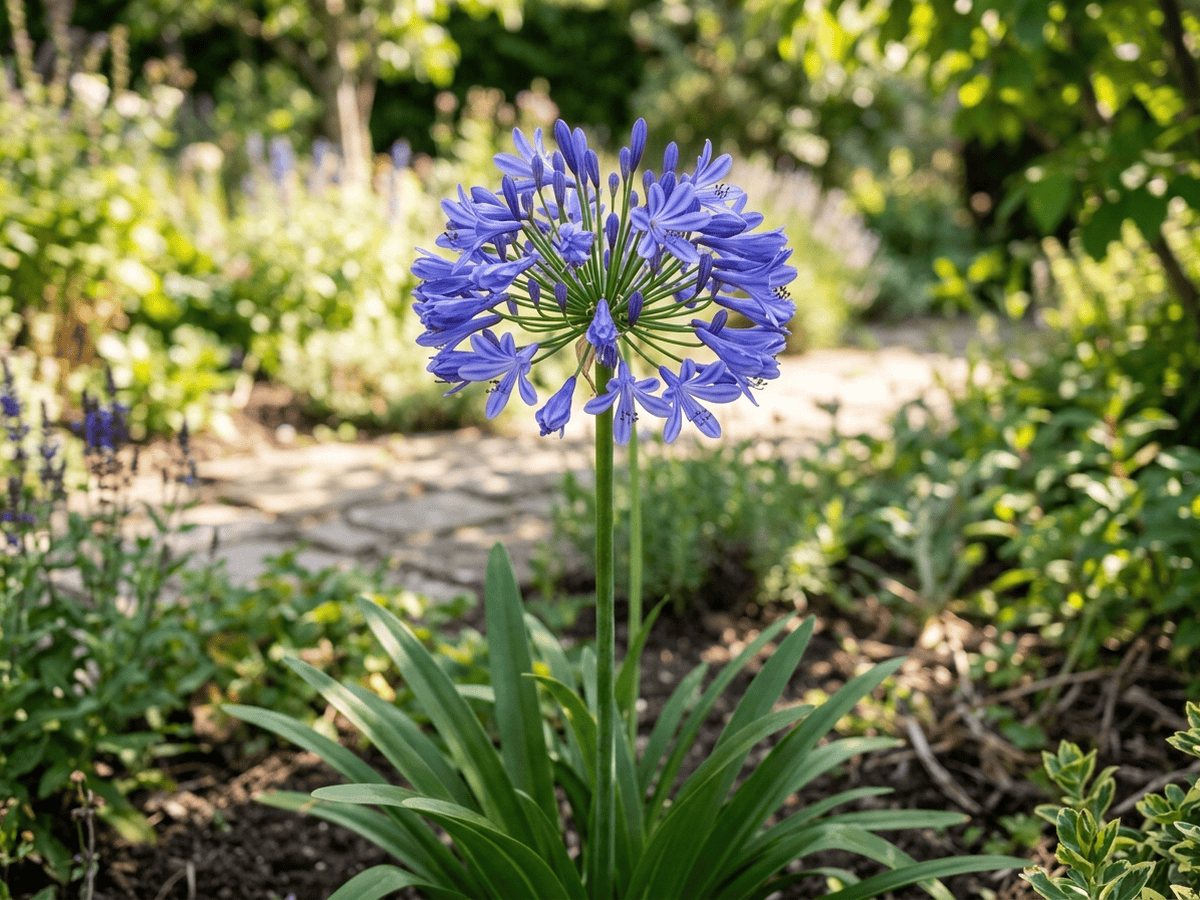 Common AgapanthusAgapanthus praecox
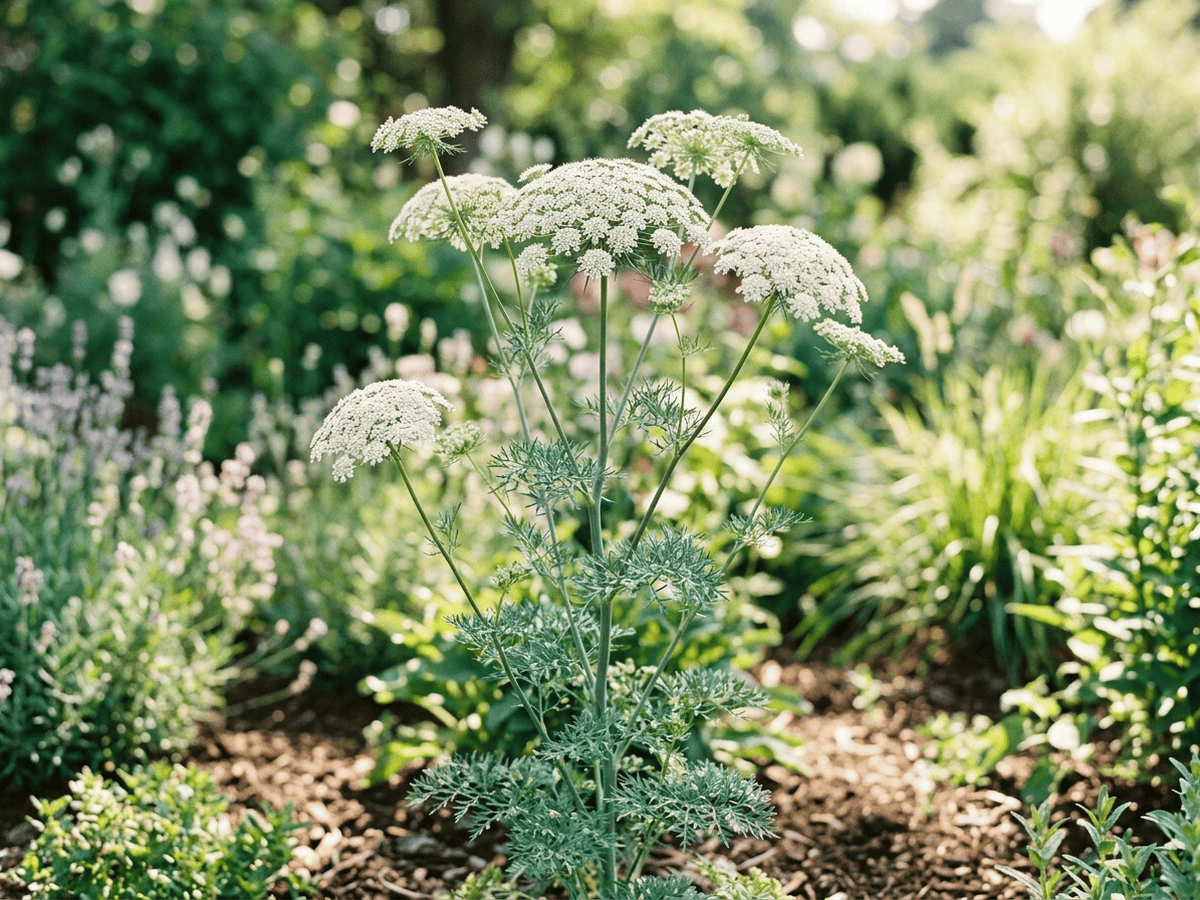 False Queen Anne's LaceAmmi majus glaucifolium
Frequently asked questions
How often should I water Redstem Stork's-bill?
Water about every 7 days during the growing season, and always let excess water drain away.
How much light does Redstem Stork's-bill need?
Part sun: 4–6 hrs direct. Watch the leaves — scorching or stretching means the light needs adjusting.
Is Redstem Stork's-bill toxic to cats or dogs?
No toxicity has been reported for this plant. Still, it is wise to keep pets from chewing on any houseplant. Educational information, not medical or veterinary advice. If exposure is suspected, contact a doctor or veterinarian.
Is Redstem Stork's-bill easy to grow?
It is considered challenging and rewards experienced growers.
When does Redstem Stork's-bill bloom?
It typically blooms Apr–Jun in the Northern Hemisphere.
YardMate
Identify any plant in seconds
Snap a photo — YardMate names the plant, diagnoses problems, and reminds you when to water.
Download on the App Store