 YardMate


African Milk Weed
Euphorbia trigona
Easy · Beginner friendlyAbout African Milk Weed
African Milk Tree is a tall columnar succulent euphorbia from Central Africa, forming upright triangular three-ridged green stems lined with short spines and small leaves. Reaching 6-9 feet, it grows as a candelabra-like tree-form succulent ideal as a tall specimen indoors or in frost-free landscapes. The 'Rubra' cultivar shows striking burgundy-red coloration. One of the most popular tall indoor succulents in American homes.
- Drought-tolerant
- Container-friendly
- Architectural
- Evergreen
How to care for African Milk Weed
Watering
- Springevery 14 days
- Summerevery 21 days
- Fallevery 30 days
- Winterevery 45 days
Soil · Fast-draining
- Main mixSand + pumice + soil 1:1:150%
- DrainagePumice / gravel50%
Keep grit at half the mix or more — this soil is meant to dry out fast.
FERTILIZER
- Springevery 60 days
- Summerevery 60 days
At a Glance
- NativeAfrica
- Height3–6 ft (0.9–1.8 m)
- Spread1–2 ft (0.3–0.6 m)
- Foliage colorGreen, Purple
- SoilSandy, Well-drained
- LocationsIndoor · Balcony · Yard
Bloom time
BLOOM CYCLE
Peak bloom
Jun–Aug
Inconspicuous small flowers (rare in cultivation)
Toxicity
Humans Toxic · Pets Toxic
diterpene esters
Toxic
- Sap
- Stem
- Contact
- Ingestion
EXPOSURE Touching sap and stems. Eating sap and stems.
EFFECT Severe skin/eye irritation and blistering.
NOTE Documented concern for humans: Severe skin/eye irritation and blistering.
Toxic
- Sap
- Stem
- Contact
- Ingestion
EXPOSURE Touching sap and stems. Eating sap and stems.
EFFECT Oral irritation, vomiting, and diarrhea.
NOTE ASPCA lists Euphorbia as toxic. Latex severely irritating to skin and eyes.
Toxic
- Sap
- Stem
- Contact
- Ingestion
EXPOSURE Touching sap and stems. Eating sap and stems.
EFFECT Oral irritation, vomiting, and diarrhea.
NOTE ASPCA lists Euphorbia as toxic. Latex severely irritating to skin and eyes.
Educational information, not medical or veterinary advice. If exposure is suspected, contact a doctor or veterinarian.
DISTRIBUTION


- Native
- Introduced
- Africa
History

Euphorbia trigona, commonly called African milk tree or cathedral cactus, is a columnar succulent in the spurge family (Euphorbiaceae) long known almost exclusively from cultivation across tropical Africa and southwest Asia, with the wild origin probably in southern Central Africa (possibly Angola, Zambia, or the Democratic Republic of Congo). Scottish botanist Philip Miller described it in 1768 in the Gardeners Dictionary based on garden material. The epithet trigona refers to the distinctive three (rarely four) angled ribs of the upright stems.
Plants form slowly-branching upright green columns 1-3 meters tall in cultivation (potentially to 6 meters in ideal tropical conditions) with small, real, ephemeral spoon-shaped green or red-tinged leaves along the rib ridges—an unusual feature among cactus-like euphorbias—plus paired brown spines. Flowers are insignificant and rarely produced in cultivation. The cultivar 'Rubra' with dark red-purple stems and leaves is one of the most popular houseplant succulents worldwide.
Milky latex is severely irritating. Native to Central African dry forests where it grows as a small tree. Long cultivated as a hedge plant in West Africa. Introduced to Western houseplant culture in the 20th century, it became a top-selling tall indoor succulent thanks to its rapid growth and dramatic vertical form.
Symbolism & meaning
What It Symbolizes
African milk weed grows in pure verticals, columns of toothed green rising like temple pillars — an unmistakable image of strength. Its growth carries aspiration, a steady reach toward the light at a pace fast enough to watch over a season. In a sunny corner it becomes a small living monument, the kind of plant that looks as if it had decided exactly where it wanted to go.
- Strength — upright pillar-like form symbolizes power
- Aspiration — rapid vertical growth toward the light
Where the Name Comes From
The name African Milk Weed points to Africa. 'Trigona' from Latin meaning three-angled, referring to the triangular stem cross-section.
Uses & Fun Facts
- Triangular candelabra succulent grown as architectural indoor pot plant
- Vertical green or red-purple stems serve as desert-look focal point
Related plants
More Euphorbia plants
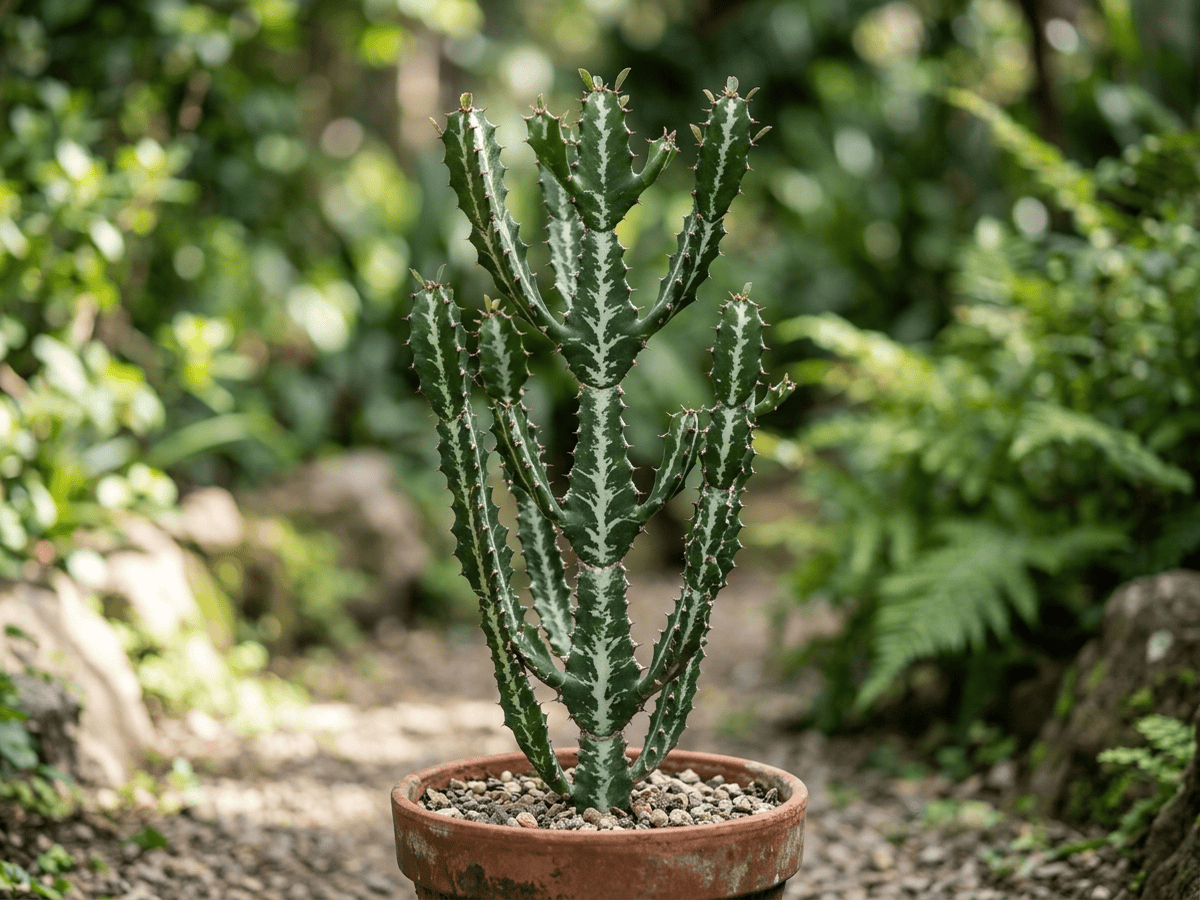 Mottled SpurgeEuphorbia lactea
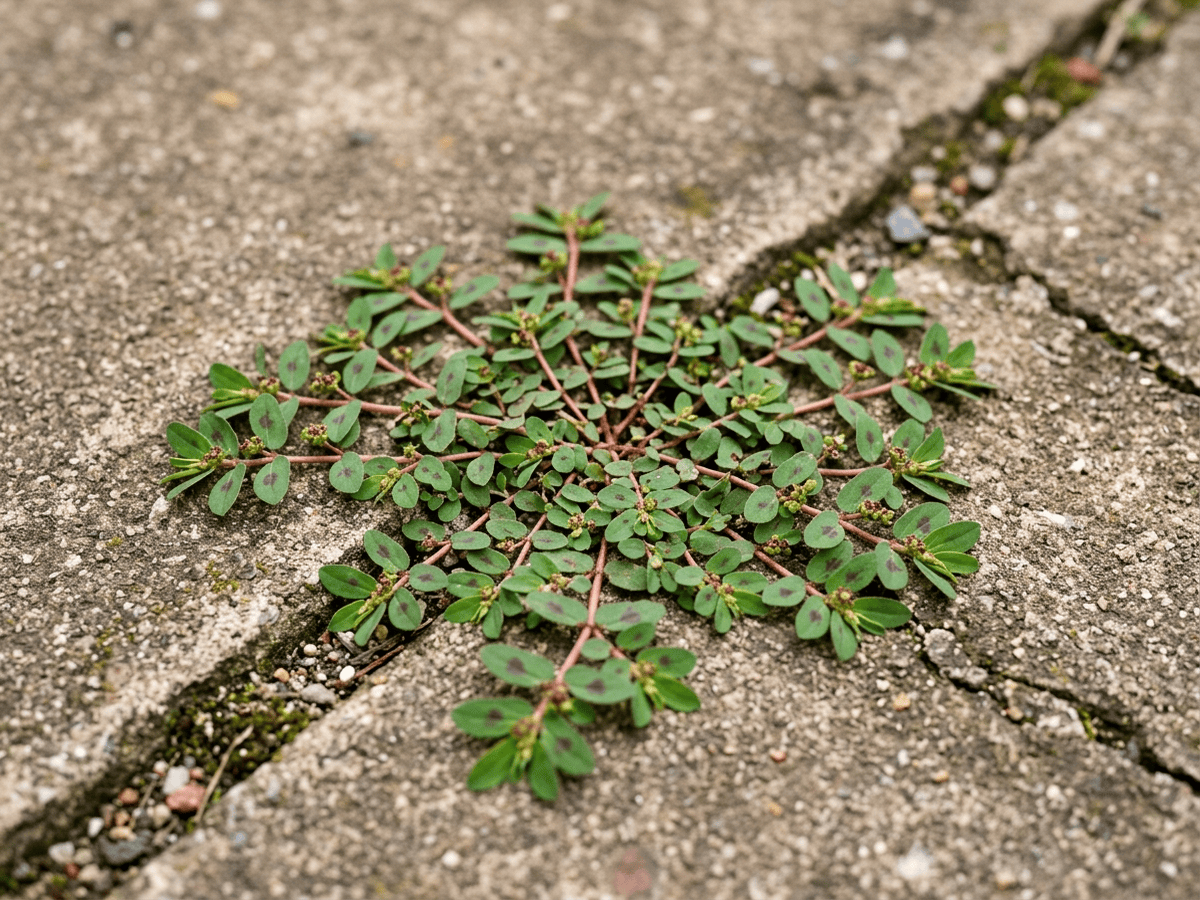 Spotted SpurgeEuphorbia maculata
 Crown-Of-ThornsEuphorbia milii
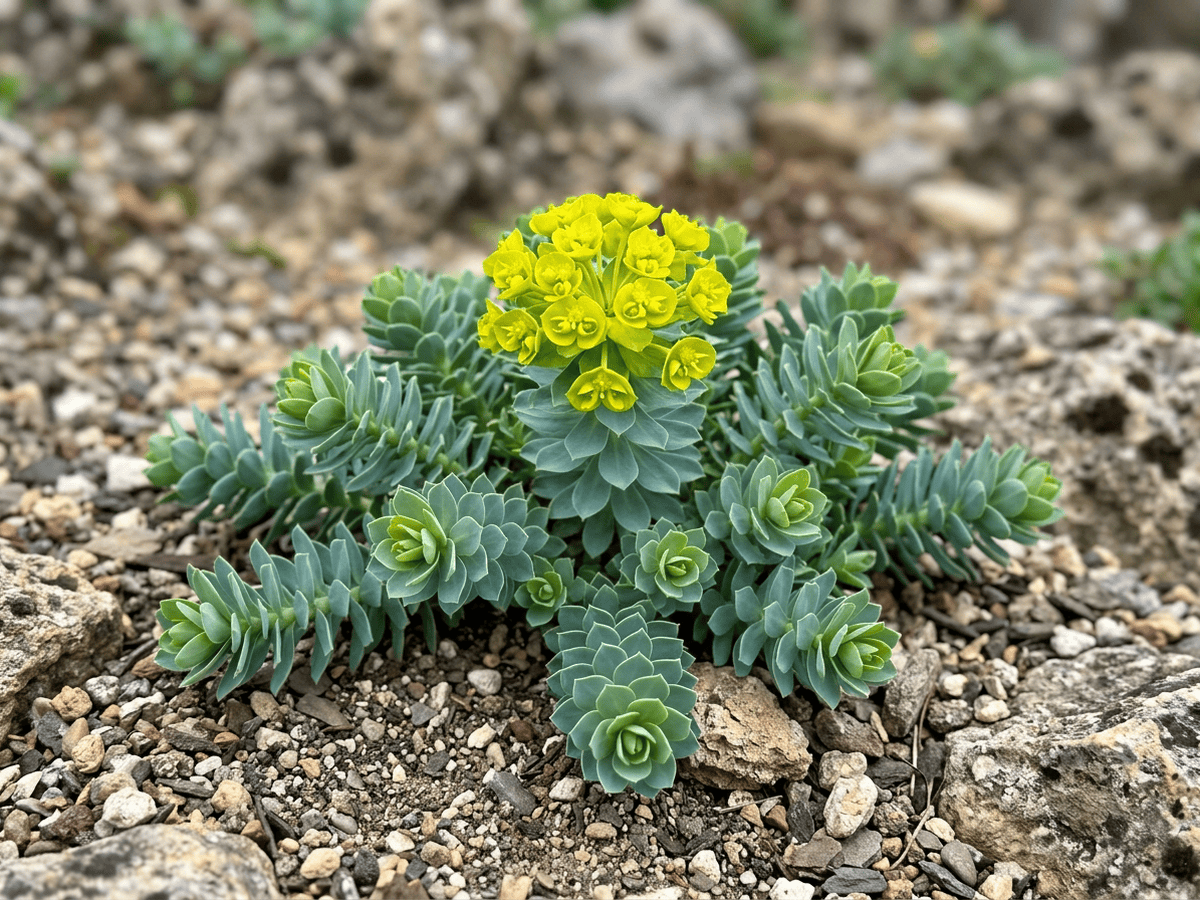 Myrtle SpurgeEuphorbia myrsinites
Plants with similar care
 Giant TaroAlocasia macrorrhizos
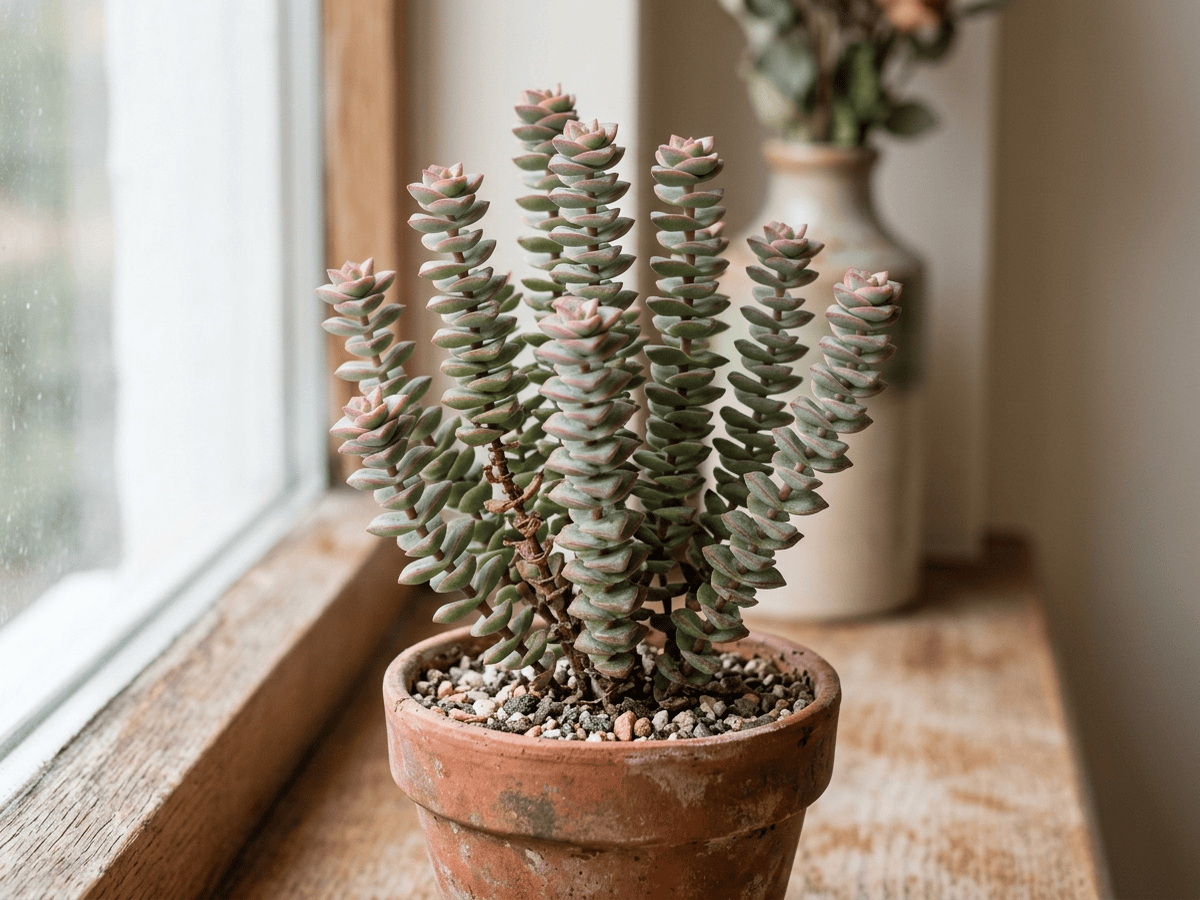 Concertina PlantCrassula perforata
 Song Of IndiaDracaena reflexa
 Snake PlantDracaena trifasciata
Frequently asked questions
How often should I water African Milk Weed?
In summer, water about every 21 days; in winter, about every 45 days. Adjust for heat, pot size and drainage.
How much light does African Milk Weed need?
Indirect: Filtered light. Watch the leaves — scorching or stretching means the light needs adjusting.
Is African Milk Weed toxic to cats or dogs?
Pets Toxic (Dogs Toxic · Cats Toxic) Educational information, not medical or veterinary advice. If exposure is suspected, contact a doctor or veterinarian.
Is African Milk Weed easy to grow?
Yes — it is considered an easy, beginner-friendly plant.
Can African Milk Weed be grown indoors?
Yes, it adapts well to indoor growing given the right light.
When does African Milk Weed bloom?
It typically blooms Jun–Aug in the Northern Hemisphere.
YardMate
Identify any plant in seconds
Snap a photo — YardMate names the plant, diagnoses problems, and reminds you when to water.
Download on the App Store