 YardMate
Myrtle Spurge
Euphorbia myrsinites
Hard · Experienced growersAbout Myrtle Spurge
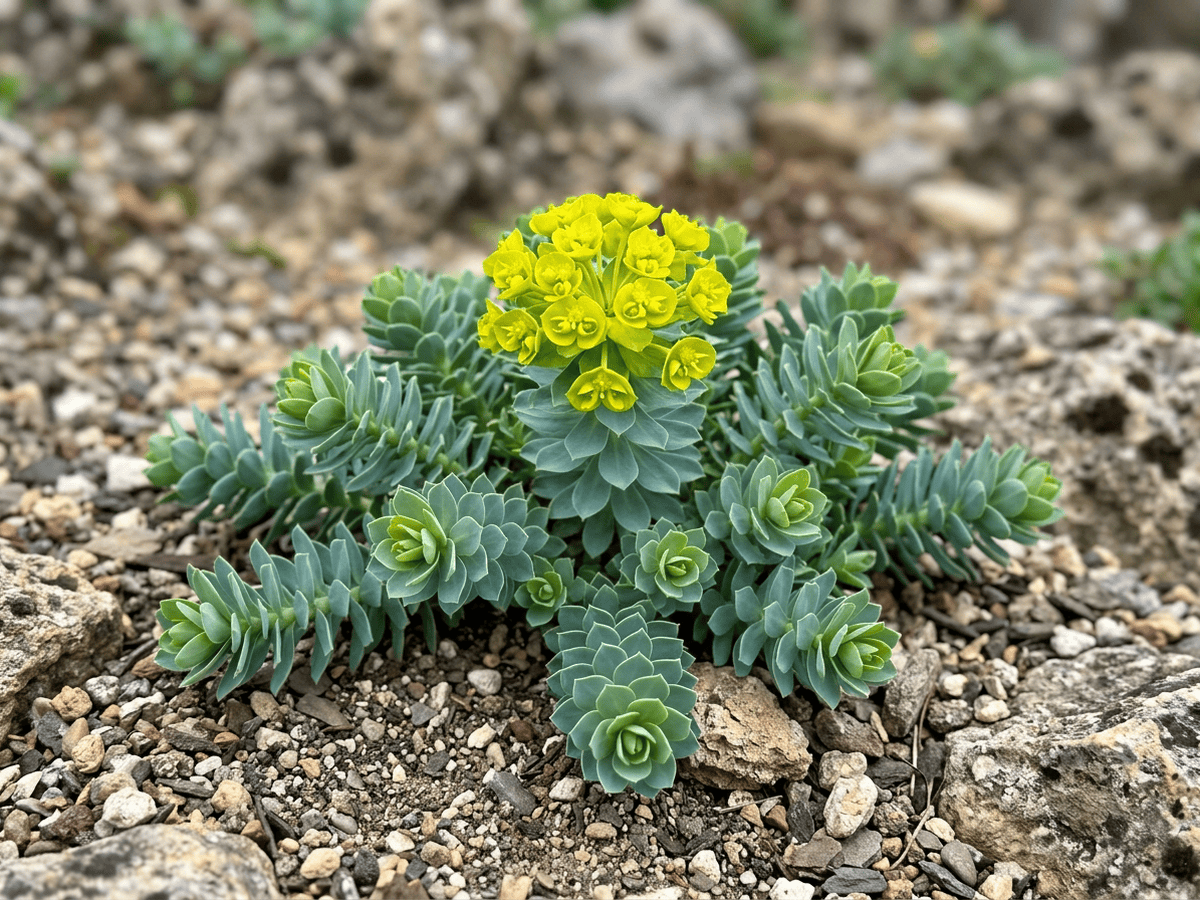
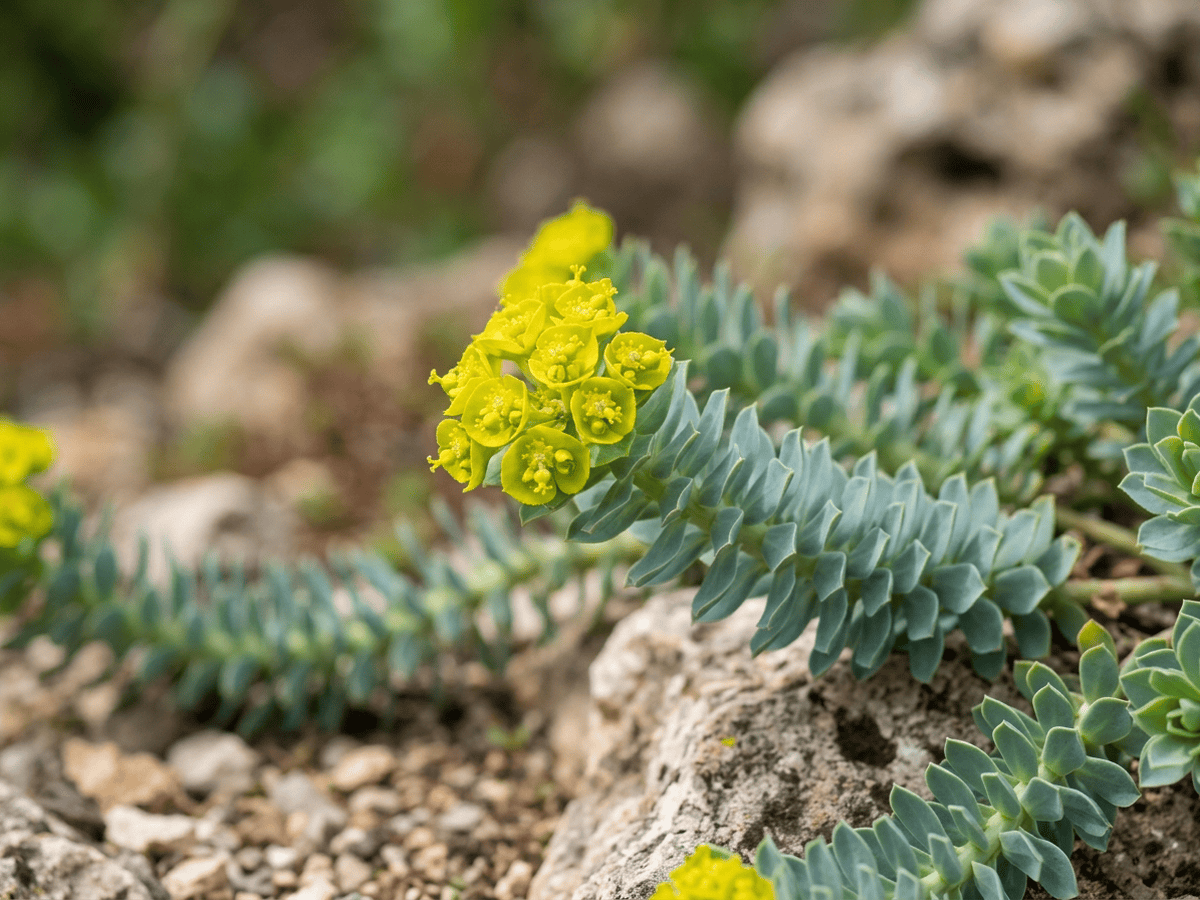
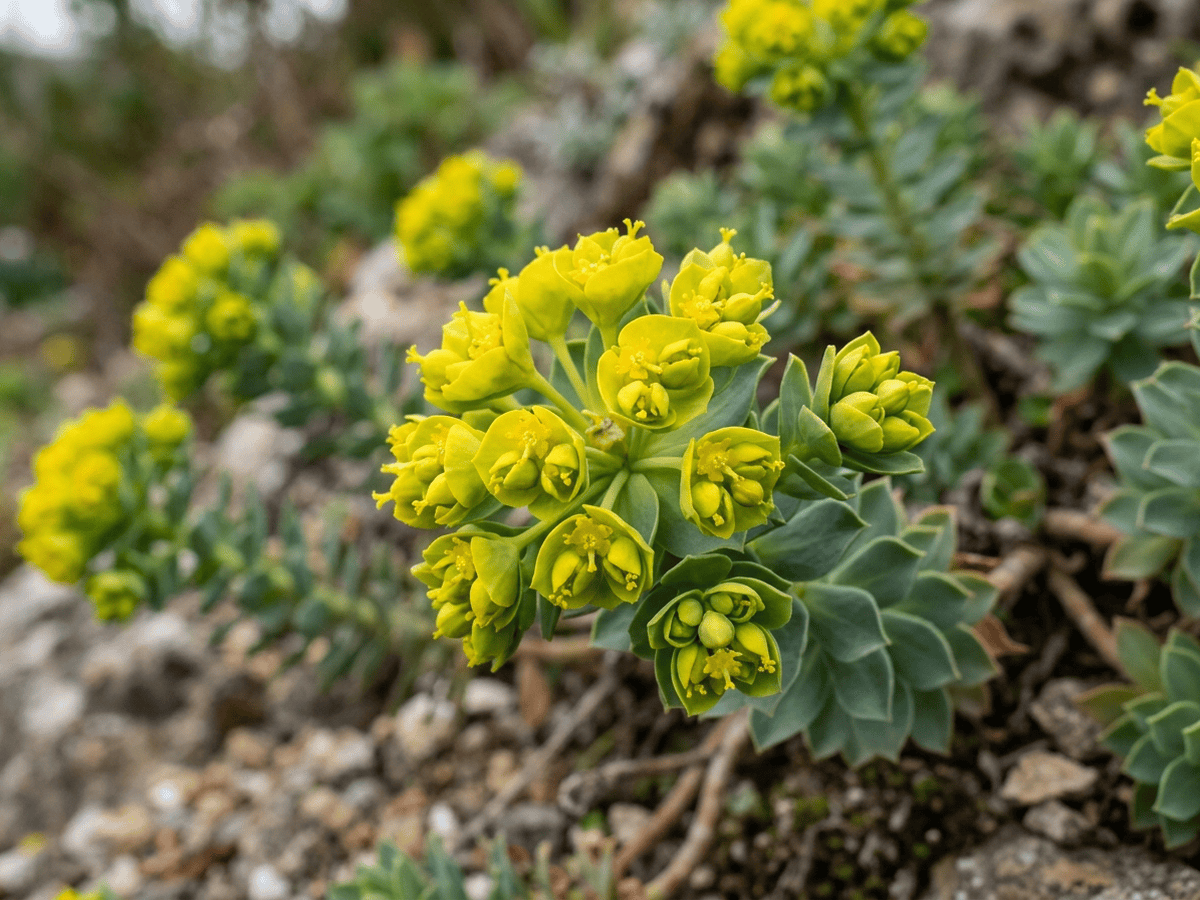
Myrtle Spurge (Euphorbia myrsinites) is a low, trailing succulent from the Mediterranean and southern Europe, prized in rock gardens and xeriscapes for its whorled, blue-gray fleshy leaves that spiral tightly around thick, sprawling stems. In spring, chartreuse cyathia crown each shoot in dense, showy clusters that persist for weeks. Extremely drought-tolerant and evergreen, Myrtle Spurge thrives in poor, well-drained soil with minimal care. However, it self-seeds aggressively and is officially listed as a noxious weed in Colorado, Oregon, and other western US states, so gardeners there should site it carefully or avoid planting it outright. Its milky sap can irritate skin and eyes on contact.
- Drought-tolerant
- Evergreen
- Spreading
- Fast-growing
- Pollinator-friendly
- Container-friendly
How to care for Myrtle Spurge
Watering
- Springevery 15 days
- Summerevery 10 days
- Fallevery 30 days
- Winterpause watering
Soil · Fast-draining
- Main mixSand + pumice + soil 1:1:150%
- DrainagePumice / gravel50%
Keep grit at half the mix or more — this soil is meant to dry out fast.
FERTILIZER
Cactus & Succulent Feed 2-7-7
Hold the nitrogen back and growth stays compact instead of soft and stretched. Phosphorus and potassium carry the roots and the flowering.
- Nitrogen · Leaves
- Phosphorus · Roots + Blooms
- Potassium · Strength
- Springevery 30 days
- Summerevery 30 days
- Fallevery 30 days
At a Glance
- NativeMediterranean
- Height1–1.5 ft (0.3–0.5 m)
- Spread2–3 ft (0.6–0.9 m)
- Flower colorYellow
- Foliage colorGreen
- Fruit colorBrown
- SoilWell-drained, Sandy
- LocationsYard · Patio
Bloom time
BLOOM CYCLE
Peak bloom
May–Sep
This plant flowers in summer, with a long flowering period.
Fragrance
NO FRAGRANCE
Myrtle Spurge has no notable floral fragrance.
Toxicity
Humans Moderate · Pets Slight
diterpene esters (irritant euphorbol-type esters in the milky latex sap)
Moderate
- Sap
- Stem
- Leaf
- Contact
- Sap
EXPOSURE Touching sap, stems, and leaves. Contact with sap, stems, and leaves.
EFFECT Skin irritation/redness, blistering on contact with sap, and eye irritation, tearing, temporary photophobia if sap contacts eyes.
NOTE The milky latex sap is a well-documented skin and eye irritant on contact and can cause mild gastrointestinal upset if chewed or ingested by pets or people; wear gloves when handling or pruning.
Slight
- Sap
- Stem
- Leaf
- Ingestion
- Contact
EXPOSURE Eating sap, stems, and leaves. Touching sap, stems, and leaves.
EFFECT Drooling, mouth/lip irritation, and vomiting if chewed or ingested.
NOTE The milky latex sap is a well-documented skin and eye irritant on contact and can cause mild gastrointestinal upset if chewed or ingested by pets or people; wear gloves when handling or pruning.
Slight
- Sap
- Stem
- Leaf
- Ingestion
- Contact
EXPOSURE Eating sap, stems, and leaves. Touching sap, stems, and leaves.
EFFECT Drooling, mouth irritation, and vomiting if chewed or ingested.
NOTE The milky latex sap is a well-documented skin and eye irritant on contact and can cause mild gastrointestinal upset if chewed or ingested by pets or people; wear gloves when handling or pruning.
Educational information, not medical or veterinary advice. If exposure is suspected, contact a doctor or veterinarian.
DISTRIBUTION


- Native
- Introduced
- Mediterranean
History
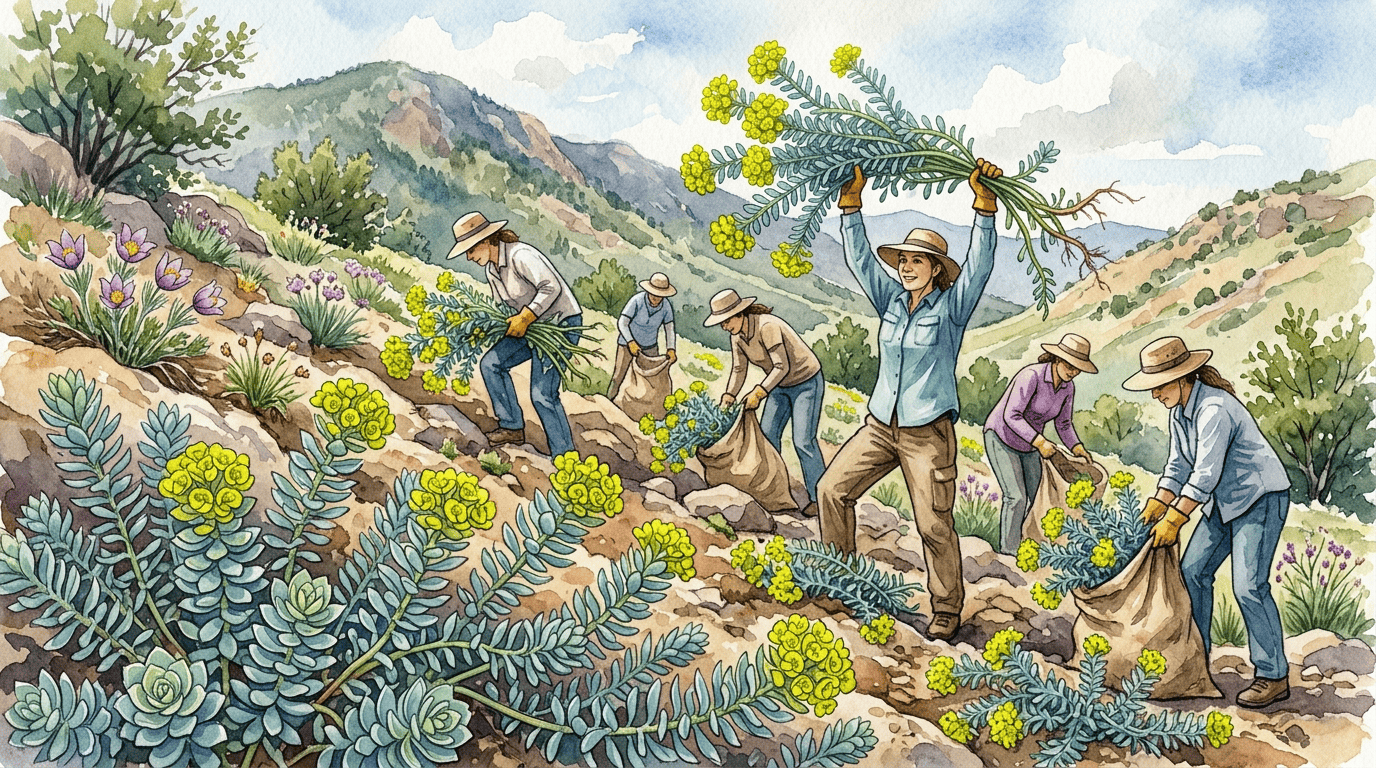
Myrtle Spurge has grown wild along stony hillsides and open woodland edges of the Mediterranean basin and southeastern Europe for millennia, its trailing, blue-gray stems evolved to hug rocky, sun-baked slopes where little else survives. European gardeners have cultivated it since at least the 17th century as an edging and rock-garden plant, valued for the way its whorled succulent foliage and acid-yellow spring bracts soften stone walls and gravel beds with almost no water or care.
That same toughness carried it across the Atlantic. Introduced to North American nurseries in the twentieth century as an ornamental for dry gardens, Myrtle Spurge was planted widely along the Front Range of Colorado and in parts of Oregon and Utah, prized by xeriscapers for exactly the traits that made it useful at home. But those same traits let it slip the garden fence: each spent flower head can fling seed several feet, and the plant colonizes disturbed, dry rangeland faster than native grasses and wildflowers can compete. By the early 2000s it had spread into foothills open space around Boulder and beyond, and Colorado and Oregon both listed it as a noxious weed, legally restricting its sale and planting.
The response became a local tradition of its own: county open-space staff and volunteer crews now hold annual spurge pulls, hiking into infested hillsides each spring to hand-dig the plants before they set seed, always in gloves, since the milky sap blisters skin on contact. A garden plant born for rocky Mediterranean slopes now defines a very different kind of Rocky Mountain ritual.
Symbolism & meaning
What It Symbolizes
In the rock gardens of the Mediterranean, Myrtle Spurge earned a quiet reputation as the plant that thrives where almost nothing else will, spreading over baked, stony ground that defeats more delicate species. Gardeners have long prized that stubbornness as a kind of resilience. But transplanted to the dry rangelands of the American West, the very same trait turned Myrtle Spurge from an admired survivor into an unwelcome invader, a living reminder that a plant's greatest strength can become its most troublesome flaw once it is moved outside the conditions that once kept it in check.
- Resilience — Myrtle Spurge asks for nothing -- poor soil, drought, and neglect all suit it -- so gardeners have long read it as a symbol of stubborn endurance in harsh, dry ground.
- Caution — Its irritant milky sap and status as a listed noxious weed in parts of the western US make it a reminder that toughness in a plant can be a double-edged trait.
Where the Name Comes From
The genus Euphorbia honors Euphorbus, Greek physician to King Juba II of Numidia, who is said to have used the milky sap of a related succulent medicinally. The species name myrsinites comes from the Greek myrsine (myrtle), describing how the small, pointed, blue-gray leaves spiral around the stem like myrtle foliage -- the source of the common name Myrtle Spurge.
Uses & Fun Facts
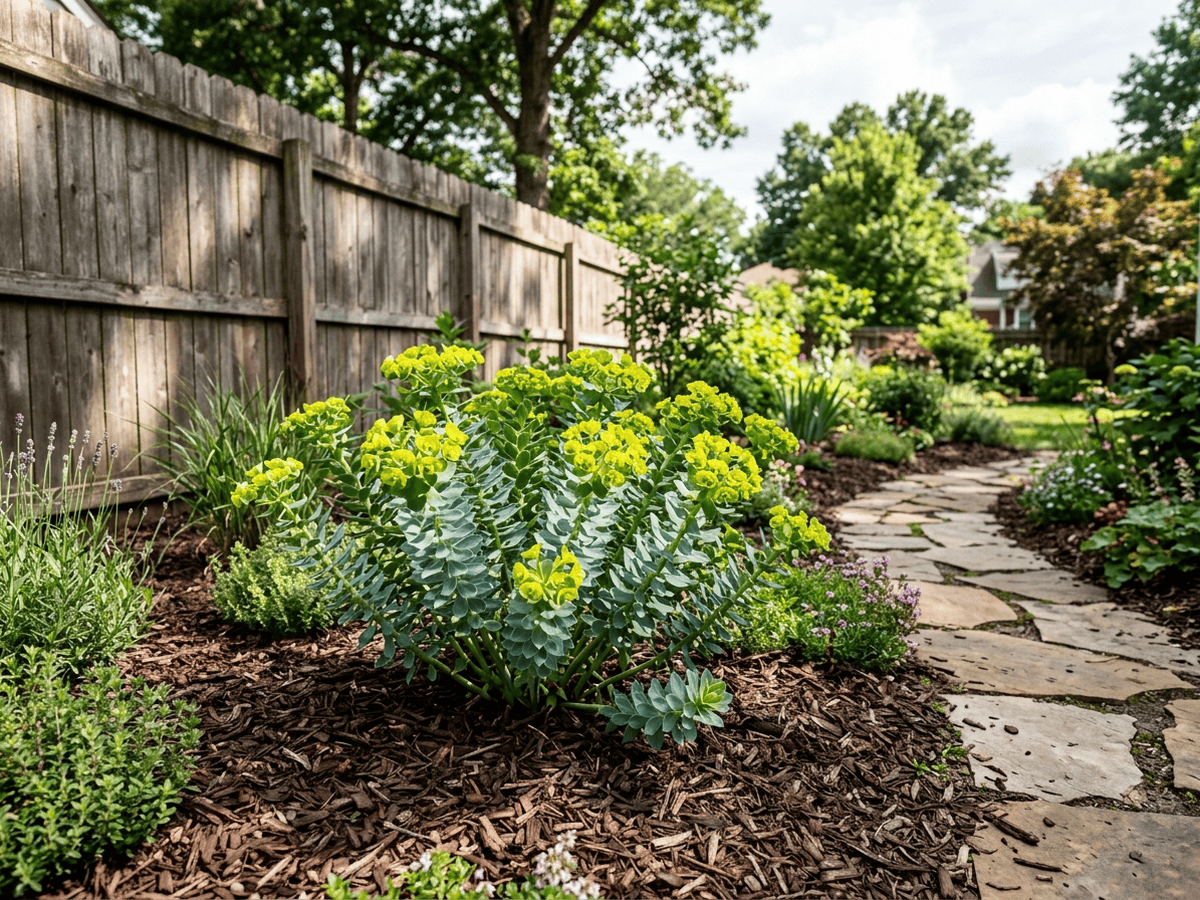
- A structural, low-water accent for rock gardens, gravel beds, and xeriscape borders, where its blue-gray trailing foliage contrasts well against stone.
- Its early chartreuse cyathia are among the first spring nectar sources for bees in dry rock-garden settings.
Related plants
More Euphorbia plants
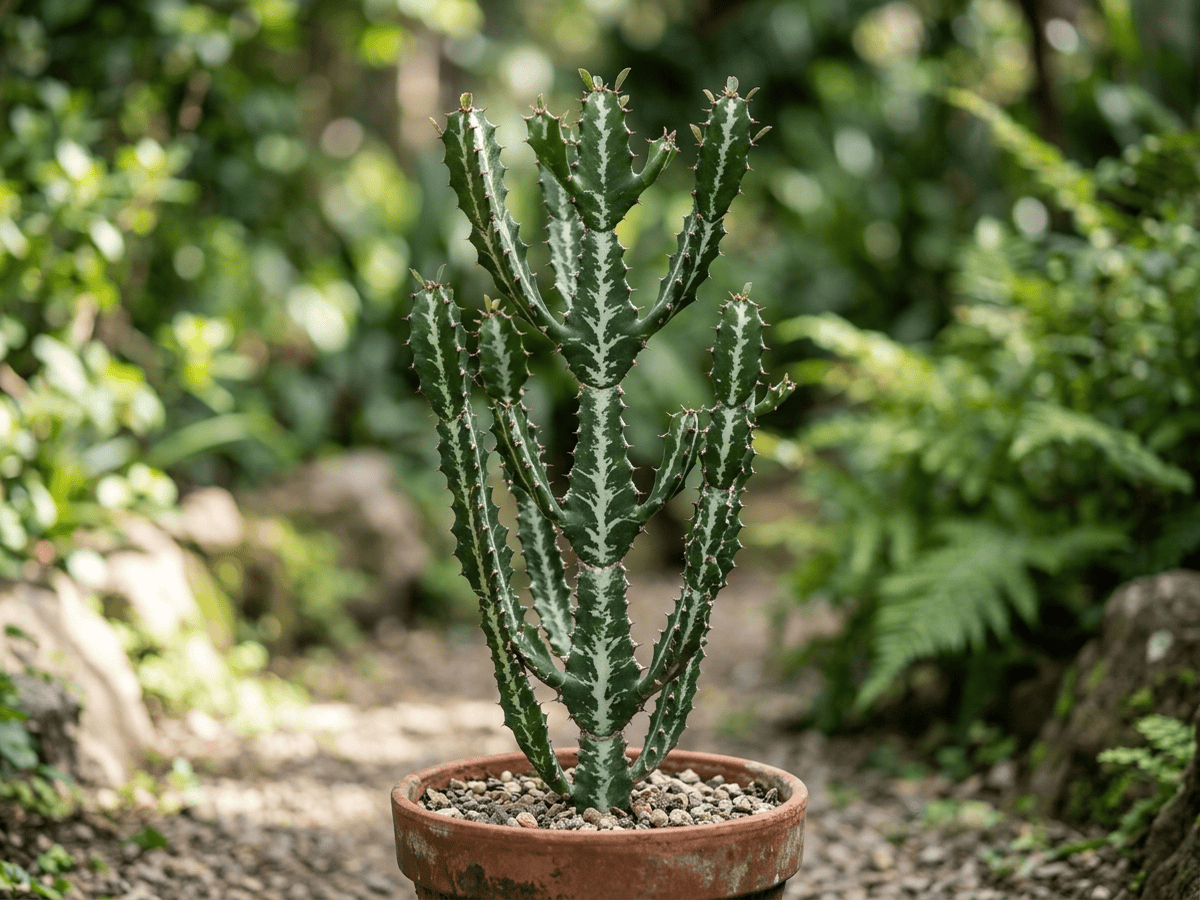 Mottled SpurgeEuphorbia lactea
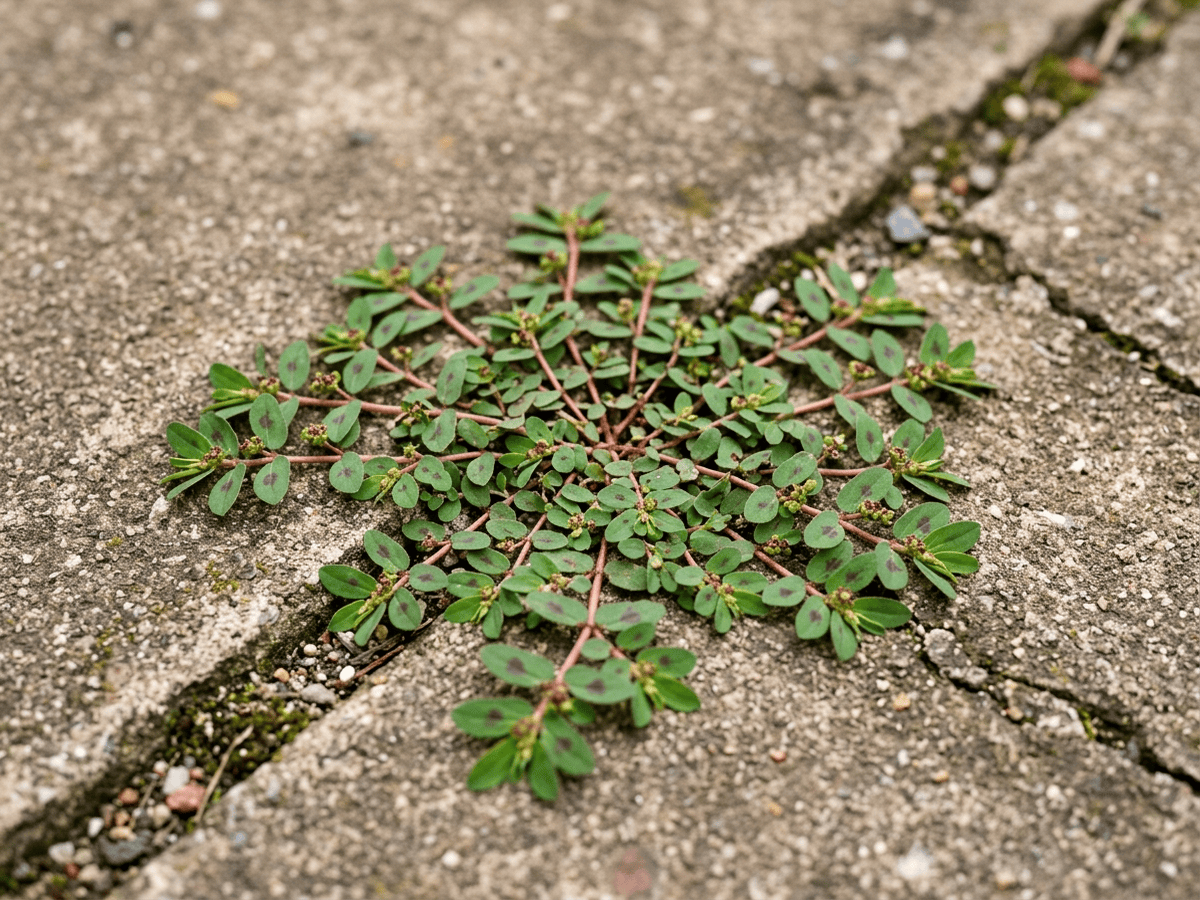 Spotted SpurgeEuphorbia maculata
 Crown-Of-ThornsEuphorbia milii
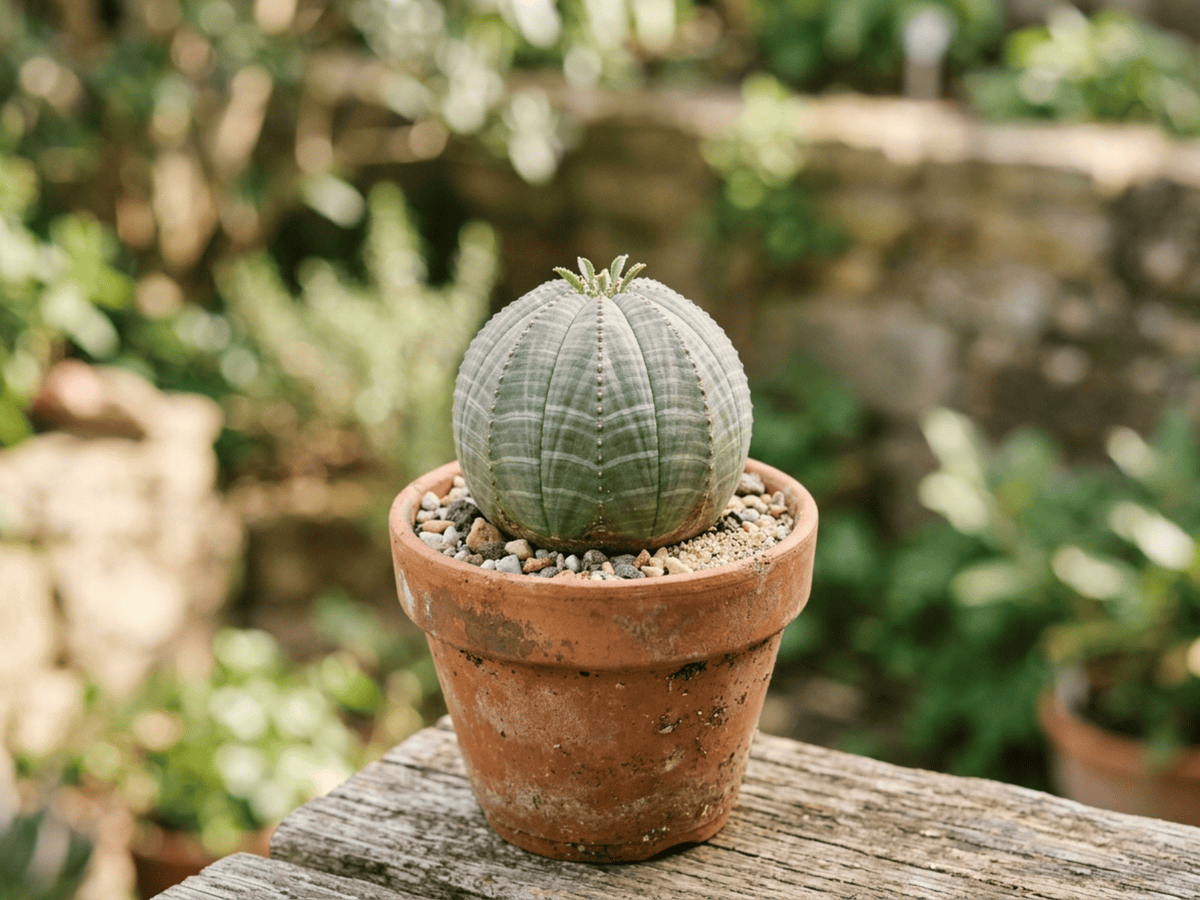 Turkish TempleEuphorbia obesa
Plants with similar care
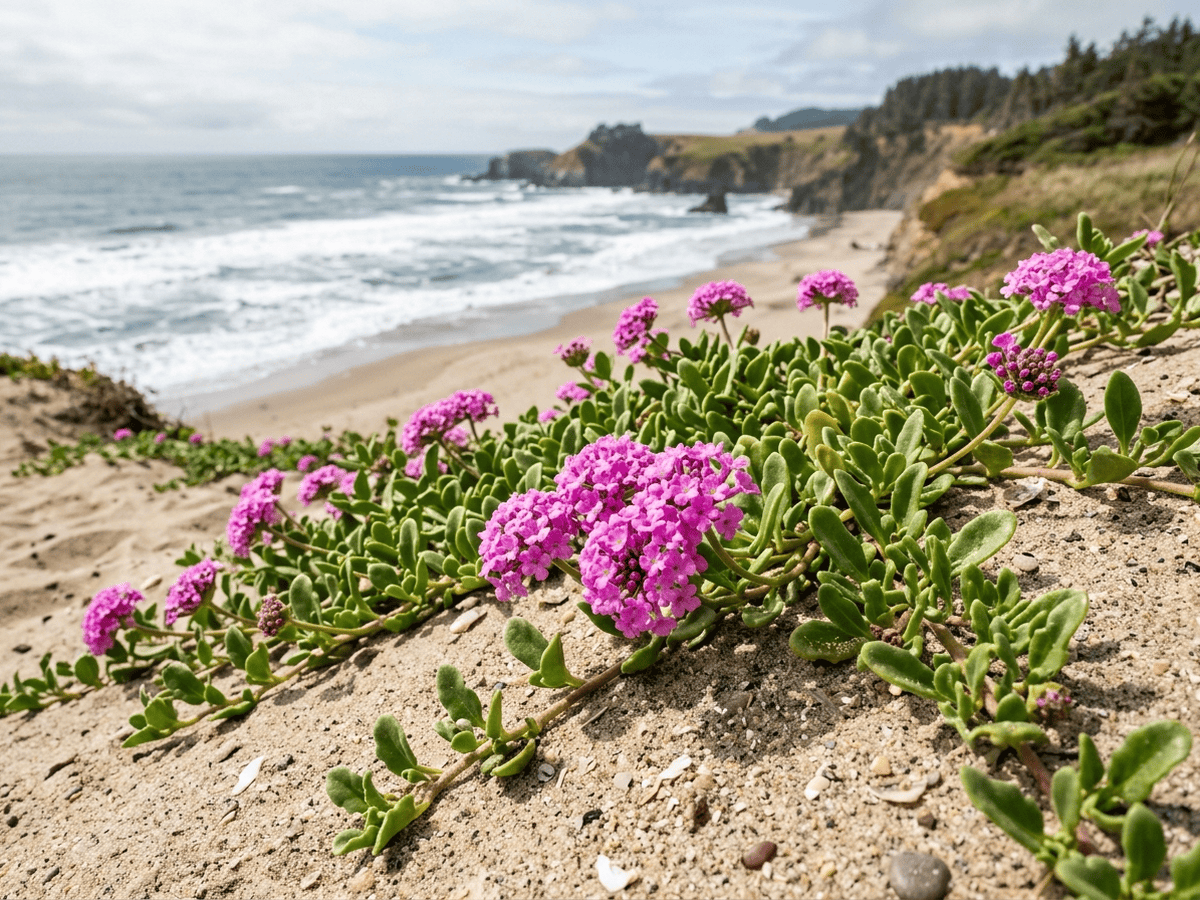 Pink Sand VerbenaAbronia umbellata
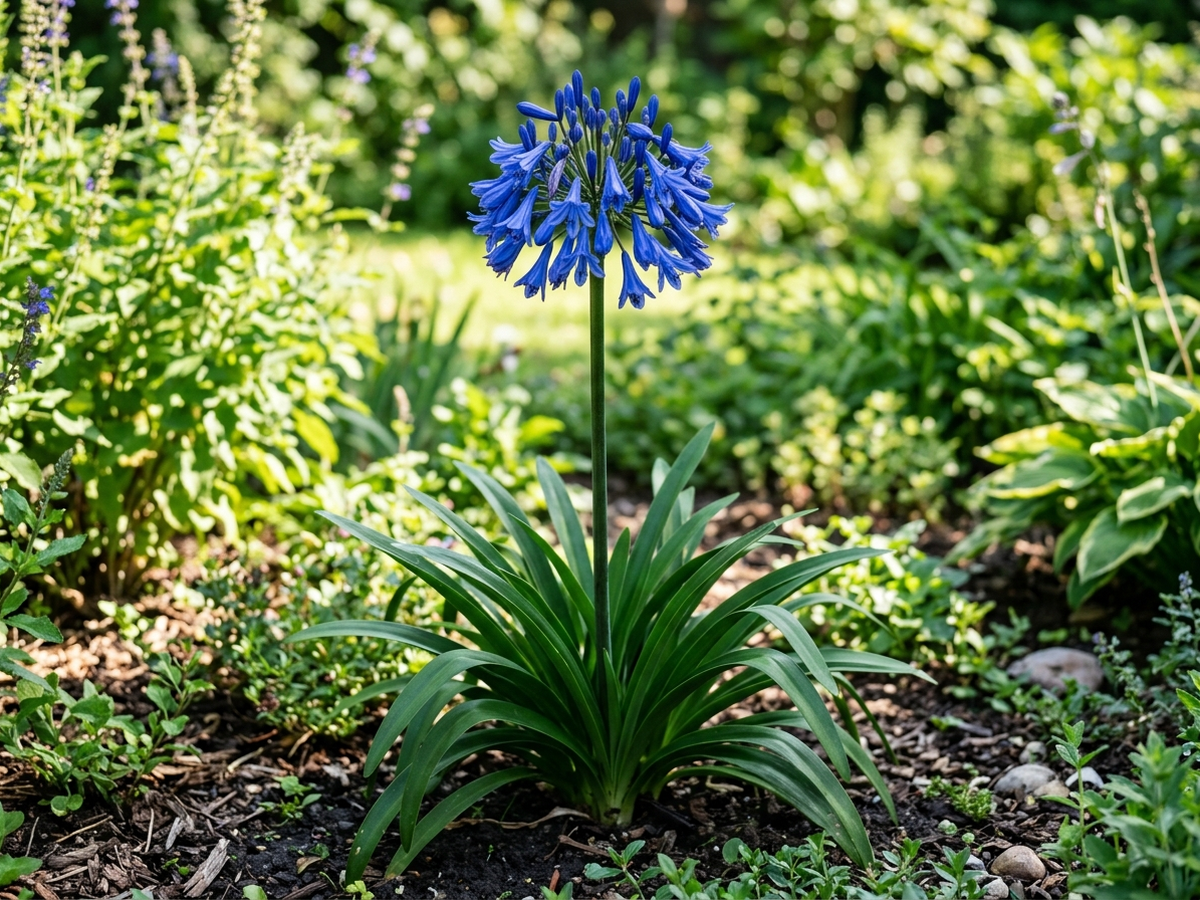 Drooping AgapanthusAgapanthus inapertus
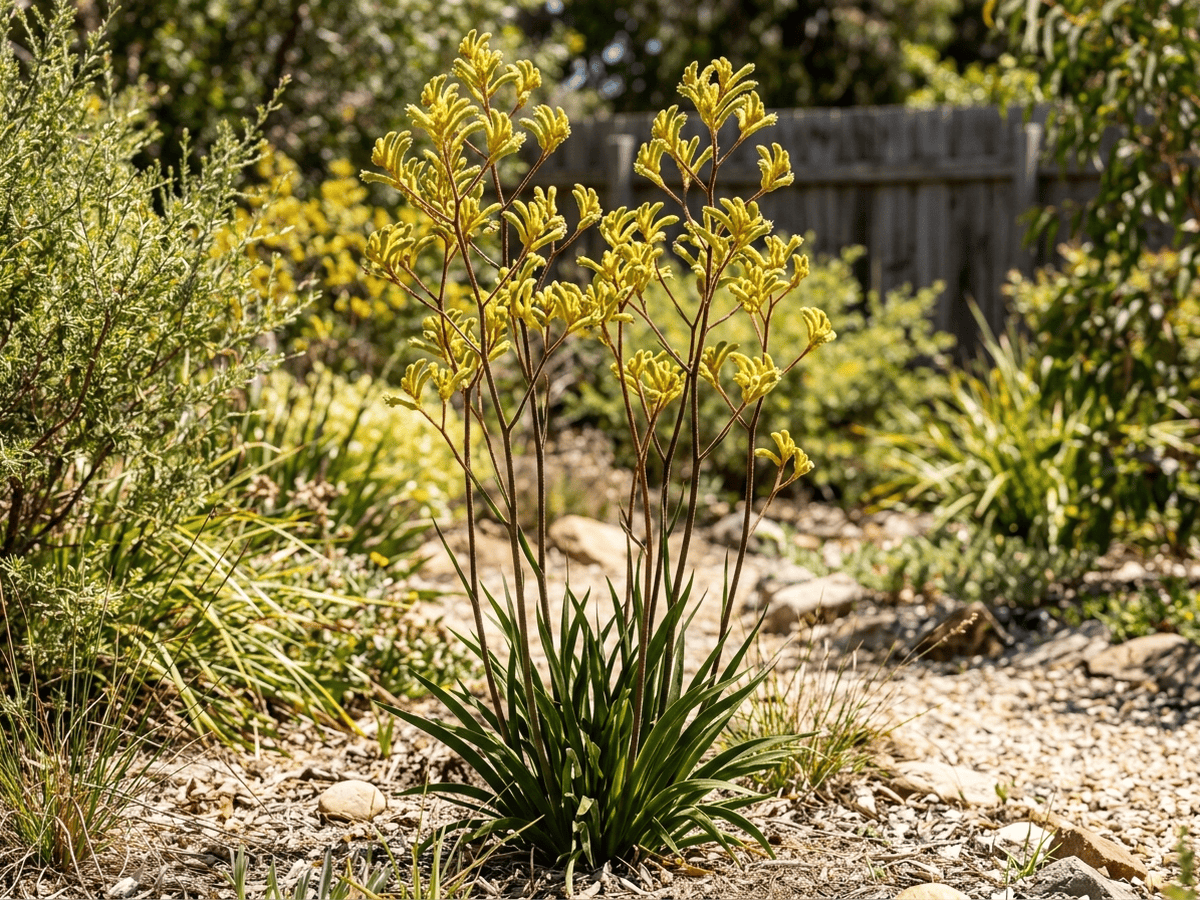 Tall Kangaroo PawAnigozanthos flavidus
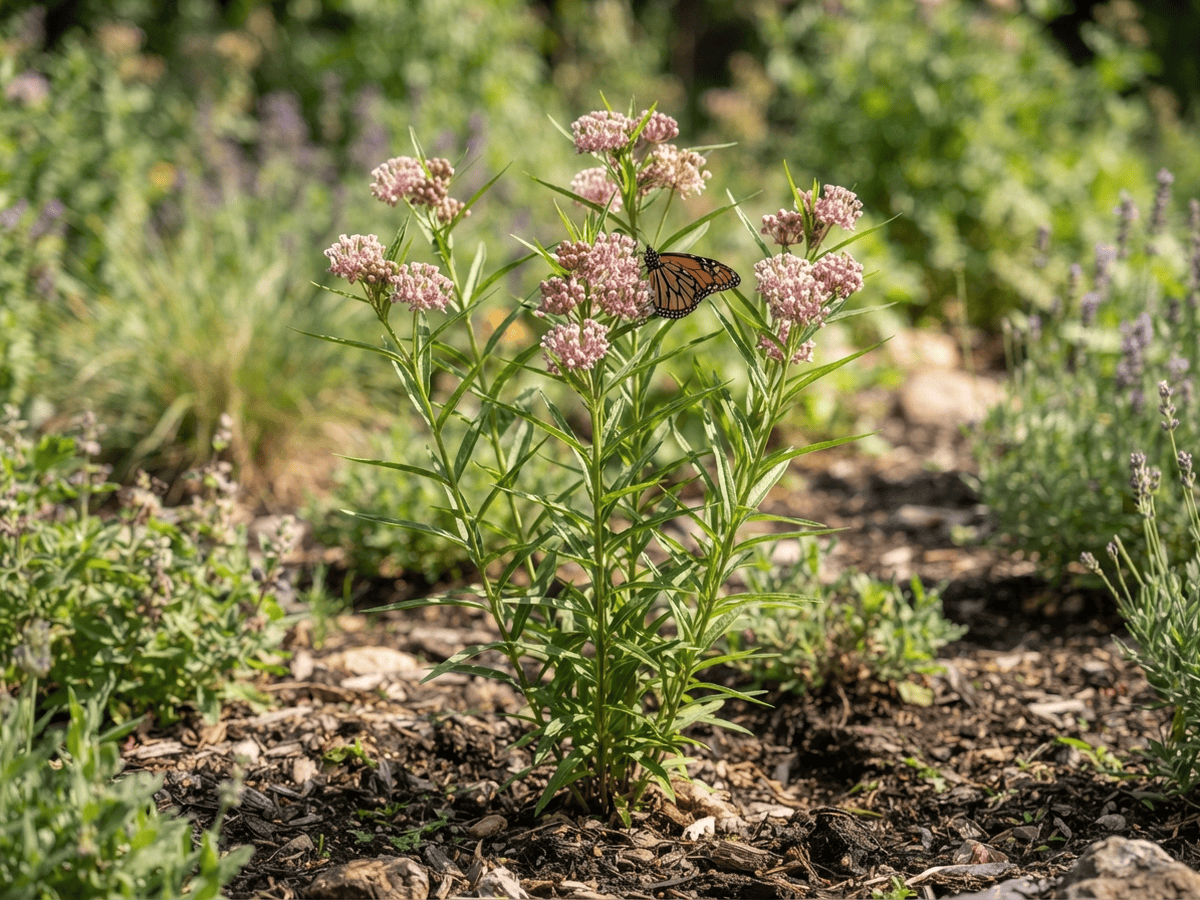 Narrowleaf MilkweedAsclepias fascicularis
Frequently asked questions
How often should I water Myrtle Spurge?
Water about every 15 days during the growing season, and always let excess water drain away.
How much light does Myrtle Spurge need?
Full sun: 6+ hrs direct. Watch the leaves — scorching or stretching means the light needs adjusting.
Is Myrtle Spurge toxic to cats or dogs?
Pets Slight (Dogs Slight · Cats Slight) Educational information, not medical or veterinary advice. If exposure is suspected, contact a doctor or veterinarian.
Is Myrtle Spurge easy to grow?
It is considered challenging and rewards experienced growers.
When does Myrtle Spurge bloom?
It typically blooms May–Sep in the Northern Hemisphere.
YardMate
Identify any plant in seconds
Snap a photo — YardMate names the plant, diagnoses problems, and reminds you when to water.
Download on the App Store