 YardMate

Hardy Fuchsia
Fuchsia magellanica
Medium · Some experienceAbout Hardy Fuchsia
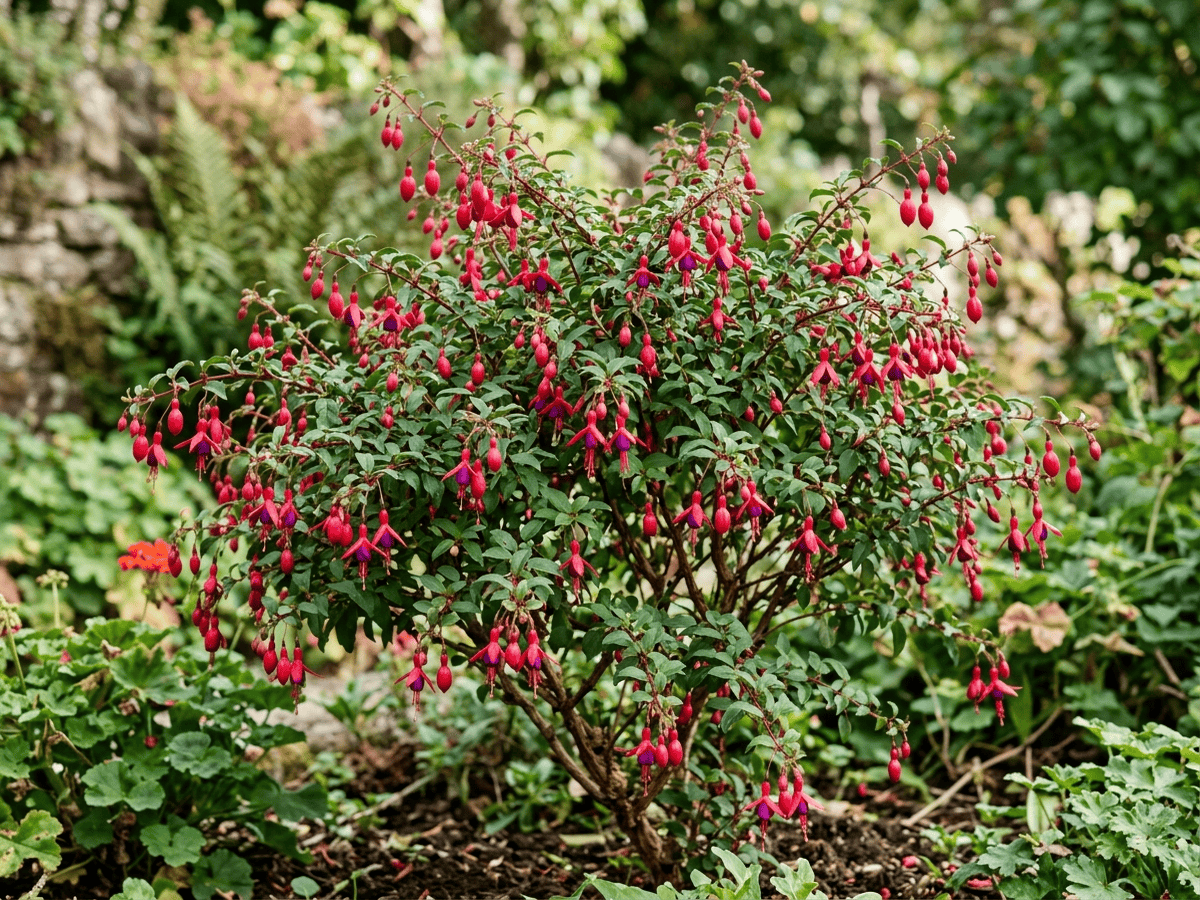
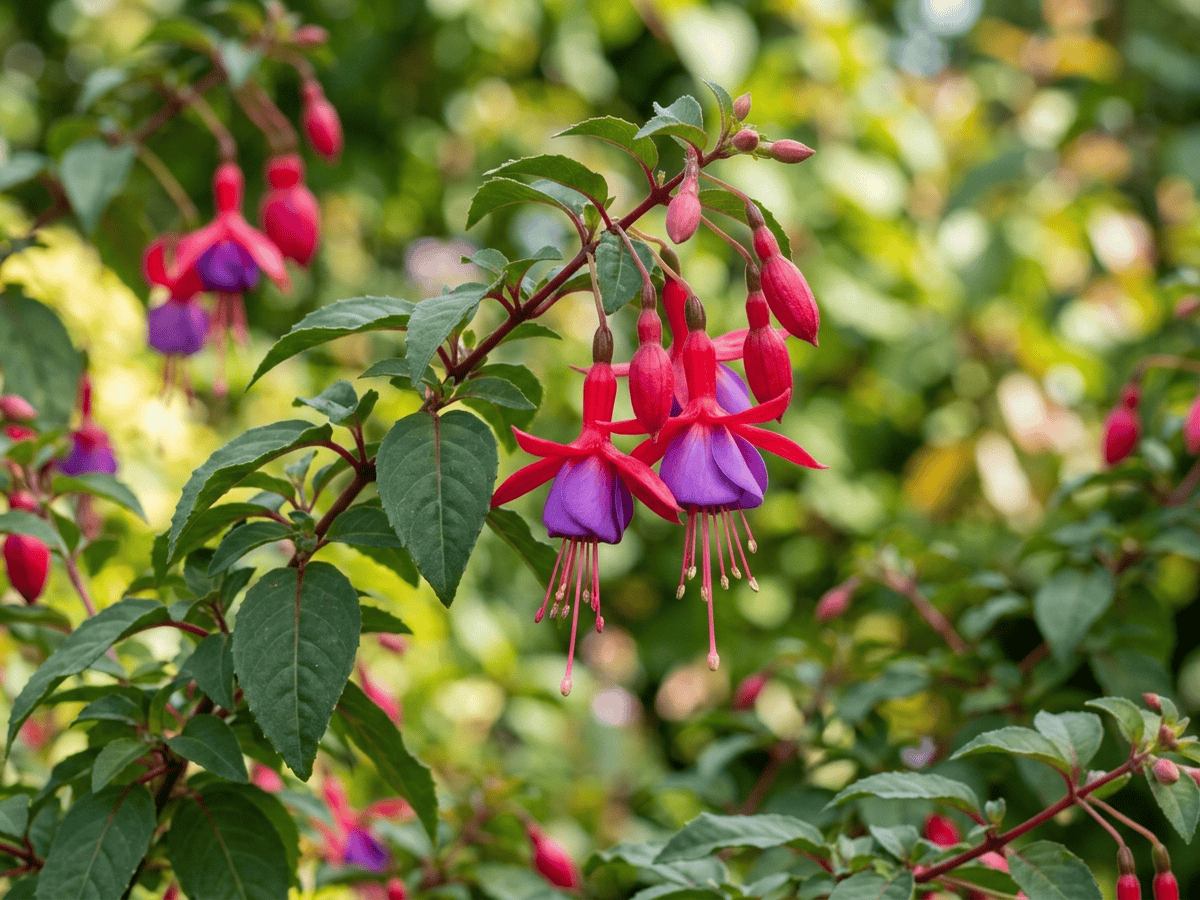
Hardy Fuchsia or Magellan's Fuchsia is a Chilean and Argentinian species fuchsia, the hardiest of all fuchsias, surviving winters down to zone 6 with mulch protection. Growing 3 to 6 feet tall as a woody shrub, it produces countless small single red-and-purple pendant flowers from summer through frost, dying back to roots in cold winters and re-sprouting each spring. The parent species of many modern hybrids.
- Cold-hardy
- Deer-resistant
- Long-blooming
How to care for Hardy Fuchsia
Watering
- Springevery 5 days
- Summerevery 4 days
- Fallevery 7 days
- Winterevery 14 days
Soil · Well-draining
- Top dressingPine bark mulch10%
- Main mixPotting soil + perlite 2:170%
- DrainageLECA / gravel20%
Never skip the drainage layer — standing water is the top cause of root rot.
FERTILIZER
Balanced Feed 14-14-14
An even feed covers all three needs at once, keeping leaves, roots and blooms moving together with nothing pushed out of balance.
- Nitrogen · Leaves
- Phosphorus · Roots + Blooms
- Potassium · Strength
- Springevery 30 days
- Summerevery 30 days
At a Glance
- NativeSouth America
- Height3–6 ft (0.9–1.8 m)
- Spread3–6 ft (0.9–1.8 m)
- Flower colorRed, Purple, Pink, White
- Foliage colorGreen, Yellow, Bronze
- Fruit colorPurple, Black
- SoilRich, Moisture-retentive, Loamy
- LocationsYard
Bloom time
BLOOM CYCLE
Peak bloom
Jul–Nov
Small red-purple pendant flowers July to frost
Toxicity
Pets Safe
None reported
Not reported
EXPOSURE No exposure route is reported.
EFFECT No toxic effect is reported.
NOTE No human toxicity is reported in this catalog; avoid eating ornamental plants unless confirmed edible.
Safe
EXPOSURE No exposure route is reported.
EFFECT No toxic effect is reported.
NOTE Listed as non-toxic for dogs; avoid eating ornamental plants unless confirmed edible.
Safe
EXPOSURE No exposure route is reported.
EFFECT No toxic effect is reported.
NOTE Listed as non-toxic for cats; avoid eating ornamental plants unless confirmed edible.
Educational information, not medical or veterinary advice. If exposure is suspected, contact a doctor or veterinarian.
DISTRIBUTION


- Native
- Introduced
- South America
History
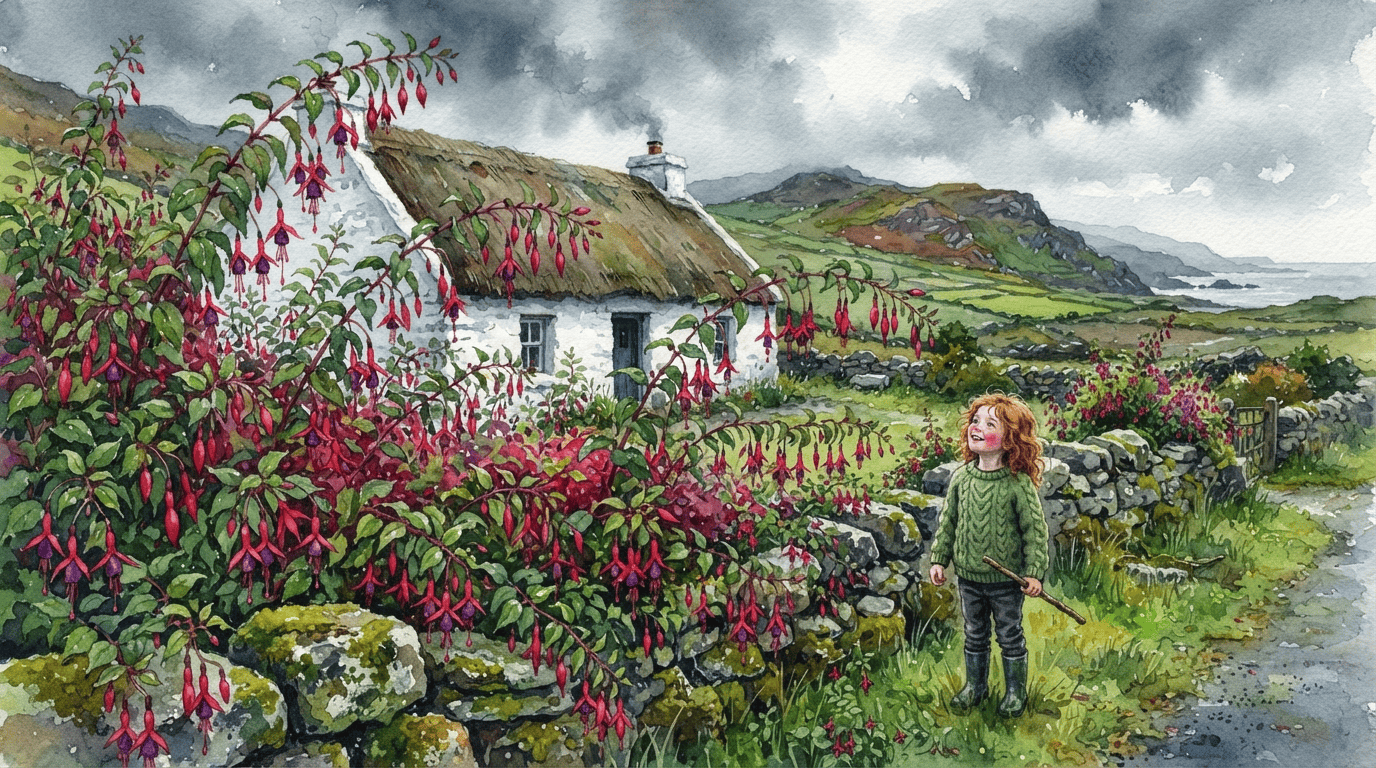
Fuchsia magellanica, called hardy fuchsia or Magellan fuchsia, is the most cold-tolerant fuchsia species, native to cool temperate forests and coastal bluffs of southern Chile and Argentina, including Tierra del Fuego. French botanist Jean-Baptiste de Lamarck described the species in 1788 following collections made during the Louis Antoine de Bougainville expedition. The plant bears elegant red and purple nodding tubular flowers throughout summer and autumn atop arching branches.
Introduced to British horticulture in the early 19th century, it thrives in the wet cool climate of Ireland and western Britain where it hedged cottages and roadsides; it has naturalized in these regions and in the Pacific Northwest. Cultivars such as Aurea, Tricolor, and Hawkshead remain staples of zone 7 to 9 gardens.
Discovered at the Strait of Magellan by 17th-century explorers, introduced to European horticulture in the 1820s and to American Pacific Northwest by the 1860s. The toughest fuchsia in cultivation, surviving zone 6-7 winters and providing reliable perennial color where tender fuchsias are annuals.
Symbolism & meaning
What It Symbolizes
Hardy Fuchsia carries Patagonian endurance in its slender stems — the toughest fuchsia in cultivation, surviving winters that would kill its tropical cousins. As wild ancestor to countless modern hybrids, it bears a deep heritage in the world's gardens, even as it still grows along windswept South American slopes. Its meaning is wild lineage preserved: elegance backed by the quiet strength of a hardy original.
- Patagonian endurance — hardiest fuchsia in cultivation
- Wild ancestry — parent of countless modern hybrids
Where the Name Comes From
'magellanica' refers to the Strait of Magellan region of Patagonia where the species was first documented.
Uses & Fun Facts
- Pendulous red flowers feed hummingbirds all summer
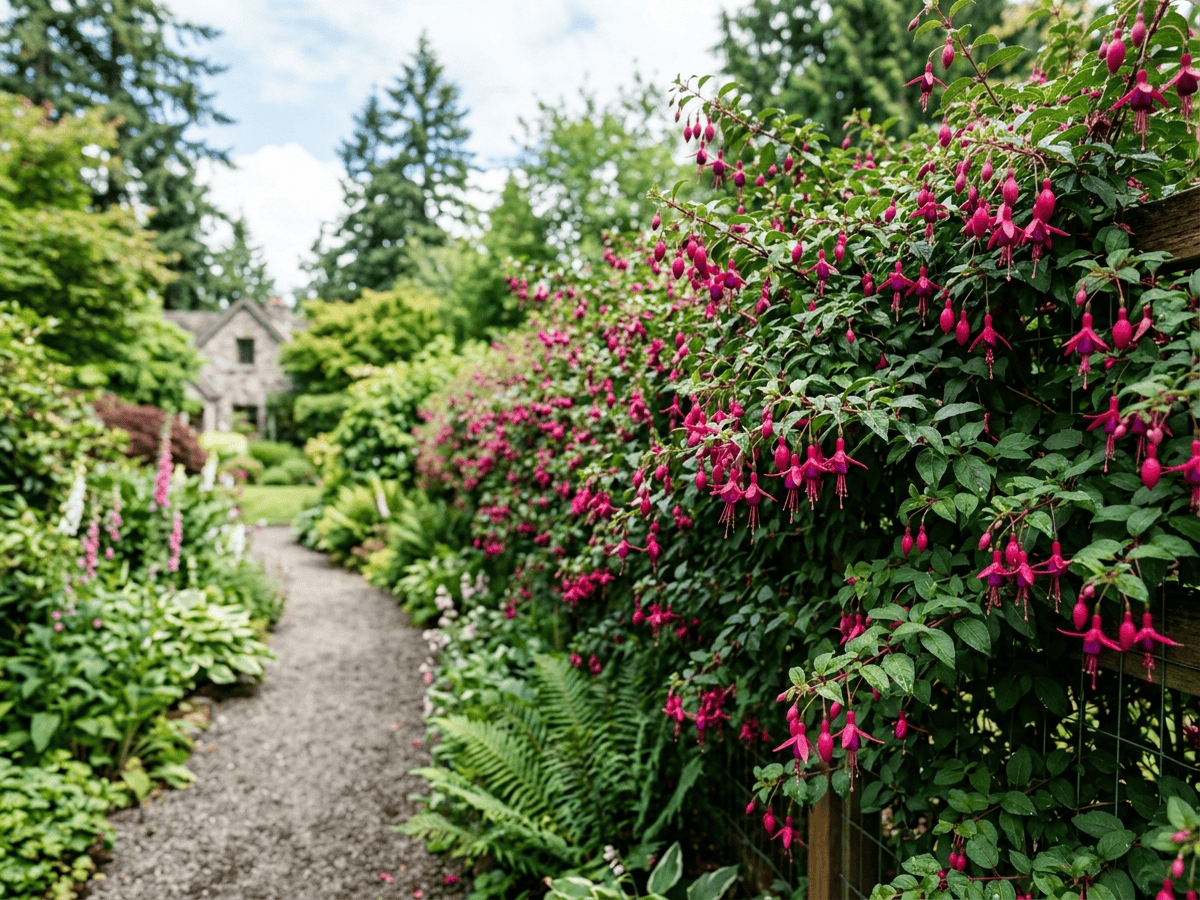
- Hardy shrub forms flowering hedge in mild coastal climates
- Graceful arching habit suits cottage and woodland gardens
Related plants
More Fuchsia plants
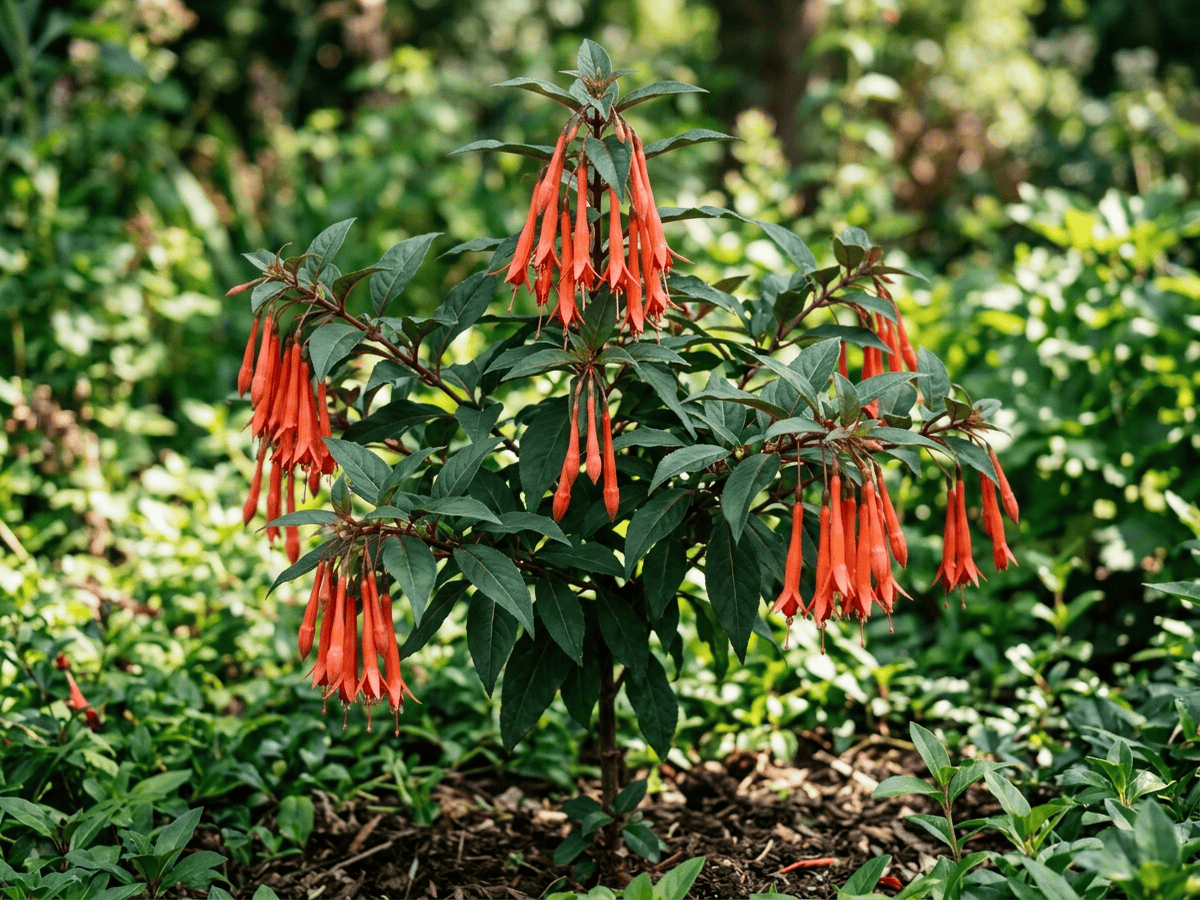
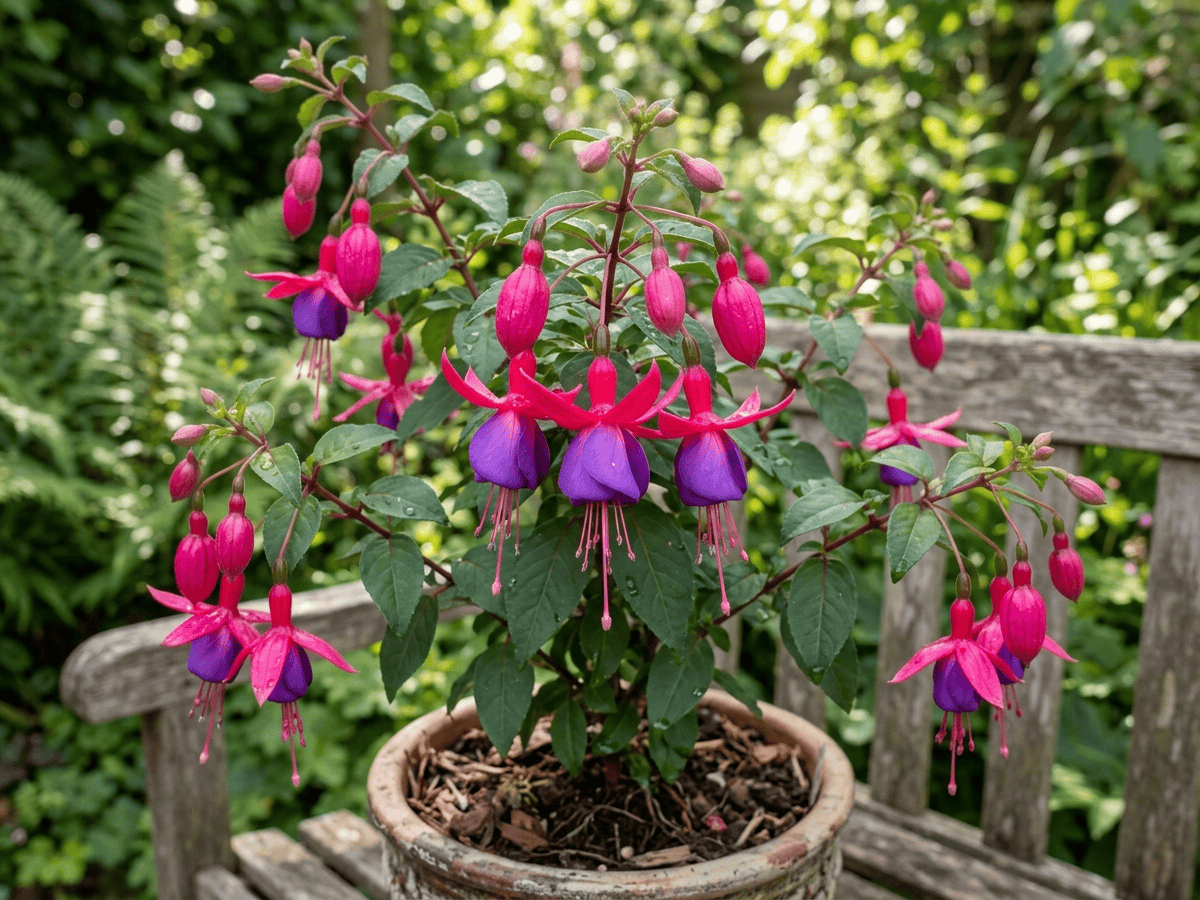
Plants with similar care
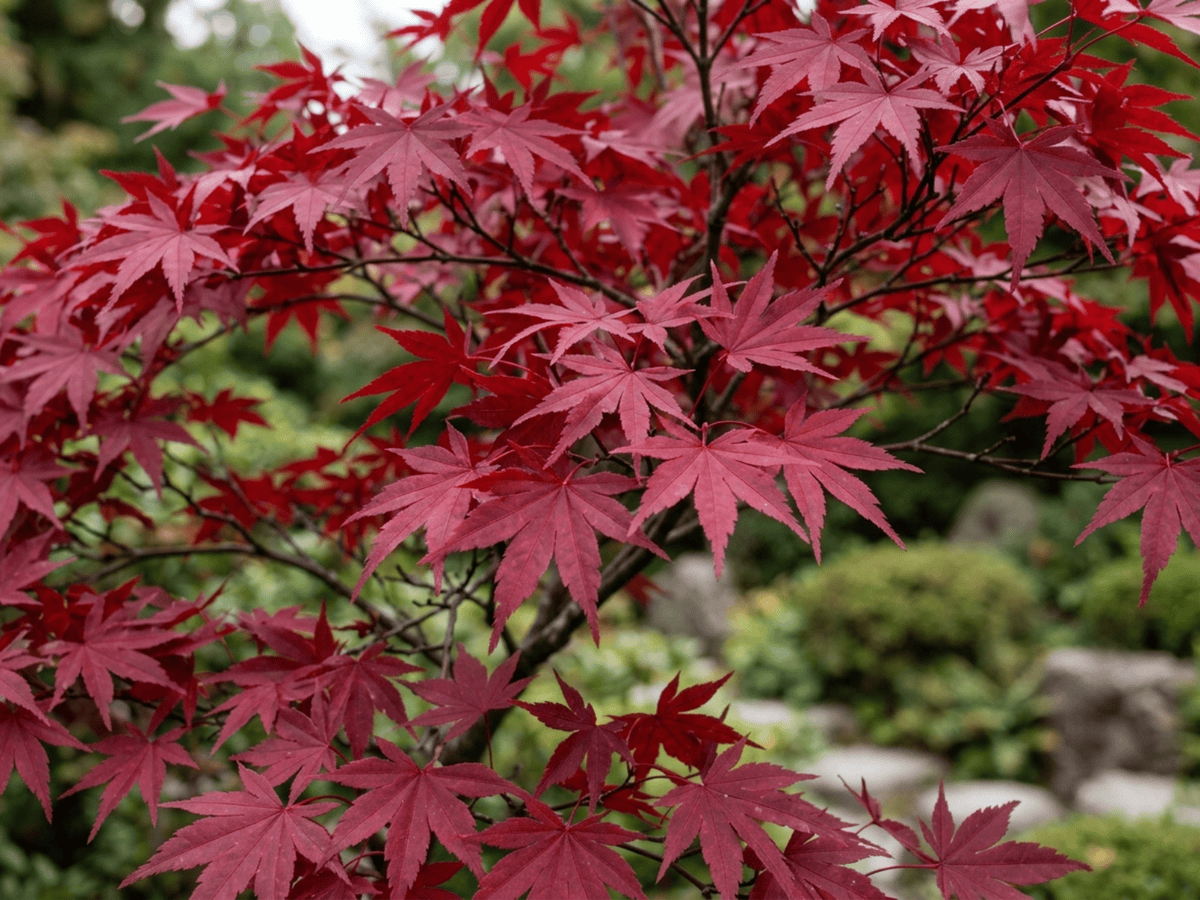 Japanese MapleAcer palmatum
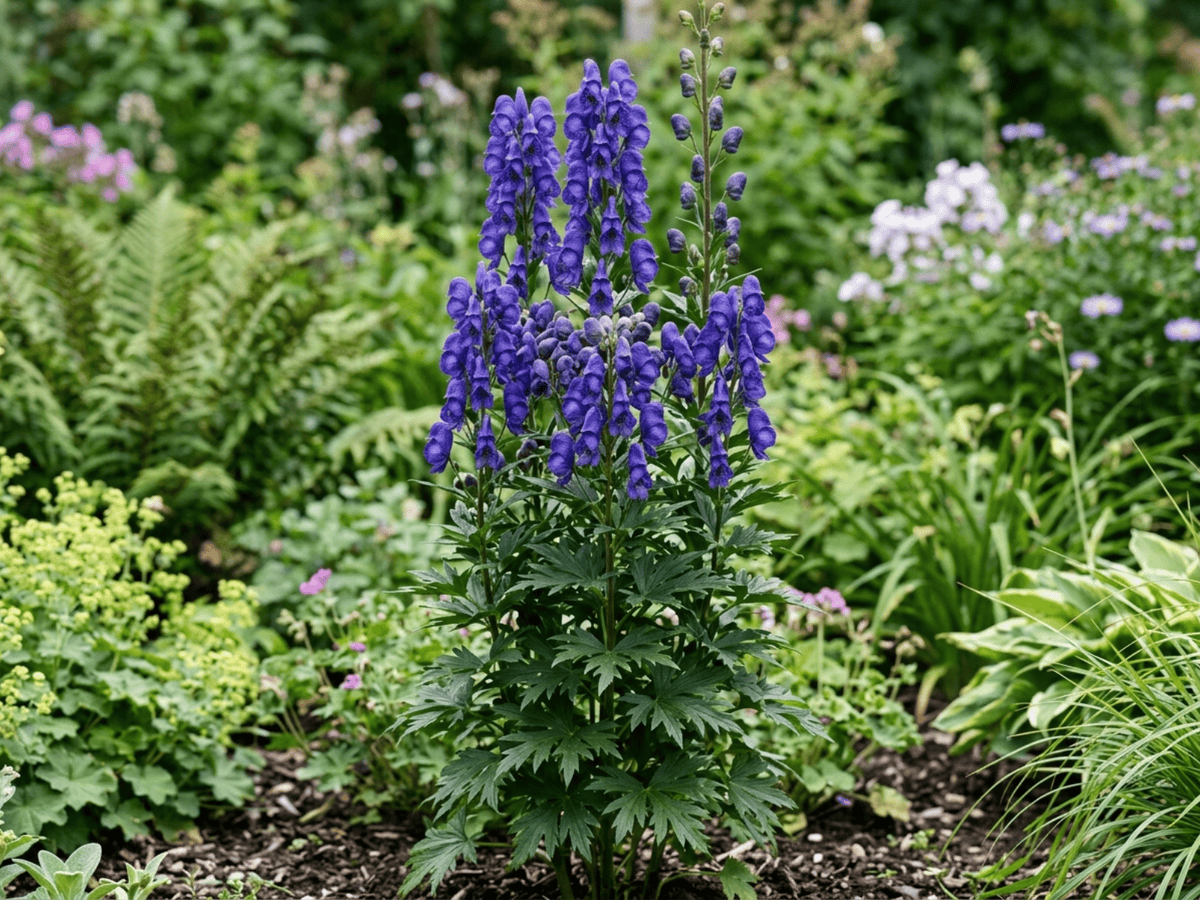 Azure MonkshoodAconitum carmichaelii
 Florida HobblebushAgarista populifolia
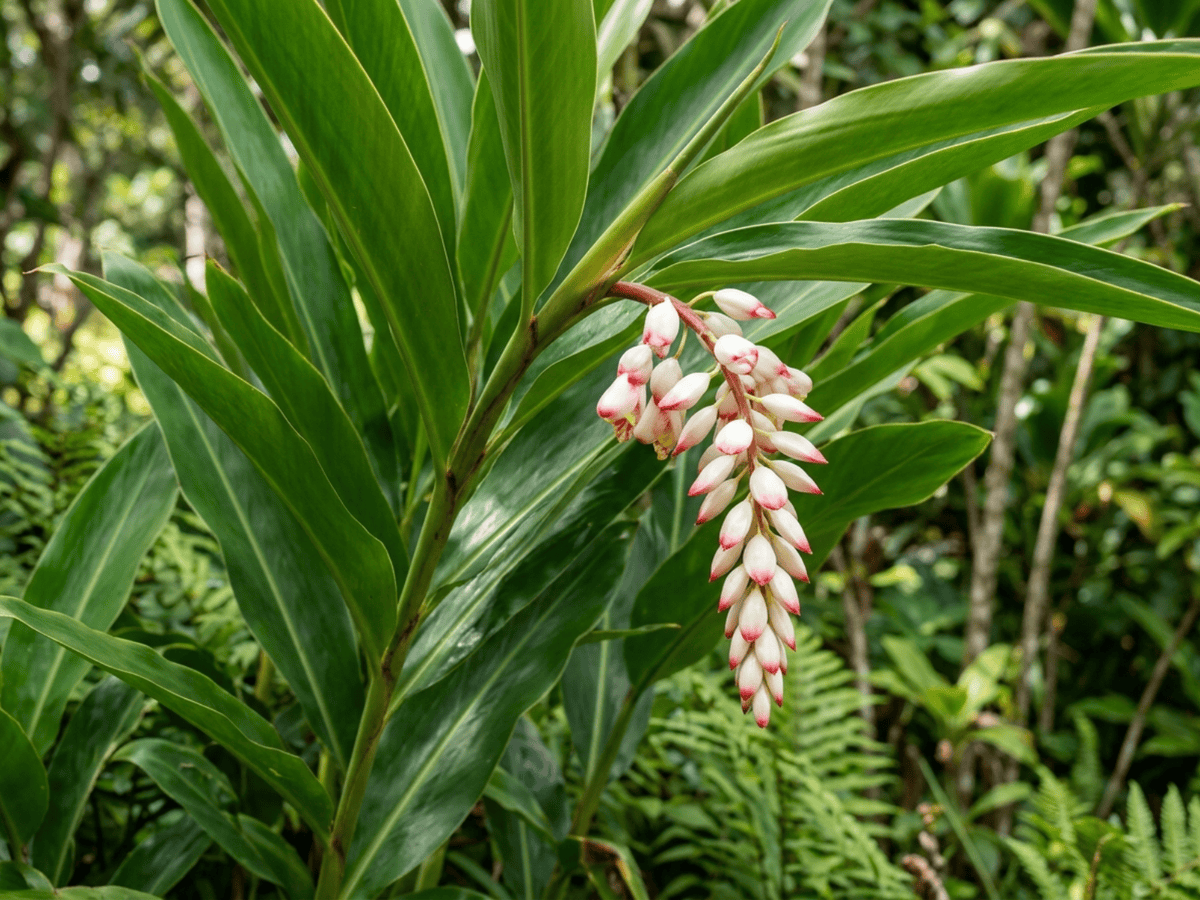 Shell GingerAlpinia zerumbet
Frequently asked questions
How often should I water Hardy Fuchsia?
In summer, water about every 4 days; in winter, about every 14 days. Adjust for heat, pot size and drainage.
How much light does Hardy Fuchsia need?
Part shade: 2–4 hrs direct. Watch the leaves — scorching or stretching means the light needs adjusting.
Is Hardy Fuchsia toxic to cats or dogs?
Pets Safe (Dogs Safe · Cats Safe) Educational information, not medical or veterinary advice. If exposure is suspected, contact a doctor or veterinarian.
Is Hardy Fuchsia easy to grow?
It is moderately demanding: a good choice once you have a little experience.
When does Hardy Fuchsia bloom?
It typically blooms Jul–Nov in the Northern Hemisphere.
YardMate
Identify any plant in seconds
Snap a photo — YardMate names the plant, diagnoses problems, and reminds you when to water.
Download on the App Store