 YardMate
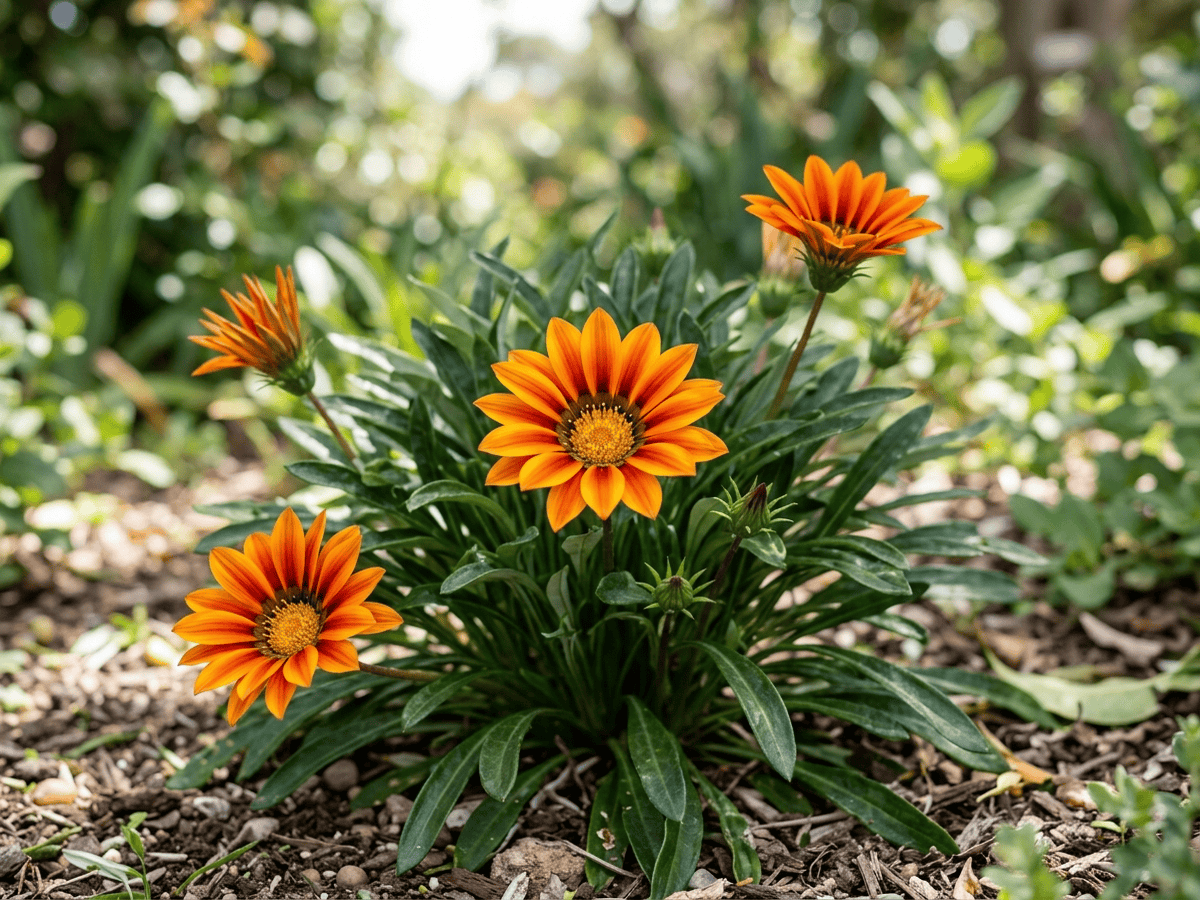


Trailing Treasureflower
Gazania rigens
Easy · Beginner friendlyAbout Trailing Treasureflower
Treasure Flower is a South African tender perennial grown as an annual across the US, producing 3-inch brilliantly colored daisy flowers in orange, yellow, red, pink, and striped forms on low mounded plants 6 to 10 inches tall. Flowers open only in sunshine and close at night. A signature drought-tolerant bedding annual of California and Southwest gardens.
- Drought-tolerant
- Heat-tolerant
- Deer-resistant
- Long-blooming
How to care for Trailing Treasureflower
Watering
- Springevery 7 days
- Summerevery 10 days
- Fallevery 10 days
- Winterevery 14 days
Soil · Well-draining
- Top dressingPine bark mulch10%
- Main mixPotting soil + perlite 2:170%
- DrainageLECA / gravel20%
Never skip the drainage layer — standing water is the top cause of root rot.
FERTILIZER
Balanced Feed 14-14-14
An even feed covers all three needs at once, keeping leaves, roots and blooms moving together with nothing pushed out of balance.
- Nitrogen · Leaves
- Phosphorus · Roots + Blooms
- Potassium · Strength
- Springevery 60 days
- Fallevery 60 days
At a Glance
- NativeAfrica
- Height0.5–1 ft (0.2–0.3 m)
- Spread1–1.5 ft (0.3–0.5 m)
- Flower colorOrange, Yellow, Pink, Red
- Foliage colorGreen, Silver
- SoilSandy, Well-drained
- LocationsYard · Balcony
Bloom time
BLOOM CYCLE
Peak bloom
Jun–Nov
Vivid daisies open in sun June to frost
Toxicity
Toxicity unknown
None reported
Unknown
EXPOSURE Unspecified plant material.
EFFECT Toxic effects are not specified.
NOTE Toxicity for humans is not well documented; use caution until verified.
Unknown
EXPOSURE Unspecified plant material.
EFFECT Toxic effects are not specified.
NOTE Toxicity for dogs is not well documented; use caution until verified.
Unknown
EXPOSURE Unspecified plant material.
EFFECT Toxic effects are not specified.
NOTE Toxicity for cats is not well documented; use caution until verified.
Educational information, not medical or veterinary advice. If exposure is suspected, contact a doctor or veterinarian.
DISTRIBUTION


- Native
- Introduced
- Africa
History
Gazania rigens, the treasure flower or South African daisy, is an evergreen coastal perennial native to sand dunes and rocky slopes along the south and east coasts of South Africa and southern Mozambique. English botanist Nikolaus Joseph von Jacquin formally described the species in 1763, though it had reached British horticulture by 1755 through Kew Gardens. The common name treasure flower references the jewel-like flowers and the genus name gazania honors Theodoros Gaza, a 15th-century Greek-Italian translator of Theophrastus.
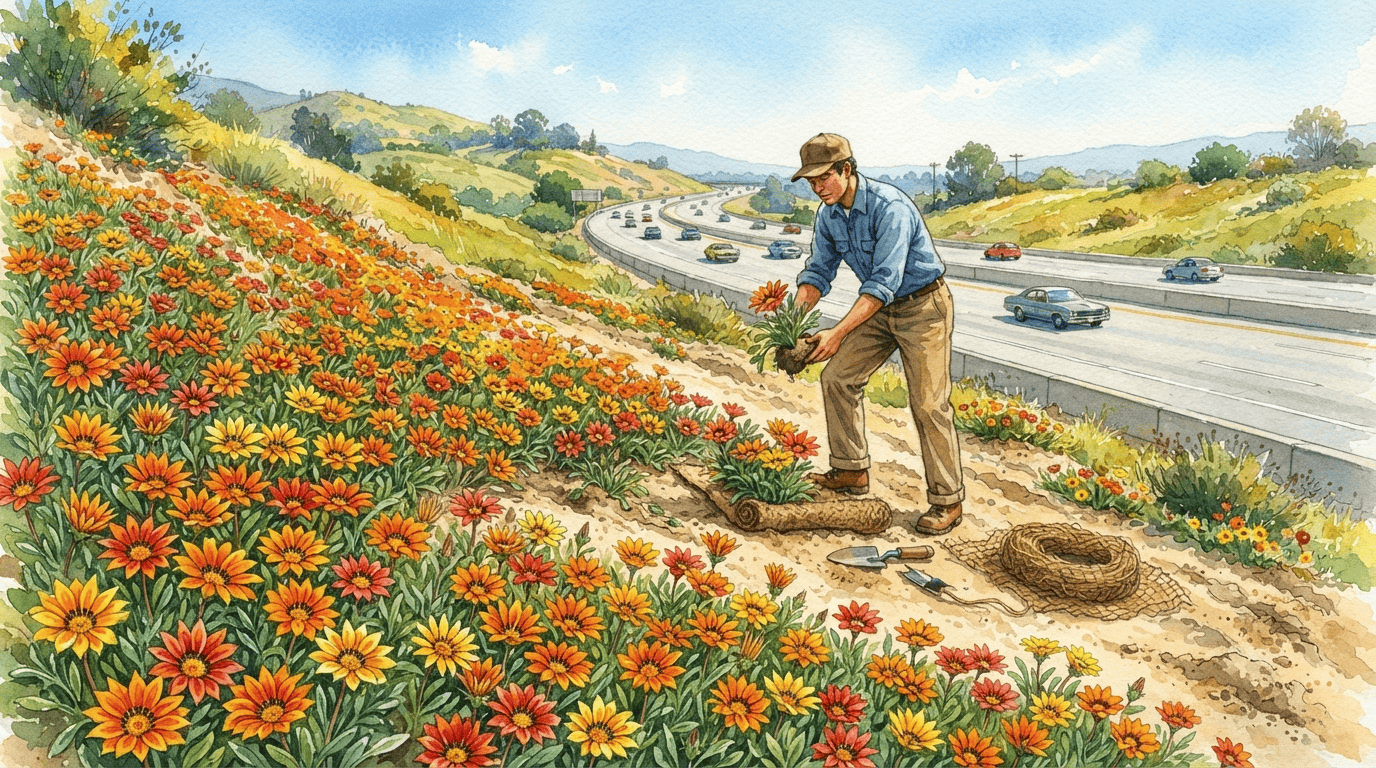
The daisy flowers range from orange, yellow, pink, red, white, and bicolor with striking dark centers, and close at night or in cloudy weather. Mediterranean and Californian landscapers planted gazania by the hectare during mid-20th-century freeway and hotel greenings; Talent and Kiss series remain global sellers.
Native to southern African coastal regions, introduced to California in the early 1900s as a drought-tolerant bedding alternative. Became a ubiquitous California freeway and parking-strip plant in mid-20th century, still a staple of low-water Western American landscape design.
Symbolism & meaning
What It Symbolizes
Trailing Treasureflower is a Radiant sun made botanical — petals striped and rayed like solar disks, opening only when the sky is clear. It is a Coastal treasure of South African origin, thriving in salt spray, blowing sand, and merciless light. A flower that essentially refuses to bloom on cloudy days, demanding brightness as its price.
- Radiant sun — flowers mimic solar disks
- Coastal treasure — thrives in salt spray and sand
Where the Name Comes From
The name Trailing Treasureflower describes its trailing stems. 'Gazania' possibly honors Theodorus Gaza (1398-1478), Greek scholar who translated Theophrastus; 'rigens' from Latin means stiff, for the rigid flower stems.
Uses & Fun Facts
- Bold striped daisies blaze across sunny dry beds
- Spreading mat covers slopes and coastal sand
- Heat-tolerant flowers thrive in window boxes
Related plants
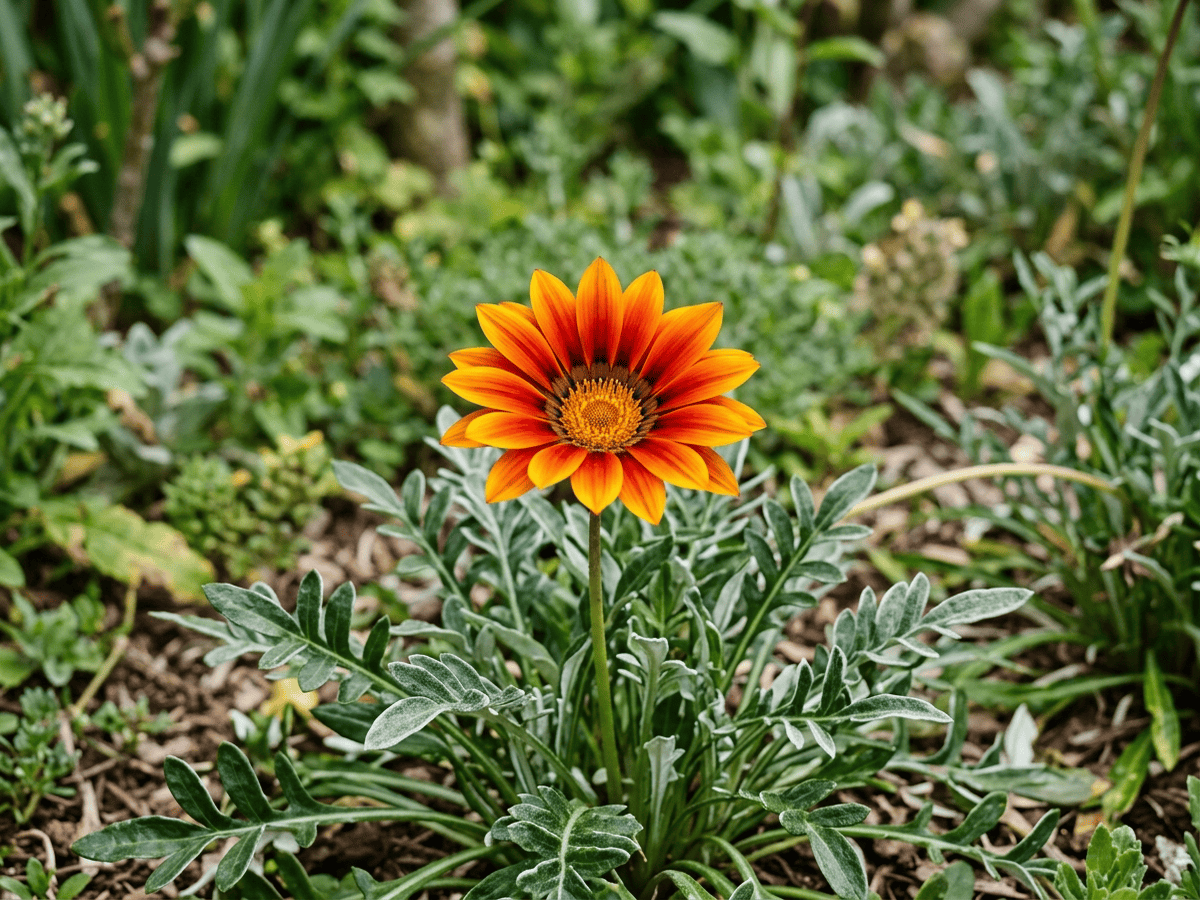
More Gazania plants

Plants with similar care
 Chinese AbeliaAbelia chinensis
 Fragrant AbeliaAbelia mosanensis
 Large-Flowered AbeliaAbelia uniflora
 Glossy AbeliaAbelia x grandiflora
Frequently asked questions
How often should I water Trailing Treasureflower?
In summer, water about every 10 days; in winter, about every 14 days. Adjust for heat, pot size and drainage.
How much light does Trailing Treasureflower need?
Full sun: 6+ hrs direct. Watch the leaves — scorching or stretching means the light needs adjusting.
Is Trailing Treasureflower toxic to cats or dogs?
Pets Unknown (Dogs Unknown · Cats Unknown) Educational information, not medical or veterinary advice. If exposure is suspected, contact a doctor or veterinarian.
Is Trailing Treasureflower easy to grow?
Yes — it is considered an easy, beginner-friendly plant.
When does Trailing Treasureflower bloom?
It typically blooms Jun–Nov in the Northern Hemisphere.
YardMate
Identify any plant in seconds
Snap a photo — YardMate names the plant, diagnoses problems, and reminds you when to water.
Download on the App Store