 YardMate

Cucumberleaf Sunflower
Helianthus debilis
Easy · Beginner friendlyAbout Cucumberleaf Sunflower
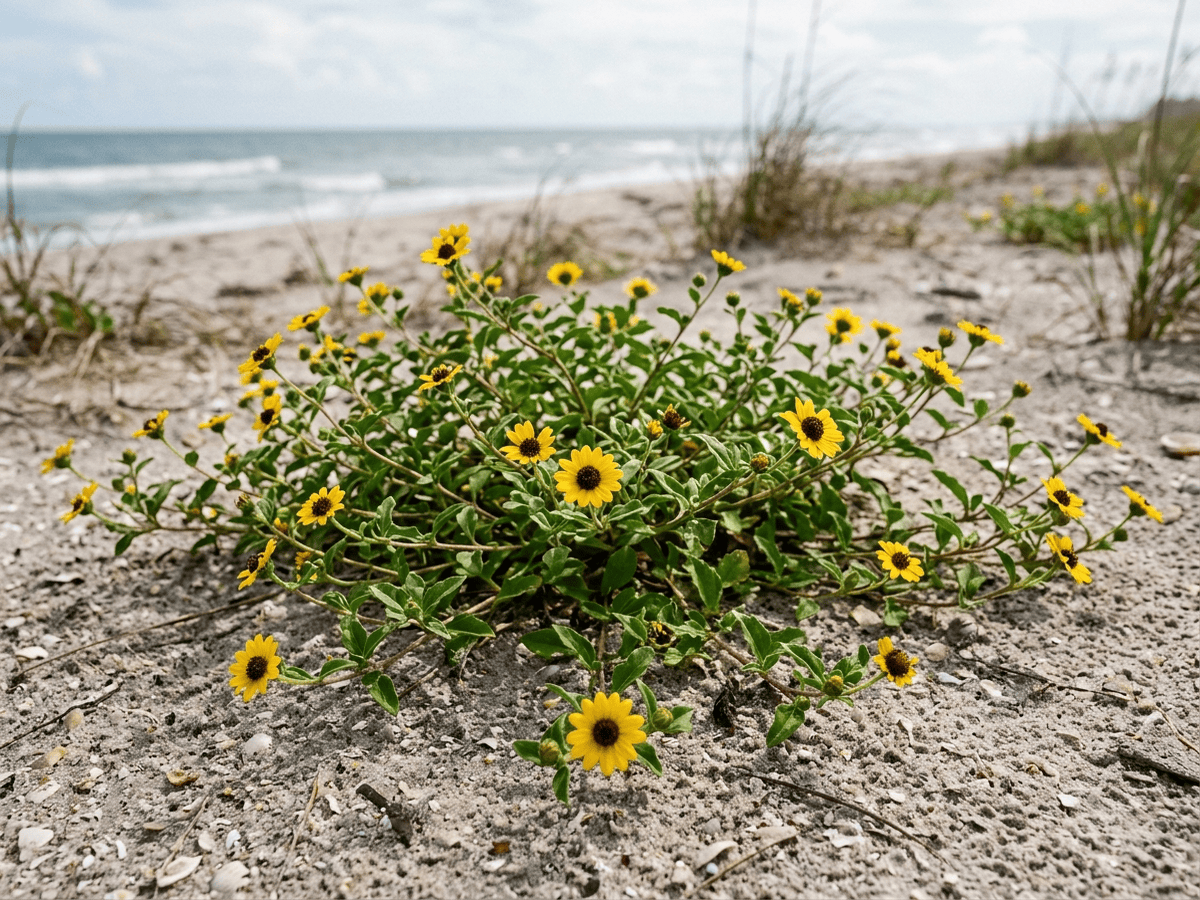
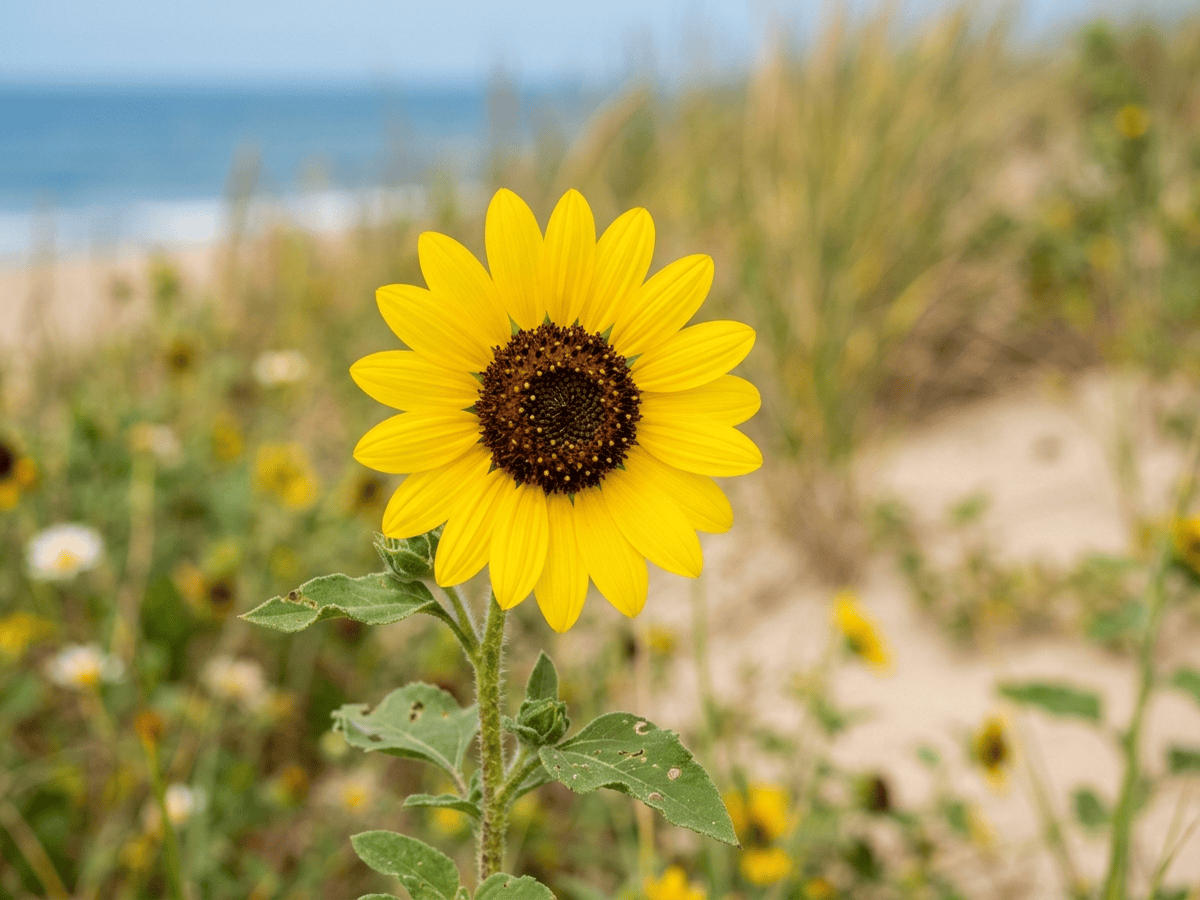
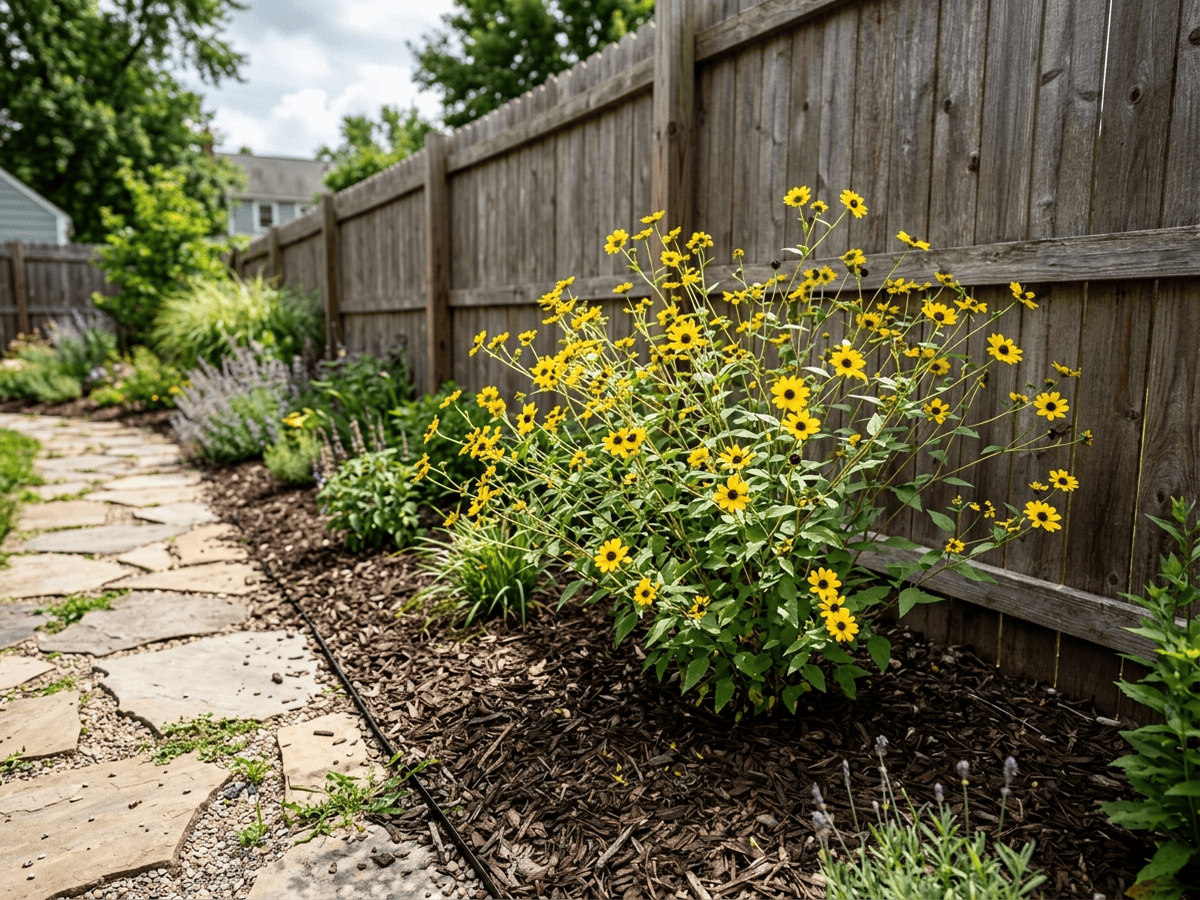
Beach Sunflower or Cucumberleaf Sunflower is a sprawling southeastern US native annual (perennial in Florida) producing small 2 to 3 inch yellow daisy flowers on trailing or mounded 18 inch plants. Native to coastal dunes from Virginia south through Florida and Texas, it is a superb drought and salt-tolerant groundcover and pollinator plant. A key restoration plant for American coastal dunes.
- Drought-tolerant
- Groundcover
- Native
- Pollinator-friendly
How to care for Cucumberleaf Sunflower
Watering
- Springevery 10 days
- Summerevery 7 days
- Fallevery 14 days
- Winterevery 21 days
Soil · Well-draining
- Top dressingPine bark mulch10%
- Main mixPotting soil + perlite 2:170%
- DrainageLECA / gravel20%
Never skip the drainage layer — standing water is the top cause of root rot.
FERTILIZER
- Springevery 30 days
At a Glance
- NativeNorth America
- Height2–4 ft (0.6–1.2 m)
- Spread2–4 ft (0.6–1.2 m)
- Flower colorYellow
- Foliage colorGreen
- SoilSandy, Well-drained
- LocationsYard
Bloom time
BLOOM CYCLE
Peak bloom
Jan–Dec
Small yellow daisies year-round in Florida, summer elsewhere
Toxicity
No toxicity has been reported for this plant. Still, it is wise to keep pets from chewing on any houseplant.
Educational information, not medical or veterinary advice. If exposure is suspected, contact a doctor or veterinarian.
DISTRIBUTION

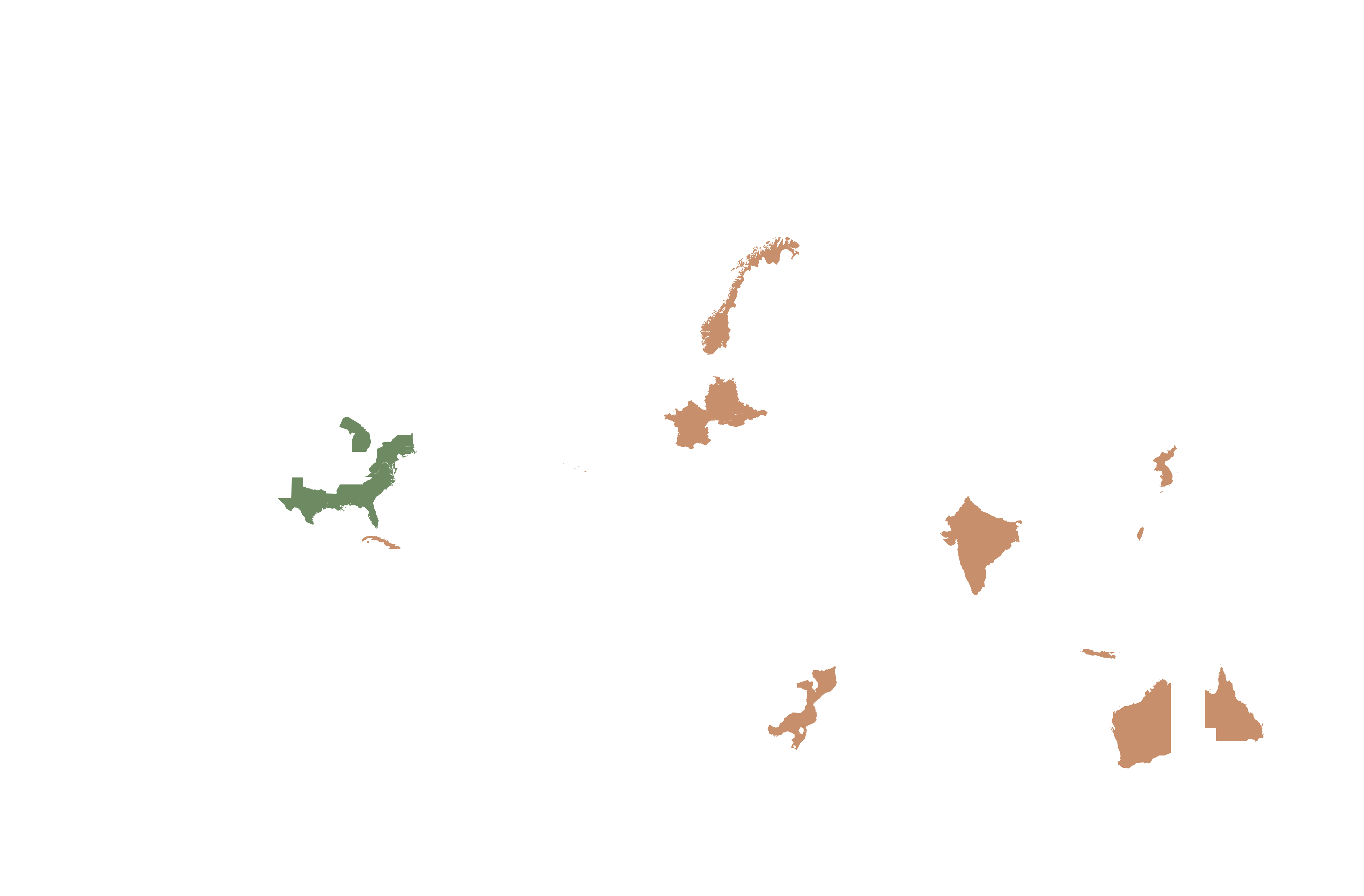
- Native
- Introduced
- North America
History
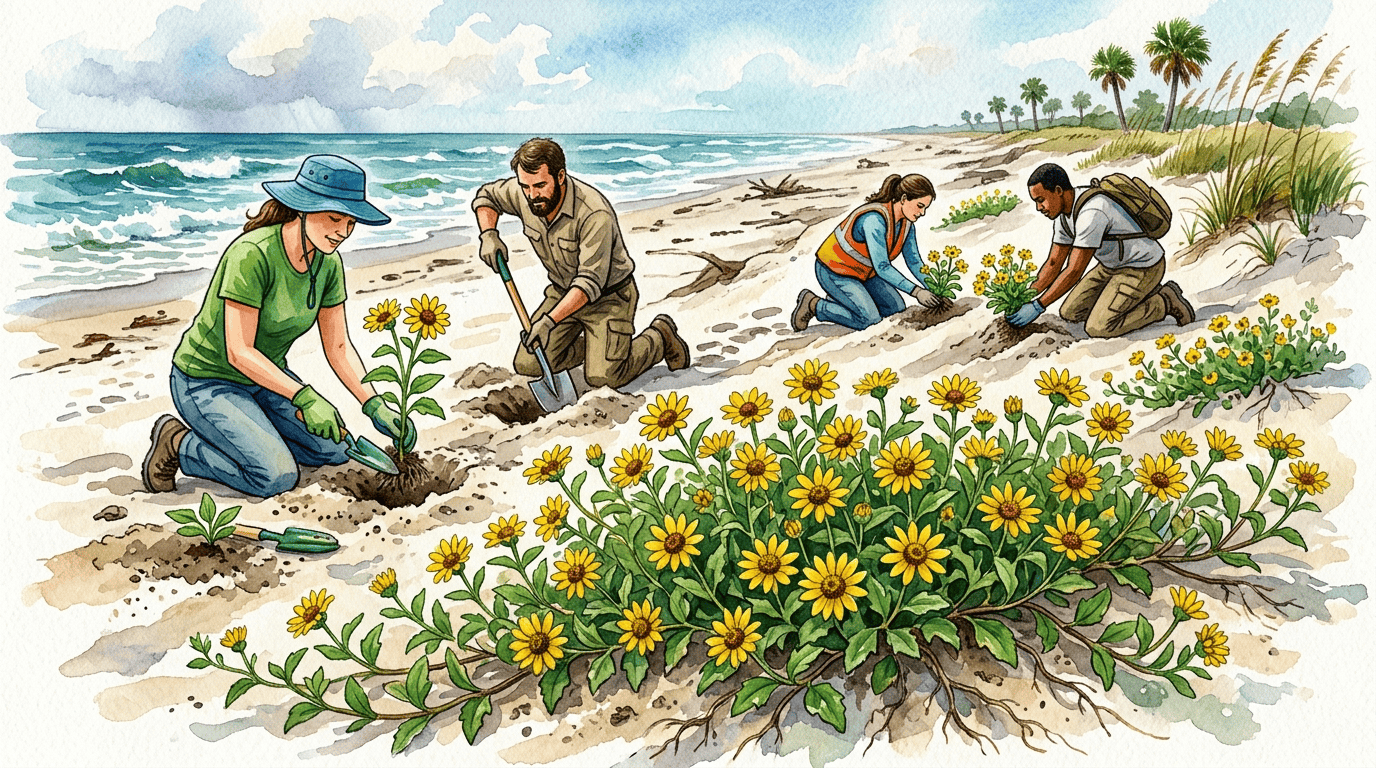
Helianthus debilis, the beach sunflower, dune sunflower, or cucumberleaf sunflower, is a sprawling annual to short-lived perennial native to coastal dunes and disturbed sandy soils from South Carolina through Florida and the Gulf Coast to Texas and into northeastern Mexico. American botanist Thomas Nuttall described the species in 1841. The plant produces dense masses of small yellow sunflower daisies above rough trailing stems, blooming nonstop from spring through frost in frost-free zones.
Its salt tolerance and dense growth make it a premier dune stabilizer, and the Lady Bird Johnson Wildflower Center and Florida Native Plant Society promote it heavily for beach restoration and xeric sandy landscape plantings. Various subspecies such as subsp. vestitus occur in different coastal regions.
A signature coastal plant of the American Southeast, crucial for stabilizing hurricane-impacted dunes along Atlantic and Gulf coasts. Native plant nurseries across Florida and the Carolinas propagate Helianthus debilis heavily for shoreline restoration projects after tropical storms.
Symbolism & meaning
What It Symbolizes
Cucumberleaf Sunflower makes visible shore resilience, anchoring storm-damaged dunes with sprawling stems that hold sand in place after each Atlantic blow. As a symbol of Southeast beaches, its sunny yellow flowers turn even battered coastlines into something cheerful again. A sunflower whose strength is measured less in height than in how stubbornly it refuses to let the dune wash away.
- Shore resilience — anchors storm-damaged dunes
- Southern sunshine — symbol of Southeast beaches
Where the Name Comes From
'Helianthus' from Greek 'helios-anthos' meaning sun flower; 'debilis' means weak or decumbent, for the sprawling growth habit.
Uses & Fun Facts
- Yellow daisies feed bees and migrating monarch butterflies
- Sprawling beach sunflower stabilizes coastal dunes and sandy soils
- Seeds eaten by sparrows, finches, and other songbirds
Related plants
More Helianthus plants

Plants with similar care
 Chinese AbeliaAbelia chinensis
 Fragrant AbeliaAbelia mosanensis
 Large-Flowered AbeliaAbelia uniflora
 Glossy AbeliaAbelia x grandiflora
Frequently asked questions
How often should I water Cucumberleaf Sunflower?
In summer, water about every 7 days; in winter, about every 21 days. Adjust for heat, pot size and drainage.
How much light does Cucumberleaf Sunflower need?
Full sun: 6+ hrs direct. Watch the leaves — scorching or stretching means the light needs adjusting.
Is Cucumberleaf Sunflower toxic to cats or dogs?
No toxicity has been reported for this plant. Still, it is wise to keep pets from chewing on any houseplant. Educational information, not medical or veterinary advice. If exposure is suspected, contact a doctor or veterinarian.
Is Cucumberleaf Sunflower easy to grow?
Yes — it is considered an easy, beginner-friendly plant.
When does Cucumberleaf Sunflower bloom?
It typically blooms Jan–Dec in the Northern Hemisphere.
YardMate
Identify any plant in seconds
Snap a photo — YardMate names the plant, diagnoses problems, and reminds you when to water.
Download on the App Store