 YardMate

Common Hibiscus
Hibiscus syriacus
Easy · Beginner friendlyAbout Common Hibiscus
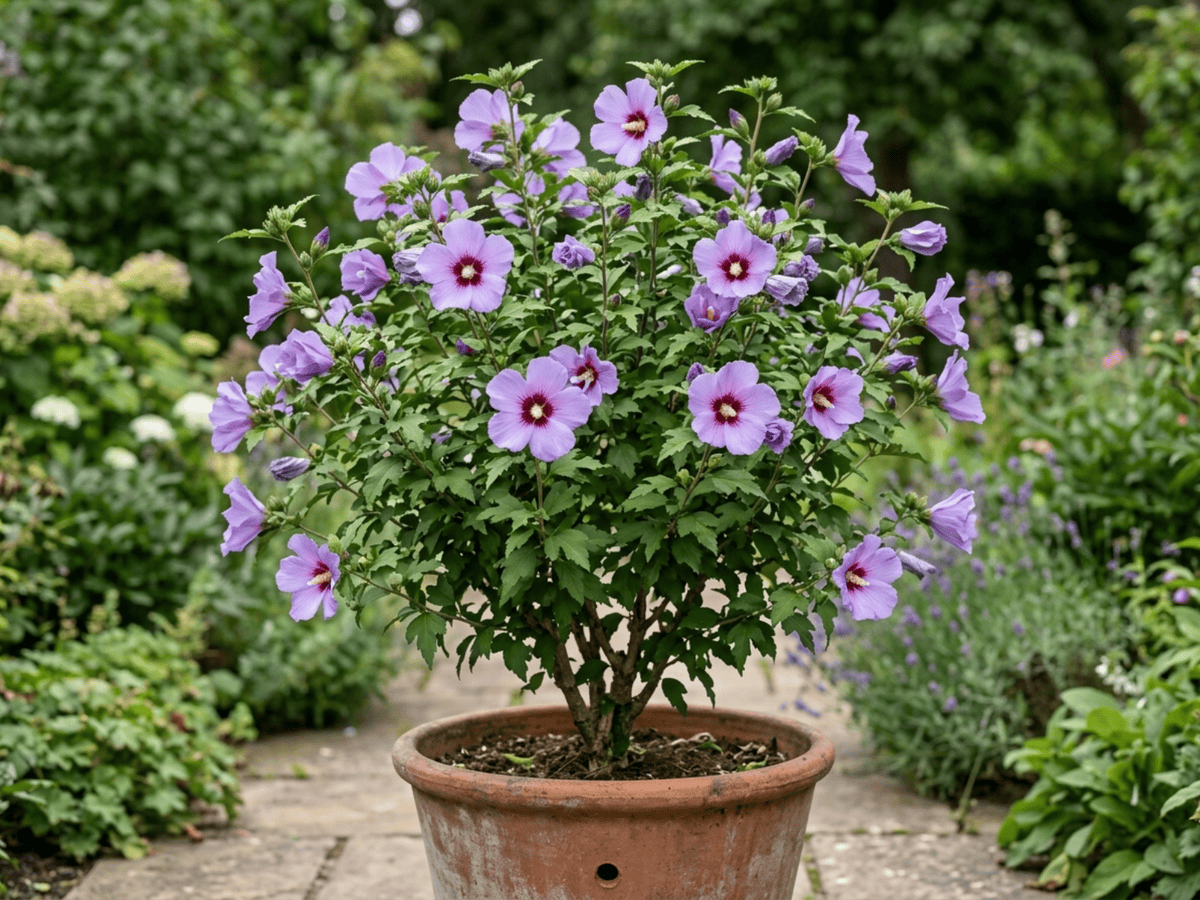
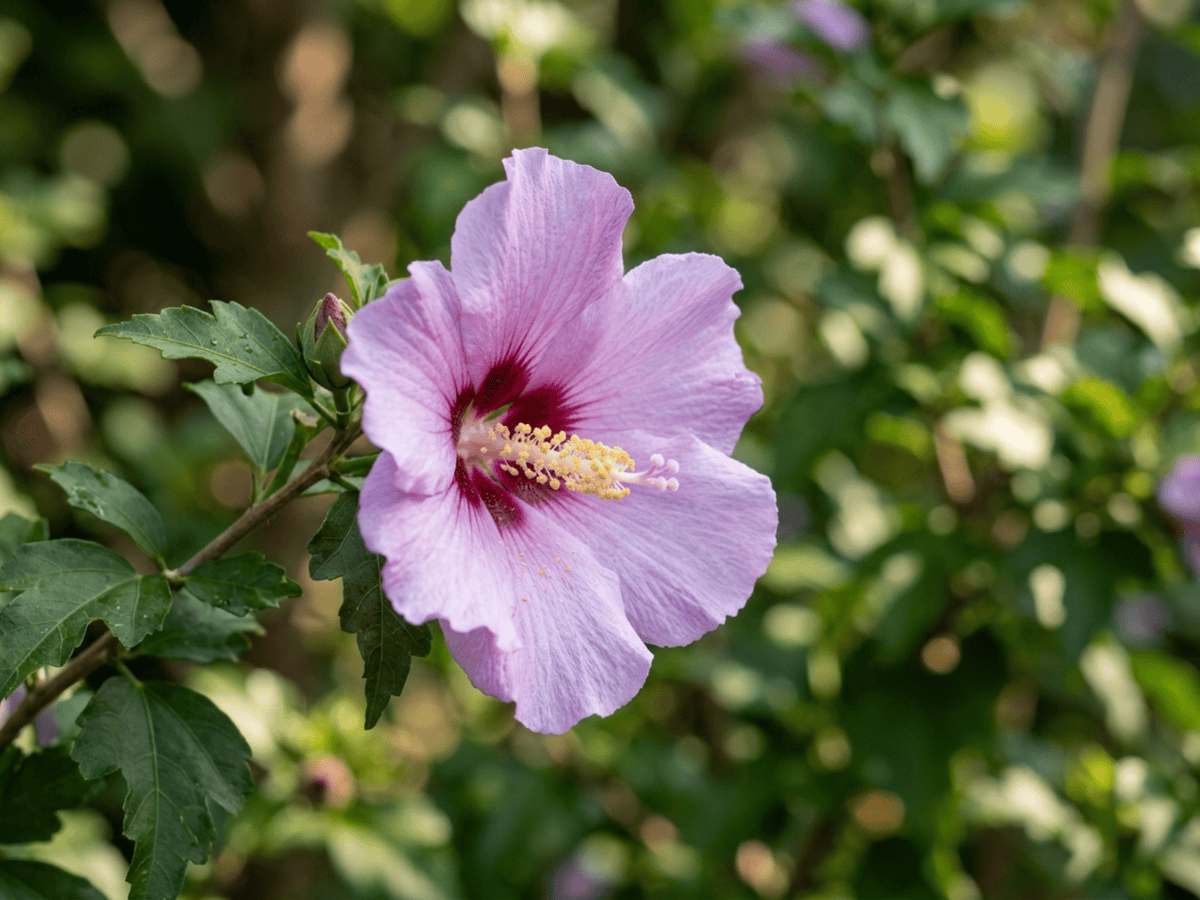
Hibiscus syriacus, the Rose of Sharon, is a deciduous shrub producing large, hollyhock-like flowers in blue, purple, pink, red, and white from midsummer through autumn — a critical bloom season when few other shrubs flower. Native to China and India (not Syria, despite the name), it grows 2–4 meters tall and is remarkably cold-hardy for a hibiscus. Modern cultivars like 'Blue Chiffon' and 'White Pillar' offer improved flower forms and reduced seediness. The national flower of South Korea, called 'mugunghwa' (무궁화, eternal flower), symbolizing the Korean people's resilience.
- Cold-hardy
- Pollinator-friendly
How to care for Common Hibiscus
Watering
- Springevery 7 days
- Summerevery 5 days
- Fallevery 10 days
- Winterevery 21 days
Soil · Rich & loamy
- Top dressingBark mulch15%
- Main mixRich loam + compost 3:170%
- DrainageGravel15%
Use fully finished compost — fresh compost burns roots.
FERTILIZER
Balanced Feed 14-14-14
An even feed covers all three needs at once, keeping leaves, roots and blooms moving together with nothing pushed out of balance.
- Nitrogen · Leaves
- Phosphorus · Roots + Blooms
- Potassium · Strength
- Springevery 30 days
- Summerevery 30 days
At a Glance
- NativeEast Asia
- Height8–12 ft (2.4–3.7 m)
- Spread6–10 ft (1.8–3 m)
- Flower colorPink, Purple, Blue, White
- Foliage colorGreen, Variegated
- SoilLoamy, Well-drained
- LocationsYard
Bloom time
BLOOM CYCLE
Peak bloom
Aug–Sep
Late summer flowers when few shrubs bloom; prune hard in spring for larger flowers
Fragrance
NO FRAGRANCE
No notable fragrance.
Toxicity
Pets Safe
None reported
Not reported
EXPOSURE No exposure route is reported.
EFFECT Flowers consumed in Korean cuisine and tea and generally regarded as safe.
NOTE No human toxicity is reported in this catalog; avoid eating ornamental plants unless confirmed edible.
Safe
EXPOSURE No exposure route is reported.
EFFECT No toxic effect is reported.
NOTE Listed as non-toxic for dogs; avoid eating ornamental plants unless confirmed edible.
Safe
EXPOSURE No exposure route is reported.
EFFECT No toxic effect is reported.
NOTE Listed as non-toxic for cats; avoid eating ornamental plants unless confirmed edible.
Educational information, not medical or veterinary advice. If exposure is suspected, contact a doctor or veterinarian.
DISTRIBUTION

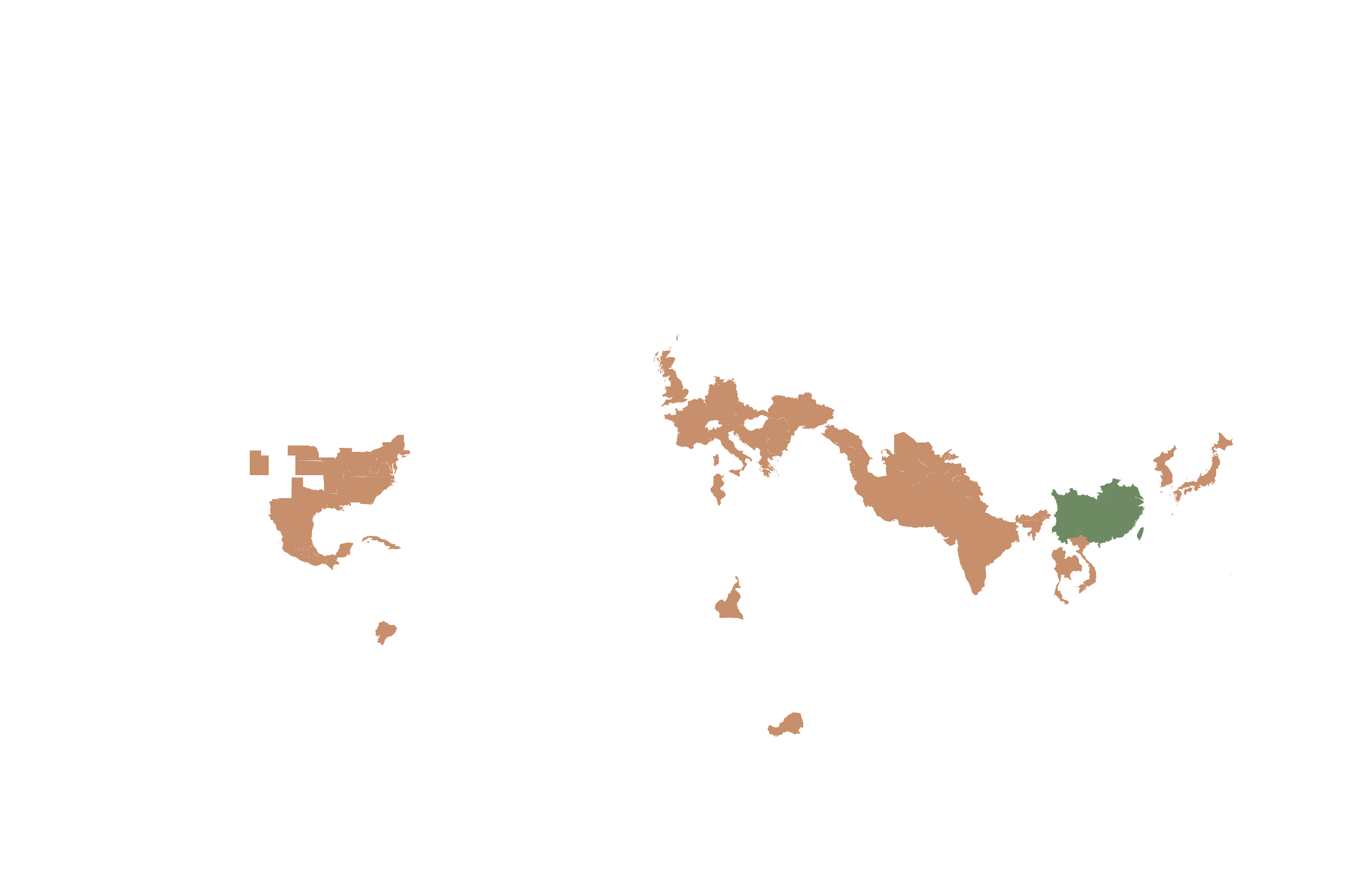
- Native
- Introduced
- East Asia
History
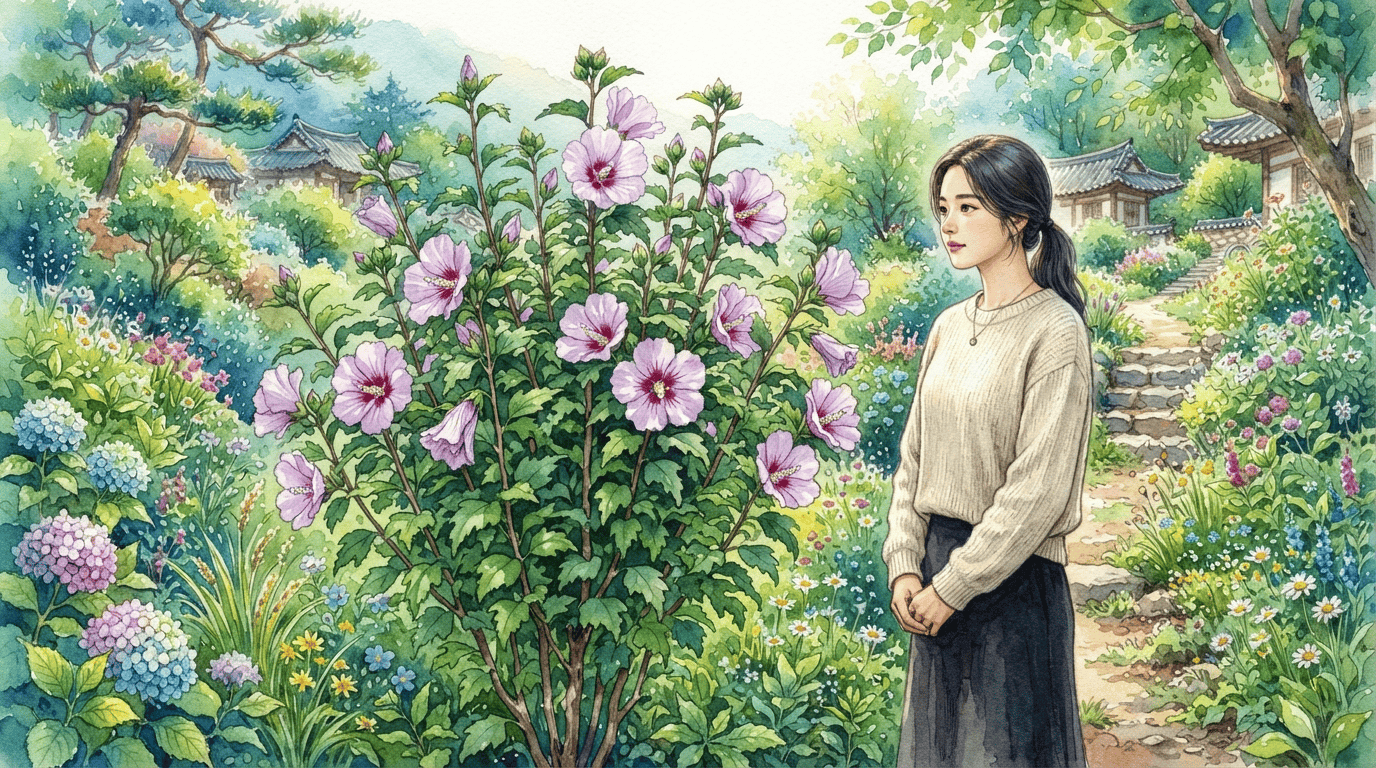
Hibiscus syriacus is native to central and eastern China, Taiwan, and the Korean Peninsula. Linnaeus's species name reflects a misidentification — 18th-century European specimens were thought to come from Syria via Ottoman trade routes, though the true origin is East Asian. In Korea it is the national flower, Mugunghwa (무궁화, "flower of eternity"), valued as a symbol of resilience for its ability to flower from summer through frost; it appears on South Korea's national emblem, government logos, and the highest national decoration (Order of Mugunghwa). Classical Korean Sillok records from the Silla Kingdom (1st century CE) reference it, and modern Korean patriotic music ("Aegukga") invokes it.
It reached European gardens in the 16th century and became a popular hardy shrub across temperate zones. ASPCA lists it as toxic to pets, though toxicity is mild. Mugunghwa is the Korean national flower, appearing on national emblems, currency, and the presidential seal.
The name means 'flower of eternity' — it symbolizes the Korean spirit because each flower blooms for only a day but new ones open continuously for months, representing the nation's resilience through hardship. Despite the species name 'syriacus' (Syrian), it is native to China — the confusion arose when it reached Europe via the Middle East along the Silk Road. In American gardens, it has been popular since colonial times — Thomas Jefferson grew it at Monticello. The cultivar 'Diana,' developed by the US National Arboretum, was one of the first sterile triploids.
Symbolism & meaning
What It Symbolizes
The Common Hibiscus stands as Korea's Mugunghwa, the national flower of perseverance whose blossoms open and fall and open again, day after day, for months on end. Its name means roughly 'eternal flower,' and its repetition makes visible a people's unwillingness to stop blooming despite hardship. In every fresh flower at dawn lies the renewed promise of resilience.
- Perseverance — Korea's national flower — blooming daily for months, it represents eternal resilience
Where the Name Comes From
Hibiscus from Greek 'hibiskos.' Syriacus means 'of Syria' — a geographic error; it is native to China.
Uses & Fun Facts
- Mild flowers garnish salads, syrups, and herbal cool drinks
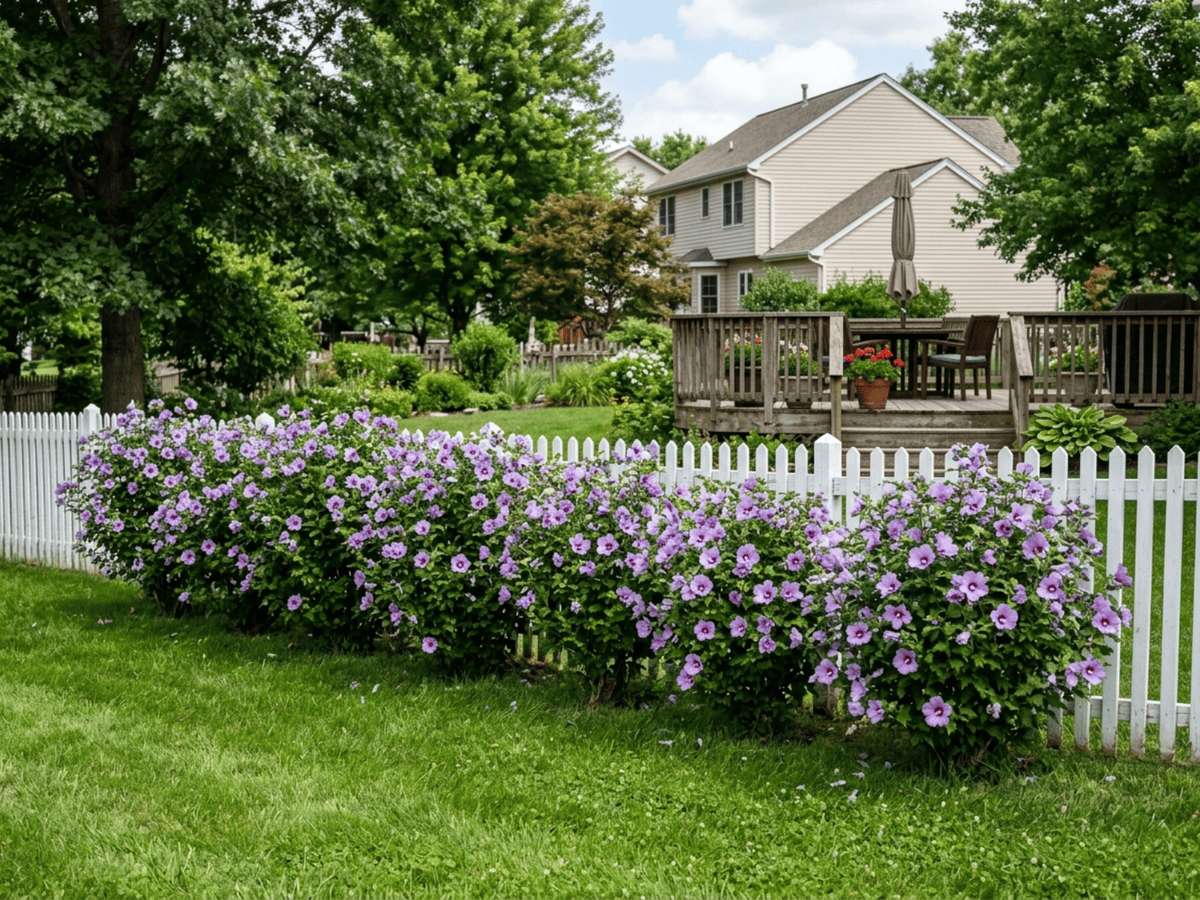
- Upright deciduous shrub forms midsummer flowering privacy screens
- Trained to a small tree as patio focal point
- Hollyhock-like blooms attract bees and hummingbirds in late summer
Related plants
More Hibiscus plants
Plants with similar care
 Chinese AbeliaAbelia chinensis
 Fragrant AbeliaAbelia mosanensis
 Large-Flowered AbeliaAbelia uniflora
 Glossy AbeliaAbelia x grandiflora
Frequently asked questions
How often should I water Common Hibiscus?
In summer, water about every 5 days; in winter, about every 21 days. Adjust for heat, pot size and drainage.
How much light does Common Hibiscus need?
Full sun: 6+ hrs direct. Watch the leaves — scorching or stretching means the light needs adjusting.
Is Common Hibiscus toxic to cats or dogs?
Pets Safe (Dogs Safe · Cats Safe) Educational information, not medical or veterinary advice. If exposure is suspected, contact a doctor or veterinarian.
Is Common Hibiscus easy to grow?
Yes — it is considered an easy, beginner-friendly plant.
When does Common Hibiscus bloom?
It typically blooms Aug–Sep in the Northern Hemisphere.
YardMate
Identify any plant in seconds
Snap a photo — YardMate names the plant, diagnoses problems, and reminds you when to water.
Download on the App Store