 YardMate


Spider Hibiscus
Hibiscus rosa-sinensis
Medium · Some experienceAbout Spider Hibiscus
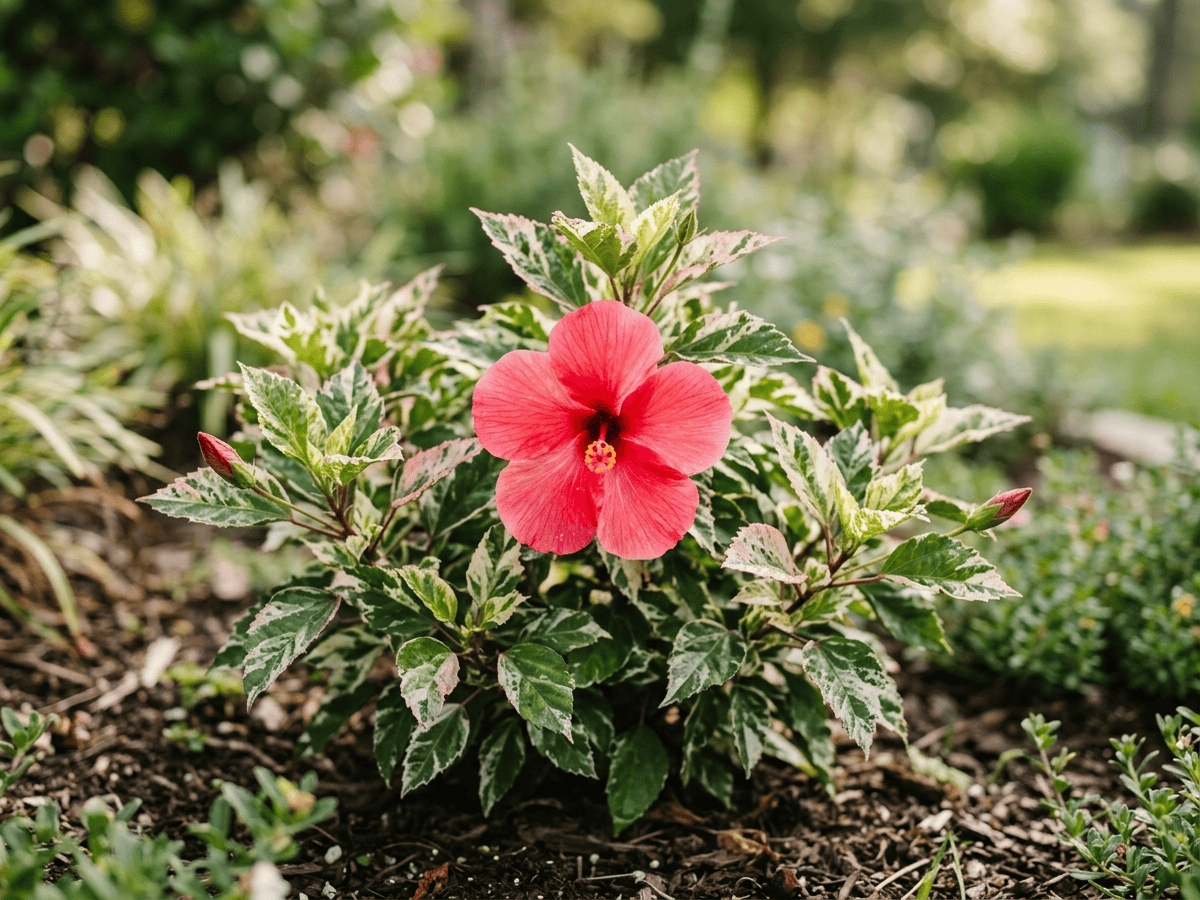
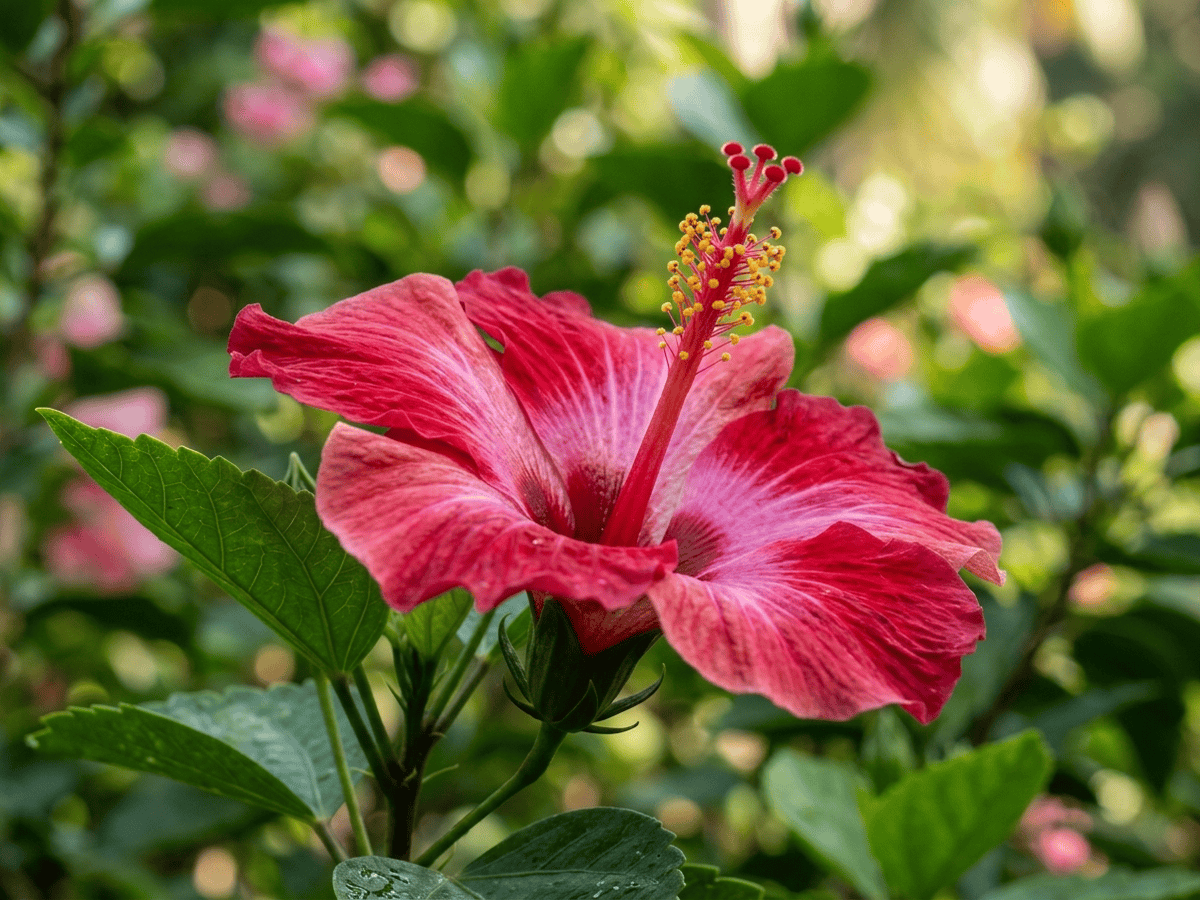
Hibiscus rosa-sinensis, the tropical hibiscus, produces large, showy, funnel-shaped flowers up to 15 cm across in vivid red, orange, yellow, pink, white, and multicolors. Each flower lasts only one day but plants produce blooms continuously in warm conditions. Native to tropical Asia, it is the national flower of Malaysia and the state flower of Hawaii. Modern hybridizers have created thousands of cultivars with ruffled, double, and fantasy color patterns. In tropical regions, it grows as a large shrub or hedge; in temperate areas, it is a prized container plant brought indoors for winter.
- Edible
- Tropical
- Long-blooming
How to care for Spider Hibiscus
Watering
- Springevery 5 days
- Summerevery 3 days
- Fallevery 7 days
- Winterevery 14 days
Soil · Rich & loamy
- Top dressingBark mulch15%
- Main mixRich loam + compost 3:170%
- DrainageGravel15%
Use fully finished compost — fresh compost burns roots.
FERTILIZER
Bloom Booster 10-52-10
A phosphorus-forward feed fuels abundant blooms, with just enough nitrogen and potassium to keep foliage and roots steady.
- Nitrogen · Leaves
- Phosphorus · Roots + Blooms
- Potassium · Strength
- Springevery 21 days
- Summerevery 21 days
- Fallevery 45 days
At a Glance
- NativeEast Asia
- Height3–6 ft (0.9–1.8 m)
- Spread2–4 ft (0.6–1.2 m)
- Flower colorRed, Pink, Yellow, Orange
- Foliage colorGreen, Variegated
- SoilWell-drained, Loamy, Rich
- LocationsIndoor · Balcony
Bloom time
BLOOM CYCLE
Peak bloom
Jun–Aug
Each flower lasts one day; feed heavily for continuous bloom; bring indoors before frost
Fragrance
NO FRAGRANCE
Flowers typically unscented despite their spectacular appearance.
Toxicity
Pets Slight
Unknown toxic principle
Not reported
EXPOSURE No exposure route is reported.
EFFECT Flowers and leaves edible and widely consumed as tea and in cuisines across Asia and the Pacific.
NOTE No human toxicity is reported in this catalog; avoid eating ornamental plants unless confirmed edible.
Slight
- All
- Ingestion
EXPOSURE Eating any part of the plant.
EFFECT Possible mild GI upset with large ingestion.
NOTE ASPCA lists Hibiscus rosa-sinensis as non-toxic, though H. syriacus is listed as toxic — keep pets away from the related species.
Slight
- All
- Ingestion
EXPOSURE Eating any part of the plant.
EFFECT Possible mild GI upset with large ingestion.
NOTE ASPCA lists Hibiscus rosa-sinensis as non-toxic, though H. syriacus is listed as toxic — keep pets away from the related species.
Educational information, not medical or veterinary advice. If exposure is suspected, contact a doctor or veterinarian.
DISTRIBUTION

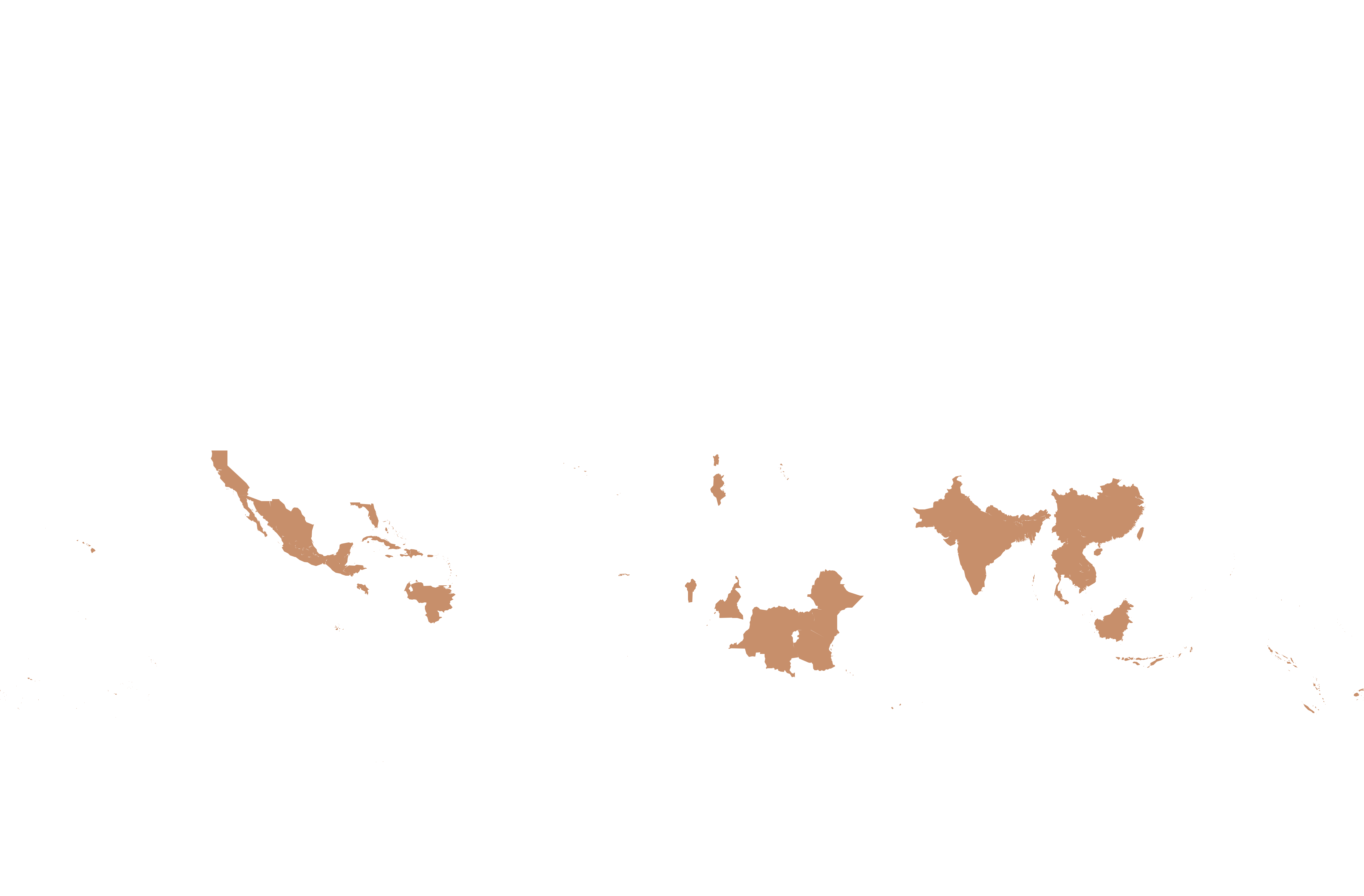
- Native
- Introduced
- East Asia
History

Hibiscus rosa-sinensis has no clear wild population and is considered an ancient cultivated hybrid, probably originating in tropical East Asia or the Pacific. It spread across Polynesia, Southeast Asia, India, and the Arab world through ancient trade networks, reaching Europe by the 17th century via Dutch and Portuguese ships. Linnaeus named it rosa-sinensis ("rose of China") in 1753 based on Chinese garden specimens.
In Hawaii it became both horticulturally central and culturally emblematic — a flower behind the right ear signals availability, the left commitment. Malaysia adopted it as the national flower (bunga raya) in 1960. Twentieth-century breeding, particularly by Hawaiian hybridizers like Alberta Weber and Ross Gast and later by Florida's Tom Winters, produced thousands of cultivars in every color except true blue.
The flowers are used in hair dye, shoe polish (hence "shoeblack plant"), and as edible garnish. In India, red hibiscus flowers are offered to the goddess Kali and Lord Ganesha. Malaysian women tuck hibiscus into their hair for special occasions. Hibiscus tea — made from the related H. sabdariffa — is consumed worldwide for its tart flavor and potential blood-pressure-lowering properties. The American Hibiscus Society registers thousands of cultivars, with collectors competing for fantasy hybrid blooms that look almost artificially colorful.
Symbolism & meaning
What It Symbolizes
Spider Hibiscus carries Beauty as a single perfect day — each enormous bloom unfurls at dawn and is gone by dusk, replaced tomorrow by another. The flower has long been a meditation on impermanence, especially in Hawaiian and South Pacific tradition. It teaches without words: loveliness need not last to matter.
- Beauty — Its large, perfect bloom lasting just one day represents the fleeting nature of beauty
Where the Name Comes From
Hibiscus from Greek 'hibiskos,' an ancient name for mallow. Rosa-sinensis means 'Chinese rose.'
Uses & Fun Facts
- Saucer-sized blooms in vivid colors symbolize the tropics
- Large flowers attract butterflies and hummingbirds
- National flower of Malaysia, worn ceremonially across Polynesia
- Reliable patio shrub in cold-climate summer pots
Related plants
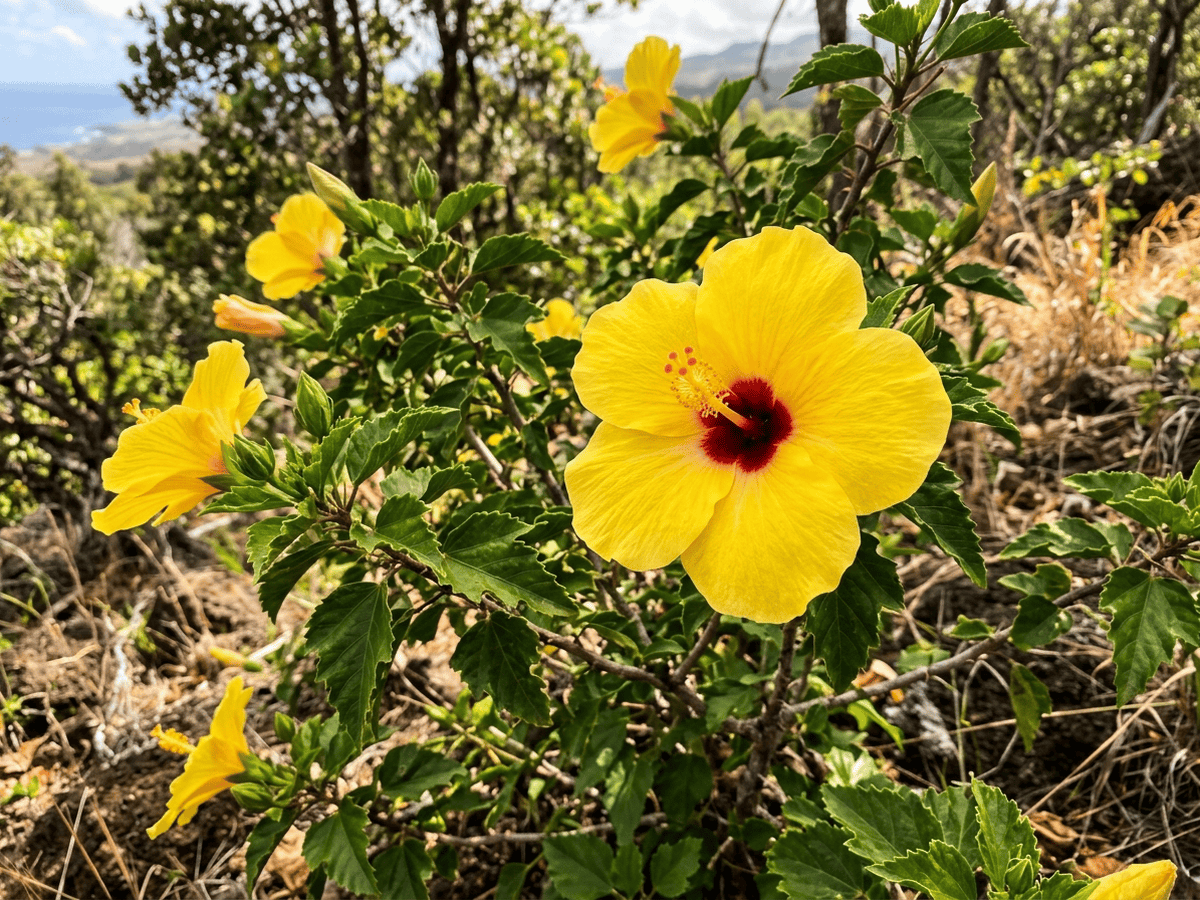
More Hibiscus plants
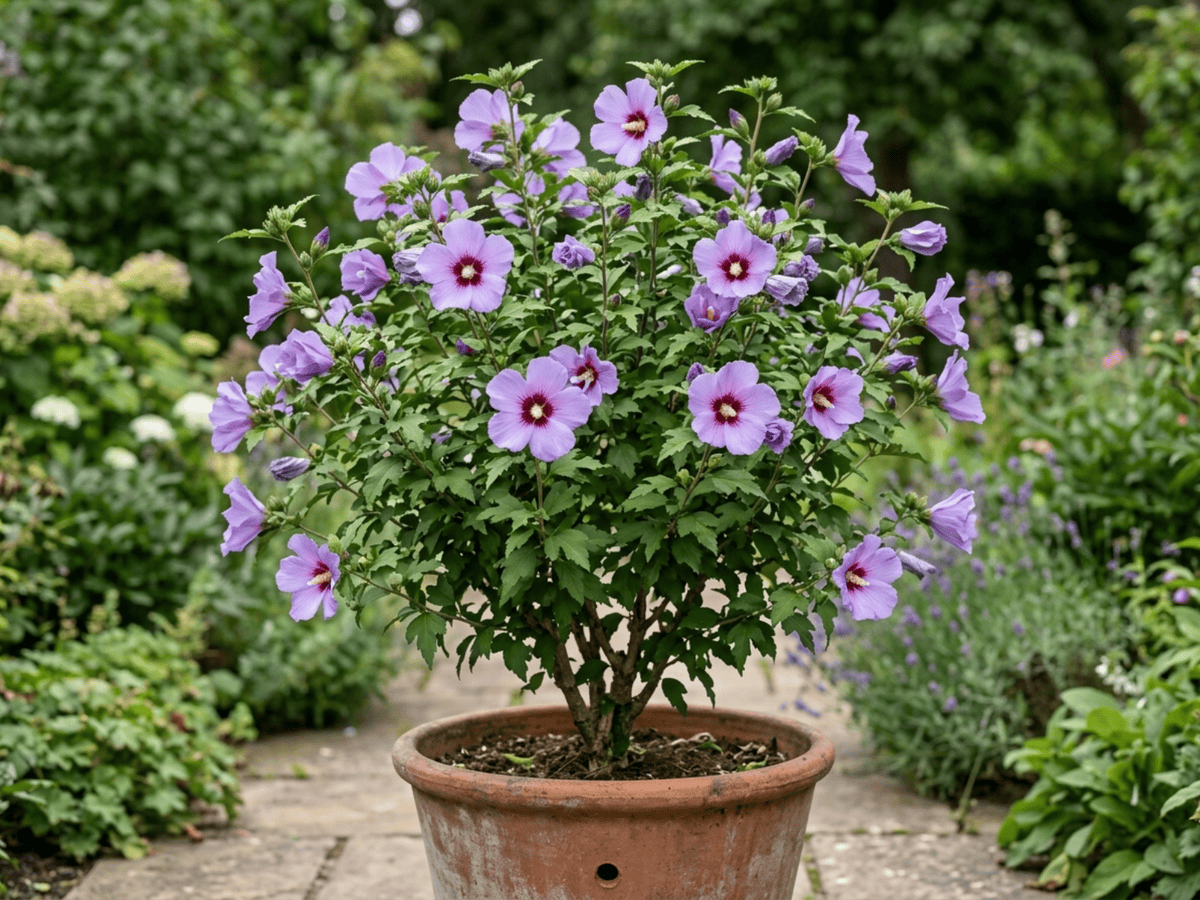
Plants with similar care
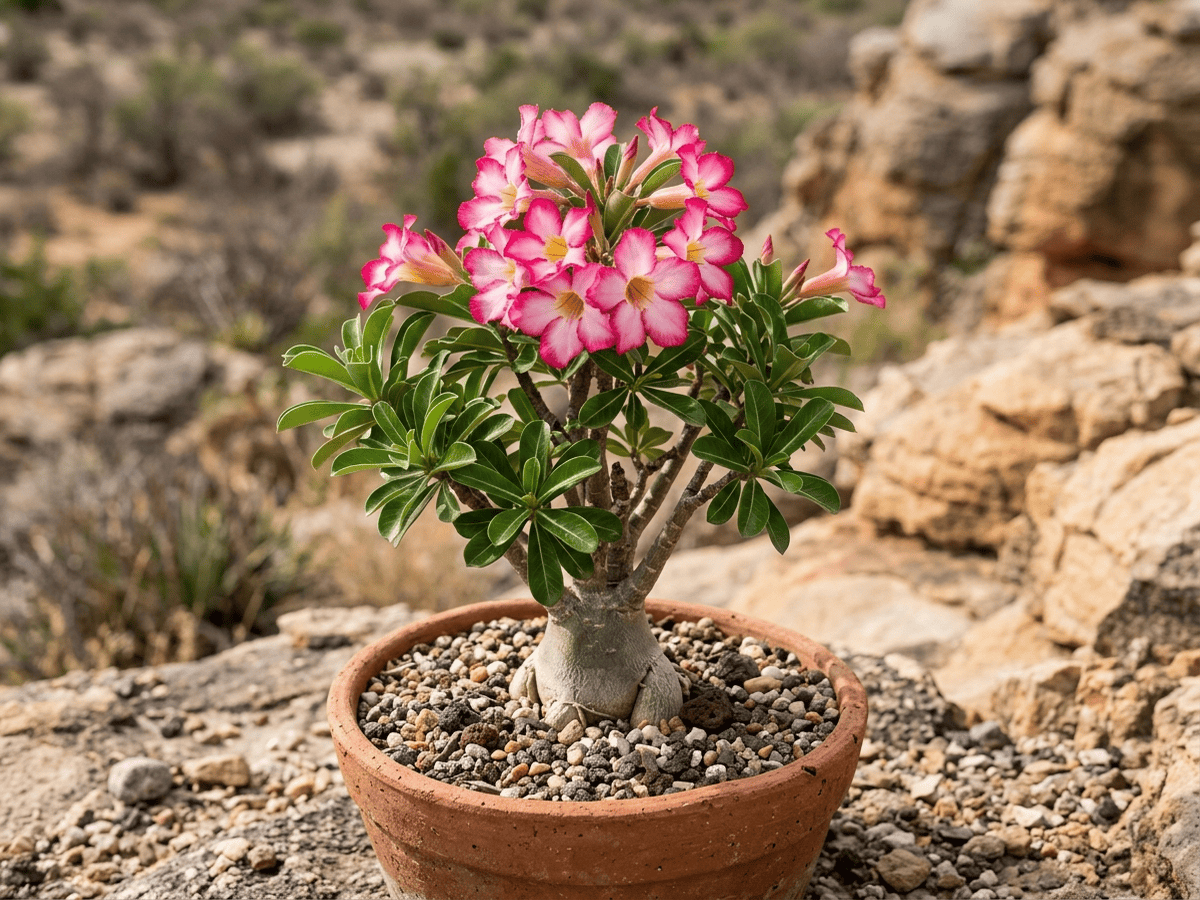 Desert RoseAdenium obesum
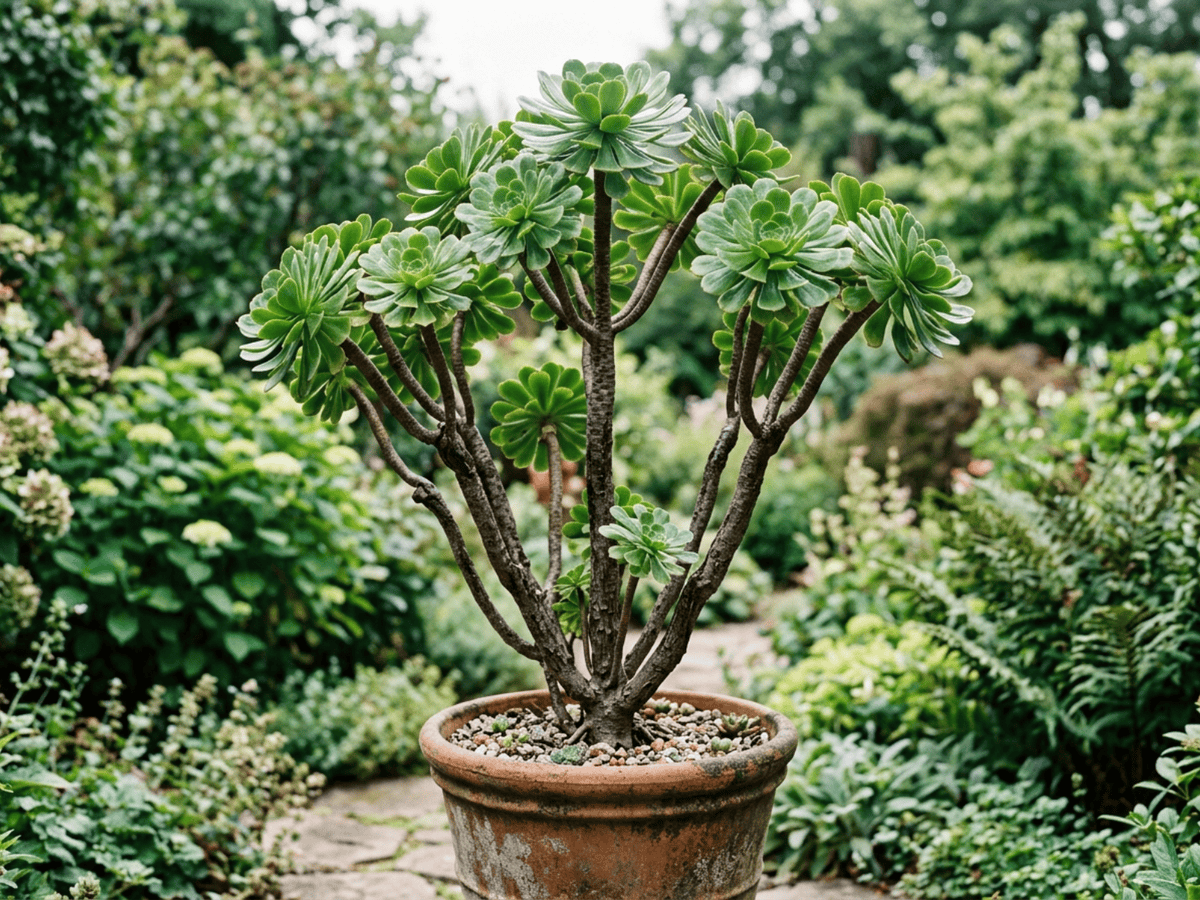 Tree AeoniumAeonium arboreum
 Queen Victoria AgaveAgave victoriae-reginae
 Lemon VerbenaAloysia citriodora
Frequently asked questions
How often should I water Spider Hibiscus?
In summer, water about every 3 days; in winter, about every 14 days. Adjust for heat, pot size and drainage.
How much light does Spider Hibiscus need?
Full sun: 6+ hrs direct. Watch the leaves — scorching or stretching means the light needs adjusting.
Is Spider Hibiscus toxic to cats or dogs?
Pets Slight (Dogs Slight · Cats Slight) Educational information, not medical or veterinary advice. If exposure is suspected, contact a doctor or veterinarian.
Is Spider Hibiscus easy to grow?
It is moderately demanding: a good choice once you have a little experience.
Can Spider Hibiscus be grown indoors?
Yes, it adapts well to indoor growing given the right light.
When does Spider Hibiscus bloom?
It typically blooms Jun–Aug in the Northern Hemisphere.
YardMate
Identify any plant in seconds
Snap a photo — YardMate names the plant, diagnoses problems, and reminds you when to water.
Download on the App Store