 YardMate


Siebold's Plantain Lily
Hosta sieboldiana
Easy · Beginner friendlyAbout Siebold's Plantain Lily
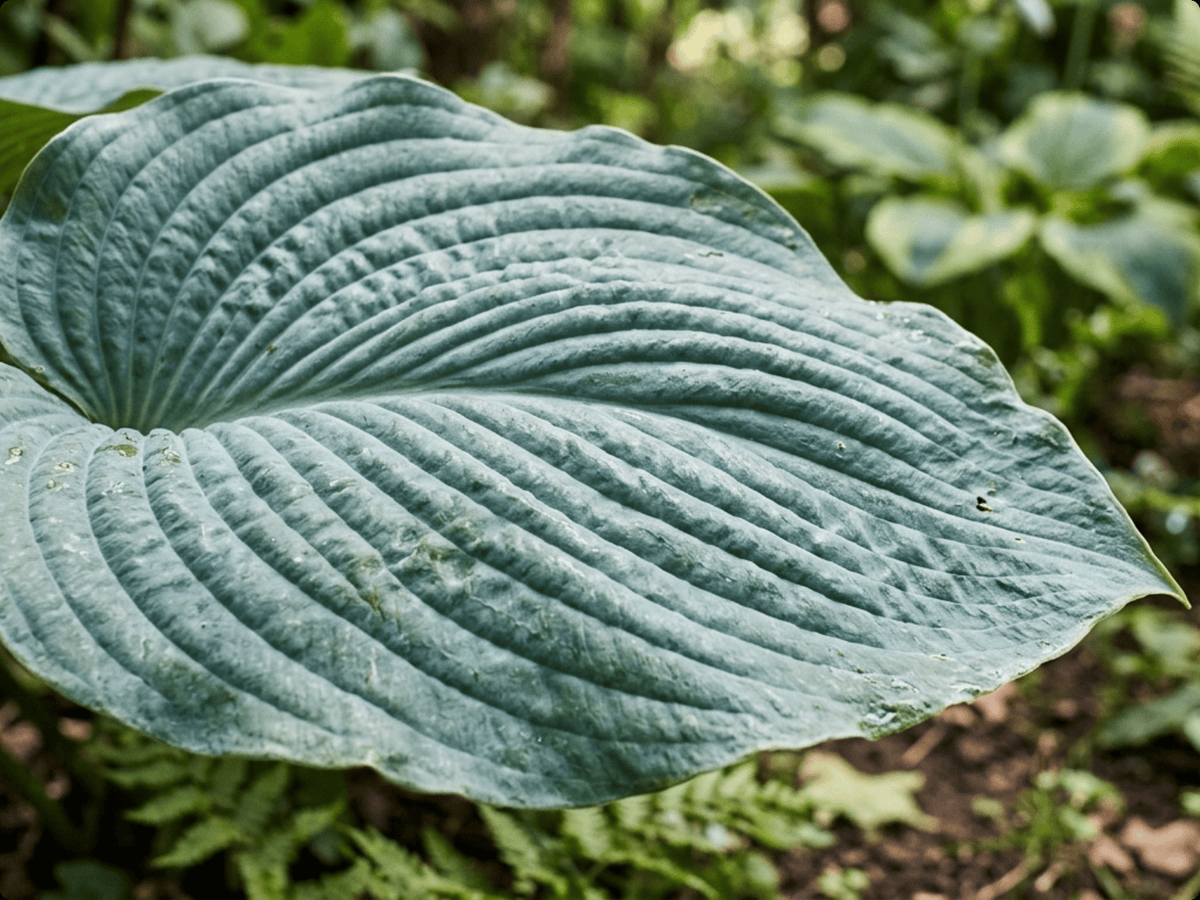
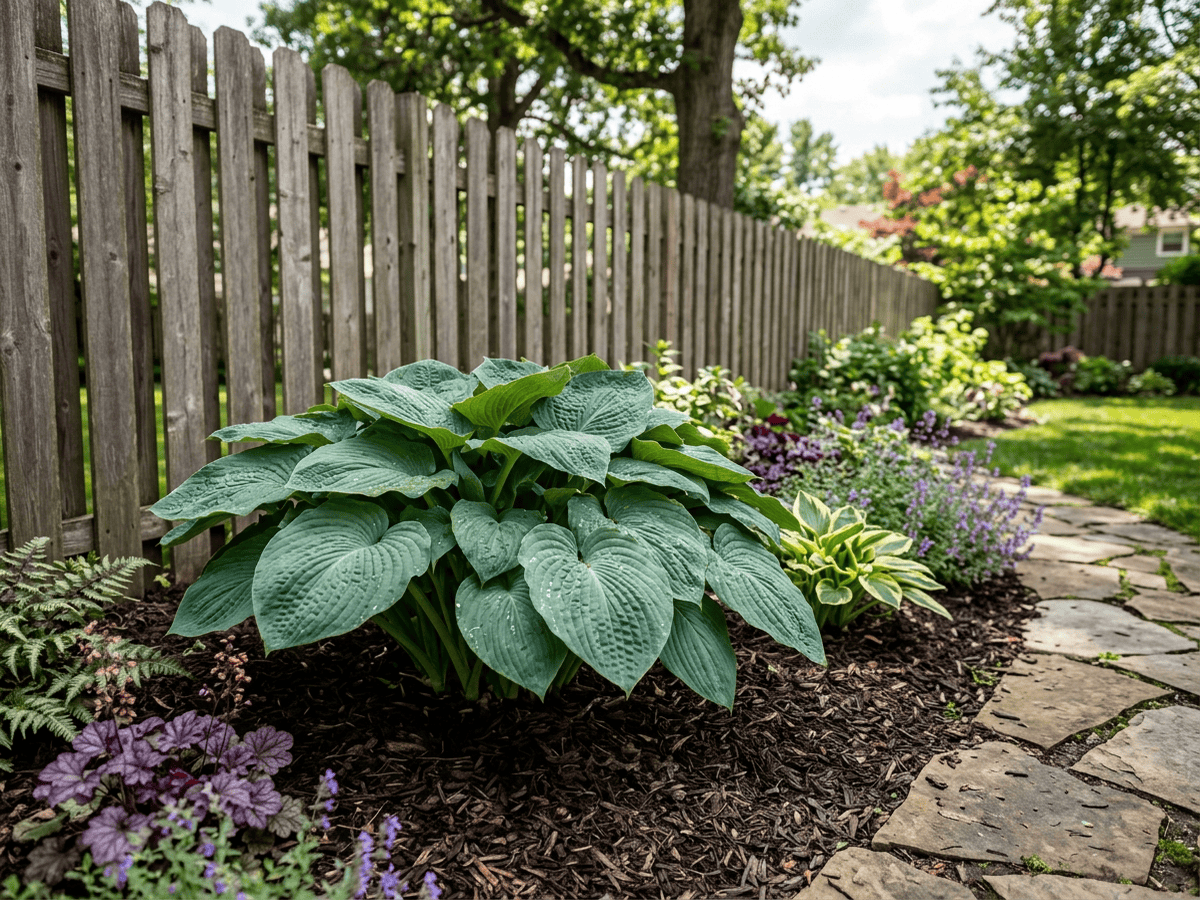
Hosta sieboldiana is a large, bold-textured shade perennial with massive, rounded, blue-green leaves up to 40 cm across covered in a waxy bloom (pruinose coating). Native to Japan, it forms impressive clumps 60–90 cm tall and over a meter wide. The thick, corrugated leaves are among the most slug-resistant in the genus. Short spikes of pale lavender flowers appear in early summer but the plant is grown primarily for its magnificent foliage. The cultivar 'Elegans' with deeply puckered blue leaves is one of the most iconic shade garden plants worldwide.
- Shade-tolerant
How to care for Siebold's Plantain Lily
Watering
- Springevery 5 days
- Summerevery 3 days
- Fallevery 7 days
- Winterevery 14 days
Soil · Well-draining
- Top dressingPine bark mulch10%
- Main mixPotting soil + perlite 2:170%
- DrainageLECA / gravel20%
Never skip the drainage layer — standing water is the top cause of root rot.
FERTILIZER
Balanced Feed 14-14-14
An even feed covers all three needs at once, keeping leaves, roots and blooms moving together with nothing pushed out of balance.
- Nitrogen · Leaves
- Phosphorus · Roots + Blooms
- Potassium · Strength
- Springevery 30 days
- Summerevery 30 days
At a Glance
- NativeEast Asia
- Height2–3 ft (0.6–0.9 m)
- Spread4–6 ft (1.2–1.8 m)
- Flower colorWhite, Purple
- Foliage colorBlue-green, Green, Variegated
- SoilLoamy, Moisture-retentive, Rich
- LocationsYard
Bloom time
BLOOM CYCLE
Peak bloom
May–Jun
Pale lavender flowers in early summer; grown for blue-green foliage; protect from afternoon sun
Fragrance
NO FRAGRANCE
Flowers not notably fragrant in this species.
Toxicity
Pets Moderate
saponins
Not reported
EXPOSURE No exposure route is reported.
EFFECT Young shoots edible and consumed in Japanese cuisine as "urui.".
NOTE No human toxicity is reported in this catalog; avoid eating ornamental plants unless confirmed edible.
Moderate
- All
- Ingestion
EXPOSURE Eating any part of the plant.
EFFECT Vomiting, diarrhea, depression (per ASPCA).
NOTE ASPCA lists Hosta as toxic to dogs, cats, and horses due to saponins.
Moderate
- All
- Ingestion
EXPOSURE Eating any part of the plant.
EFFECT Vomiting, diarrhea, depression.
NOTE ASPCA lists Hosta as toxic to dogs, cats, and horses due to saponins.
Educational information, not medical or veterinary advice. If exposure is suspected, contact a doctor or veterinarian.
DISTRIBUTION


- Native
- Introduced
- East Asia
History
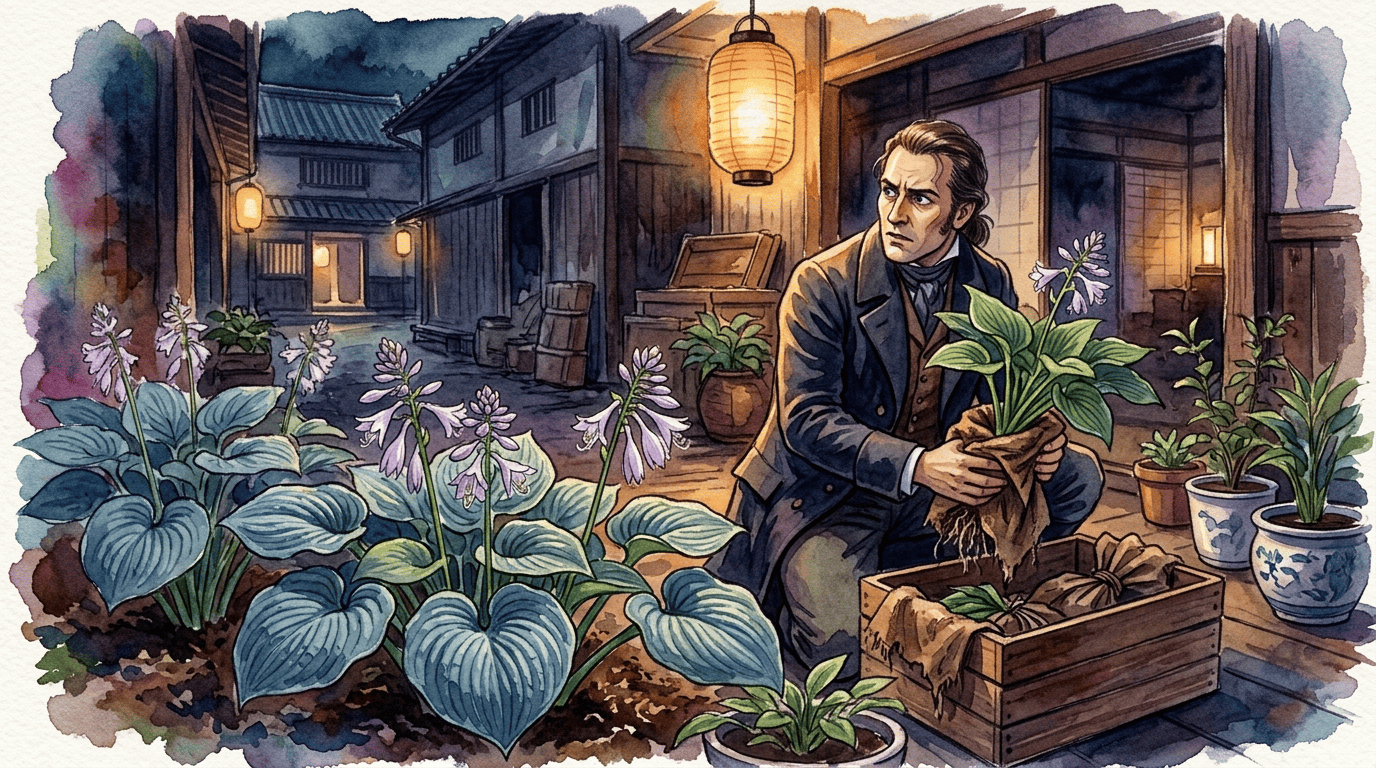
Hosta sieboldiana is native to the damp, shaded slopes of central Honshu, Japan, where it had been cultivated in Japanese gardens for centuries under the name "oba giboushi." Philipp Franz von Siebold, the German physician to the Dutch trading post at Dejima, collected it during his 1823-1829 residence and smuggled living material out of Japan in defiance of Edo-period export bans. He established it at his Leiden nursery in the Netherlands, from which it spread through European and American horticulture.
The blue-leaved form "Elegans," selected by Ernst Pagels' mentor Karl Foerster in Germany, became the definitive architectural hosta. Paul Aden, Eric Smith, Mildred Seaver, and Bob Solberg then drove a late 20th-century American breeding explosion that produced thousands of modern cultivars. Hostas are named after Austrian botanist Nicholas Thomas Host, but the plant is thoroughly Japanese in culture.
Philipp Franz von Siebold brought the first hostas to Europe from Japan in the 1830s — this species honors him. In Japan, wild hosta shoots ('urui') are a prized spring vegetable, served as tempura or pickled. The American Hosta Society has registered over 6,000 cultivars, making Hosta one of the most hybridized perennials. A specimen of 'Sagae' was the first hosta to win the Royal Horticultural Society's Award of Garden Merit. Hostas are the number one selling perennial in the shade plant market.
Symbolism & meaning
What It Symbolizes
Siebold's Plantain Lily is devotion in shade — returning each spring larger, ribbed-bluer, more imposing than the year before, the kind of perennial that grows into family. A single clump may outlive the gardener who planted it, deepening into legend in the same shaded corner. It is faithful love expressed slowly, in larger and larger leaves, season after patient season.
- Devotion — Returning larger and more beautiful each year, it represents growing, faithful love
Where the Name Comes From
The name Siebold's Plantain Lily describes its lily-like flowers. Hosta honors Nicholas Thomas Host (1761–1834), Austrian botanist. Sieboldiana honors Philipp Franz von Siebold, who introduced it to Europe.
Uses & Fun Facts
- Massive blue-green clumps anchor shaded woodland focal points
- Slug-resistant heavy-textured leaves star in large shade pots
Related plants
More Hosta plants
 Fortune's HostaHosta fortunei
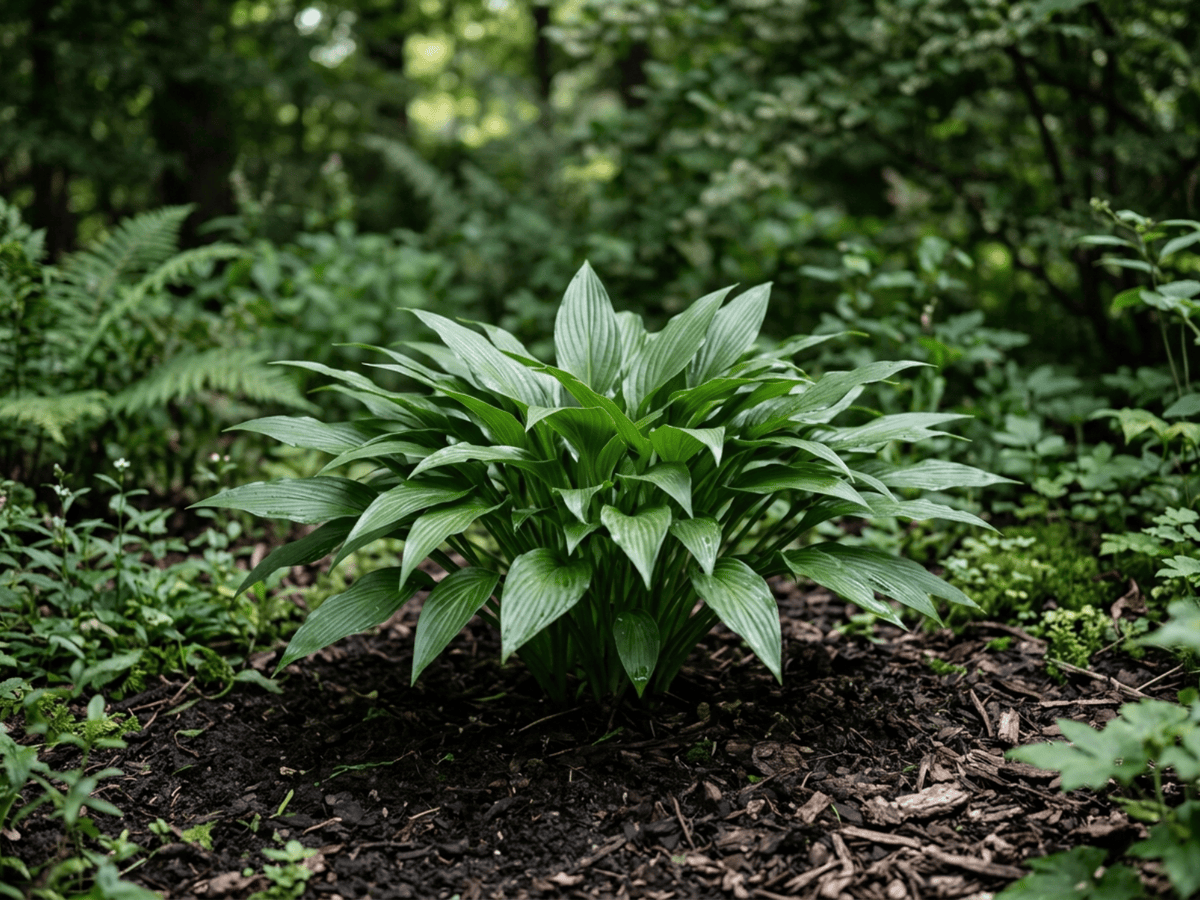 Narrow-Leaved Plantain-LilyHosta lancifolia
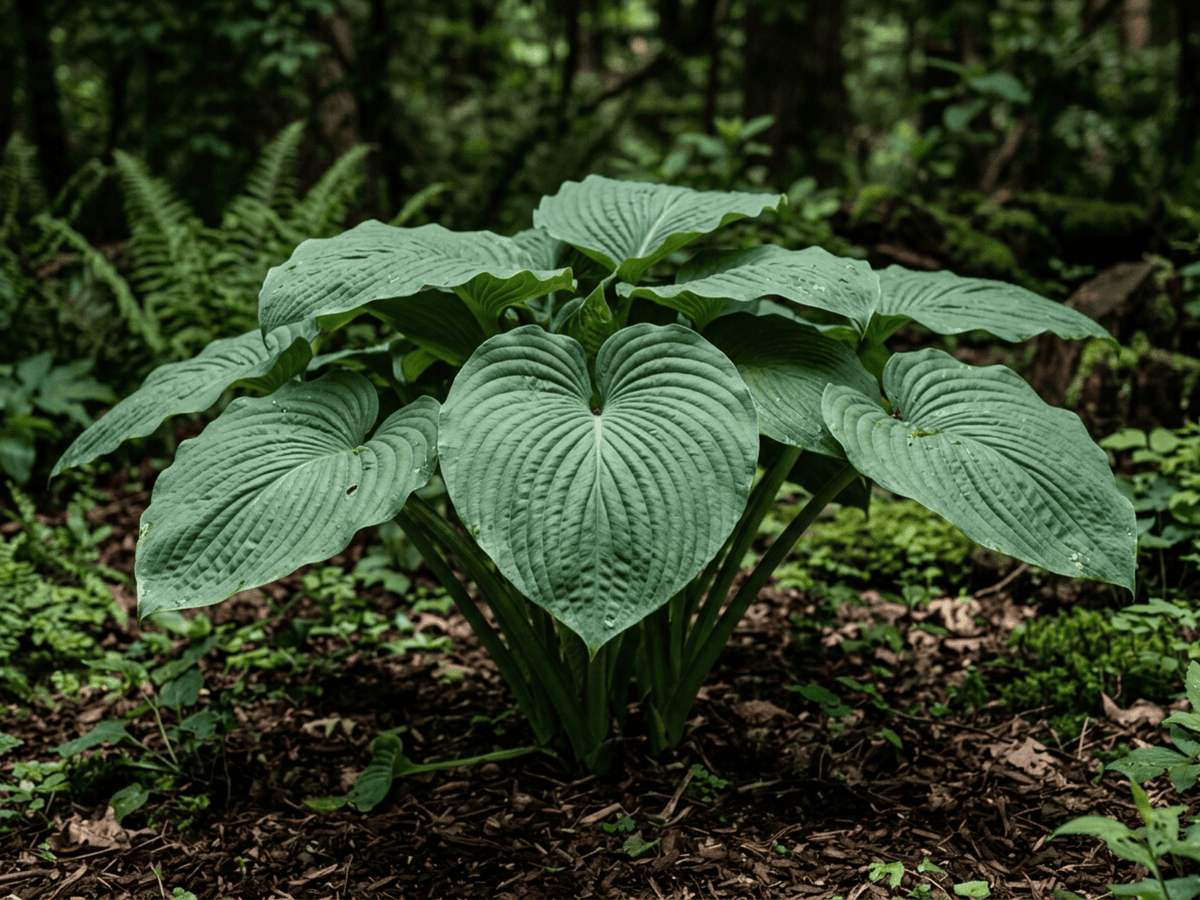 Mountain HostaHosta montana
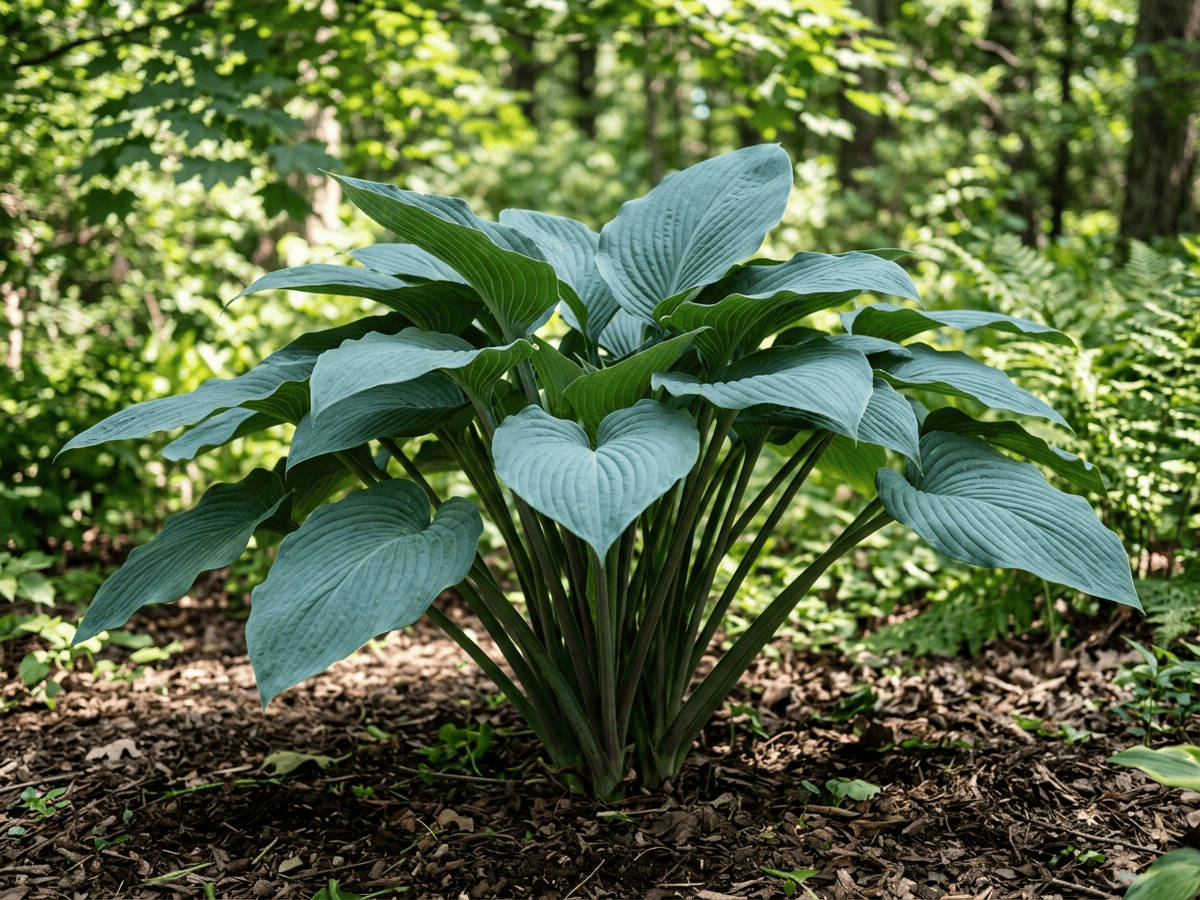 HostaHosta nigrescens
Plants with similar care
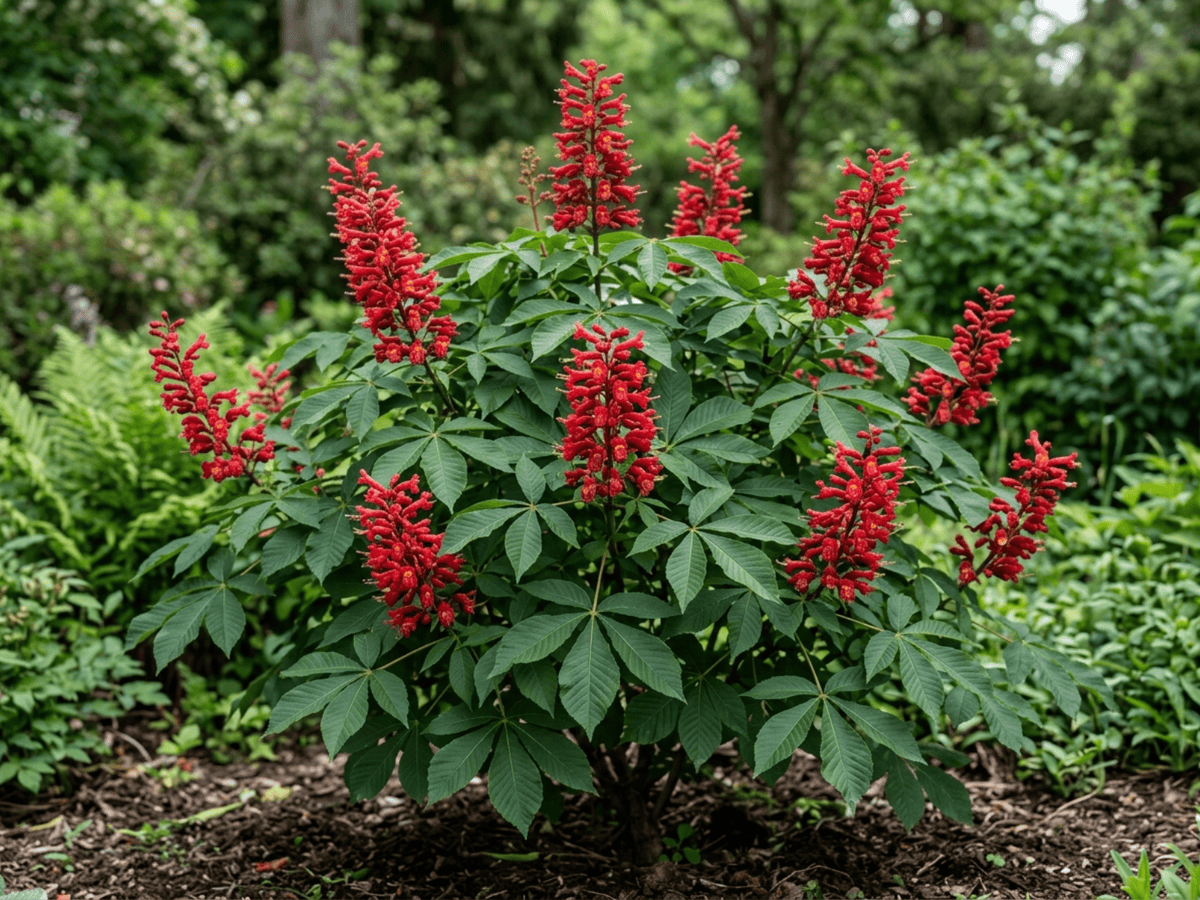 Red BuckeyeAesculus pavia
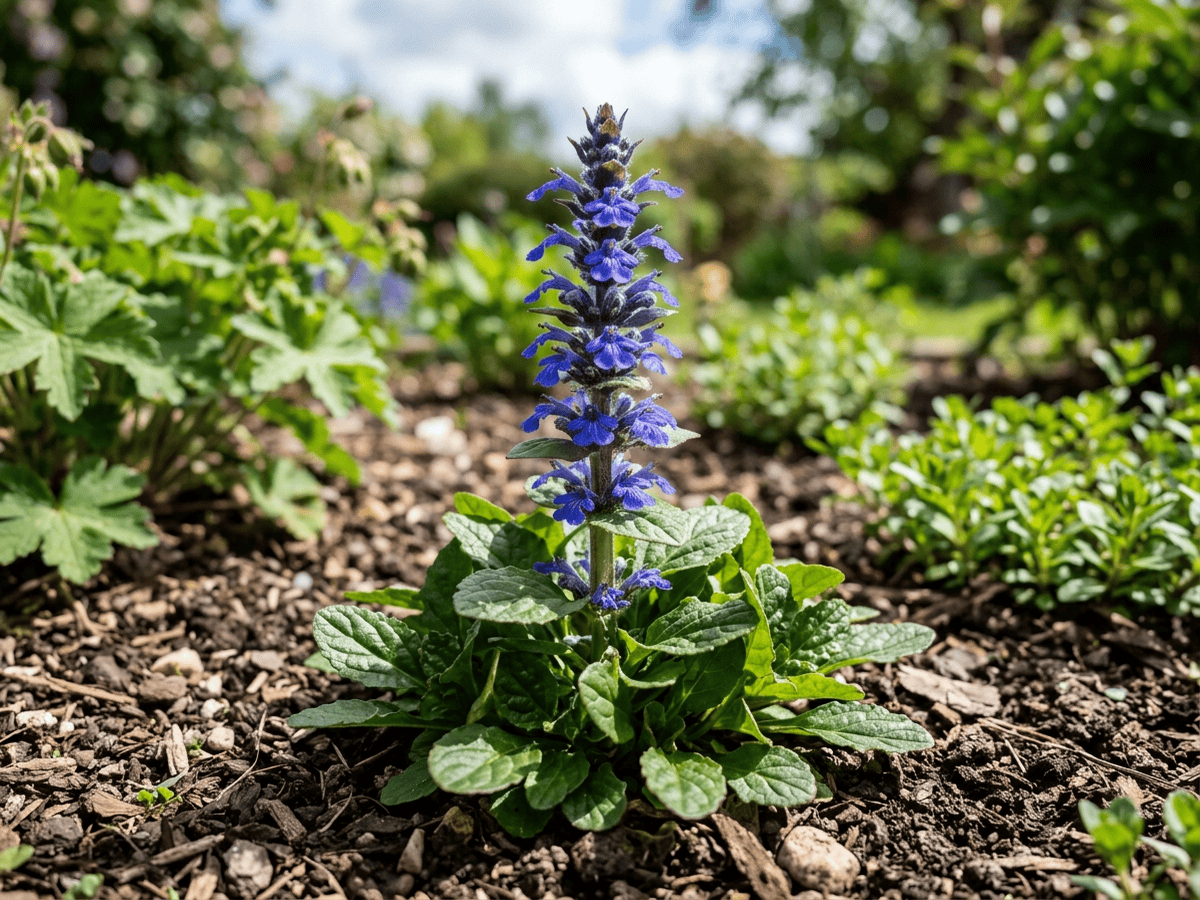 Blue BugleAjuga genevensis
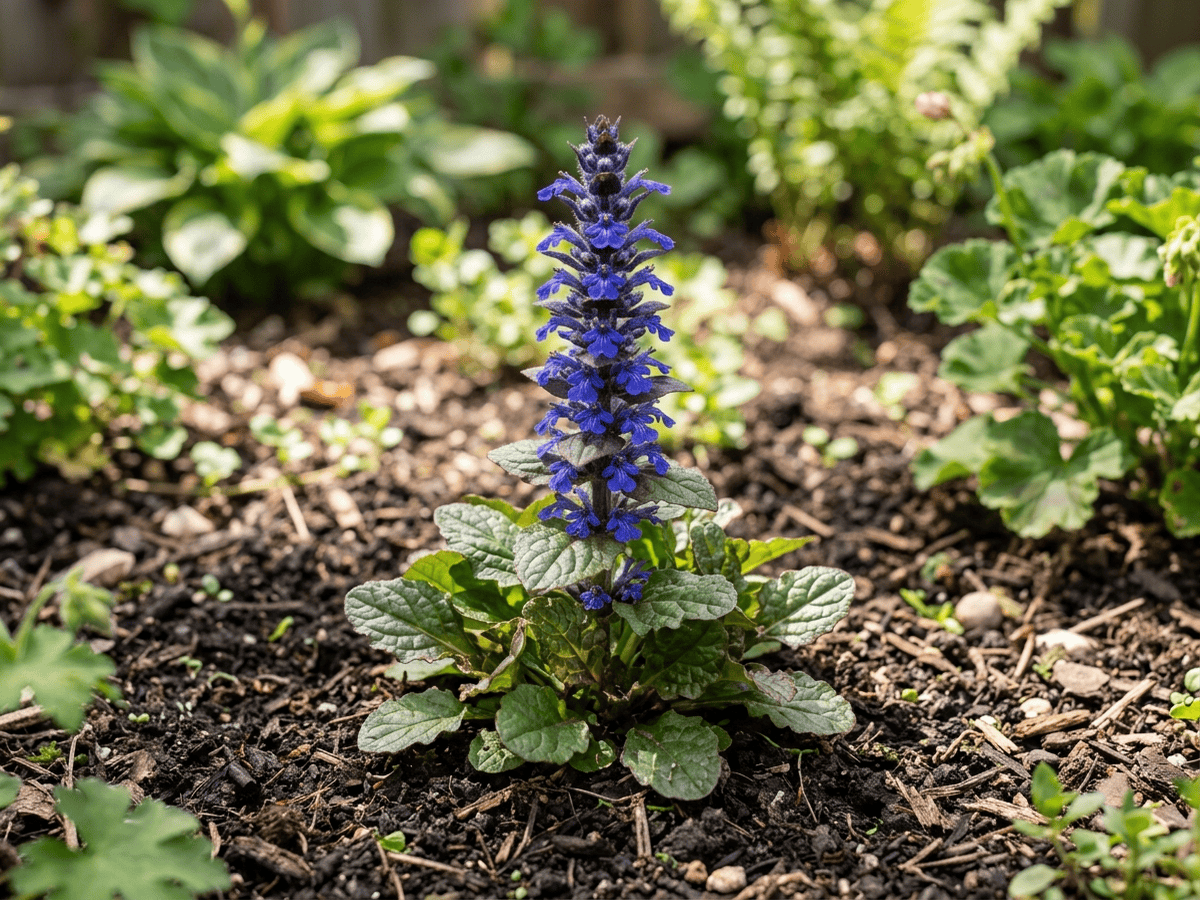 Pyramidal BugleAjuga pyramidalis
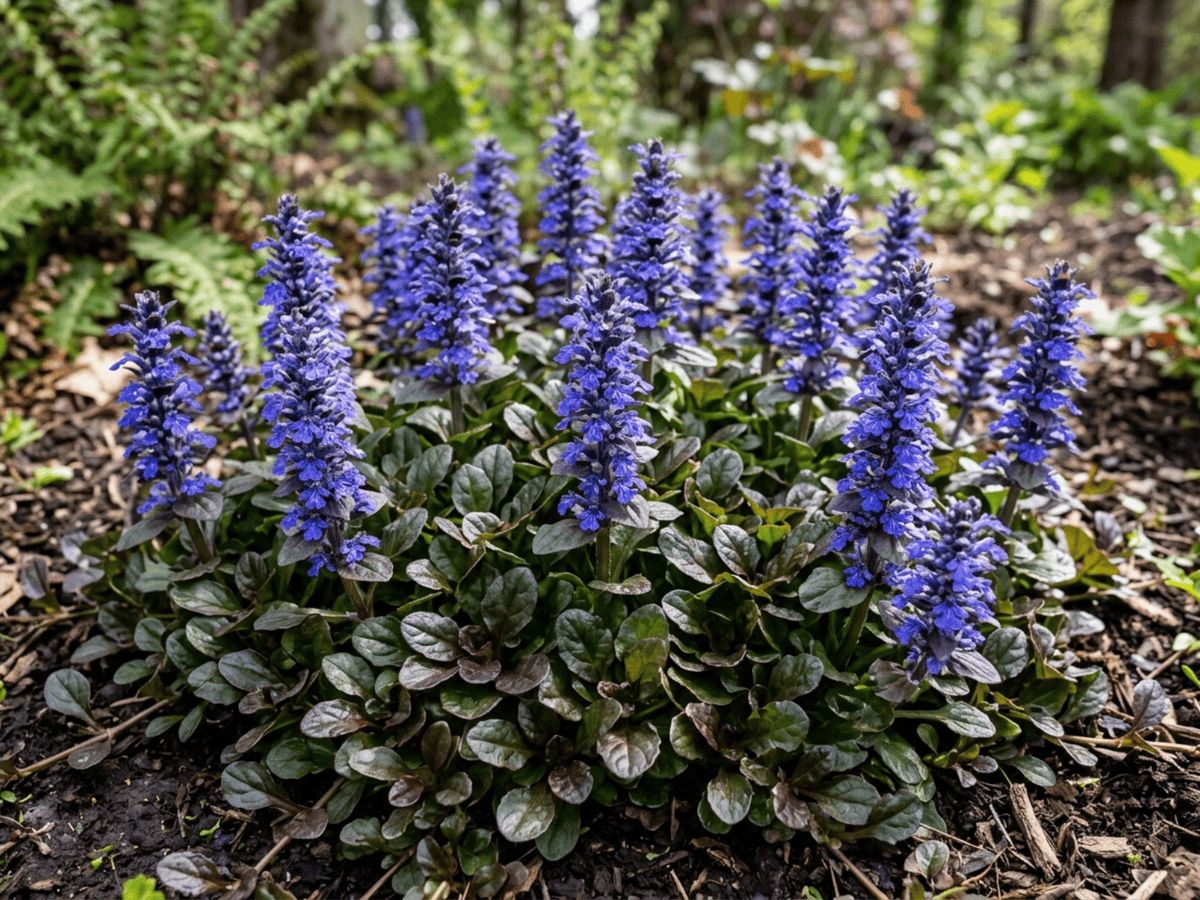 Carpet BugleAjuga reptans
Frequently asked questions
How often should I water Siebold's Plantain Lily?
In summer, water about every 3 days; in winter, about every 14 days. Adjust for heat, pot size and drainage.
How much light does Siebold's Plantain Lily need?
Part shade: 2–4 hrs direct. Watch the leaves — scorching or stretching means the light needs adjusting.
Is Siebold's Plantain Lily toxic to cats or dogs?
Pets Moderate (Dogs Moderate · Cats Moderate) Educational information, not medical or veterinary advice. If exposure is suspected, contact a doctor or veterinarian.
Is Siebold's Plantain Lily easy to grow?
Yes — it is considered an easy, beginner-friendly plant.
When does Siebold's Plantain Lily bloom?
It typically blooms May–Jun in the Northern Hemisphere.
YardMate
Identify any plant in seconds
Snap a photo — YardMate names the plant, diagnoses problems, and reminds you when to water.
Download on the App Store