 YardMate


Panda Plant
Kalanchoe tomentosa
Easy · Beginner friendlyAbout Panda Plant
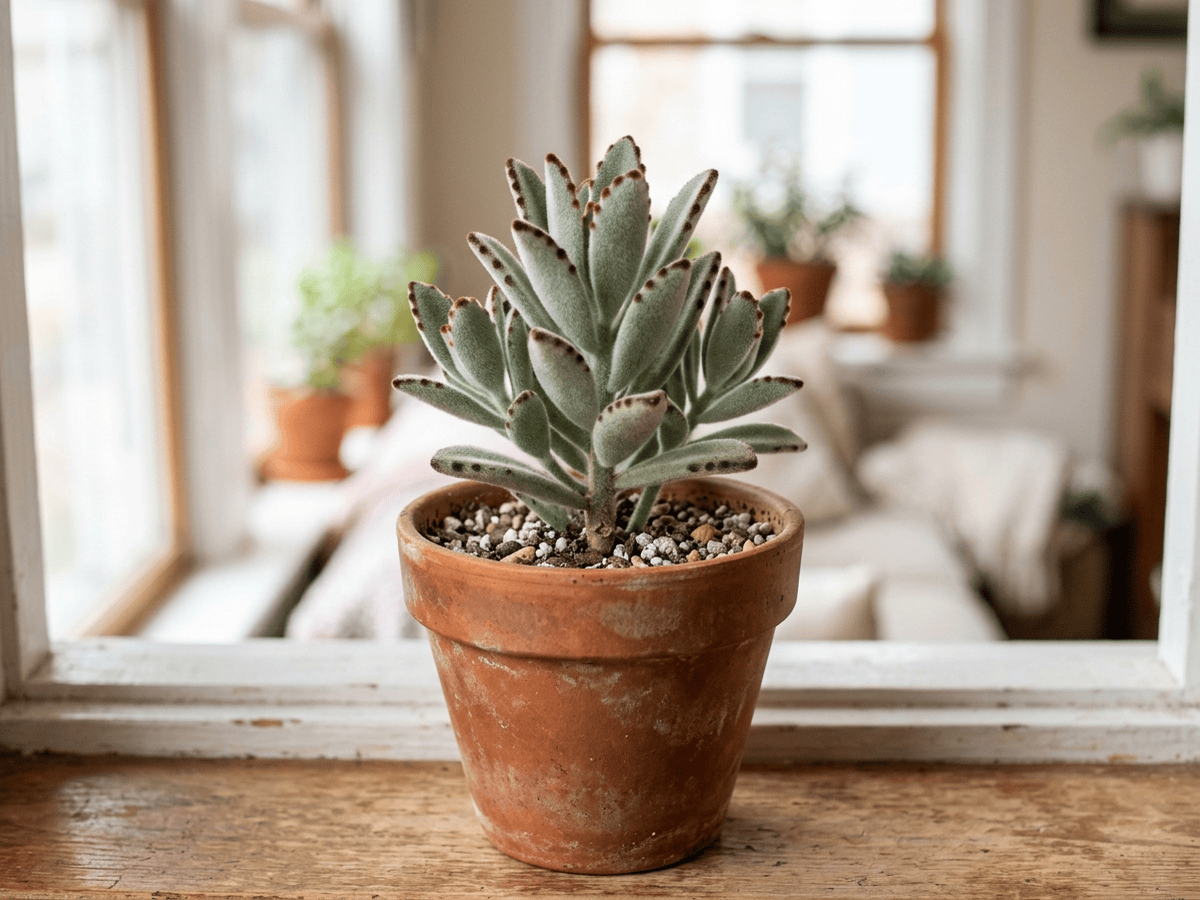
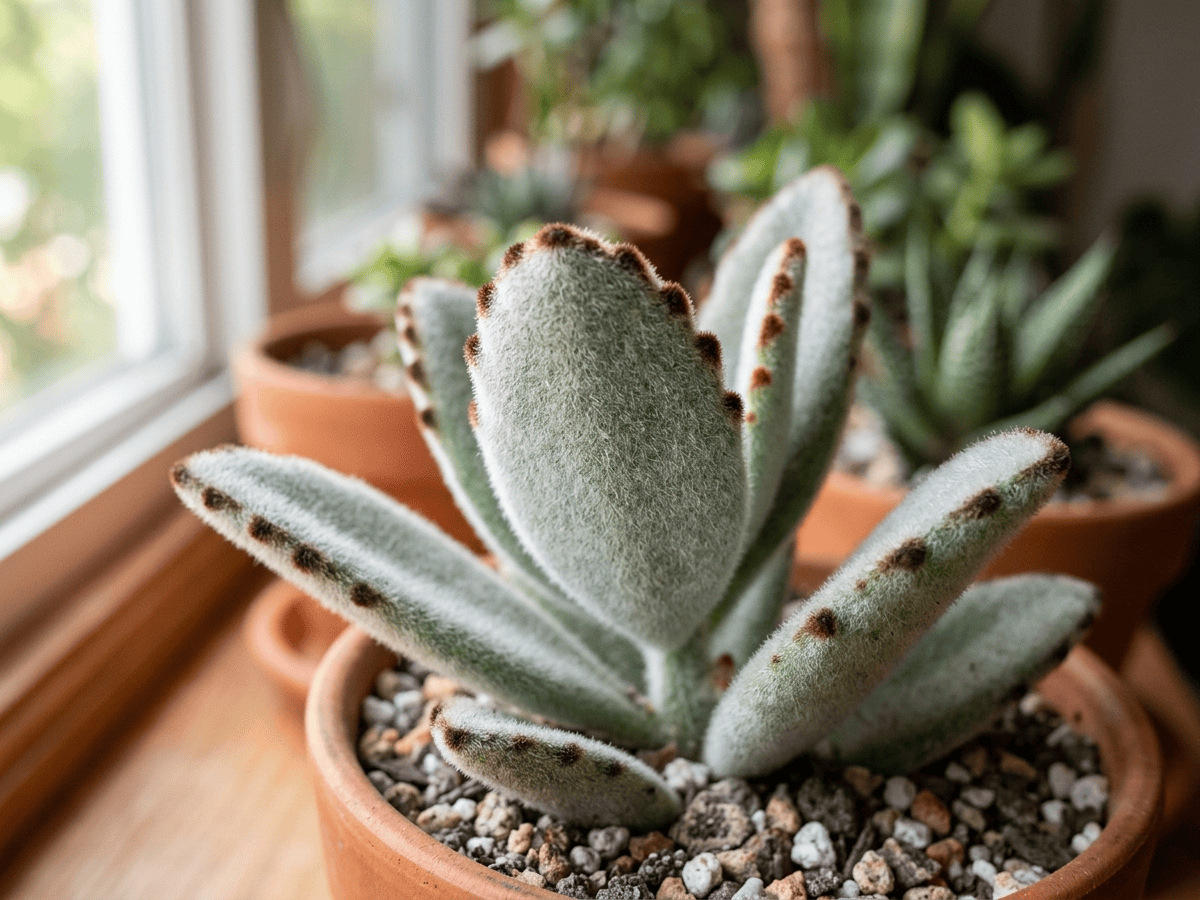
Panda Plant is a popular Madagascan succulent reaching 12-18 inches tall, with thick fleshy oval leaves coated in soft silver-white fuzz and tipped with chocolate-brown markings along the edges. Its plush teddy-bear texture makes it among the most beloved windowsill succulents in the world. Slow-growing and easy to care for, it tolerates neglect and is widely sold across American garden centers and houseplant retailers.
- Drought-tolerant
- Container-friendly
- Evergreen
How to care for Panda Plant
Watering
- Springevery 14 days
- Summerevery 14 days
- Fallevery 21 days
- Winterevery 30 days
Soil · Fast-draining
- Main mixSand + pumice + soil 1:1:150%
- DrainagePumice / gravel50%
Keep grit at half the mix or more — this soil is meant to dry out fast.
FERTILIZER
- Springevery 60 days
At a Glance
- NativeAfrica
- Height1–1.5 ft (0.3–0.5 m)
- Spread1–1.5 ft (0.3–0.5 m)
- Flower colorGreen
- Foliage colorSilver, Bronze
- SoilSandy, Well-drained
- LocationsIndoor · Balcony
Bloom time
BLOOM CYCLE
Peak bloom
Jun–Aug
Small fuzzy greenish flowers (rare indoors)
Toxicity
Humans Moderate · Pets Toxic
bufadienolides
Moderate
- Leaf
- Ingestion
EXPOSURE Eating leaves.
EFFECT Gastrointestinal upset.
NOTE Documented concern for humans: Gastrointestinal upset.
Toxic
- Leaf
- Stem
- Ingestion
EXPOSURE Eating leaves and stems.
EFFECT Vomiting, diarrhea, arrhythmia, and weakness.
NOTE ASPCA lists Kalanchoe as toxic due to cardiac bufadienolides.
Toxic
- Leaf
- Stem
- Ingestion
EXPOSURE Eating leaves and stems.
EFFECT Vomiting, diarrhea, arrhythmia, and weakness.
NOTE ASPCA lists Kalanchoe as toxic due to cardiac bufadienolides.
Educational information, not medical or veterinary advice. If exposure is suspected, contact a doctor or veterinarian.
DISTRIBUTION


- Native
- Africa
History

Kalanchoe tomentosa, commonly called panda plant, pussy ears, or chocolate soldier, is a shrubby succulent in the stonecrop family (Crassulaceae) endemic to central-southern Madagascar, growing on granite outcrops at 1000-2000 meters elevation. British botanist John Gilbert Baker described the species in 1882 based on specimens collected by French naturalist Alfred Grandidier. The epithet tomentosa refers to the dense felt of soft short silvery-white hairs covering every surface.
Plants grow as 30-45 cm tall (occasionally taller) upright shrublets with thick stems bearing whorled rosettes of thick, oblong to spoon-shaped fleshy leaves 3-7 cm long. The apex of each leaf is marked with distinctive chocolate-brown to rust-red spots and crenate-toothed margins, giving a panda-bear coloration. Tubular greenish-yellow flowers appear on terminal cymes but are rarely seen in cultivation.
Native to Madagascar, introduced to Western cultivation in the early 20th century. Its plush appearance made it a fixture of 1970s American houseplant collections and it has remained a top-selling indoor succulent ever since. Since its introduction to horticulture in the early 20th century the species has been one of the most popular 'fuzzy' or 'furry' succulents worldwide, particularly common as a houseplant.
Symbolism & meaning
What It Symbolizes
The Panda Plant evokes affection, its soft fuzzy silver leaves all but inviting a gentle touch. Paired with comfort, the plush texture brings a domestic warmth to indoor spaces — a succulent that feels almost like a small animal. It is a houseplant whose meaning is largely tactile: the simple, daily gesture of reaching out to feel something kind.
- Affection — soft fuzzy leaves invite touch
- Comfort — plush texture brings warmth to indoor spaces
Where the Name Comes From
'Tomentosa' from Latin meaning densely woolly or hairy.
Uses & Fun Facts
- Velvety silver panda-plant leaves prized for windowsill pots
- Fuzzy silver leaves rimmed chocolate-brown for tactile succulent gardens
Related plants
More Kalanchoe plants

Plants with similar care
 Giant TaroAlocasia macrorrhizos
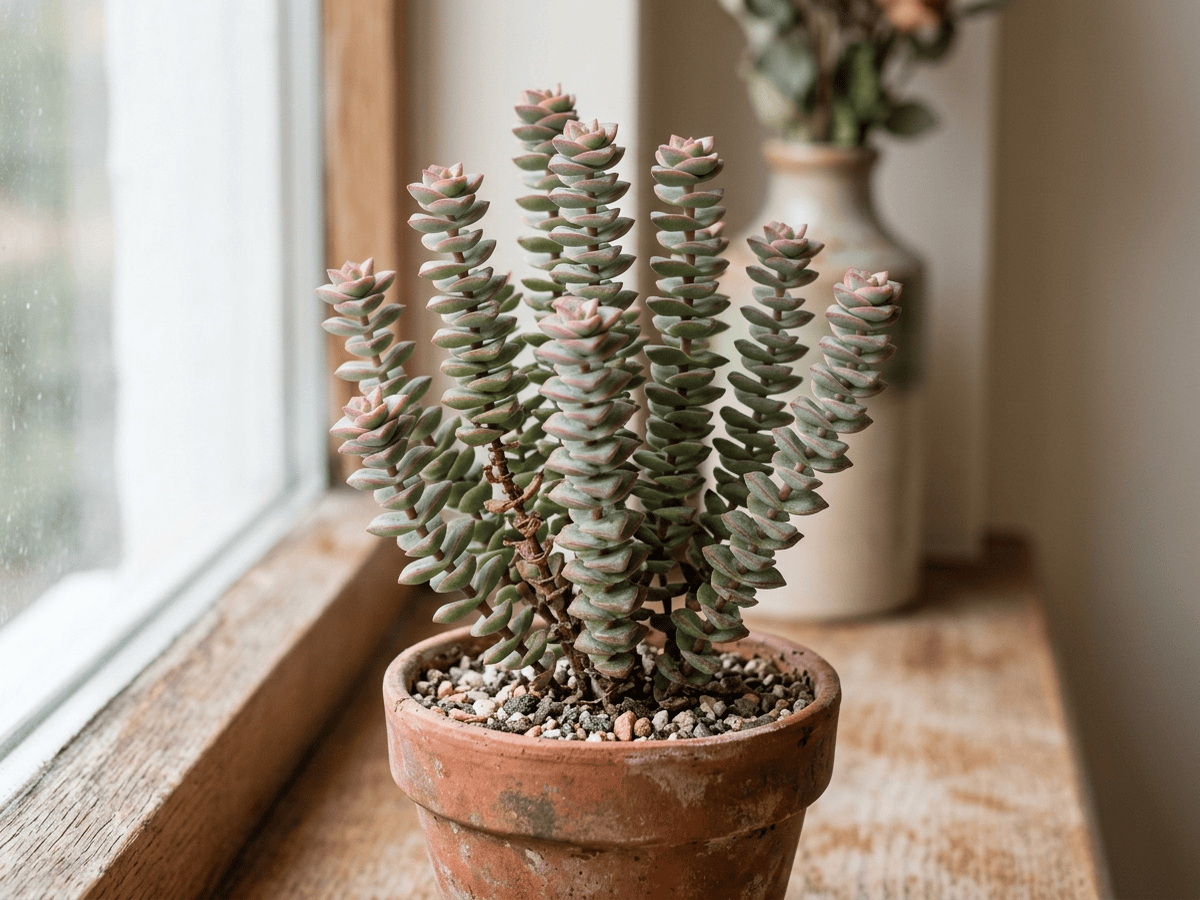 Concertina PlantCrassula perforata
 Song Of IndiaDracaena reflexa
 Snake PlantDracaena trifasciata
Frequently asked questions
How often should I water Panda Plant?
In summer, water about every 14 days; in winter, about every 30 days. Adjust for heat, pot size and drainage.
How much light does Panda Plant need?
Indirect: Filtered light. Watch the leaves — scorching or stretching means the light needs adjusting.
Is Panda Plant toxic to cats or dogs?
Pets Toxic (Dogs Toxic · Cats Toxic) Educational information, not medical or veterinary advice. If exposure is suspected, contact a doctor or veterinarian.
Is Panda Plant easy to grow?
Yes — it is considered an easy, beginner-friendly plant.
Can Panda Plant be grown indoors?
Yes, it adapts well to indoor growing given the right light.
When does Panda Plant bloom?
It typically blooms Jun–Aug in the Northern Hemisphere.
YardMate
Identify any plant in seconds
Snap a photo — YardMate names the plant, diagnoses problems, and reminds you when to water.
Download on the App Store