 YardMate


Velvet-Leaf
Kalanchoe beharensis
Medium · Some experienceAbout Velvet-Leaf
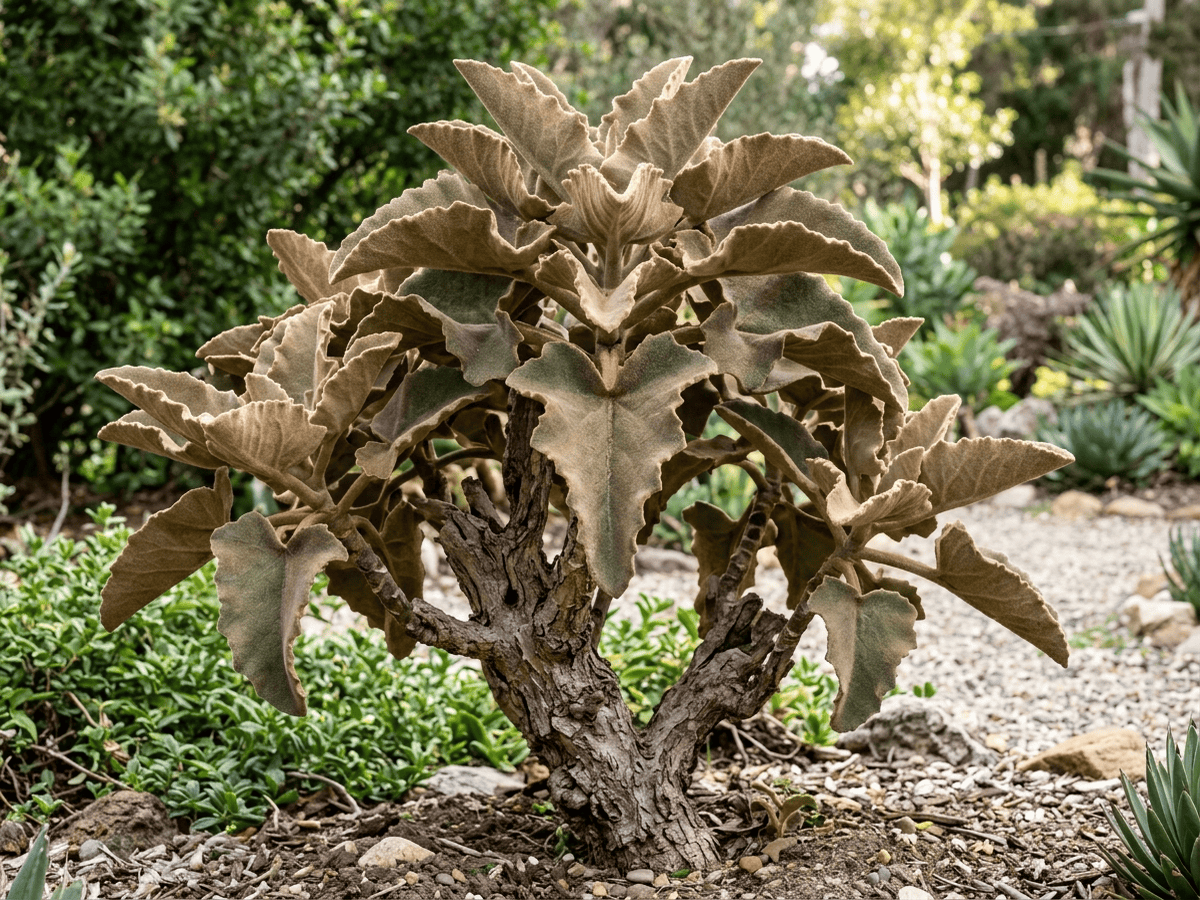
Felt Plant or Velvet Leaf is a remarkable Madagascan succulent reaching 6-12 feet with massive triangular leaves covered in a thick coating of silvery brown felt-like hairs. The leaves grow up to a foot across and feel like soft suede. Older specimens develop a thick gnarled trunk, creating a sculptural tree-like form. A favorite of collectors and Mediterranean-climate gardens for its primeval almost prehistoric appearance.
- Drought-tolerant
- Architectural
- Evergreen
How to care for Velvet-Leaf
Watering
- Springevery 14 days
- Summerevery 21 days
- Fallevery 30 days
- Winterevery 45 days
Soil · Fast-draining
- Main mixSand + pumice + soil 1:1:150%
- DrainagePumice / gravel50%
Keep grit at half the mix or more — this soil is meant to dry out fast.
FERTILIZER
- Springevery 60 days
At a Glance
- NativeAfrica
- Height6–12 ft (1.8–3.7 m)
- Spread4–6 ft (1.2–1.8 m)
- Flower colorGreen, Yellow
- Foliage colorSilver, Bronze
- SoilSandy, Well-drained
- LocationsYard · Balcony
Bloom time
BLOOM CYCLE
Small urn-shaped greenish-yellow flowers (rare in cultivation)
Toxicity
Humans Moderate · Pets Toxic
bufadienolides
Moderate
- Leaf
- Ingestion
EXPOSURE Eating leaves.
EFFECT Gastrointestinal upset.
NOTE Documented concern for humans: Gastrointestinal upset.
Toxic
- Leaf
- Stem
- Ingestion
EXPOSURE Eating leaves and stems.
EFFECT Vomiting, diarrhea, arrhythmia, and weakness.
NOTE ASPCA lists Kalanchoe as toxic due to cardiac glycoside bufadienolides.
Toxic
- Leaf
- Stem
- Ingestion
EXPOSURE Eating leaves and stems.
EFFECT Vomiting, diarrhea, arrhythmia, and weakness.
NOTE ASPCA lists Kalanchoe as toxic due to cardiac glycoside bufadienolides.
Educational information, not medical or veterinary advice. If exposure is suspected, contact a doctor or veterinarian.
DISTRIBUTION

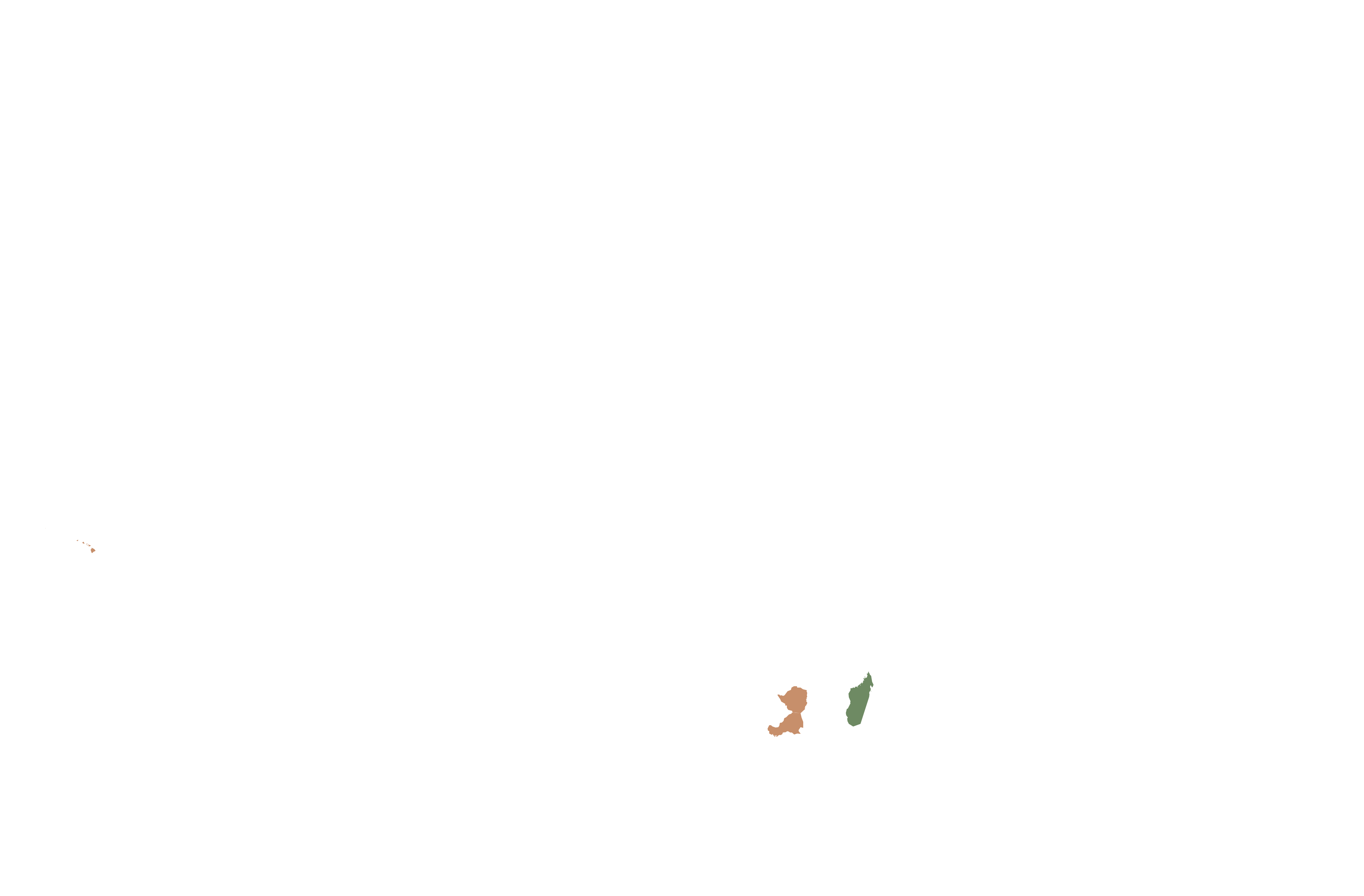
- Native
- Introduced
- Africa
History
Kalanchoe beharensis, commonly called felt bush, velvet leaf, or elephant's ear kalanchoe, is a tree-like succulent in the stonecrop family (Crassulaceae) endemic to the arid spiny thicket of southwestern Madagascar, particularly the Behara region near Ambovombe from which the species epithet derives. French botanist Emmanuel Drake del Castillo described the species in 1903. Plants grow into striking upright sparsely-branched small trees or shrubs 1.5-3 (rarely to 6) meters tall with thick knobby gray bark and leaves clustered at the branch tips.
The leaves are enormous for a Kalanchoe—up to 35 cm long, triangular to arrowhead-shaped with wavy crinkled margins and densely covered on both surfaces by a thick felt of stellate trichomes giving them a tactile velvet texture in colors ranging from silvery-white to olive-bronze depending on cultivar (e.g., 'Fang', 'Silver Spoon'). Tiny urn-shaped yellow-green flowers appear on branched panicles in winter but are insignificant compared to the foliage.
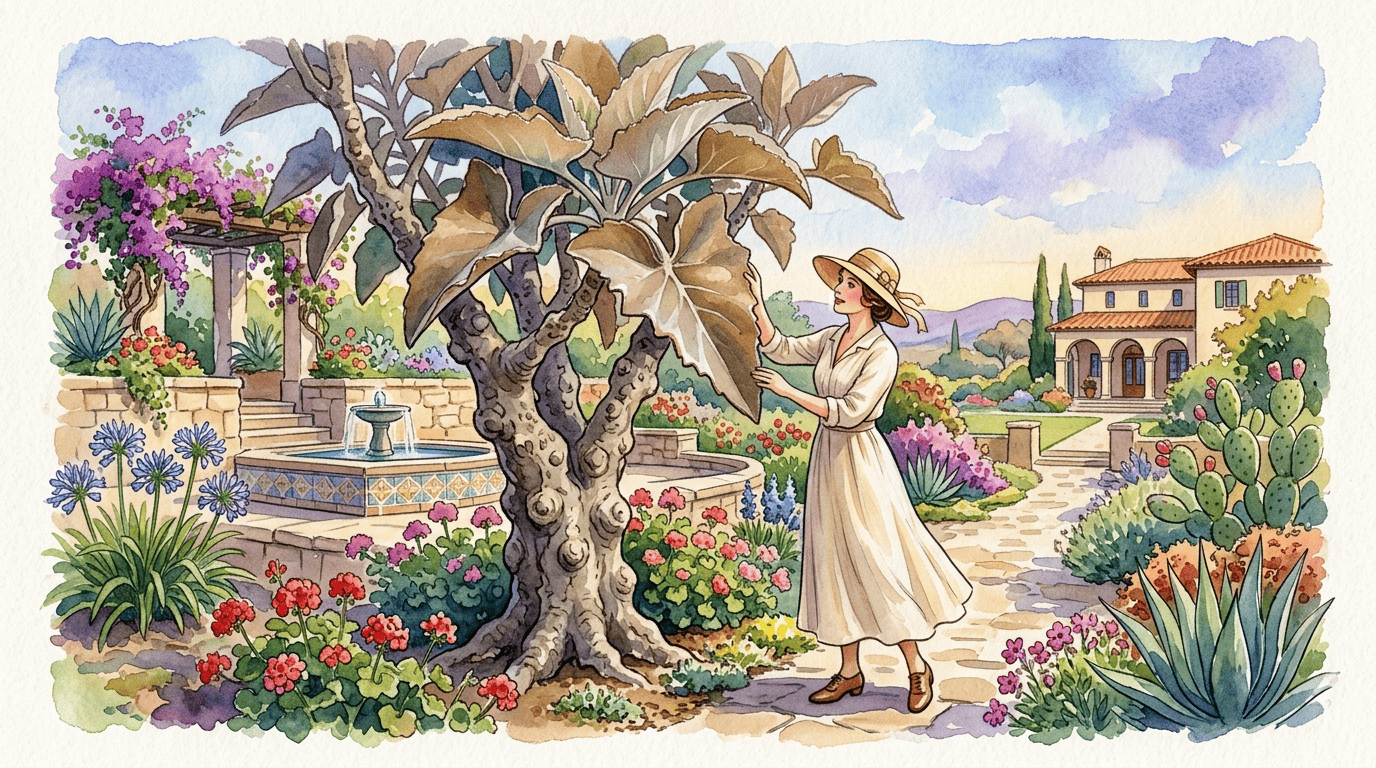
An iconic succulent for dry Mediterranean-climate architectural gardens. Introduced to European cultivation in the early 20th century, it gained Hollywood-era popularity in California where it now appears in many historic Mediterranean-style gardens. The Huntington and Lotusland have specimens over 50 years old.
Symbolism & meaning
What It Symbolizes
Velvet-Leaf wears the meaning of uniqueness through felted, almost suede leaves no other succulent shares, a texture that practically asks to be touched. Another layer is heritage, for it is endemic to Madagascar, an island whose plant life carries a strangely prehistoric feel even in the ordinary windowsill. Kalanchoe beharensis is the small ambassador of an ancient flora, a houseplant whose oddness comes from belonging, originally, to a much older world.
- Uniqueness — no other succulent shares its felted texture
- Heritage — Madagascar endemic with prehistoric feel
Where the Name Comes From
'Beharensis' refers to the Behara region of Madagascar.
Uses & Fun Facts
- Felted velvet leaves form a striking succulent statement
- Olive felt-bush leaves on architectural Madagascar succulent
Related plants
More Kalanchoe plants

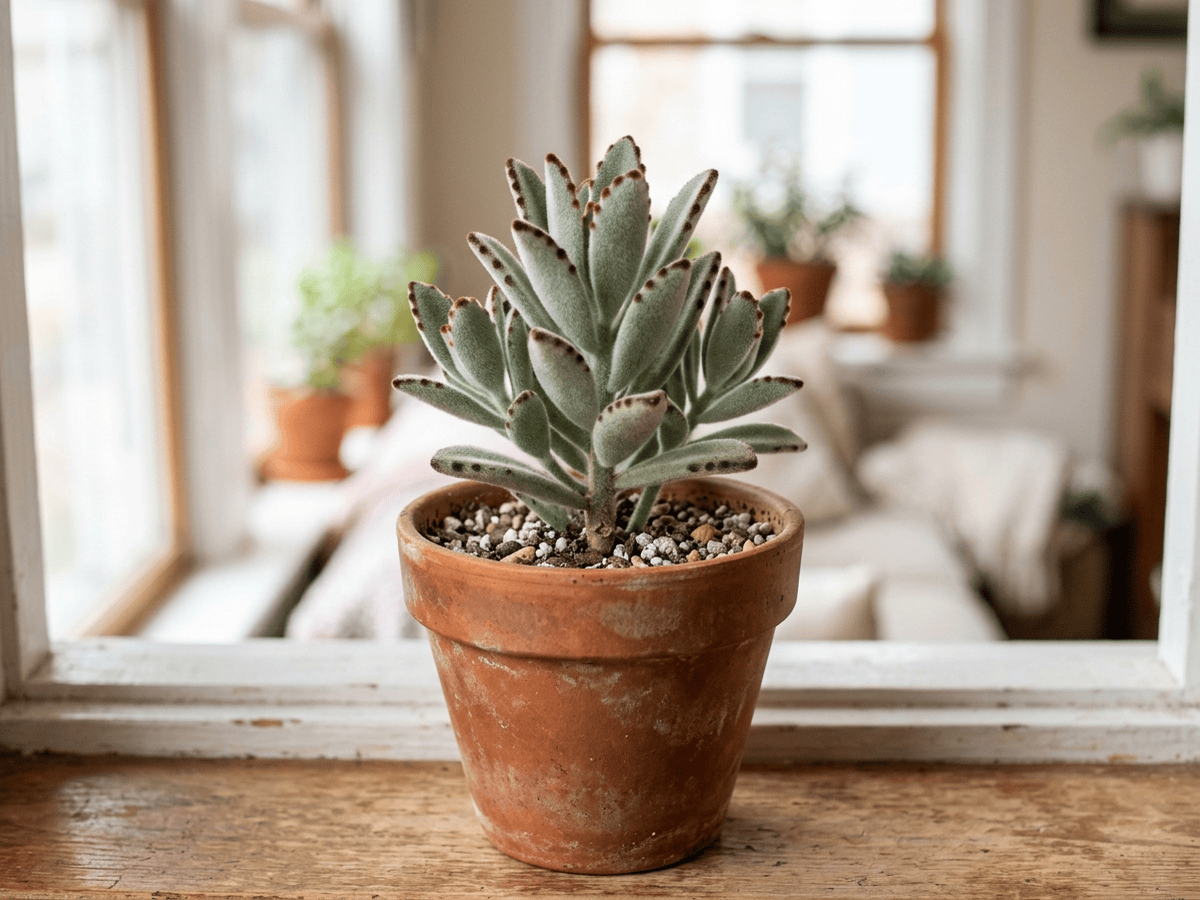
Plants with similar care
 Mexican AbeliaAbelia floribunda
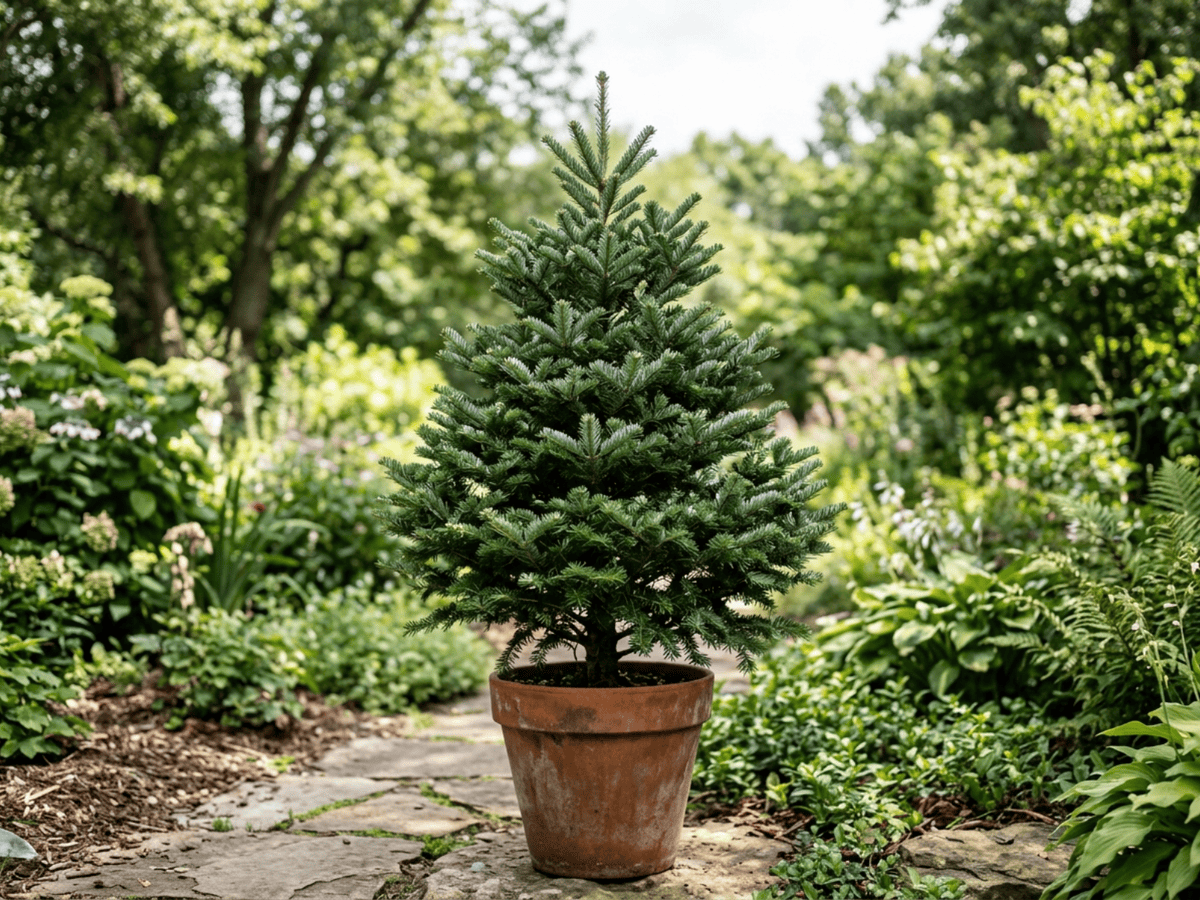 Fraser FirAbies fraseri
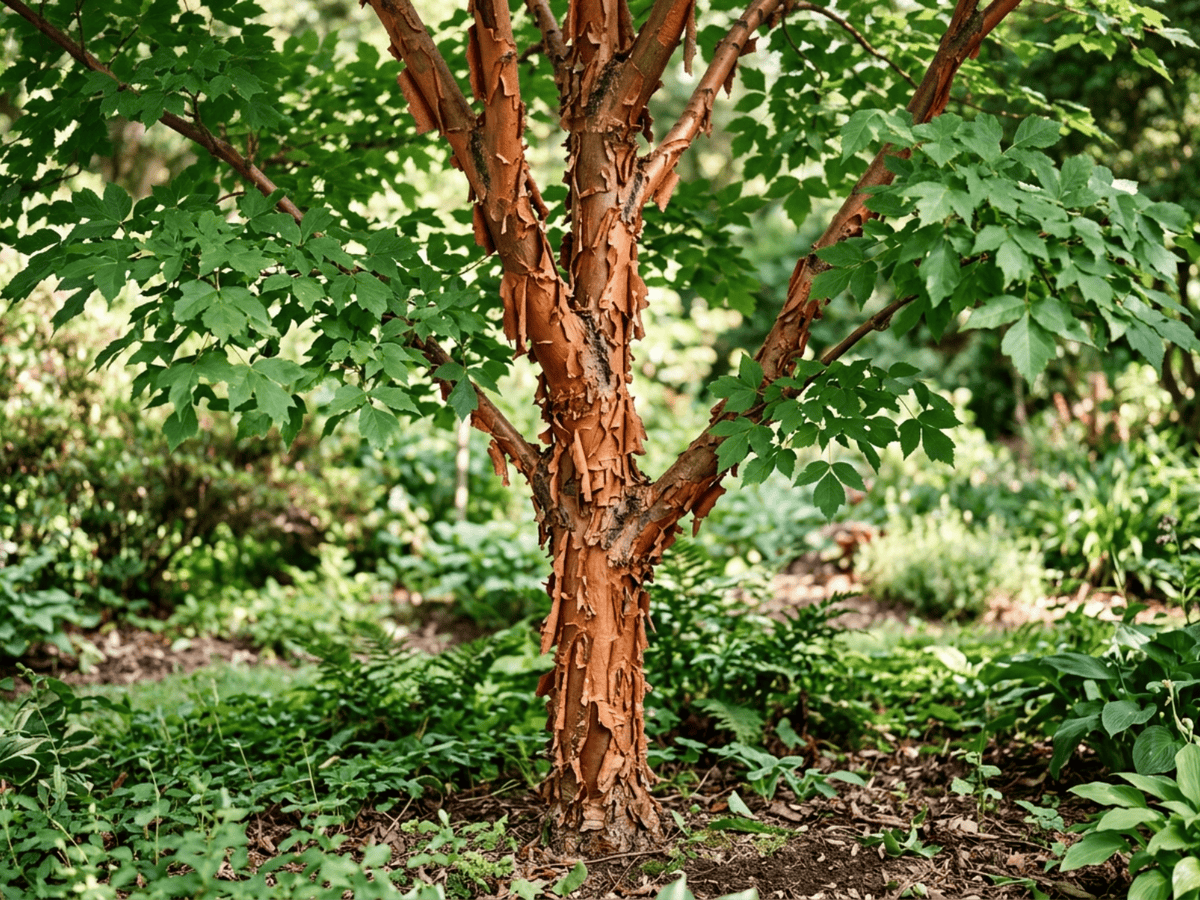 Paperbark MapleAcer griseum
 Sugar MapleAcer saccharum
Frequently asked questions
How often should I water Velvet-Leaf?
In summer, water about every 21 days; in winter, about every 45 days. Adjust for heat, pot size and drainage.
How much light does Velvet-Leaf need?
Full sun: 6+ hrs direct. Watch the leaves — scorching or stretching means the light needs adjusting.
Is Velvet-Leaf toxic to cats or dogs?
Pets Toxic (Dogs Toxic · Cats Toxic) Educational information, not medical or veterinary advice. If exposure is suspected, contact a doctor or veterinarian.
Is Velvet-Leaf easy to grow?
It is moderately demanding: a good choice once you have a little experience.
YardMate
Identify any plant in seconds
Snap a photo — YardMate names the plant, diagnoses problems, and reminds you when to water.
Download on the App Store