 YardMate


Paddle Plant
Kalanchoe luciae
Easy · Beginner friendlyAbout Paddle Plant
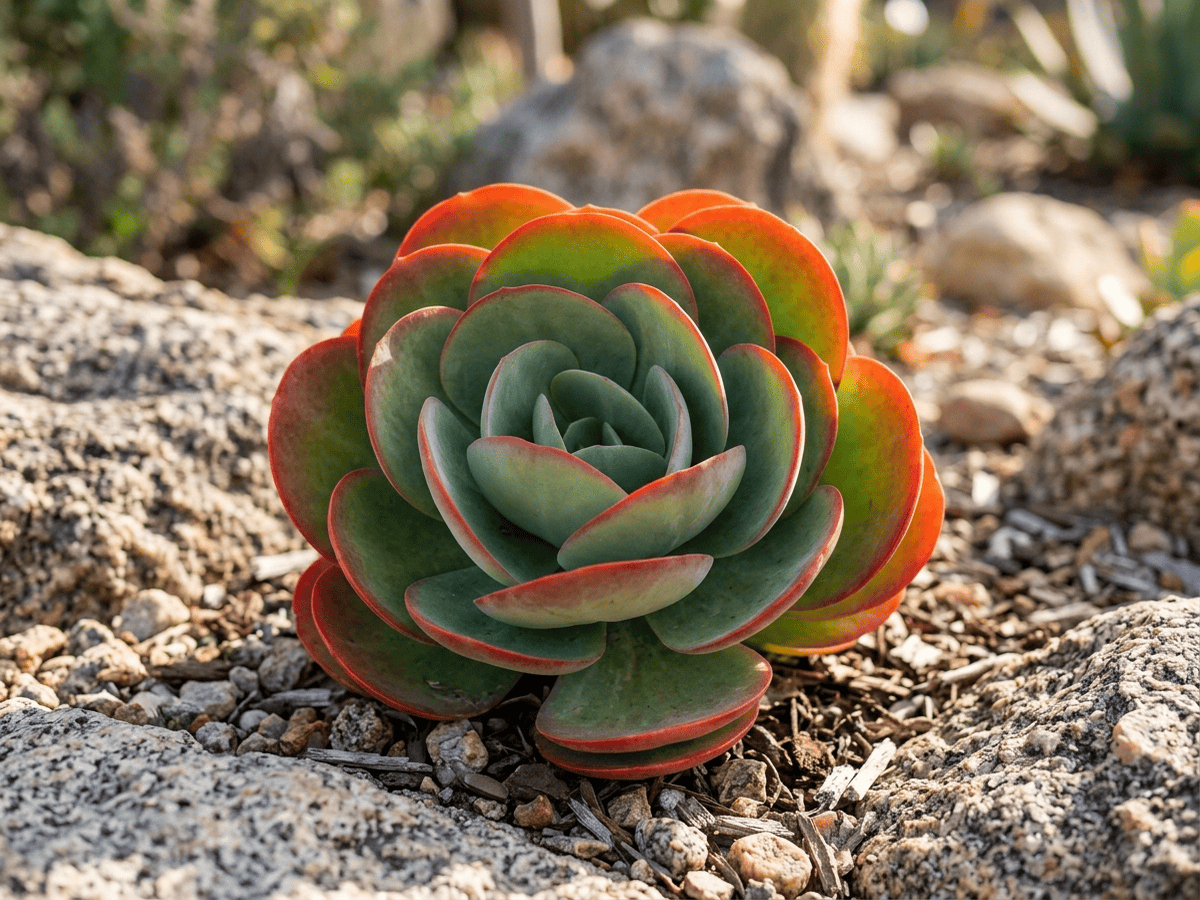
Paddle Plant or Flapjacks is a striking Madagascan succulent forming basal rosettes of broad flat round paddle-shaped leaves stacked like pancakes. In bright sun and cool weather the leaf edges flush vivid red, creating a stunning display in container and rock gardens. Reaching 18-24 inches tall in flower, it sends up a tall yellow flower spike before the original rosette dies, leaving offsets. A signature plant of modern American succulent design.
- Drought-tolerant
- Evergreen
- Architectural
- Container-friendly
How to care for Paddle Plant
Watering
- Springevery 14 days
- Summerevery 14 days
- Fallevery 21 days
- Winterevery 30 days
Soil · Fast-draining
- Main mixSand + pumice + soil 1:1:150%
- DrainagePumice / gravel50%
Keep grit at half the mix or more — this soil is meant to dry out fast.
FERTILIZER
- Springevery 60 days
At a Glance
- NativeAfrica
- Height1.5–2.5 ft (0.5–0.8 m)
- Spread1.5–2 ft (0.5–0.6 m)
- Flower colorGreen, Yellow
- Foliage colorGreen, Red
- SoilSandy, Well-drained
- LocationsYard · Balcony · Indoor
Bloom time
BLOOM CYCLE
Peak bloom
Jun–Aug
Tall yellow tubular flower spike on mature rosettes
Toxicity
Humans Moderate · Pets Toxic
bufadienolides (daigremontianin, bryotoxin)
Moderate
- Leaf
- Stem
- Flower
- Ingestion
EXPOSURE Eating leaves, stems, and flowers.
EFFECT Gastrointestinal upset and cardiac effects.
NOTE Documented concern for humans: Gastrointestinal upset and cardiac effects.
Toxic
- Leaf
- Stem
- Flower
- Ingestion
EXPOSURE Eating leaves, stems, and flowers.
EFFECT Vomiting, diarrhea, arrhythmia, weakness, and seizures.
NOTE ASPCA lists Kalanchoe as toxic to dogs and cats due to cardiac bufadienolides.
Toxic
- Leaf
- Stem
- Flower
- Ingestion
EXPOSURE Eating leaves, stems, and flowers.
EFFECT Vomiting, diarrhea, arrhythmia, and weakness.
NOTE ASPCA lists Kalanchoe as toxic to dogs and cats due to cardiac bufadienolides.
Educational information, not medical or veterinary advice. If exposure is suspected, contact a doctor or veterinarian.
DISTRIBUTION


- Native
- Africa
History
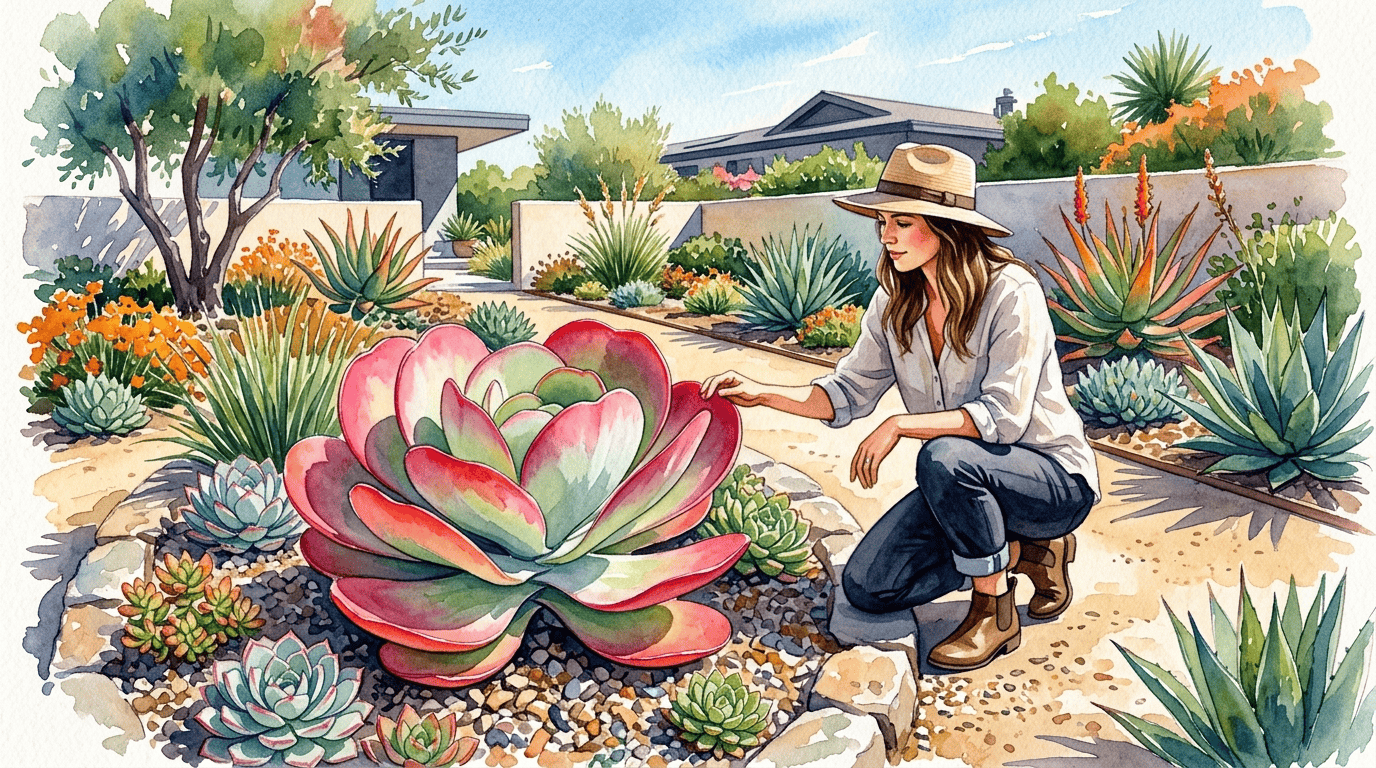
Kalanchoe luciae, paddle plant or flapjack plant, is a monocarpic rosette-forming succulent in the stonecrop family (Crassulaceae) native to rocky slopes of southern Africa from the Northern Cape through KwaZulu-Natal, Eswatini, Mozambique, Malawi, and Zimbabwe at 500-1800 meters elevation. French pharmacologist and succulent specialist Raymond-Hamet described the species in 1908. For over a century the plant was widely mislabeled in horticultural trade as Kalanchoe thyrsiflora, a similar but yellow-flowered species, and the confusion persists in many nurseries today.
Plants form a stemless basal rosette 40-70 cm wide of large flat obovate-paddle-shaped leaves with powdery white bloom, which flush intense pink-to-red colors along the margins (and often across the whole surface) when grown in full sun and cool conditions—the showiest foliage color of any Kalanchoe. A tall 1.5-meter spike of tubular pale greenish-white flowers appears after 3-5 years, after which the rosette dies but leaves offsets.
Native to South Africa and Mozambique, often confused with K. Described in 1932 by botanist Hamet, it became a defining plant of modern Southern California landscape design after the 2000s for its bold paddle-shaped form and dramatic red coloring.
Symbolism & meaning
What It Symbolizes
Kalanchoe luciae makes visible boldness through dramatic red-edged paddle leaves that stack upward like flat hands held to the sun. With each shift in light or temperature, the colors transform — green deepening to fiery scarlet, then back again. This is the patron succulent of dramatic change, a plant whose very surface keeps a running record of the weather it has lived through, written in shifting bands of color.
- Boldness — dramatic red-edged paddles command attention
- Transformation — color shifts dramatically with light and temperature
Where the Name Comes From
'Kalanchoe' is thought to derive from a Chinese name; 'luciae' honors botanist Lucia, wife of the original collector.
Uses & Fun Facts
- Red-edged paddle leaves give dry gardens a bold graphic accent
- Paddle leaves make bold dry containers for sunny patios
Related plants
More Kalanchoe plants

Plants with similar care
 Chinese AbeliaAbelia chinensis
 Fragrant AbeliaAbelia mosanensis
 Large-Flowered AbeliaAbelia uniflora
 Glossy AbeliaAbelia x grandiflora
Frequently asked questions
How often should I water Paddle Plant?
In summer, water about every 14 days; in winter, about every 30 days. Adjust for heat, pot size and drainage.
How much light does Paddle Plant need?
Full sun: 6+ hrs direct. Watch the leaves — scorching or stretching means the light needs adjusting.
Is Paddle Plant toxic to cats or dogs?
Pets Toxic (Dogs Toxic · Cats Toxic) Educational information, not medical or veterinary advice. If exposure is suspected, contact a doctor or veterinarian.
Is Paddle Plant easy to grow?
Yes — it is considered an easy, beginner-friendly plant.
Can Paddle Plant be grown indoors?
Yes, it adapts well to indoor growing given the right light.
When does Paddle Plant bloom?
It typically blooms Jun–Aug in the Northern Hemisphere.
YardMate
Identify any plant in seconds
Snap a photo — YardMate names the plant, diagnoses problems, and reminds you when to water.
Download on the App Store