 YardMate
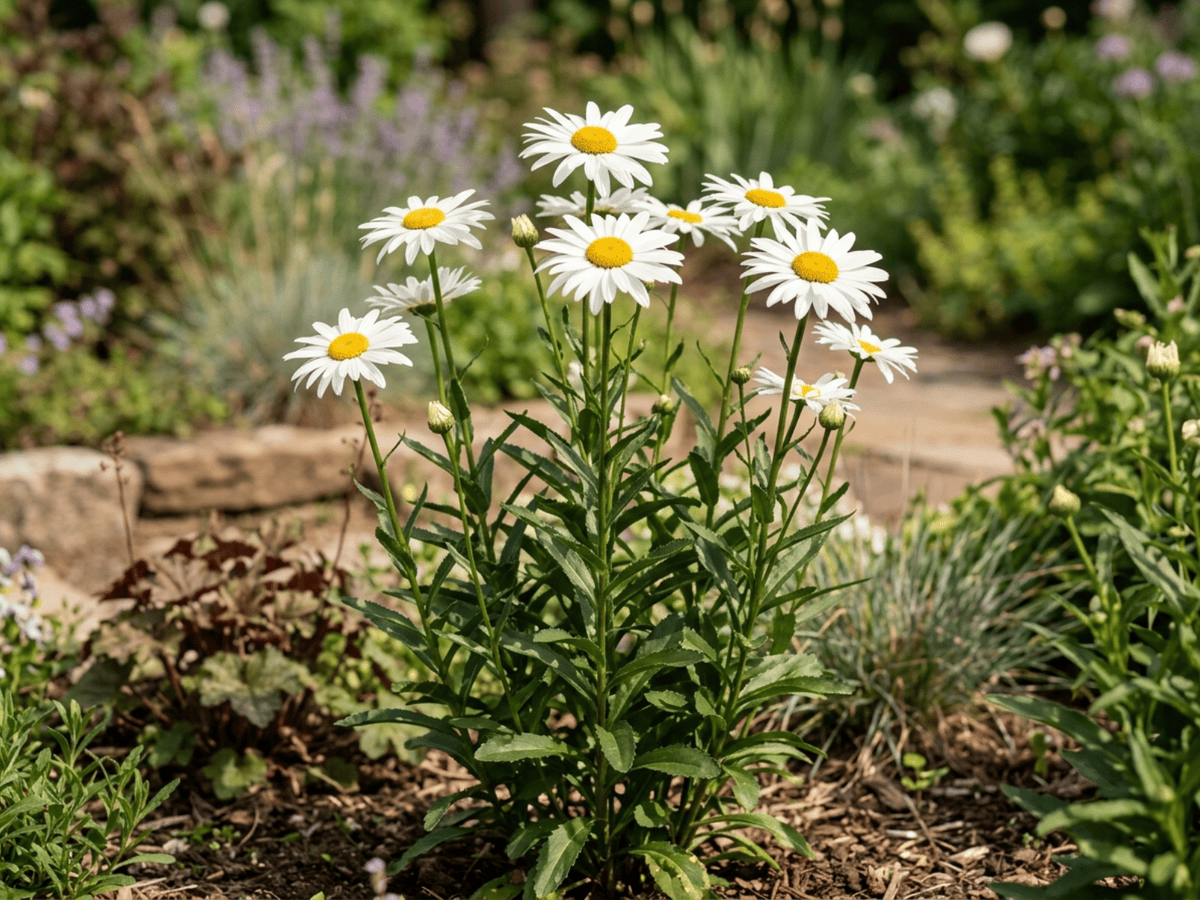
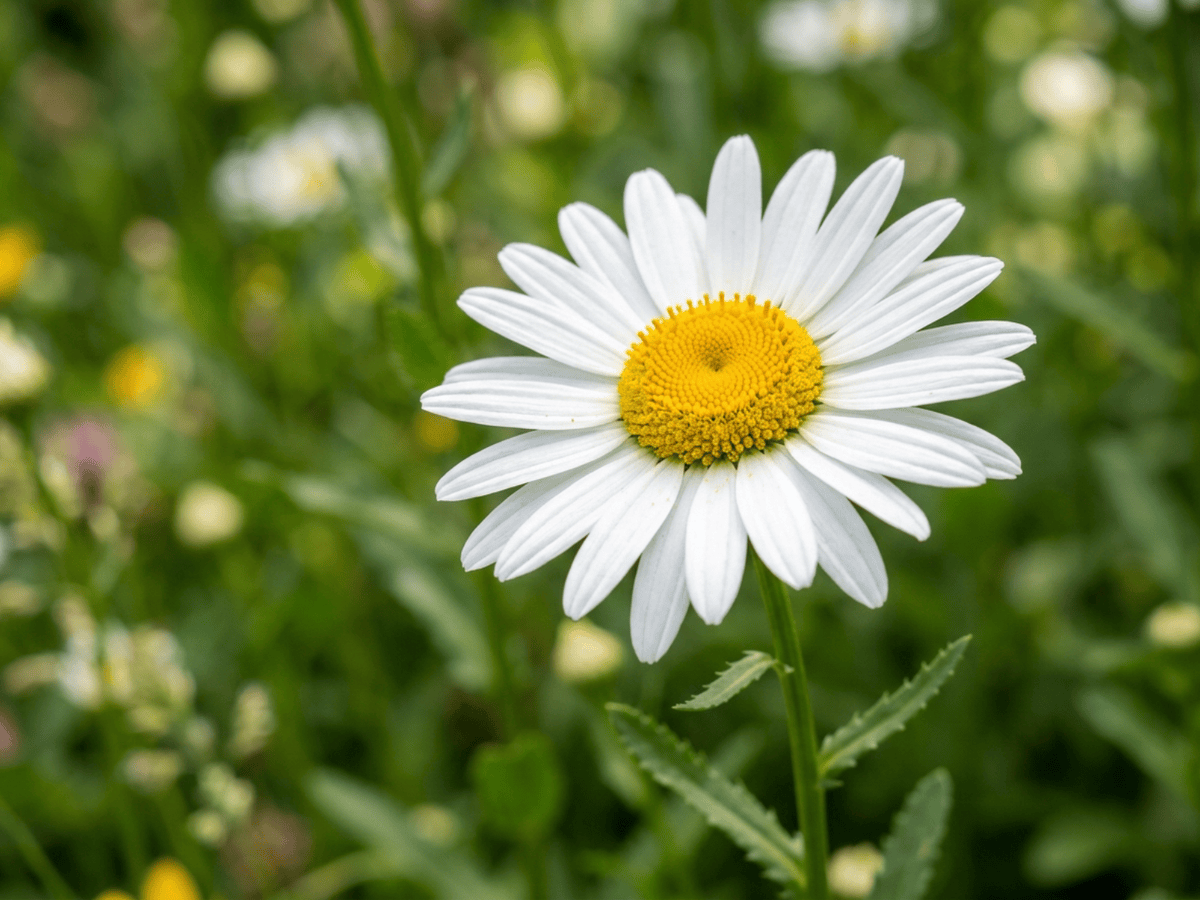


Shasta Daisy
Leucanthemum x superbum
Easy · Beginner friendlyAbout Shasta Daisy
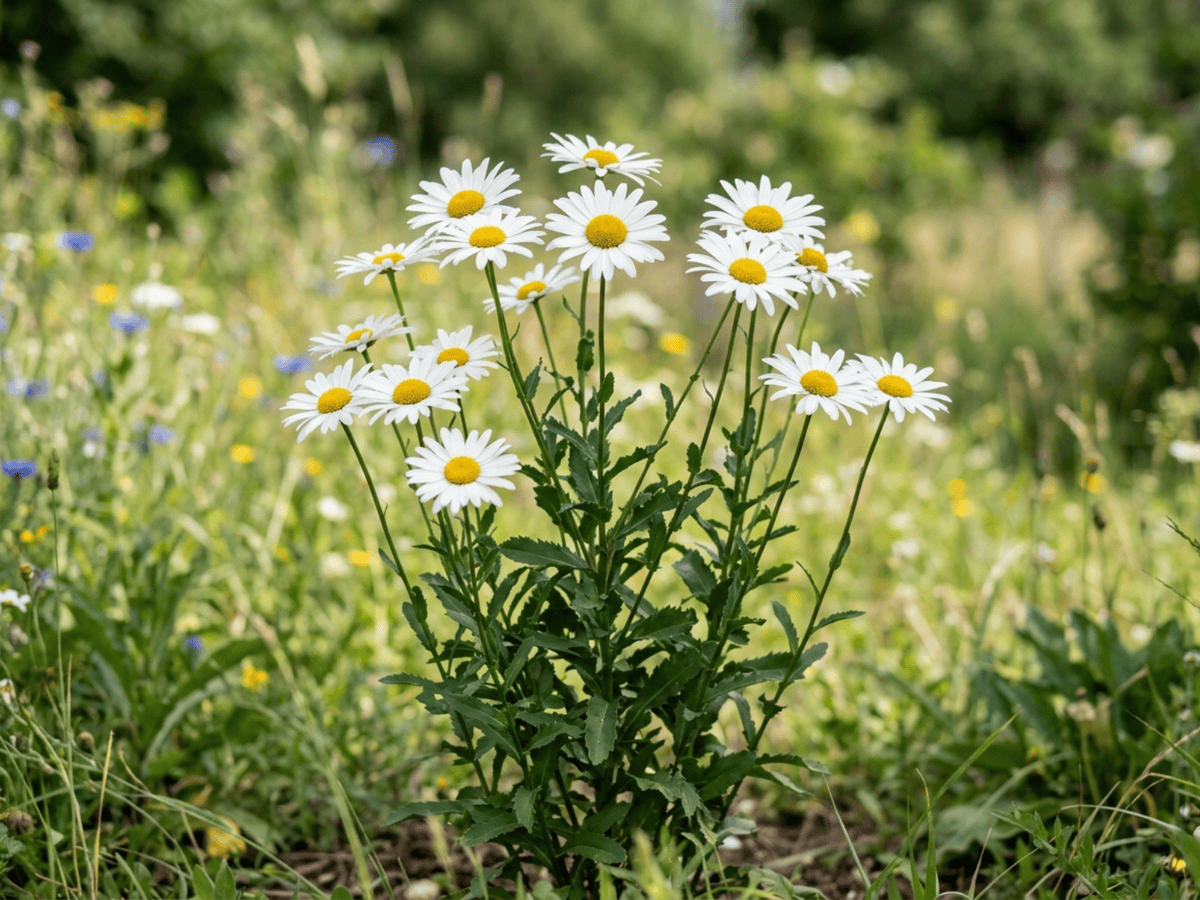
Shasta Daisy is a hybrid perennial developed by Luther Burbank in Santa Rosa, California in the 1890s, combining several Leucanthemum species to create the classic white-petaled, gold-centered daisy of American gardens. Plants reach 2–3 feet tall and bloom mid- to late summer. 'Becky', Perennial Plant of the Year 2003, remains the standard tall cultivar in US gardens. Hardy zones 4–9.
- Cut-flower
- Deer-resistant
- Pollinator-friendly
How to care for Shasta Daisy
Watering
- Springevery 5 days
- Summerevery 4 days
- Fallevery 7 days
- Winterpause watering
Soil · Well-draining
- Top dressingPine bark mulch10%
- Main mixPotting soil + perlite 2:170%
- DrainageLECA / gravel20%
Never skip the drainage layer — standing water is the top cause of root rot.
FERTILIZER
Balanced Feed 14-14-14
An even feed covers all three needs at once, keeping leaves, roots and blooms moving together with nothing pushed out of balance.
- Nitrogen · Leaves
- Phosphorus · Roots + Blooms
- Potassium · Strength
- Springevery 30 days
- Summerevery 30 days
At a Glance
- Height2–3 ft (0.6–0.9 m)
- Spread1–2 ft (0.3–0.6 m)
- Flower colorWhite
- Foliage colorGreen
- SoilLoamy, Well-drained
- LocationsYard
Bloom time
BLOOM CYCLE
Peak bloom
Jun–Aug
White gold-eyed daisies midsummer
Fragrance
LIGHT FRAGRANCE
The flowers have a mild herbaceous scent.
Toxicity
Humans Slight · Pets Slight
sesquiterpene lactones and pyrethrins
Slight
- All
- Contact
EXPOSURE Touching any part of the plant.
EFFECT Mild dermatitis in sensitive individuals.
NOTE Documented concern for humans: Mild dermatitis in sensitive individuals.
Slight
- All
- Ingestion
EXPOSURE Eating any part of the plant.
EFFECT Vomiting, diarrhea, and skin irritation.
NOTE ASPCA lists Chrysanthemum/Leucanthemum group as mildly toxic to pets.
Slight
- All
- Ingestion
EXPOSURE Eating any part of the plant.
EFFECT Vomiting, diarrhea, and skin irritation.
NOTE ASPCA lists Chrysanthemum/Leucanthemum group as mildly toxic to pets.
Educational information, not medical or veterinary advice. If exposure is suspected, contact a doctor or veterinarian.
History
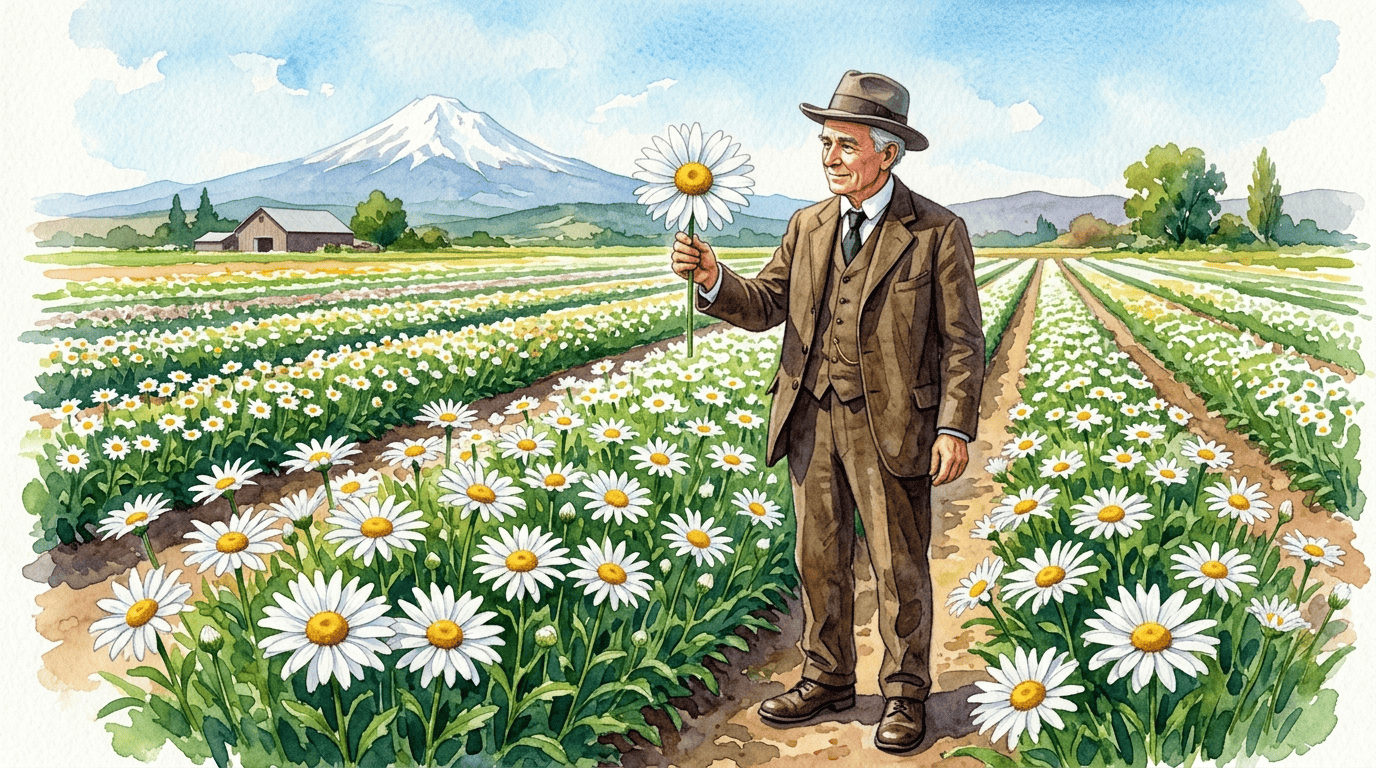
Leucanthemum x superbum, the Shasta daisy, is a complex hybrid developed by American horticulturist Luther Burbank at his Sebastopol, California breeding farm. Beginning around 1884 and continuing for 17 years, Burbank crossed the European oxeye daisy Leucanthemum maximum with Portuguese L. lacustre and then Japanese L. nipponicum to create an improved daisy with pure white rays, large heads, and sturdy stems. He introduced the first selection as 'Shasta' in 1901, naming it for the snow-capped peak visible from his property.
Countless cultivars followed, including 'Alaska', 'Becky' (2003 Perennial Plant of the Year), and modern double-flowered forms like 'Snowcap'. Created in the 1890s by American horticultural pioneer Luther Burbank in Santa Rosa, California, by combining four Leucanthemum species. Named for Mount Shasta, the snow-white summit of northern California. Shasta daisy became one of the most recognizable perennials in American gardens.
Symbolism & meaning
What It Symbolizes
The Shasta Daisy suggests innocence, the classic daisy meaning of simple, unguarded love. Its specific story is American — created by Luther Burbank in California through patient hybridizing, named for the snow-white slopes of Mount Shasta. It is a flower of homegrown horticulture, innocence with a Californian backstory and a horticulturist's careful hand.
- Innocence — classic daisy symbolism
- American horticulture — created by Luther Burbank in California
Where the Name Comes From
The name Shasta Daisy describes its daisy-like flower heads. Genus from Greek 'leukos' (white) and 'anthemon' (flower); 'superbum' means 'superb'.
Uses & Fun Facts
- Classic white shasta daisies long-lasting in summer bouquets
- Open white daisies draw bees, hoverflies, and butterflies
Related plants
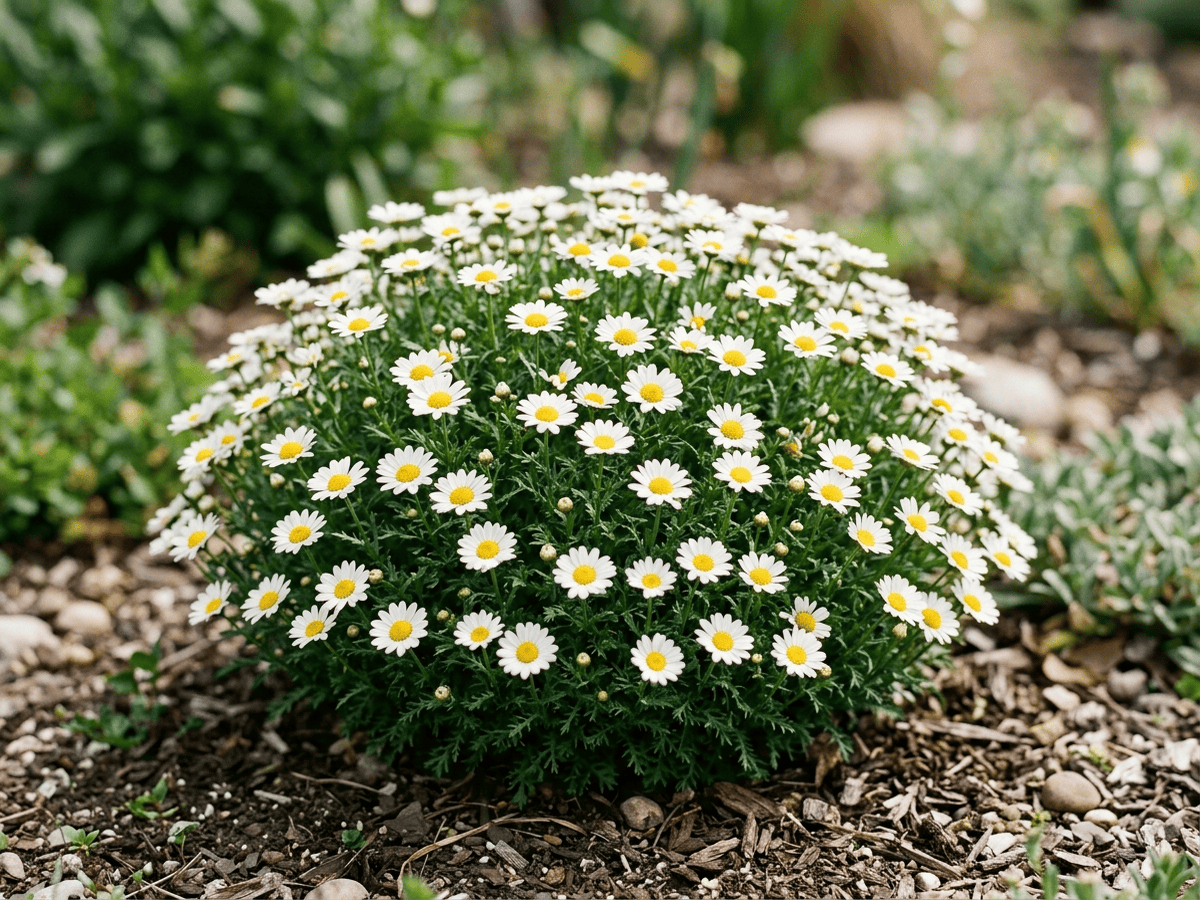
More Leucanthemum plants
Plants with similar care
 Chinese AbeliaAbelia chinensis
 Fragrant AbeliaAbelia mosanensis
 Large-Flowered AbeliaAbelia uniflora
 Glossy AbeliaAbelia x grandiflora
Frequently asked questions
How often should I water Shasta Daisy?
Water about every 5 days during the growing season, and always let excess water drain away.
How much light does Shasta Daisy need?
Full sun: 6+ hrs direct. Watch the leaves — scorching or stretching means the light needs adjusting.
Is Shasta Daisy toxic to cats or dogs?
Pets Slight (Dogs Slight · Cats Slight) Educational information, not medical or veterinary advice. If exposure is suspected, contact a doctor or veterinarian.
Is Shasta Daisy easy to grow?
Yes — it is considered an easy, beginner-friendly plant.
When does Shasta Daisy bloom?
It typically blooms Jun–Aug in the Northern Hemisphere.
YardMate
Identify any plant in seconds
Snap a photo — YardMate names the plant, diagnoses problems, and reminds you when to water.
Download on the App Store