 YardMate
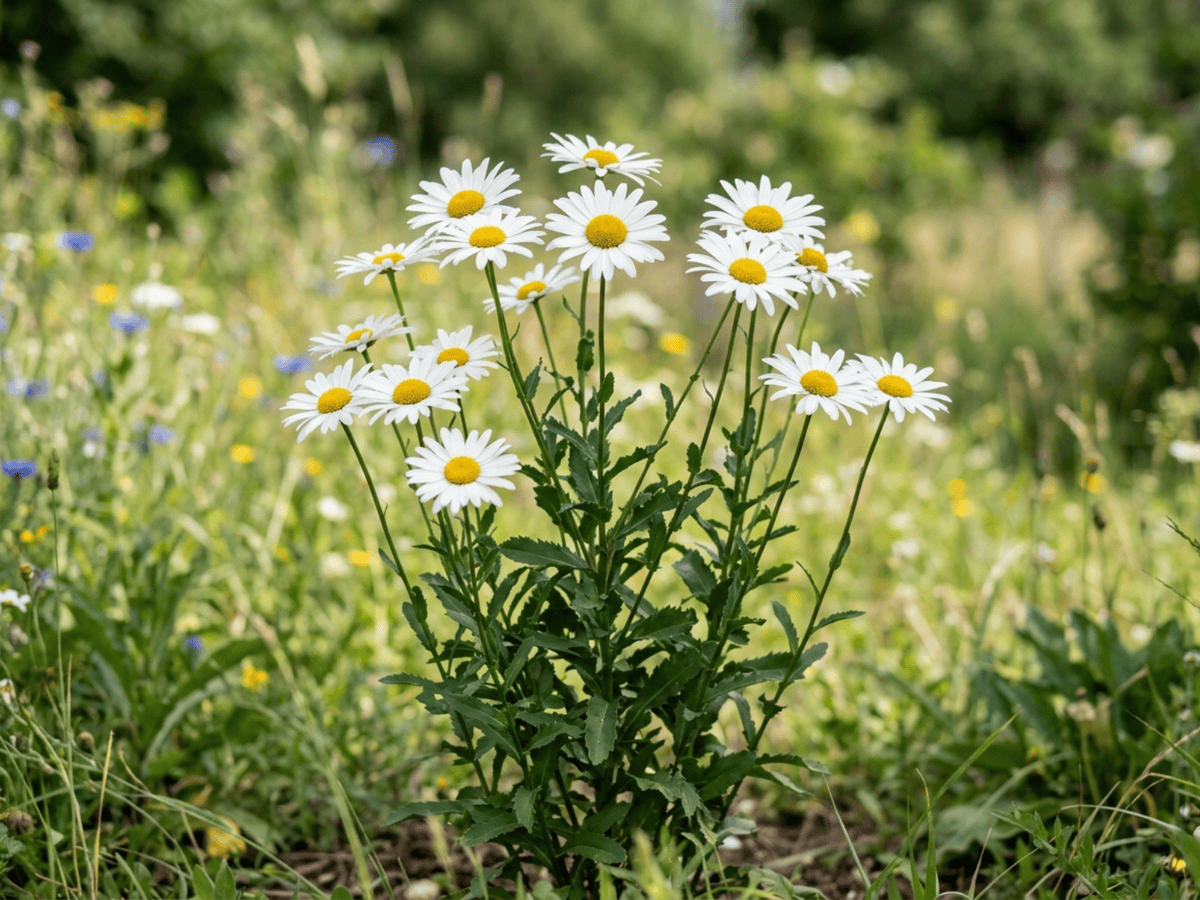


Oxeye Daisy
Leucanthemum vulgare
Easy · Beginner friendlyAbout Oxeye Daisy
Leucanthemum vulgare, the oxeye daisy, is one of the most recognized wildflowers in the world, with its classic white ray petals surrounding a golden-yellow central disk. Native to Europe and temperate Asia, it has naturalized extensively across North America, Australia, and New Zealand. Growing 30 to 60 cm tall, it blooms prolifically from late spring through midsummer, creating iconic meadow scenes. Each flower head is actually a composite of hundreds of tiny florets — the 'petals' are individual ray flowers, and the golden center is packed with tubular disk flowers. The plant spreads by both seed and creeping rhizomes, and can become weedy in pastures and meadows. It thrives in poor to average soil and full sun, requiring almost no maintenance. The oxeye daisy has deep roots in European folklore, herbal medicine, and childhood games — pulling petals to 'loves me, loves me not' is perhaps the most universal flower game. It is edible, with young leaves used in salads and flower buds pickled like capers.
- Edible
How to care for Oxeye Daisy
Watering
- Springevery 7 days
- Summerevery 5 days
- Fallevery 14 days
- Winterevery 30 days
Soil · Well-draining
- Top dressingPine bark mulch10%
- Main mixPotting soil + perlite 2:170%
- DrainageLECA / gravel20%
Never skip the drainage layer — standing water is the top cause of root rot.
FERTILIZER
- Springevery 60 days
At a Glance
- NativeEurope, East Asia
- Height1–3 ft (0.3–0.9 m)
- Spread1–2 ft (0.3–0.6 m)
- Flower colorWhite
- Foliage colorGreen
- SoilLoamy, Well-drained
- LocationsYard
Bloom time
BLOOM CYCLE
Peak bloom
Jun–Aug
Deadhead to prevent aggressive self-sowing; divide clumps every 2-3 years to maintain vigor
Fragrance
NO FRAGRANCE
No notable fragrance.
Toxicity
Pets Slight
sesquiterpene lactones and pyrethrin-like irritants
Not reported
EXPOSURE No exposure route is reported.
EFFECT No significant toxicity and young leaves edible in salads historically.
NOTE No toxicity is reported for humans in this catalog; this is not evidence that the plant is edible or harmless.
Slight
- Leaf
- Flower
- Ingestion
- Contact
EXPOSURE Eating leaves and flowers. Touching leaves and flowers.
EFFECT Mild GI upset and dermatitis possible.
NOTE NC State flags oxeye daisy as a problem for dogs, cats, and horses. Treat as mild pet GI/dermatitis risk rather than severe toxicity.
Slight
- Leaf
- Flower
- Ingestion
- Contact
EXPOSURE Eating leaves and flowers. Touching leaves and flowers.
EFFECT Mild GI upset and dermatitis possible.
NOTE NC State flags oxeye daisy as a problem for dogs, cats, and horses. Treat as mild pet GI/dermatitis risk rather than severe toxicity.
Educational information, not medical or veterinary advice. If exposure is suspected, contact a doctor or veterinarian.
DISTRIBUTION

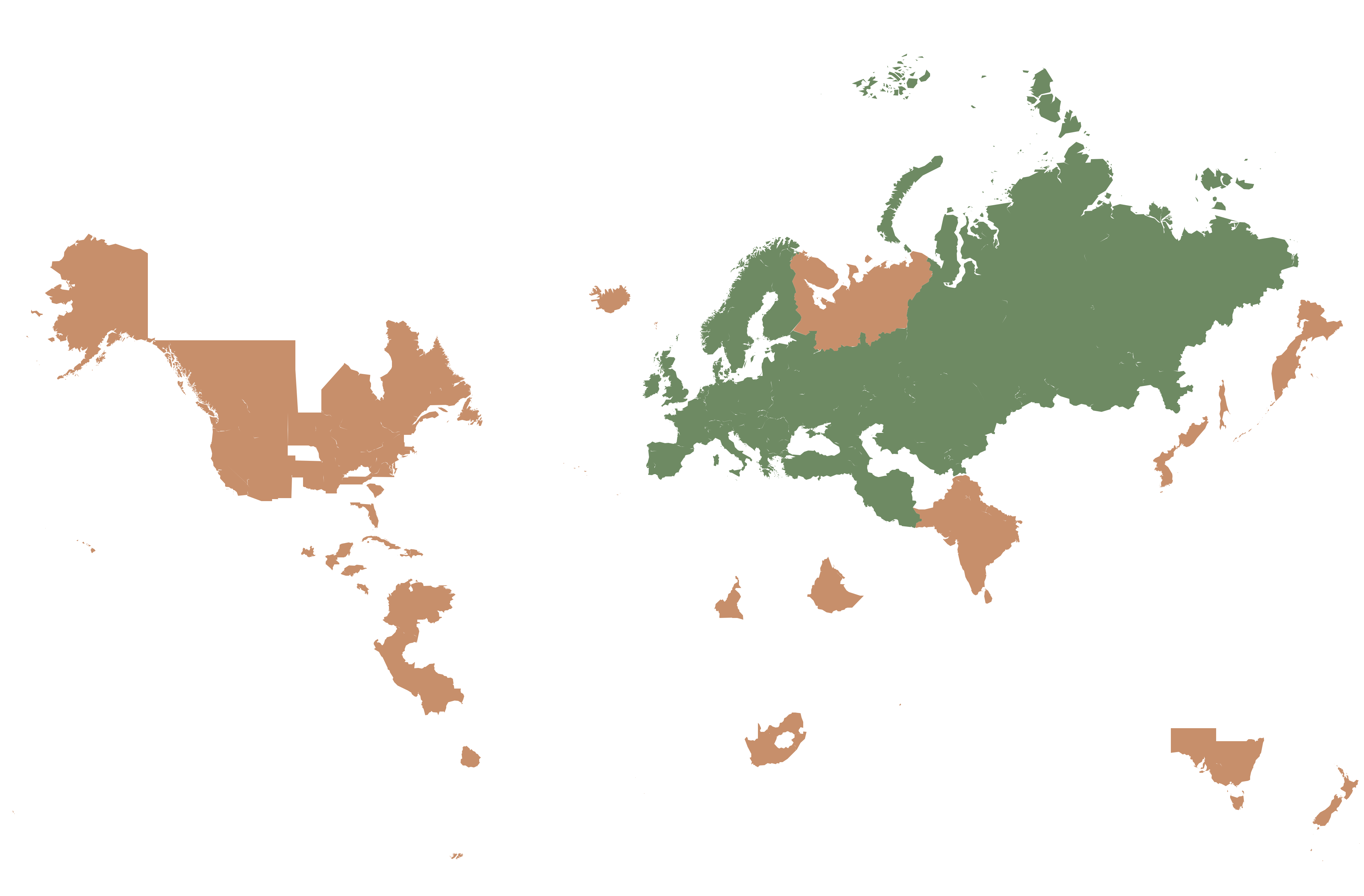
- Native
- Introduced
- Europe
- East Asia
History

Leucanthemum vulgare is native to Europe and temperate Asia — essentially the entire Eurasian temperate zone — and has been the quintessential European meadow "daisy" of children's flower-chain making, fortune-telling ("he loves me, he loves me not" — the petals are plucked one at a time as alternate phrases), and pastoral poetry for centuries. It features in Geoffrey Chaucer's 14th-century poetry as the "ee of the day" (eye of the day) — the English word "daisy" descends from the Old English "dæges ēage" (day's eye), referring to the flower's habit of opening its rays in the morning and closing them at night. The species produces familiar single white ray-flowered daisies with yellow disk centers on 30-90 cm stems through early and mid-summer. It was carried to North America by European colonists with hay and seed, and has naturalized extensively across virtually the entire continent.
In its introduced range it is now classified as an invasive weed by multiple US states (Colorado, Montana, Wyoming, Ohio, Washington, and others have noxious-weed listings) and as a costly pasture weed by the Canadian Food Inspection Agency — cattle and horses avoid eating the plant, so in heavily grazed pastures it can form monoculture stands. Horticultural use is increasingly restricted in western US states. The horticultural Shasta daisy (Leucanthemum x superbum) is a garden hybrid derived in part from L. vulgare by Luther Burbank in 1890.
The oxeye daisy has been a beloved wildflower since ancient times — the name 'daisy' itself comes from Old English 'daeges eage' (day's eye), because the flower opens at dawn and closes at dusk. In medieval Europe it was called 'moon daisy' and associated with the Norse goddess Freya, symbolizing motherhood and fertility. The Romans used it medicinally for wounds and coughs. English colonists deliberately brought it to North America as a garden flower, never suspecting it would escape and blanket entire continents.
Symbolism & meaning
What It Symbolizes
The Oxeye Daisy embodies innocence, its simple white-and-yellow face the universal flower of childhood meadows. Across European folklore it has long been associated with spring, dawn, and the freshness of new beginnings — a flower of clean starts and clear hearts. Few wildflowers are so closely tied to the first kind of love and the simple, unhurried wonder of the very young at play in long grass.
- Innocence — The simple white flower universally represents purity and childlike wonder
- New beginnings — Associated with spring, dawn, and fresh starts in European folklore
Where the Name Comes From
The name Oxeye Daisy describes its daisy-like flower heads. Leucanthemum from Greek 'leukos' (white) and 'anthemon' (flower). Vulgare means 'common' in Latin, reflecting its widespread occurrence.
Related plants
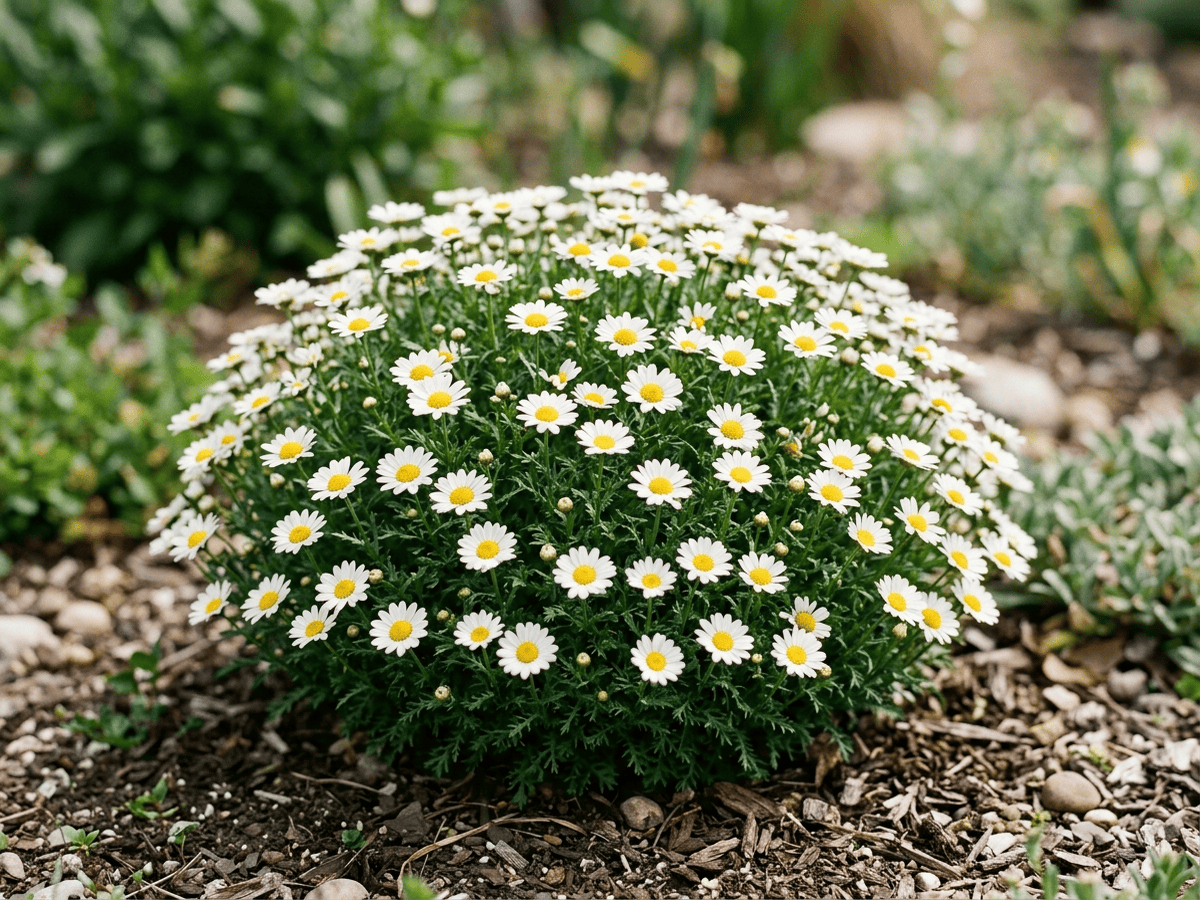
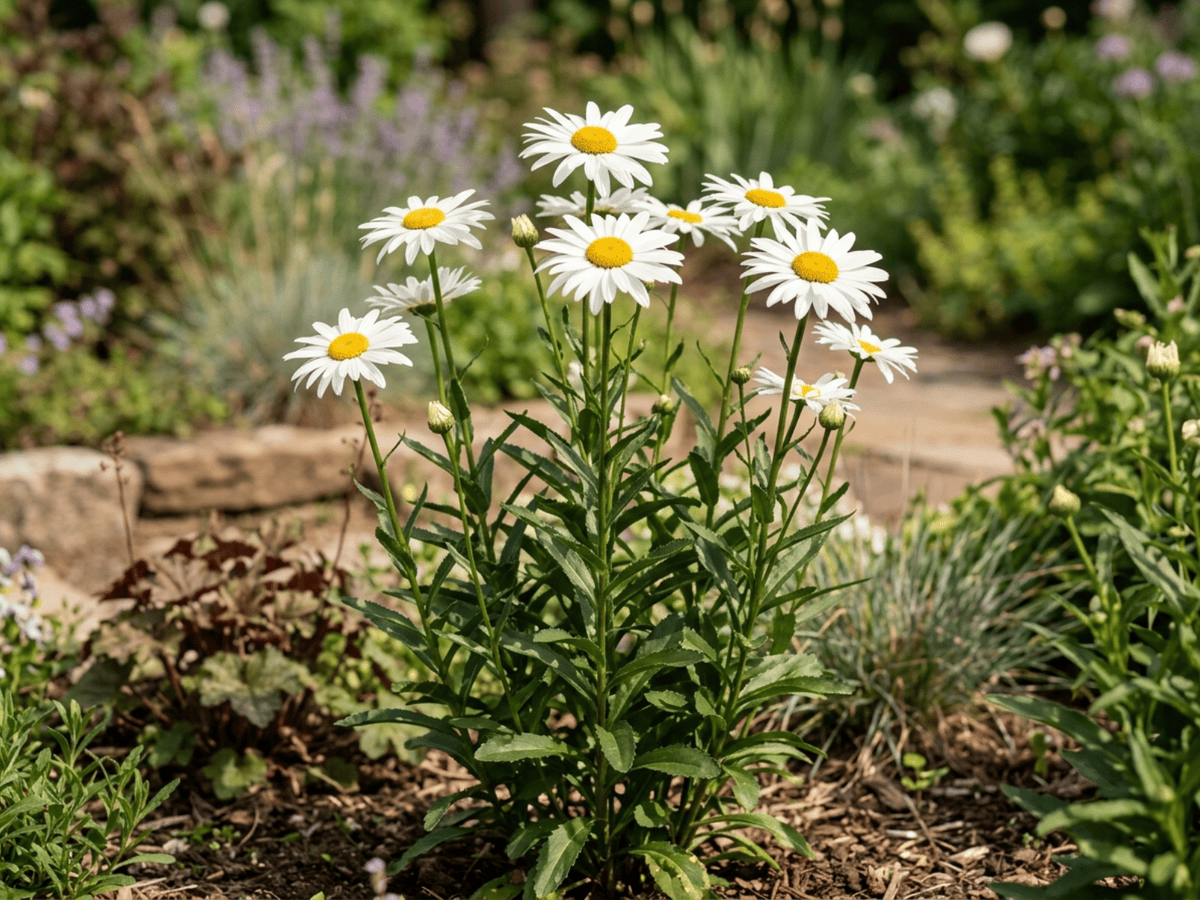
More Leucanthemum plants
Plants with similar care
 Chinese AbeliaAbelia chinensis
 Fragrant AbeliaAbelia mosanensis
 Large-Flowered AbeliaAbelia uniflora
 Glossy AbeliaAbelia x grandiflora
Frequently asked questions
How often should I water Oxeye Daisy?
In summer, water about every 5 days; in winter, about every 30 days. Adjust for heat, pot size and drainage.
How much light does Oxeye Daisy need?
Full sun: 6+ hrs direct. Watch the leaves — scorching or stretching means the light needs adjusting.
Is Oxeye Daisy toxic to cats or dogs?
Pets Slight (Dogs Slight · Cats Slight) Educational information, not medical or veterinary advice. If exposure is suspected, contact a doctor or veterinarian.
Is Oxeye Daisy easy to grow?
Yes — it is considered an easy, beginner-friendly plant.
When does Oxeye Daisy bloom?
It typically blooms Jun–Aug in the Northern Hemisphere.
YardMate
Identify any plant in seconds
Snap a photo — YardMate names the plant, diagnoses problems, and reminds you when to water.
Download on the App Store