 YardMate

Silver Bush Lupine
Lupinus albifrons
Easy · Beginner friendlyAbout Silver Bush Lupine
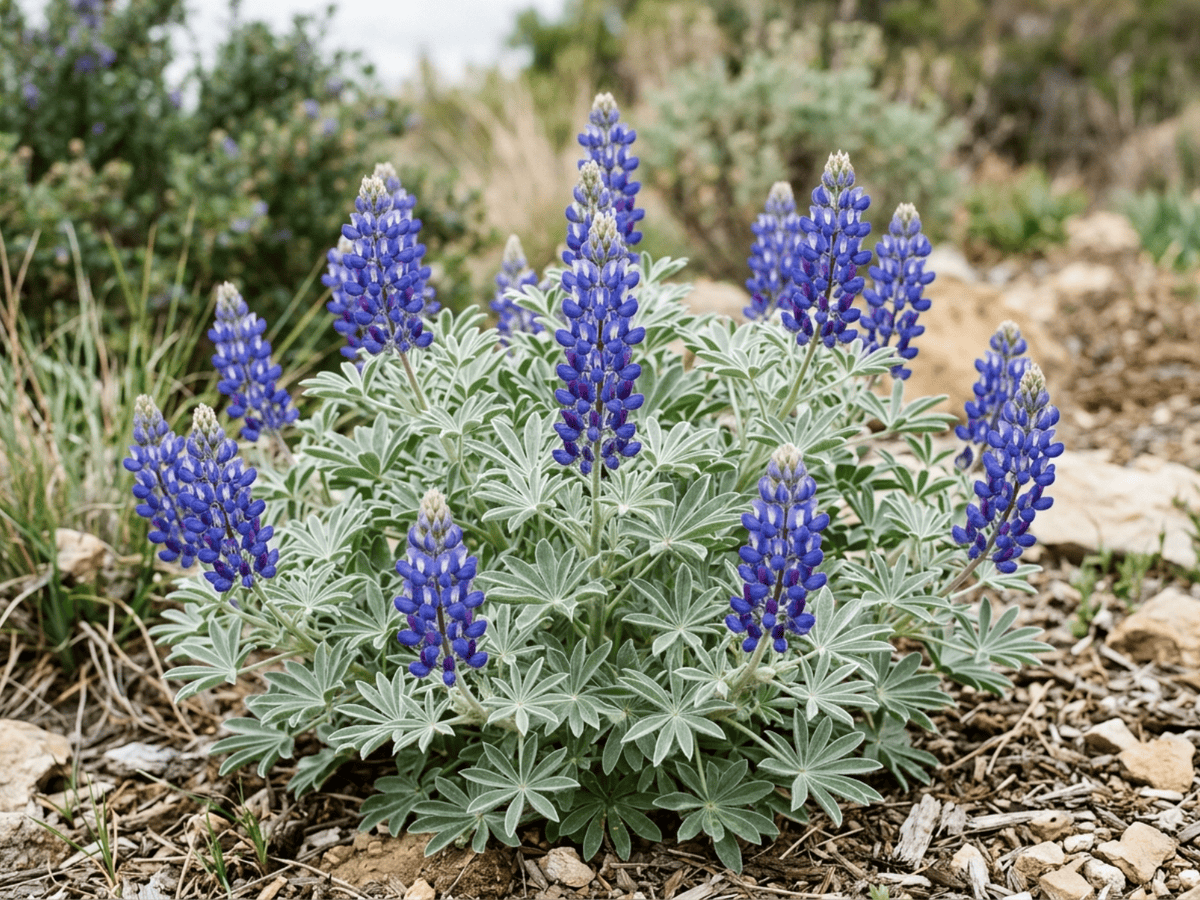
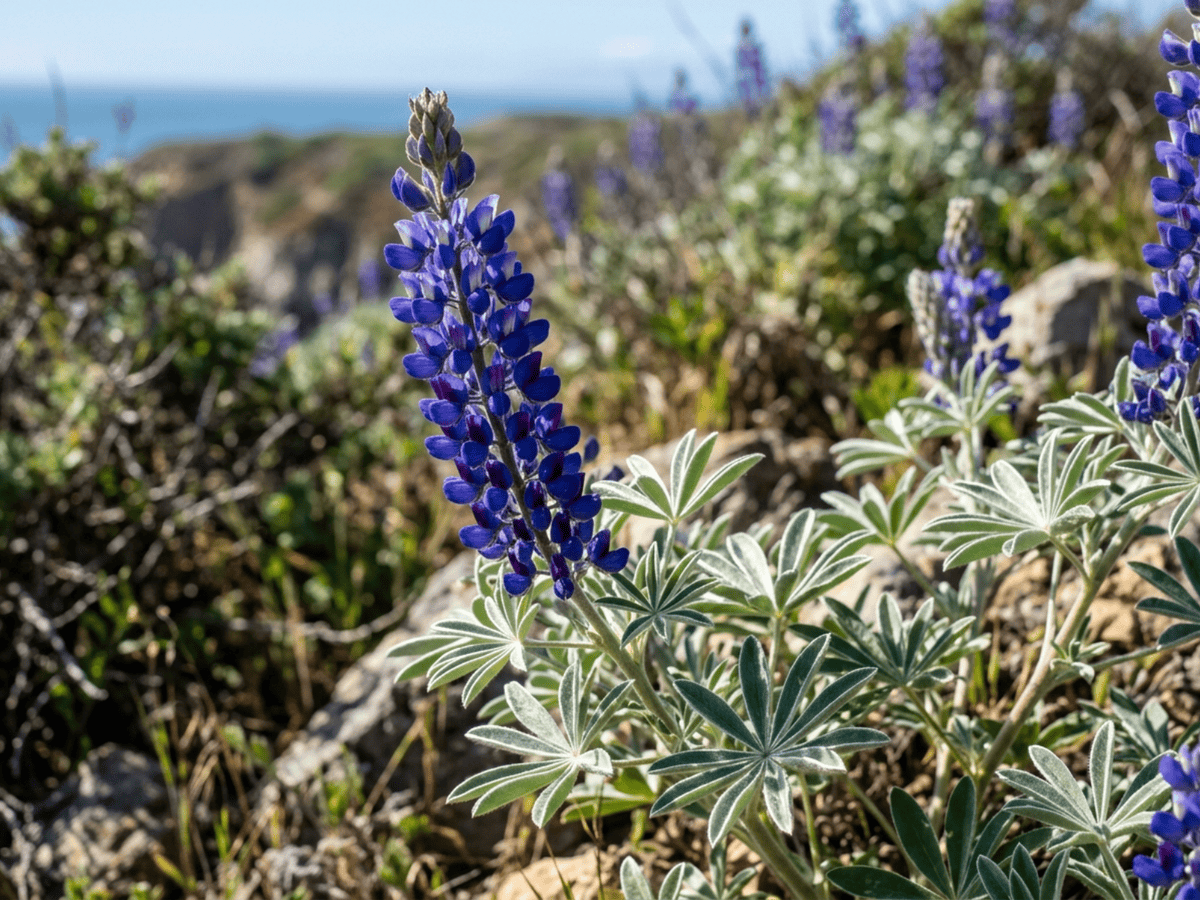
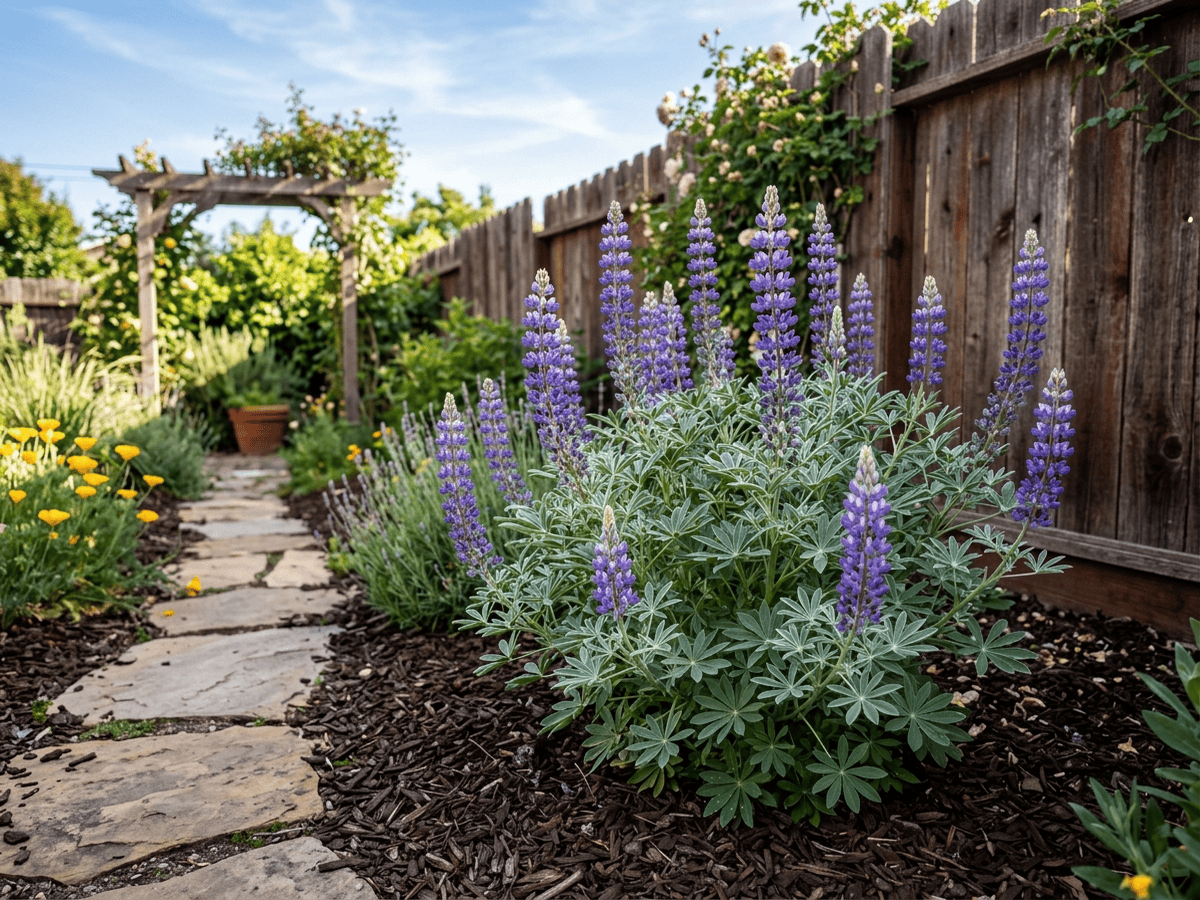
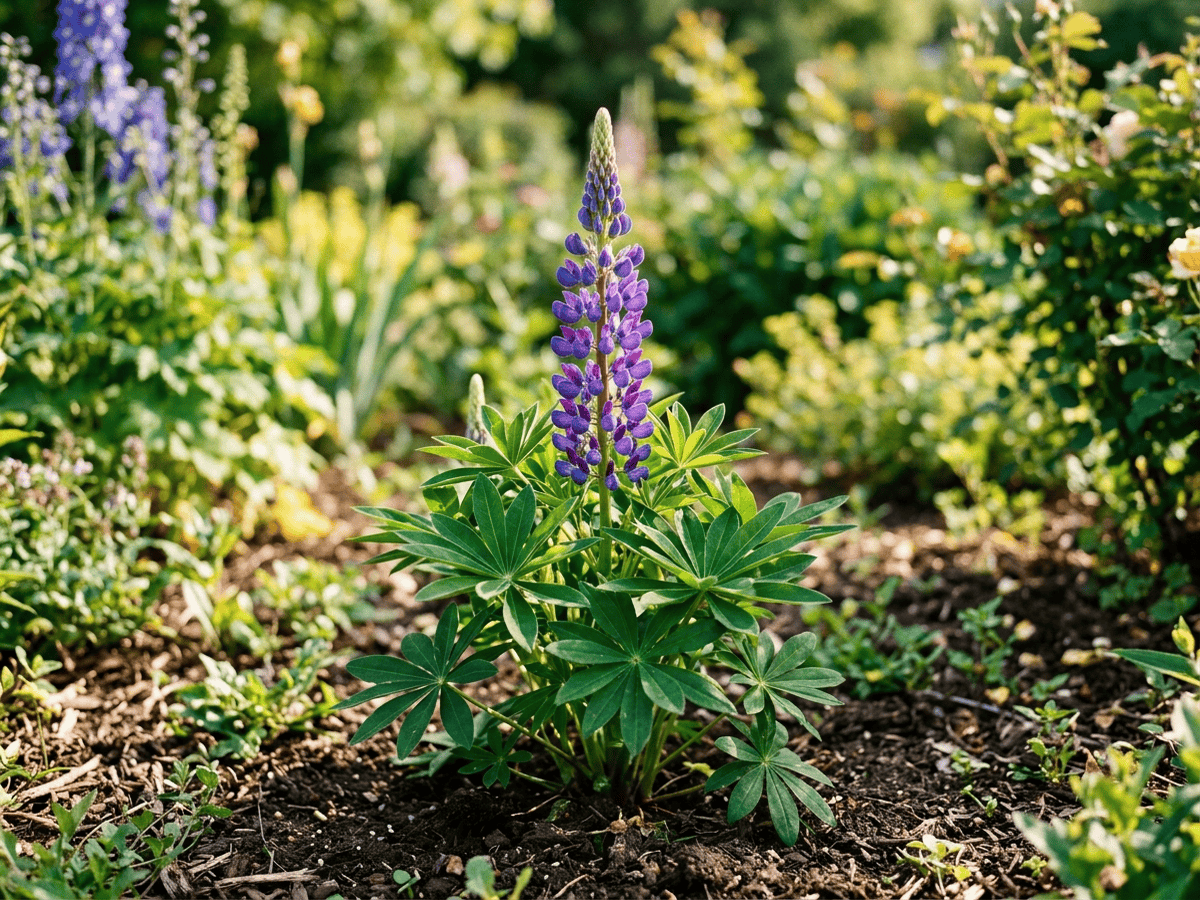
Silver Bush Lupine is a striking California native shrub reaching 2-4 feet, celebrated for its intensely silvery-gray silky foliage and tall spikes of blue-purple to lavender flowers. Native to dry rocky slopes and chaparral throughout California, its silvery leaves reflect sunlight, helping it survive hot dry summers. It is one of the most beautiful native shrubs for the low-water garden, and it is the primary host plant for the endangered mission blue butterfly.
- Drought-tolerant
- Native
- Pollinator-friendly
How to care for Silver Bush Lupine
Watering
- Springevery 14 days
- Summerevery 21 days
- Fallevery 21 days
- Winterpause watering
Soil · Well-draining
- Top dressingPine bark mulch10%
- Main mixPotting soil + perlite 2:170%
- DrainageLECA / gravel20%
Never skip the drainage layer — standing water is the top cause of root rot.
FERTILIZER
This plant needs little to no feeding.
At a Glance
- NativeNorth America
- Height3–5 ft (0.9–1.5 m)
- Spread3–5 ft (0.9–1.5 m)
- Flower colorPurple, Blue
- Foliage colorSilver, Green, Variegated
- SoilSandy, Well-drained
- LocationsYard
Bloom time
BLOOM CYCLE
Peak bloom
Mar–May
Blue-purple to lavender spikes March to May
Fragrance
MODERATE FRAGRANCE
The flowers have a sweet fragrance.
Toxicity
Humans Moderate · Pets Moderate
quinolizidine alkaloids
Moderate
- Seed
- All
- Ingestion
EXPOSURE Eating seeds and any part of the plant.
EFFECT Lupine alkaloids cause neurological and respiratory symptoms.
NOTE Documented concern for humans: Lupine alkaloids cause neurological and respiratory symptoms.
Moderate
- Seed
- All
- Ingestion
EXPOSURE Eating seeds and any part of the plant.
EFFECT Vomiting, weakness, tremors.
NOTE ASPCA lists Lupinus as toxic to pets and livestock.
Moderate
- Seed
- All
- Ingestion
EXPOSURE Eating seeds and any part of the plant.
EFFECT Same as dogs.
NOTE ASPCA lists Lupinus as toxic to pets and livestock.
Educational information, not medical or veterinary advice. If exposure is suspected, contact a doctor or veterinarian.
DISTRIBUTION


- Native
- North America
History
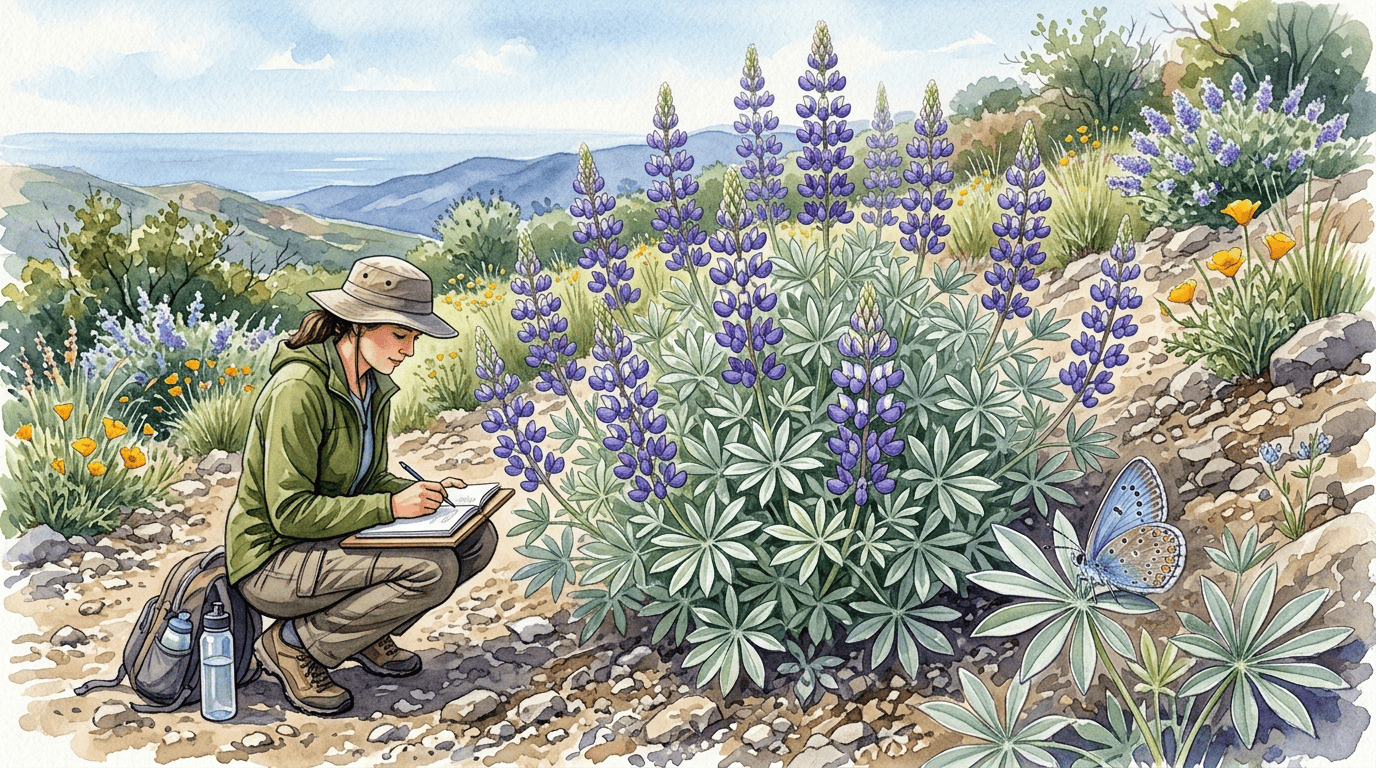
Lupinus albifrons is native to California and southwestern Oregon, growing in chaparral, oak woodland, open coniferous forest, and rocky slopes from the coast to middle Sierra Nevada elevations, up to about 1600 meters. The species epithet "albifrons" means "white-fronded" or "white-leaved," referring to the distinctively silvery-white palmately-compound foliage produced by fine appressed hairs — one of the most attractive silver-foliage California natives. Plants grow as rounded evergreen shrubs 1-1.5 meters tall and wide, producing in spring spectacular vertical racemes 20-30 cm long of fragrant purple-blue pea-like flowers arranged in whorled rings up the stem.
Unlike many other California-native bush lupines which are short-lived and challenging in irrigated gardens, L. albifrons is notably garden-tolerant and relatively long-lived (5-10 years), making it one of the most widely-grown California-native bush lupines for drought-tolerant residential and commercial native landscaping. Several ecological varieties are recognized — var. collinus (coastal dwarf form), var. douglasii (larger mainland form), and others. Like other lupines it is nitrogen-fixing and supports diverse native bees and butterflies including the monarch; it is a larval host plant for several native butterflies including the mission blue (Icaricia icarioides missionensis, an endangered species of the San Francisco Bay Area).
Seeds contain quinolizidine alkaloids and are toxic. The subspecies populations in the San Francisco Bay Area are carefully monitored by conservation agencies. First described botanically in 1838 by John Torrey and Asa Gray.
Symbolism & meaning
What It Symbolizes
Silver Bush Lupine commands admiration in the chaparral — silver-leaved mounds covered in violet spires that catch the California sun like polished pewter. It also acts as quiet protection: it is the host plant of the endangered Mission Blue butterfly, whose entire existence depends on its presence on a few San Francisco hillsides. It is botanical beauty doing real conservation work.
- Admiration — silvery beauty commanding attention
- Protection — shelters endangered butterfly species
Where the Name Comes From
'Albifrons' means 'white-fronted' in Latin, referring to the silvery-white fronts of the leaves.
Uses & Fun Facts
- Larval host for mission blue and silvery blue butterflies
- Silvery foliage and lavender spikes for California chaparral gardens
- Pea-flower spikes feed bumblebees and native solitary bees
Related plants
More Lupinus plants

Plants with similar care
 Chinese AbeliaAbelia chinensis
 Fragrant AbeliaAbelia mosanensis
 Large-Flowered AbeliaAbelia uniflora
 Glossy AbeliaAbelia x grandiflora
Frequently asked questions
How often should I water Silver Bush Lupine?
Water about every 14 days during the growing season, and always let excess water drain away.
How much light does Silver Bush Lupine need?
Full sun: 6+ hrs direct. Watch the leaves — scorching or stretching means the light needs adjusting.
Is Silver Bush Lupine toxic to cats or dogs?
Pets Moderate (Dogs Moderate · Cats Moderate) Educational information, not medical or veterinary advice. If exposure is suspected, contact a doctor or veterinarian.
Is Silver Bush Lupine easy to grow?
Yes — it is considered an easy, beginner-friendly plant.
When does Silver Bush Lupine bloom?
It typically blooms Mar–May in the Northern Hemisphere.
YardMate
Identify any plant in seconds
Snap a photo — YardMate names the plant, diagnoses problems, and reminds you when to water.
Download on the App Store