 YardMate


Coastal Bush Lupine
Lupinus arboreus
Easy · Beginner friendlyAbout Coastal Bush Lupine
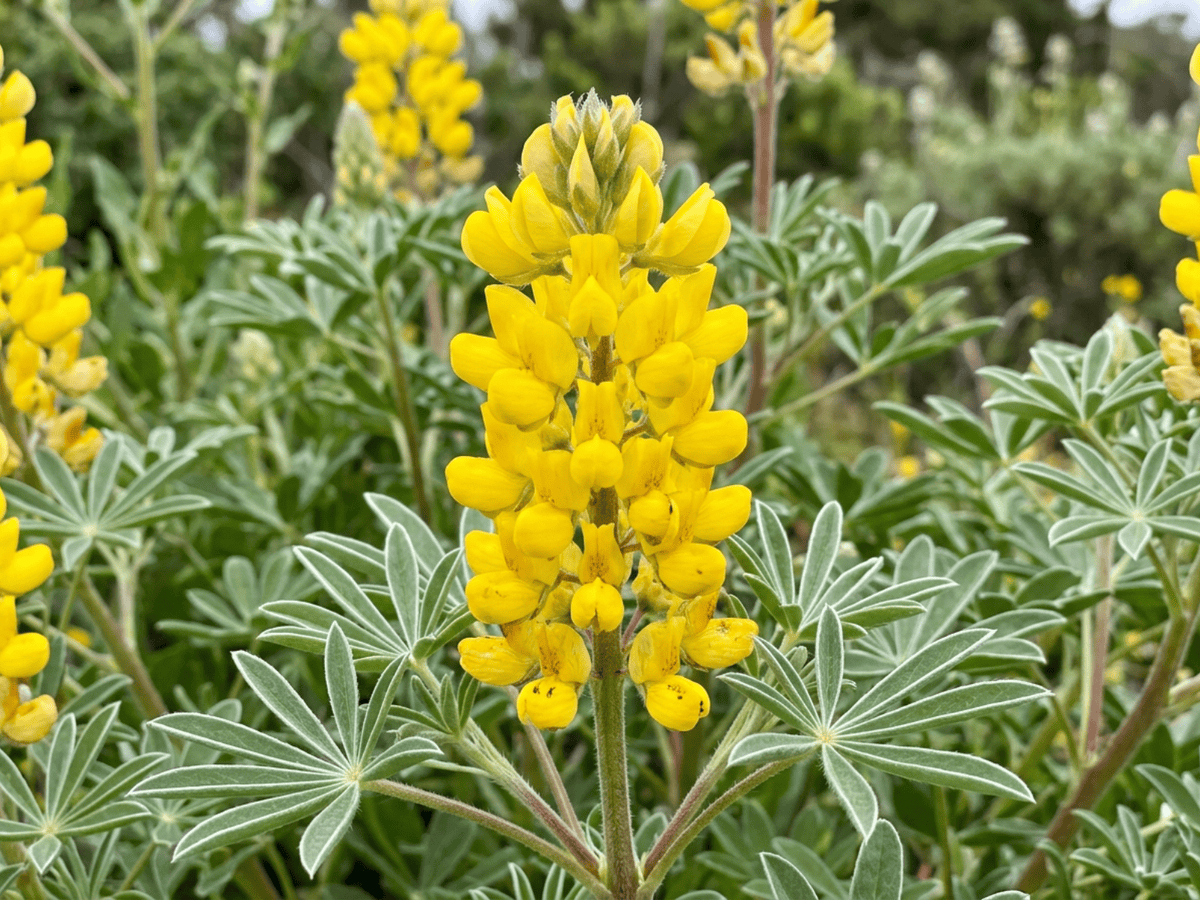
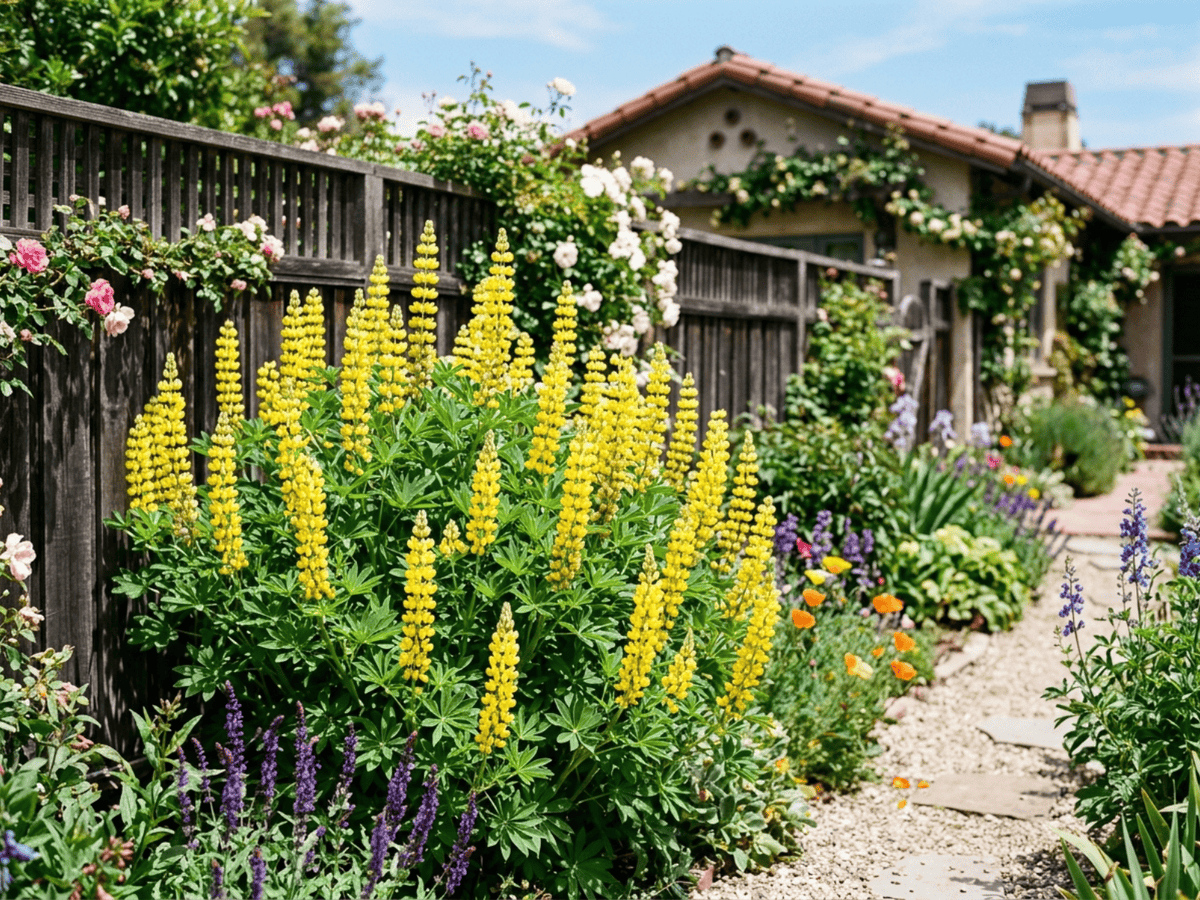
Yellow Bush Lupine is a fast-growing California native coastal shrub reaching 3-6 feet, producing fragrant spikes of bright yellow (occasionally blue or lavender) flowers beloved by bumblebees and native bees. Native to the coastal dunes and scrub of central and northern California, it fixes atmospheric nitrogen, enriching the soil. A nitrogen fixer and pioneer species, it establishes quickly on disturbed sites, though it can become invasive in non-native coastal habitats outside California.
- Fragrant
- Drought-tolerant
- Native
- Pollinator-friendly
How to care for Coastal Bush Lupine
Watering
- Springevery 14 days
- Summerevery 21 days
- Fallevery 21 days
- Winterpause watering
Soil · Well-draining
- Top dressingPine bark mulch10%
- Main mixPotting soil + perlite 2:170%
- DrainageLECA / gravel20%
Never skip the drainage layer — standing water is the top cause of root rot.
FERTILIZER
This plant needs little to no feeding.
At a Glance
- NativeNorth America
- Height4–8 ft (1.2–2.4 m)
- Spread4–8 ft (1.2–2.4 m)
- Flower colorYellow
- Foliage colorGreen
- SoilSandy, Well-drained, Acidic
- LocationsYard
Bloom time
BLOOM CYCLE
Peak bloom
Mar–Jun
Yellow fragrant flower spikes March to June
Fragrance
MODERATE FRAGRANCE
Sweet fragrance carrying in coastal air.
Toxicity
Humans Moderate · Pets Moderate
lupinine, anagyrine, and sparteine
Moderate
- Seed
- All
- Ingestion
EXPOSURE Eating seeds and any part of the plant.
EFFECT Lupine alkaloids (quinolizidines) cause neurological and respiratory symptoms and seeds most concentrated.
NOTE Documented concern for humans: Lupine alkaloids (quinolizidines) cause neurological and respiratory symptoms and seeds most concentrated.
Moderate
- Seed
- All
- Ingestion
EXPOSURE Eating seeds and any part of the plant.
EFFECT Vomiting, weakness, tremors and potentially serious with large ingestion.
NOTE ASPCA lists Lupinus as toxic to dogs, cats, and livestock — significant cattle poisoning on western rangeland.
Moderate
- Seed
- All
- Ingestion
EXPOSURE Eating seeds and any part of the plant.
EFFECT Same as dogs.
NOTE ASPCA lists Lupinus as toxic to dogs, cats, and livestock — significant cattle poisoning on western rangeland.
Educational information, not medical or veterinary advice. If exposure is suspected, contact a doctor or veterinarian.
DISTRIBUTION


- Native
- Introduced
- North America
History

Lupinus arboreus is native to coastal bluffs and dunes of the central California coast, primarily from Sonoma County south to northern San Luis Obispo County, where it grows as a rounded evergreen shrub 1-2 meters tall and wide. It produces fragrant sulfur-yellow pea-like flowers in dense vertical racemes 20-40 cm long in late spring and early summer, followed by hairy seed pods. Like other legumes, the species fixes atmospheric nitrogen through symbiotic root-nodule bacteria, which made it attractive to early-20th-century dune-stabilization plantings on the US Pacific Coast. It was extensively planted outside its native range — particularly along the Oregon and Washington coasts and along the northern California coast north of Mendocino — to stabilize shifting sand dunes near coastal highways, railroads, and settlements.
These plantings have become one of the more serious invasive-plant problems of Pacific Northwest coastal ecosystems: by fixing nitrogen into naturally nitrogen-poor sand dune soils, yellow bush lupine fundamentally alters dune ecology, allowing invasive grasses and forbs to colonize and destroying habitat for native dune-specialist plants and the rare western snowy plover and other dune-nesting birds. Active removal and restoration programs now operate on the Oregon and Humboldt coasts. Within its native central California range the species remains an important coastal ecosystem component and an attractive ornamental.
A foundational species in California coastal dune restoration, widely used to stabilize blow-sand and accelerate succession. Indigenous peoples of California roasted seeds for food after leaching. Now naturalized in coastal regions worldwide—including New Zealand and the UK—where it is considered invasive, though it remains a valued native in its California homeland.
Symbolism & meaning
What It Symbolizes
Coastal Bush Lupine carries Imagination — a shrub that can transform open dunes into a fragrant yellow seascape almost overnight. Its Generosity runs underground as well: nitrogen-fixing roots quietly enrich the sandy soil, paving the way for plants that follow. A shrub that gives more to its place than it takes.
- Imagination — dynamic plant transforming landscapes
- Generosity — gives nutrients back to the soil
Where the Name Comes From
The name Coastal Bush Lupine points to coastal habitats. 'Lupinus' from Latin 'lupus' (wolf), once thought to rob soil of nutrients—now known to enrich it; 'arboreus' means 'tree-like'.
Uses & Fun Facts
- Yellow flower spires top fast-growing evergreen shrub
- Pea flowers attract bumblebees along coastal bluffs
- Fixes nitrogen and stabilizes sandy slopes
Related plants
More Lupinus plants
Plants with similar care
 Chinese AbeliaAbelia chinensis
 Fragrant AbeliaAbelia mosanensis
 Large-Flowered AbeliaAbelia uniflora
 Glossy AbeliaAbelia x grandiflora
Frequently asked questions
How often should I water Coastal Bush Lupine?
Water about every 14 days during the growing season, and always let excess water drain away.
How much light does Coastal Bush Lupine need?
Full sun: 6+ hrs direct. Watch the leaves — scorching or stretching means the light needs adjusting.
Is Coastal Bush Lupine toxic to cats or dogs?
Pets Moderate (Dogs Moderate · Cats Moderate) Educational information, not medical or veterinary advice. If exposure is suspected, contact a doctor or veterinarian.
Is Coastal Bush Lupine easy to grow?
Yes — it is considered an easy, beginner-friendly plant.
When does Coastal Bush Lupine bloom?
It typically blooms Mar–Jun in the Northern Hemisphere.
YardMate
Identify any plant in seconds
Snap a photo — YardMate names the plant, diagnoses problems, and reminds you when to water.
Download on the App Store