 YardMate


Japanese Crab
Malus floribunda
Easy · Beginner friendlyAbout Japanese Crab
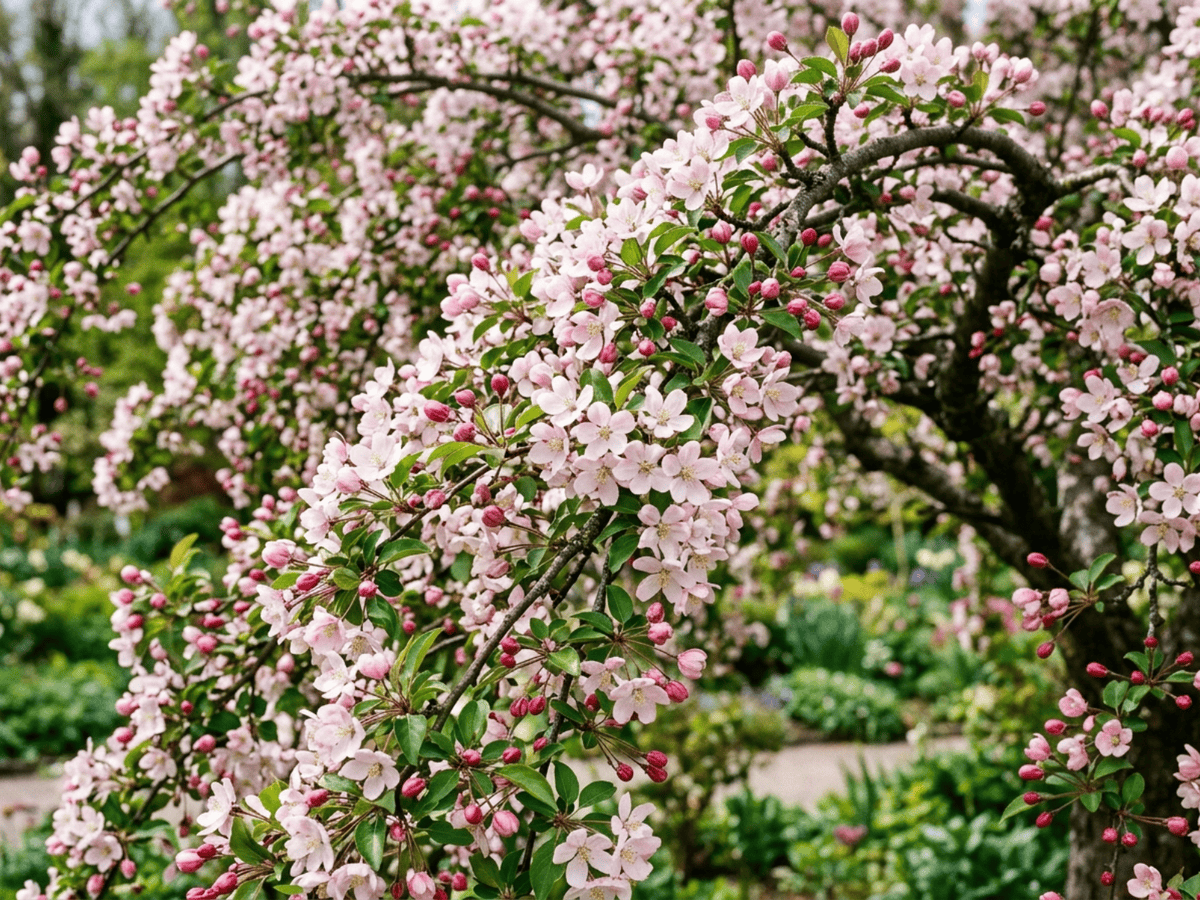
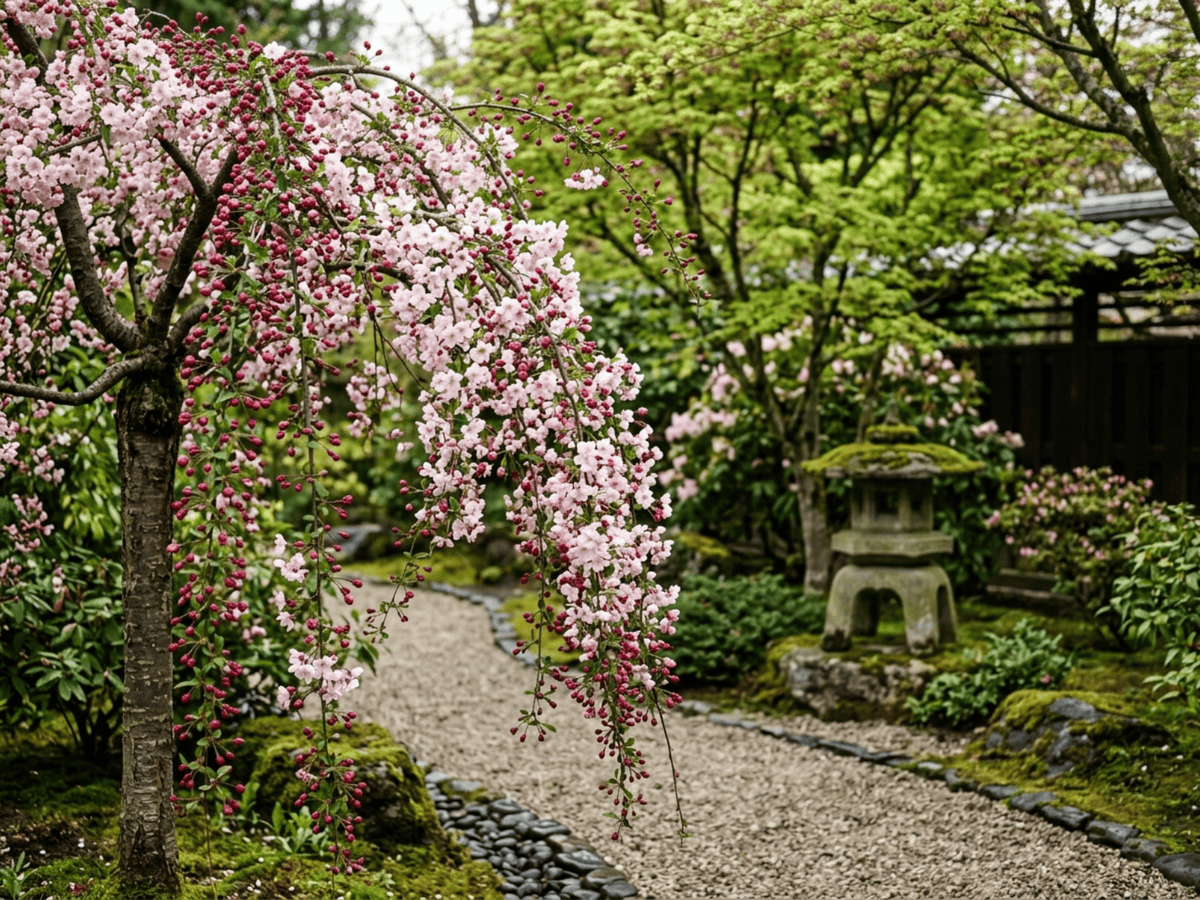
Malus floribunda, the Japanese flowering crabapple, is one of the most ornamental crabapple species and a cornerstone of spring garden displays worldwide. This small deciduous tree grows 15 to 25 feet tall with a dense, rounded, spreading habit. In mid-spring, deep crimson-pink buds open to masses of pale pink flowers that gradually fade to white, creating a breathtaking two-tone effect across the canopy. The flowers are followed by small yellow to red ornamental fruits about the size of a pea that persist into autumn and attract birds. Introduced to Europe from Japan in 1862, it has become one of the most widely planted ornamental trees in temperate gardens. It prefers full sun and well-drained soil and is moderately drought-tolerant once established. While somewhat susceptible to apple scab in humid climates, its sheer flower power makes it remain popular. The arching branches create a graceful silhouette even in winter, and it serves as an excellent pollinator for apple orchards.
- Wildlife-friendly
- Pollinator-friendly
How to care for Japanese Crab
Watering
- Springevery 5 days
- Summerevery 4 days
- Fallevery 10 days
- Winterevery 30 days
Soil · Well-draining
- Top dressingPine bark mulch10%
- Main mixPotting soil + perlite 2:170%
- DrainageLECA / gravel20%
Never skip the drainage layer — standing water is the top cause of root rot.
FERTILIZER
Balanced Feed 14-14-14
An even feed covers all three needs at once, keeping leaves, roots and blooms moving together with nothing pushed out of balance.
- Nitrogen · Leaves
- Phosphorus · Roots + Blooms
- Potassium · Strength
- Springevery 45 days
At a Glance
- NativeEast Asia
- Height15–25 ft (4.6–7.6 m)
- Spread15–25 ft (4.6–7.6 m)
- Flower colorPink, White
- Foliage colorGreen, Yellow
- SoilLoamy, Well-drained, Neutral
- LocationsYard
Bloom time
BLOOM CYCLE
Peak bloom
Mar–May
Crimson buds open to pale pink then white in mid-spring; thin interior branches for airflow to reduce scab risk
Fragrance
LIGHT FRAGRANCE
The flowers have a light sweet scent.
Toxicity
Humans Slight · Pets Moderate
cyanogenic glycosides (amygdalin, in seeds, stems, leaves)
Slight
- Seed
- Ingestion
EXPOSURE Eating seeds.
EFFECT Seeds contain trace cyanogenic glycosides and flesh of fruit is edible.
NOTE Documented concern for humans: Seeds contain trace cyanogenic glycosides and flesh of fruit is edible.
Moderate
- Seed
- Leaf
- Stem
- Ingestion
EXPOSURE Eating seeds, leaves, and stems.
EFFECT ASPCA lists Malus spp. as toxic to dogs and stems, leaves, and seeds contain cyanogenic glycosides.
NOTE ASPCA lists apple (Malus sylvestris) and by extension the genus as toxic to dogs, cats, and horses; fruit flesh is safe but seeds, stems, and leaves are not.
Moderate
- Seed
- Leaf
- Stem
- Ingestion
EXPOSURE Eating seeds, leaves, and stems.
EFFECT Cyanogenic glycoside exposure: respiratory distress, dilated pupils, shock if consumed.
NOTE ASPCA lists apple (Malus sylvestris) and by extension the genus as toxic to dogs, cats, and horses; fruit flesh is safe but seeds, stems, and leaves are not.
Educational information, not medical or veterinary advice. If exposure is suspected, contact a doctor or veterinarian.
DISTRIBUTION

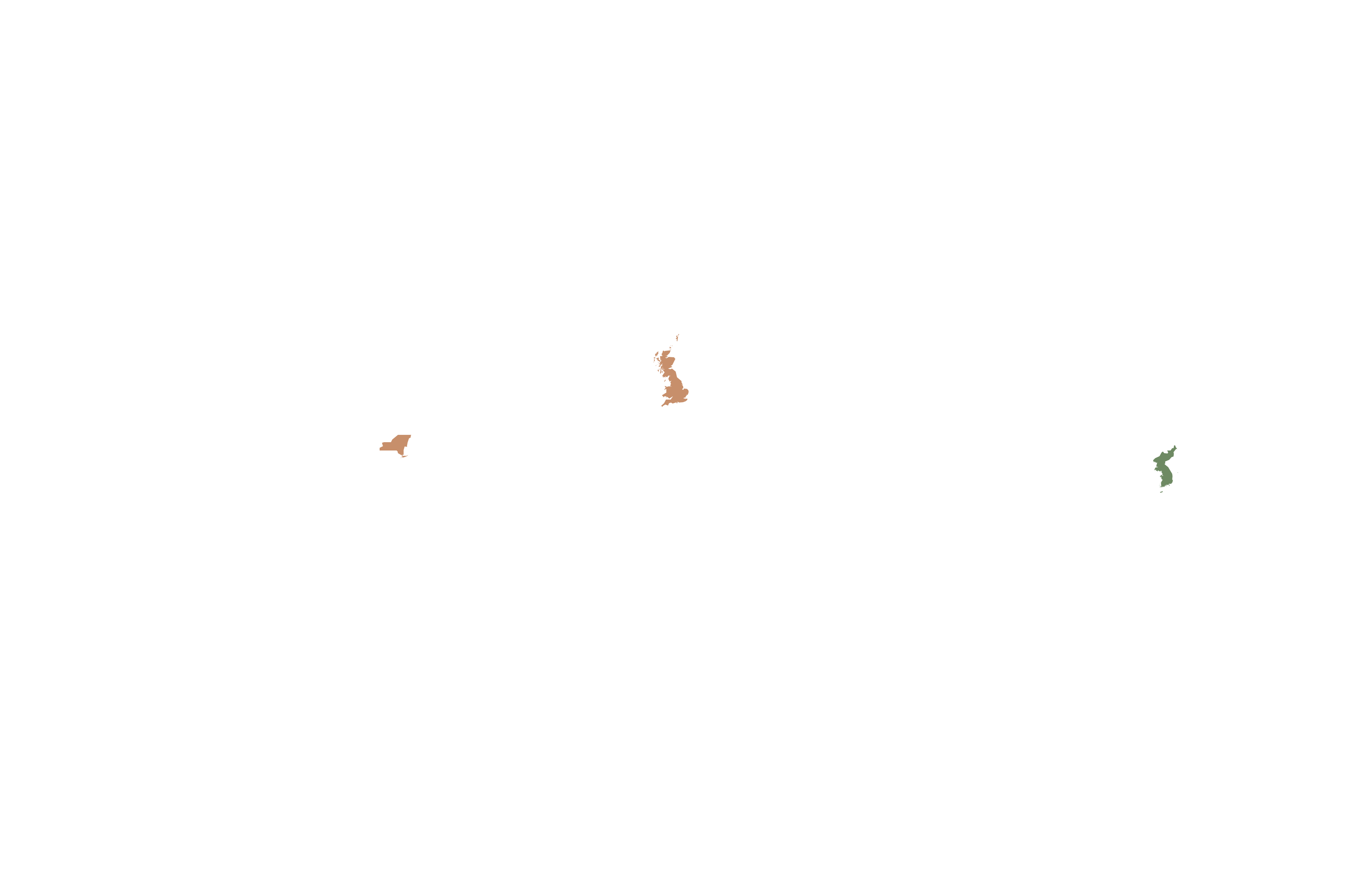
- Native
- Introduced
- East Asia
History
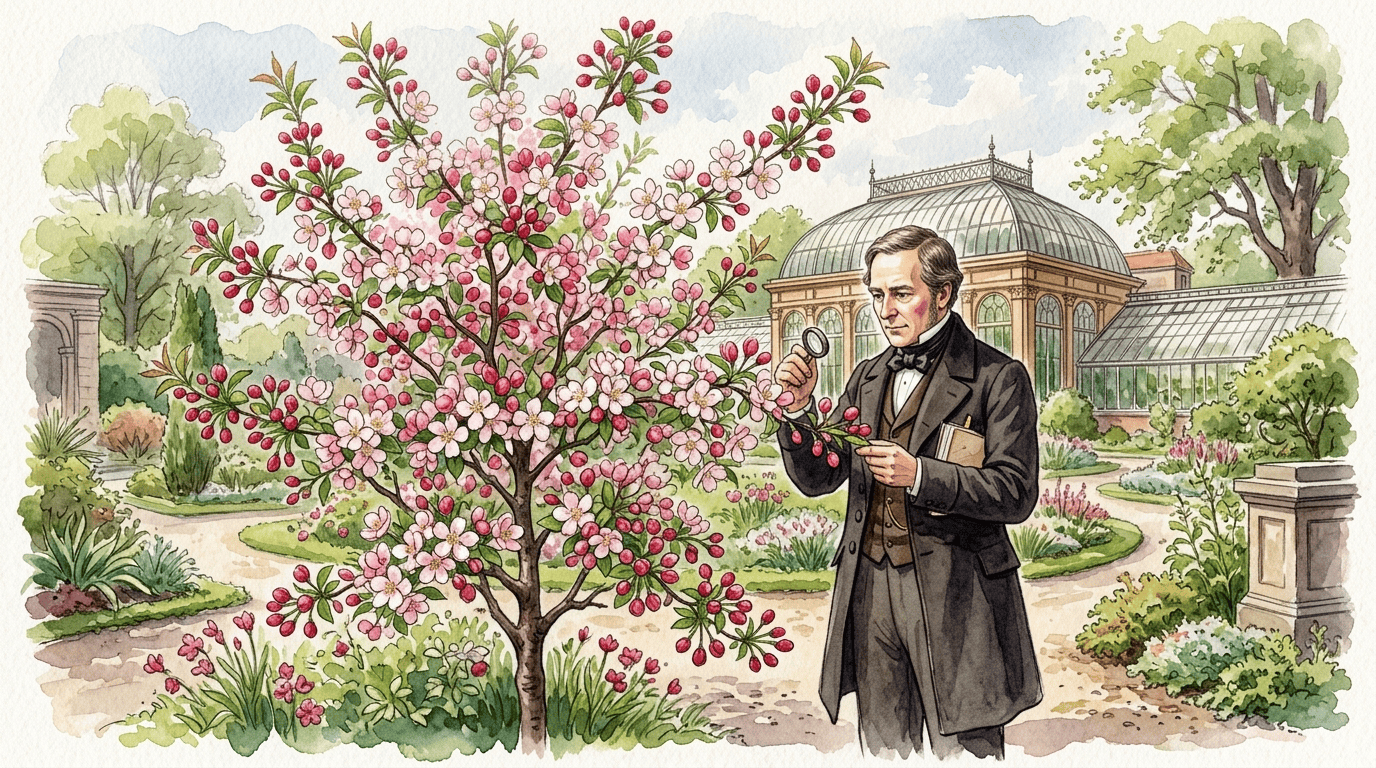
Malus floribunda is native to or long-cultivated in Japan — its true wild origin is debated, and it may be an ancient hybrid cultivated in Japanese horticulture rather than a purely wild species. It was introduced to Western horticulture via the Leiden botanical garden around 1862 by Philipp Franz von Siebold, the German physician-botanist who had worked for the Dutch East India Company at Dejima in Nagasaki. The species' defining characteristic — buds opening deep pink and fading to nearly white as flowers mature, producing a two-tone display — made it one of the most widely planted ornamental crabapples of the 19th and 20th centuries.
It is a parent of numerous disease-resistant modern crabapple cultivars including "Prairifire," "Donald Wyman," and "Adams," developed to replace older crabapples vulnerable to apple scab, fire blight, cedar-apple rust, and powdery mildew. The small red-yellow fruits are persistent into winter and valuable for songbirds and as Christmas-time decoration.
Modern North American horticulture increasingly avoids older Malus cultivars entirely in favor of these scab-resistant hybrids. Malus floribunda was introduced to the West from Japan by German botanist Philipp Franz von Siebold in 1862 and rapidly became one of the most planted ornamental trees in Europe and North America. In Japanese gardens, crabapples have been cultivated for centuries alongside cherries as complementary spring-flowering trees.
Symbolism & meaning
What It Symbolizes
The Japanese Crab signals preference in Victorian floriography — the language flower for personal choice and considered favor. Its lavish spring bloom, smothering each bough in rosy buds and white-pink petals, also carries the deeper meaning of overwhelming natural beauty. To plant this crabapple is to choose, deliberately, a tree whose annual performance is so abundant that the act of selection itself becomes a small declaration of love.
- Preference — In the Victorian language of flowers, crabapple blossoms signified personal preference and choice
- Beauty — The lavish spring display represents overwhelming natural beauty
Where the Name Comes From
The name Japanese Crab points to Japan. 'Malus' is the Latin word for apple. 'Floribunda' means 'profusely flowering' in Latin, describing its extraordinary abundance of blossoms.
Uses & Fun Facts
- Spring blossom, fruit, and branching form make a compact ornamental crabapple
- Japanese Crab flowers nourish foraging bees and pollinators
- Japanese Crab berries and cover sustain songbirds through autumn
Related plants
More Malus plants
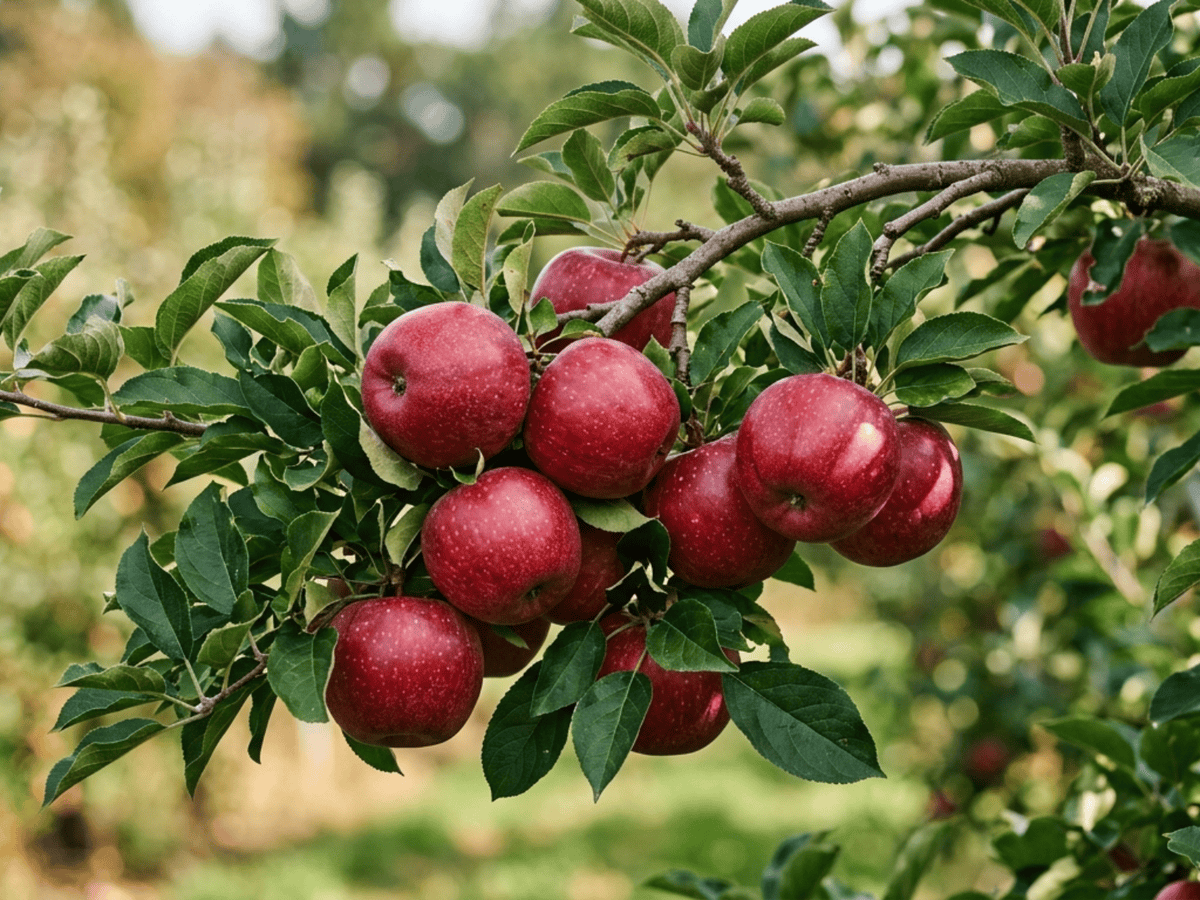
Plants with similar care
 Chinese AbeliaAbelia chinensis
 Fragrant AbeliaAbelia mosanensis
 Large-Flowered AbeliaAbelia uniflora
 Glossy AbeliaAbelia x grandiflora
Frequently asked questions
How often should I water Japanese Crab?
In summer, water about every 4 days; in winter, about every 30 days. Adjust for heat, pot size and drainage.
How much light does Japanese Crab need?
Full sun: 6+ hrs direct. Watch the leaves — scorching or stretching means the light needs adjusting.
Is Japanese Crab toxic to cats or dogs?
Pets Moderate (Dogs Moderate · Cats Moderate) Educational information, not medical or veterinary advice. If exposure is suspected, contact a doctor or veterinarian.
Is Japanese Crab easy to grow?
Yes — it is considered an easy, beginner-friendly plant.
When does Japanese Crab bloom?
It typically blooms Mar–May in the Northern Hemisphere.
YardMate
Identify any plant in seconds
Snap a photo — YardMate names the plant, diagnoses problems, and reminds you when to water.
Download on the App Store