 YardMate


Gold Lace Cactus
Mammillaria elongata
Easy · Beginner friendlyAbout Gold Lace Cactus
Mammillaria elongata, commonly called ladyfinger cactus or gold lace cactus, is a charming clustering cactus native to central Mexico. It produces dense clumps of slender, cylindrical stems covered in short, interlocking star-shaped spines that range from golden yellow to reddish-brown, giving the plant a delicate lace-like texture. Individual stems reach about 15 centimeters long and 2 to 3 centimeters in diameter, but the plant forms impressive cushion-like clusters over time as it offsets prolifically. In spring, a ring of small cream to pale pink bell-shaped flowers appears around the top of each stem, followed by tiny red club-shaped fruit. The plant is easy to grow, tolerating some neglect and adapting well to indoor conditions with bright light. Its spines, while numerous, are relatively soft and unlikely to cause injury. Mammillaria elongata is one of the most popular beginner cacti due to its forgiving nature, rapid clustering habit, and attractive spine coloration. The cristata (crested) form, known as 'brain cactus', is a particularly sought-after mutation.
- Drought-tolerant
- Compact
- Low-maintenance
- Container-friendly
How to care for Gold Lace Cactus
Watering
- Springevery 14 days
- Summerevery 10 days
- Fallevery 21 days
- Winterevery 45 days
Soil · Fast-draining
- Main mixSand + pumice + soil 1:1:150%
- DrainagePumice / gravel50%
Keep grit at half the mix or more — this soil is meant to dry out fast.
FERTILIZER
Cactus & Succulent Feed 2-7-7
Hold the nitrogen back and growth stays compact instead of soft and stretched. Phosphorus and potassium carry the roots and the flowering.
- Nitrogen · Leaves
- Phosphorus · Roots + Blooms
- Potassium · Strength
- Springevery 45 days
- Summerevery 45 days
- Fallevery 60 days
At a Glance
- NativeNorth America
- Height0.25–0.5 ft (0.1–0.2 m)
- Spread0.5–1 ft (0.2–0.3 m)
- Flower colorYellow, Pink
- Foliage colorGreen, Yellow
- SoilSandy, Well-drained
- LocationsIndoor · Balcony · Yard
Bloom time
BLOOM CYCLE
Peak bloom
Mar–May
Ring of cream to pale pink flowers around stem tops in spring
Fragrance
NO FRAGRANCE
No notable fragrance.
Toxicity
Humans Slight
Unknown toxic principle
Slight
- Stem
- Contact
EXPOSURE Touching stems.
EFFECT Mechanical injury from spines and no chemical toxicity.
NOTE Documented concern for humans: Mechanical injury from spines and no chemical toxicity.
Safe
EXPOSURE No exposure route is reported.
EFFECT Not listed as chemically toxic by ASPCA and spine injury possible.
NOTE Listed as non-toxic for dogs; avoid eating ornamental plants unless confirmed edible.
Safe
EXPOSURE No exposure route is reported.
EFFECT Not listed as chemically toxic and spine injury possible.
NOTE Listed as non-toxic for cats; avoid eating ornamental plants unless confirmed edible.
Educational information, not medical or veterinary advice. If exposure is suspected, contact a doctor or veterinarian.
DISTRIBUTION


- Native
- Introduced
- North America
History
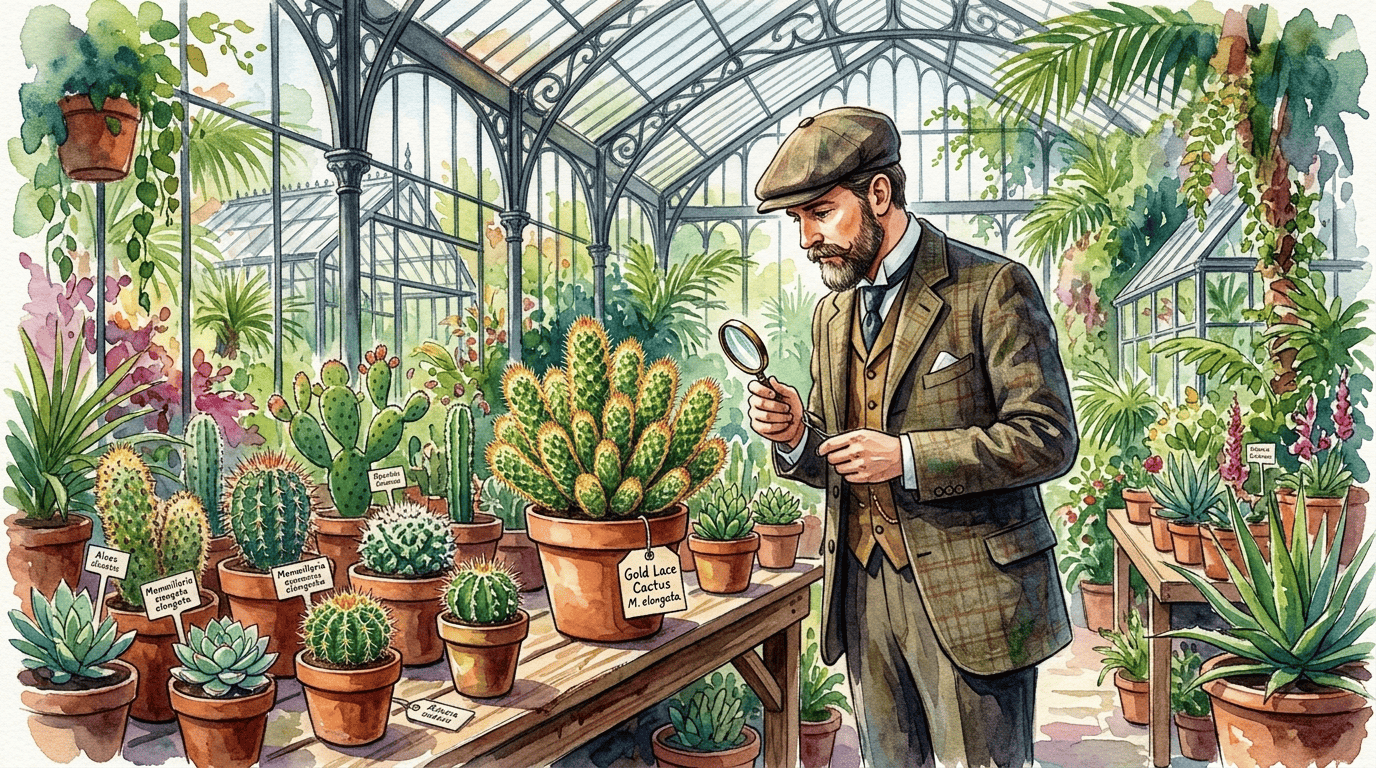
Mammillaria elongata is native to rocky limestone slopes of central Mexico, particularly Hidalgo and Querétaro states. It was formally described by French botanist Augustin Pyramus de Candolle in 1828 and quickly entered European cactus collections, which were booming through the mid-19th century as Victorian glasshouses proliferated. Unlike most of the globe-forming Mammillaria species, M. elongata produces elongated finger-like stems that cluster into compact mounds, inspiring common names including "ladyfinger cactus" and "gold lace cactus."
It is among the most commercially mass-produced houseplant cacti worldwide, with Dutch, Spanish, Chinese, and Central American growers supplying millions of plants annually. The crested (cristate) form is particularly prized among collectors for its wave-like fused stems. Mammillaria elongata is part of the largest cactus genus, with over 200 species mostly found in Mexico.
It was first described in 1827 by Augustin Pyramus de Candolle, a Swiss botanist who cataloged thousands of plant species. The cristata (crested) mutation, where the growing point fans out into a brain-like form, occurs rarely in nature but has been selectively propagated by nurseries and commands premium prices. Mexico has designated many Mammillaria species as protected under national law due to habitat loss from agriculture and development.
Symbolism & meaning
What It Symbolizes
The Gold Lace Cactus carries grace through its delicate golden lacework of fine spines, embodying elegance in a miniature, almost decorative form. Its prolific clustering habit gives it a second meaning of community, a tight family of fingers leaning together as a single supportive group. It is often read as a flower of small gathered grace, a cactus whose beauty is inseparable from it instinct to grow alongside its own kind.
- Grace — Its delicate golden lace-like spines embody elegance in a miniature form
- Community — Its prolific clustering habit represents togetherness and mutual support
Where the Name Comes From
The name Gold Lace Cactus describes its cactus-like form. Mammillaria from Latin 'mammilla' (nipple), referring to the tubercles on the stem. 'Elongata' means elongated, describing the slender cylindrical stems.
Uses & Fun Facts
- Clustering ladyfinger cactus for sunny windowsill pots
- Crested cristata form prized by cactus collectors
Related plants
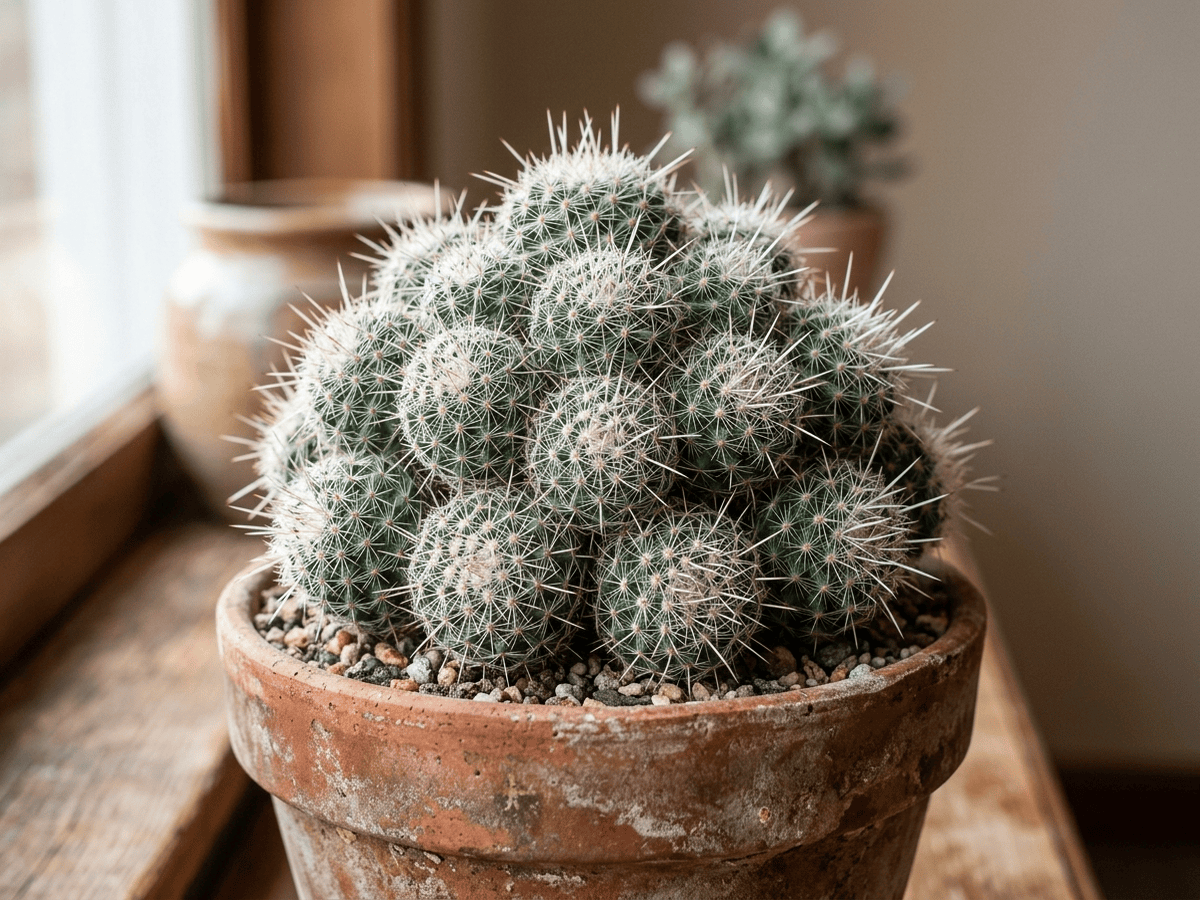
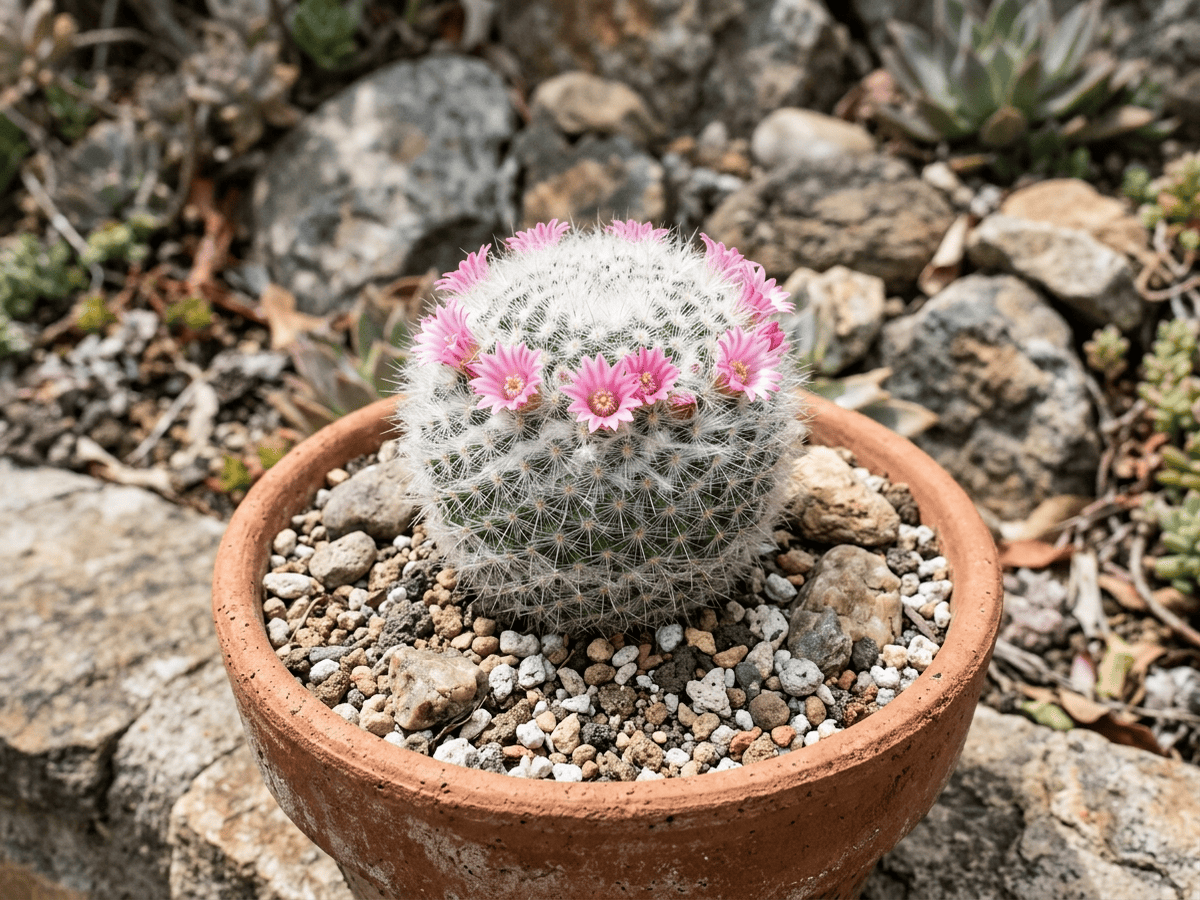
More Mammillaria plants
Plants with similar care
 Chinese AbeliaAbelia chinensis
 Fragrant AbeliaAbelia mosanensis
 Large-Flowered AbeliaAbelia uniflora
 Glossy AbeliaAbelia x grandiflora
Frequently asked questions
How often should I water Gold Lace Cactus?
In summer, water about every 10 days; in winter, about every 45 days. Adjust for heat, pot size and drainage.
How much light does Gold Lace Cactus need?
Full sun: 6+ hrs direct. Watch the leaves — scorching or stretching means the light needs adjusting.
Is Gold Lace Cactus toxic to cats or dogs?
Pets Safe (Dogs Safe · Cats Safe) Educational information, not medical or veterinary advice. If exposure is suspected, contact a doctor or veterinarian.
Is Gold Lace Cactus easy to grow?
Yes — it is considered an easy, beginner-friendly plant.
Can Gold Lace Cactus be grown indoors?
Yes, it adapts well to indoor growing given the right light.
When does Gold Lace Cactus bloom?
It typically blooms Mar–May in the Northern Hemisphere.
YardMate
Identify any plant in seconds
Snap a photo — YardMate names the plant, diagnoses problems, and reminds you when to water.
Download on the App Store