 YardMate


Old Woman Cactus
Mammillaria hahniana
Medium · Some experienceAbout Old Woman Cactus
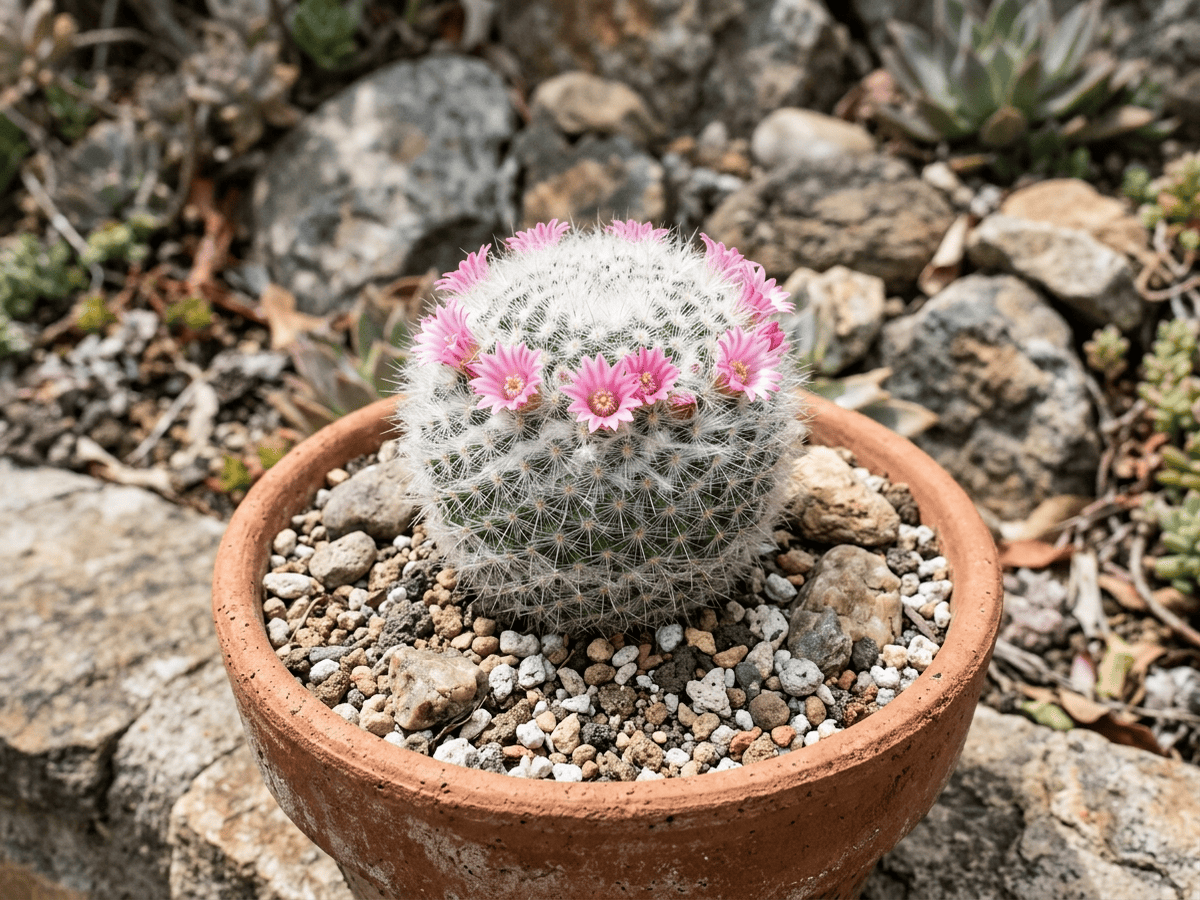
Mammillaria hahniana, known as old lady cactus, is a charming spherical to cylindrical cactus native to Guanajuato in central Mexico. Its most distinctive feature is the dense covering of long, white, hair-like radial spines that envelop the plant body like a soft white beard or shawl, giving it its affectionate common name. Beneath this white hair, the cactus has a globular green body covered in spiraling tubercles. In spring and early summer, it produces a spectacular crown of bright reddish-pink to purplish-magenta flowers arranged in a ring around the top — the vivid color contrast against the white hair is one of the most beautiful sights in the cactus world. Small red fruits follow the flowers. The plant is solitary when young but may slowly offset with age to form small clusters. It grows moderately slowly, reaching about 10 centimeters in diameter. Old lady cactus requires excellent drainage and bright light, and is sensitive to overwatering, especially in winter when it should be kept nearly dry. Its photogenic appearance and manageable size make it a beloved collector's specimen.
- Compact
How to care for Old Woman Cactus
Watering
- Springevery 14 days
- Summerevery 10 days
- Fallevery 21 days
- Winterevery 45 days
Soil · Fast-draining
- Main mixSand + pumice + soil 1:1:150%
- DrainagePumice / gravel50%
Keep grit at half the mix or more — this soil is meant to dry out fast.
FERTILIZER
Cactus & Succulent Feed 2-7-7
Hold the nitrogen back and growth stays compact instead of soft and stretched. Phosphorus and potassium carry the roots and the flowering.
- Nitrogen · Leaves
- Phosphorus · Roots + Blooms
- Potassium · Strength
- Springevery 45 days
- Summerevery 45 days
- Fallevery 60 days
At a Glance
- NativeNorth America
- Height0.3–0.7 ft (0.1–0.2 m)
- Spread0.5–1 ft (0.2–0.3 m)
- Flower colorPink, Purple
- Foliage colorGreen, Silver
- SoilSandy, Well-drained
- LocationsIndoor · Balcony
Bloom time
BLOOM CYCLE
Peak bloom
Dec–May
Crown of vivid magenta-pink flowers in spring; keep cool and dry in winter to encourage blooming
Fragrance
NO FRAGRANCE
No notable fragrance.
Toxicity
Humans Slight
Unknown toxic principle
Slight
- Stem
- Contact
EXPOSURE Touching stems.
EFFECT Mechanical injury from spines and no chemical toxicity.
NOTE Documented concern for humans: Mechanical injury from spines and no chemical toxicity.
Safe
EXPOSURE No exposure route is reported.
EFFECT Not listed as chemically toxic.
NOTE Listed as non-toxic for dogs; avoid eating ornamental plants unless confirmed edible.
Safe
EXPOSURE No exposure route is reported.
EFFECT Not listed as chemically toxic.
NOTE Listed as non-toxic for cats; avoid eating ornamental plants unless confirmed edible.
Educational information, not medical or veterinary advice. If exposure is suspected, contact a doctor or veterinarian.
DISTRIBUTION


- Native
- North America
History
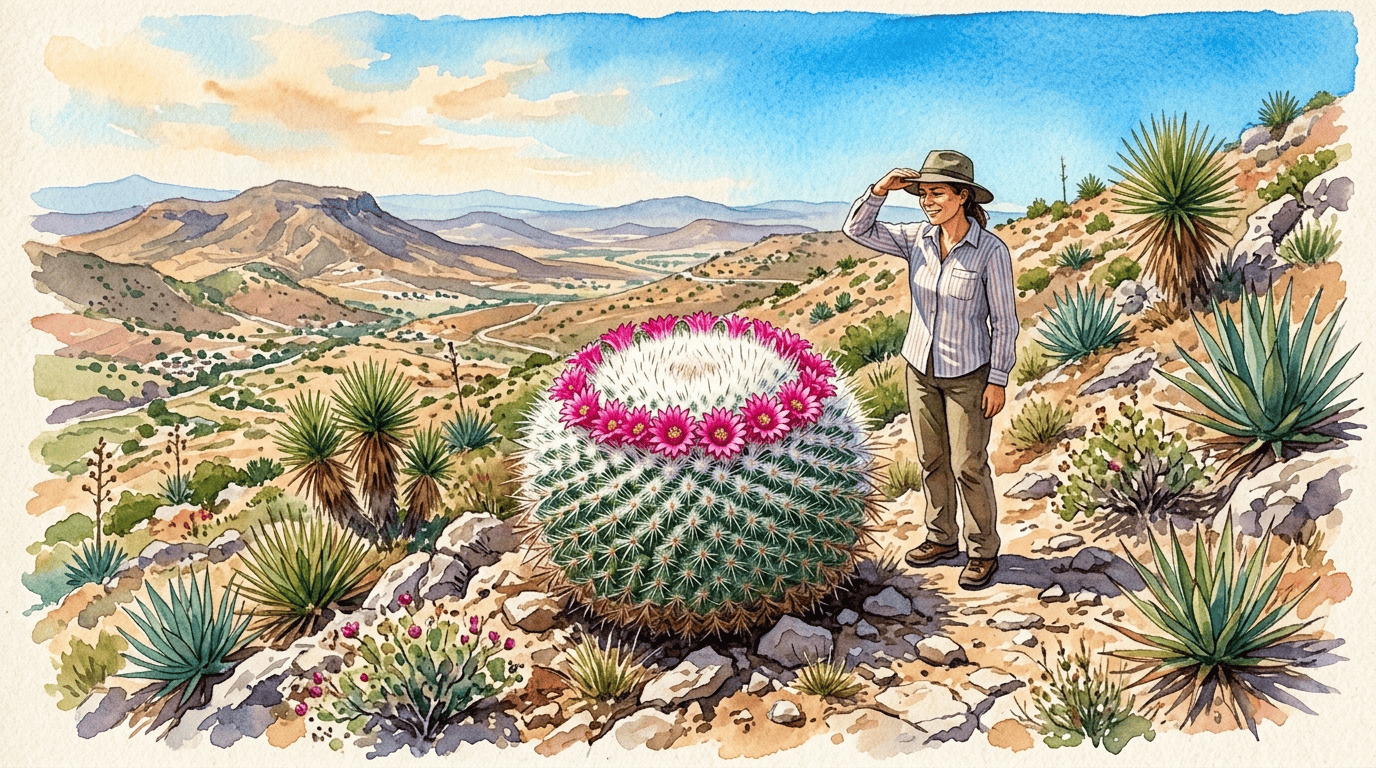
Mammillaria hahniana is native to dry limestone slopes in central Mexico, primarily in Guanajuato and Querétaro states. It was described by German botanist Werdermann in 1929 and named for German cactus collector Alfred Hahn. The species produces a flattened globe of dark green with conspicuous long white hairs and central spines that collectively form a dense silvery crown, inspiring common names including "old lady cactus."
In late winter and early spring the plant produces a characteristic ring of bright pink flowers around the crown, followed by red fruit. It grows readily from seed or offset, tolerates cool winter temperatures that promote flowering, and has become a standard windowsill cactus throughout temperate horticulture. The white hairs are modified spines that shade the plant from intense Mexican highland sun.
Mammillaria hahniana was first described in 1929 by German cactus specialist Erich Werdermann, who named it in honor of the Hahn family of notable German cactus collectors. In its native Guanajuato, Mexico, it grows on rocky limestone hillsides at elevations between 1,500 and 2,400 meters. The dense white hairs that define the species serve a dual purpose in the wild — they reflect intense high-altitude UV radiation and trap a layer of still air around the plant body, insulating it from temperature extremes. The species is considered vulnerable in the wild due to habitat degradation and illegal collection.
Symbolism & meaning
What It Symbolizes
The Old Woman Cactus wears wisdom as silver hair — a soft white pelt of bristles clothing each globe in the dignity of age. Beauty in age is its companion meaning: a small ring of rose-pink flowers crowns the head each spring, proof that elegance only deepens with time. To keep one on a sunny sill is to keep an honored elder, year after slow year.
- Wisdom — Its white-haired appearance evokes the dignity and knowledge of age
- Beauty in age — Demonstrates that elegance and charm only deepen with the passage of time
Where the Name Comes From
Mammillaria from Latin 'mammilla' (nipple), for the tubercles. 'Hahniana' honors the Hahn family, prominent German cactus enthusiasts and collectors of the early 20th century.
Uses & Fun Facts
- Compact globular cactus thrives in sunny windowsill pots
- Old-lady cactus fringed with white hairs and pink flower crown
Related plants
More Mammillaria plants

Plants with similar care
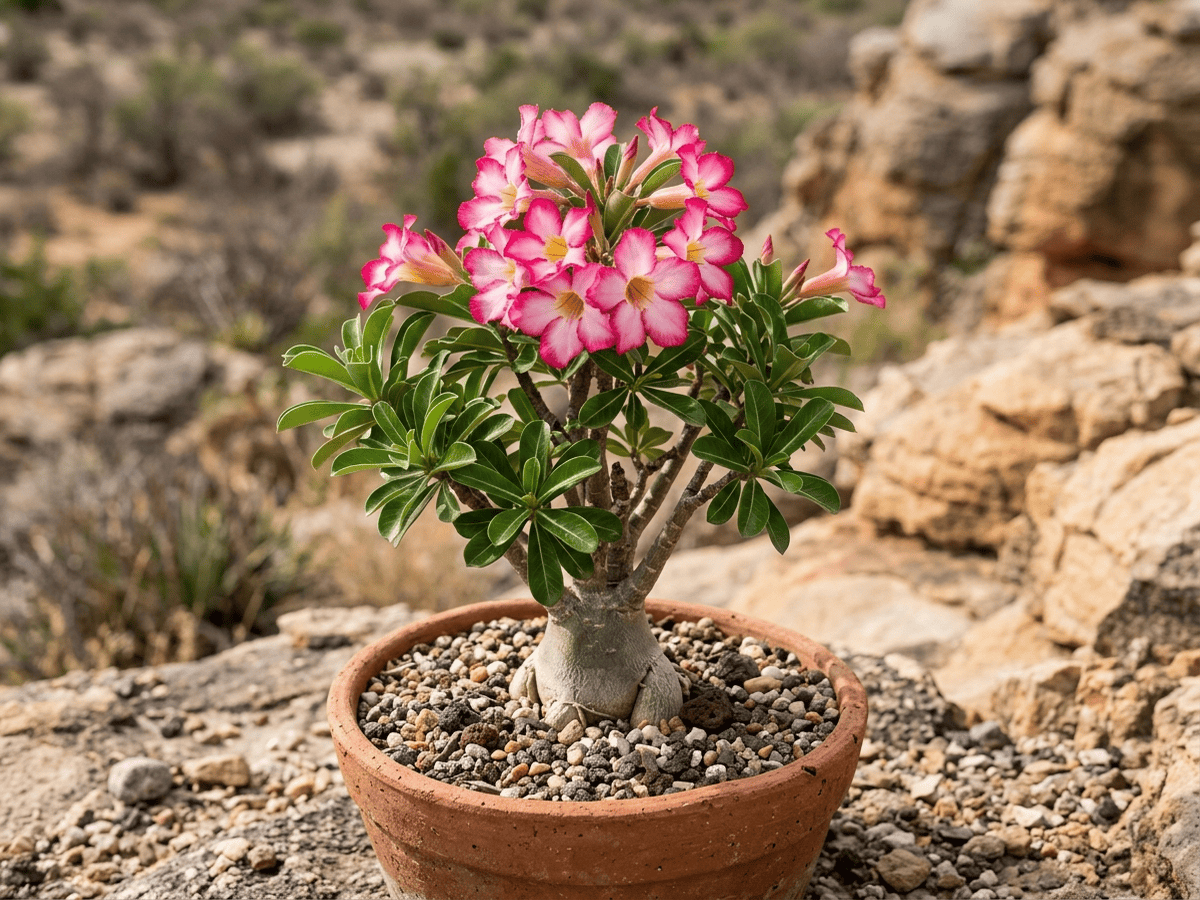 Desert RoseAdenium obesum
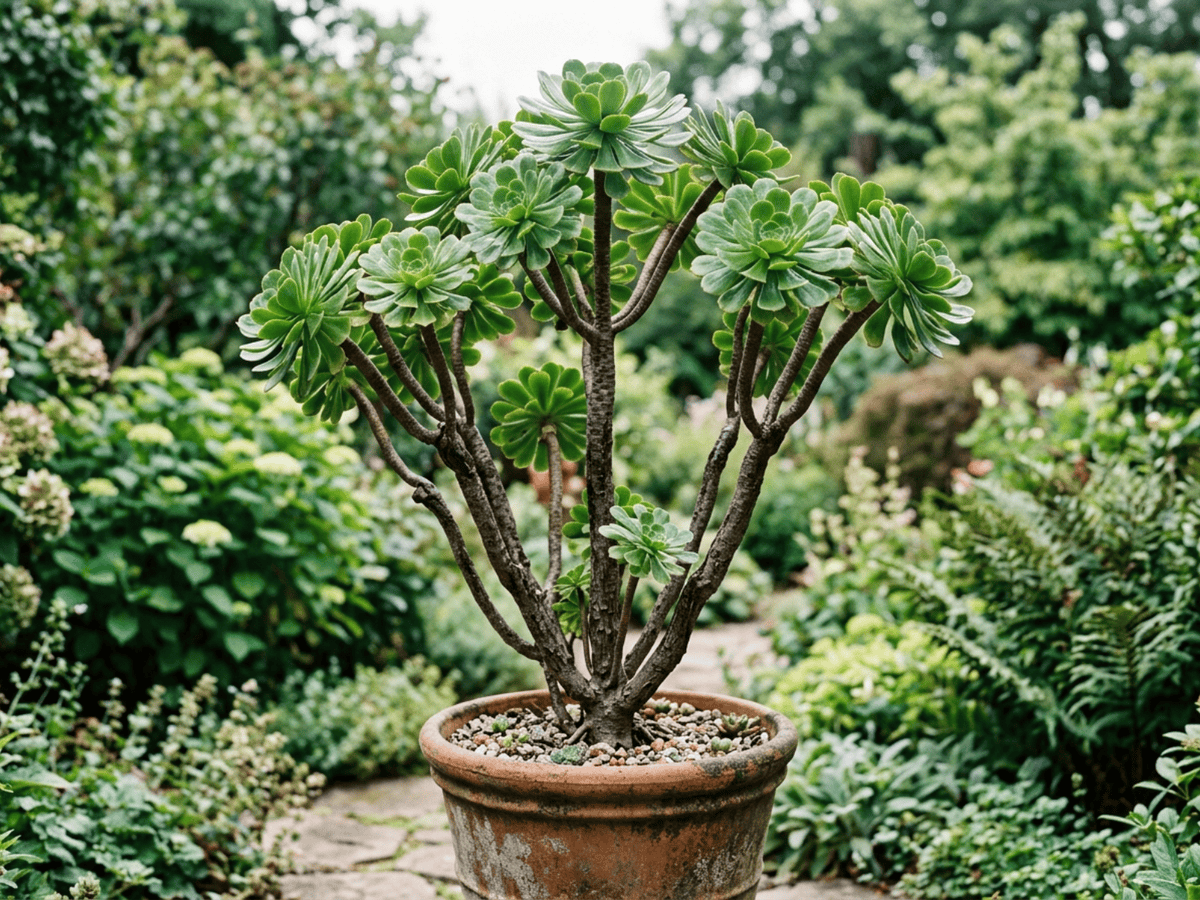 Tree AeoniumAeonium arboreum
 Queen Victoria AgaveAgave victoriae-reginae
 Lemon VerbenaAloysia citriodora
Frequently asked questions
How often should I water Old Woman Cactus?
In summer, water about every 10 days; in winter, about every 45 days. Adjust for heat, pot size and drainage.
How much light does Old Woman Cactus need?
Full sun: 6+ hrs direct. Watch the leaves — scorching or stretching means the light needs adjusting.
Is Old Woman Cactus toxic to cats or dogs?
Pets Safe (Dogs Safe · Cats Safe) Educational information, not medical or veterinary advice. If exposure is suspected, contact a doctor or veterinarian.
Is Old Woman Cactus easy to grow?
It is moderately demanding: a good choice once you have a little experience.
Can Old Woman Cactus be grown indoors?
Yes, it adapts well to indoor growing given the right light.
When does Old Woman Cactus bloom?
It typically blooms Dec–May in the Northern Hemisphere.
YardMate
Identify any plant in seconds
Snap a photo — YardMate names the plant, diagnoses problems, and reminds you when to water.
Download on the App Store