 YardMate


Twin-Spine Cactus
Mammillaria geminispina
Easy · Beginner friendlyAbout Twin-Spine Cactus
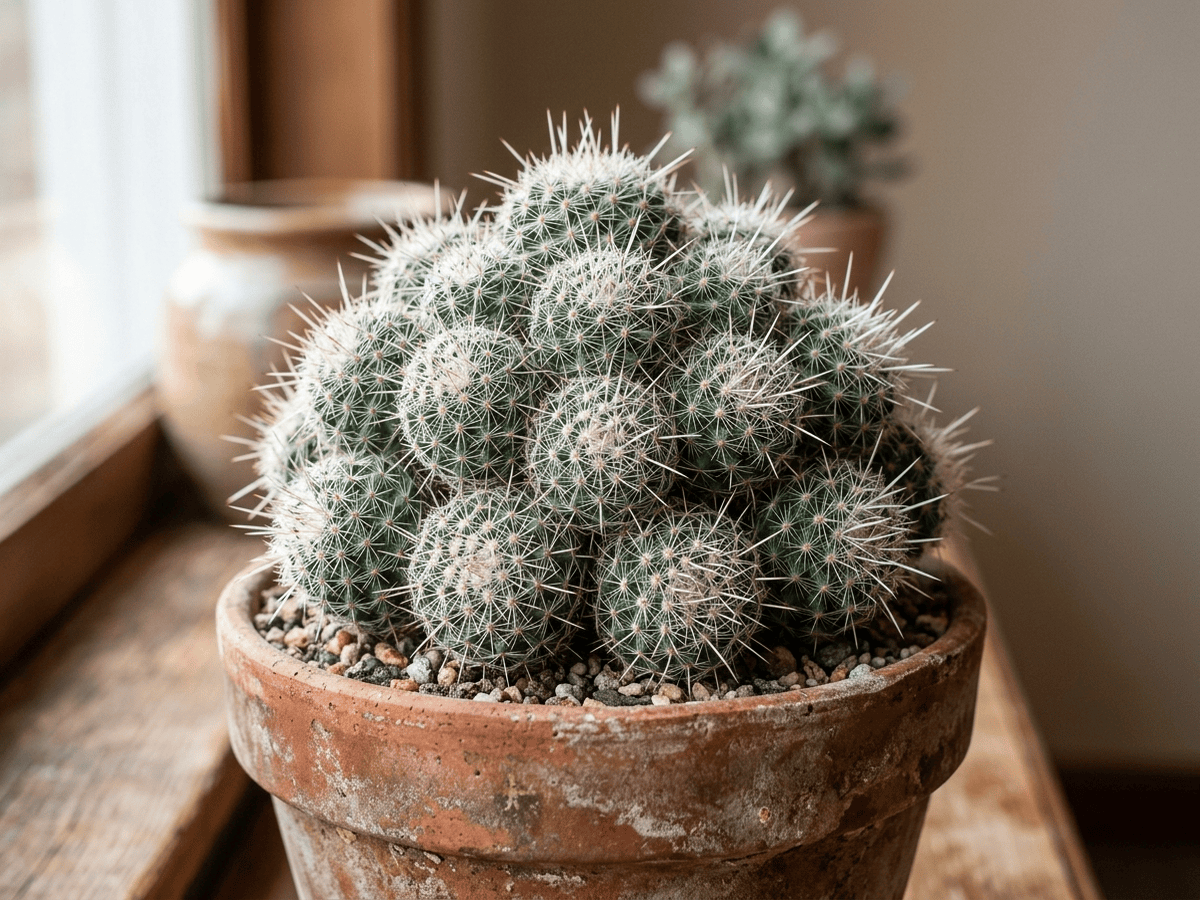
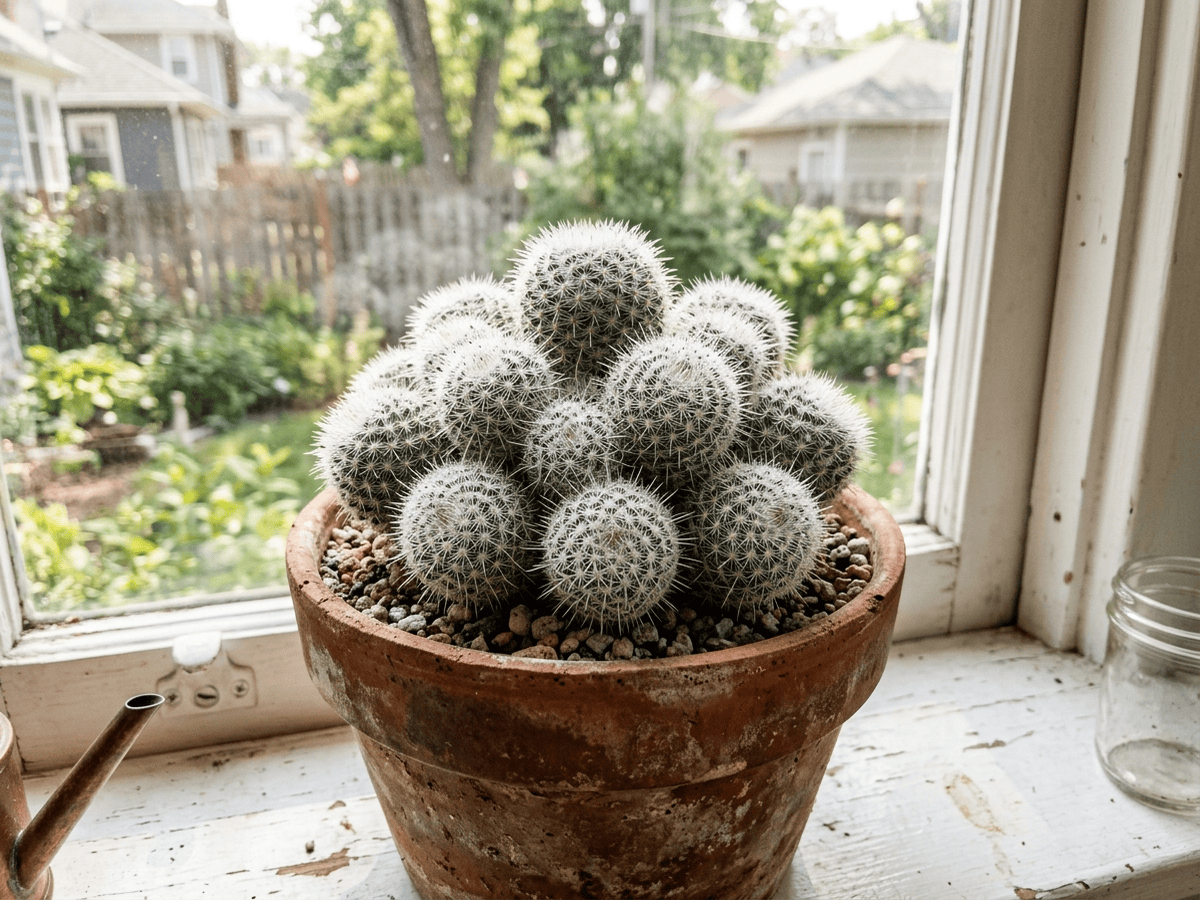
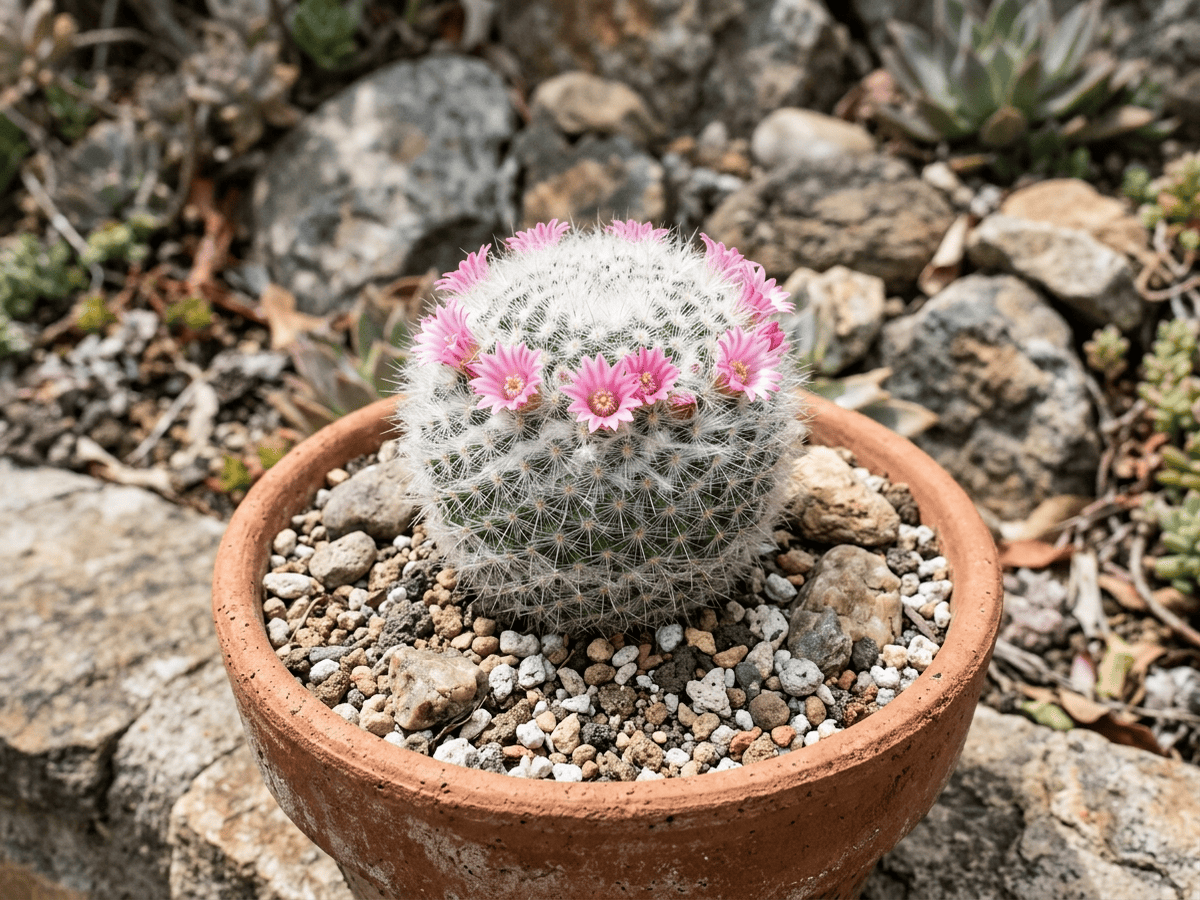
Twin-Spined Cactus is a clustering Mexican globular cactus forming dense colonies of white-spined globes 4-8 inches across. Each tubercle bears paired chalk-white central spines surrounded by a halo of fine white radial spines, giving the plant a soft snowy appearance. In late winter and spring it produces a crown of small pink-purple flowers that ring each head. One of the most commonly grown Mammillaria species across American collections.
- Drought-tolerant
- Container-friendly
- Evergreen
How to care for Twin-Spine Cactus
Watering
- Springevery 14 days
- Summerevery 21 days
- Fallevery 30 days
- Winterevery 60 days
Soil · Fast-draining
- Main mixSand + pumice + soil 1:1:150%
- DrainagePumice / gravel50%
Keep grit at half the mix or more — this soil is meant to dry out fast.
FERTILIZER
Balanced Feed 14-14-14
An even feed covers all three needs at once, keeping leaves, roots and blooms moving together with nothing pushed out of balance.
- Nitrogen · Leaves
- Phosphorus · Roots + Blooms
- Potassium · Strength
- Springevery 60 days
- Summerevery 60 days
At a Glance
- NativeNorth America
- Height0.5–1 ft (0.2–0.3 m)
- Spread0.5–1 ft (0.2–0.3 m)
- Flower colorPink, Red
- Foliage colorGreen
- Fruit colorRed
- SoilSandy, Well-drained
- LocationsIndoor · Balcony · Yard
Bloom time
BLOOM CYCLE
Peak bloom
Dec–May
Ring of pink-purple flowers in late winter to spring
Toxicity
Pets Slight
Unknown toxic principle
Not reported
EXPOSURE No exposure route is reported.
EFFECT No toxic effect is reported.
NOTE No toxicity is reported for humans in this catalog; this is not evidence that the plant is edible or harmless.
Slight
- Stem
- Contact
EXPOSURE Touching stems.
EFFECT Puncture wounds from spines.
NOTE Not chemically toxic; spines pose mechanical injury risk.
Slight
- Stem
- Contact
EXPOSURE Touching stems.
EFFECT Puncture wounds from spines.
NOTE Not chemically toxic; spines pose mechanical injury risk.
Educational information, not medical or veterinary advice. If exposure is suspected, contact a doctor or veterinarian.
DISTRIBUTION


- Native
- North America
History

Mammillaria geminispina, commonly called twin-spined cactus, is a clumping cactus native to limestone outcrops of central Mexico in the states of Hidalgo, San Luis Potosí, Querétaro, and Guanajuato at 1500-2500 meters elevation. British botanist Adrian Hardy Haworth described the species in 1824. The epithet geminispina refers to the distinctive paired (gemini = twin) long central spines per areole.
Plants form dense mounding clumps eventually 60 cm or more wide, composed of cylindrical bright green stems 10-20 cm tall with closely-spaced tubercles. Each areole bears 16-20 short white radial spines and 2-4 long (1-4 cm) white-to-pale yellow central spines, creating an overall densely woolly-white appearance. Typical of Mammillaria, small funnelform carmine-pink to deep red flowers emerge in a ring from the previous year's growth in late winter and early spring, followed by club-shaped pink-red berries.
One of the classic showy Mammillaria species in cultivation since the 19th century. Described by Haworth in 1824, it has been a fixture of European and American cactus collections for nearly two centuries. Easily mistaken for several closely related species but distinguished by its twin central spines.
Symbolism & meaning
What It Symbolizes
Twin-Spine Cactus carries charm in its snowy white spines and ring of small pink flowers crowning each plump stem like a tiara. It also expresses community, naturally clustering into tight colonies where individuals seem to hold each other up. A cactus that proves prickly and sociable can describe the same plant, depending on who is looking.
- Charm — snowy white spines and ring of pink flowers
- Community — naturally clusters into colonies
Where the Name Comes From
'Mammillaria' from Latin meaning nipple, referring to tubercles; 'geminispina' means twin-spined.
Uses & Fun Facts
- Clustering white-spined cactus prized in windowsill collections
- Pincushion mounds with a halo of pink crown flowers
Related plants
More Mammillaria plants

Plants with similar care
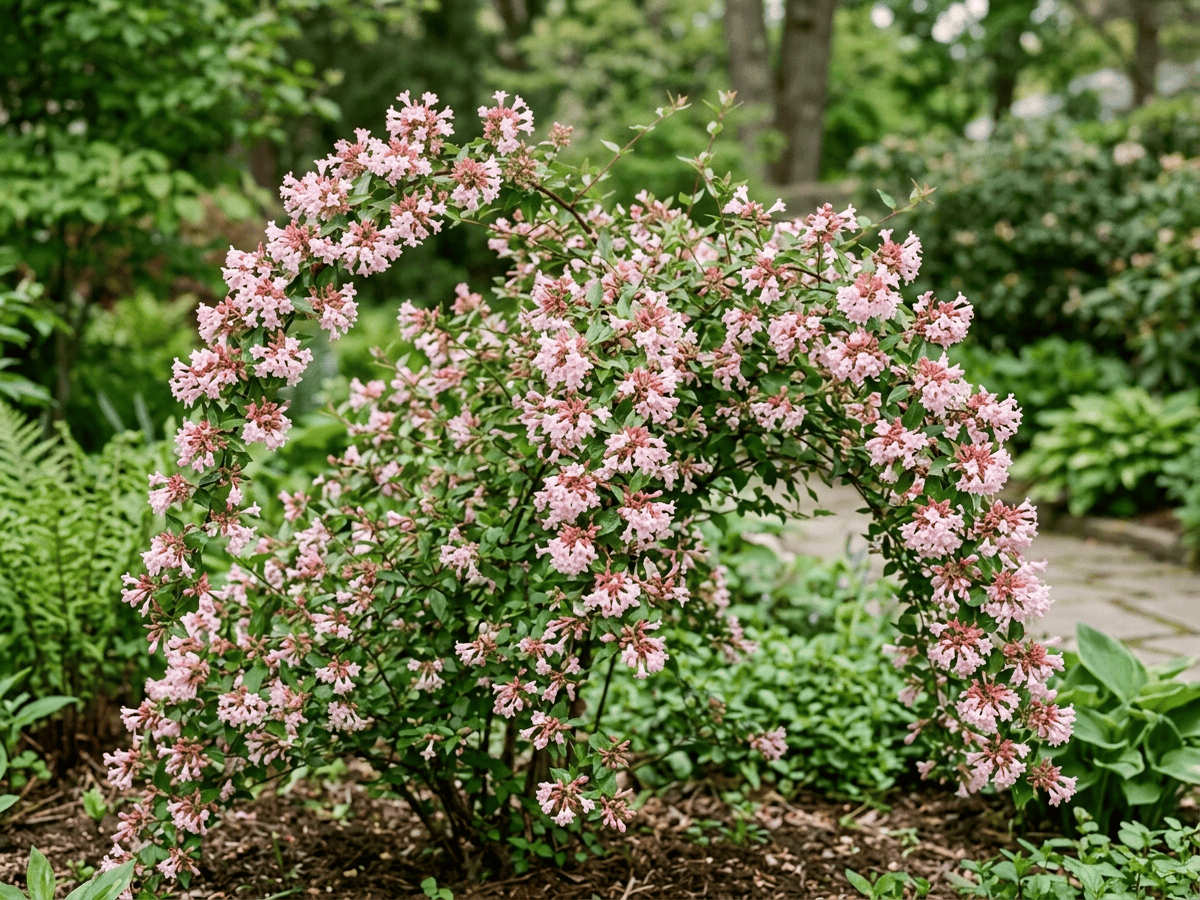
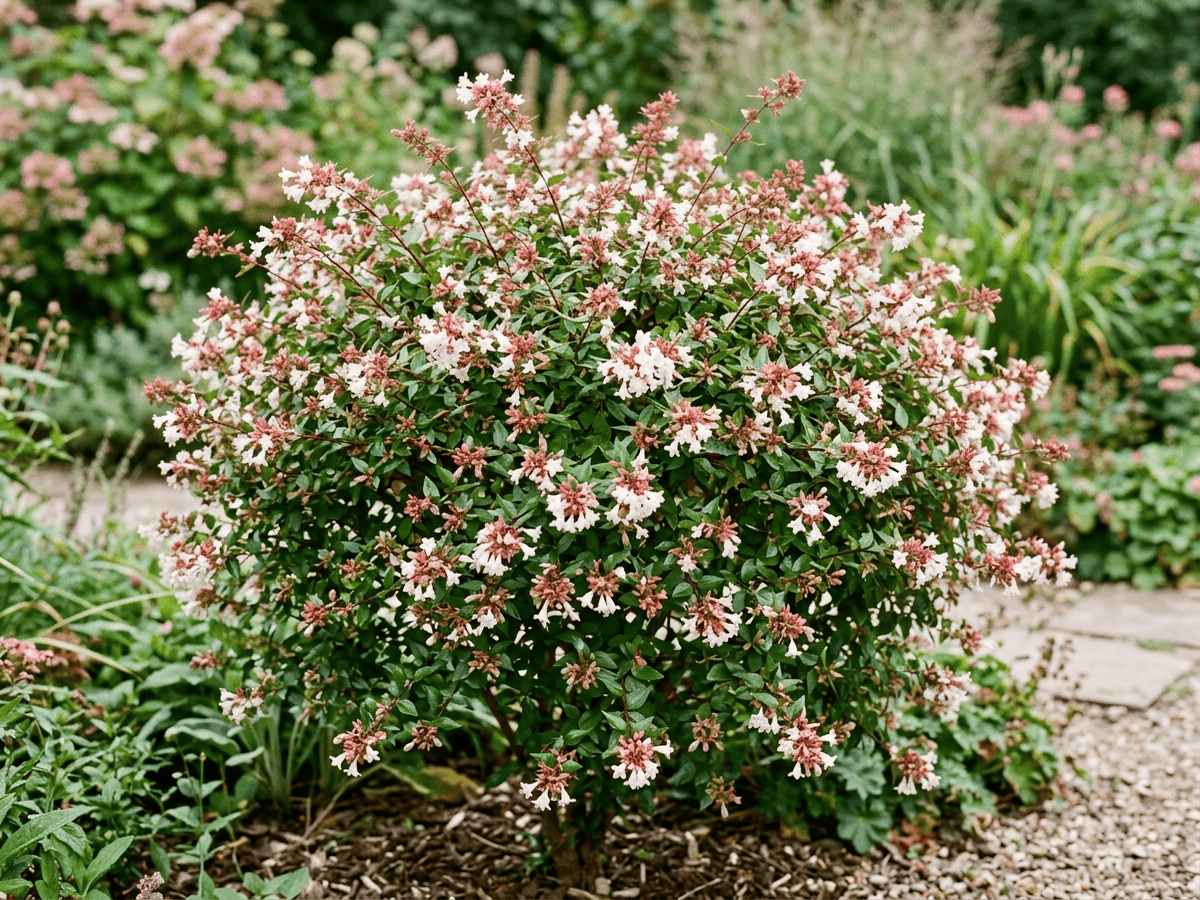 Chinese AbeliaAbelia chinensis
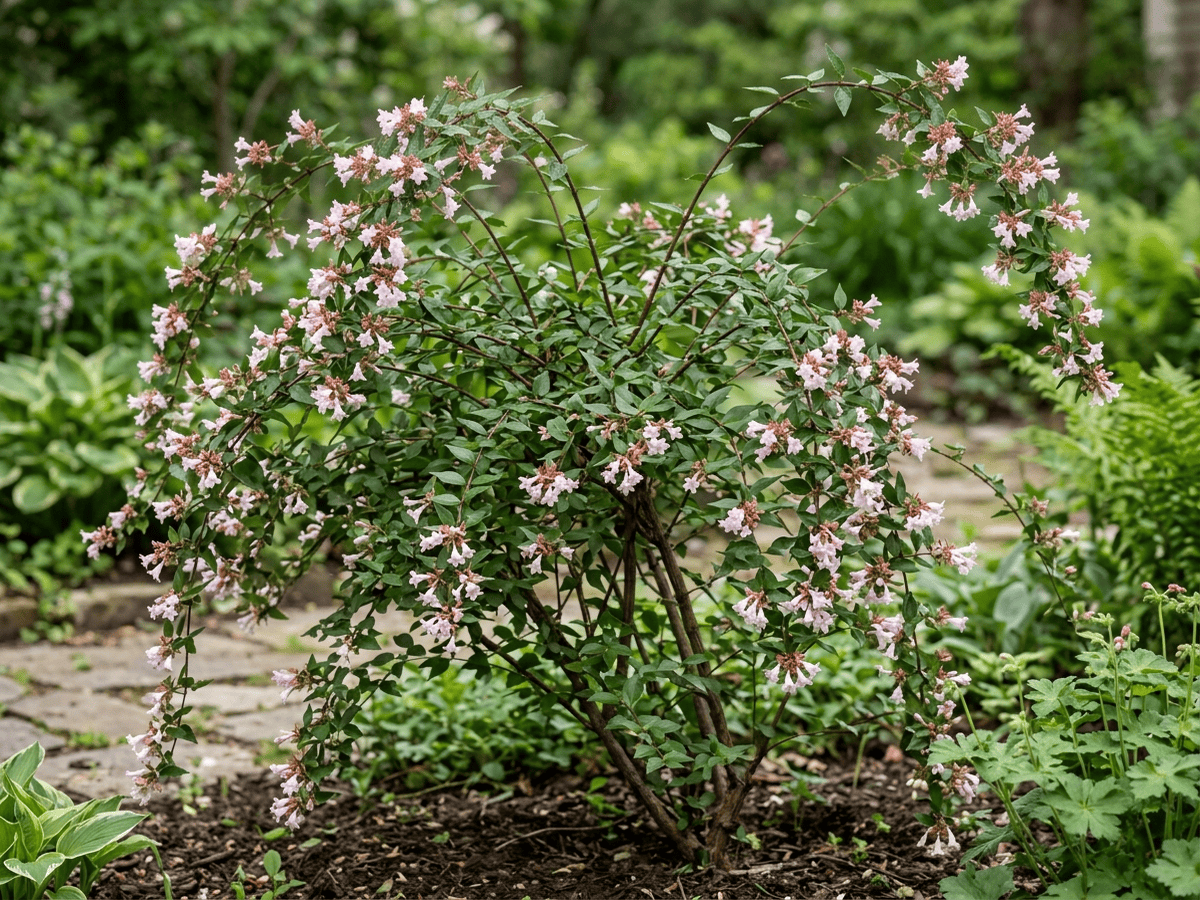
 Fragrant AbeliaAbelia mosanensis
 Large-Flowered AbeliaAbelia uniflora
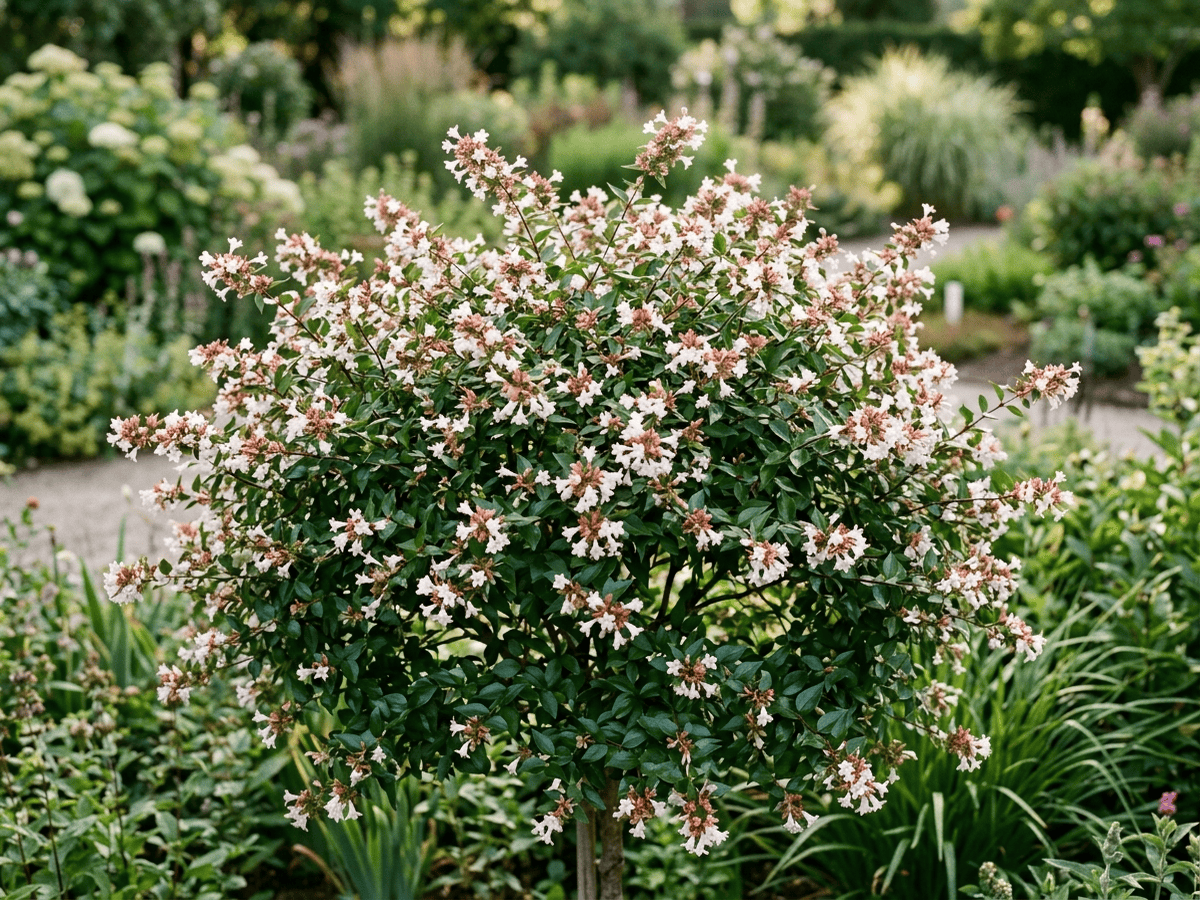 Glossy AbeliaAbelia x grandiflora
Frequently asked questions
How often should I water Twin-Spine Cactus?
In summer, water about every 21 days; in winter, about every 60 days. Adjust for heat, pot size and drainage.
How much light does Twin-Spine Cactus need?
Full sun: 6+ hrs direct. Watch the leaves — scorching or stretching means the light needs adjusting.
Is Twin-Spine Cactus toxic to cats or dogs?
Pets Slight (Dogs Slight · Cats Slight) Educational information, not medical or veterinary advice. If exposure is suspected, contact a doctor or veterinarian.
Is Twin-Spine Cactus easy to grow?
Yes — it is considered an easy, beginner-friendly plant.
Can Twin-Spine Cactus be grown indoors?
Yes, it adapts well to indoor growing given the right light.
When does Twin-Spine Cactus bloom?
It typically blooms Dec–May in the Northern Hemisphere.
YardMate
Identify any plant in seconds
Snap a photo — YardMate names the plant, diagnoses problems, and reminds you when to water.
Download on the App Store