 YardMate


Ostrich Fern
Matteuccia struthiopteris
Easy · Beginner friendlyAbout Ostrich Fern
Matteuccia struthiopteris, the ostrich fern, is a strikingly architectural deciduous fern native to the temperate regions of North America, Europe, and Asia. Its common name comes from the tall, gracefully arching sterile fronds that resemble enormous ostrich plumes, rising 1 to 1.5 meters from a central crown in a perfect vase shape. In the center of this green fountain, stiff, dark brown fertile fronds emerge in late summer and persist through winter, looking like feathered shuttlecocks standing upright in the snow. The ostrich fern is one of the few ferns whose young fiddleheads are widely eaten — in New England, Quebec, and the Maritimes, fiddlehead harvesting is a beloved spring tradition. The tightly coiled, bright green fiddleheads must be thoroughly cooked before eating. The fern spreads vigorously by underground stolons, forming large, dramatic colonies in moist, shady areas. It is the quintessential fern for creating lush, prehistoric-looking woodland scenes.
- Edible
- Architectural
- Native
How to care for Ostrich Fern
Watering
- Springevery 2 days
- Summerevery 2 days
- Fallevery 5 days
- Winterevery 30 days
Soil · Moisture-retentive
- Top dressingSphagnum moss10%
- Main mixPeat + coco coir 1:180%
- DrainagePerlite / gravel10%
Keep it evenly moist — but the drainage layer still matters.
FERTILIZER
Balanced Feed 14-14-14
An even feed covers all three needs at once, keeping leaves, roots and blooms moving together with nothing pushed out of balance.
- Nitrogen · Leaves
- Phosphorus · Roots + Blooms
- Potassium · Strength
- Springevery 60 days
At a Glance
- NativeNorth America, Europe, East Asia
- Height3–6 ft (0.9–1.8 m)
- Spread3–5 ft (0.9–1.5 m)
- Foliage colorGreen, Bronze
- SoilLoamy, Moisture-retentive
- LocationsYard
Bloom time
BLOOM CYCLE
Fern — does not flower. Dark brown fertile fronds stand through winter as ornamental features.
Fragrance
NO FRAGRANCE
No notable fragrance.
Toxicity
Humans Slight
unidentified fiddlehead toxin (destroyed by thorough cooking)
Slight
- Frond
- Ingestion
EXPOSURE Eating frond.
EFFECT Raw or undercooked fiddleheads cause gastrointestinal illness (documented outbreaks) and cook thoroughly before eating.
NOTE Documented concern for humans: Raw or undercooked fiddleheads cause gastrointestinal illness (documented outbreaks) and cook thoroughly before eating.
Not reported
EXPOSURE No exposure route is reported.
EFFECT Not listed as toxic in mature form.
NOTE No toxicity is reported for dogs in this catalog; this is not evidence that the plant is edible or harmless.
Not reported
EXPOSURE No exposure route is reported.
EFFECT Not listed as toxic in mature form.
NOTE No toxicity is reported for cats in this catalog; this is not evidence that the plant is edible or harmless.
Educational information, not medical or veterinary advice. If exposure is suspected, contact a doctor or veterinarian.
DISTRIBUTION

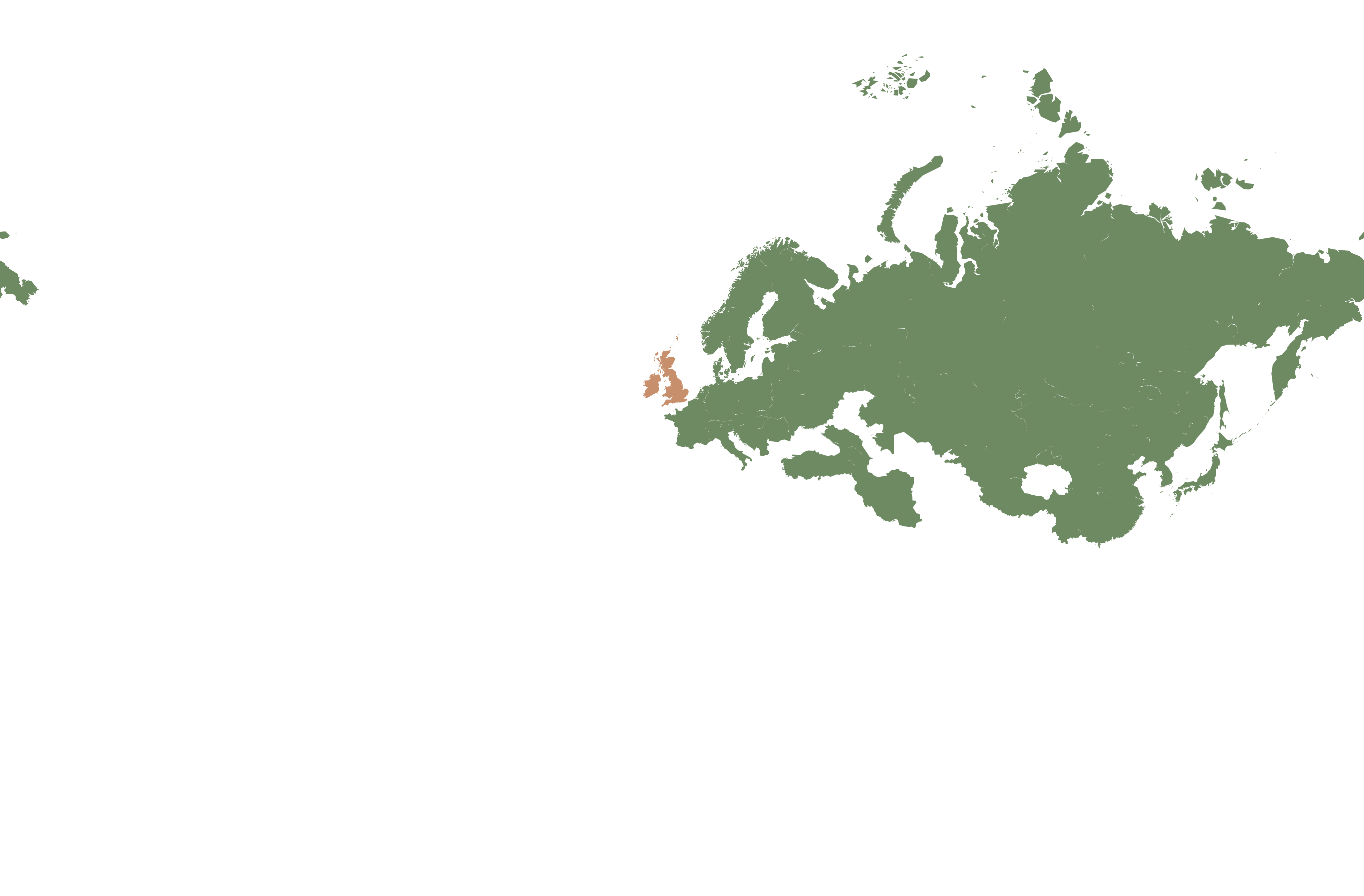
- Native
- Introduced
- North America
- Europe
- East Asia
History

Matteuccia struthiopteris, the ostrich fern, is native across temperate North America, Europe, and East Asia. Its sterile fronds rise in a vase like green plumes, while dark fertile fronds stand through winter, giving the plant its ostrich-plume name. It thrives in rich, moist alluvial soils along streams and floodplains, spreading into broad colonies by rhizomes.
The tightly coiled spring shoots, or fiddleheads, are the most commercially important edible fern shoots in eastern North America, especially in Quebec, New Brunswick, Maine, and New England. They are also eaten in Japan as kogomi, a traditional spring mountain vegetable. Fiddleheads must be cooked thoroughly; undercooked shoots have caused foodborne illness outbreaks in the US and Canada. Properly prepared, they taste somewhere between asparagus, green bean, and artichoke. The plant bridges woodland architecture and seasonal food culture.
Symbolism & meaning
What It Symbolizes
The ostrich fern is a green hope — its tightly curled fiddleheads are among the first edible greens of the year, harvested in northern woodlands and on farm tables as a sign that winter is over. In the woodland garden it spreads with abundance, sending up shuttlecock fronds that fill shaded floors with lush green colonies. The plant gives both supper and reassurance in a single April week.
- Hope — Spring fiddleheads are among the first edible greens, heralding the end of winter
- Abundance — Spreads generously, filling woodland floors with lush green colonies
Where the Name Comes From
'Matteuccia' honors Carlo Matteucci, a 19th-century Italian physicist. 'Struthiopteris' from Greek 'struthio' (ostrich) and 'pteris' (fern), describing the plume-like fronds.
Uses & Fun Facts
- Tightly coiled spring fiddleheads cooked as traditional foraged vegetable
- Spreading vase-shaped fronds form lush colonies in moist shade
- Tall plume-like sterile fronds bring architectural form to shade
Related plants
Plants with similar care
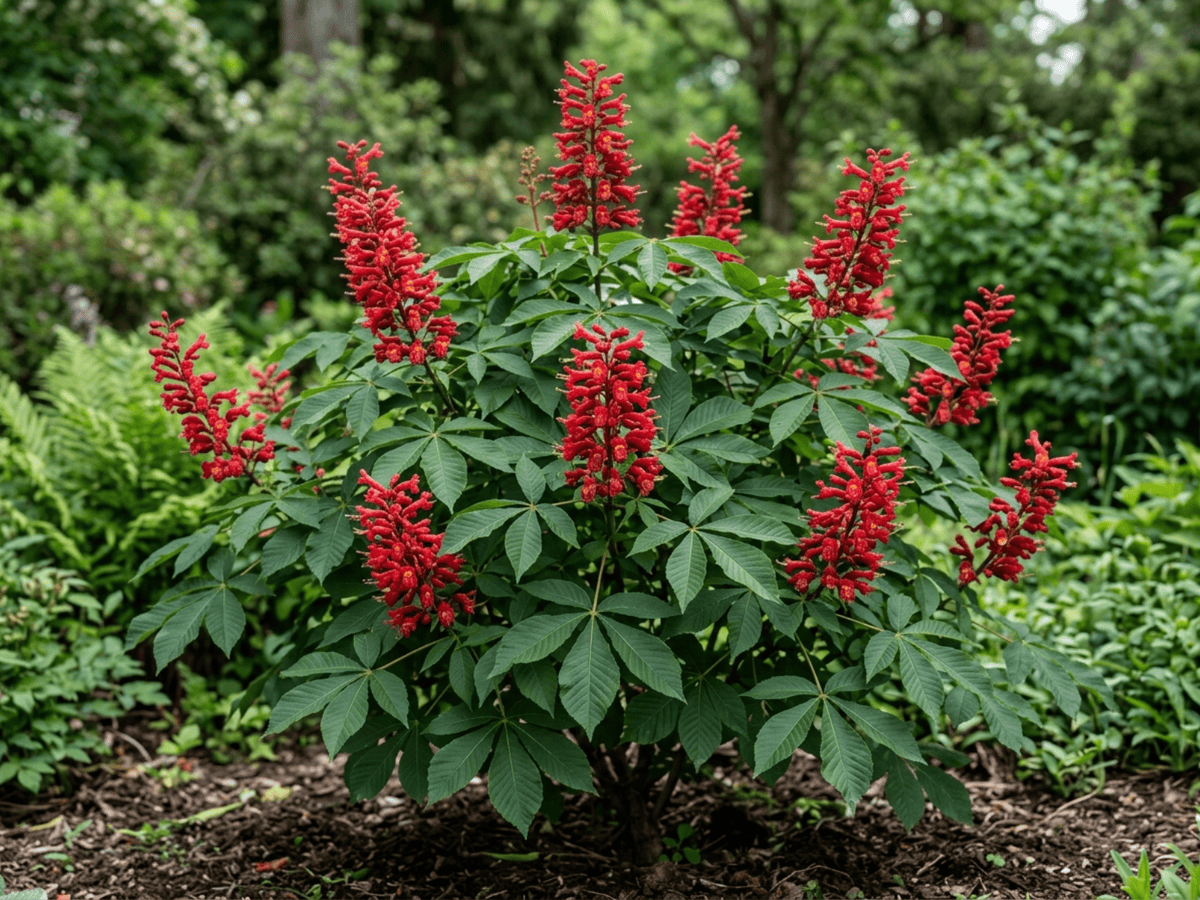 Red BuckeyeAesculus pavia
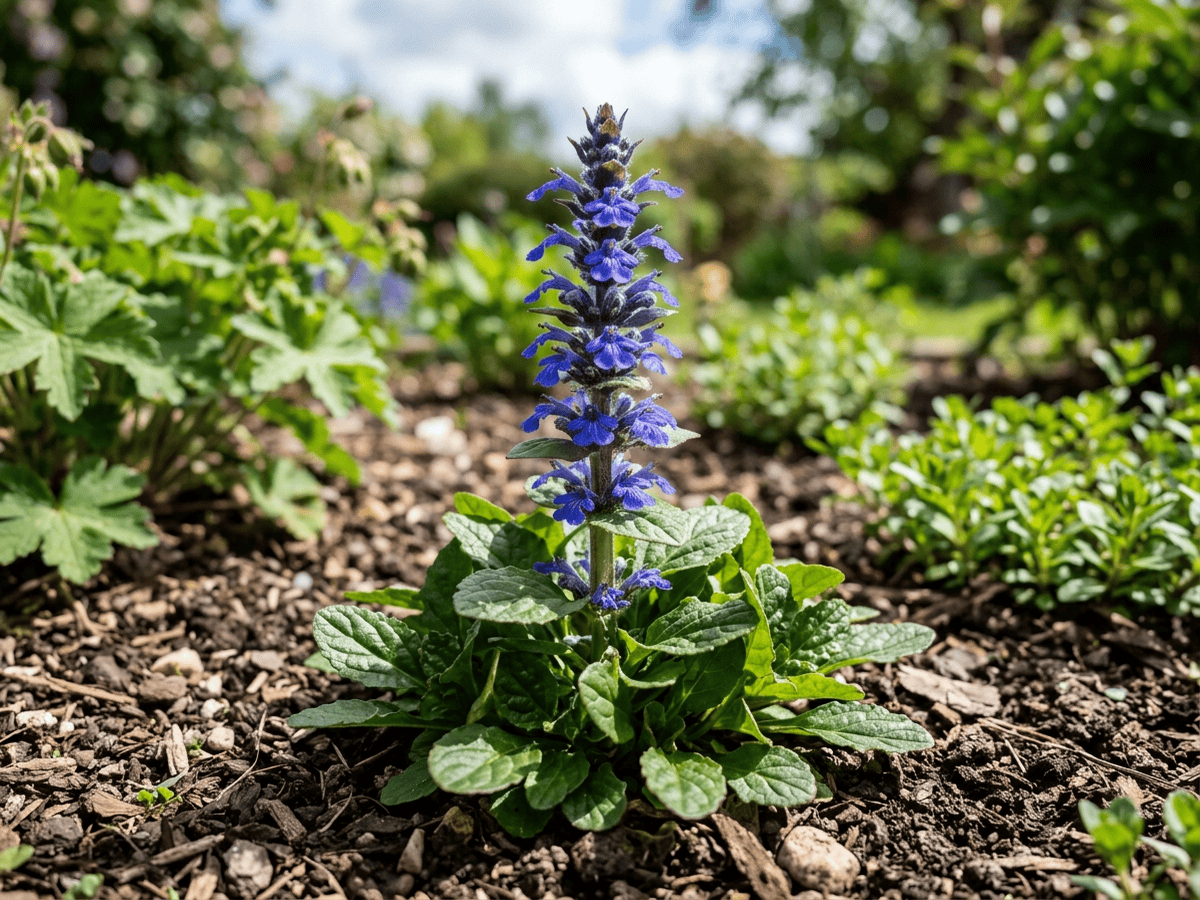 Blue BugleAjuga genevensis
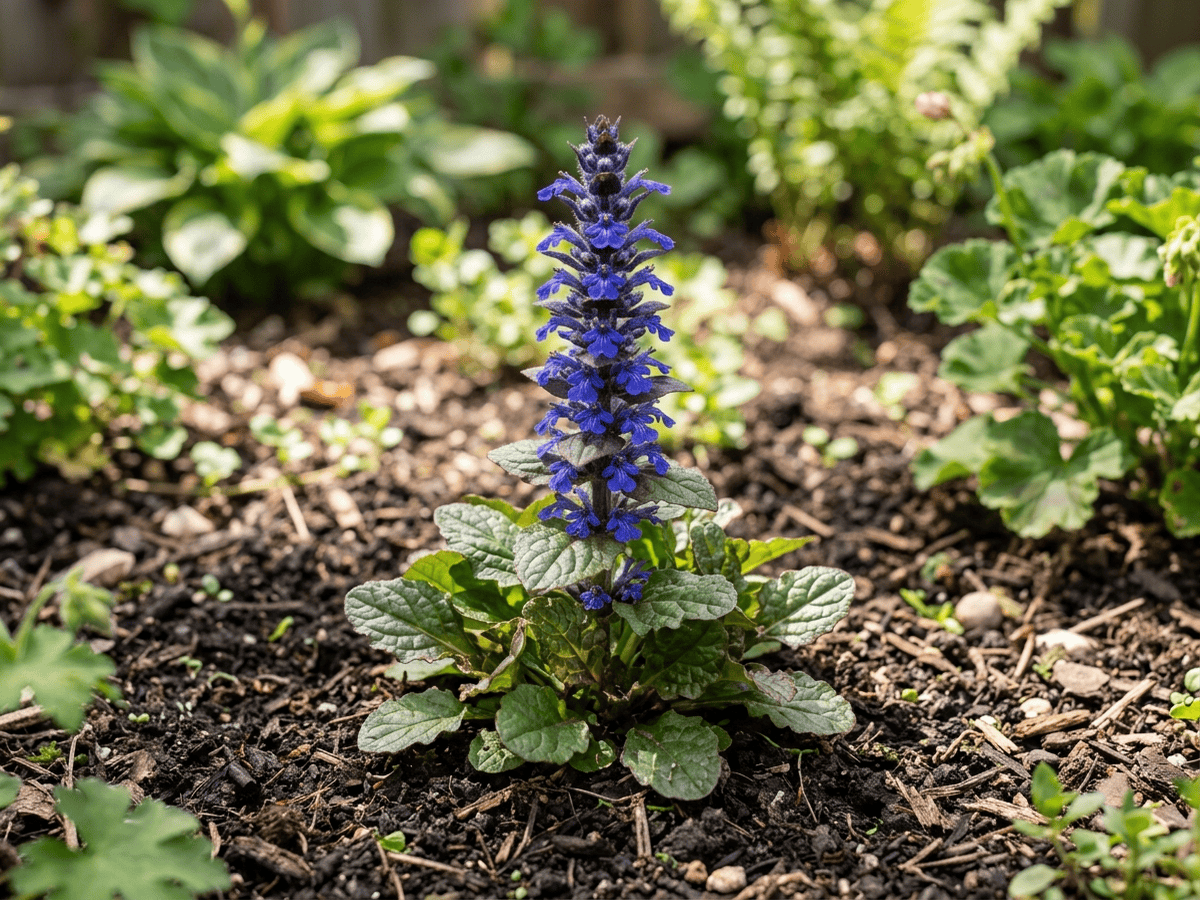 Pyramidal BugleAjuga pyramidalis
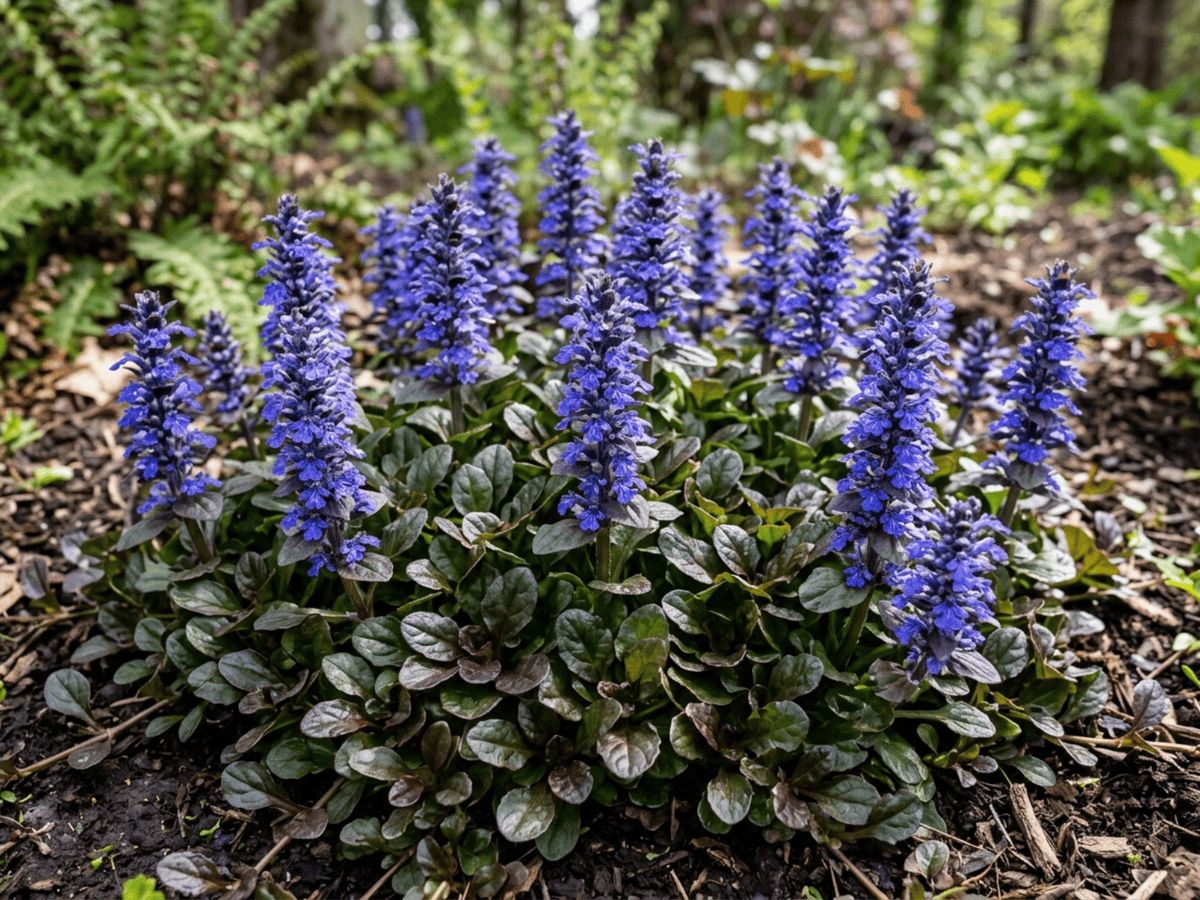 Carpet BugleAjuga reptans
Frequently asked questions
How often should I water Ostrich Fern?
In summer, water about every 2 days; in winter, about every 30 days. Adjust for heat, pot size and drainage.
How much light does Ostrich Fern need?
Part shade: 2–4 hrs direct. Watch the leaves — scorching or stretching means the light needs adjusting.
Is Ostrich Fern toxic to cats or dogs?
Pets Not reported (Dogs Not reported · Cats Not reported) Educational information, not medical or veterinary advice. If exposure is suspected, contact a doctor or veterinarian.
Is Ostrich Fern easy to grow?
Yes — it is considered an easy, beginner-friendly plant.
YardMate
Identify any plant in seconds
Snap a photo — YardMate names the plant, diagnoses problems, and reminds you when to water.
Download on the App Store