 YardMate

Jasmine Tobacco
Nicotiana alata
Easy · Beginner friendlyAbout Jasmine Tobacco
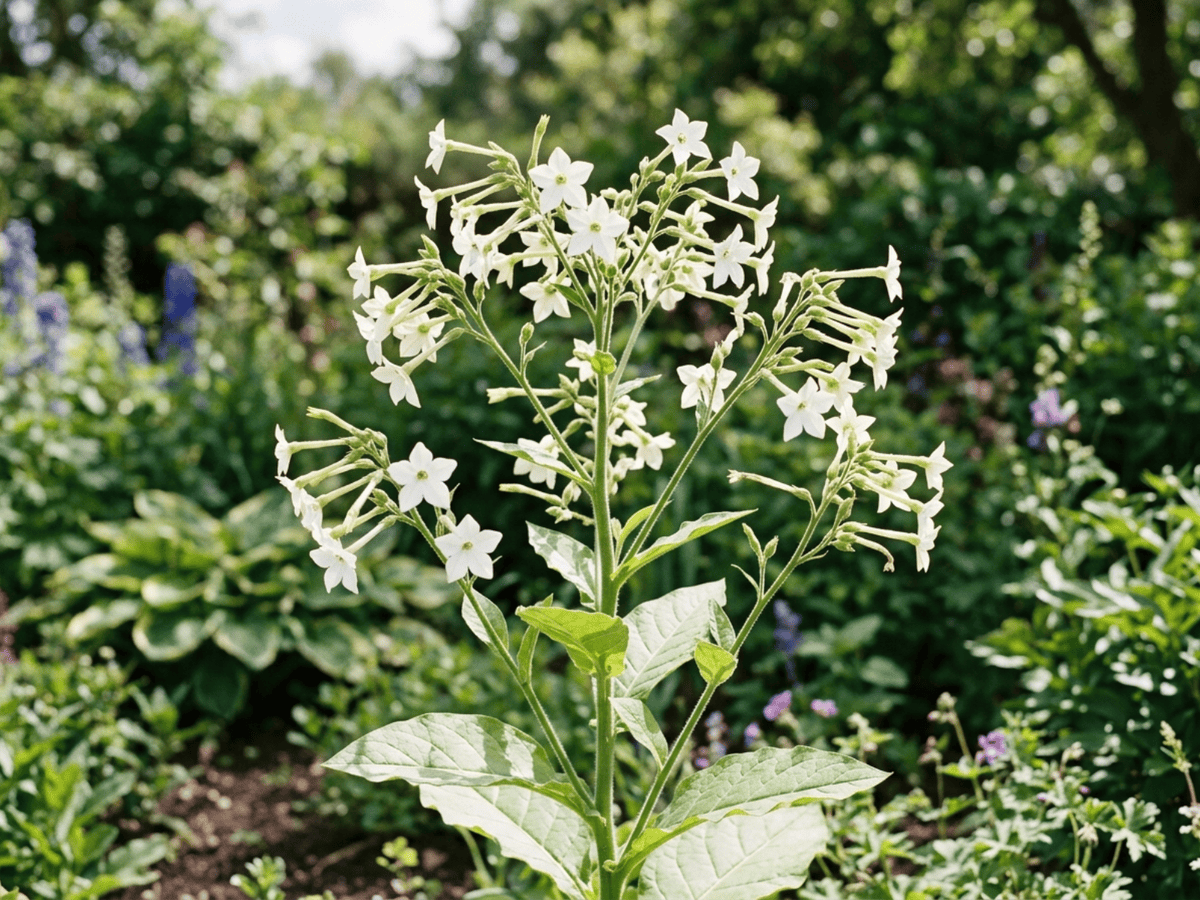
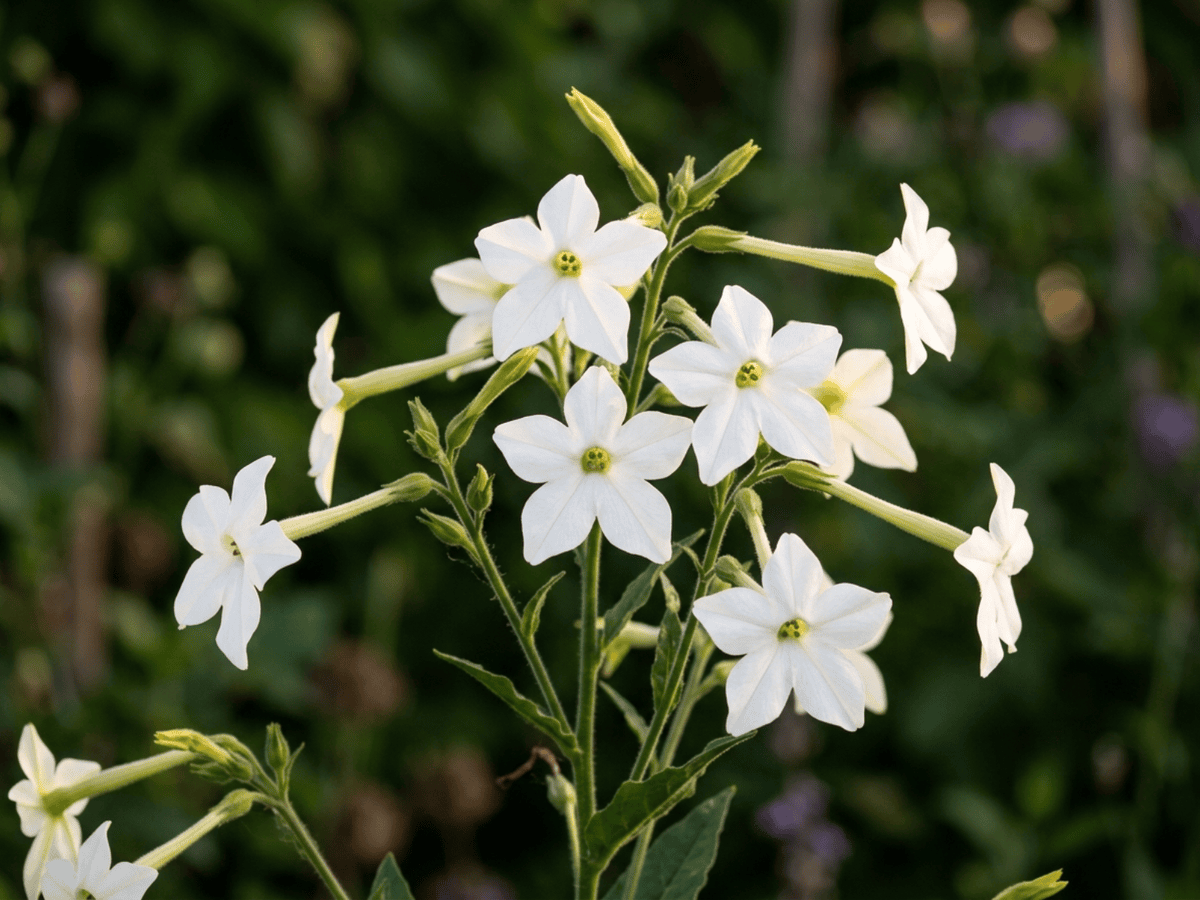
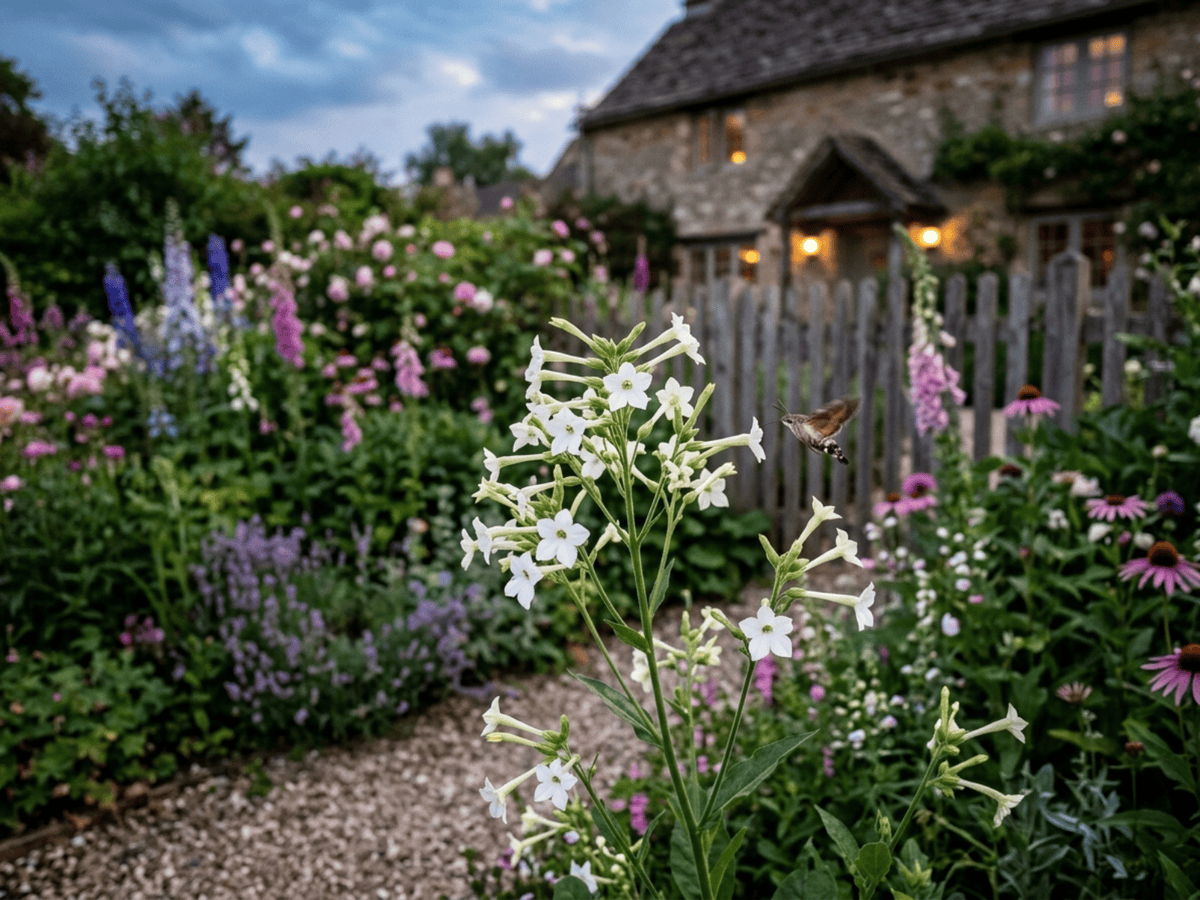
Flowering Tobacco is a tender perennial grown as an annual throughout the United States, bearing 3–4 foot plants with sticky leaves and clusters of long-tubed, star-shaped flowers that open in evening to release a rich jasmine-like fragrance. Colors range from white and cream through pink, rose, and lime-green. A classic evening garden and moon garden plant, it attracts sphinx moths and hummingbirds. Self-seeds modestly in most zones.
- Fragrant
- Pollinator-friendly
How to care for Jasmine Tobacco
Watering
- Springevery 3 days
- Summerevery 2 days
- Fallevery 5 days
- Winterevery 10 days
Soil · Well-draining
- Top dressingPine bark mulch10%
- Main mixPotting soil + perlite 2:170%
- DrainageLECA / gravel20%
Never skip the drainage layer — standing water is the top cause of root rot.
FERTILIZER
Balanced Feed 14-14-14
An even feed covers all three needs at once, keeping leaves, roots and blooms moving together with nothing pushed out of balance.
- Nitrogen · Leaves
- Phosphorus · Roots + Blooms
- Potassium · Strength
- Springevery 14 days
- Summerevery 14 days
- Fallevery 30 days
At a Glance
- NativeSouth America
- Height2–4 ft (0.6–1.2 m)
- Spread1–2 ft (0.3–0.6 m)
- Flower colorWhite, Pink, Burgundy, Green
- Foliage colorGreen
- SoilLoamy, Well-drained, Rich
- LocationsYard · Balcony
Bloom time
BLOOM CYCLE
Peak bloom
Jun–Nov
Fragrant star flowers summer to frost
Fragrance
STRONG FRAGRANCE
Exceptionally powerful sweet jasmine-gardenia-tuberose evening fragrance in the wild form; many modern bedding cultivars have reduced scent.
Toxicity
Humans Toxic · Pets Toxic
nicotine
Toxic
- All
- Ingestion
EXPOSURE Eating any part of the plant.
EFFECT Nicotine: vomiting, tremors, cardiac effects, respiratory depression and potentially fatal in quantity.
NOTE Documented concern for humans: Nicotine: vomiting, tremors, cardiac effects, respiratory depression and potentially fatal in quantity.
Toxic
- All
- Ingestion
EXPOSURE Eating any part of the plant.
EFFECT Severe nicotine toxicity: vomiting, tremors, collapse, respiratory failure.
NOTE ASPCA lists Nicotiana as toxic to dogs, cats, and horses. Serious pet-safety concern.
Toxic
- All
- Ingestion
EXPOSURE Eating any part of the plant.
EFFECT Same as dogs.
NOTE ASPCA lists Nicotiana as toxic to dogs, cats, and horses. Serious pet-safety concern.
Educational information, not medical or veterinary advice. If exposure is suspected, contact a doctor or veterinarian.
DISTRIBUTION


- Native
- Introduced
- South America
History
Nicotiana alata is native to the subtropical grasslands and forest edges of southern Brazil, Paraguay, Uruguay, and northern Argentina, growing in open habitats with full sun and summer moisture. The species epithet "alata" means "winged," referring to the distinctive narrow wings that extend down the stem below each leaf. The plant grows as a tender perennial or annual 90-150 cm tall with a rosette of large sticky basal leaves and tall upright flower stalks bearing loose clusters of long trumpet-shaped flowers 5-8 cm long with narrow tubes opening to 3-4 cm flat-faced stars. The most distinctive feature of the wild species is the evening opening behavior: flowers open at dusk and remain open through the night and early morning, closing by midday — and during the open evening hours release an extraordinarily powerful sweet fragrance with jasmine-gardenia-tuberose notes that can fill an entire garden.
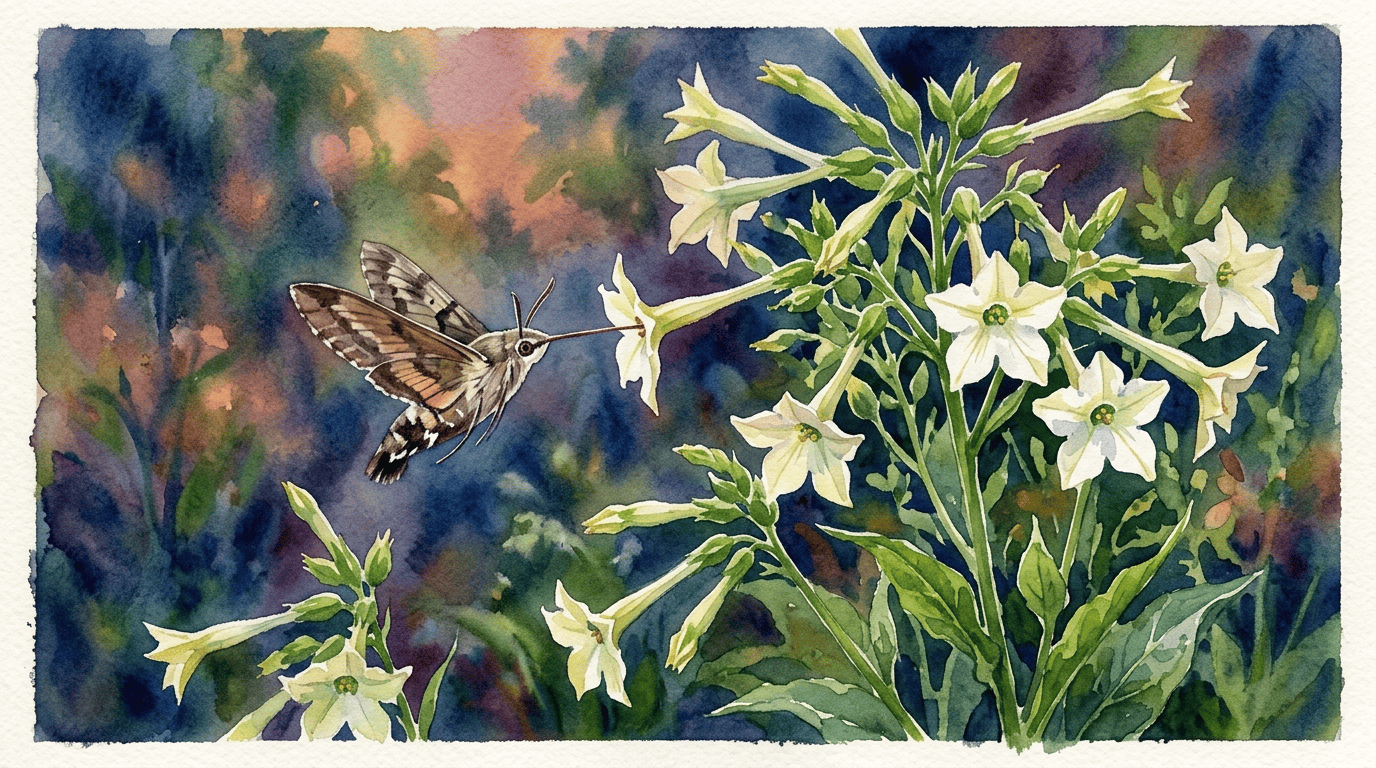
The evening bloom timing and strong fragrance reflect pollination by nocturnal hawk moths (particularly Manduca spp.) which hover-feed from the long flower tubes. Modern horticultural breeding has produced many day-blooming compact bedding cultivars in extended colors (pink, crimson, lime green, white) — the "Nicki" series, "Domino" series, "Perfume" series, and others — but most of these have lost much of the evening fragrance that defines the wild species; heritage tall "grandiflora" evening-scented selections are preserved by specialist seed suppliers.
All Nicotiana species contain nicotine and are toxic. The 'Grandiflora' heirloom strains, with their towering stems and intense evening perfume, have been kept alive by seed-saver networks; modern compact bedding series trade fragrance for day-bloom and tidy form.
Symbolism & meaning
What It Symbolizes
Jasmine Tobacco carries the Victorian meaning of solitary love, the flower of feelings nurtured privately rather than spoken aloud. By day its trumpet blooms hang half-closed, but at dusk they open fully and release a sweet, jasmine-like fragrance into the night garden. This is the plant of evening reverie — a flower that comes alive precisely when the world quiets, for company kept only with itself.
- Solitary love — Victorian meaning for affection kept private and nocturnal
- Evening charm — signature night-garden fragrance
Where the Name Comes From
Genus honors Jean Nicot (1530–1600), French diplomat who introduced tobacco to France; 'alata' means 'winged' for the petiole wings.
Uses & Fun Facts
- Evening trumpets release sweet jasmine scent around patios and open windows
- Jasmine Tobacco flowers nourish foraging bees and pollinators
Related plants
More Nicotiana plants
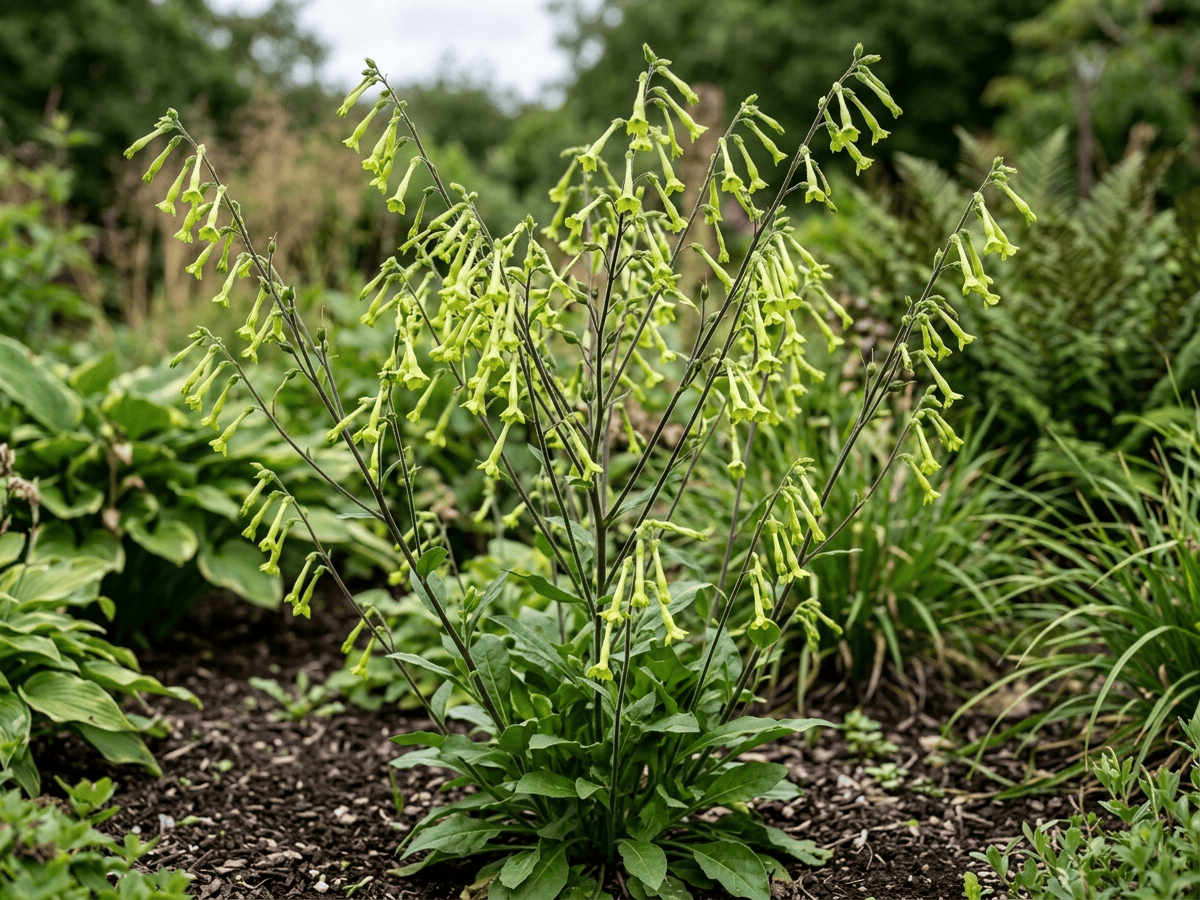 Langsdorff's TobaccoNicotiana langsdorffii
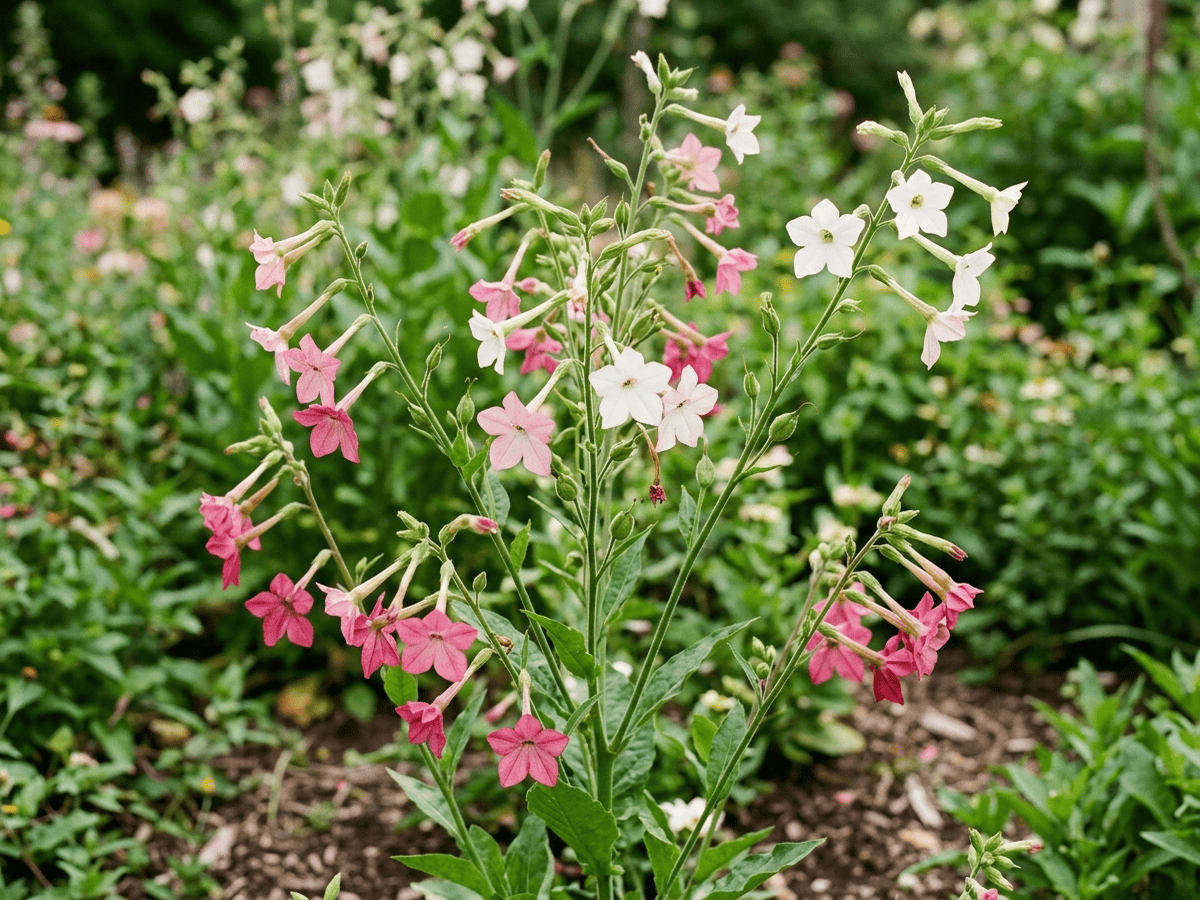 Nicotiana mutabilisNicotiana mutabilis
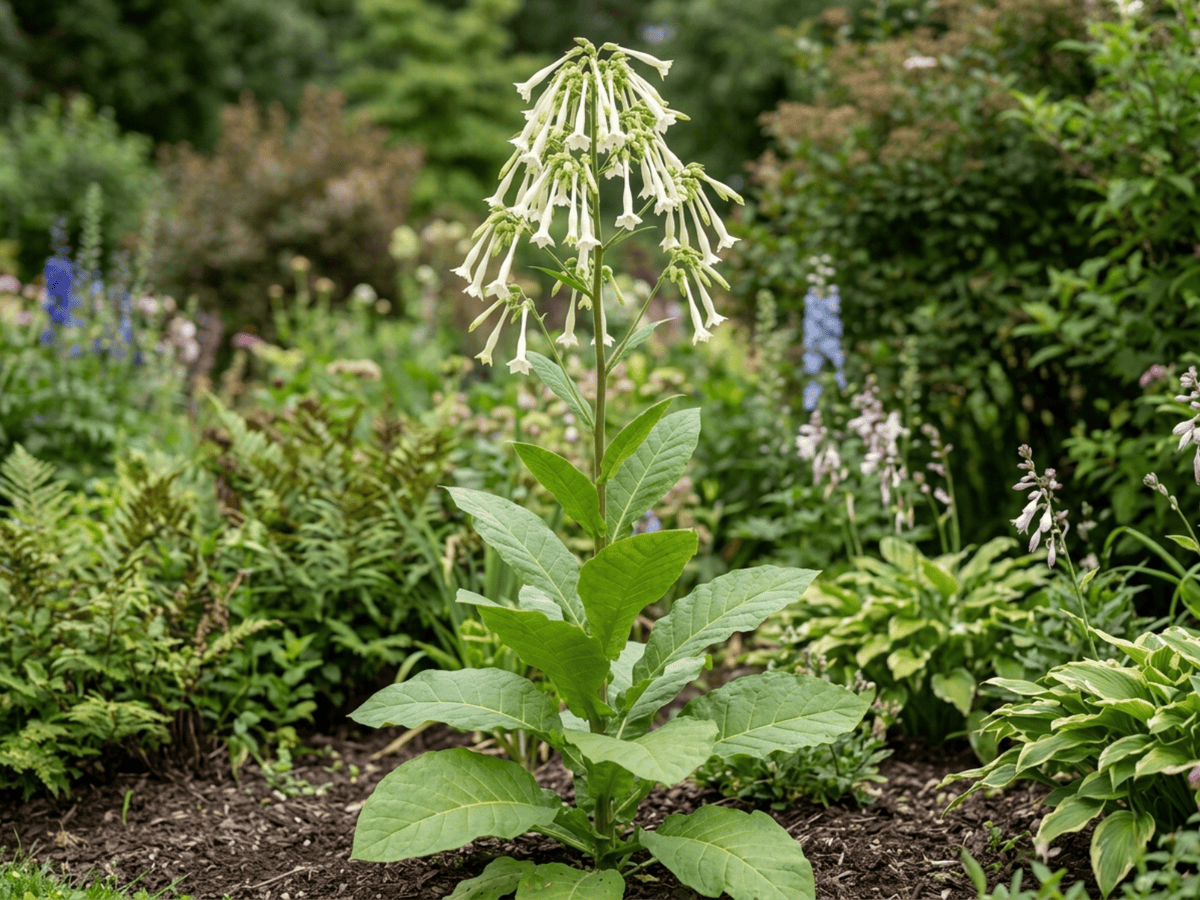 Woodland TobaccoNicotiana sylvestris
Plants with similar care
 Chinese AbeliaAbelia chinensis
 Fragrant AbeliaAbelia mosanensis
 Large-Flowered AbeliaAbelia uniflora
 Glossy AbeliaAbelia x grandiflora
Frequently asked questions
How often should I water Jasmine Tobacco?
In summer, water about every 2 days; in winter, about every 10 days. Adjust for heat, pot size and drainage.
How much light does Jasmine Tobacco need?
Full sun: 6+ hrs direct. Watch the leaves — scorching or stretching means the light needs adjusting.
Is Jasmine Tobacco toxic to cats or dogs?
Pets Toxic (Dogs Toxic · Cats Toxic) Educational information, not medical or veterinary advice. If exposure is suspected, contact a doctor or veterinarian.
Is Jasmine Tobacco easy to grow?
Yes — it is considered an easy, beginner-friendly plant.
When does Jasmine Tobacco bloom?
It typically blooms Jun–Nov in the Northern Hemisphere.
YardMate
Identify any plant in seconds
Snap a photo — YardMate names the plant, diagnoses problems, and reminds you when to water.
Download on the App Store