 YardMate
Woodland Tobacco
Nicotiana sylvestris
Easy · Beginner friendlyAbout Woodland Tobacco
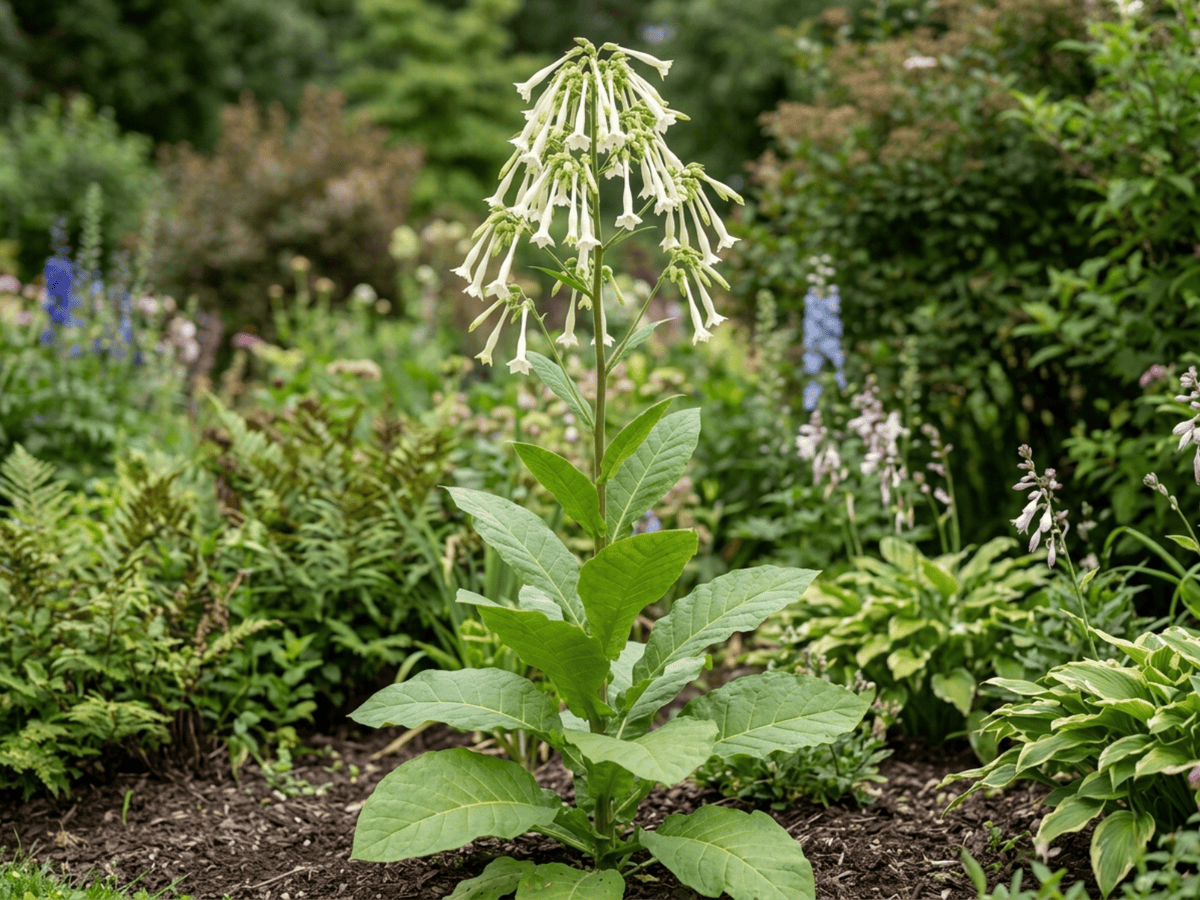
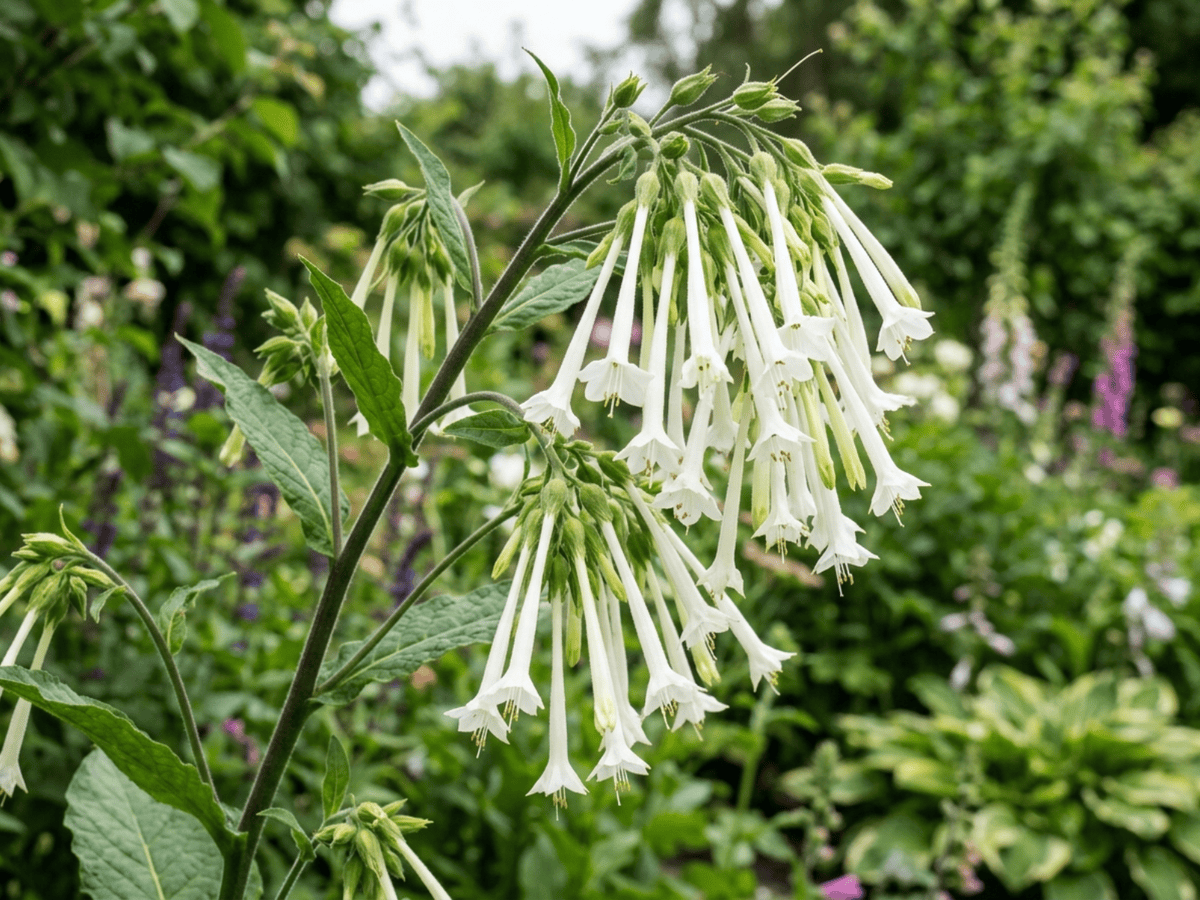
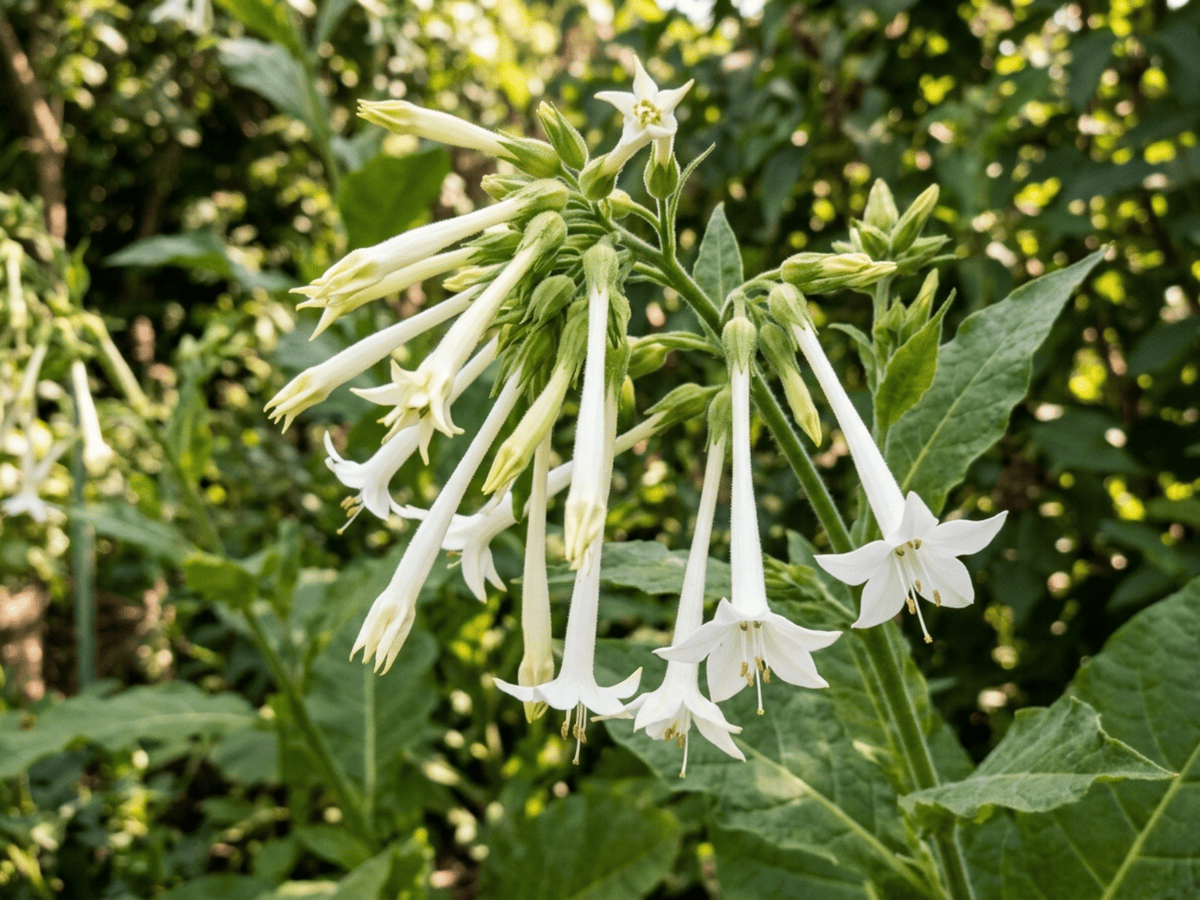
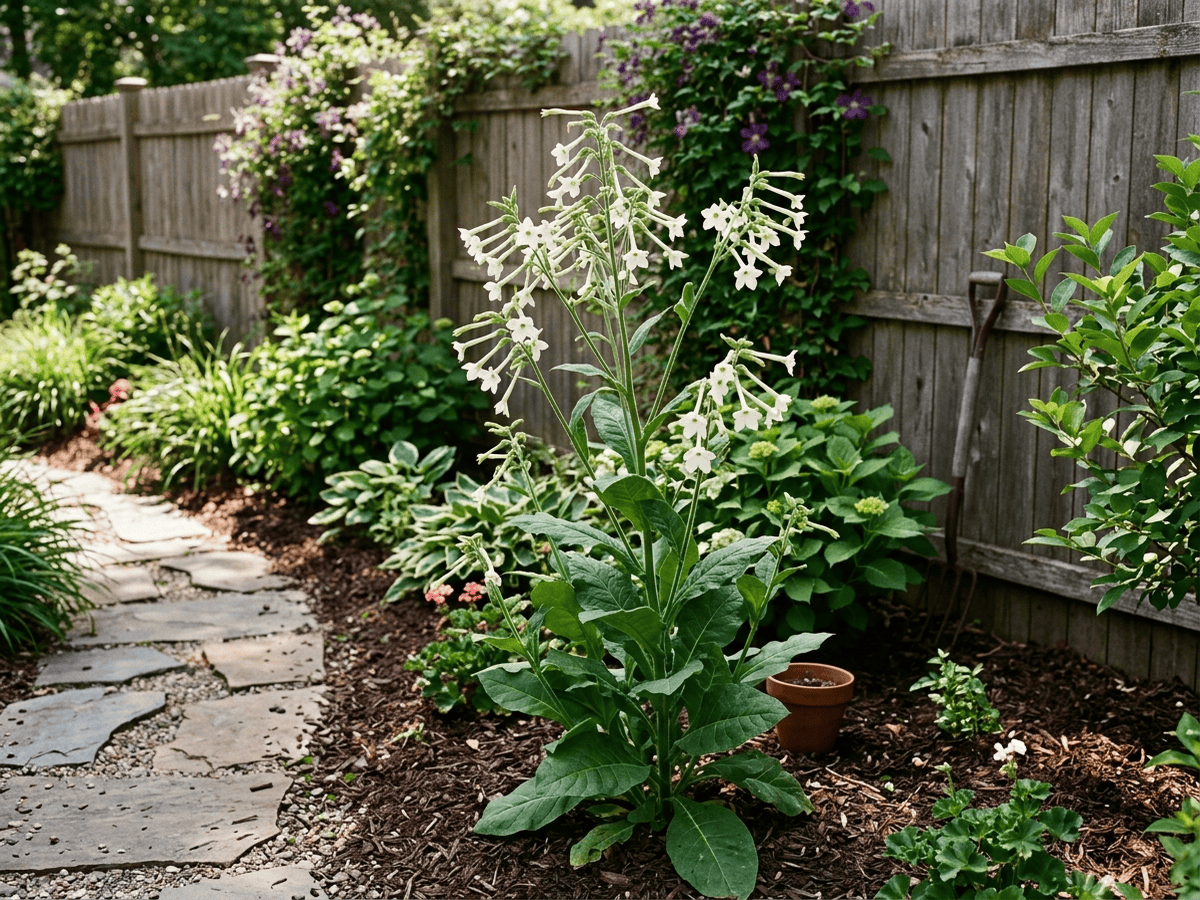
Woodland Tobacco is a statuesque tender perennial grown as an annual, reaching 4–6 feet tall with enormous paddle-shaped basal leaves and towering panicles of pendant, pure-white trumpet flowers. Intensely fragrant at dusk, it is a dramatic back-of-border plant from the Pacific Northwest to New England. Self-seeds reliably in most zones. A South American native, it performs beautifully in cool, moist summers such as those of New England and the Pacific Northwest.
- Fragrant
- Architectural
- Pollinator-friendly
How to care for Woodland Tobacco
Watering
- Springevery 3 days
- Summerevery 2 days
- Fallevery 5 days
- Winterevery 10 days
Soil · Well-draining
- Top dressingPine bark mulch10%
- Main mixPotting soil + perlite 2:170%
- DrainageLECA / gravel20%
Never skip the drainage layer — standing water is the top cause of root rot.
FERTILIZER
Balanced Feed 14-14-14
An even feed covers all three needs at once, keeping leaves, roots and blooms moving together with nothing pushed out of balance.
- Nitrogen · Leaves
- Phosphorus · Roots + Blooms
- Potassium · Strength
- Springevery 14 days
- Summerevery 14 days
- Fallevery 30 days
At a Glance
- NativeSouth America
- Height4–6 ft (1.2–1.8 m)
- Spread1.5–3 ft (0.5–0.9 m)
- Flower colorWhite
- Foliage colorGreen
- SoilLoamy, Moisture-retentive, Rich
- LocationsYard
Bloom time
BLOOM CYCLE
Peak bloom
Jul–Nov
Pendant white trumpets midsummer to frost
Fragrance
STRONG FRAGRANCE
Powerful sweet jasmine-like evening fragrance.
Toxicity
Humans Toxic · Pets Toxic
nicotine
Toxic
- All
- Ingestion
EXPOSURE Eating any part of the plant.
EFFECT Nicotine toxicity: vomiting, cardiac and respiratory effects and potentially fatal in quantity.
NOTE Documented concern for humans: Nicotine toxicity: vomiting, cardiac and respiratory effects and potentially fatal in quantity.
Toxic
- All
- Ingestion
EXPOSURE Eating any part of the plant.
EFFECT Severe nicotine toxicity.
NOTE ASPCA lists Nicotiana as toxic to dogs, cats, and horses.
Toxic
- All
- Ingestion
EXPOSURE Eating any part of the plant.
EFFECT Same as dogs.
NOTE ASPCA lists Nicotiana as toxic to dogs, cats, and horses.
Educational information, not medical or veterinary advice. If exposure is suspected, contact a doctor or veterinarian.
DISTRIBUTION


- Native
- Introduced
- South America
History
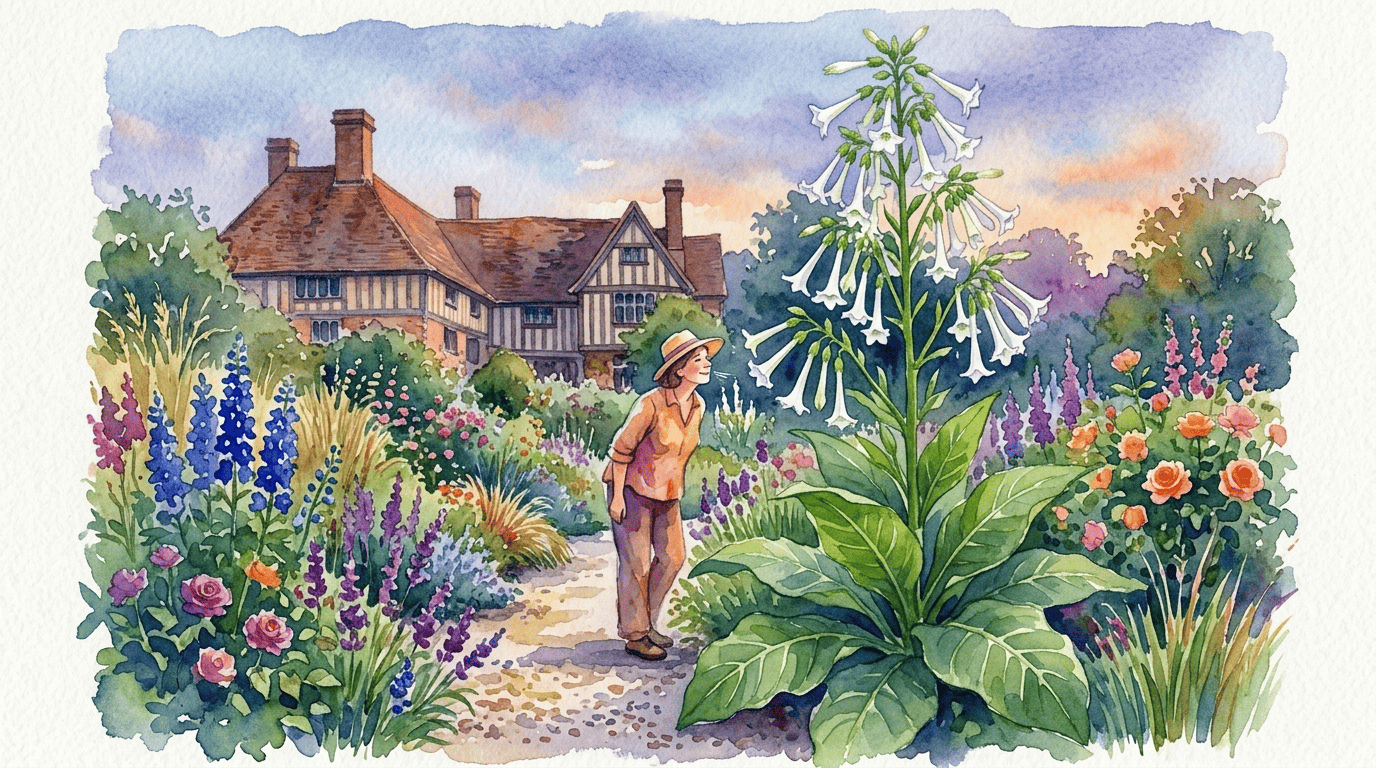
Nicotiana sylvestris is native to the eastern mid-elevation slopes of the Andes in northwestern Argentina (particularly Salta and Jujuy provinces) and southern Bolivia, growing at 500-2500 meters elevation in semi-shaded forest edges, streamside habitats, and disturbed moist slopes. The species epithet "sylvestris" means "of the forest." It is among the most architecturally dramatic of the ornamental Nicotiana species — plants form a massive basal rosette of huge tropical-looking bright-green leaves up to 90 cm long (substantially larger than any other garden Nicotiana), with towering central flower stalks reaching 1.5-2 meters tall bearing pendulous clusters of long pure-white trumpet-shaped flowers 6-10 cm long. Like N. alata, the flowers open in the late afternoon and evening, release a powerful sweet jasmine-like fragrance for moth pollination, and close by late morning.
The combination of massive architectural foliage, towering vertical flower stalks, and strong evening fragrance make N. sylvestris particularly valuable as a dramatic "dot plant" (vertical accent) in perennial borders, traditional English cottage gardens, and designer garden work. Christopher Lloyd at Great Dixter popularized the species in mid-to-late-20th century English garden design. Cool-summer climates suit the species better than hot humid ones — it is grown as a tender perennial in USDA zone 8-9 and as an annual further north, though the plant needs a long growing season to reach full height.
All parts contain nicotine and are toxic. Collected in Argentina in the 1880s, sylvestris reached American gardens via European nurseries. It earned the Royal Horticultural Society's Award of Garden Merit and became a signature plant of New England cottage gardens and the White Flower Farm catalog, which helped popularize it across the US in the late 20th century.
Symbolism & meaning
What It Symbolizes
Woodland Tobacco makes visible refined beauty, its stately white-flowered spires representing quiet elegance more than tropical exuberance. It also carries mystery — releasing its evening perfume after dusk and standing tall enough to loom in moonlit gardens. A nicotiana for those who prefer their summer drama scented, shadowy, and a little theatrical after dark.
- Refined beauty — stately spires represent quiet elegance
- Mystery — evening perfume and towering form
Where the Name Comes From
The name Woodland Tobacco points to woodland habitats. Genus honors Jean Nicot; 'sylvestris' means 'of the woods'.
Uses & Fun Facts
- Long white trumpets release jasmine-like evening fragrance
- Night-blooming flowers attract hawk moths and hummingbirds
- Tall Woodland Tobacco as dramatic moonlight-garden focal annual
Related plants
More Nicotiana plants
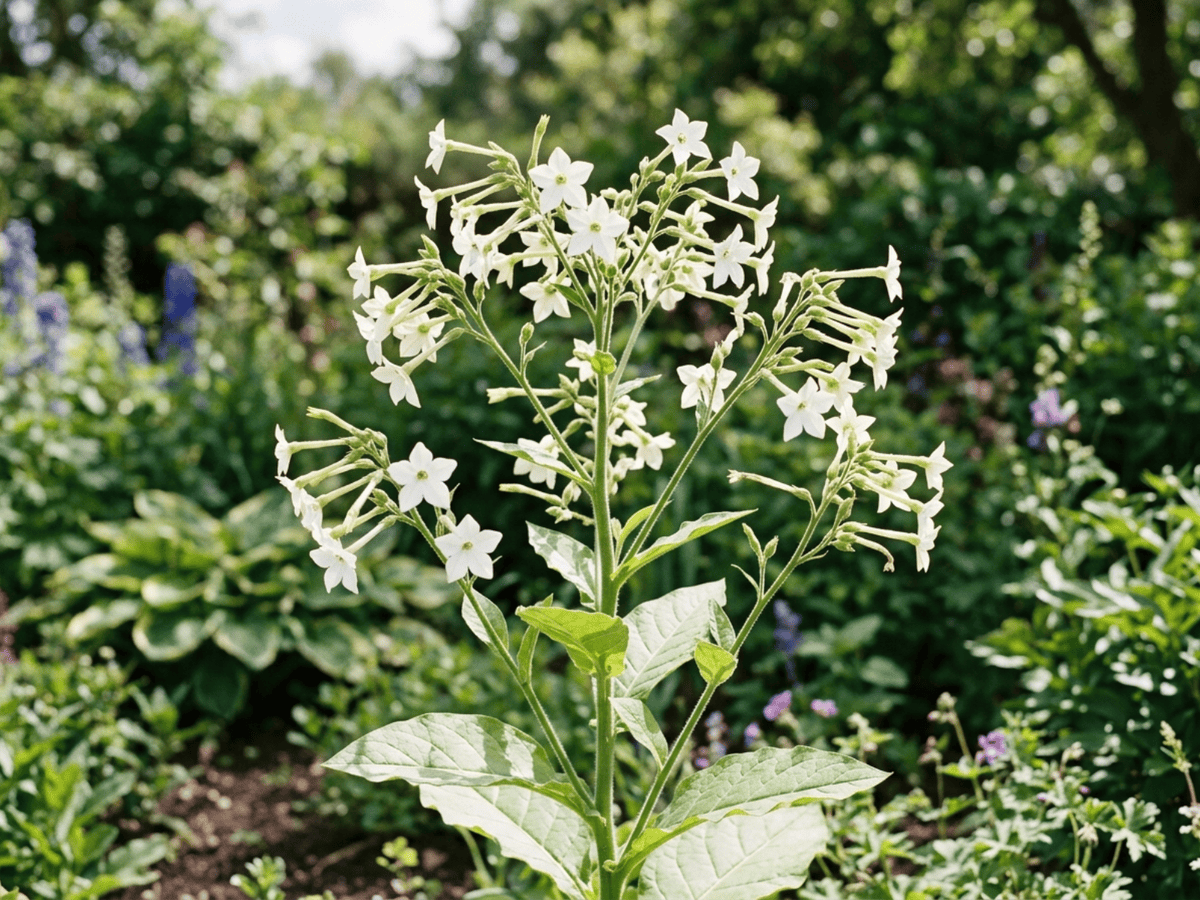 Jasmine TobaccoNicotiana alata
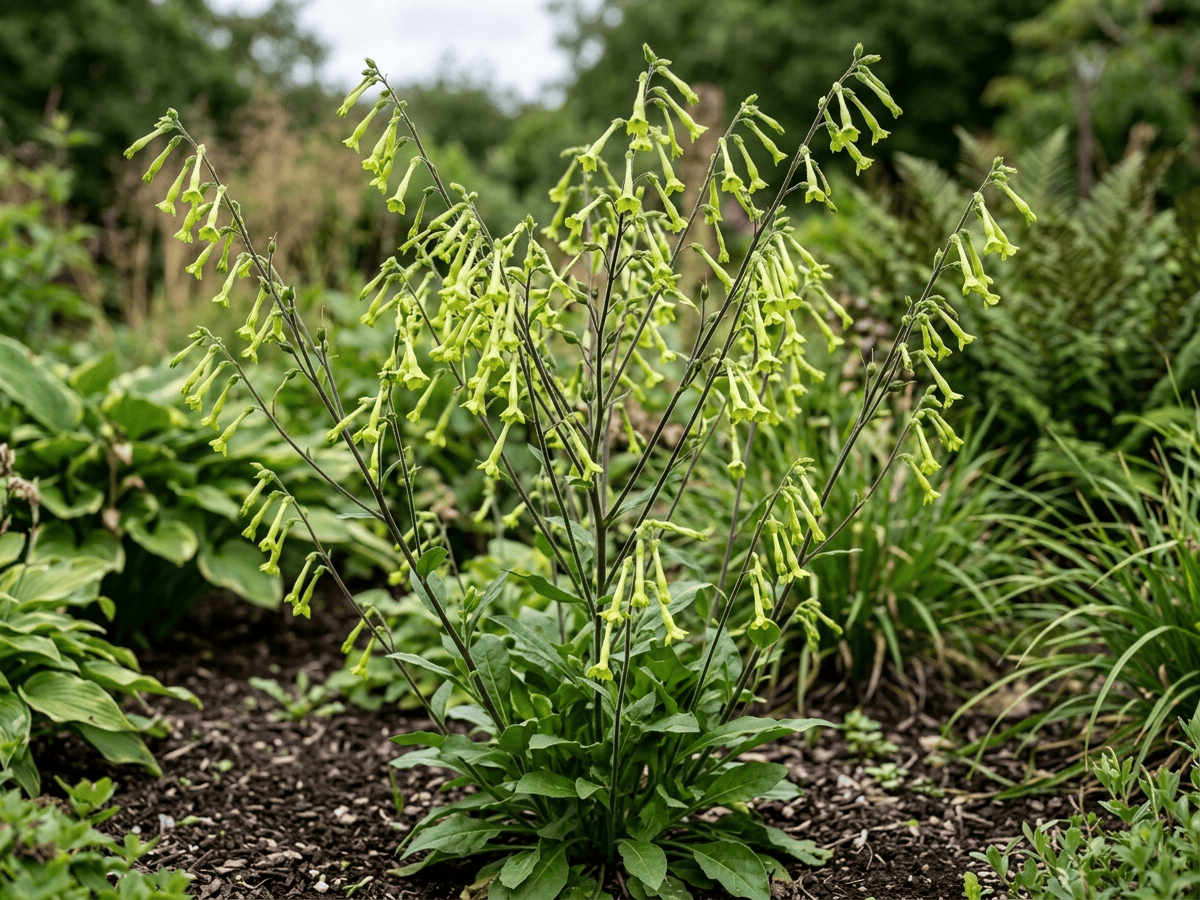 Langsdorff's TobaccoNicotiana langsdorffii
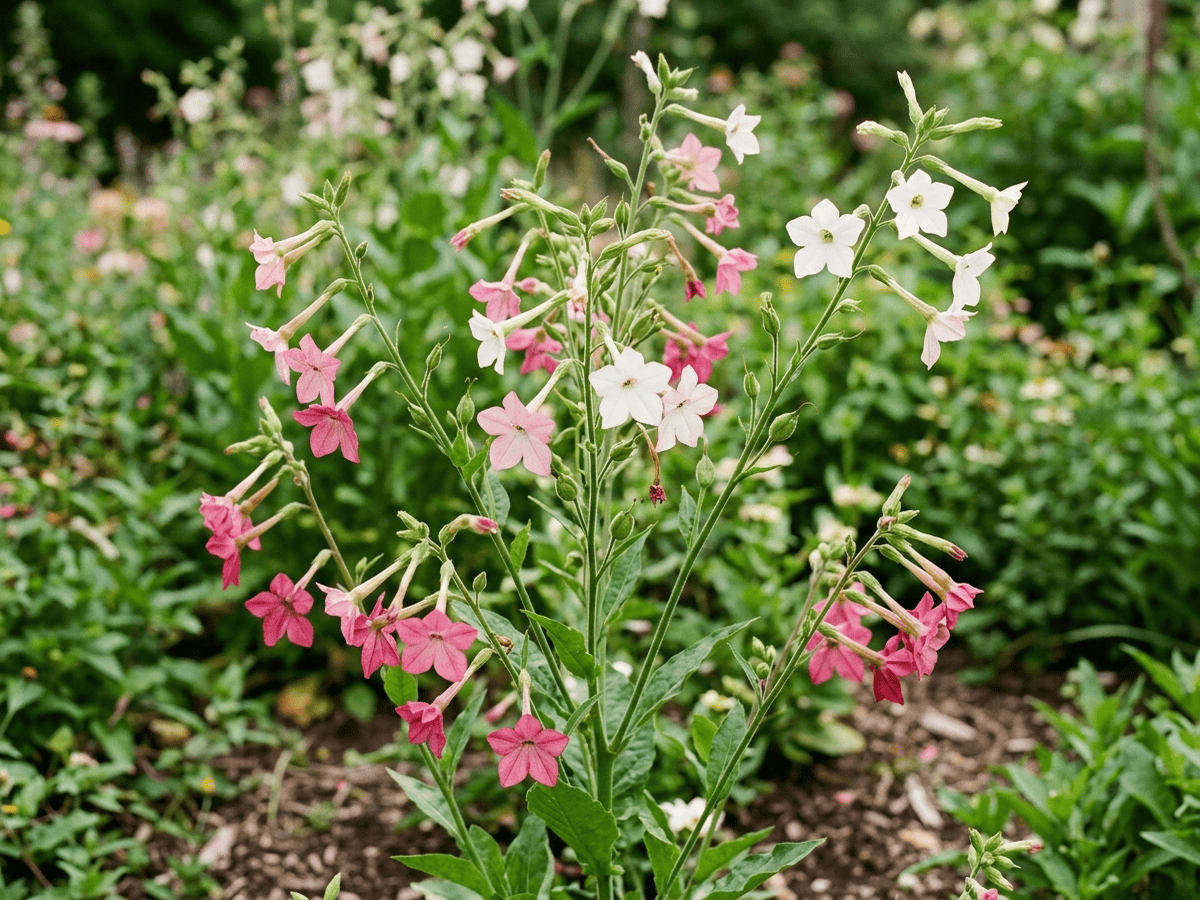 Nicotiana mutabilisNicotiana mutabilis
Plants with similar care
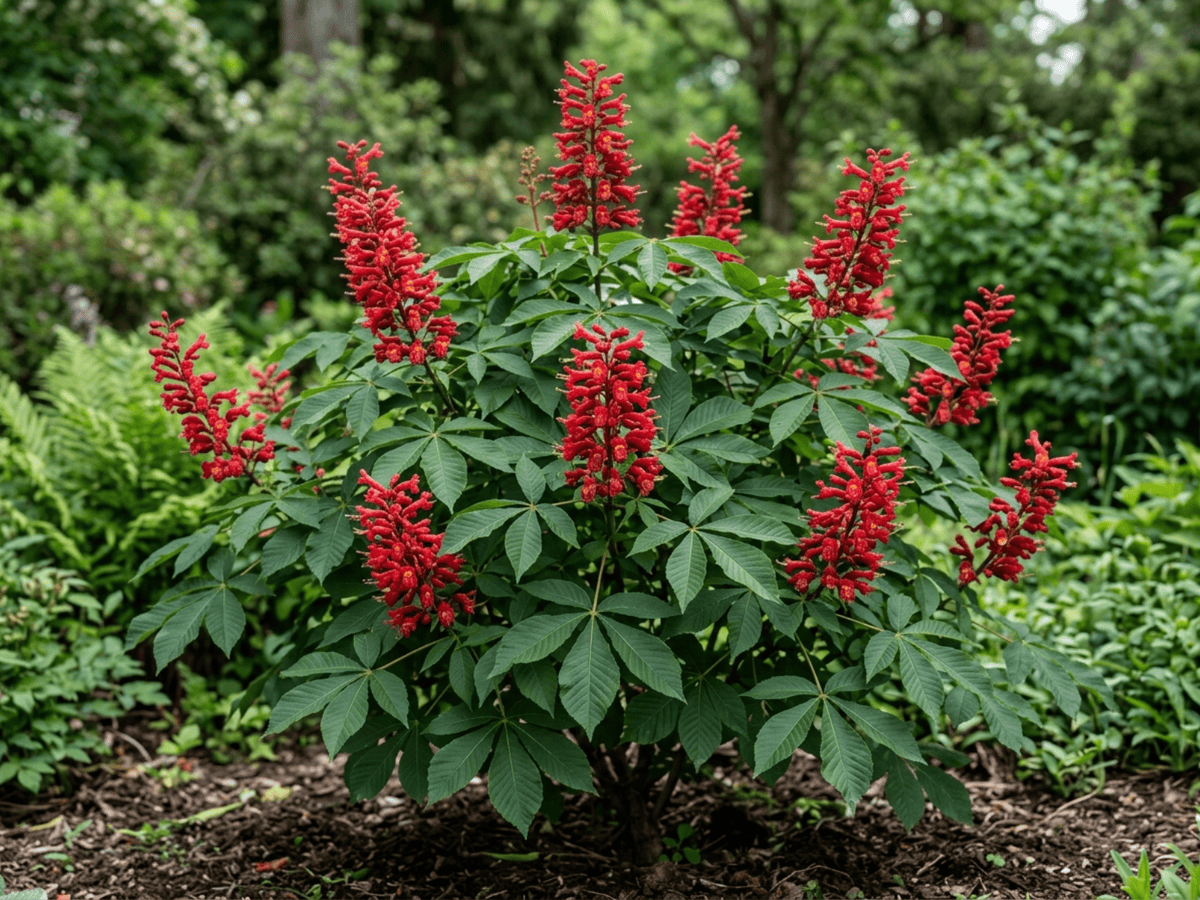 Red BuckeyeAesculus pavia
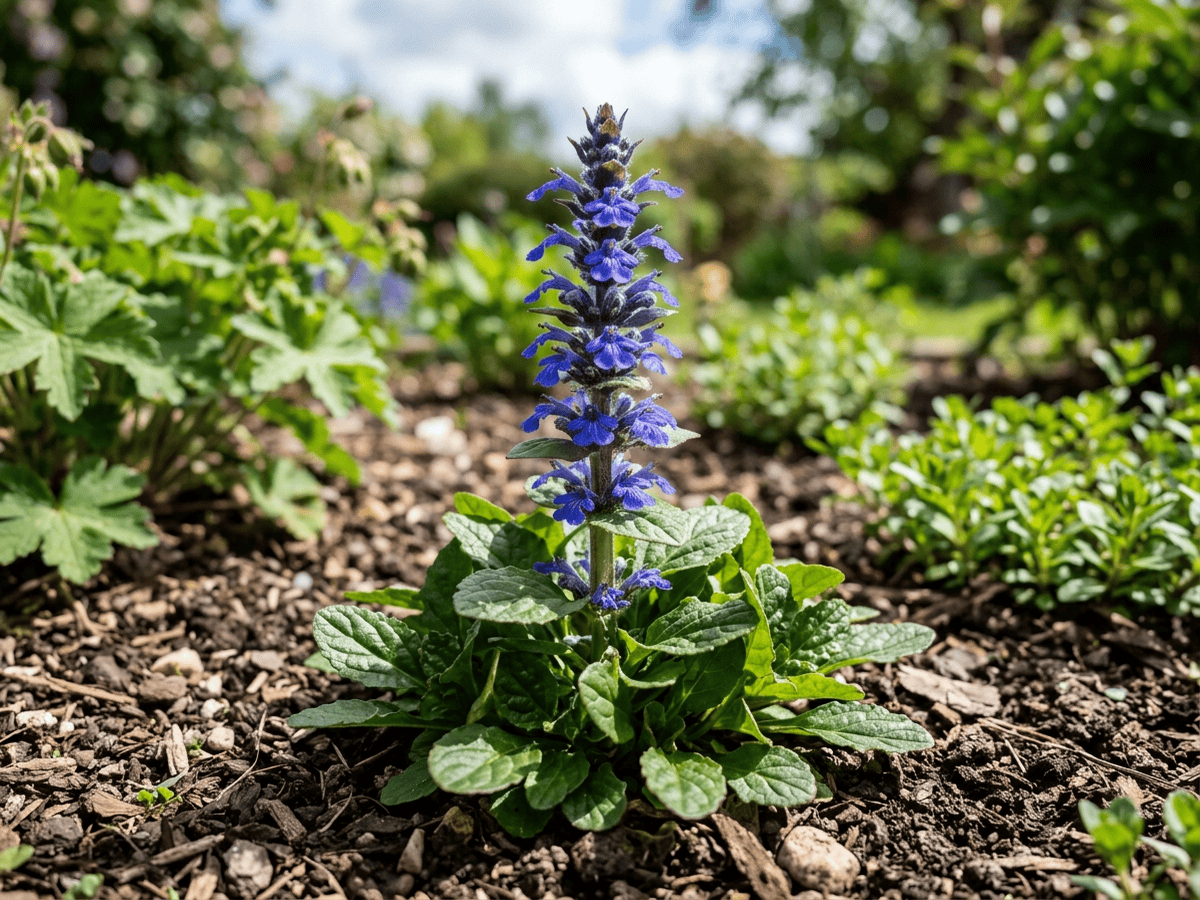 Blue BugleAjuga genevensis
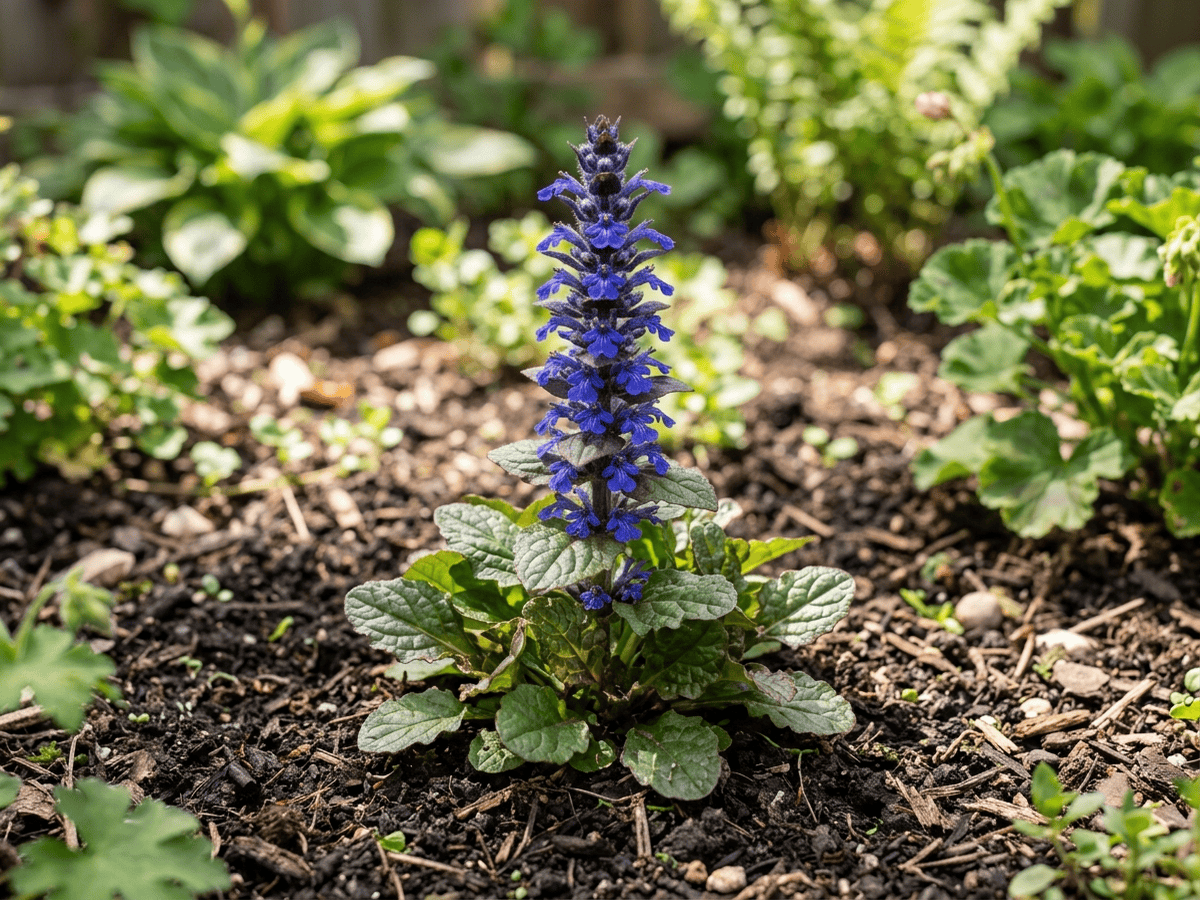 Pyramidal BugleAjuga pyramidalis
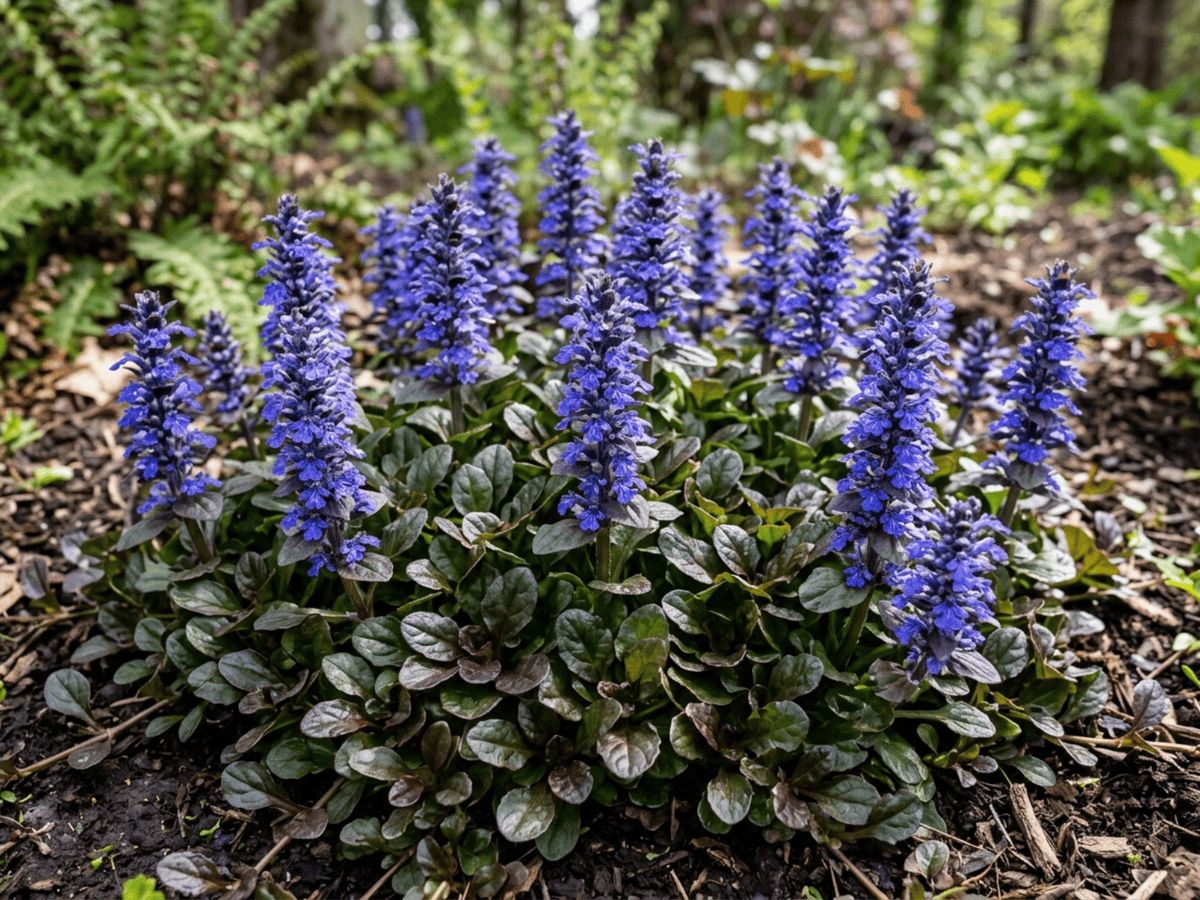 Carpet BugleAjuga reptans
Frequently asked questions
How often should I water Woodland Tobacco?
In summer, water about every 2 days; in winter, about every 10 days. Adjust for heat, pot size and drainage.
How much light does Woodland Tobacco need?
Part shade: 2–4 hrs direct. Watch the leaves — scorching or stretching means the light needs adjusting.
Is Woodland Tobacco toxic to cats or dogs?
Pets Toxic (Dogs Toxic · Cats Toxic) Educational information, not medical or veterinary advice. If exposure is suspected, contact a doctor or veterinarian.
Is Woodland Tobacco easy to grow?
Yes — it is considered an easy, beginner-friendly plant.
When does Woodland Tobacco bloom?
It typically blooms Jul–Nov in the Northern Hemisphere.
YardMate
Identify any plant in seconds
Snap a photo — YardMate names the plant, diagnoses problems, and reminds you when to water.
Download on the App Store