 YardMate

Holy Basil
Ocimum tenuiflorum
Easy · Beginner friendlyAbout Holy Basil
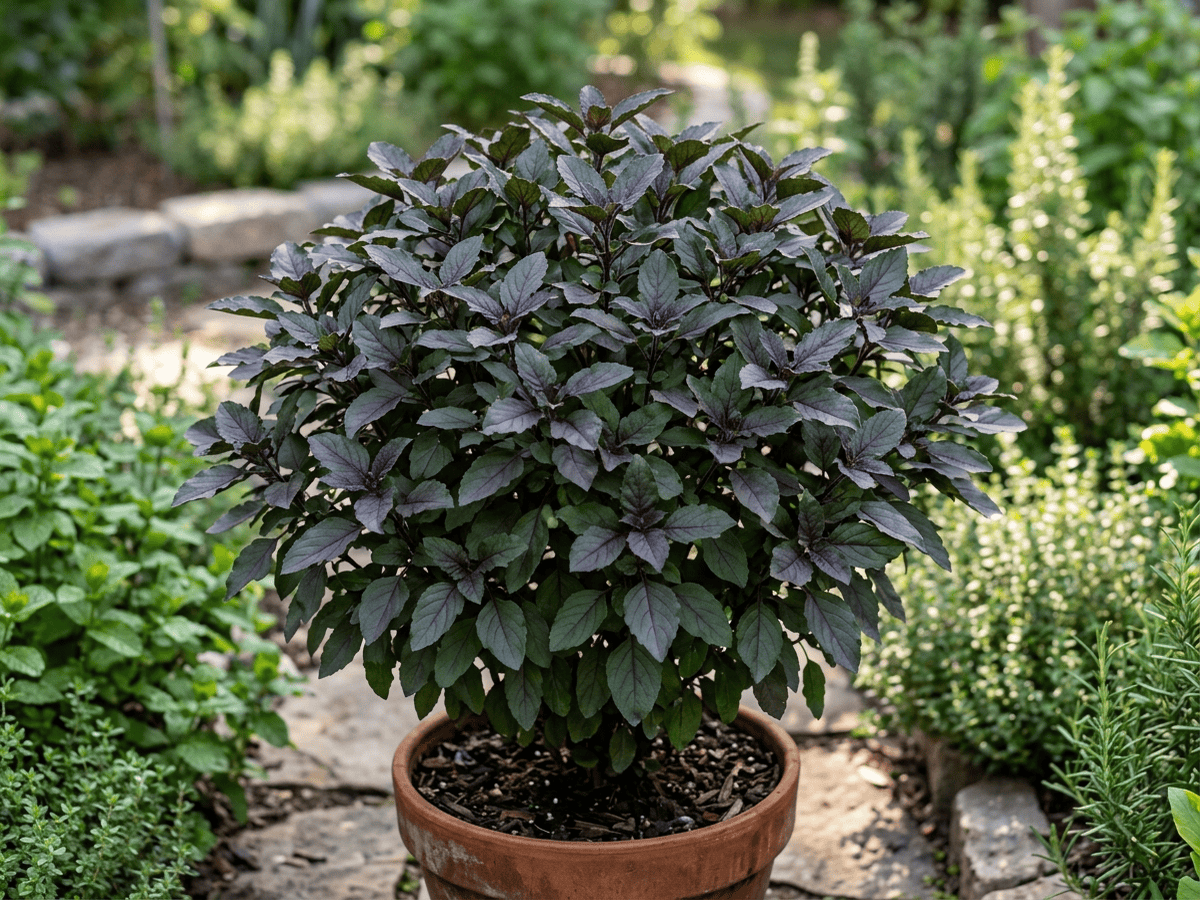
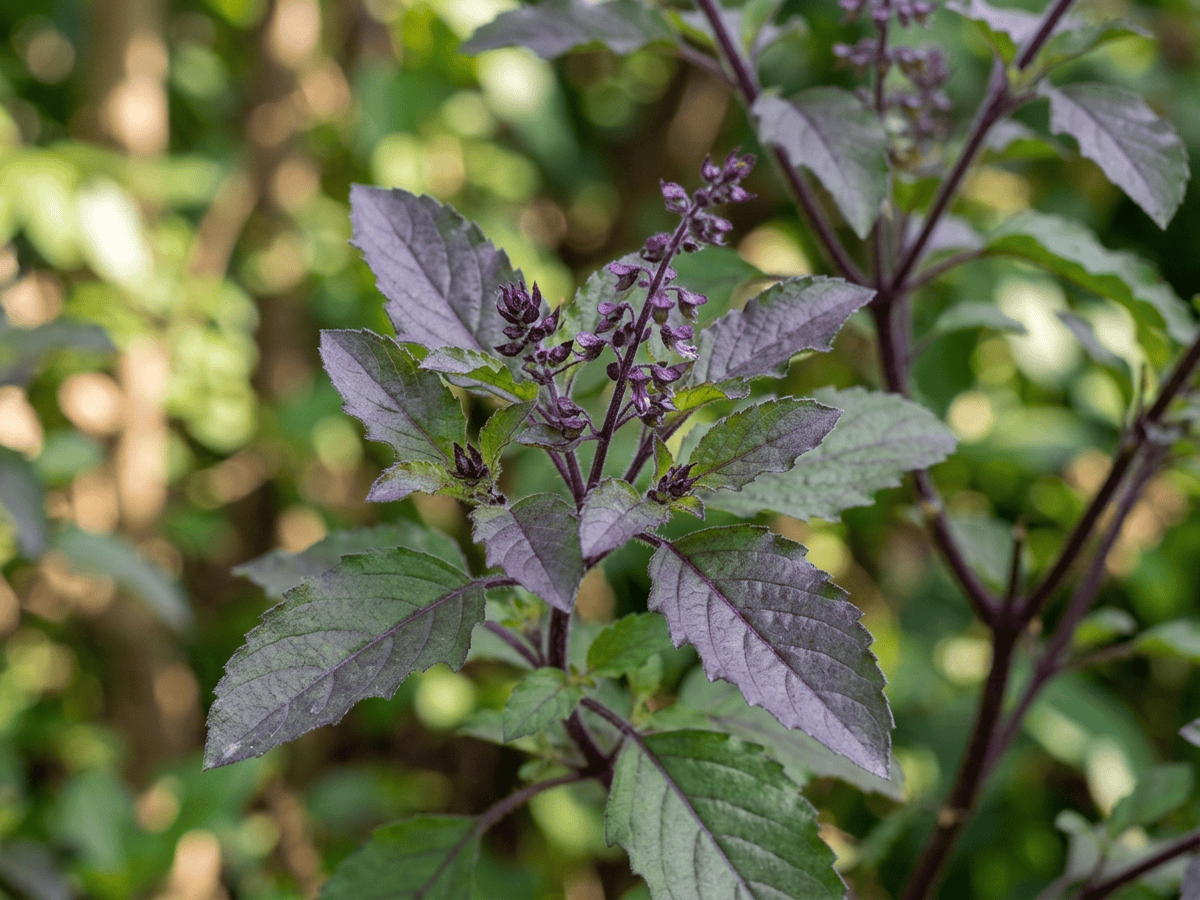
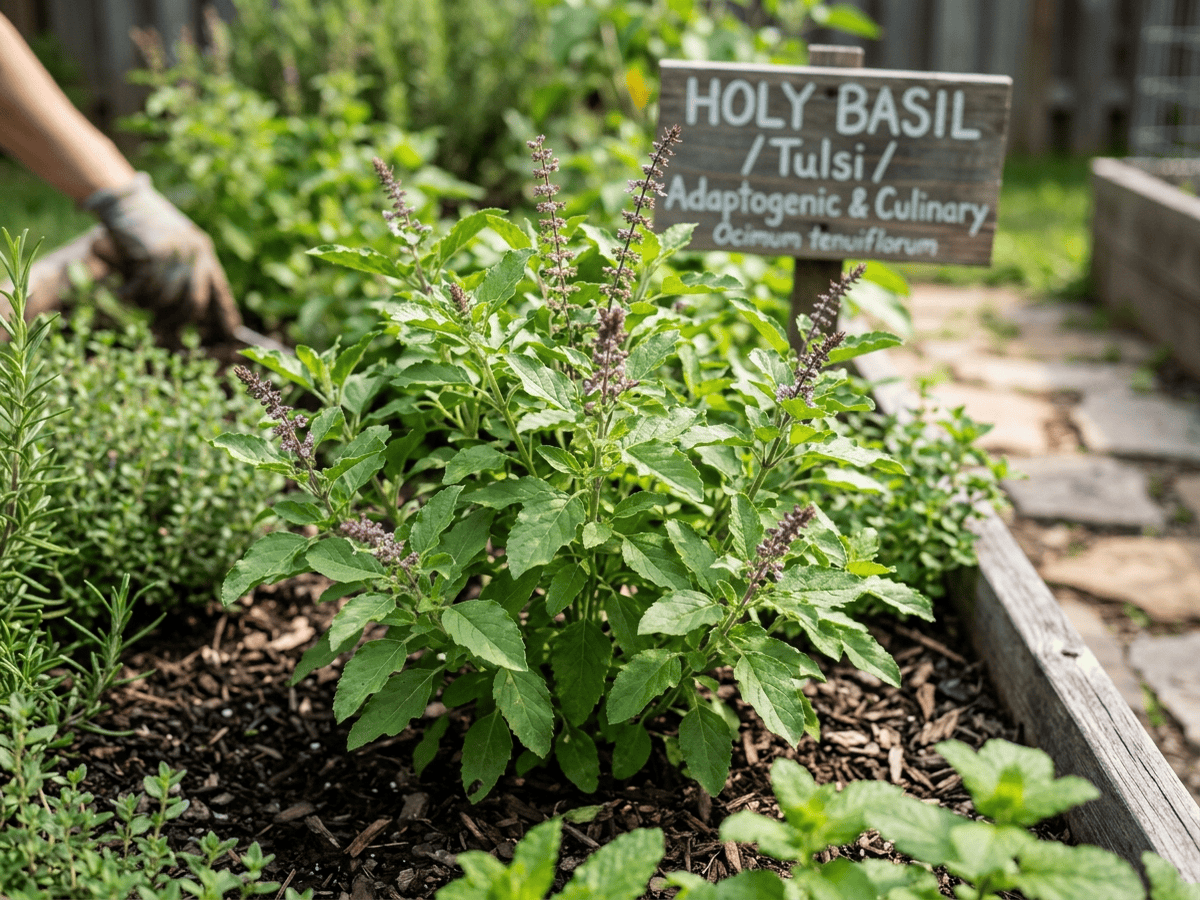
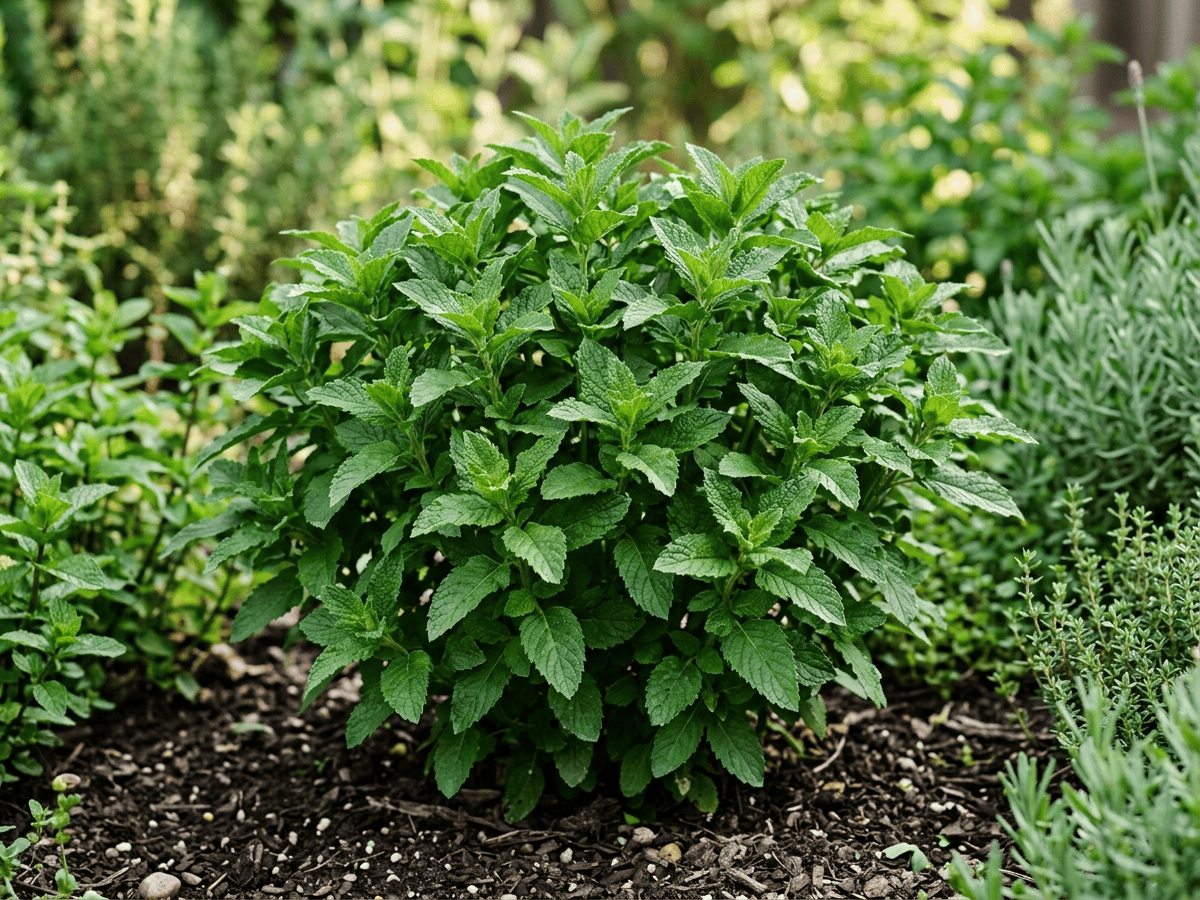
Ocimum tenuiflorum, holy basil or tulsi, is an aromatic basil of the Indian subcontinent with green, purple, or wild forest forms. Plants grow 30-90 cm with clove-scented leaves, purple-tinged flower spikes, and a warmer, more resinous flavor than sweet basil. In Hindu homes it is often grown as a sacred courtyard plant, tended daily and associated with devotion, protection, and household well-being. The leaves are brewed into teas and used sparingly in food, while the flowers feed bees and other small pollinators. In temperate gardens it behaves as a warm-season annual: give it heat, sun, and regular harvests to keep it branching. Few herbs carry so much fragrance and meaning in such a small plant.
- Edible
- Medicinal
- Fragrant
- Pollinator-friendly
How to care for Holy Basil
Watering
- Springevery 5 days
- Summerevery 5 days
- Fallevery 7 days
- Winterevery 14 days
Soil · Rich & well-draining
- Top dressingCompost10%
- Main mixPotting soil + compost 3:180%
- DrainageGravel10%
Top up the compost layer each season.
FERTILIZER
Balanced Feed 14-14-14
An even feed covers all three needs at once, keeping leaves, roots and blooms moving together with nothing pushed out of balance.
- Nitrogen · Leaves
- Phosphorus · Roots + Blooms
- Potassium · Strength
- Springevery 30 days
- Summerevery 30 days
- Fallevery 45 days
At a Glance
- NativeSouth Asia, East Asia
- Height1.5–3 ft (0.5–0.9 m)
- Spread1–2 ft (0.3–0.6 m)
- Flower colorPurple, White
- Foliage colorGreen, Purple
- SoilLoamy, Well-drained, Rich
- LocationsYard · Balcony · Indoor
Bloom time
BLOOM CYCLE
Peak bloom
Jun–Aug
Small pink-white or purple flower spikes through summer
Fragrance
STRONG FRAGRANCE
The flowers have a clove-like eugenol aroma.
Toxicity
Pets Safe
eugenol, rosmarinic acid, and ursolic acid
Not reported
EXPOSURE No exposure route is reported.
EFFECT No toxic effect is reported.
NOTE No human toxicity is reported in this catalog; avoid eating ornamental plants unless confirmed edible.
Safe
EXPOSURE No exposure route is reported.
EFFECT No toxic effect is reported.
NOTE Listed as non-toxic for dogs; avoid eating ornamental plants unless confirmed edible.
Safe
EXPOSURE No exposure route is reported.
EFFECT No toxic effect is reported.
NOTE Listed as non-toxic for cats; avoid eating ornamental plants unless confirmed edible.
Educational information, not medical or veterinary advice. If exposure is suspected, contact a doctor or veterinarian.
DISTRIBUTION


- Native
- Introduced
- South Asia
- East Asia
History
Ocimum tenuiflorum, correctly the earliest and accepted scientific name for the species also widely known as Ocimum sanctum, is an erect aromatic subshrub in the mint family (Lamiaceae) native to the Indian subcontinent and tropical Southeast Asia, naturalized throughout the world's tropics. Carl Linnaeus described it in Species Plantarum in 1753. The epithet tenuiflorum means slender-flowered.
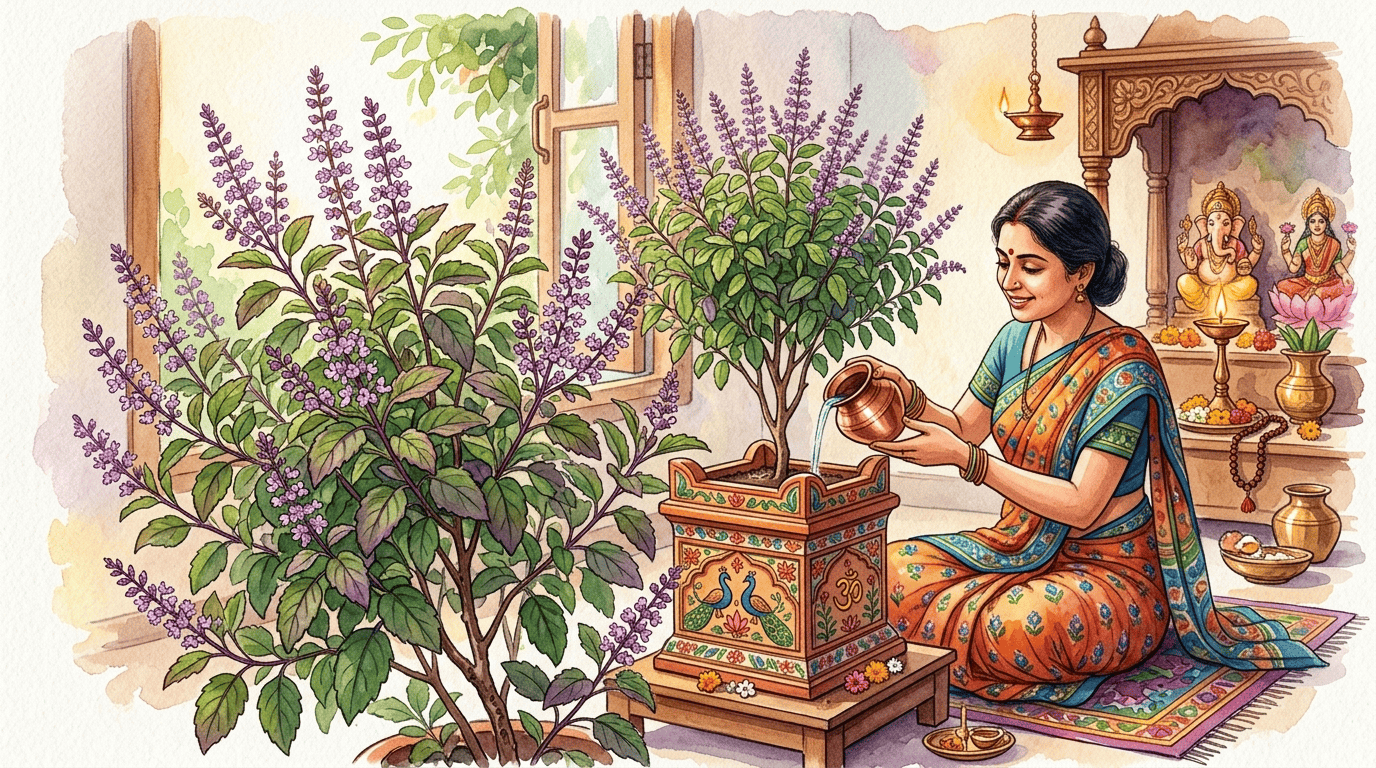
Plants grow 30-60 cm tall with oval serrated-margined green or purple aromatic leaves and slender terminal inflorescences of small lavender, purple, or white flowers in whorls along the raceme. The plant has been cultivated on the Indian subcontinent for at least 3000 years as a sacred herb (tulsi) in Hindu traditions, daily watered in household temples, considered an earthly manifestation of the goddess Lakshmi. In Ayurvedic medicine it is classified as a rasayana (rejuvenative) and adaptogen, used for respiratory issues, stress, fever, and immune support.
The essential oil is rich in eugenol. The accepted scientific name for Holy Basil, often listed as a synonym of Ocimum sanctum. Three major cultivated forms: Rama (green, sweeter), Krishna (purple, spicier), Vana (woodland/wild).
Symbolism & meaning
What It Symbolizes
Holy Basil, or Tulsi, is one of the great domestic sacred plants of India. It grows in courtyards, receives daily attention, and gathers fragrance, prayer, and pollinators around a modest woody stem. Its symbolism is devotion made ordinary: holiness not in distance, but in daily care.
- Sacredness — most revered plant in Hinduism
- Wellness — central herb of modern adaptogenic medicine
Where the Name Comes From
'Tenuiflorum' from Latin meaning slender-flowered, referring to the narrow flower spikes.
Uses & Fun Facts
- Holy basil leaves brewed as tulsi tea across India
- Ayurvedic adaptogen used for stress, immunity, and respiratory health
- Crushed leaves release clove-spice basil aroma
- Sacred plant of Hindu households tended at home shrines
Related plants
More Ocimum plants

Plants with similar care
 Chinese AbeliaAbelia chinensis
 Fragrant AbeliaAbelia mosanensis
 Large-Flowered AbeliaAbelia uniflora
 Glossy AbeliaAbelia x grandiflora
Frequently asked questions
How often should I water Holy Basil?
In summer, water about every 5 days; in winter, about every 14 days. Adjust for heat, pot size and drainage.
How much light does Holy Basil need?
Full sun: 6+ hrs direct. Watch the leaves — scorching or stretching means the light needs adjusting.
Is Holy Basil toxic to cats or dogs?
Pets Safe (Dogs Safe · Cats Safe) Educational information, not medical or veterinary advice. If exposure is suspected, contact a doctor or veterinarian.
Is Holy Basil easy to grow?
Yes — it is considered an easy, beginner-friendly plant.
Can Holy Basil be grown indoors?
Yes, it adapts well to indoor growing given the right light.
When does Holy Basil bloom?
It typically blooms Jun–Aug in the Northern Hemisphere.
YardMate
Identify any plant in seconds
Snap a photo — YardMate names the plant, diagnoses problems, and reminds you when to water.
Download on the App Store