 YardMate


Bunny Ears Cactus
Opuntia microdasys
Easy · Beginner friendlyAbout Bunny Ears Cactus
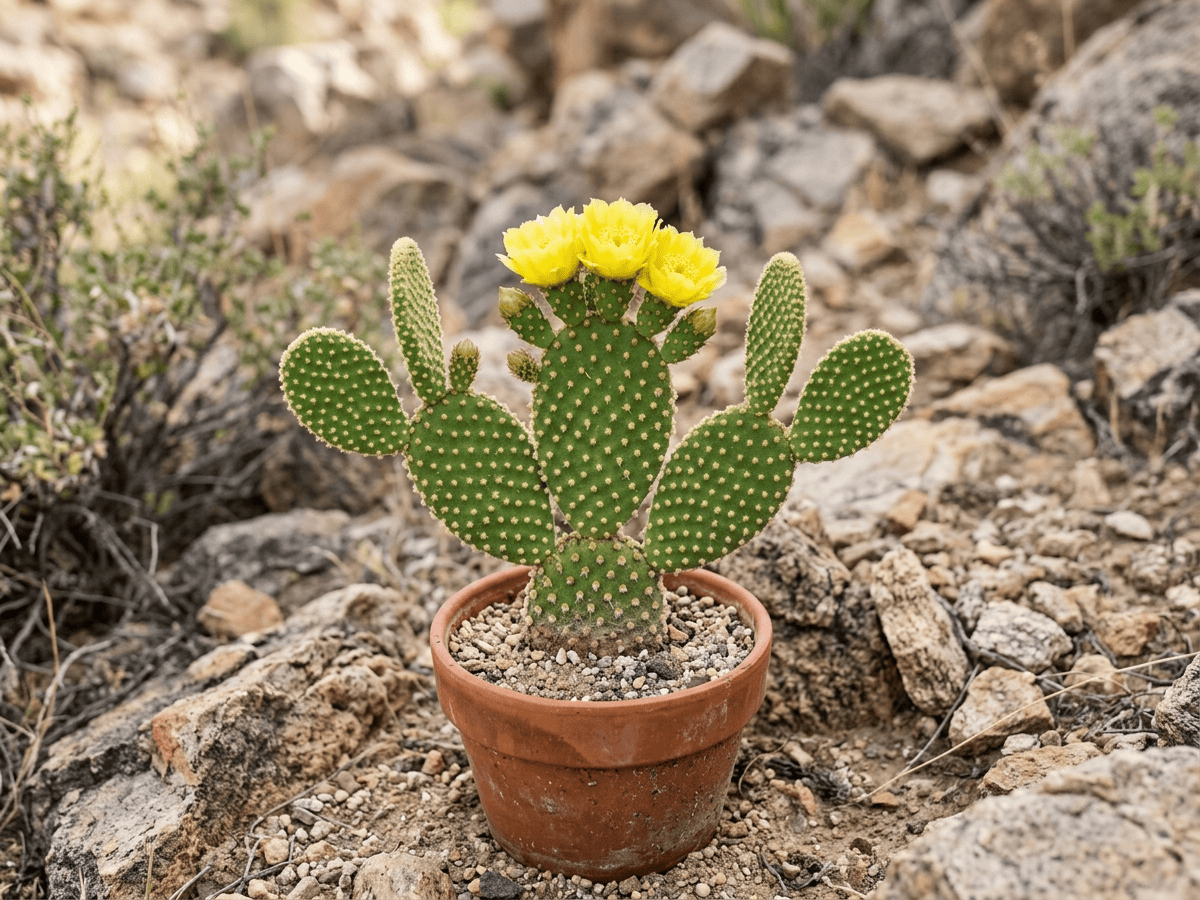
Bunny Ears Cactus is a charming Mexican native from the Chihuahuan Desert, beloved for its flat, oval pads covered in dense clusters of tiny golden glochids instead of large spines. These hair-like barbed bristles give the pads a velvety, polka-dotted appearance that has made it one of the most popular ornamental cacti worldwide. In habitat it forms low, spreading shrubs up to two feet tall, branching freely into a bushy mound. Despite its cuddly appearance, the glochids detach easily and embed in skin, causing persistent irritation — always handle with thick gloves or tongs. It thrives in bright sun and extremely well-drained soil, requiring almost no water during winter dormancy. Small yellow or white flowers may appear along pad edges in spring, followed by reddish-purple fruit. Its compact size and whimsical shape make it a favorite windowsill cactus and a gateway plant for new succulent collectors.
- Drought-tolerant
- Low-maintenance
- Compact
How to care for Bunny Ears Cactus
Watering
- Springevery 14 days
- Summerevery 10 days
- Fallevery 21 days
- Winterevery 45 days
Soil · Fast-draining
- Main mixSand + pumice + soil 1:1:150%
- DrainagePumice / gravel50%
Keep grit at half the mix or more — this soil is meant to dry out fast.
FERTILIZER
Cactus & Succulent Feed 2-7-7
Hold the nitrogen back and growth stays compact instead of soft and stretched. Phosphorus and potassium carry the roots and the flowering.
- Nitrogen · Leaves
- Phosphorus · Roots + Blooms
- Potassium · Strength
- Springevery 45 days
- Summerevery 45 days
- Fallevery 60 days
At a Glance
- NativeNorth America
- Height1–2 ft (0.3–0.6 m)
- Spread2–4 ft (0.6–1.2 m)
- Flower colorYellow
- Foliage colorGreen
- SoilSandy, Well-drained
- LocationsIndoor · Yard
Bloom time
BLOOM CYCLE
Peak bloom
Mar–May
Small yellow flowers at pad edges in spring
Fragrance
NO FRAGRANCE
No notable fragrance.
Toxicity
Humans Slight · Pets Slight
Unknown toxic principle
Slight
- Stem
- Contact
EXPOSURE Touching stems.
EFFECT Glochids (fine barbed bristles) cause persistent skin irritation, inflammation, and splinter-like removal.
NOTE Documented concern for humans: Glochids (fine barbed bristles) cause persistent skin irritation, inflammation, and splinter-like removal.
Slight
- Stem
- Contact
EXPOSURE Touching stems.
EFFECT Oral and paw injury from glochids.
NOTE ASPCA/NC State list Opuntia as non-toxic. Glochids/spines can injure paws or mouths mechanically; this is not chemical toxicity.
Slight
- Stem
- Contact
EXPOSURE Touching stems.
EFFECT Oral and paw injury from glochids.
NOTE ASPCA/NC State list Opuntia as non-toxic. Glochids/spines can injure paws or mouths mechanically; this is not chemical toxicity.
Educational information, not medical or veterinary advice. If exposure is suspected, contact a doctor or veterinarian.
DISTRIBUTION

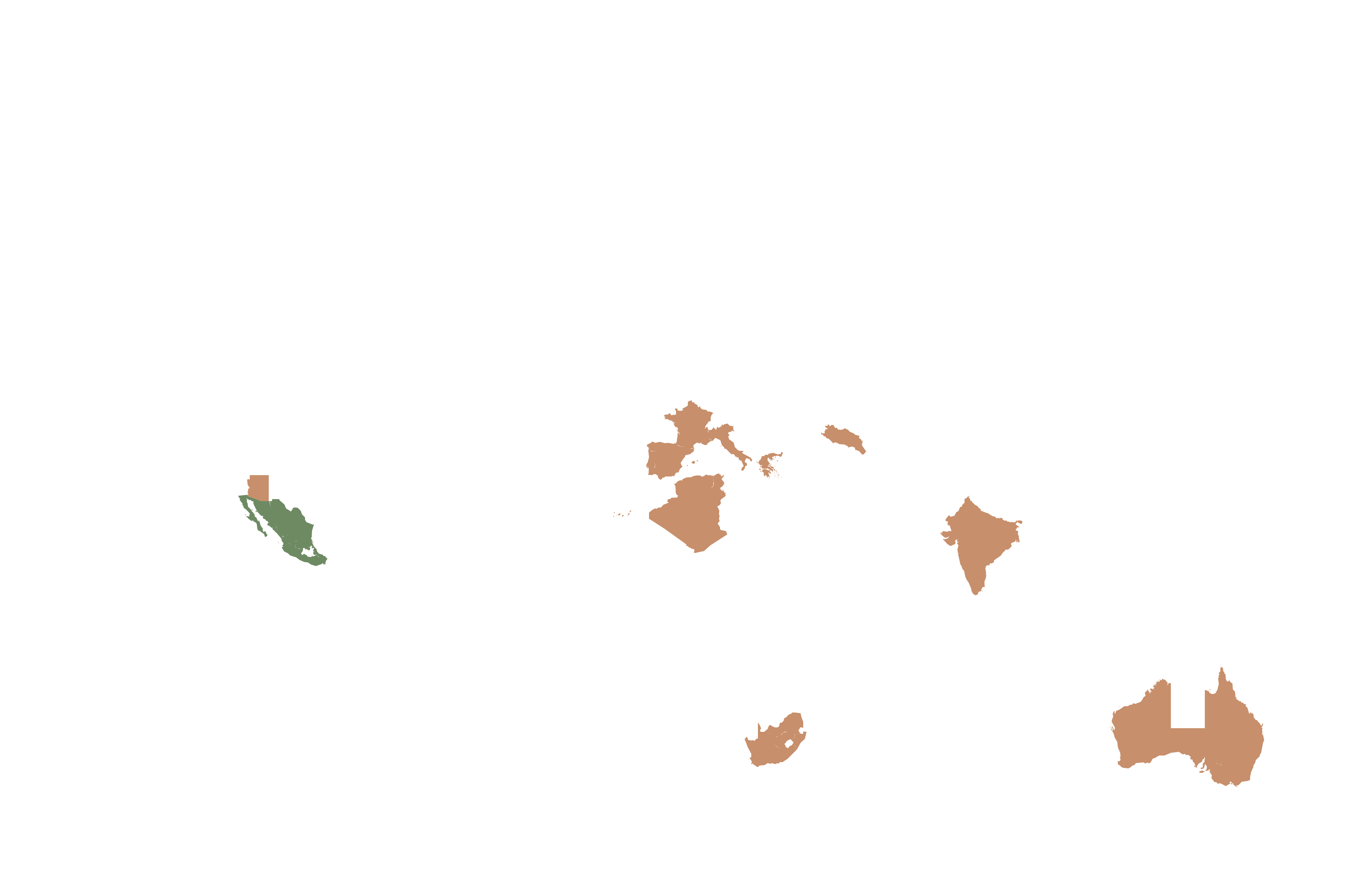
- Native
- Introduced
- North America
History

Opuntia microdasys is native to the Chihuahuan Desert and adjacent arid regions of central and northern Mexico. It was described by German botanist Heinrich Gustav Adolf Engelmann in 1852. The species lacks the long spines typical of most Opuntia and instead produces dense polka-dot tufts of fine barbed bristles called glochids, which look decorative but detach on contact and lodge painfully in skin, causing irritation and inflammation that can persist for weeks.
Despite — or partly because of — this unique appearance, it became one of the most widely propagated ornamental cacti of the 20th century, sold globally as a novelty houseplant. Varieties include yellow-glochid ("aurea"), white-glochid ("albispina"), and red-glochid ("rufida") forms. In its native Mexico it is one of many Opuntia species historically used for food and forage.
Its common name 'Bunny Ears' arose from the way paired young pads sprout from a parent pad, resembling rabbit ears. It became a staple of European cactus collections in the Victorian era, when exotic desert plants were prized curiosities. In Mexican folk medicine, Opuntia species have been used for centuries to treat burns and digestive ailments.
Symbolism & meaning
What It Symbolizes
The Bunny Ears Cactus embodies warmth, its golden bristles seeming to hold the heat of the desert sun even when grown indoors. Endurance lies in its DNA, thriving in arid environments with minimal soil and almost no water. To keep this cactus is to bring a small piece of Mexican desert into the home — patient, sun-soaked, and perfectly content with the sparest possible care.
- Warmth — its golden bristles evoke the warmth of the desert sun
- Endurance — thrives in harsh arid environments with minimal resources
Where the Name Comes From
The name Bunny Ears Cactus describes its cactus-like form. 'Opuntia' derives from the ancient Greek city of Opus where a similar spiny plant grew. 'Microdasys' means 'small and hairy' in Greek, referring to the fine glochids covering each pad.
Uses & Fun Facts
- Polka-dot pads make a playful cactus for dry pots and desert displays
Related plants
More Opuntia plants

Plants with similar care
 Chinese AbeliaAbelia chinensis
 Fragrant AbeliaAbelia mosanensis
 Large-Flowered AbeliaAbelia uniflora
 Glossy AbeliaAbelia x grandiflora
Frequently asked questions
How often should I water Bunny Ears Cactus?
In summer, water about every 10 days; in winter, about every 45 days. Adjust for heat, pot size and drainage.
How much light does Bunny Ears Cactus need?
Full sun: 6+ hrs direct. Watch the leaves — scorching or stretching means the light needs adjusting.
Is Bunny Ears Cactus toxic to cats or dogs?
Pets Slight (Dogs Slight · Cats Slight) Educational information, not medical or veterinary advice. If exposure is suspected, contact a doctor or veterinarian.
Is Bunny Ears Cactus easy to grow?
Yes — it is considered an easy, beginner-friendly plant.
Can Bunny Ears Cactus be grown indoors?
Yes, it adapts well to indoor growing given the right light.
When does Bunny Ears Cactus bloom?
It typically blooms Mar–May in the Northern Hemisphere.
YardMate
Identify any plant in seconds
Snap a photo — YardMate names the plant, diagnoses problems, and reminds you when to water.
Download on the App Store