 YardMate
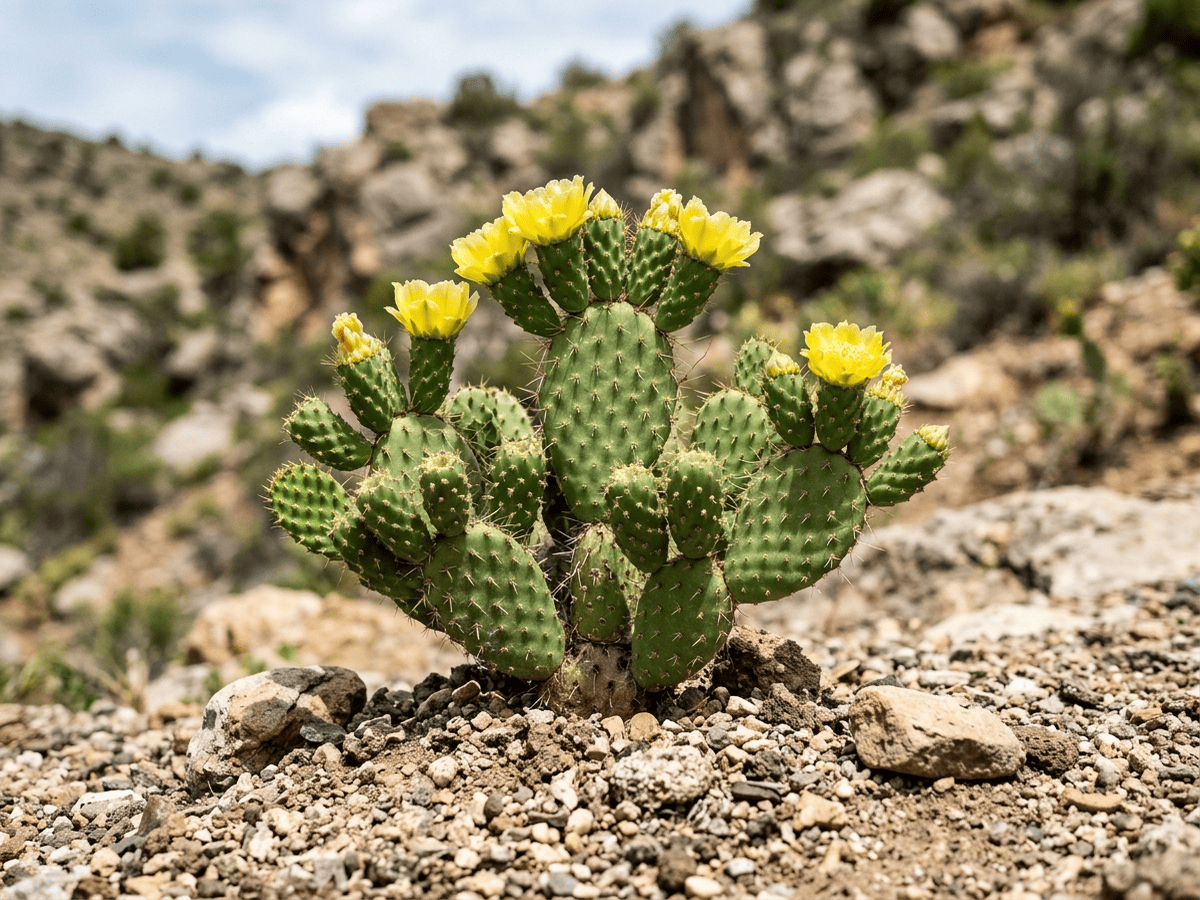


Indian Fig Opuntia
Opuntia ficus-indica
Easy · Beginner friendlyAbout Indian Fig Opuntia
Prickly Pear is a large, tree-like cactus originally from Mexico that has been cultivated for thousands of years as a vital food crop. Its thick, flat pads (nopales) are a staple vegetable in Mexican cuisine, eaten grilled, pickled, or in salads, while its sweet, jewel-toned fruits (tunas) are prized for juices, candies, and natural dyes. Growing up to fifteen feet tall, it forms massive clumps of blue-green pads that can colonize entire hillsides. The plant was so important to Aztec civilization that it appears on the Mexican coat of arms and flag — an eagle perched on a prickly pear cactus. It has naturalized across the Mediterranean, Africa, and Australia, sometimes becoming invasive. Rich in fiber, vitamins, and antioxidants, both pads and fruit are increasingly recognized as superfoods. Its ability to thrive on degraded land makes it valuable for combating desertification and providing food security in arid regions.
- Edible
- Drought-tolerant
- Fast-growing
How to care for Indian Fig Opuntia
Watering
- Springevery 14 days
- Summerevery 10 days
- Fallevery 21 days
- Winterevery 45 days
Soil · Fast-draining
- Main mixSand + pumice + soil 1:1:150%
- DrainagePumice / gravel50%
Keep grit at half the mix or more — this soil is meant to dry out fast.
FERTILIZER
Balanced Feed 14-14-14
An even feed covers all three needs at once, keeping leaves, roots and blooms moving together with nothing pushed out of balance.
- Nitrogen · Leaves
- Phosphorus · Roots + Blooms
- Potassium · Strength
- Springevery 45 days
- Summerevery 45 days
- Fallevery 60 days
At a Glance
- NativeNorth America
- Height10–18 ft (3–5.5 m)
- Spread6–12 ft (1.8–3.7 m)
- Flower colorYellow, Orange, Red
- Foliage colorGreen, Blue-green
- Fruit colorRed
- SoilSandy, Well-drained
- LocationsYard
Bloom time
BLOOM CYCLE
Peak bloom
Mar–May
Large yellow or orange flowers in late spring
Fragrance
NO FRAGRANCE
No notable fragrance.
Toxicity
Pets Safe
None reported
Not reported
EXPOSURE No exposure route is reported.
EFFECT Fruit and pads widely eaten and major food crop.
NOTE No human toxicity is reported in this catalog; avoid eating ornamental plants unless confirmed edible.
Safe
EXPOSURE No exposure route is reported.
EFFECT Chemically non-toxic and glochid injury possible.
NOTE Listed as non-toxic for dogs; avoid eating ornamental plants unless confirmed edible.
Safe
EXPOSURE No exposure route is reported.
EFFECT Chemically non-toxic and glochid injury possible.
NOTE Listed as non-toxic for cats; avoid eating ornamental plants unless confirmed edible.
Educational information, not medical or veterinary advice. If exposure is suspected, contact a doctor or veterinarian.
DISTRIBUTION


- Native
- Introduced
- North America
History

Opuntia ficus-indica is native to central Mexico and one of the most ancient domesticated cacti — archaeobotanical evidence places cultivation by Mesoamerican peoples at least 9,000 years ago. The Aztec origin myth describes the founding of Tenochtitlán where an eagle perched on a prickly pear devoured a serpent, a scene commemorated on the modern Mexican flag and national coat of arms. Cochineal, the red dye historically produced from Dactylopius coccus scale insects feeding on this and related cacti, was one of the most valuable exports of colonial New Spain.
Spanish conquest spread Opuntia globally: it became a staple food crop in North Africa, Sicily, the Mediterranean, Ethiopia, and semi-arid Latin America; both fruit (tuna) and young pads (nopales) are consumed. In Australia it caused one of history's worst invasive-species crises until biological control by Cactoblastis cactorum moth (1920s-1930s).
Prickly pear has been cultivated in Mesoamerica for over 9,000 years, making it one of the oldest domesticated plants in the Americas. The Aztec capital Tenochtitlan was founded where an eagle was seen eating a snake atop a prickly pear — this image remains on Mexico's flag today. Spanish colonizers brought it to Europe in the 16th century, where it spread across the Mediterranean.
Symbolism & meaning
What It Symbolizes
The Indian fig opuntia is abundance shaped like a paddle, producing waves of fruit and new pads year after year on land that supports almost nothing else. As the central image of the Mexican flag — an eagle perched on a nopal devouring a serpent — it carries unmatched national pride. Its resilience completes the trio: a plant that thrives on rock, drought, and heat, and feeds nations from that improbable success.
- Abundance — its prolific fruit and pad production symbolize generosity and plenty
- National Pride — central symbol on the Mexican flag and coat of arms
- Resilience — thrives on barren land, representing strength in adversity
Where the Name Comes From
'Opuntia' from the Greek city of Opus. 'Ficus-indica' means 'Indian fig,' as early Europeans confused the Americas with India and likened the fruit to figs.
Uses & Fun Facts
- Sweet prickly pear fruit and young pads eaten across Mexico
- Large yellow cup flowers attract native bees and beetles
- Iconic plant on the Mexican national flag and coat of arms
Related plants
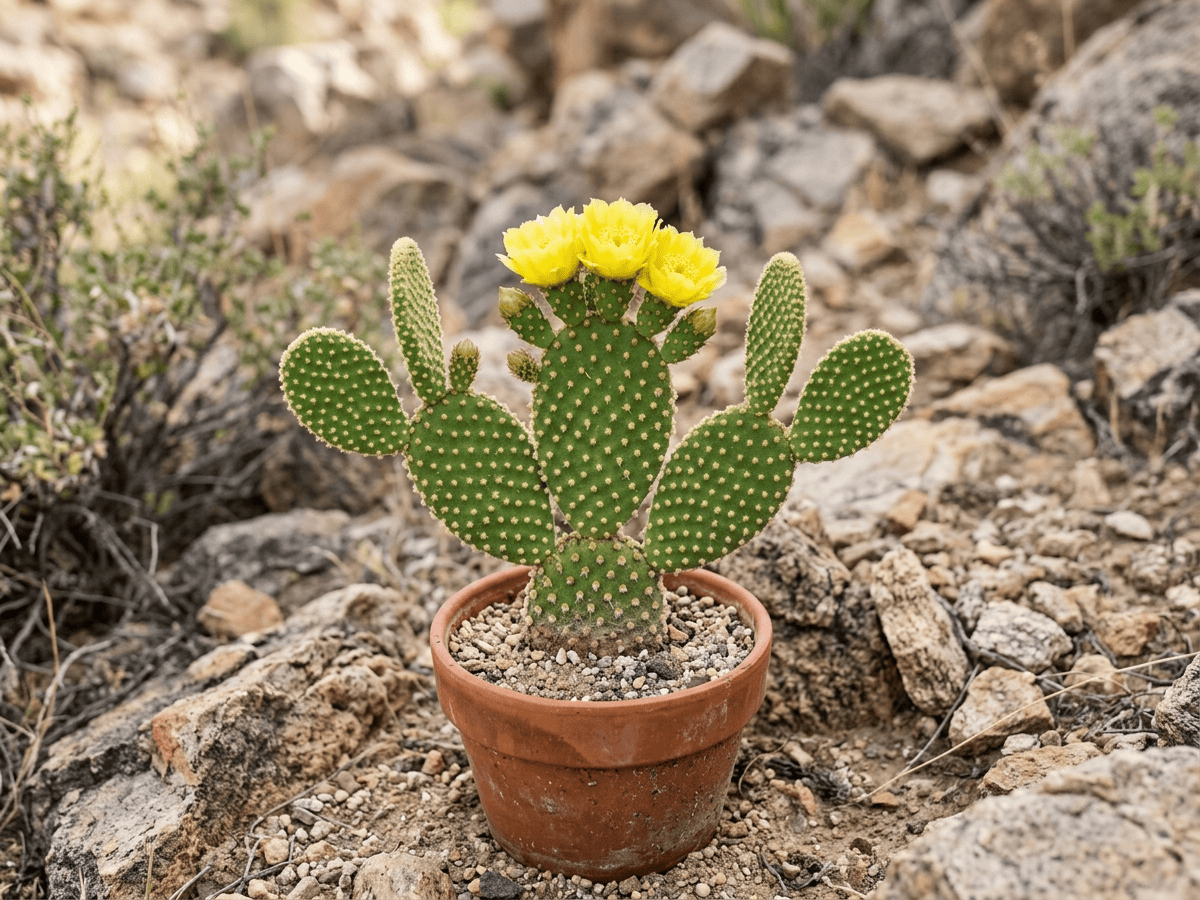
More Opuntia plants

Plants with similar care
 Chinese AbeliaAbelia chinensis
 Fragrant AbeliaAbelia mosanensis
 Large-Flowered AbeliaAbelia uniflora
 Glossy AbeliaAbelia x grandiflora
Frequently asked questions
How often should I water Indian Fig Opuntia?
In summer, water about every 10 days; in winter, about every 45 days. Adjust for heat, pot size and drainage.
How much light does Indian Fig Opuntia need?
Full sun: 6+ hrs direct. Watch the leaves — scorching or stretching means the light needs adjusting.
Is Indian Fig Opuntia toxic to cats or dogs?
Pets Safe (Dogs Safe · Cats Safe) Educational information, not medical or veterinary advice. If exposure is suspected, contact a doctor or veterinarian.
Is Indian Fig Opuntia easy to grow?
Yes — it is considered an easy, beginner-friendly plant.
When does Indian Fig Opuntia bloom?
It typically blooms Mar–May in the Northern Hemisphere.
YardMate
Identify any plant in seconds
Snap a photo — YardMate names the plant, diagnoses problems, and reminds you when to water.
Download on the App Store