 YardMate



Santa Rita Pricklypear
Opuntia santa-rita
Easy · Beginner friendlyAbout Santa Rita Pricklypear
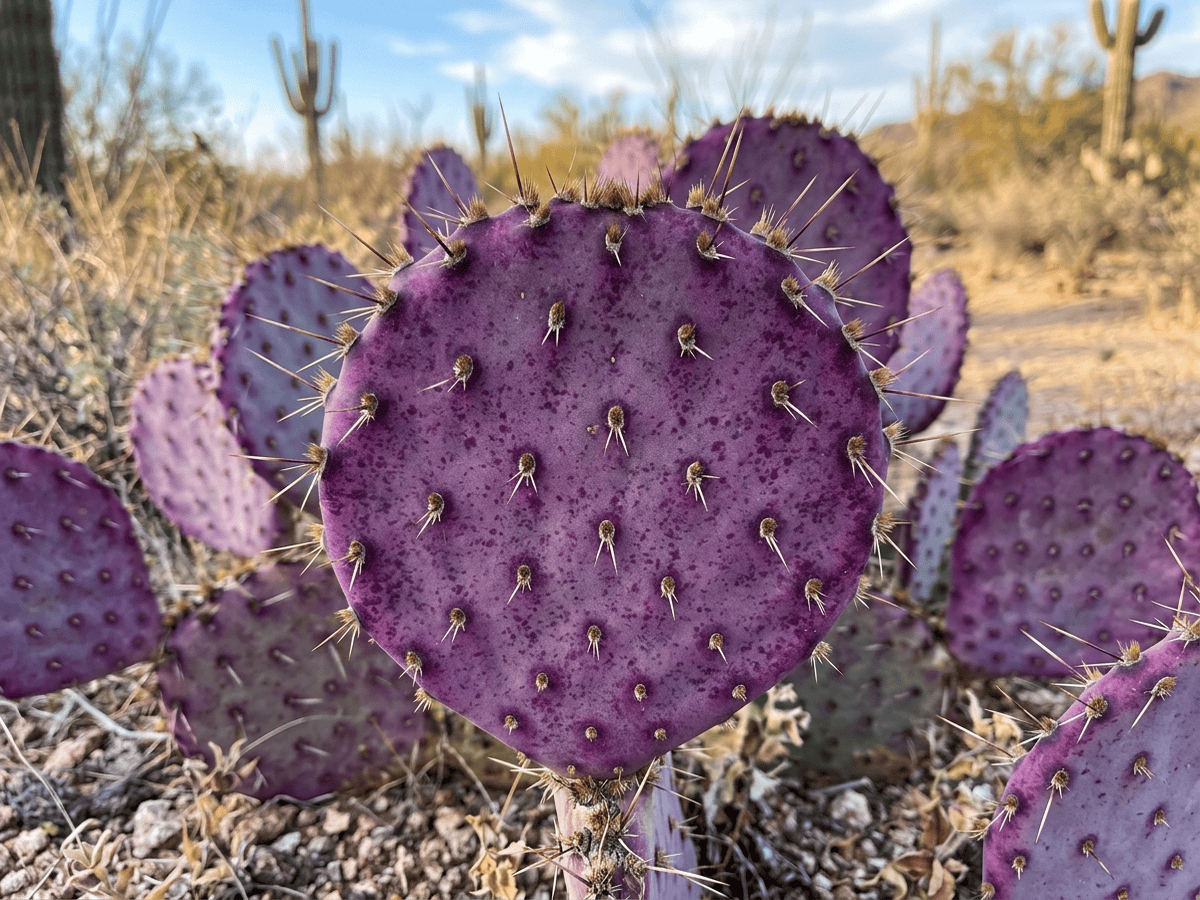
Santa Rita Prickly Pear is a stunning North American cactus from the Sonoran Desert, distinguished by flat round pads that flush vivid purple-violet to lavender in cold weather, drought, or stress—returning to gray-blue in summer. Reaching 3-6 feet tall and 4-8 feet wide, it produces large bright-yellow flowers in spring followed by purple-red edible fruits. A signature plant of modern Southwest landscape design from Tucson to Palm Springs.
- Edible
- Drought-tolerant
- Evergreen
- Native
How to care for Santa Rita Pricklypear
Watering
- Springevery 21 days
- Summerevery 21 days
- Fallevery 30 days
- Winterevery 60 days
Soil · Fast-draining
- Main mixSand + pumice + soil 1:1:150%
- DrainagePumice / gravel50%
Keep grit at half the mix or more — this soil is meant to dry out fast.
FERTILIZER
- Springevery 60 days
At a Glance
- NativeNorth America
- Height3–6 ft (0.9–1.8 m)
- Spread4–6 ft (1.2–1.8 m)
- Flower colorYellow
- Foliage colorBlue-green, Purple
- Fruit colorRed, Purple
- SoilSandy, Well-drained
- LocationsYard
Bloom time
BLOOM CYCLE
Peak bloom
Mar–May
Large bright yellow flowers in spring
Toxicity
Humans Slight · Pets Slight
Unknown toxic principle
Slight
- Stem
- Contact
EXPOSURE Touching stems.
EFFECT Glochid embedment and skin irritation.
NOTE Not chemically toxic; glochids (hair-like barbed spines) cause significant mechanical irritation.
Slight
- Stem
- Contact
- Ingestion
EXPOSURE Touching stems. Eating stems.
EFFECT Glochid irritation and oral injury.
NOTE Not chemically toxic; glochids (hair-like barbed spines) cause significant mechanical irritation.
Slight
- Stem
- Contact
- Ingestion
EXPOSURE Touching stems. Eating stems.
EFFECT Glochid irritation and oral injury.
NOTE Not chemically toxic; glochids (hair-like barbed spines) cause significant mechanical irritation.
Educational information, not medical or veterinary advice. If exposure is suspected, contact a doctor or veterinarian.
DISTRIBUTION


- Native
- North America
History

Opuntia santa-rita, commonly called Santa Rita prickly pear or purple prickly pear, is a spreading shrubby cactus native to the Sonoran Desert of southern Arizona, southeastern California, New Mexico, and northern Mexico (Sonora, Chihuahua), particularly the Santa Rita Mountains from which the epithet derives. American botanist Joseph Nelson Rose described it in 1908. Some authorities treat it as a form of the variable Opuntia violacea.
Plants form spreading shrubs 1-2 meters tall composed of round, flat, obovate 10-20 cm pads that in good growing conditions are soft blue-green but in winter cold, drought, or strong sun flush brilliant purple, magenta, or red-purple—the color change is reversible but the species is prized specifically for this dramatic seasonal display. Large glossy golden-yellow flowers 5-8 cm across appear along upper pad margins in spring, followed by 3-4 cm red-purple edible fruit. One of the most popular ornamental Opuntias in Xeriscape landscapes.
Long used by the Tohono O'odham and Hohokam peoples for fruit and pads. Now a defining plant of Sonoran-style landscape design in Tucson and Phoenix, where its purple winter color provides a unique seasonal show. Carries fine irritating glochids despite minimal spines.
Symbolism & meaning
What It Symbolizes
Santa Rita Pricklypear expresses adaptability, its pads shifting from blue-green to deep purple as the seasons and stresses change — a plant that visibly responds to its environment. Its heritage runs through the Sonoran cultural landscape, an icon of Southwestern terraces and washes. To grow it is to keep a piece of desert color theory: a cactus that wears its weather on its skin.
- Adaptability — color shifts with the seasons and conditions
- Heritage — iconic plant of Sonoran cultural landscapes
Where the Name Comes From
'Opuntia' from the ancient Greek city Opus where a similar plant grew; 'santa-rita' refers to the Santa Rita Mountains of Arizona.
Uses & Fun Facts
- Tunas and young pads eaten in Mexican cooking when despined
- Purple-blushed prickly-pear pads for desert and gravel gardens
- Fruits feed javelinas, quail, and desert songbirds
Related plants
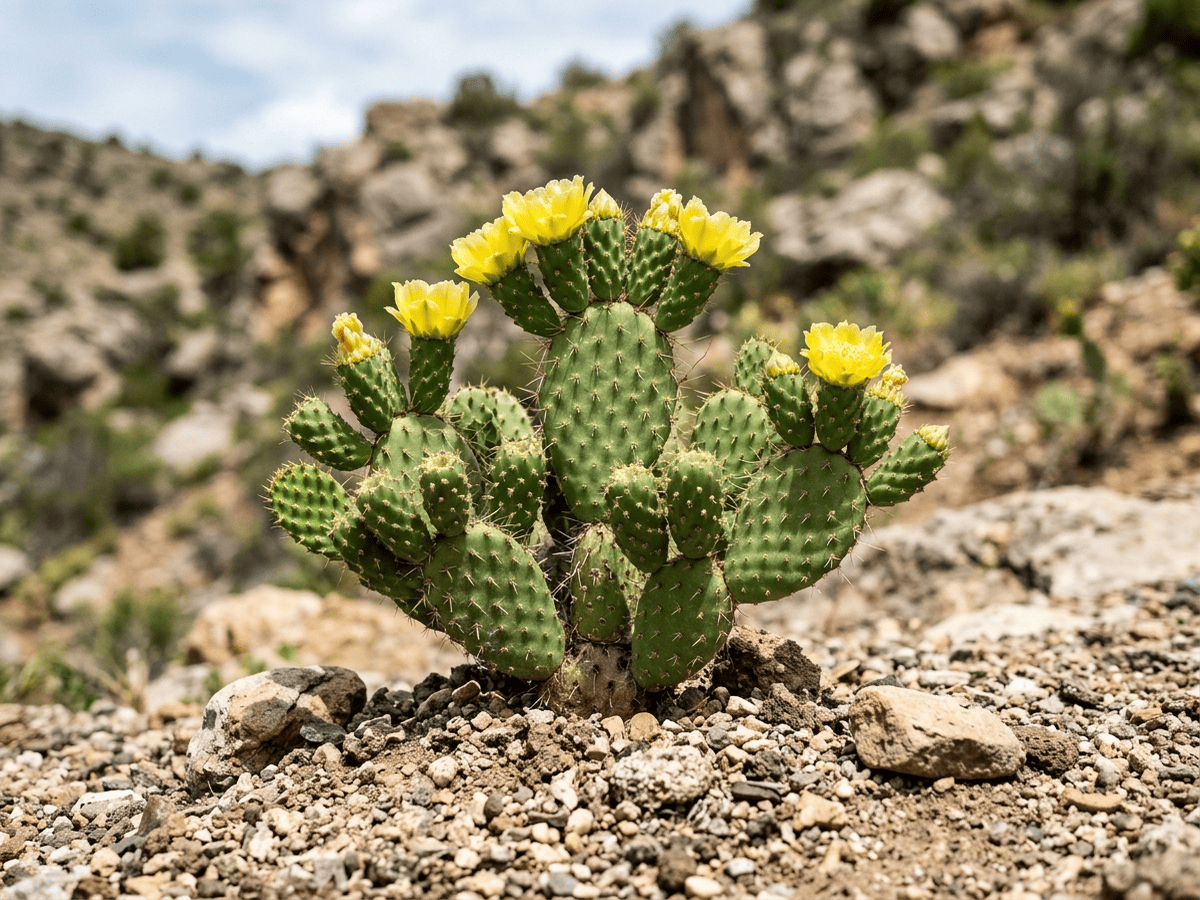
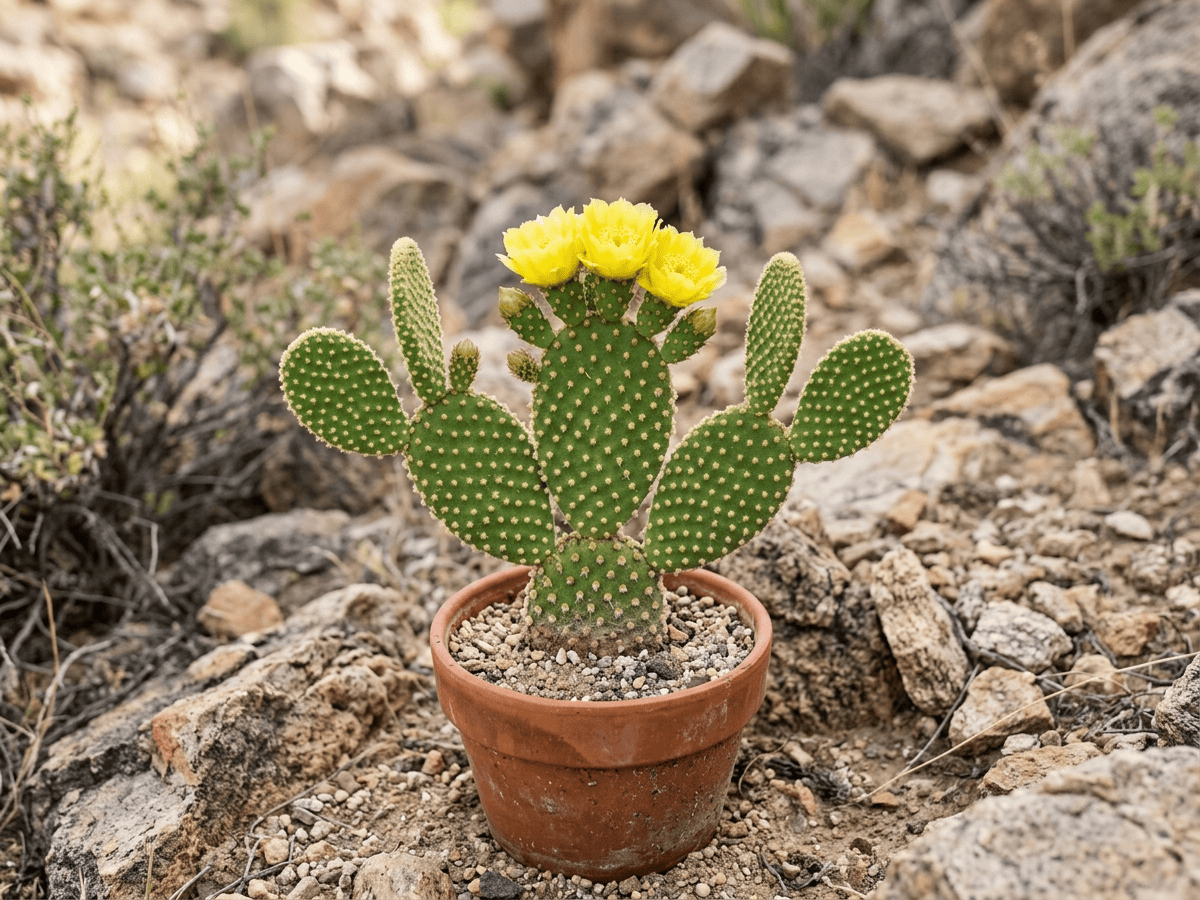
More Opuntia plants
Plants with similar care
 Chinese AbeliaAbelia chinensis
 Fragrant AbeliaAbelia mosanensis
 Large-Flowered AbeliaAbelia uniflora
 Glossy AbeliaAbelia x grandiflora
Frequently asked questions
How often should I water Santa Rita Pricklypear?
In summer, water about every 21 days; in winter, about every 60 days. Adjust for heat, pot size and drainage.
How much light does Santa Rita Pricklypear need?
Full sun: 6+ hrs direct. Watch the leaves — scorching or stretching means the light needs adjusting.
Is Santa Rita Pricklypear toxic to cats or dogs?
Pets Slight (Dogs Slight · Cats Slight) Educational information, not medical or veterinary advice. If exposure is suspected, contact a doctor or veterinarian.
Is Santa Rita Pricklypear easy to grow?
Yes — it is considered an easy, beginner-friendly plant.
When does Santa Rita Pricklypear bloom?
It typically blooms Mar–May in the Northern Hemisphere.
YardMate
Identify any plant in seconds
Snap a photo — YardMate names the plant, diagnoses problems, and reminds you when to water.
Download on the App Store