 YardMate
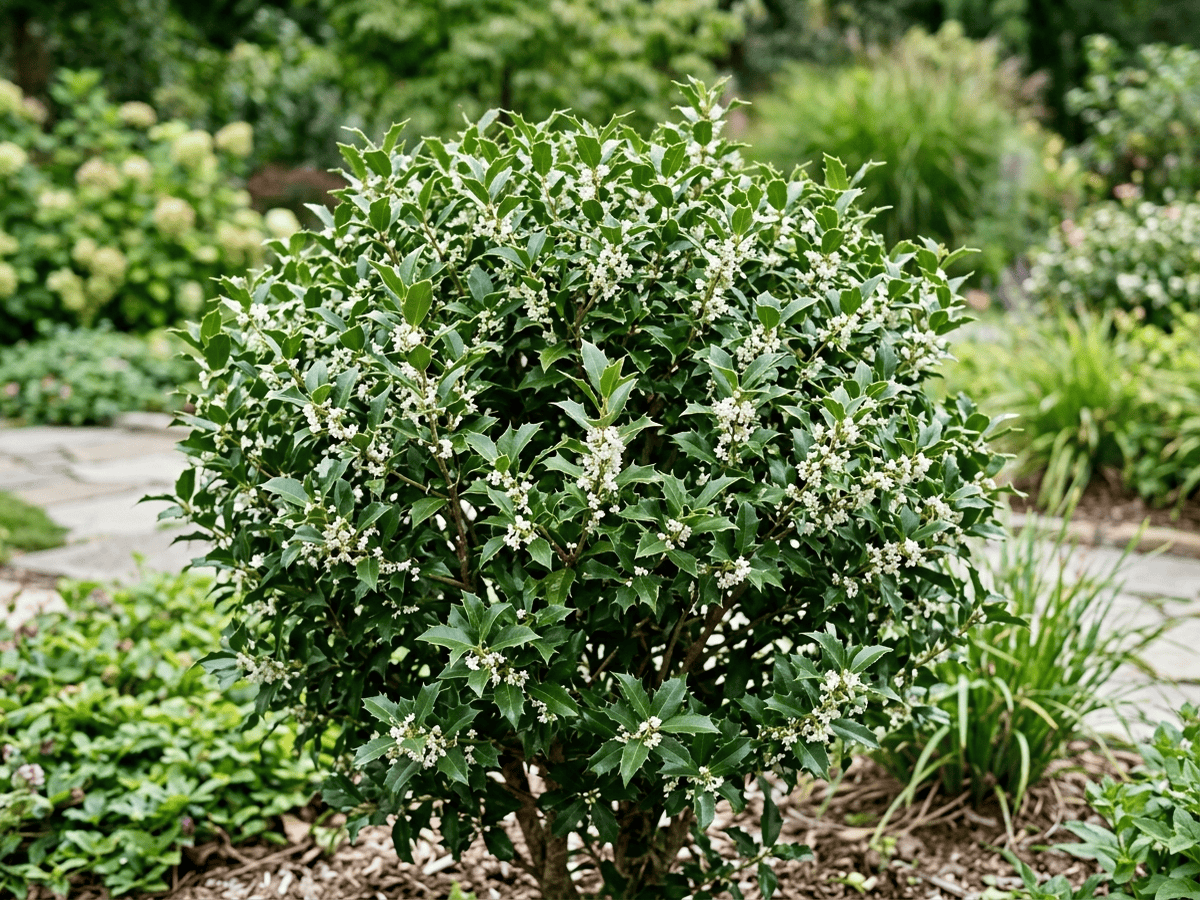


Holly Olive
Osmanthus heterophyllus
Easy · Beginner friendlyAbout Holly Olive
Holly Osmanthus is a dense evergreen shrub from Japan, growing 8-15 feet tall with spiny holly-like leaves that are often mistaken for true holly. In autumn, it produces tiny but intensely fragrant white flowers hidden among the foliage—the sweet scent seems to come from nowhere, delighting passersby. More refined and slower-growing than cherry laurel, it makes an elegant hedge or foundation plant. The cultivar 'Goshiki' with cream-pink-green variegated leaves is a popular accent plant.
- Fragrant
- Deer-resistant
- Shade-tolerant
- Evergreen
How to care for Holly Olive
Watering
- Springevery 7 days
- Summerevery 5 days
- Fallevery 10 days
- Winterevery 21 days
Soil · Acidic · pH 4.5–6
- Top dressingPine needle mulch10%
- Main mixAcid-lover mix + peat 3:175%
- DrainageGravel15%
Never add lime or wood ash — it cancels out the acidity.
FERTILIZER
Balanced Feed 14-14-14
An even feed covers all three needs at once, keeping leaves, roots and blooms moving together with nothing pushed out of balance.
- Nitrogen · Leaves
- Phosphorus · Roots + Blooms
- Potassium · Strength
- Springevery 30 days
At a Glance
- NativeEast Asia
- Height8–15 ft (2.4–4.6 m)
- Spread6–10 ft (1.8–3 m)
- Flower colorWhite, Cream
- Foliage colorDark-green, Green, Variegated, Red
- Fruit colorBlue, Black
- SoilLoamy, Well-drained, Acidic
- LocationsYard
Bloom time
BLOOM CYCLE
Peak bloom
Oct–Nov
Intensely fragrant tiny white flowers October to November; hidden in foliage
Fragrance
STRONG FRAGRANCE
Sweet apricot-honeysuckle-peach fragrance in autumn bloom.
Toxicity
No toxicity has been reported for this plant. Still, it is wise to keep pets from chewing on any houseplant.
Educational information, not medical or veterinary advice. If exposure is suspected, contact a doctor or veterinarian.
DISTRIBUTION


- Native
- Introduced
- East Asia
History

Osmanthus heterophyllus is native to Japan and Taiwan. Its species name means variable-leaved, a perfect description of a shrub whose young leaves are sharply holly-like while mature leaves become smoother and more oval. In Japan it is called hiiragi and has long been planted at entrances and shrine gates because the spiny leaves were believed to repel harmful spirits.
During Setsubun, the traditional end-of-winter observance, sprigs of hiiragi were hung with sardine heads at doorways for protection. Unlike true holly, it also offers the Osmanthus family's signature fragrance: small creamy-white autumn flowers with a rich apricot-honeysuckle scent. Variegated cultivars such as 'Goshiki' and 'Variegatus' made it popular in Western landscapes as a deer-resistant evergreen hedge. It brings temple folklore, fragrance, and practical structure into one compact shrub.
Symbolism & meaning
What It Symbolizes
Holly Olive can symbolize truth — its spiny leaves look exactly like holly, but it belongs instead to the olive family, a reminder that true identity is hidden beneath appearances. In Japan it also offers protection: branches are placed at doorways during Setsubun to repel demons at the start of spring. It is the shrub that wears one face and reveals another, both useful.
- Truth — looks like holly but belongs to the olive family—true beauty is hidden
- Protection — spiny leaves used in Japanese Setsubun rituals
Where the Name Comes From
'Osmanthus' from Greek 'osme' (fragrance) and 'anthos' (flower); 'heterophyllus' means 'variable-leaved', as mature plants produce spineless leaves.
Uses & Fun Facts
- Tiny autumn flowers release sweet apricot scent across yards
- Holly-like spiny evergreen forms dense tall privacy hedges
- Dense glossy shrub for shaded foundation plantings
Related plants
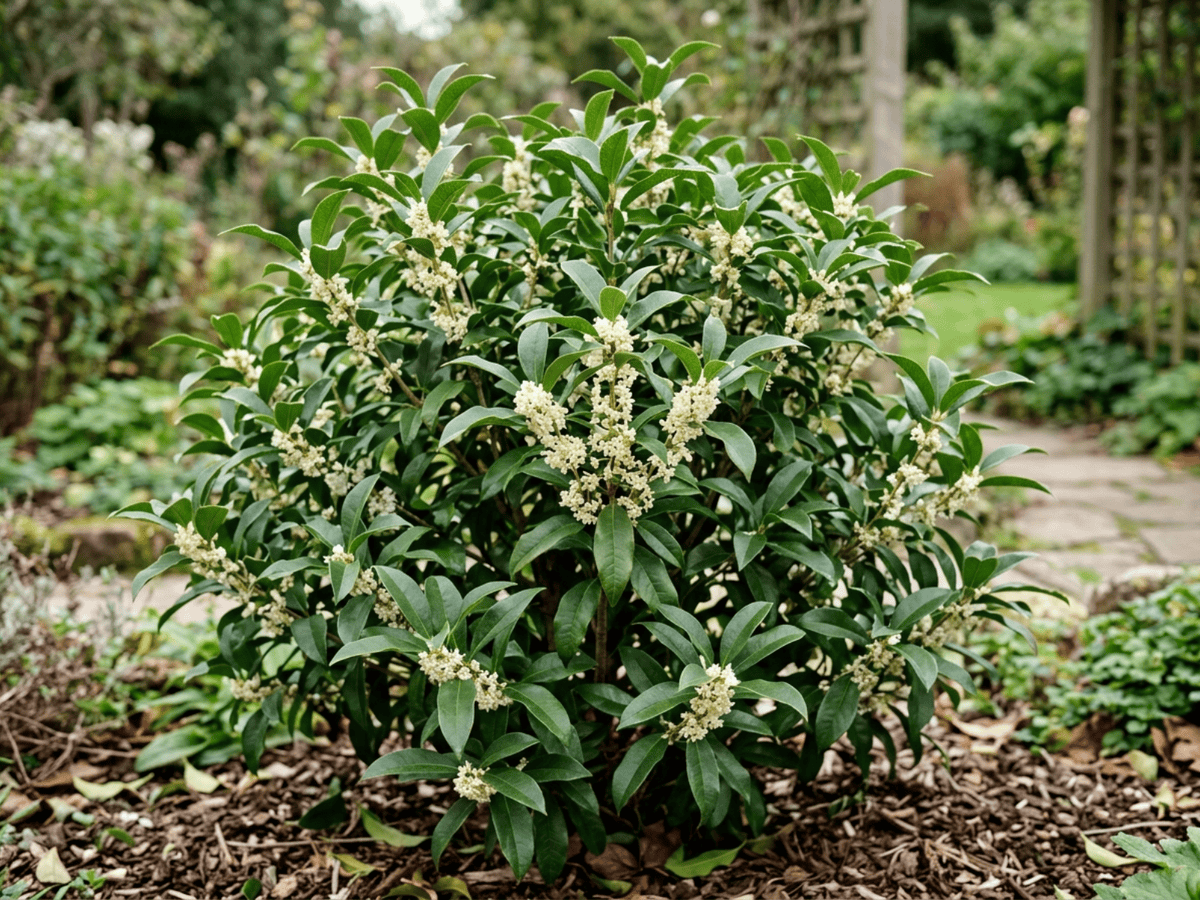
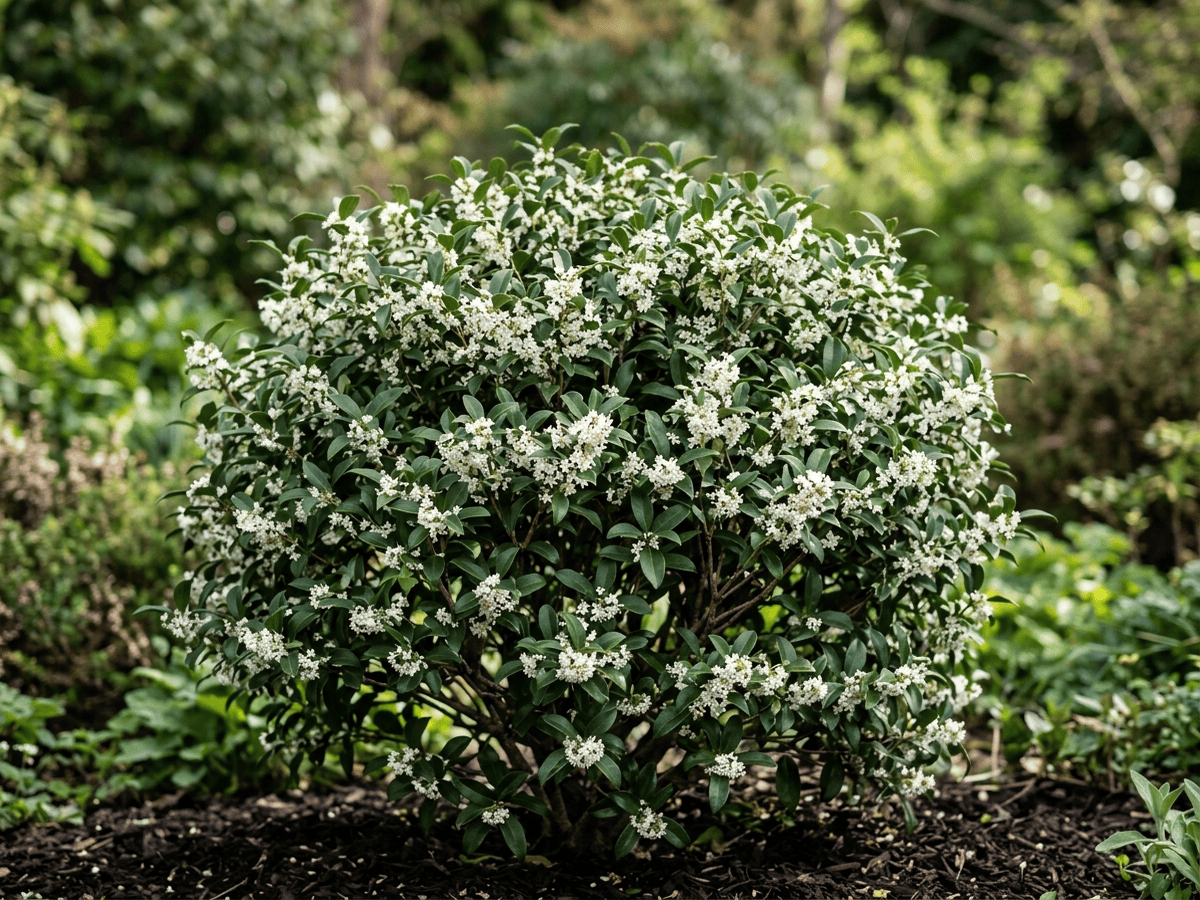
More Osmanthus plants
Plants with similar care
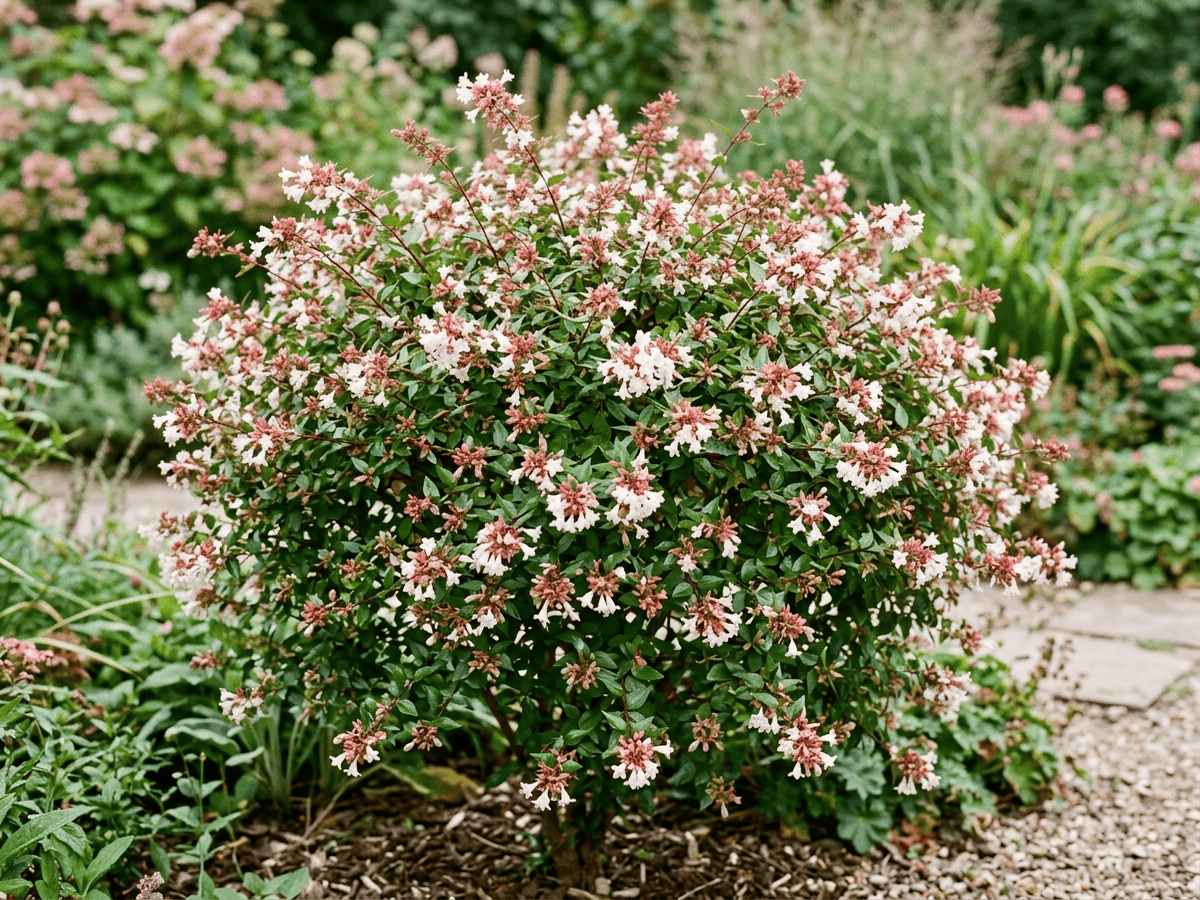 Chinese AbeliaAbelia chinensis
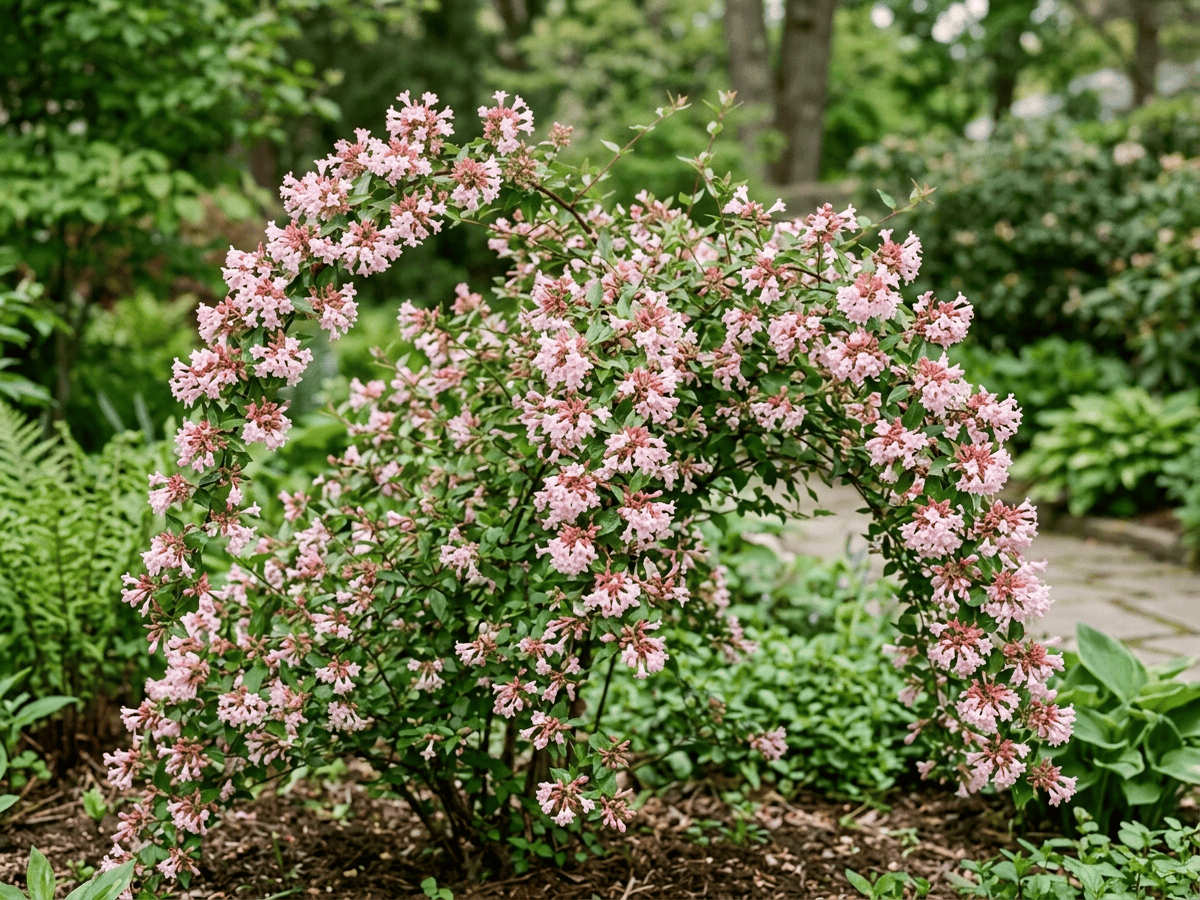 Fragrant AbeliaAbelia mosanensis
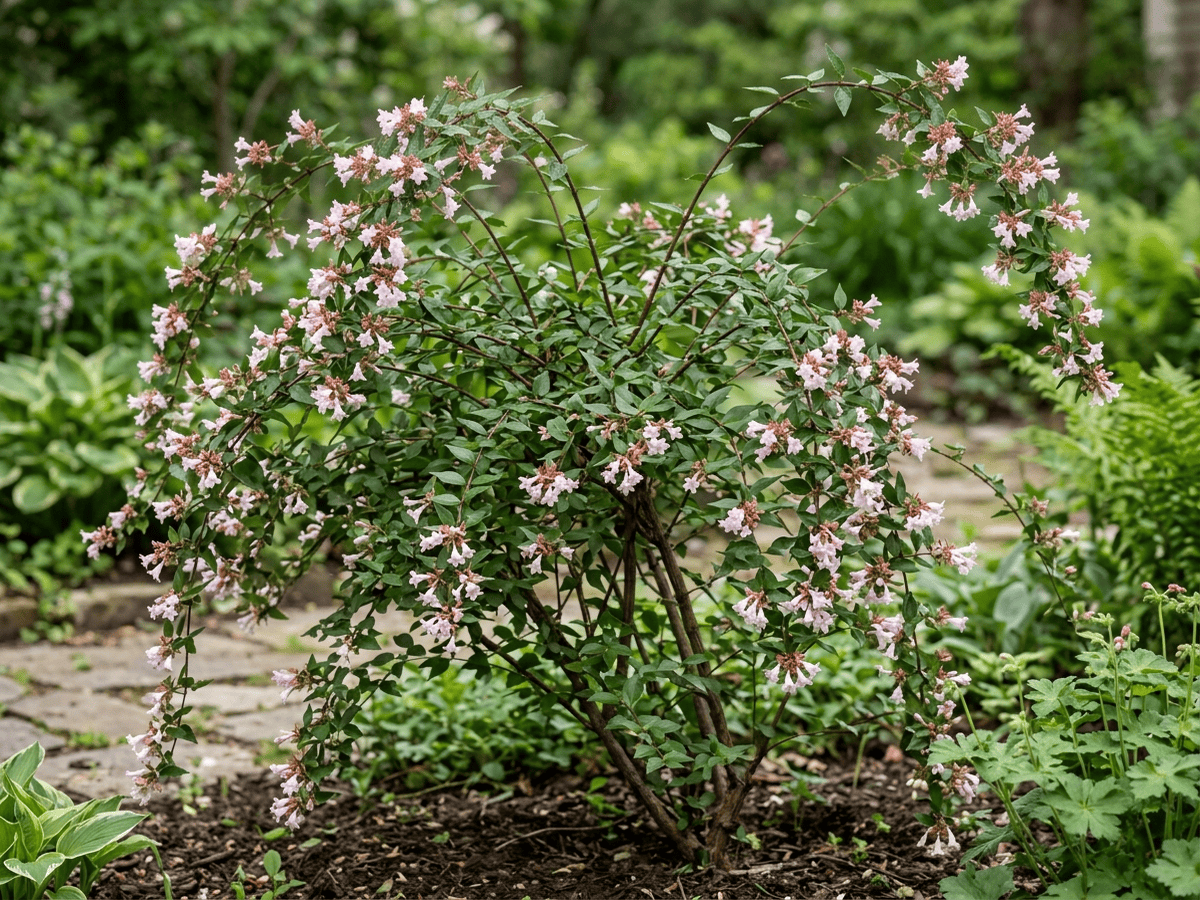 Large-Flowered AbeliaAbelia uniflora
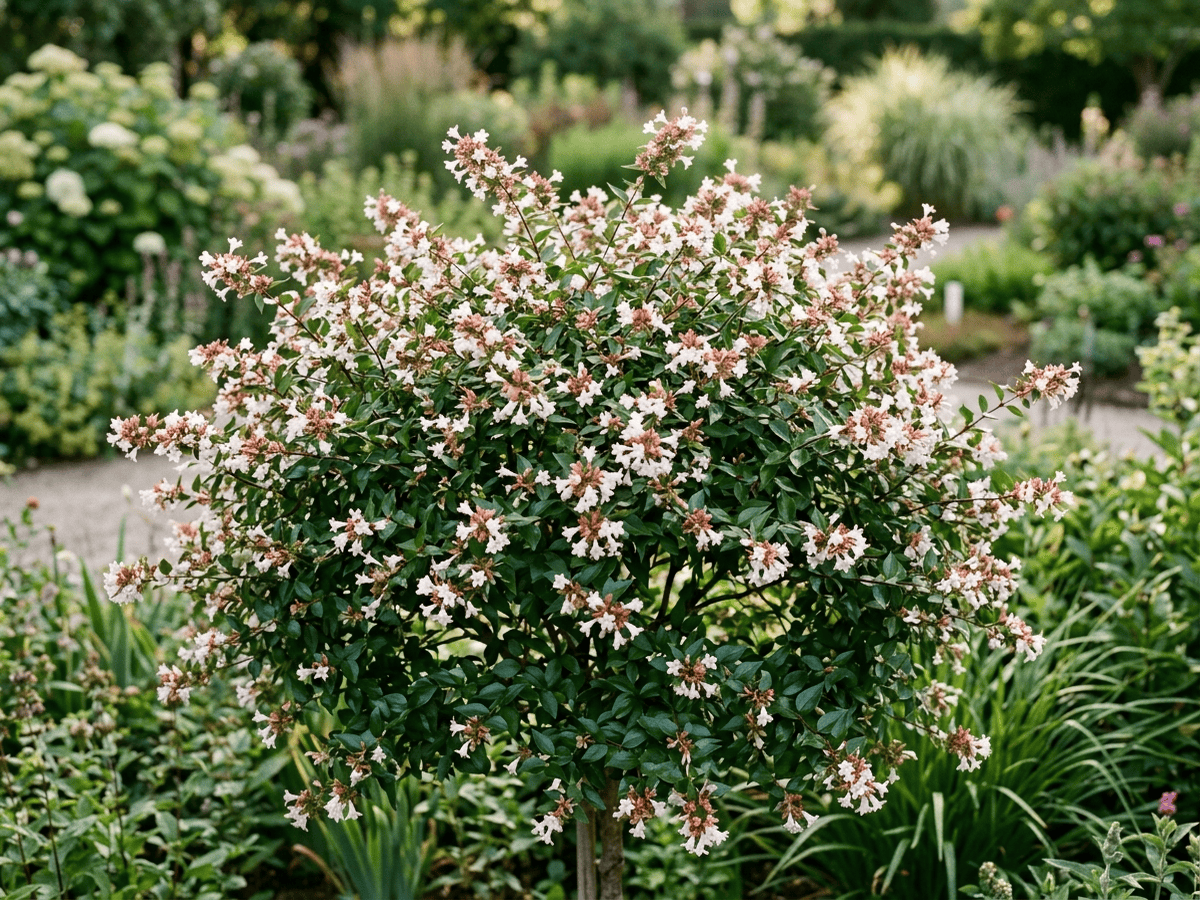 Glossy AbeliaAbelia x grandiflora
Frequently asked questions
How often should I water Holly Olive?
In summer, water about every 5 days; in winter, about every 21 days. Adjust for heat, pot size and drainage.
How much light does Holly Olive need?
Full sun: 6+ hrs direct. Watch the leaves — scorching or stretching means the light needs adjusting.
Is Holly Olive toxic to cats or dogs?
No toxicity has been reported for this plant. Still, it is wise to keep pets from chewing on any houseplant. Educational information, not medical or veterinary advice. If exposure is suspected, contact a doctor or veterinarian.
Is Holly Olive easy to grow?
Yes — it is considered an easy, beginner-friendly plant.
When does Holly Olive bloom?
It typically blooms Oct–Nov in the Northern Hemisphere.
YardMate
Identify any plant in seconds
Snap a photo — YardMate names the plant, diagnoses problems, and reminds you when to water.
Download on the App Store